
Skip to Content
  • オフィス

    オフィス

    北米・南米
    • Atlanta
    • Austin
    • Bogota
    • Boston
    • Buenos Aires
    • Chicago
    • Dallas
    • Denver
    • Houston
    • Los Angeles
    • Mexico City
    • Minneapolis
    • Monterrey
    • Montreal
    • New York
    • Rio de Janeiro
    • San Francisco
    • Santiago
    • São Paulo
    • Seattle
    • Silicon Valley
    • Toronto
    • Washington, DC
    ヨーロッパ・中東・アフリカ
    • Amsterdam
    • Athens
    • Berlin
    • Brussels
    • Copenhagen
    • Doha
    • Dubai
    • Dusseldorf
    • Frankfurt
    • Helsinki
    • Istanbul
    • Johannesburg
    • Kyiv
    • Lisbon
    • London
    • Madrid
    • Milan
    • Munich
    • Oslo
    • Paris
    • Riyadh
    • Rome
    • Stockholm
    • Vienna
    • Warsaw
    • Zurich
    アジア・オーストラリア
    • Bangkok
    • Beijing
    • Bengaluru
    • Brisbane
    • Ho Chi Minh City
    • Hong Kong
    • Jakarta
    • Kuala Lumpur
    • Manila
    • Melbourne
    • Mumbai
    • New Delhi
    • Perth
    • Shanghai
    • Singapore
    • Sydney
    • Tokyo
    全てのオフィス
  • アルムナイ
  • メディア
  • お問い合わせ
  • 東京オフィス
  • Japan | 日本語

    地域と言語を選択

    グローバル
    • Global (English)
    北米・南米
    • Brazil (Português)
    • Argentina (Español)
    • Canada (Français)
    • Chile (Español)
    • Colombia (Español)
    ヨーロッパ・中東・アフリカ
    • France (Français)
    • DACH Region (Deutsch)
    • Italy (Italiano)
    • Spain (Español)
    • Greece (Elliniká)
    アジア・オーストラリア
    • China (中文版)
    • Korea (한국어)
    • Japan (日本語)
  • Saved items (0)
    Saved items (0)

    You have no saved items.

    後で閲読、共有できるようにするためにブックマークしてください

    Explore Bain Insights
  • 業界別プラクティス
    メインメニュー

    業界別プラクティス

    • 航空宇宙、防衛、政府関連
    • 農業
    • 化学製品
    • インフラ、建設
    • 消費財
    • 金融サービス
    • ヘルスケア
    • 産業機械、設備
    • メディア、エンターテインメント
    • 金属
    • 採掘・鉱業
    • 石油、ガス
    • 紙、パッケージ
    • プライベートエクイティ
    • 公共、社会セクター
    • 小売
    • テクノロジー
    • 通信
    • 交通
    • 観光産業
    • 公益事業、再生可能エネルギー
  • 機能別プラクティス
    メインメニュー

    機能別プラクティス

    • カスタマー・エクスペリエンス
    • サステイナビリティ、 社会貢献
    • Innovation
    • 企業買収、合併 (M&A)
    • オペレーション
    • 組織
    • プライベートエクイティ
    • マーケティング・営業
    • 戦略
    • アドバンスド・アナリティクス
    • Technology
    • フルポテンシャル・トランスフォーメーション
  • Digital
  • 知見/レポート
  • ベイン・アンド・カンパニーについて
    メインメニュー

    ベイン・アンド・カンパニーについて

    • ベインの信条
    • 活動内容
    • 社員とリーダーシップ
    • プレス・メディア情報
    • クライアントの結果
    • 受賞歴
    • パートナーシップを結んでいる団体
    Further: Our global responsibility
    • ダイバーシティ
    • 社会貢献
    • サステイナビリティへの取り組み
    • 世界経済フォーラム(WEF)
    Learn more about Further
  • キャリア
    メインメニュー

    キャリア

    • ベインで働く
      キャリア
      ベインで働く
      • Find Your Place
      • ベインで活躍する機会
      • ベインのチーム体制
      • 学生向けページ
      • インターンシップ
      • 採用イベント
    • ベインでの体験
      キャリア
      ベインでの体験
      • Blog: Inside Bain
      • キャリアストーリー
      • 社員紹介
      • Where We Work
      • 成長を後押しするサポート体制
      • アフィニティ・グループ
      • 福利厚生
    • Impact Stories
    • 採用情報
      キャリア
      採用情報
      • 採用プロセス
      • 面接内容
    FIND JOBS
  • オフィス
    メインメニュー

    オフィス

    • 北米・南米
      オフィス
      北米・南米
      • Atlanta
      • Austin
      • Bogota
      • Boston
      • Buenos Aires
      • Chicago
      • Dallas
      • Denver
      • Houston
      • Los Angeles
      • Mexico City
      • Minneapolis
      • Monterrey
      • Montreal
      • New York
      • Rio de Janeiro
      • San Francisco
      • Santiago
      • São Paulo
      • Seattle
      • Silicon Valley
      • Toronto
      • Washington, DC
    • ヨーロッパ・中東・アフリカ
      オフィス
      ヨーロッパ・中東・アフリカ
      • Amsterdam
      • Athens
      • Berlin
      • Brussels
      • Copenhagen
      • Doha
      • Dubai
      • Dusseldorf
      • Frankfurt
      • Helsinki
      • Istanbul
      • Johannesburg
      • Kyiv
      • Lisbon
      • London
      • Madrid
      • Milan
      • Munich
      • Oslo
      • Paris
      • Riyadh
      • Rome
      • Stockholm
      • Vienna
      • Warsaw
      • Zurich
    • アジア・オーストラリア
      オフィス
      アジア・オーストラリア
      • Bangkok
      • Beijing
      • Bengaluru
      • Brisbane
      • Ho Chi Minh City
      • Hong Kong
      • Jakarta
      • Kuala Lumpur
      • Manila
      • Melbourne
      • Mumbai
      • New Delhi
      • Perth
      • Shanghai
      • Singapore
      • Sydney
      • Tokyo
    全てのオフィス
  • アルムナイ
  • メディア
  • お問い合わせ
  • 東京オフィス
  • Japan | 日本語
    メインメニュー

    地域と言語を選択

    • グローバル
      地域と言語を選択
      グローバル
      • Global (English)
    • 北米・南米
      地域と言語を選択
      北米・南米
      • Brazil (Português)
      • Argentina (Español)
      • Canada (Français)
      • Chile (Español)
      • Colombia (Español)
    • ヨーロッパ・中東・アフリカ
      地域と言語を選択
      ヨーロッパ・中東・アフリカ
      • France (Français)
      • DACH Region (Deutsch)
      • Italy (Italiano)
      • Spain (Español)
      • Greece (Elliniká)
    • アジア・オーストラリア
      地域と言語を選択
      アジア・オーストラリア
      • China (中文版)
      • Korea (한국어)
      • Japan (日本語)
  • Saved items  (0)
    メインメニュー
    Saved items (0)

    You have no saved items.

    後で閲読、共有できるようにするためにブックマークしてください

    Explore Bain Insights
  • 業界別プラクティス
    • 業界別プラクティス

      • 航空宇宙、防衛、政府関連
      • 農業
      • 化学製品
      • インフラ、建設
      • 消費財
      • 金融サービス
      • ヘルスケア
      • 産業機械、設備
      • メディア、エンターテインメント
      • 金属
      • 採掘・鉱業
      • 石油、ガス
      • 紙、パッケージ
      • プライベートエクイティ
      • 公共、社会セクター
      • 小売
      • テクノロジー
      • 通信
      • 交通
      • 観光産業
      • 公益事業、再生可能エネルギー
  • 機能別プラクティス
    • 機能別プラクティス

      • カスタマー・エクスペリエンス
      • サステイナビリティ、 社会貢献
      • Innovation
      • 企業買収、合併 (M&A)
      • オペレーション
      • 組織
      • プライベートエクイティ
      • マーケティング・営業
      • 戦略
      • アドバンスド・アナリティクス
      • Technology
      • フルポテンシャル・トランスフォーメーション
  • Digital
  • 知見/レポート
  • ベイン・アンド・カンパニーについて
    • ベイン・アンド・カンパニーについて

      • ベインの信条
      • 活動内容
      • 社員とリーダーシップ
      • プレス・メディア情報
      • クライアントの結果
      • 受賞歴
      • パートナーシップを結んでいる団体
      Further: Our global responsibility
      • ダイバーシティ
      • 社会貢献
      • サステイナビリティへの取り組み
      • 世界経済フォーラム(WEF)
      Learn more about Further
  • キャリア
    人気検索キーワード
    • デジタル
    • 戦略
    前回の検索
      最近訪れたページ

      Content added to saved items

      Saved items (0)

      Removed from saved items

      Saved items (0)

      論説

      The New Realities of Tech M&A

      The New Realities of Tech M&A

      More scope deals, more start-ups on the block, and the rise of institutional investors are just three trends causing acquirers to update their playbooks.

      著者:Adam Haller and Chris Johnson

      • min read
      }

      論説

      The New Realities of Tech M&A
      en
      概要
      • Technology companies are looking to M&A for growth, swelling deal volume to more than three times what it was five years ago.
      • More deals are about broadening scope, to acquire new capabilities or gain access to markets. That’s a trend across sectors, but it’s even more pronounced in tech, where customers are pressuring vendors to deliver more complete solutions.
      • Most big tech deals in recent years have focused on one of three themes: connectivity, the cloud, or data and analytics.
      • The potential of a recession should lead acquirers to sharpen their due diligence, to avoid taking on unnecessary risk. But recessions also offer opportunities for bargains, if the buyers have prepared by strengthening their position ahead of time.

      Mergers and acquisitions have become increasingly important sources of value in the technology sector over the past decade, and will continue to play an important role in tech companies’ strategies in the years ahead. Most technology executives know this, and they also know that the pace and shape of M&A is changing rapidly. Fewer, however, are updating their playbooks to take advantage of four rising trends—and those who don’t could miss out on critical strategic opportunities.

      More scope deals to add capabilities and deliver solutions

      Tech deal volume has surged over the past five years, growing to more than $500 billion annually in 2018 from less than $150 billion in 2013 (see Figure 1). Large, frequent deals have emerged as a winning strategy, delivering returns 3 to 10 percentage points higher than less-aggressive strategies over the past 10 years.

      Figure 1
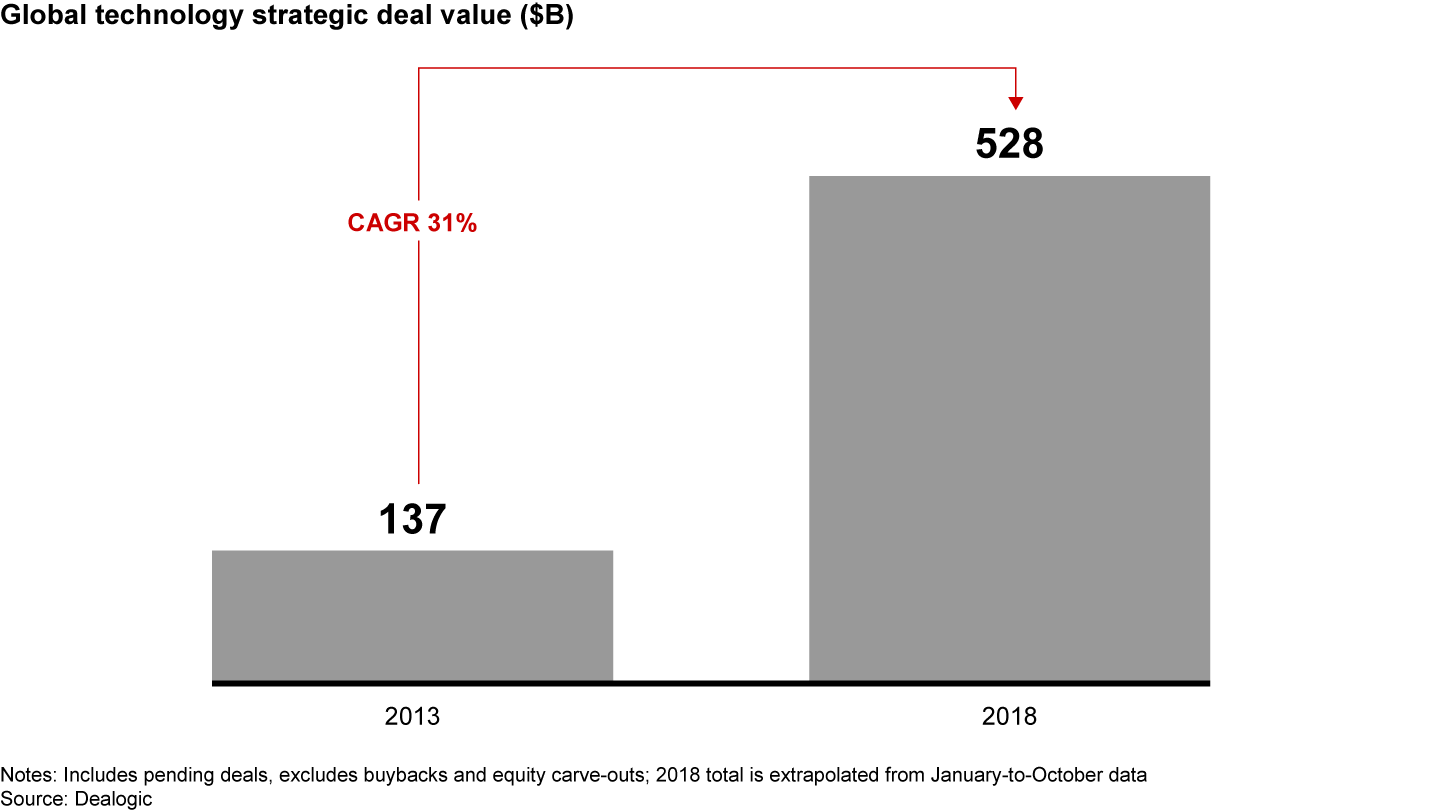
      M&A deals in the technology sector grew 31% annually over five years
      M&A deals in the technology sector grew 31% annually over five years
      M&A deals in the technology sector grew 31% annually over five years

      Significantly, the nature of these deals has shifted from scale to scope, as companies look for their acquisitions to provide more than just economies of scale. Scope deals have accounted for almost 90% of tech deals so far in 2019, up from only 50% four years earlier—a clear sign that tech companies are looking to expand their lines of business and their own capabilities (see Figure 2).

      Figure 2
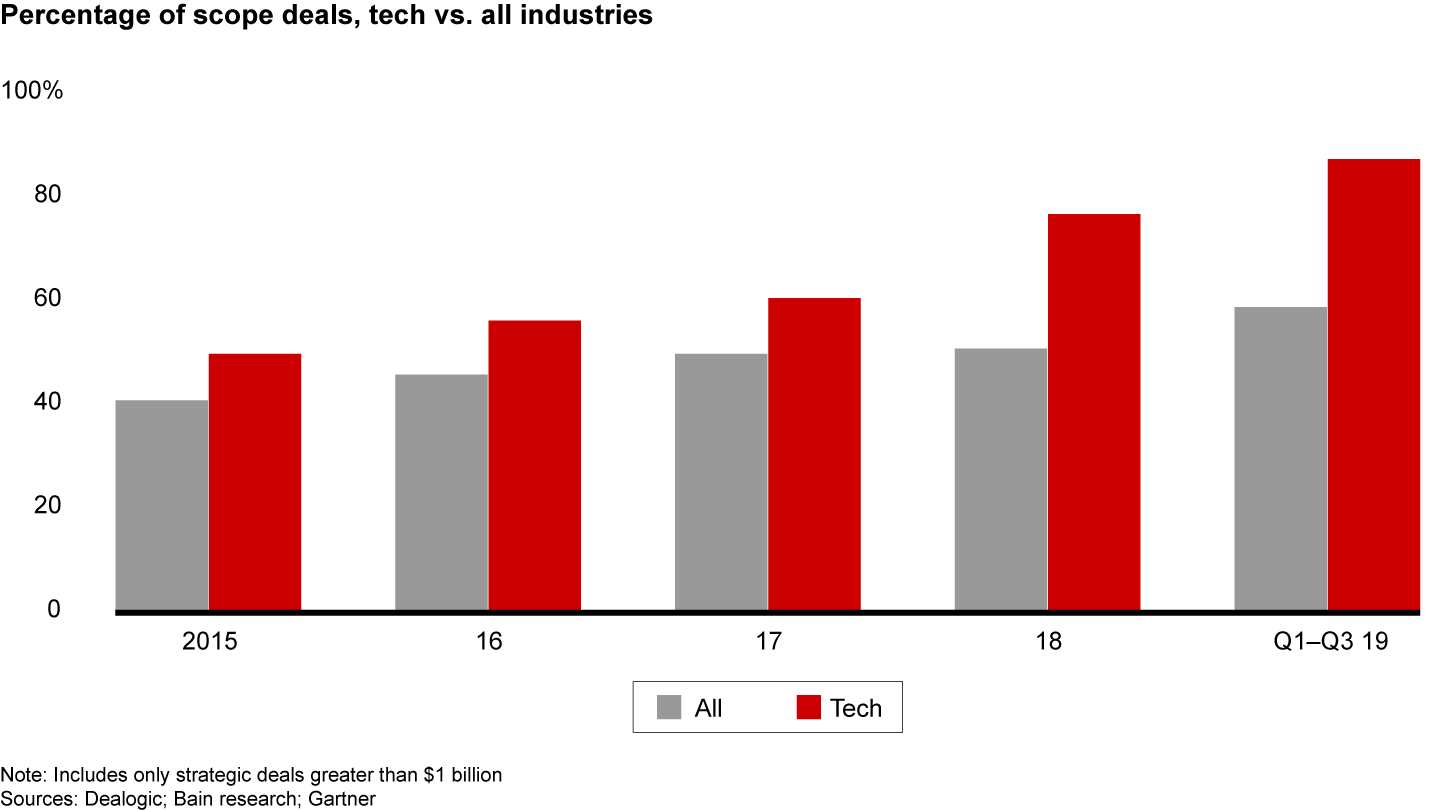
      Technology deals are shifting from scale to scope, as companies look to gain new capabilities and access to markets
      Technology deals are shifting from scale to scope, as companies look to gain new capabilities and access to markets
      Technology deals are shifting from scale to scope, as companies look to gain new capabilities and access to markets

      Scope deals are often more complex than scale ones, with more challenges delivering on the deal thesis. Revenue synergies are less certain due to different types of products, services and pricing models. Since scope deals require investing in less familiar businesses and capabilities, it’s essential to explain clearly how the acquisition fits within the long-term strategy and how executives intend to bring the companies together. Talent and culture vary from one type of business to another, so integrating teams can be trickier than when both companies work in the same business. It may be necessary to invest extra effort in retaining talented people at the acquired company to avoid breaking its base business. Dell’s successful acquisition of EMC provides an attractive model. The parent company took pains to protect the crown jewel in the merger—VMware—and cross-pollinate the best ideas from both sides during the acquisition and after.

      Bain’s analysis of 250 strategic deals over the past three years found that most scope deals aligned with one of three interrelated themes (see Figure 3). We believe these themes will continue to influence M&A activity in the future, but expect new trends and industry dynamics to influence acquisition activity as well.

      • Connectivity. Greater connectivity and the advent of 5G is creating demand for new products and offers, including better security, more advanced automation, and more capable and intelligent network infrastructure. For example, Nokia’s 2016 acquisition of Alcatel-Lucent expanded its portfolio in optical transmission and Internet Protocol routers and switches.
      • Cloud. An accelerated transition to the cloud is creating more M&A activity in the infrastructure behind the cloud, as well as the SaaS model enabled by it. Consider Oracle’s acquisition of NetSuite to manage Oracle’s shift of its core enterprise resource planning (ERP) software to the cloud.
      • Data. As data and the analytics that make sense of it become increasingly valuable, enterprises are pursuing deals to access proprietary data such as Intel’s acquisition of Mobileye, which gave it access to mapping capabilities and high-precision location data.
      Figure 3
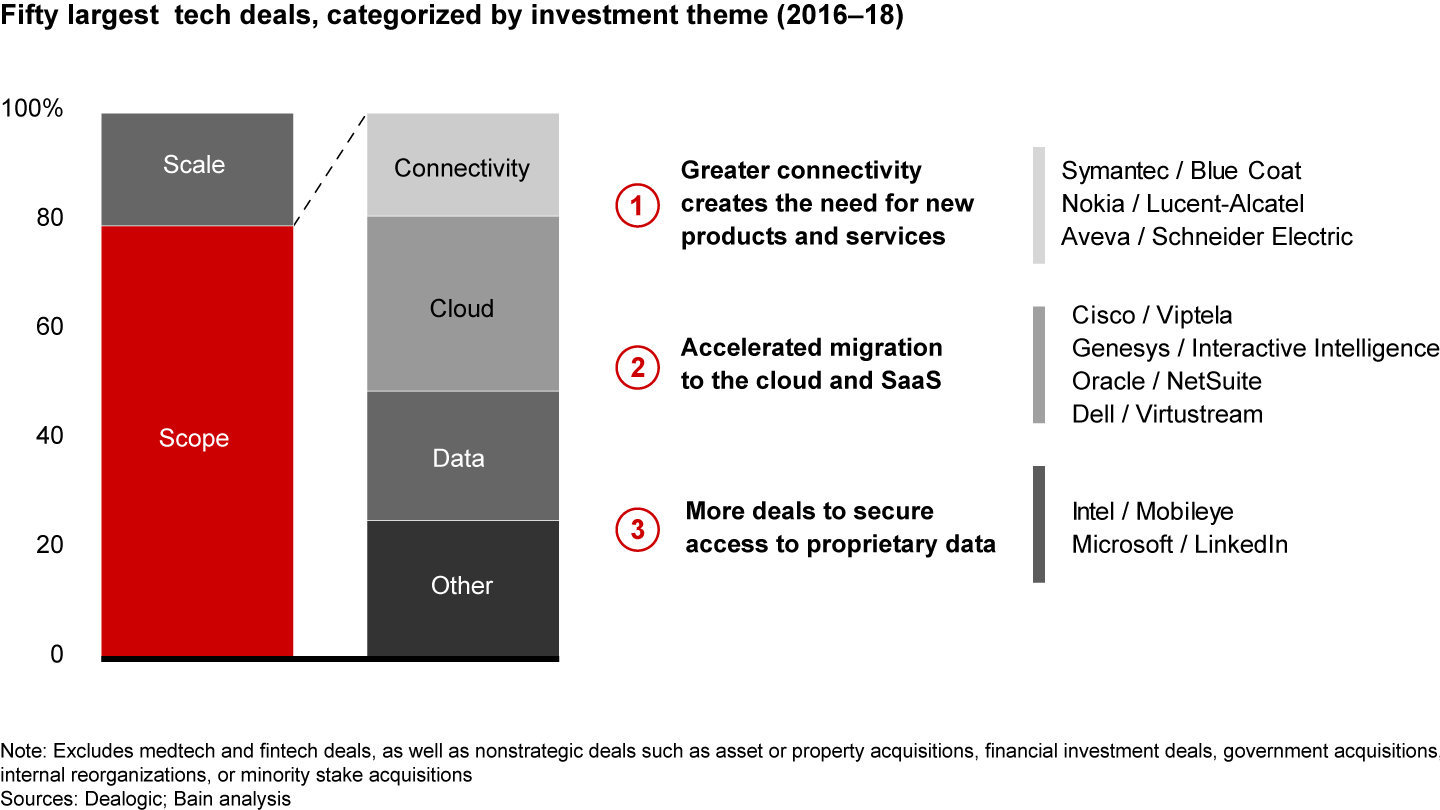
      Most of the big tech deals over the past three years reflected three themes
      Most of the big tech deals over the past three years reflected three themes
      Most of the big tech deals over the past three years reflected three themes

      More start-ups

      Innovation in tech continues to shift from R&D in established companies to venture-backed start-ups, where the tolerance for risk is greater. Consequently, more acquirers are targeting start-ups to gain access to their intellectual property, data and engineering talent. These deals can be even more challenging than other scope deals. Due diligence is more complex, since most start-ups lack a long record of generating revenue. Culture and talent are often difficult to blend into a larger firm. And identifying the right targets can be difficult, since many aren’t yet selling any products or services that would draw the attention of acquirers. To gain access to potential start-up targets, many larger companies are setting up various forms of corporate venture capital, not only to invest early in promising ideas, but also to get a better look at the pipeline of upcoming technologies—and tech companies lead the way across sectors (see Figure 4). (For more on this trend, see the Bain Brief “Five Things Companies Get Wrong about Corporate Venture Capital.”)

      Figure 4
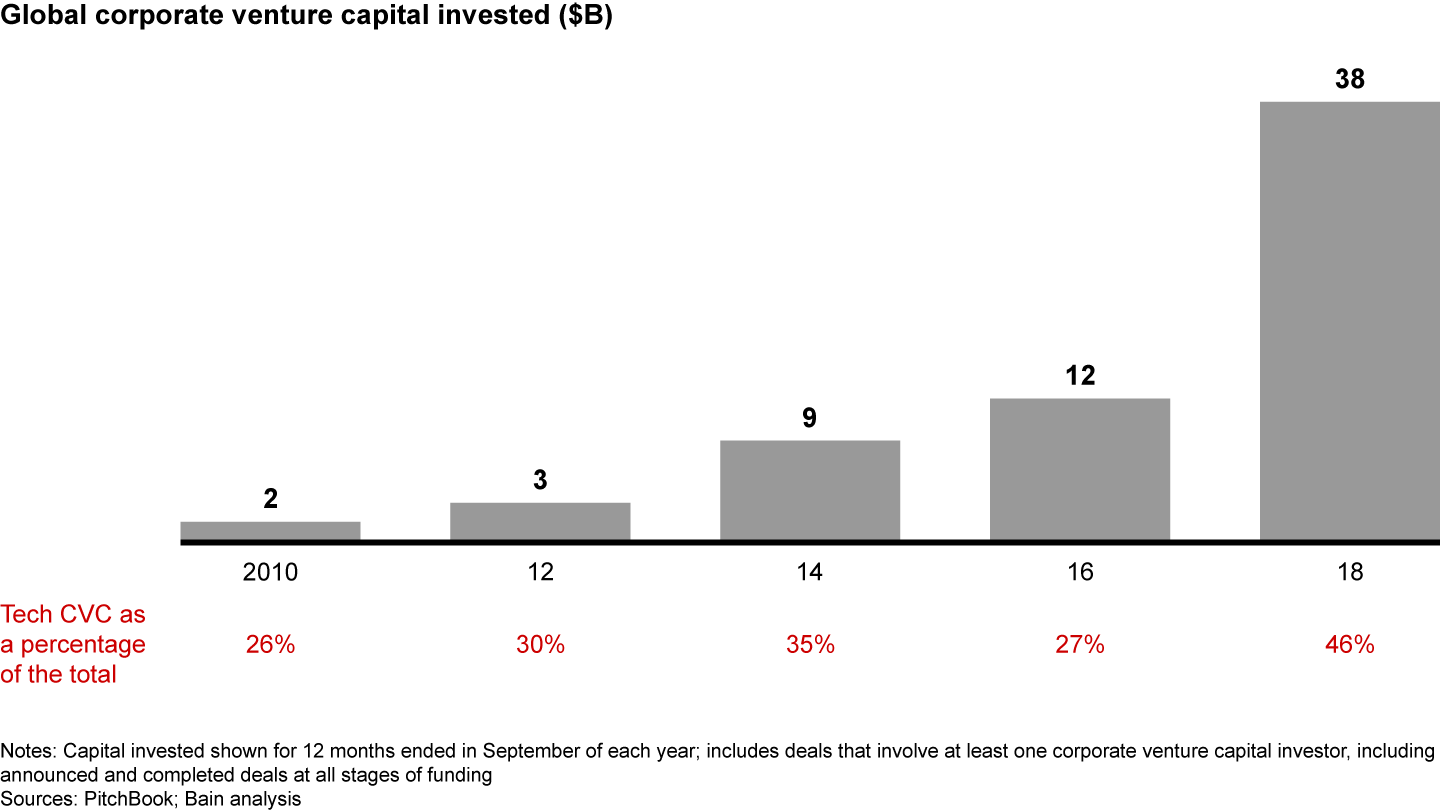
      Corporate venture capital is growing quickly, especially in technology
      Corporate venture capital is growing quickly, especially in technology
      Corporate venture capital is growing quickly, especially in technology

      Institutional buyers are increasing their range

      Institutional buyers are acting more like strategic investors, not only pursuing larger and more established targets, but competing with each other and traditional acquirers to get at them. With so much private equity in play, it’s becoming harder for investors to find and acquire smaller, poorly managed assets. This increases demand (and available funding) for targets, which means tech companies interested in acquisitions may need to pay more and should be more rigorous in their diligence. Silver Lake’s role in supporting Avago’s consolidation of the semiconductor industry—most notably, acquiring Broadcom and then attempting to acquire Qualcom—is a prominent example.  

      Potential of recession

      Recessions create new opportunities for M&A, and companies should look for bargains while sharpening their diligence to minimize taking on new risk. M&A was an important part of many tech strategies coming out of the 2008 downturn and will likely be just as important in the next recession. The tech sector weathered the recession of 2008 much better than the previous one—the so-called dotcom crash. Tech companies were better positioned in 2008, with stronger fundamentals and more cash in reserve (see Figure 5). As a result, deal volume stayed robust, and lower premiums provided several opportunities for bargains. Of course, not all bargains are good strategic deals, and executives need to identify which targets fit their long-term strategy. (For more, read the Bain Brief “Beyond the Downturn: Recession Strategies to Take the Lead.”)

      Figure 5
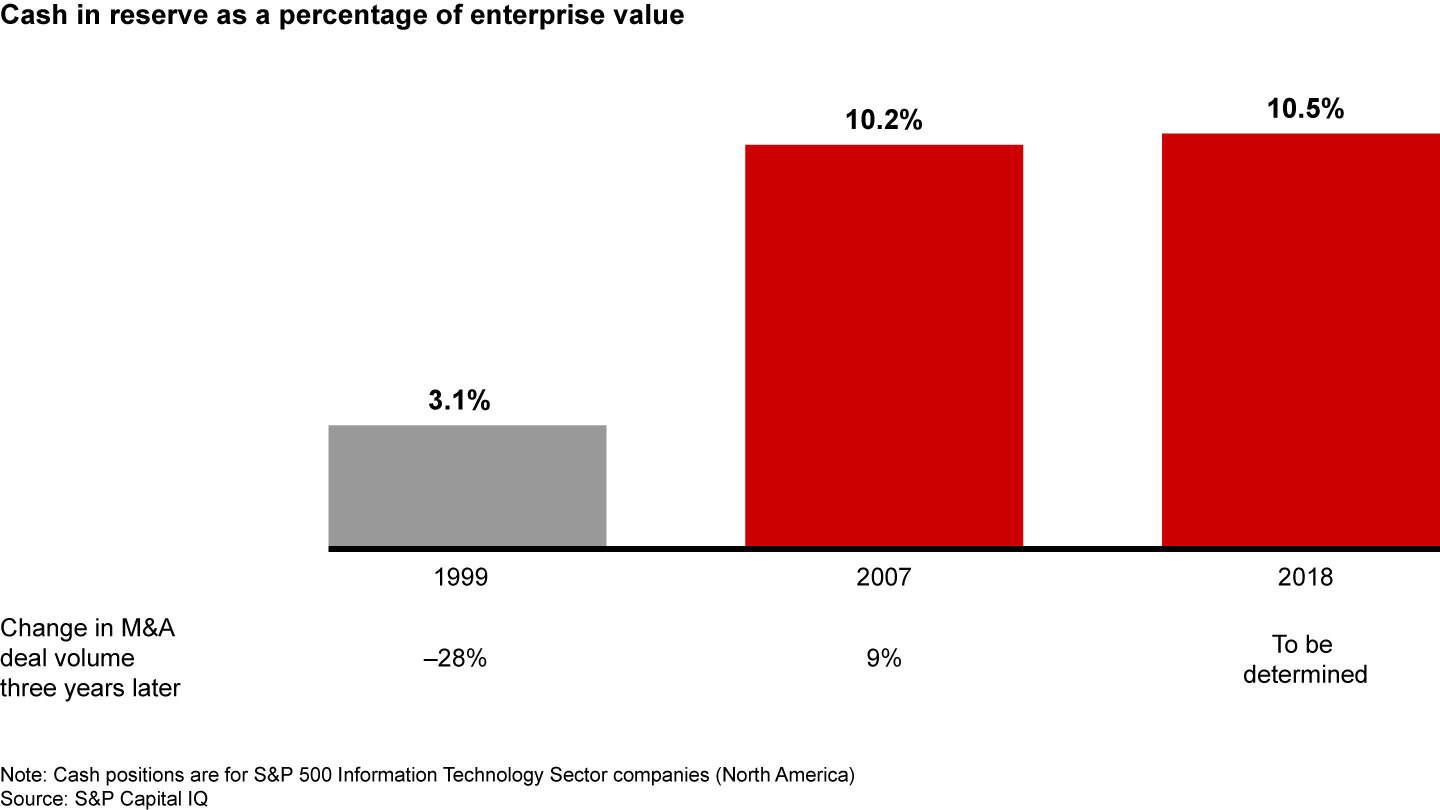
      Technology companies were in a better position to weather a recession in 2007 than in 1999—and were similarly strong in 2018
      Technology companies were in a better position to weather a recession in 2007 than in 1999—and were similarly strong in 2018
      Technology companies were in a better position to weather a recession in 2007 than in 1999—and were similarly strong in 2018

      Given the huge amounts of cash in some tech companies’ war chests, the importance on growth in technology and the entrance of sovereign wealth funds as investors in the sector, M&A is likely to continue to become an increasingly important aspect of long-term strategy in technology. But today’s tech M&A calls on a different approach, given the structural shifts in acquisition deal theses, target companies, competitors in the hunt for tech assets and the pending economic climate. Past M&A playbooks won’t work, and companies need to evolve how they source, perform due diligence on and integrate companies in order to extract the full value of their inorganic strategies as these shifts continue to accelerate.

      Adam Haller is a partner with Bain & Company’s Global M&A and Technology practices. Chris Johnson is a partner with Bain’s Global Technology practice. Both are based in San Francisco.

      著者
      • Headshot of Adam Haller
        Adam Haller
        パートナー, San Francisco
      • Headshot of Chris Johnson
        Chris Johnson
        Alumni, San Francisco
      関連業種
      • テクノロジー
      関連するコンサルティングサービス
      • Corporate Strategy
      • 企業買収、合併(M&A)
      コンサルティングサービス
      • M&A Capability
      • Technology M&A
      M&A Capability
      Arnaud Leroi: The Changing Rules for Digital M&A

      Four steps for companies turning to M&A to accelerate their digital strategy.

      詳細
      テクノロジー
      Why SaaS Stocks Have Dropped—and What It Signals for Software’s Next Chapter

      A sharp reset in valuations reflects AI-driven disruption, slowing retention, and a growing divide between incumbents and future winners.

      詳細
      企業買収、合併(M&A)
      Positioning Oil & Gas Companies for Today’s Capital Markets

      We interviewed senior investment professionals, and here’s what we heard.

      詳細
      テクノロジー
      Software M&A

      The good news: Most deal best practices still apply to AI acquisitions.

      詳細
      M&A Capability
      The Changing Rules for Digital M&A

      Digital M&A requires a different approach than traditional deals.

      詳細
      First published in 12月 2019
      Tags
      • Corporate Strategy
      • M&A Capability
      • Technology M&A
      • テクノロジー
      • 企業買収、合併(M&A)

      クライアント支援事例

      サステイナビリティ、社会貢献 Can Microchips Turbocharge Sustainability Improvement?

      ケーススタディを見る

      Helping a Midsize ERP Player Compete against the Giants

      ケーススタディを見る

      顧客戦略、マーケティング Increased sales productivity frees selling time and saves millions

      ケーススタディを見る

      お気軽にご連絡下さい

      私達は、グローバルに活躍する経営者が抱える最重要経営課題に対して、厳しい競争環境の中でも成長し続け、「結果」を出すために支援しています。

      ベインの知見。競争が激化するグローバルビジネス環境で、日々直面するであろう問題について論じている知見を毎月お届けします。

      *プライバシーポリシーの内容を確認し、合意しました。

      プライバシーポリシーをご確認頂き、合意頂けますようお願い致します。
      Bain & Company
      お問い合わせ Sustainability Accessibility Terms of use Privacy Cookie Policy Sitemap Log In

      © 1996-2026 Bain & Company, Inc.

      お問い合わせ

      How can we help you?

      • ビジネスについて
      • プレス報道について
      • 採用について
      全てのオフィス