
Skip to Content
  • オフィス

    オフィス

    北米・南米
    • Atlanta
    • Austin
    • Bogota
    • Boston
    • Buenos Aires
    • Chicago
    • Dallas
    • Denver
    • Houston
    • Los Angeles
    • Mexico City
    • Minneapolis
    • Monterrey
    • Montreal
    • New York
    • Rio de Janeiro
    • San Francisco
    • Santiago
    • São Paulo
    • Seattle
    • Silicon Valley
    • Toronto
    • Washington, DC
    ヨーロッパ・中東・アフリカ
    • Amsterdam
    • Athens
    • Berlin
    • Brussels
    • Copenhagen
    • Doha
    • Dubai
    • Dusseldorf
    • Frankfurt
    • Helsinki
    • Istanbul
    • Johannesburg
    • Kyiv
    • Lisbon
    • London
    • Madrid
    • Milan
    • Munich
    • Oslo
    • Paris
    • Riyadh
    • Rome
    • Stockholm
    • Vienna
    • Warsaw
    • Zurich
    アジア・オーストラリア
    • Bangkok
    • Beijing
    • Bengaluru
    • Brisbane
    • Ho Chi Minh City
    • Hong Kong
    • Jakarta
    • Kuala Lumpur
    • Manila
    • Melbourne
    • Mumbai
    • New Delhi
    • Perth
    • Shanghai
    • Singapore
    • Sydney
    • Tokyo
    全てのオフィス
  • アルムナイ
  • メディア
  • お問い合わせ
  • 東京オフィス
  • Japan | 日本語

    地域と言語を選択

    グローバル
    • Global (English)
    北米・南米
    • Brazil (Português)
    • Argentina (Español)
    • Canada (Français)
    • Chile (Español)
    • Colombia (Español)
    ヨーロッパ・中東・アフリカ
    • France (Français)
    • DACH Region (Deutsch)
    • Italy (Italiano)
    • Spain (Español)
    • Greece (Elliniká)
    アジア・オーストラリア
    • China (中文版)
    • Korea (한국어)
    • Japan (日本語)
  • Saved items (0)
    Saved items (0)

    You have no saved items.

    後で閲読、共有できるようにするためにブックマークしてください

    Explore Bain Insights
  • 業界別プラクティス
    メインメニュー

    業界別プラクティス

    • 航空宇宙、防衛、政府関連
    • 農業
    • 化学製品
    • インフラ、建設
    • 消費財
    • 金融サービス
    • ヘルスケア
    • 産業機械、設備
    • メディア、エンターテインメント
    • 金属
    • 採掘・鉱業
    • 石油、ガス
    • 紙、パッケージ
    • プライベートエクイティ
    • 公共、社会セクター
    • 小売
    • テクノロジー
    • 通信
    • 交通
    • 観光産業
    • 公益事業、再生可能エネルギー
  • 機能別プラクティス
    メインメニュー

    機能別プラクティス

    • カスタマー・エクスペリエンス
    • サステイナビリティ、 社会貢献
    • Innovation
    • 企業買収、合併 (M&A)
    • オペレーション
    • 組織
    • プライベートエクイティ
    • マーケティング・営業
    • 戦略
    • アドバンスド・アナリティクス
    • Technology
    • フルポテンシャル・トランスフォーメーション
  • Digital
  • 知見/レポート
  • ベイン・アンド・カンパニーについて
    メインメニュー

    ベイン・アンド・カンパニーについて

    • ベインの信条
    • 活動内容
    • 社員とリーダーシップ
    • プレス・メディア情報
    • クライアントの結果
    • 受賞歴
    • パートナーシップを結んでいる団体
    Further: Our global responsibility
    • ダイバーシティ
    • 社会貢献
    • サステイナビリティへの取り組み
    • 世界経済フォーラム(WEF)
    Learn more about Further
  • キャリア
    メインメニュー

    キャリア

    • ベインで働く
      キャリア
      ベインで働く
      • Find Your Place
      • ベインで活躍する機会
      • ベインのチーム体制
      • 学生向けページ
      • インターンシップ
      • 採用イベント
    • ベインでの体験
      キャリア
      ベインでの体験
      • Blog: Inside Bain
      • キャリアストーリー
      • 社員紹介
      • Where We Work
      • 成長を後押しするサポート体制
      • アフィニティ・グループ
      • 福利厚生
    • Impact Stories
    • 採用情報
      キャリア
      採用情報
      • 採用プロセス
      • 面接内容
    FIND JOBS
  • オフィス
    メインメニュー

    オフィス

    • 北米・南米
      オフィス
      北米・南米
      • Atlanta
      • Austin
      • Bogota
      • Boston
      • Buenos Aires
      • Chicago
      • Dallas
      • Denver
      • Houston
      • Los Angeles
      • Mexico City
      • Minneapolis
      • Monterrey
      • Montreal
      • New York
      • Rio de Janeiro
      • San Francisco
      • Santiago
      • São Paulo
      • Seattle
      • Silicon Valley
      • Toronto
      • Washington, DC
    • ヨーロッパ・中東・アフリカ
      オフィス
      ヨーロッパ・中東・アフリカ
      • Amsterdam
      • Athens
      • Berlin
      • Brussels
      • Copenhagen
      • Doha
      • Dubai
      • Dusseldorf
      • Frankfurt
      • Helsinki
      • Istanbul
      • Johannesburg
      • Kyiv
      • Lisbon
      • London
      • Madrid
      • Milan
      • Munich
      • Oslo
      • Paris
      • Riyadh
      • Rome
      • Stockholm
      • Vienna
      • Warsaw
      • Zurich
    • アジア・オーストラリア
      オフィス
      アジア・オーストラリア
      • Bangkok
      • Beijing
      • Bengaluru
      • Brisbane
      • Ho Chi Minh City
      • Hong Kong
      • Jakarta
      • Kuala Lumpur
      • Manila
      • Melbourne
      • Mumbai
      • New Delhi
      • Perth
      • Shanghai
      • Singapore
      • Sydney
      • Tokyo
    全てのオフィス
  • アルムナイ
  • メディア
  • お問い合わせ
  • 東京オフィス
  • Japan | 日本語
    メインメニュー

    地域と言語を選択

    • グローバル
      地域と言語を選択
      グローバル
      • Global (English)
    • 北米・南米
      地域と言語を選択
      北米・南米
      • Brazil (Português)
      • Argentina (Español)
      • Canada (Français)
      • Chile (Español)
      • Colombia (Español)
    • ヨーロッパ・中東・アフリカ
      地域と言語を選択
      ヨーロッパ・中東・アフリカ
      • France (Français)
      • DACH Region (Deutsch)
      • Italy (Italiano)
      • Spain (Español)
      • Greece (Elliniká)
    • アジア・オーストラリア
      地域と言語を選択
      アジア・オーストラリア
      • China (中文版)
      • Korea (한국어)
      • Japan (日本語)
  • Saved items  (0)
    メインメニュー
    Saved items (0)

    You have no saved items.

    後で閲読、共有できるようにするためにブックマークしてください

    Explore Bain Insights
  • 業界別プラクティス
    • 業界別プラクティス

      • 航空宇宙、防衛、政府関連
      • 農業
      • 化学製品
      • インフラ、建設
      • 消費財
      • 金融サービス
      • ヘルスケア
      • 産業機械、設備
      • メディア、エンターテインメント
      • 金属
      • 採掘・鉱業
      • 石油、ガス
      • 紙、パッケージ
      • プライベートエクイティ
      • 公共、社会セクター
      • 小売
      • テクノロジー
      • 通信
      • 交通
      • 観光産業
      • 公益事業、再生可能エネルギー
  • 機能別プラクティス
    • 機能別プラクティス

      • カスタマー・エクスペリエンス
      • サステイナビリティ、 社会貢献
      • Innovation
      • 企業買収、合併 (M&A)
      • オペレーション
      • 組織
      • プライベートエクイティ
      • マーケティング・営業
      • 戦略
      • アドバンスド・アナリティクス
      • Technology
      • フルポテンシャル・トランスフォーメーション
  • Digital
  • 知見/レポート
  • ベイン・アンド・カンパニーについて
    • ベイン・アンド・カンパニーについて

      • ベインの信条
      • 活動内容
      • 社員とリーダーシップ
      • プレス・メディア情報
      • クライアントの結果
      • 受賞歴
      • パートナーシップを結んでいる団体
      Further: Our global responsibility
      • ダイバーシティ
      • 社会貢献
      • サステイナビリティへの取り組み
      • 世界経済フォーラム(WEF)
      Learn more about Further
  • キャリア
    人気検索キーワード
    • デジタル
    • 戦略
    前回の検索
      最近訪れたページ

      Content added to saved items

      Saved items (0)

      Removed from saved items

      Saved items (0)

      論説

      The Normal Level of Inflation in the 2020s May Be Lower Than Current Projections

      The Normal Level of Inflation in the 2020s May Be Lower Than Current Projections

      Strategy planners should consider scenarios that assume both low and high rates of inflation.

      著者:Austin Kimson

      • min read
      }

      論説

      The Normal Level of Inflation in the 2020s May Be Lower Than Current Projections
      en

      In brief: A consensus is emerging that the 2020s are likely to be a more inflationary decade, a thesis we’ve argued for several years and generally agree with. But while inflationary pressures are likely to be higher in the medium term, actual inflation levels may not be, and businesses should avoid assuming as much. At present, the range of possible economic outcomes is so wide that strategy planners should consider scenarios in which inflation is lower as well as higher.

      The inflation surge of 2021–2022 has forced businesses and observers to wake up to the reality of inflation as a live macro risk. As we’ve noted in recent years, we believe inflationary pressures are likely to increase in the 2020s due to a variety of macro forces, including demographics and post-globalization—both of which will require structural investments in automation and domestic manufacturing capacity, raising the demands on investable capacity while lowering its supply. But higher inflationary pressures may not produce higher inflation rates. Policy will play a large role in determining price levels.

      To put the issue in context, it is helpful to think about the bounds of what inflation has done over a much longer time frame than we’re accustomed to. Certainly, we should extend our lens back at least 50 years into the 1970s, but for completeness, we can look back even further to the 1930s (see Figure 1).

      Figure 1
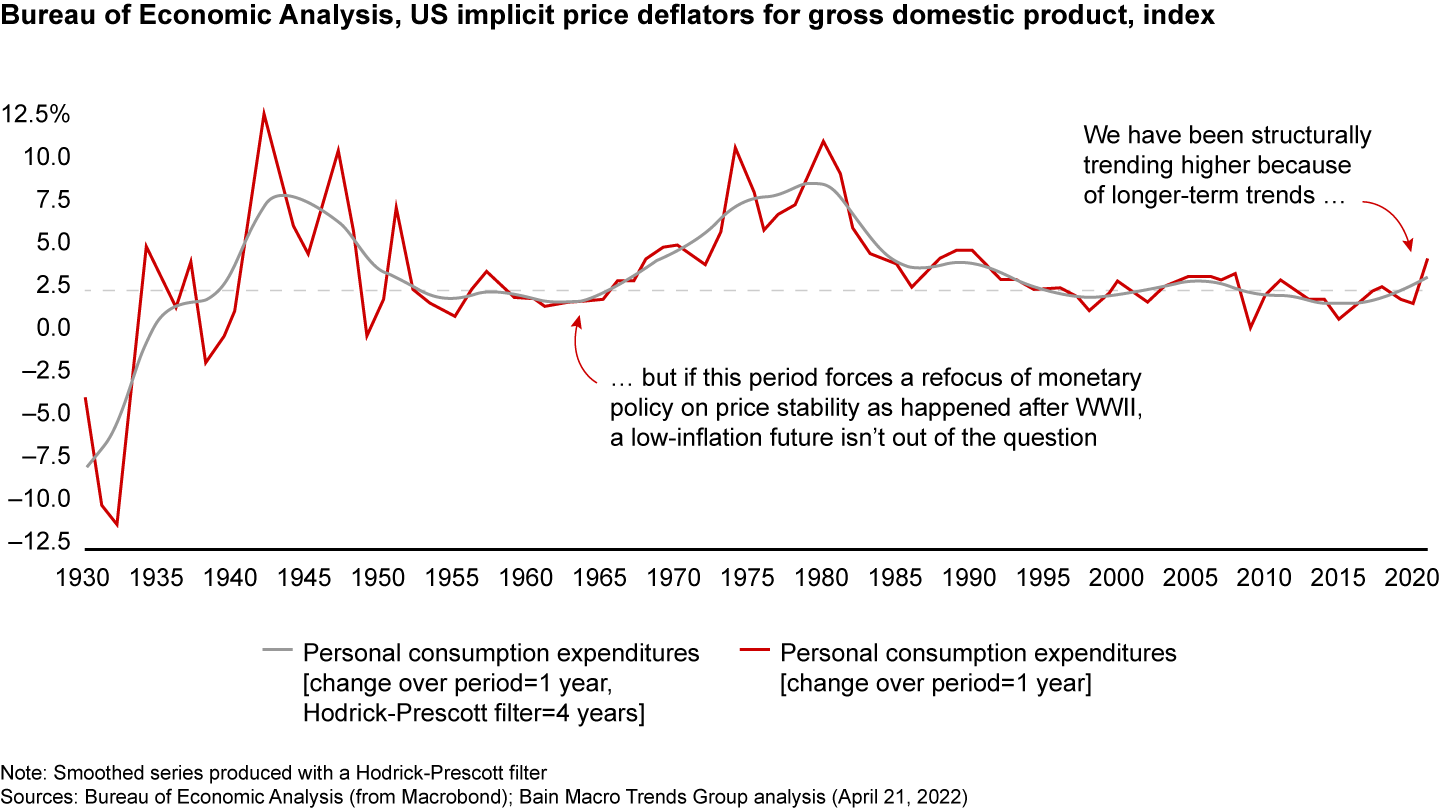
      What is the normal level of inflation we should return to?
      What is the normal level of inflation we should return to?
      What is the normal level of inflation we should return to?

      This figure lends itself to a few observations. First, the idea that the Federal Reserve managed to tame the inflation cycle through modern policy techniques, effectively anchoring inflation to 2%, is a bit of an empirical myth. Trend inflation levels in the post-1980s (post–Volcker shock) era have actually fluctuated a fair bit. Inflation started the 1990s at 3.5%, dropped to 1.5% by the late 1990s, rose to 2.5% by the mid-2000s, dropped to 1% by the mid-2010s, and is now moving above 3% again with the latest spike. The Fed’s target rate may have consistently hovered around 2%, but actual trend levels have varied by at least 2 percentage points. By contrast, most of the Bretton Woods era (after the disruptions of World War II had settled and before Nixon closed the US gold window in 1971) was arguably a period of both low trend inflation (sub-2%) and lower variation from trend (less than half a percentage point around the 2% level). The policy regime of the last 30 years actually isn’t (or wasn’t) particularly stable or well anchored at 2%, nor was it notably more effective than past regimes. While we maintain (and have long said) that the Federal Reserve has the ability to counter inflation shocks, this historical context also serves as a reminder that inflation does wander in the medium term.

      The second observation is that just as the financial crisis forced a substantial rethink of the nature of banking and financial regulation, the great inflationary shock of 2021–2022 is likely to spur a rethink of what the goals of monetary policy and regulation should be. Such is the nature of crises. What might the outcome of such a rethink look like? The answer to this question doesn’t lend itself to traditional economic analysis, but we would speculate that some level of public discussion is likely to arise around the question of what the normal level of inflation in our economy should be.

      To a degree, the extent to which a central bank chooses to encourage or discourage inflation is a policy choice. In recent years, the vast deflationary pressure of globalization, combined with the fear of Japan-style deflation, has largely framed a pro-inflationary bias that’s been implicit in Federal Reserve policy (and that of the other major developed-market central banks) for the better part of a generation. But in a world without the deflationary pressure of globalization—one still reeling from a memorable inflationary experience—it’s not unreasonable to expect a pivot and refocus on price stability as the Fed’s overriding mandate.

      Such a mandate isn’t without precedent, although we’d have to go back to the post-WWII period to find a historical comparison. During this era, the challenge of high postwar government debt and high postwar inflation had to be tackled with a greater central bank independence and a focus on leaning against the wind of inflation. The specifics of what a similar policy might look like in the current era are beyond the scope of this discussion, but we believe a monetary policy focused on achieving low inflation is a realistic and achievable policy choice. Under such a regime, we could see longer-term trend inflation (i.e., the new normal level of inflation) that is as low as or even lower than it has been in recent years. However, real interest rates would likely still have to be maintained at higher levels—certainly higher than post–Great Recession levels and perhaps even higher than that. A greater focus on price stability would also imply less monetary activism around business cycle suppression. Again, we can look to the 1950s and the first half of the 1960s as a potential template for what the coming era could look like.

      Stepping back, we draw this fairly speculative scenario out to emphasize the tremendous uncertainty that currently shadows longer-term strategy planning now that the broad de-anchoring of the global economic system has opened up such a wide array of highly divergent paths. Of course, we can imagine events and scenarios that lead to something of an unremitting inflationary pain extending across the decade—a sort of 1970s redux. But strategy planners should avoid assigning certainty to this scenario.

      This article was originally published on the Bain Macro Strategy Platform; it has been modified slightly for publication on Bain.com. You can request more information about the Macro Strategy Platform here.

      著者
      • Austin Kimson
        Chief Economist, Macro Trends Group, Dallas
      関連するコンサルティングサービス
      • Corporate Strategy
      Managing Inflation
      Turning Inflation Disruption into Value with Six Strategic Steps

      Our study determined the key moves that have helped companies in times of high inflation.

      詳細
      Managing Inflation
      The New Case for Zero-Based Cost Management

      A clean-sheet approach helps leaders produce savings that stick—even in turbulent times.

      詳細
      Corporate Strategy
      The Magic of Founder-led Companies

      Companies with their founder present performed twice as well as their peers in the S&P 500 over the past decade.

      詳細
      Corporate Strategy
      Positioning Oil & Gas Companies for Today’s Capital Markets

      We interviewed senior investment professionals, and here’s what we heard.

      詳細
      Managing Inflation
      Six Strategies to Help Your Company Weather Inflation

      Lessons from a study of 5,700 global businesses.

      詳細
      First published in 6月 2022
      Tags
      • CFO Insights
      • Corporate Strategy
      • Managing Inflation
      • コスト

      クライアント支援事例

      戦略 A Conglomerate Charts a New Global Strategy

      ケーススタディを見る

      Divestitures and Spin-offs A holding company lets go to grow

      ケーススタディを見る

      戦略 A financial services leader gains market confidence

      ケーススタディを見る

      お気軽にご連絡下さい

      私達は、グローバルに活躍する経営者が抱える最重要経営課題に対して、厳しい競争環境の中でも成長し続け、「結果」を出すために支援しています。

      ベインの知見。競争が激化するグローバルビジネス環境で、日々直面するであろう問題について論じている知見を毎月お届けします。

      *プライバシーポリシーの内容を確認し、合意しました。

      プライバシーポリシーをご確認頂き、合意頂けますようお願い致します。
      Bain & Company
      お問い合わせ Sustainability Accessibility Terms of use Privacy Cookie Policy Sitemap Log In

      © 1996-2026 Bain & Company, Inc.

      お問い合わせ

      How can we help you?

      • ビジネスについて
      • プレス報道について
      • 採用について
      全てのオフィス