

論説

概要
- Bain’s survey of nearly 1,100 consumer companies identifies relative strengths and weaknesses across 40 capabilities critical to effective consumer pricing.
- Some 15% of companies are top performers, defined as those with superior pricing decisions and market share growth. They are stronger across the board, but especially differentiated in a handful of areas.
- Leaders master the basics with particular vigor. They tightly tie their pricing practices to their value proposition, tune their product mix to that proposition and maintain tight discipline around promotions.
- Leaders have also begun pushing the boundaries, by influencing consumers’ perception of their prices. The best companies also master the digital tools and processes required to field dynamic, in-the-moment pricing.
Pricing in consumer markets has grown so complex in the past few years that companies are being forced to reconsider how they make pricing decisions. To better understand how companies are responding, Bain & Company surveyed nearly 1,100 companies worldwide in a range of consumer industries, evaluating 40 pricing capabilities. Across all the industries, respondents identified the same forces as the most disruptive:
- New digital competitors. The spread of e-commerce, direct-to-consumer digital native sellers, comparison sites such as Google Shopping and algorithmic price-matching policies shifts the balance of power to consumers, in part through greater price transparency. They allow a single, small and perhaps momentarily desperate competitor to rapidly shift prevailing price levels in a category.
- Low-price competitors. Focused, low-price entrants have taken market share from legacy firms. German grocery retailer Aldi, for example, has used its formula of low prices enabled by a radically simplified assortment, bare-bones stores and high private-label mix to gain market share in the UK, the US and Australia.
- Premium niche competitors. Some consumer product brands, such as Justin’s nut butters, secure a market niche at high price points. Justin’s strong growth, especially among younger, health-conscious consumers, attracted an acquisition by Hormel in 2016 for $286 million.
- Tools to price dynamically. Oceans of digital data and new analytics tools make it possible to understand consumers’ willingness to pay and optimize prices on the fly. Surge pricing by Uber and Lyft has been accepted by consumers during periods of high demand for ride hailing. Some retailers, such as the 7-Eleven convenience store chain, have been targeting coupons at customers within a radius of stores using geo-fencing. In fact, the fast-food chain McDonald’s recently paid over $300 million to acquire Dynamic Yield, a start-up using machine learning technology to prompt customers with potential upsells popular at a particular location and time of day.
Most executives are acutely aware of these challenges—in our survey, 78% of respondents say their pricing decisions could be improved, and they acknowledge they are leaving money on the table on many dimensions of pricing. Many struggle to use digital data effectively, for instance, as they lack the requisite talent, tools or processes (see Figure 1). However, our analysis of a select group of top performers—the 15% of respondents that make excellent pricing decisions and increased their market share over past two years—reveal the capabilities in which top performers most clearly exceed the rest of the pack.
Figure 1
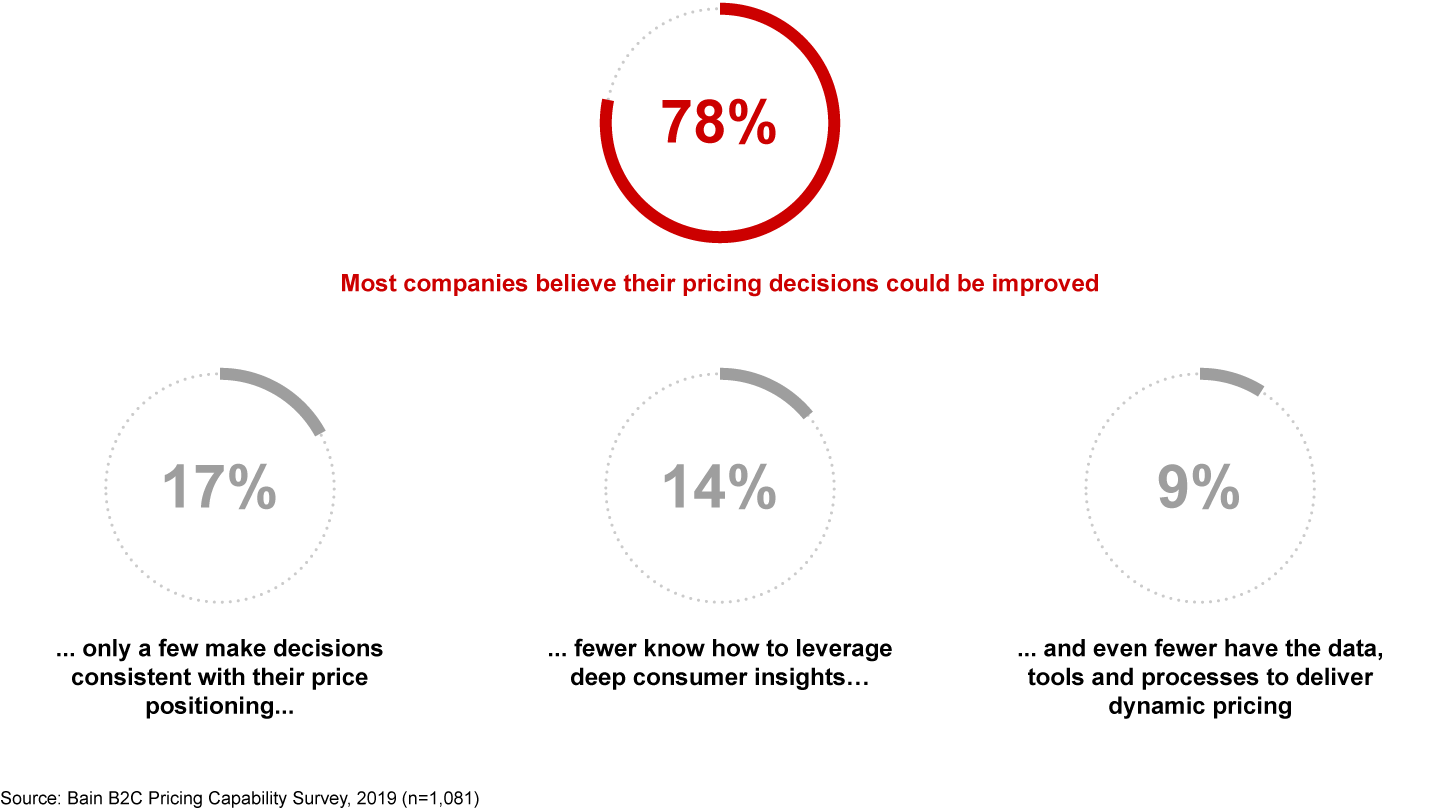

While top performers tend to be stronger across all pricing capabilities, they have built the biggest leads on five in particular; our statistical analysis shows these five most closely predict top performance. The first three are foundational capabilities that every consumer business should master. The final two capabilities form the vanguard of pricing. Top performers are fanatical about perfecting the seemingly basic but actually difficult foundation of pricing, while starting to manage other cutting-edge capabilities at a level of sophistication that will help them widen their lead in the future (see Figure 2).
Figure 2
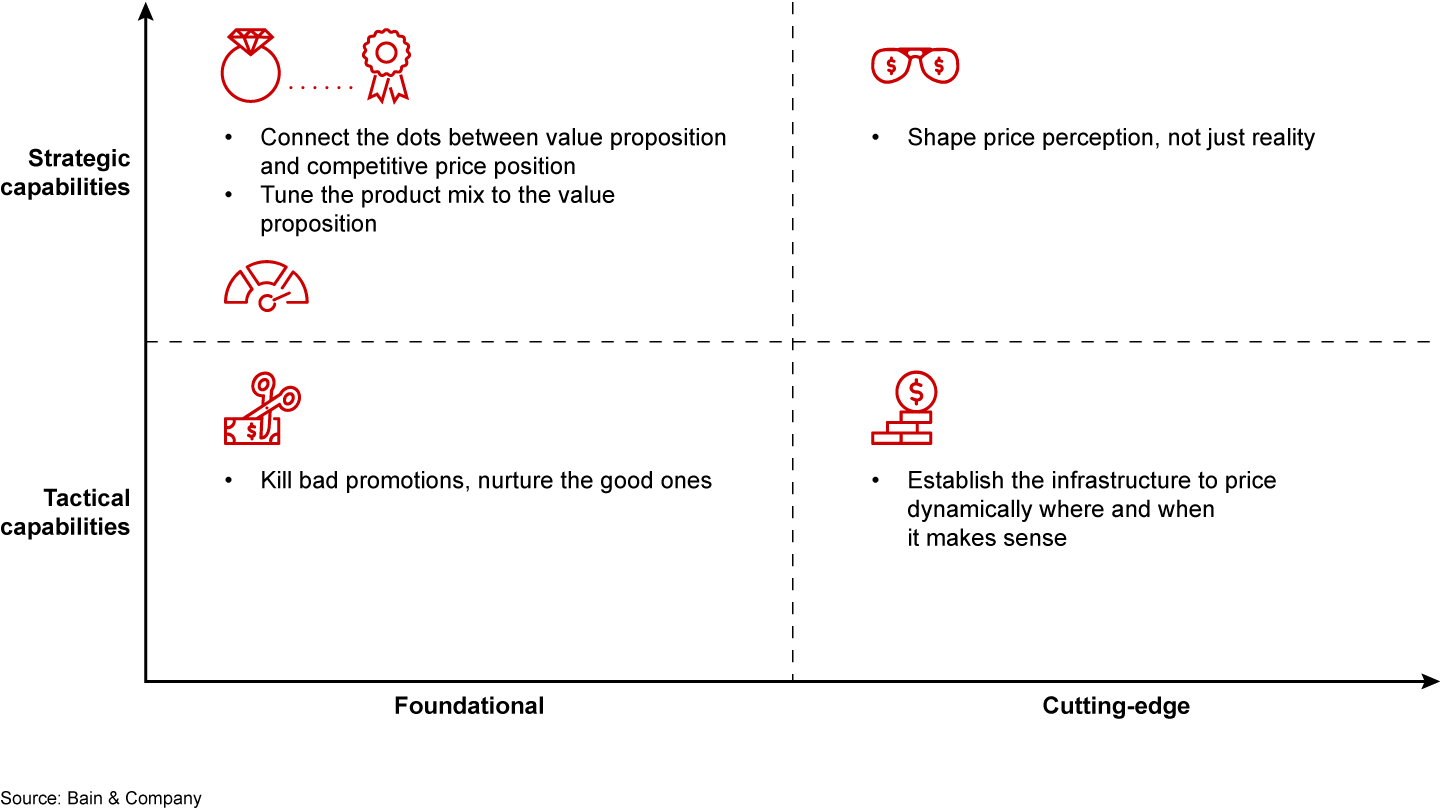

Connect the dots between value proposition and competitive price position
It might sound obvious, but many companies have gone astray in pricing because they don’t have a clearly defined value proposition, or the proposition does not align with what their target customers value. When McDonald’s raised pricing substantially on Happy Meals several years ago, store traffic declined as budget-conscious families went elsewhere. Similarly, department store JC Penney’s pivot in 2012 from sales and coupons to an everyday low pricing strategy ended up alienating the chain’s core customers.
Conversely, strong performers create a value proposition that not only lines up with their strategy but also flows through to product and pricing decisions. They understand “value” expansively, focusing beyond product features to the entire consumer experience. T-Mobile realized that mobile connectivity broadly defined had become table stakes for wireless providers. Since 2013, it invested heavily in such elements as radically simple rate plans, no service contracts, free international roaming and data-free video streaming, which allowed it to deliver something customers valued but were price-sensitive about. As a result, T-Mobile rapidly added new customers, from 30% of postpaid net additions in 2013 to 44% in 2016.
It’s crucial to understand consumers’ priorities for the particular market, in order to price at a level that captures all the value they perceive in the product or service experience. This does not necessarily mean raising prices. Subscription-based models for routine products like contact lenses and razor blades allow for a lower cost to serve, because with a known monthly delivery there’s no need for rush shipping. And saving money can be disproportionately powerful in consumers’ minds for some products. That’s why a business built on low prices through consistently efficient operations can win over a long period, as Walmart, Vanguard and Enterprise Rent-a-Car attest. But delivering other benefits, such as saving time, can result in consumers’ willingness to pay more, or give a company a greater share of their spending.
Tune the product mix to that value proposition
Given that most large and midsize consumer companies offer a range of products, they must translate their value proposition for different customer segments by calibrating the product mix and architecture. Whatever the value proposition—premium, mass-market, value or other—the overall strategic price position of the business should flow through to tactics aligned with that proposition. Our survey found, for instance, that a strong product portfolio and category mix was the single biggest factor in performance for telecom and cable providers. Careful adjustment of the product portfolio allows companies to appeal to a broader range of customers, while protecting their margins on premium products.
This can be accomplished in different ways. Apple uses only one brand for all its computer products, but it applies a rigorous life-cycle pricing approach to successive generations of each product. Coca-Cola prices its Dasani, Glaceau Smartwater and Topo Chico brands of water separately to appeal to distinct customer segments. And consumer products manufacturers have a long track record of creating versions of a product, like laundry detergent, with fewer features at a lower price point.
Kill bad promotions, nurture the good ones
Consumers have come to expect promotions from most of their providers. For these companies, once they have aligned the pricing structure to the customer base and competitive position, the most important task is to optimize promotions that deliver higher sales with minimal profit margin erosion or degradation of the brand. Leading companies tailor promotions for customer segments based on what they know about preferences and buying patterns. Promotions targeted to customers who value those most are far more effective than blanketing the market with an offer that most people may not even realize they are receiving.
Promotions mostly work—at least initially. But they tend to spread like kudzu year after year without much analytical justification, which usually erodes profitability and may confuse customers and tarnish the brand. Once-effective promotions sometimes become tired as consumers no longer find the hook to be compelling. Bad promotions—those that do not yield much in incremental sales or significantly hurt the bottom line—should be killed, so that investments can go to those with a high return on investment (ROI). We estimate that at least 20% of promotional activity falls into one of these categories.
Finding the bad promotions is easier said than done. A given promotion might appear to lift sales, but how much of that increase truly rose above the baseline, given that many companies run promotions during seasonal peak demand for a category? How much cannibalized the company’s other products, or pulled demand forward? Could the company have realized roughly the same lift with a discount half as deep?
Leading companies analyze the volume, sales and margin effect of prior promotions, including the second- and third-order effects. They carry out scientifically valid experiments with new variations on promotional tactics—what to promote, when, at what price point, framed in what way and with what marketing. They clarify guidelines around the use of promotions and require formal approval before taking them to market. Finally, they continually evaluate the role promotions play in their category and are ready to begin a careful, multiyear drawdown of promotional intensity when the facts warrant.
One supermarket chain in Latin America restructured its promotions as part of a pricing overhaul in response to lost volume due to encroachment by low-cost competitors. Initial analysis found that different segments of customers responded differently to promotions in three types of shopping journeys: staple goods, fresh produce and meats. The analysis showed further that promotions were far too deep on certain items. For example, discounts on one cut of meat cannibalized sales of other meats, and discounts on another category had the unintended effect of attracting small merchants who then resold that product at a higher price.
The supermarket rationalized discounts in several ways. Not only did it reduce the discounts on special items including the two products above, it shifted the promotional assortment to emphasize more staple goods, because that attracted customers who then bought other types of products as well. It renegotiated with suppliers, changed the mix of promotional TV advertising and ran fewer in-store promotions that were not advertised, since the latter did nothing to attract people to the store. When combined with other pricing moves, the new promotional tactics turned around the decline and revenues without hurting profit margins.
Beyond delivering the basics, top performers increasingly focus on two innovative areas of pricing: shaping price perception and adopting dynamic pricing.
Shape price perception, not just reality
When companies come under pressure to reduce prices, managers may act hastily, without the same rigor they apply to investments elsewhere. All too often, customers don’t react as anticipated to price cuts and discounts, and how customers perceive the price is as important as the price itself. Even if customers fail to notice specific price moves in isolation, companies should make sure customers have a good sense of how the firm’s prices compare with those of competitors. Most companies—luxury purveyors aside—want to be perceived by consumers as delivering greater value, relative to competitors, than they in fact do (see Figure 3).
Figure 3
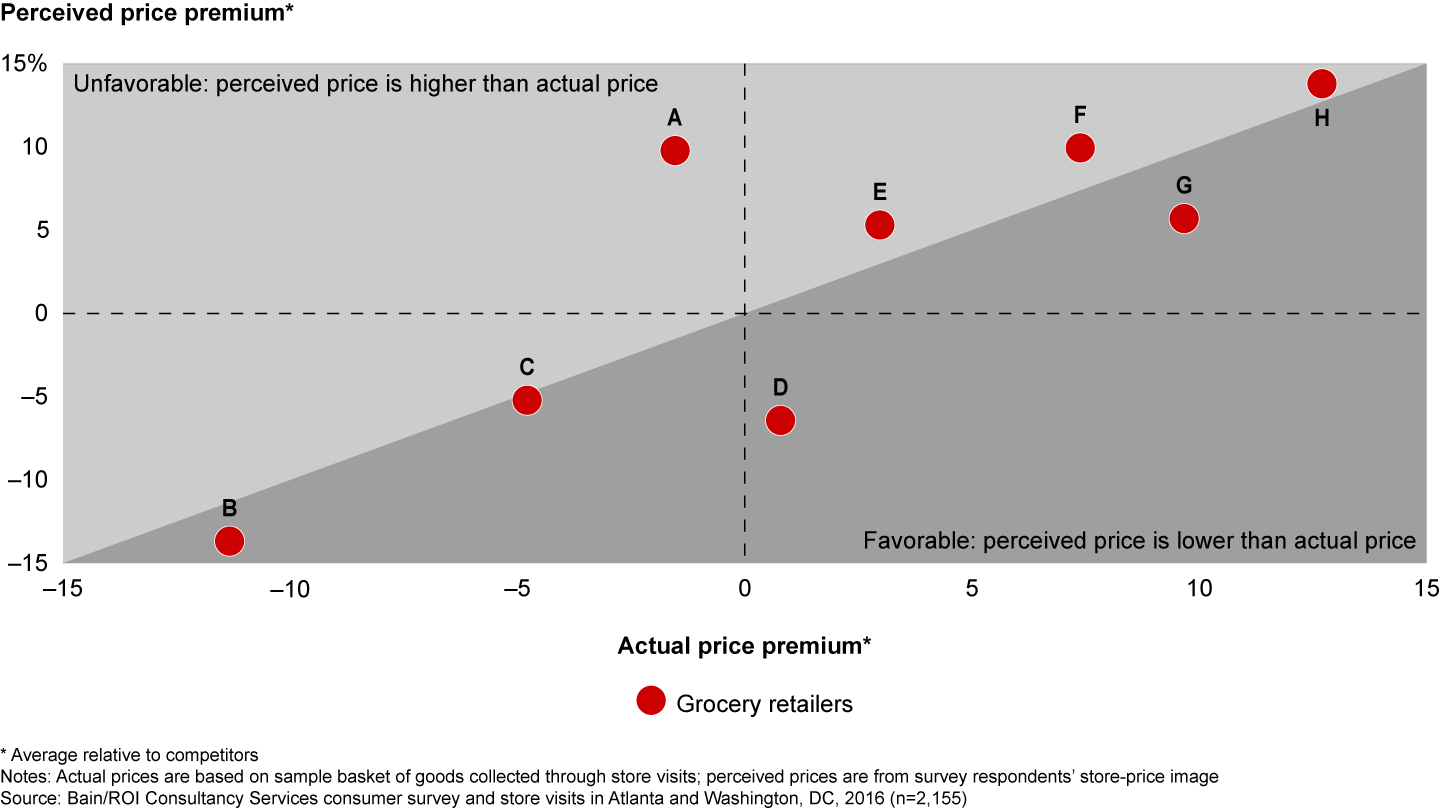

Some top performers thus take great pains to communicate and reinforce consumers’ price perceptions. In retail, for instance, creating positive price perceptions is the biggest factor that distinguishes top performers. Certain categories and items have a much greater impact on perception than others—bananas and milk in grocery, and socks and basic T-shirts in apparel retail. The best companies have a clear sense of their known value items (KVIs) and categories. They also actively manage perceptions. The Kroger grocery chain, for instance, gets more than its fair share of credit from consumers on price in large part because of two tactics: heavy use of store signage that touts all the great deals, and a prominent rewards programs for discounts on gasoline.
To get more credit for their pricing from consumers beyond the sticker price, so that they can build traffic and earn loyalty, companies can choose among tactics in four categories: offering lower prices, shouting out those prices, giving great deals and tailoring the experience. Examples of tactics within these categories include price-point policies (such as ending a price with the digit 9) and in-store signage. The right combination of tactics, of course, depends on a company’s sector, strategy and proposition to customers.
There is one other route to influencing perception: good-better-best (G-B-B) pricing, or adding or subtracting product features to create variably priced bundles targeted to customers who value features differently. Merchants ranging from gas stations to credit card companies to cable TV providers offer different flavors of essentially the same product. Sometimes the “best” level can influence perceptions of its “better” sibling. As recounted in a recent Harvard Business Review article by Rafi Mohammed, Patrón Spirits debuted a line of Roca Patrón tequilas made by the tahona process, which uses a two-ton wheel hand-cut from volcanic stone to extract juice from cooked agave. The success of that premium tequila boosted perceptions of the less-expensive Patrón tequilas as also artisan-crafted and made by a small-batch producer.
Lay the groundwork to price dynamically where it makes sense
In select sectors including airlines, online retail, ride sharing, hotels and sporting events, consumers have grown accustomed to frequently fluctuating prices. Companies that excel in dynamic pricing have access to real-time data on changing market conditions, which inform fast decision-making processes to push out price changes quickly and easily. They have the strategic clarity and discipline to determine when they should change prices and when it’s more important to provide a sense of stability to consumers. While few companies have mastered dynamic pricing, it is one of the strongest predictors of success in a select set of industries (see Figure 4). Moreover, companies that don’t currently engage in dynamic pricing should at least lay the groundwork, as the practice has been spreading.
Figure 4
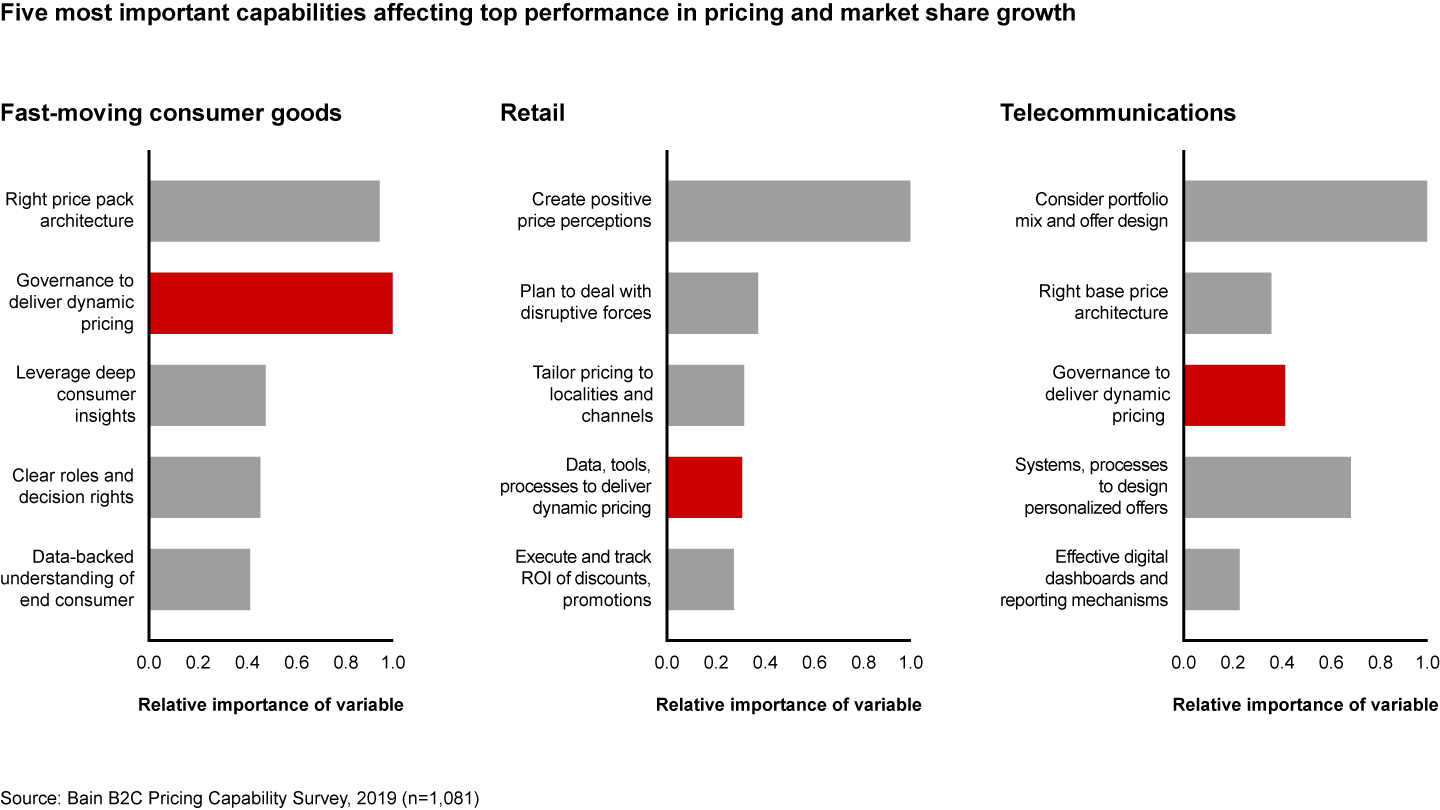

Truly dynamic pricing depends on such real-time variables as seasonality, inventory levels and competitor pricing, powered by automated digital tools. A dynamic system should continuously test price points and messaging to optimize not only each product but also the profitability of the entire product portfolio.
One e-commerce retailer in the UK, amid the rise of easy price comparisons in online shopping, was getting feedback from consumers that they perceived its prices to be higher than those of competitors. After setting rules for pricing in each product category, it decided to set up a real-time data feed that compared its prices on thousands of products with a dozen competitors, twice daily. Using a digital dashboard showing these analytics, the retailer’s pricing teams were able to make decisions that responded to the competitive context yet kept a coherent pricing strategy overall.
Bridge the gaps
It should be clear by now that strong pricing hinges on several components: alignment between pricing strategy and the value proposition, competitive benchmark data and deep insights on customer segments, as well as a solid reading of consumers’ perceptions.
Realizing the full potential of pricing then involves a diagnostic of each product and brand. Assess your company’s gaps in pricing capabilities, and draw up a plan to address the gaps for the most critical capabilities, including any training and investment required. In parallel, quantify the pricing opportunities across the business, and devise a separate plan to capture that latent value. Given that pricing represents the large opportunity for most companies to improve profitability, especially in the short term, it’s well worth the effort and investment to get pricing right.
Ron Kermisch is a partner with Bain & Company’s Customer Strategy & Marketing and Telecommunications practices. Stephen Mewborn is a partner with Bain’s Customer Strategy & Marketing and Retail practices. They lead the firm’s pricing work and are based, respectively, in Boston and Chicago. Tim Morningstar is a Boston-based partner with the Consumer Products practice. Stephen Caine is a Chicago-based partner with the Customer Strategy & Marketing and Retail practices.
First published in 9月 2019