

論説

概要
- Come the recession, support-function heads will be able to rely less on hiring freezes and across-the-board cuts to contain costs, and more on changes in technology investment, process redesign and eliminating low-value work.
- To get there, they must gain a clear view of all their costs and what drives these costs, so they can change how work gets done.
- Top-performing support functions also make the most of digital technologies already deployed, before they install new digital tools.
- There’s a substantial payoff, as we estimate every 1% reduction in G&A spending translates to a 10% improvement in operating margin.
A low-grade fever simmers in the hallways of many companies: More than half of executives who lead general and administrative (G&A) functions expect a downturn this year or next, a new Bain & Company survey shows. The good news is that most believe the next downturn will be shallower and shorter than the last one, and will require a lower level of savings from them—about half the level of 2008. The bad news is that two-thirds said it will be as hard or harder to find these more modest savings than the last time around (see Figure 1).
Figure 1
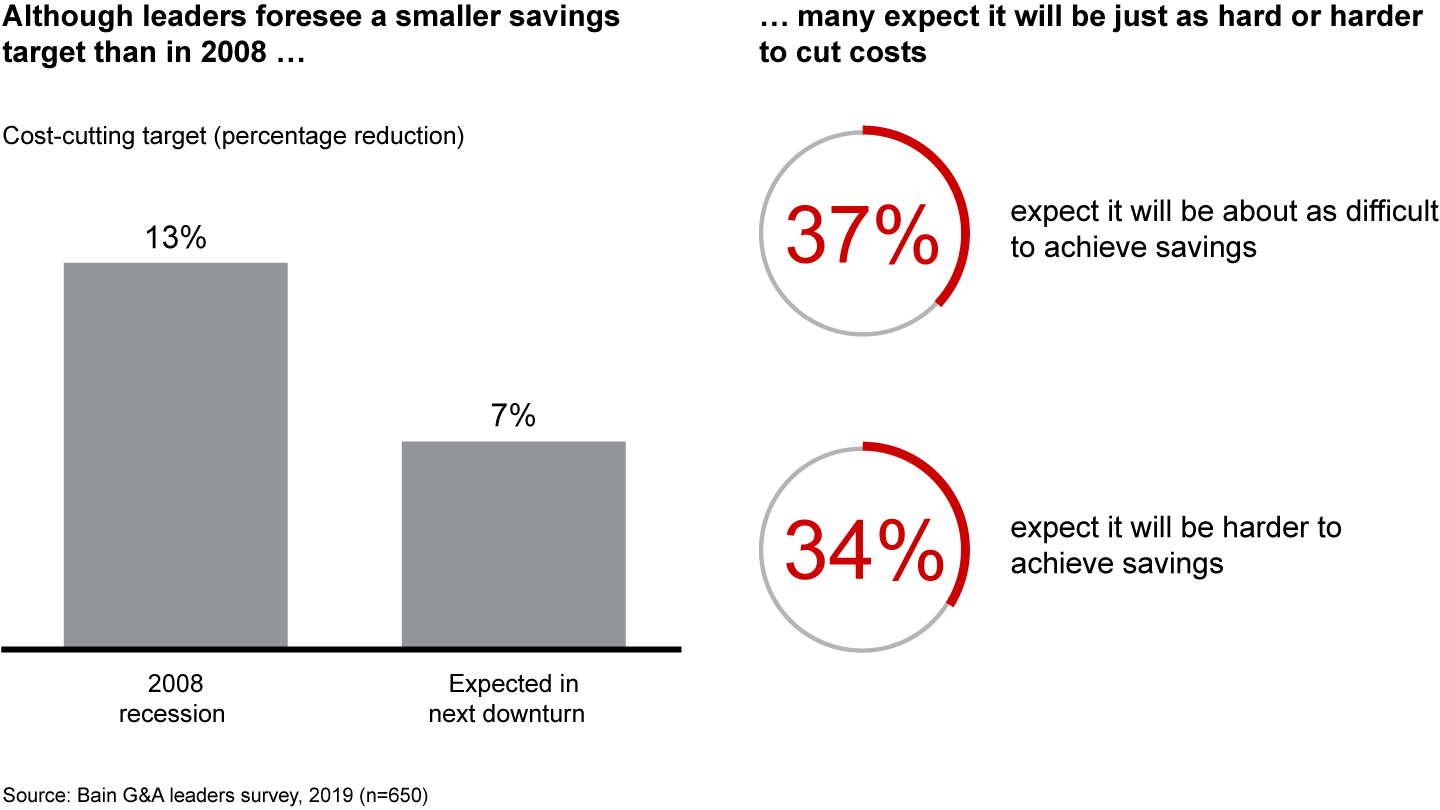

What explains this contradiction? To better understand the challenge, Bain conducted research on how US companies’ G&A spending has changed over the past economic cycle, and what concerns support-function leaders. We surveyed 650 executives and professionals across human resources (HR), information technology (IT), finance, legal, and real estate and facilities management departments about their recession experience, challenges faced today and expectations for the future. And we analyzed the G&A spending patterns of over 450 US-based companies with more than $100 million in annual revenue from 2003 to 2017.
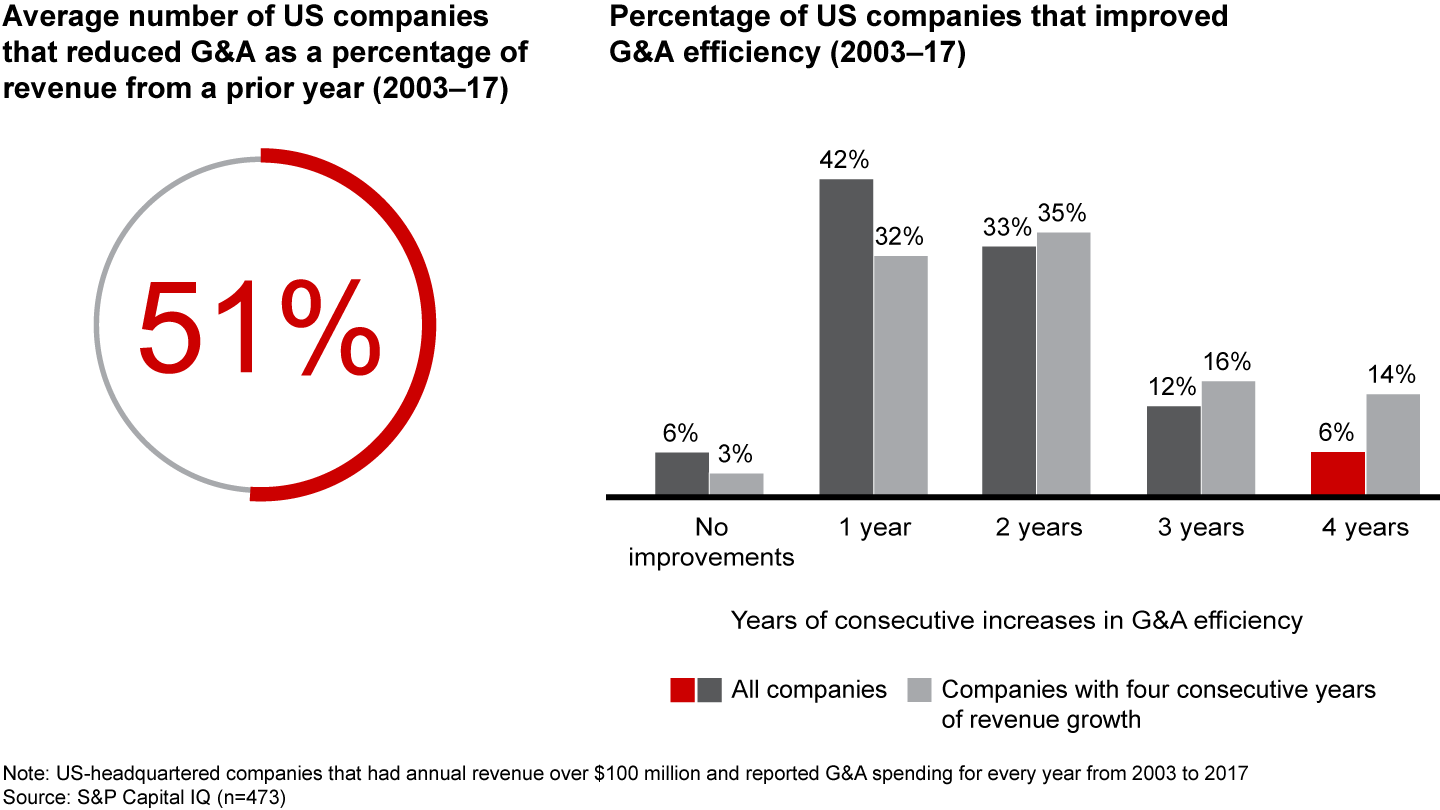
In past recessions, many companies turned to G&A for fast, easy cuts, because they viewed support functions as less critical than customer-facing or operational activities. However, our analysis found that the track record of most companies in managing G&A spending over the entire economic cycle has been mediocre at best. While half of companies in a given year improved their G&A efficiency (G&A as a percentage of revenue) from the prior year, the gains were transitory: Only 6% of companies achieved efficiency gains for four straight years during the period (see Figure 2).
Figure 2

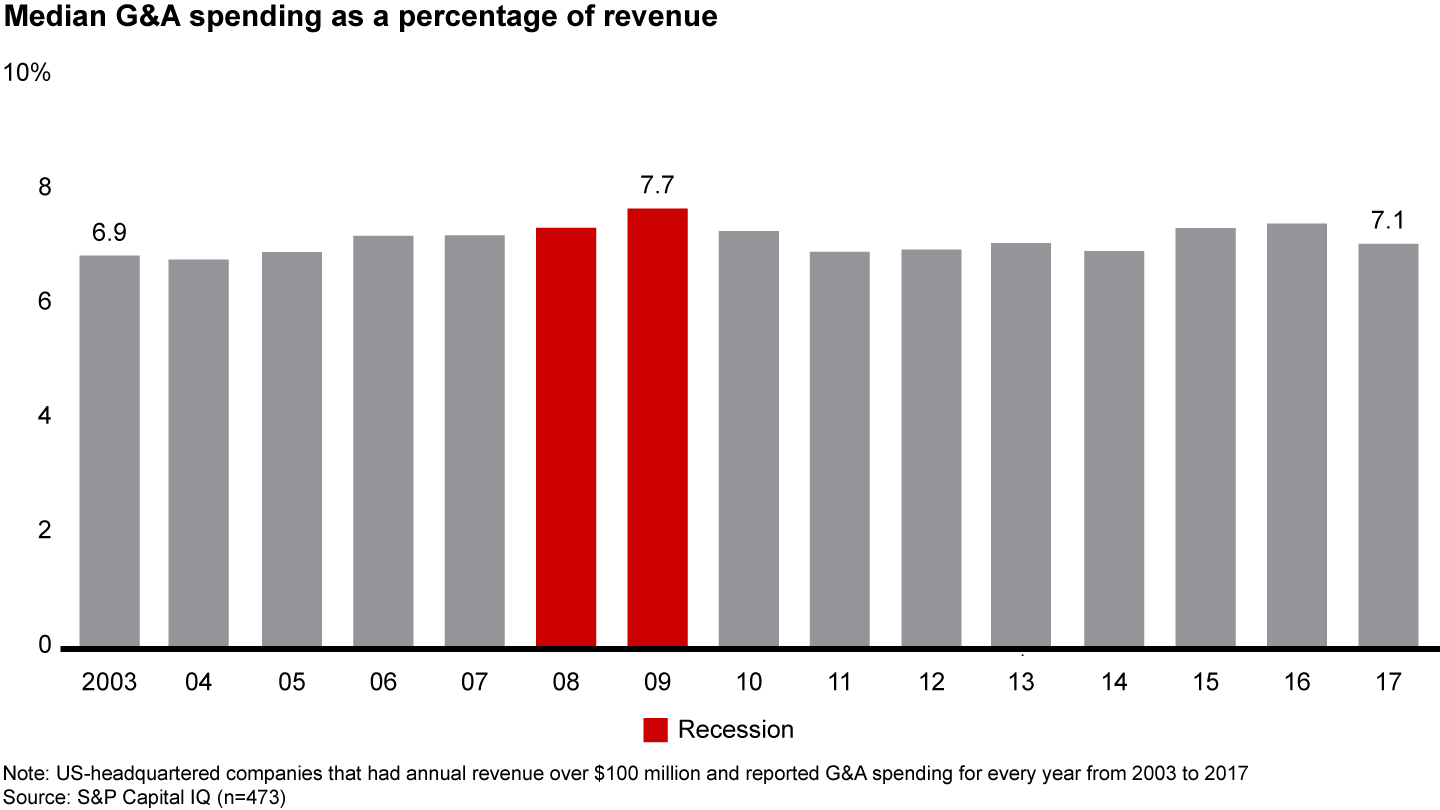
Despite large investments in technology, on average, G&A efficiency has actually deteriorated by 20 basis points, from 6.9% in 2003 to 7.1% in 2017 (see Figure 3). Beneath the average, of course, there are winners spending far less and losers that have increased G&A spending relative to revenue.
Figure 3

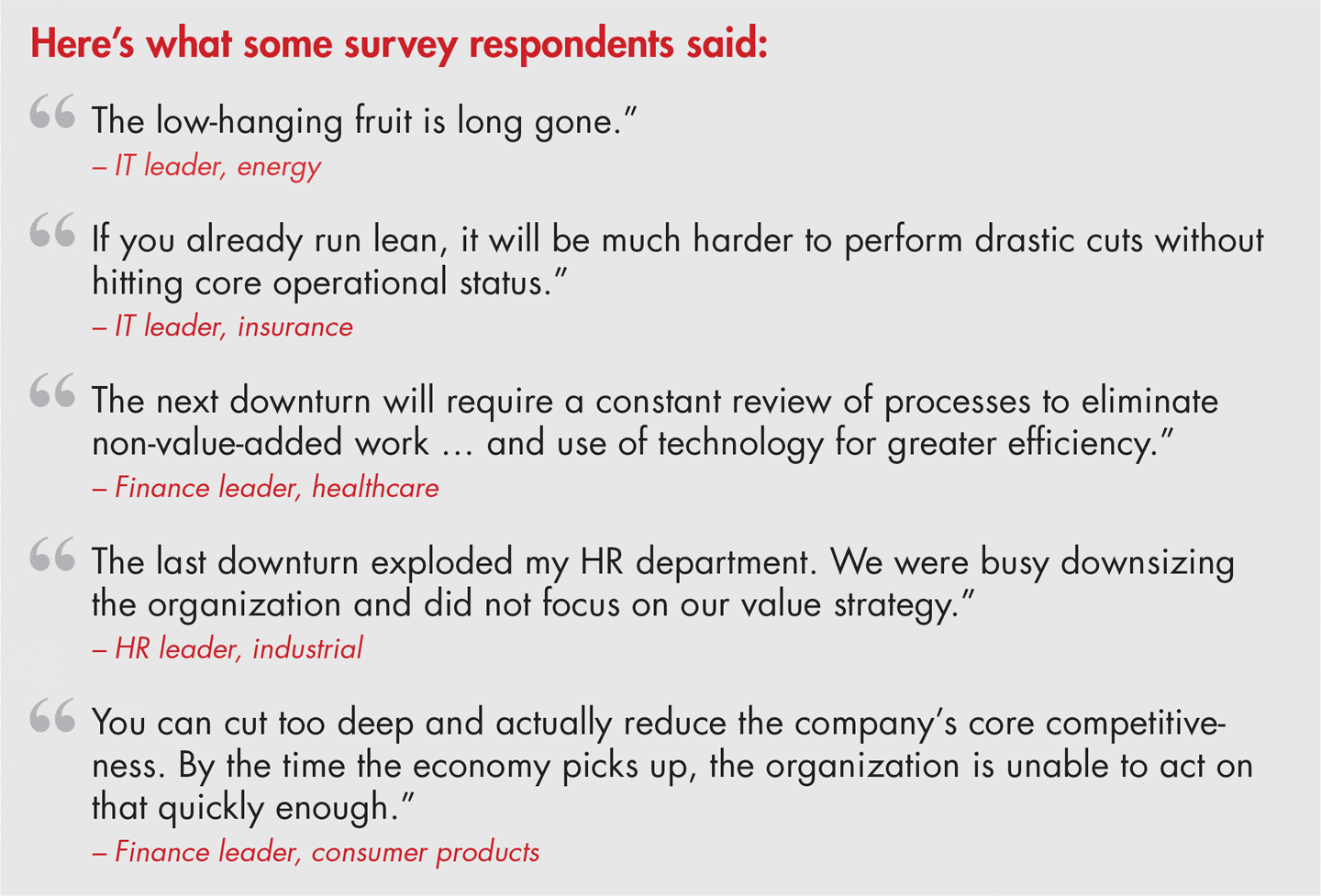
Stalled efficiency raises concerns. Support-function leaders relied on labor cuts, without changing the underlying work, to find 50% of the savings made in 2008 and 2009. They learned the hard way that overly deep cuts take years to recover from, because of reduced service levels and lost institutional knowledge. Asking staff to do more with less cannot be sustained for long, as people will have no leeway to innovate or execute new initiatives.

Hiring freezes aren’t the answer
For these reasons, support-function leaders expect expedient labor-based strategies such as hiring freezes and across-the-board cuts to account for only one-quarter of savings needed for the next recession. Instead, they’ll have to rely on a mix of changes to technology investment, process redesign and eliminating low-value work.
That will be easier said than done. Almost two-thirds of companies surveyed have taken action in the past two years to reduce costs, with one-quarter making moves beyond the normal course of business. Yet the expectations of support functions have been steadily rising. For instance, they’re being asked to use new digital capabilities to speed decision making and improve business outcomes.
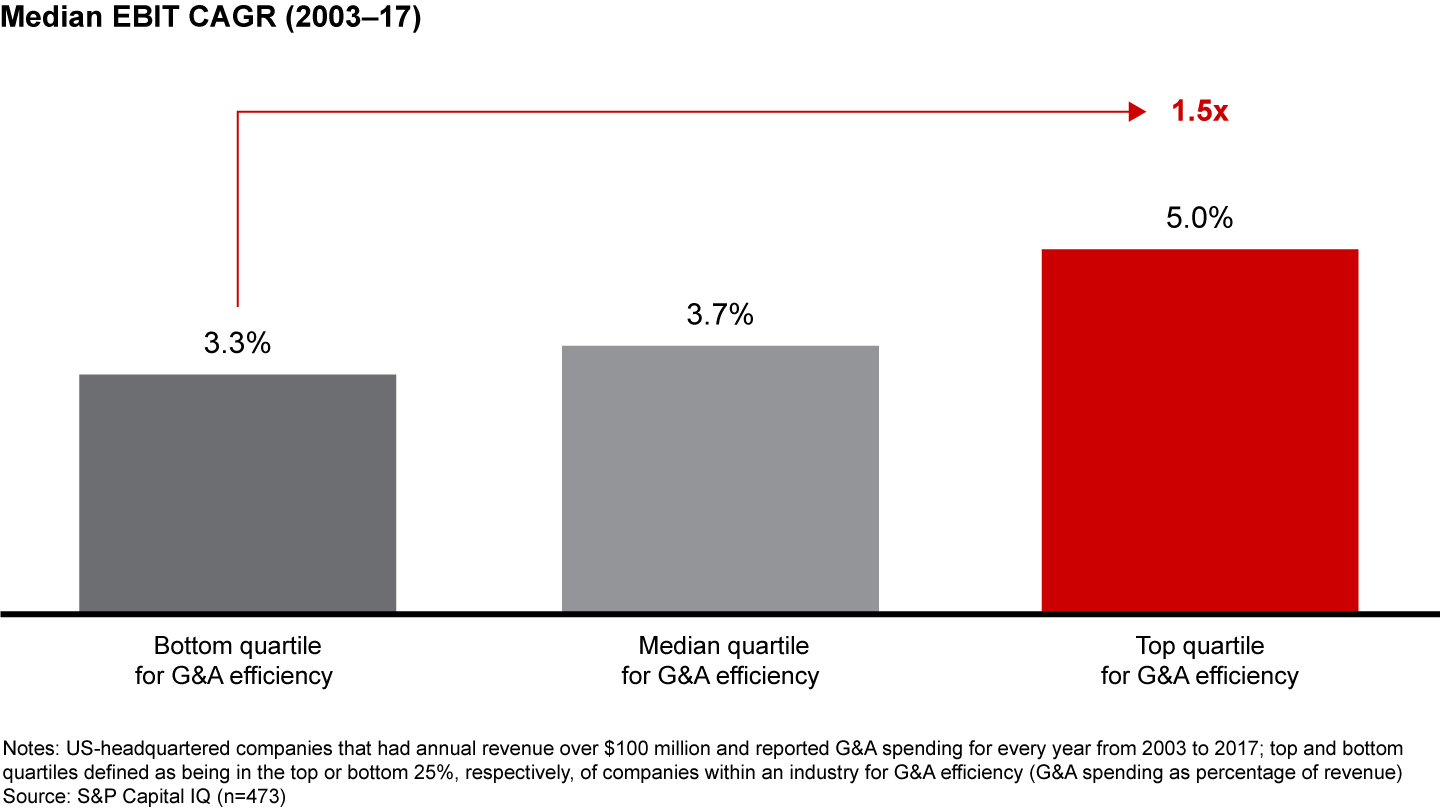
The stakes are high, as successful support functions help create a competitive advantage. For the average global 1000 company, we estimate that every 1% reduction in G&A spending translates to a 10% improvement in operating margin. The most efficient quartile of performers in our analysis increased EBIT 1.5 times more than bottom-quartile performers through the cycle (see Figure 4). The gap between the best and lowest performers ranges from 2.5 times to 4 times, depending on the support function, suggesting that the highest performers create significant value to reinvest in their businesses.
Figure 4

To achieve greater efficiency, support-function leaders will need to step up their game on four fronts:
- gaining a clear view of all their costs and what drives them;
- fundamentally changing how work is done;
- reaping more value from digital investments already made; and
- creating a fail-safe plan for drastic cost reductions, agreed on by the senior team, should that become necessary.
Let’s explore each of these.
Understand your costs in detail, including their causes
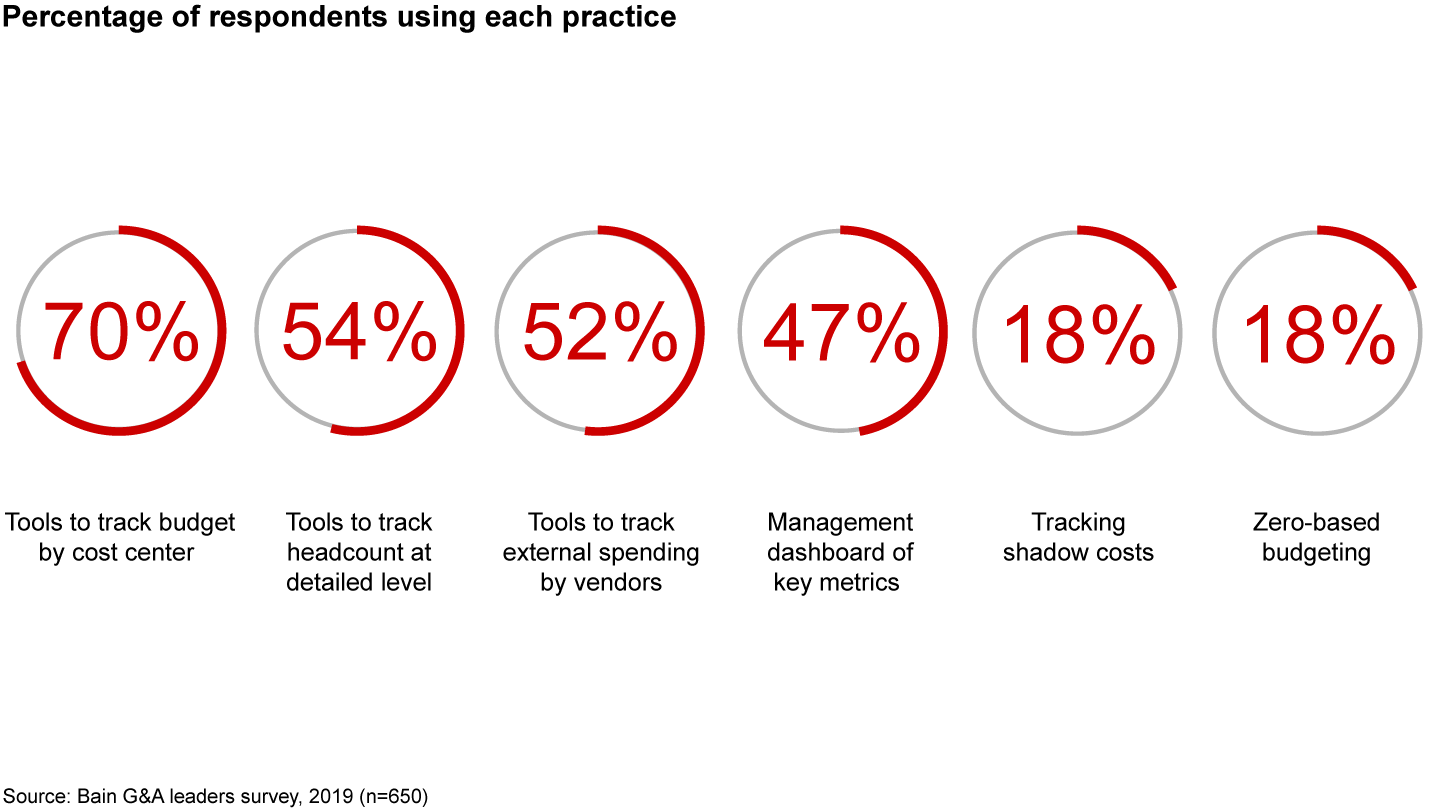
This imperative might sound obvious. However, many support functions don’t manage costs with the same rigor that sales, manufacturing and operations costs are managed. For example, only 54% of survey respondents track functional headcount in detail, and only 47% have management dashboards to measure and track efficiency and effectiveness. Worse, many companies don’t have a complete view of support-function costs. Only 18% of survey respondents said their companies track shadow costs, namely, people in distributed business units performing activities that duplicate those performed by the support functions (see Figure 5).
Figure 5

Full visibility requires identifying costs at every level inside and outside corporate headquarters—whether the costs are attributed directly to functions or to shadow costs. When managers know and measure all the costs for each process, they can target cost reductions surgically rather than spread cuts evenly.
A cloudy cost picture proved troublesome for an industrial company that had high G&A costs relative to competitors, driven by a large number of management layers and duplication across corporate headquarters, regions and local sites. Support functions didn’t measure or manage their costs holistically. For example, corporate HR was constantly pushing out new policies and processes for the regions and sites to follow, without realizing the cost implications to both the business and the HR departments in those places. More broadly, the multiple layers in headquarters and regional support offices led to slow, ineffective decision making. Once the company shifted to a decentralized operating model and started measuring all costs, it was able to adjust the size of each support function, reducing the corporate office by more than one-third and overall G&A costs by one-quarter.
Look for alternative ways of working
To move beyond incremental improvements, companies benefit from taking a clean-sheet approach to redesigning how work gets done. This method sets aggressive cost targets, defines what the future should look like and then works backward on how to achieve it, reinventing from the ground up rather than optimizing current ways of working. Taking a blank-sheet approach to simplify the organization and streamline work processes can unlock massive value in both efficiency and effectiveness. Defining the future state involves four dimensions:
- clear roles aligned with customers’ priorities;
- a service portfolio and service levels that make the appropriate trade-offs between which activities should be best-in-class and which should be best-in-cost;
- a service-delivery model that balances efficiency with value added to the business; and
- the right talent, processes and systems.
A clean-sheet approach proved transformative for a manufacturing company building a factory in Europe. Success hinged on redesigning how support functions carried out their work, not just on how production processes were managed. In HR, for example, the company set targets for digitalizing over 100 activities, and rebuilt them from the ground up in conjunction with the other plant processes, to ensure that support functions helped enable the broader business. The result: HR costs reduced by 10% to 30%, depending on the HR process, as well as a radically better employee experience through standardized, simplified and more digital interactions.
Get full value from existing digital technologies
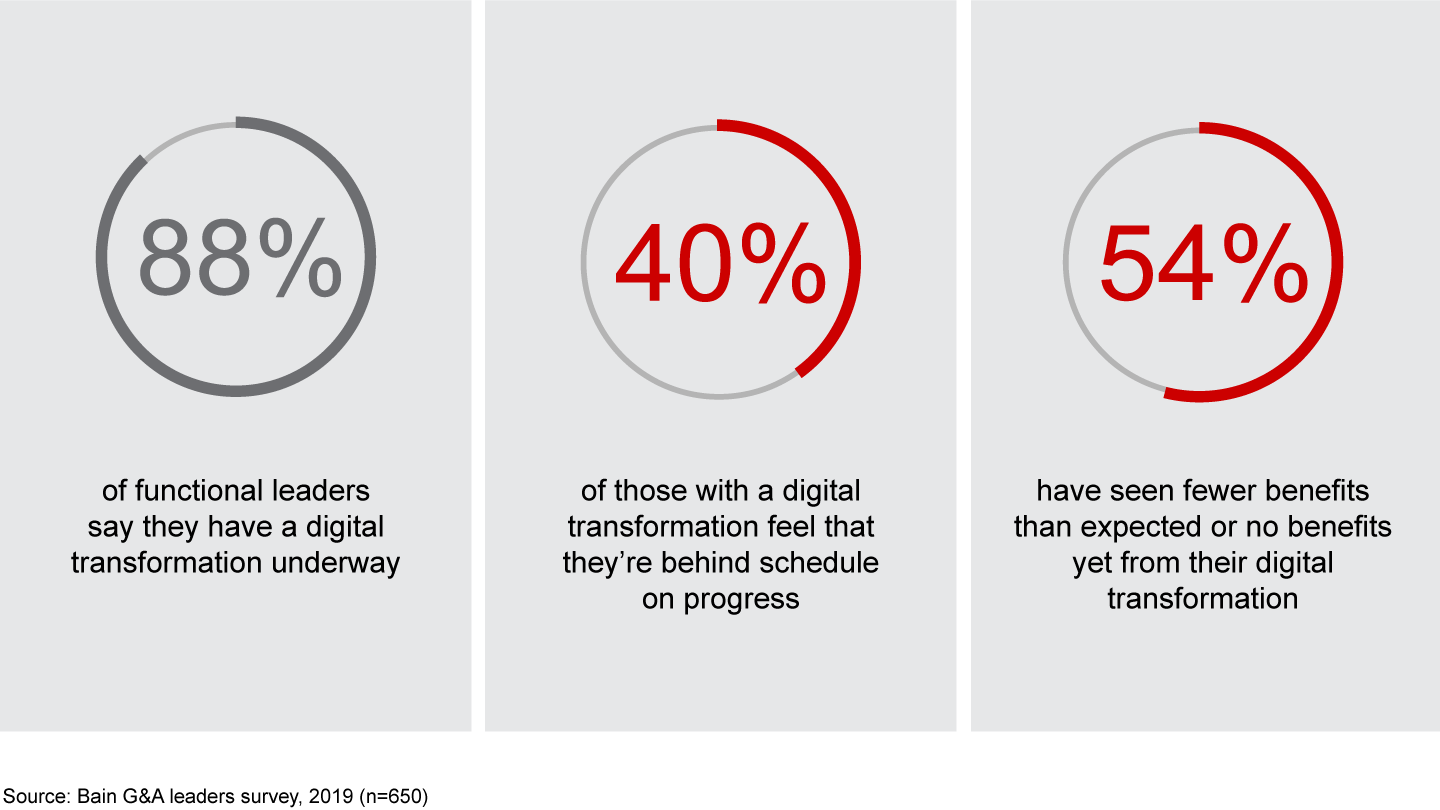
Reinventing how work is done inevitably requires smart investments in digital technologies. Digital yields benefits beyond cost savings, including faster decision making and improved service, business insights and financial controls. But while almost 90% of survey respondents are investing in digital today, more than half said they aren’t getting the benefits they’d expected (see Figure 6).
Figure 6

An earlier Bain survey of HR executives found several issues cause the most aggravation: too many digital tools, especially unintegrated tools; interfaces that users find difficult to understand; and tools that are missing critical functionality. And in finance departments, even while many companies rush into new technologies such as robotic process automation, they aren’t wringing full potential value from current technologies. In accounts payable, for instance, 55% of finance groups Bain surveyed don’t use basic technologies such as online invoice approvals. Absent proper integration, companies that adopt more tools risk adding further complexity and unwittingly creating a new set of problems.
Top-performing support functions, by contrast, have learned how to get tangible business benefits from their digital investments. A good example is Microsoft’s finance function. In the early 2000s, Microsoft faced a proliferation of internal data, inflexible technology systems with static reporting, overly manual processes and increased regulations. Through a decade-long effort, Microsoft’s finance group patiently invested in a digital transformation through the recession and a change in corporate leadership. Digital enhanced virtually every corner of finance, from global business reviews on a KPI data lake to machine learning in accounts receivables, allowing finance professionals to spend more time on higher-value activities. In parallel, relative costs fell: From 2009 to 2018, finance headcount grew by 14% while revenue grew by 89%.
Expect the best, plan for the worst
Reducing costs by 5% to 10% might be challenging, but what if the situation calls for 30% or more in savings? Even if the next recession turns out to be mild, what happens when an entire industry faces disruption? Rather than wait and possibly get backed into a corner during crisis or disruption, it pays to plan early for restructuring functions to take out massive costs, whether through eliminated work, redesigned processes, shared services or digital tools.
Reaction time is critical during a crisis, so securing the entire senior leadership team’s buy-in beforehand allows a company to act quickly. Rather than relying on across-the-board cuts, which inevitably remove muscle from the organization, it helps to define and align on a contingency plan in advance.
Caterpillar, which provides heavy equipment and related services, put contingency planning to good use. As part of its 2005 strategic plan, the company started an initiative called trough planning. Every business unit developed a detailed plan that could be initiated quickly during an economic downturn. Once the recession started, prior planning allowed the company to take rapid, bold steps to immediately align the G&A structure with lower volumes and revenue. When revenue declined by 37% in 2009, Caterpillar had already started to execute contingency plans the year earlier, reducing selling, general and administrative costs by 17%.
While the next economic downturn might not hold the unpleasant surprises of the last ones, its scale and duration remain uncertain. Many support-function leaders will likely find the traditional approaches to managing costs through the cycle less fruitful this time around. Those leaders that make the hard investments early—eliminating low-value work, reinventing processes and making the most of digital technology—are likely to navigate the next downturn better than others. They’ll provide fuel for reinvestment to go on offense and emerge from the recession in a winning position.
Michael Heric and Pamela Yee are partners with Bain & Company’s Performance Improvement practice. Heric leads the firm’s support functions product globally. They are based, respectively, in New York and Washington, DC.
First published in 5月 2019