Skip to Content
  • オフィス

    オフィス

    北米・南米
    • Atlanta
    • Austin
    • Bogota
    • Boston
    • Buenos Aires
    • Chicago
    • Dallas
    • Denver
    • Houston
    • Los Angeles
    • Mexico City
    • Minneapolis
    • Monterrey
    • Montreal
    • New York
    • Rio de Janeiro
    • San Francisco
    • Santiago
    • São Paulo
    • Seattle
    • Silicon Valley
    • Toronto
    • Washington, DC
    ヨーロッパ・中東・アフリカ
    • Amsterdam
    • Athens
    • Berlin
    • Brussels
    • Copenhagen
    • Doha
    • Dubai
    • Dusseldorf
    • Frankfurt
    • Helsinki
    • Istanbul
    • Johannesburg
    • Kyiv
    • Lisbon
    • London
    • Madrid
    • Milan
    • Munich
    • Oslo
    • Paris
    • Riyadh
    • Rome
    • Stockholm
    • Vienna
    • Warsaw
    • Zurich
    アジア・オーストラリア
    • Bangkok
    • Beijing
    • Bengaluru
    • Brisbane
    • Ho Chi Minh City
    • Hong Kong
    • Jakarta
    • Kuala Lumpur
    • Manila
    • Melbourne
    • Mumbai
    • New Delhi
    • Perth
    • Shanghai
    • Singapore
    • Sydney
    • Tokyo
    全てのオフィス
  • アルムナイ
  • メディア
  • お問い合わせ
  • 東京オフィス
  • Japan | 日本語

    地域と言語を選択

    グローバル
    • Global (English)
    北米・南米
    • Brazil (Português)
    • Argentina (Español)
    • Canada (Français)
    • Chile (Español)
    • Colombia (Español)
    ヨーロッパ・中東・アフリカ
    • France (Français)
    • DACH Region (Deutsch)
    • Italy (Italiano)
    • Spain (Español)
    • Greece (Elliniká)
    アジア・オーストラリア
    • China (中文版)
    • Korea (한국어)
    • Japan (日本語)
  • Saved items (0)
    Saved items (0)

    You have no saved items.

    後で閲読、共有できるようにするためにブックマークしてください

    Explore Bain Insights
  • 業界別プラクティス
    メインメニュー

    業界別プラクティス

    • 航空宇宙、防衛、政府関連
    • 農業
    • 化学製品
    • インフラ、建設
    • 消費財
    • 金融サービス
    • ヘルスケア
    • 産業機械、設備
    • メディア、エンターテインメント
    • 金属
    • 採掘・鉱業
    • 石油、ガス
    • 紙、パッケージ
    • プライベートエクイティ
    • 公共、社会セクター
    • 小売
    • テクノロジー
    • 通信
    • 交通
    • 観光産業
    • 公益事業、再生可能エネルギー
  • 機能別プラクティス
    メインメニュー

    機能別プラクティス

    • カスタマー・エクスペリエンス
    • サステイナビリティ、 社会貢献
    • Innovation
    • 企業買収、合併 (M&A)
    • オペレーション
    • 組織
    • プライベートエクイティ
    • マーケティング・営業
    • 戦略
    • アドバンスド・アナリティクス
    • Technology
    • フルポテンシャル・トランスフォーメーション
  • Digital
  • 知見/レポート
  • ベイン・アンド・カンパニーについて
    メインメニュー

    ベイン・アンド・カンパニーについて

    • ベインの信条
    • 活動内容
    • 社員とリーダーシップ
    • プレス・メディア情報
    • クライアントの結果
    • 受賞歴
    • パートナーシップを結んでいる団体
    Further: Our global responsibility
    • ダイバーシティ
    • 社会貢献
    • サステイナビリティへの取り組み
    • 世界経済フォーラム(WEF)
    Learn more about Further
  • キャリア
    メインメニュー

    キャリア

    • ベインで働く
      キャリア
      ベインで働く
      • Find Your Place
      • ベインで活躍する機会
      • ベインのチーム体制
      • 学生向けページ
      • インターンシップ
      • 採用イベント
    • ベインでの体験
      キャリア
      ベインでの体験
      • キャリアストーリー
      • 社員紹介
      • Where We Work
      • 成長を後押しするサポート体制
      • アフィニティ・グループ
      • 福利厚生
    • Impact Stories
    • 採用情報
      キャリア
      採用情報
      • 採用プロセス
      • 面接内容
    FIND JOBS
  • オフィス
    メインメニュー

    オフィス

    • 北米・南米
      オフィス
      北米・南米
      • Atlanta
      • Austin
      • Bogota
      • Boston
      • Buenos Aires
      • Chicago
      • Dallas
      • Denver
      • Houston
      • Los Angeles
      • Mexico City
      • Minneapolis
      • Monterrey
      • Montreal
      • New York
      • Rio de Janeiro
      • San Francisco
      • Santiago
      • São Paulo
      • Seattle
      • Silicon Valley
      • Toronto
      • Washington, DC
    • ヨーロッパ・中東・アフリカ
      オフィス
      ヨーロッパ・中東・アフリカ
      • Amsterdam
      • Athens
      • Berlin
      • Brussels
      • Copenhagen
      • Doha
      • Dubai
      • Dusseldorf
      • Frankfurt
      • Helsinki
      • Istanbul
      • Johannesburg
      • Kyiv
      • Lisbon
      • London
      • Madrid
      • Milan
      • Munich
      • Oslo
      • Paris
      • Riyadh
      • Rome
      • Stockholm
      • Vienna
      • Warsaw
      • Zurich
    • アジア・オーストラリア
      オフィス
      アジア・オーストラリア
      • Bangkok
      • Beijing
      • Bengaluru
      • Brisbane
      • Ho Chi Minh City
      • Hong Kong
      • Jakarta
      • Kuala Lumpur
      • Manila
      • Melbourne
      • Mumbai
      • New Delhi
      • Perth
      • Shanghai
      • Singapore
      • Sydney
      • Tokyo
    全てのオフィス
  • アルムナイ
  • メディア
  • お問い合わせ
  • 東京オフィス
  • Japan | 日本語
    メインメニュー

    地域と言語を選択

    • グローバル
      地域と言語を選択
      グローバル
      • Global (English)
    • 北米・南米
      地域と言語を選択
      北米・南米
      • Brazil (Português)
      • Argentina (Español)
      • Canada (Français)
      • Chile (Español)
      • Colombia (Español)
    • ヨーロッパ・中東・アフリカ
      地域と言語を選択
      ヨーロッパ・中東・アフリカ
      • France (Français)
      • DACH Region (Deutsch)
      • Italy (Italiano)
      • Spain (Español)
      • Greece (Elliniká)
    • アジア・オーストラリア
      地域と言語を選択
      アジア・オーストラリア
      • China (中文版)
      • Korea (한국어)
      • Japan (日本語)
  • Saved items  (0)
    メインメニュー
    Saved items (0)

    You have no saved items.

    後で閲読、共有できるようにするためにブックマークしてください

    Explore Bain Insights
  • 業界別プラクティス
    • 業界別プラクティス

      • 航空宇宙、防衛、政府関連
      • 農業
      • 化学製品
      • インフラ、建設
      • 消費財
      • 金融サービス
      • ヘルスケア
      • 産業機械、設備
      • メディア、エンターテインメント
      • 金属
      • 採掘・鉱業
      • 石油、ガス
      • 紙、パッケージ
      • プライベートエクイティ
      • 公共、社会セクター
      • 小売
      • テクノロジー
      • 通信
      • 交通
      • 観光産業
      • 公益事業、再生可能エネルギー
  • 機能別プラクティス
    • 機能別プラクティス

      • カスタマー・エクスペリエンス
      • サステイナビリティ、 社会貢献
      • Innovation
      • 企業買収、合併 (M&A)
      • オペレーション
      • 組織
      • プライベートエクイティ
      • マーケティング・営業
      • 戦略
      • アドバンスド・アナリティクス
      • Technology
      • フルポテンシャル・トランスフォーメーション
  • Digital
  • 知見/レポート
  • ベイン・アンド・カンパニーについて
    • ベイン・アンド・カンパニーについて

      • ベインの信条
      • 活動内容
      • 社員とリーダーシップ
      • プレス・メディア情報
      • クライアントの結果
      • 受賞歴
      • パートナーシップを結んでいる団体
      Further: Our global responsibility
      • ダイバーシティ
      • 社会貢献
      • サステイナビリティへの取り組み
      • 世界経済フォーラム(WEF)
      Learn more about Further
  • キャリア
    人気検索キーワード
    • デジタル
    • 戦略
    前回の検索
      最近訪れたページ

      Content added to saved items

      Saved items (0)

      Removed from saved items

      Saved items (0)

      レポート

      US and China: The Decoupling Accelerates

      US and China: The Decoupling Accelerates

      Geopolitical tensions are pushing technology companies to revisit their global strategies.

      著者:Anne Hoecker and Jue Wang

      • min read
      }

      レポート

      US and China: The Decoupling Accelerates
      en

      This article is Chapter 8 of Bain’s global Technology Report 2020. Explore the contents of the report here or download the PDF to read the full report.

      Escalating tensions between the US and China have accelerated the unraveling of globalization more quickly than many predicted even a year ago. This trend isn’t likely to reverse course. Now, executive teams at leading technology companies both within China and around the world are coming to grips with a new reality that has serious implications for their businesses: the US and Chinese economies and technology ecosystems are headed toward decoupling.

      Seemingly every week, the geopolitical conflict between the two countries intensifies: new companies on an entity or watch list, threats of new tariffs, military drills in the South China Sea, embassy closures, changes in Hong Kong’s status, US executive orders to ban Chinese network equipment and social apps, and more. 

      At the heart of it, the US and China agendas are at odds.

      American politicians want to level the playing field for US companies. US political leaders are now pushing back harder than ever against China’s joint venture requirement for companies headquartered outside its borders that want to access certain sectors in China. American leaders also want to bring jobs back to the US and balance the trade deficit. This stance was evident during the previous Democratic administration, and it sharpened over the last couple of years under Republican President Donald Trump. There are currently around 300 bills in Congress related to China. This desire to be stricter with China isn’t likely to change with the US election in November, considering public remarks from leaders of both political parties.

      Meanwhile, China’s leaders want to sustain growth of its gross domestic product and ensure a secure and controllable technology supply chain. China’s leaders also wish to build a thriving indigenous technology sector. This aspiration has grown stronger after recent sanctions by the US. The focus is driven both by supply assurance and security goals. Supply assurance: Chinese leaders would like to decrease the country’s reliance on external suppliers of semiconductors, hardware and software, by having “good enough” local alternatives. Security: After Edward Snowden leaked information about NSA spying programs, China’s leaders have worried about depending on US-based technologies for critical infrastructure. Recent events have only reinforced China’s need for a secure technology source, including the US placing Huawei Technologies and ZTE on the Entity List, and restricting HiSilicon’s access to Taiwan Semiconductor Manufacturing Company’s (TSMC) leading-edge technology. 

      In the long term, the US wants to maintain its technology leadership position, and China wants to rise to that level. But the political maneuvering and growing momentum toward decoupling are pushing technology executives in China, the US and around the world to reevaluate their global strategies.

      A prize that can’t be ignored 

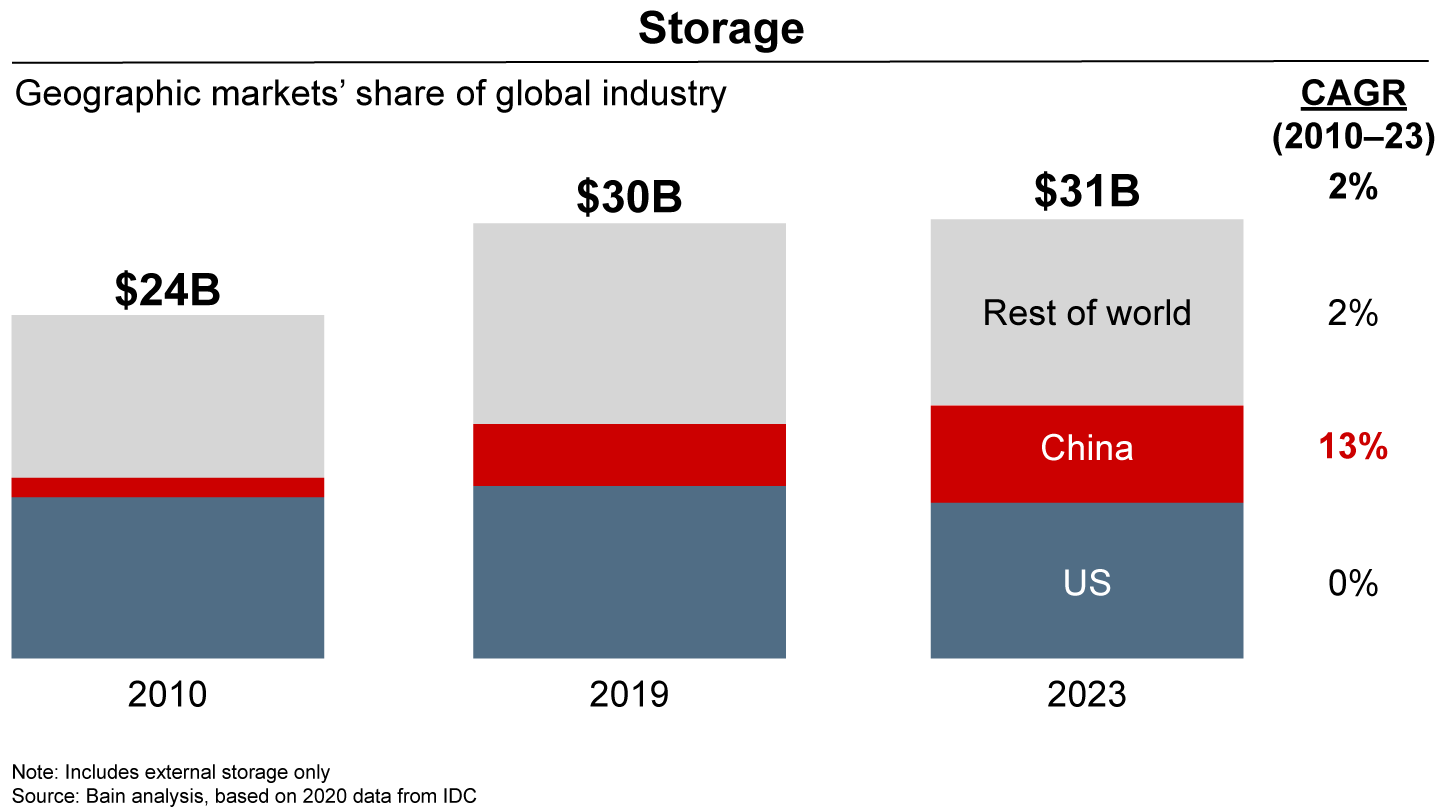
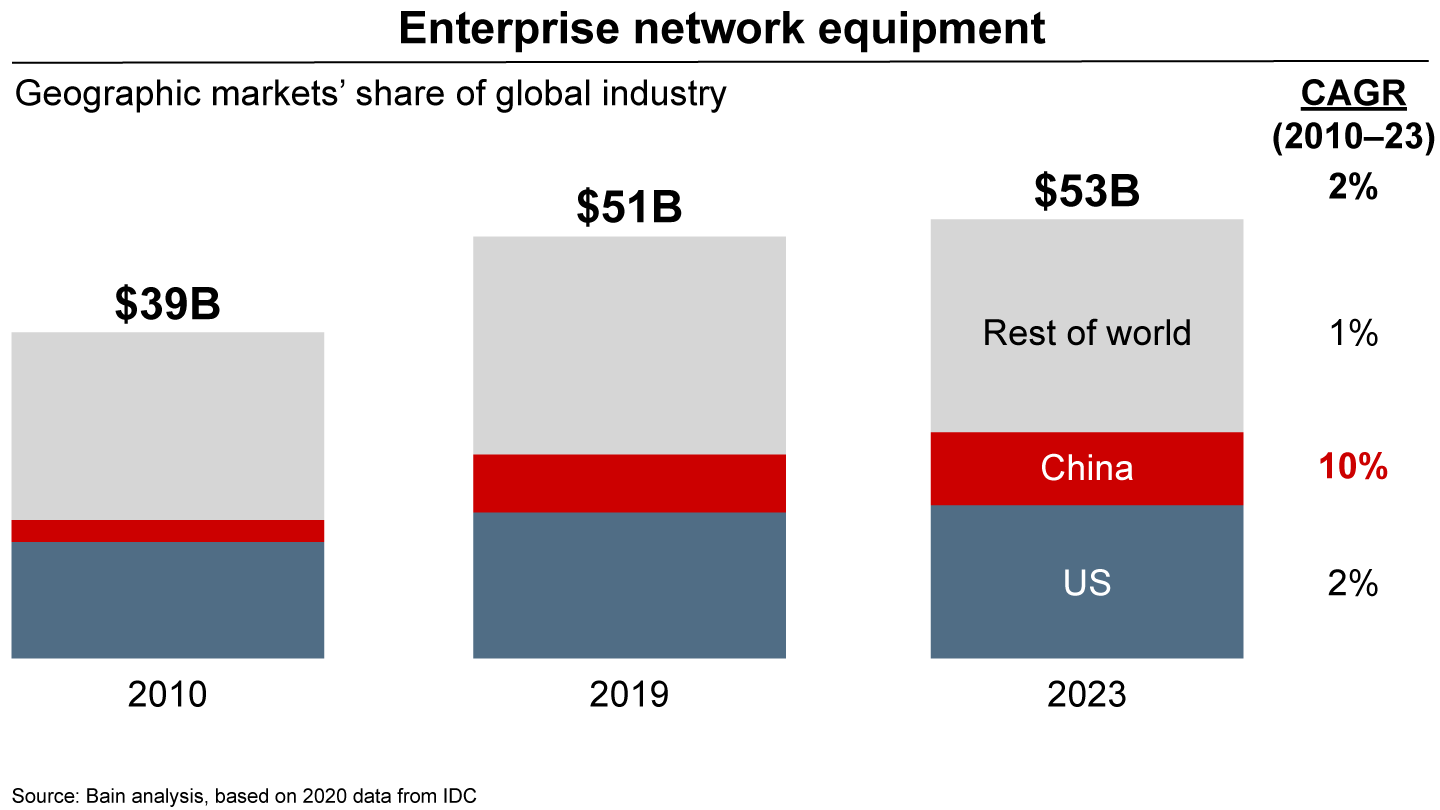
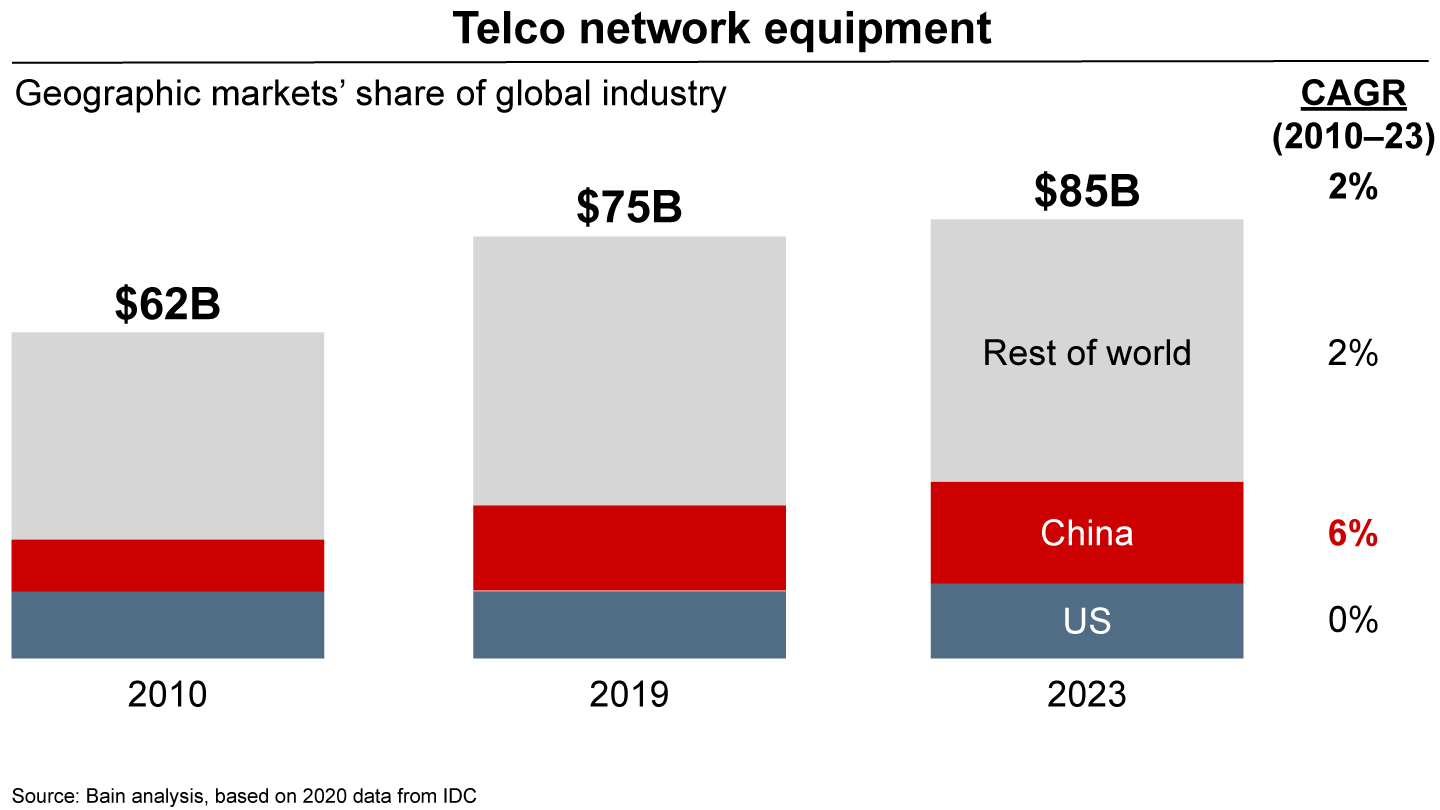
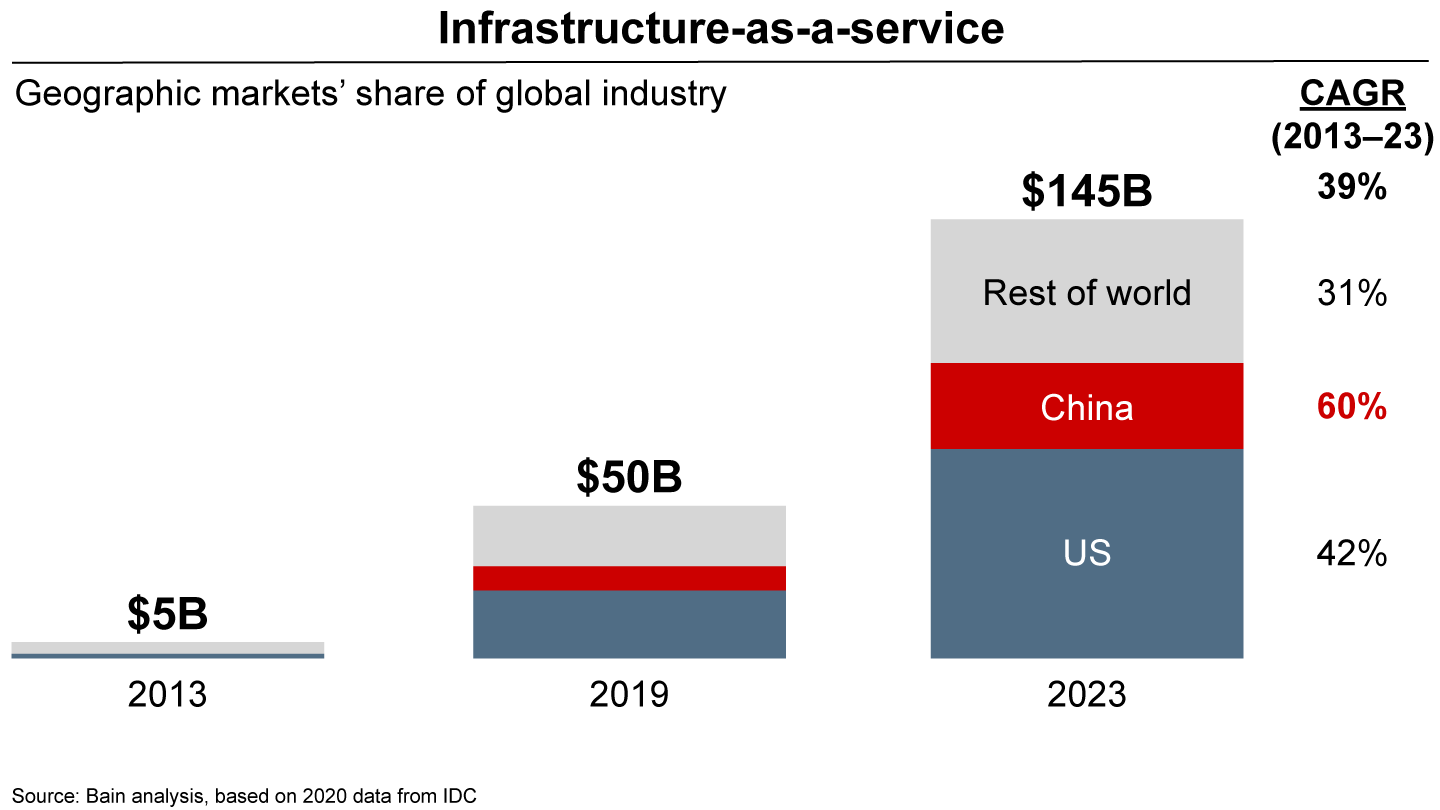
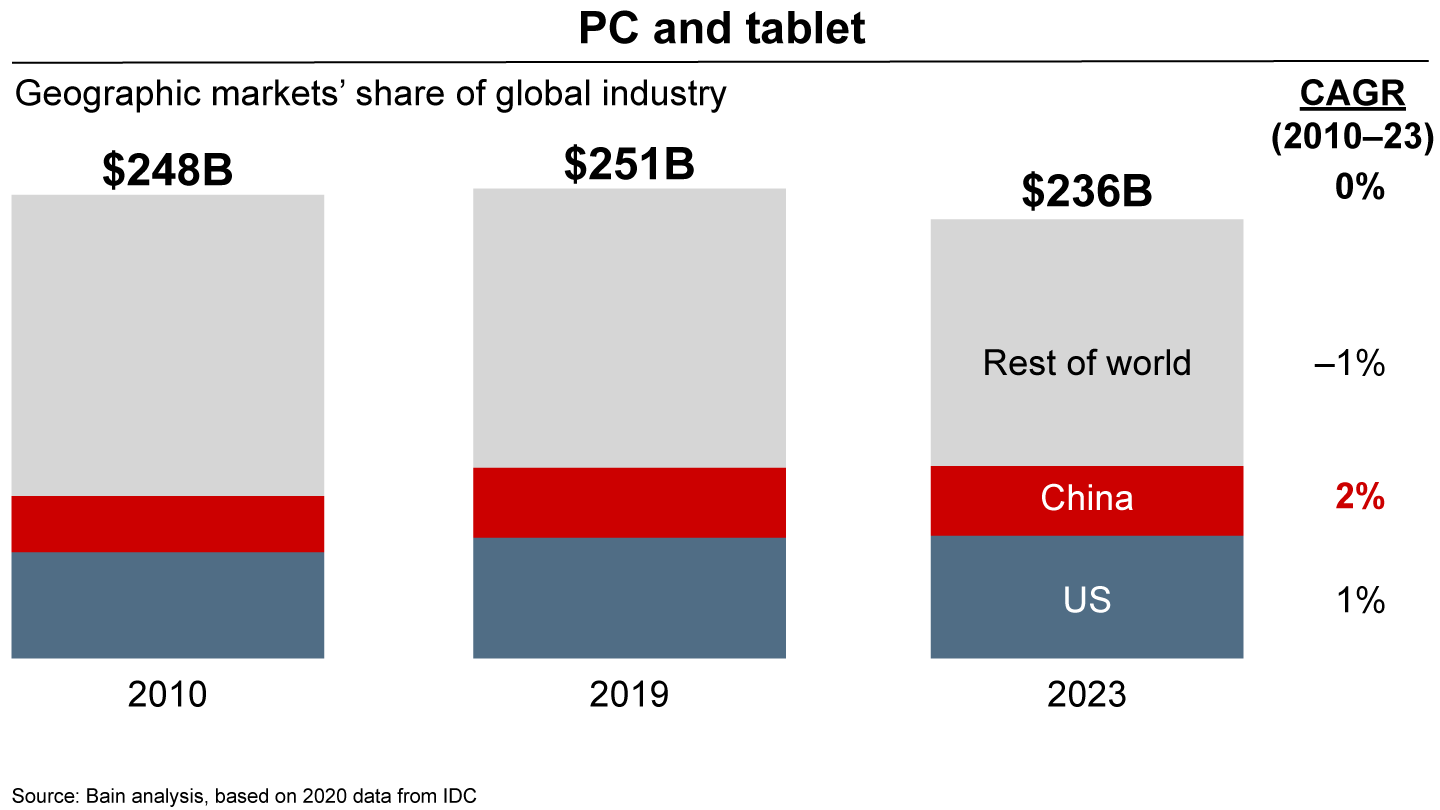
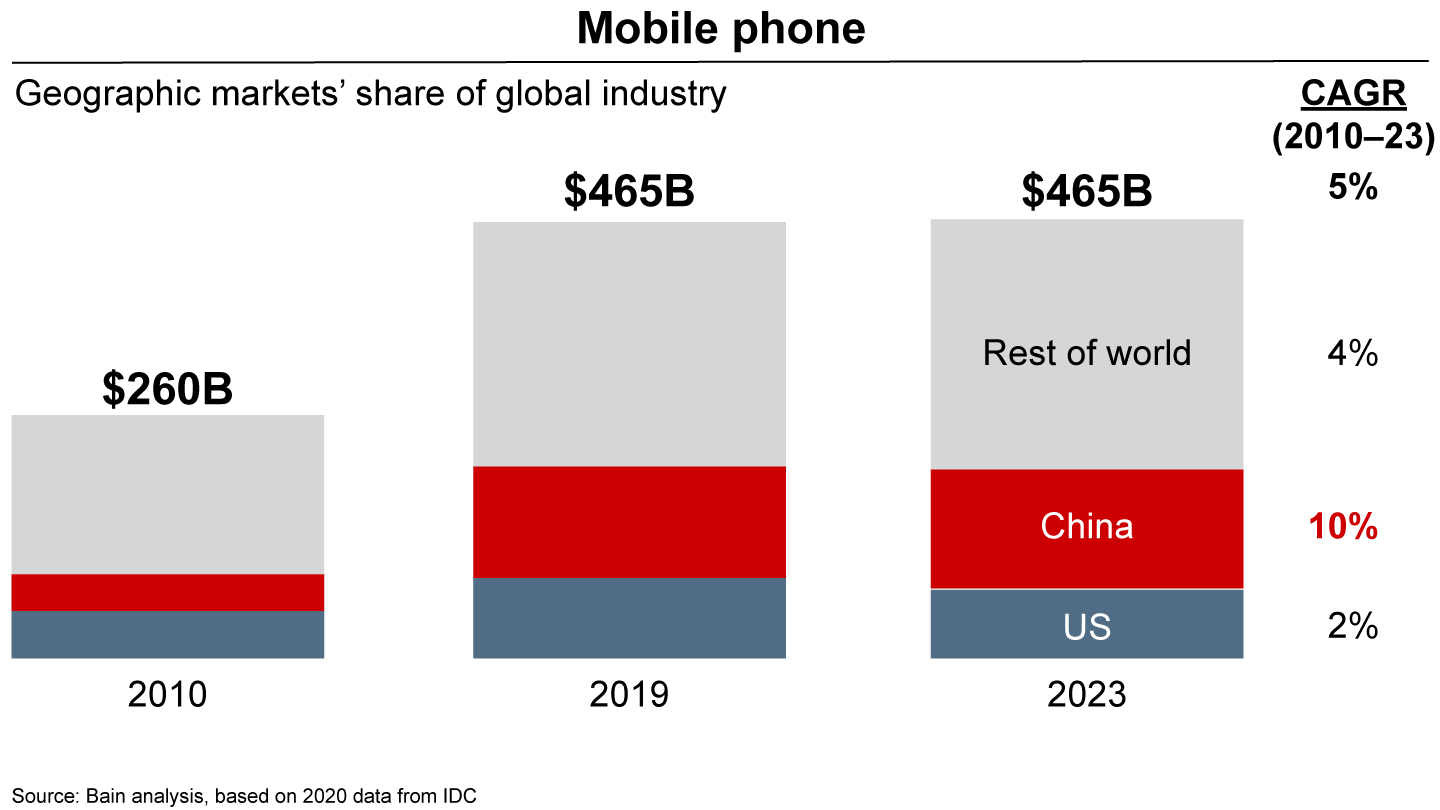
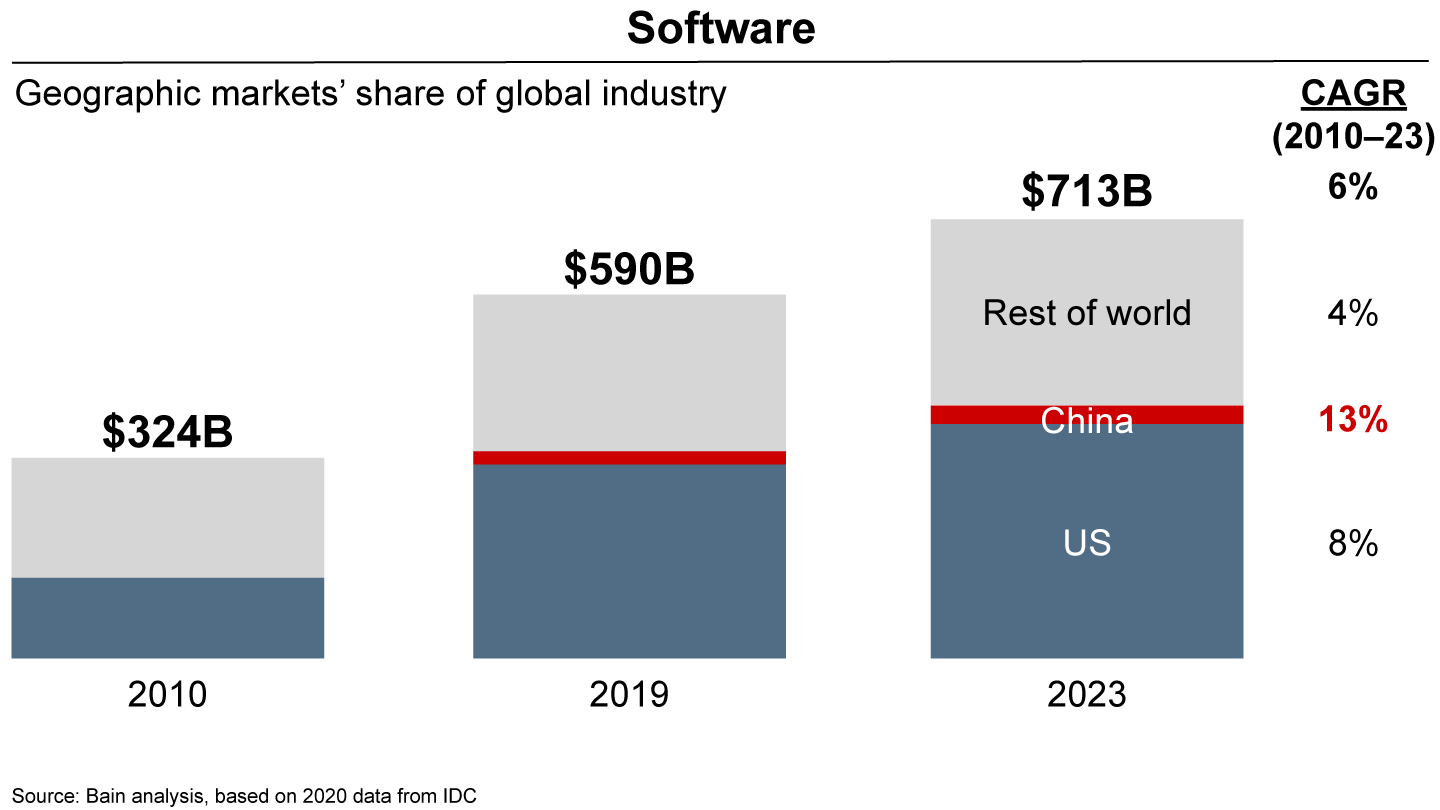
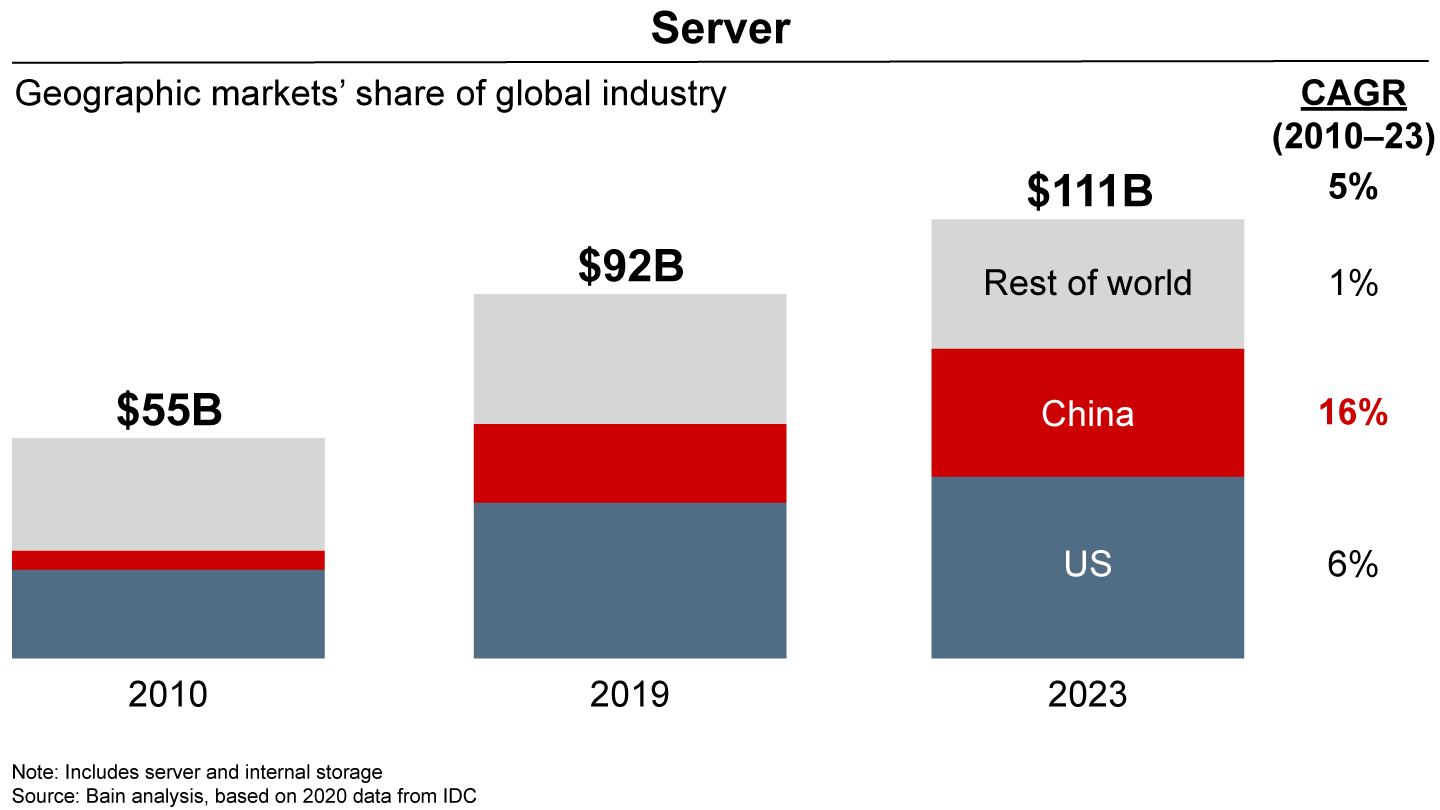
      Even with the geopolitical challenge, global technology companies can’t ignore China. It’s a huge market and growing fast. China consumption represents up to 25% of global demand in server, networking, PC and smartphone products, and the country’s consumption of most technology products is increasing at least twice as fast as the global average (see Figures 1 through 8).

      Figure 1
      China is a large and growing market for global technology companies
      Chart showing that China is a large and growing market for global technologies in the server sector.
      Chart showing that China is a large and growing market for global technologies in the server sector.
      Figure 2
      China is a large and growing market for global technology companies
      Chart showing that China is a large and growing market for global technologies in the storage sector.
      Chart showing that China is a large and growing market for global technologies in the storage sector.
      Figure 3
      China is a large and growing market for global technology companies
      Chart showing that China is a large and growing market for global technologies in the enterprise network equipment sector.
      Chart showing that China is a large and growing market for global technologies in the enterprise network equipment sector.
      Figure 4
      China is a large and growing market for global technology companies
      Chart showing that China is a large and growing market for global technologies in the telco network equipment sector.
      Chart showing that China is a large and growing market for global technologies in the telco network equipment sector.
      Figure 5
      China is a large and growing market for global technology companies
      Chart showing that China is a large and growing market for global technologies in the infrastructure-as-a-service sector.
      Chart showing that China is a large and growing market for global technologies in the infrastructure-as-a-service sector.
      Figure 6
      China is a large and growing market for global technology companies
      Chart showing that China is a large and growing market for global technologies in the PC and tablet sector.
      Chart showing that China is a large and growing market for global technologies in the PC and tablet sector.
      Figure 7
      China is a large and growing market for global technology companies
      Chart showing that China is a large and growing market for global technologies in the mobile phone sector.
      Chart showing that China is a large and growing market for global technologies in the mobile phone sector.
      Figure 8
      China is a large and growing market for global technology companies
      Chart showing that China is a large and growing market for global technologies in the software sector.
      Chart showing that China is a large and growing market for global technologies in the software sector.

      But China’s domestic market isn’t just a big prize for multinational technology companies. China’s homegrown technology sector is a successful and dynamic market unto itself. Four of the top six smartphone companies worldwide are Chinese (Huawei, Oppo, Vivo and Xiaomi). Huawei has become the global market leader in telecommunications network equipment. Alibaba Cloud is now the third-largest infrastructure-as-a-service business in the world. China’s enormous population of smartphone users has enabled rapid growth of mobile apps such as TikTok, which topped 800 million monthly active users within three years of launching, 100 million of them in the US.

      China lags in some technology areas, particularly semiconductor equipment and manufacturing, electronic design automation tools, CPUs, GPUs, field-programmable gate arrays and infrastructure software. As the country pushes toward a secure, indigenous supply chain, these are areas of concern and, therefore, focus. 

      The move toward decoupling

      China’s technology sector is rising as the globalization era comes to an end. Expanding tariffs, cybersecurity concerns and US interventions are reversing years of mostly open, global trade. We’re calling this new era “slowbalization,” a term coined in 2015 by Dutch trend-watcher Adjiedj Bakas and popularized last year by The Economist. The global economy has been moving in this direction for a while, but over the past year it unexpectedly accelerated. The Covid-19 pandemic, the anti-China sentiment that followed, and the increasingly tense political climate have raised the stakes and contributed to slowbalization’s momentum. Now, it’s clear the world isn’t going back to globalization—it’s headed toward decoupling.

      This scenario would create two walled gardens in global trade: a China-allied trading bloc and supply chain, and a US-allied one. That has big implications for technology companies, which would face significantly higher barriers to doing business across the two ecosystems (see Figure 9).

      Figure 9
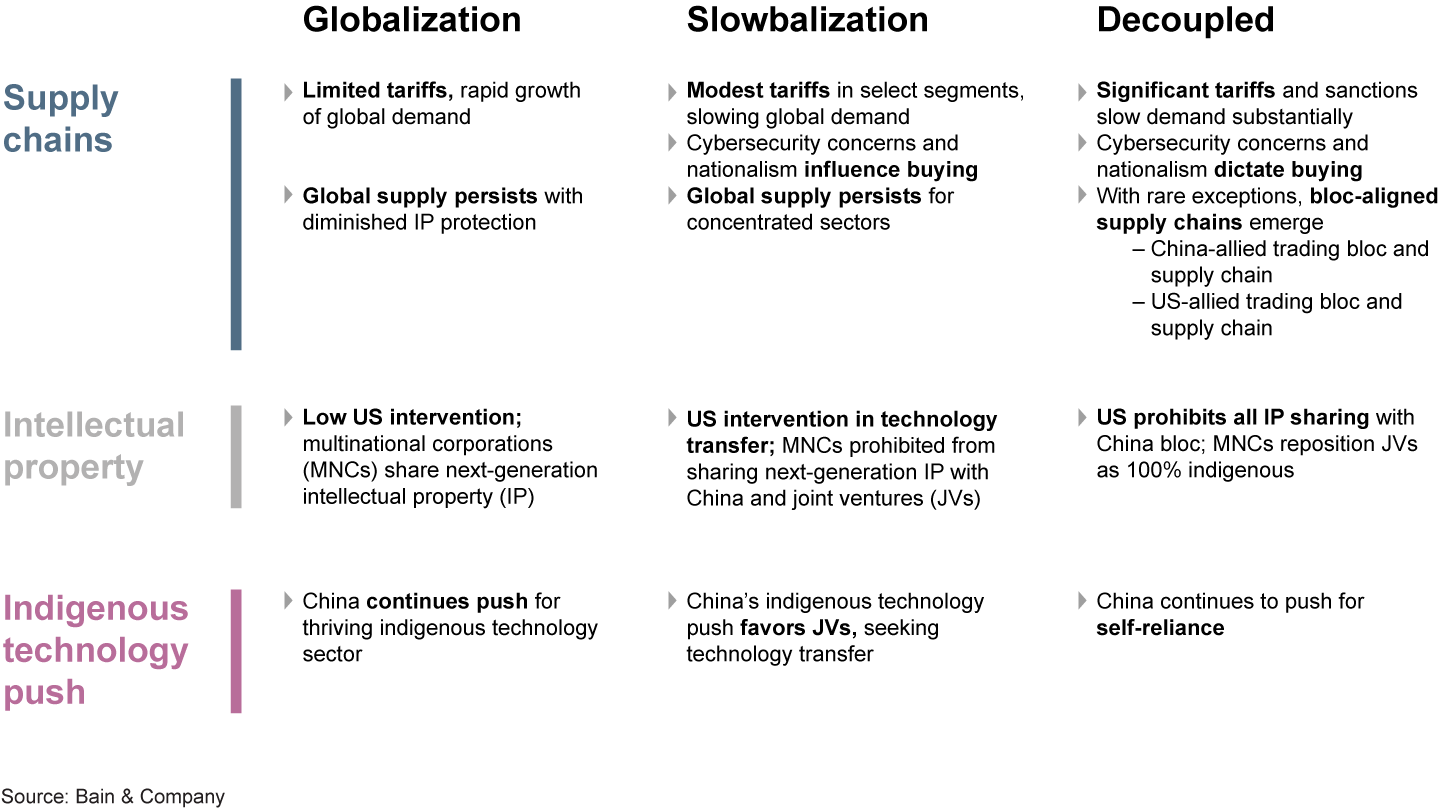
      China and the US are moving from globalization toward a decoupled system
      Figure showing the change over time in China and US relations that is leading to the decoupling of the two economies.
      Figure showing the change over time in China and US relations that is leading to the decoupling of the two economies.

      Decoupling is forcing technology leadership teams in China, the US and everywhere else to make tough decisions about the future of their supply chains, products, customers, employees and even organizational boundaries. 

      Supply chains: Making supply chains more resilient is a top priority for technology companies across the globe. Chinese companies are investing in business continuity measures and a secure, self-reliant supply chain. That effort has become more urgent in light of stricter US export regulations.

      Companies in the US also want to add redundancy in order to reduce dependence on Chinese suppliers. Some are pursuing a “China-plus-one” model. For example, Apple reportedly has looked into the possibility of moving one-third of its production for some devices out of China. Dell and HP were both making plans last year to relocate up to 30% of their notebook production outside of China, according to news reports. Given its large US customer base, TSMC announced plans to build its first advanced semiconductor factory in the US.

      Products: Technology companies have wrestled with the question of localization of products for years. Should an international company partner with a local business in China to gain access to the market with a mandate requiring purchases from indigenous companies? How can a Chinese company expand globally?

      On the US side, Hewlett-Packard Enterprise has a successful partnership with H3C that opens up the Chinese enterprise IT market for HPE. On the China side, Alibaba in 2018 doubled its investment in Southeast Asian online shopping giant Lazada to $4 billion. In addition, Chinese smartphone brands such as Oppo, Vivo and Xiaomi have expanded their operations in European and Latin American markets in the past three years.

      The question of localization is again at the forefront of executives’ minds as China, the US, India and other countries increase restrictions on technology companies. Huawei’s business has been hampered by a Trump executive order forbidding US companies from working with the company or buying its products. AMD pulled away from its Chinese joint venture with Sugon and other partners after the US government added those partners to the Entity List. TikTok was banned in India, and is under pressure from the Trump administration to become part of a US-based company. Alibaba suspended subsidiary UCWeb’s services in India after the app was banned, and the company is reportedly pausing investments in Indian start-ups. China also issued new measures on cybersecurity review for critical information infrastructure, including the telecommunications, energy and technology industries. 

      Customers: As more companies get added to watch lists and face tighter restrictions, leading suppliers are revisiting which customers they should invest in. On one hand, customers’ efforts to diversify their supplier base could enable suppliers to strengthen their businesses by building new and trusted relationships during a challenging time. By the same token, regulatory constraints could tie some suppliers’ hands. In those cases, suppliers might backfill the revenue hole left by one departing customer by investing in its competitors.

      Organizations: Technology companies are increasingly exploring the option of creating new regional entities to ensure continued access to the market outside of their bloc. The early examples of this have had spotty success. Conflicts over decision rights for leadership and product roadmaps continue to be murky waters to navigate.

      As companies evaluate their strategies for product localization and organizational separation, it’s important to set themselves up for success by involving the government of the parent company’s home country early. This can increase the chances of a two-way-street strategy—a lesson several companies learned the hard way.

      Finding the balance

      As the march toward decoupling continues, more technology companies will revisit their US and China strategies. How can they balance the desire to sell into both the US and China blocs, protect IP and outgrow competitors?

      Based on our work with technology companies across the globe, here are several key strategies for companies in each market to consider.

      US companies trying to sustain business in China. Executives at leading companies first map out a multiyear strategy for product localization, based on the company’s competitive advantage over local alternatives, and what’s considered “good enough” in the target segment. In addition, they might look to acquire assets or build new business models in segments where China or the eastern bloc has a strength that the US lacks, such as 5G equipment. In general, all companies should consider a “China-plus-one” supply chain model to increase resilience.

      Chinese companies looking to expand globally. Leading companies focus first and foremost on maximizing growth in the home market so they have a solid business foundation to withstand global headwinds. Once ready to invest outside of China, geographic diversification can help mitigate geopolitical risks. Leading companies also build partnerships through equity investments and other types of deals, establish regional entities and operations, and implement mechanisms to separate their local organizations and data platforms. Lastly, they prepare a contingency exit strategy.

      Companies headquartered everywhere else. In the short term, US-China tensions might not hamper many of these companies. They might find open doors in both China and the US. But the march toward decoupling will affect every company in the long run. Businesses based outside the US and China should start laying the groundwork for localization in both blocs by making adjustments now across their supply chain, products, customer base and organization. Compared with their US and Chinese counterparts, this group has more degrees of freedom. But their choices also come with more uncertainty at this point.

      Ultimately, the right answer depends on the company and its industry, and must be graded against what the US and Chinese governments are likely to allow. The complexities are high, but the prize is continued access to a large, global technology market.

      Read the Next Chapter

      How Technology Companies Can Sharpen Their Operational Advantages


      著者
      • Headshot of Anne Hoecker
        Anne Hoecker
        パートナー, Silicon Valley
      • Headshot of Jue Wang
        Jue Wang
        パートナー, Silicon Valley
      関連業種
      • Cybersecurity
      • Software
      • テクノロジー
      • 産業機械
      関連するコンサルティングサービス
      • Digital
      • IT
      • サプライチェーン
      Technology Report
      How Technology Companies Can Sharpen Their Operational Advantages

      Leading companies are investing in supply chains, process automation, go-to-market strategies and M&A.

      詳細
      Technology Report
      Quantum Computing Moves from Theoretical to Inevitable

      Quantum will likely become part of a mosaic, working with classical computing to solve big problems.

      詳細
      Technology Report
      Humanoid Robots: From Demos to Deployment

      With capabilities evolving rapidly, now is the time to begin assessing when and how bipedal robots may change industries.

      詳細
      産業機械
      Artificial Intelligence Rockets to the Top of the Manufacturing Priority List

      Increased adoption of artificial intelligence significantly boosts productivity and improves performance.

      詳細
      Technology Report
      Will AI Disrupt Tech’s Most Valuable Companies?

      Hyperscalers and other market leaders have adapted well to technology shifts, but generative AI poses new challenges.

      詳細
      First published in 10月 2020
      Tags
      • Cybersecurity
      • Digital
      • IT
      • Software
      • Technology Report
      • サプライチェーン
      • テクノロジー
      • 産業機械

      クライアント支援事例

      Digital How a Data-Driven Mindset Powers McAfee’s Growth

      ケーススタディを見る

      Helping a Midsize ERP Player Compete against the Giants

      ケーススタディを見る

      顧客戦略、マーケティング Video: A Marketing Transformation Puts a Software Leader Back on Top

      ケーススタディを見る

      お気軽にご連絡下さい

      私達は、グローバルに活躍する経営者が抱える最重要経営課題に対して、厳しい競争環境の中でも成長し続け、「結果」を出すために支援しています。

      Digital is a service mark of Bain & Company, Inc.

      ベインの知見。競争が激化するグローバルビジネス環境で、日々直面するであろう問題について論じている知見を毎月お届けします。

      *プライバシーポリシーの内容を確認し、合意しました。

      プライバシーポリシーをご確認頂き、合意頂けますようお願い致します。
      Bain & Company
      お問い合わせ Sustainability Accessibility Terms of use Privacy Cookie Policy Sitemap Log In

      © 1996-2026 Bain & Company, Inc.

      お問い合わせ

      How can we help you?

      • ビジネスについて
      • プレス報道について
      • 採用について
      全てのオフィス