

論説

概要
- Banks are starting to adopt web3 technologies to develop more efficient and innovative products. A Bain survey of senior executives at financial institutions finds that 60% believe web3 will disrupt activities historically performed by banks.
- Yet while banks are well placed to leverage their strengths, they also face the threat of disintermediation from fintechs and major tech firms—not just other banks.
- The earliest likely candidates for significant adoption of web3 are wholesale cash management and retail payments, custody and asset servicing, and private capital markets.
- Customers’ identity is a critical factor in unlocking web3’s potential, and banks have the opportunity to lead the charge in developing persistent, portable digital identities.
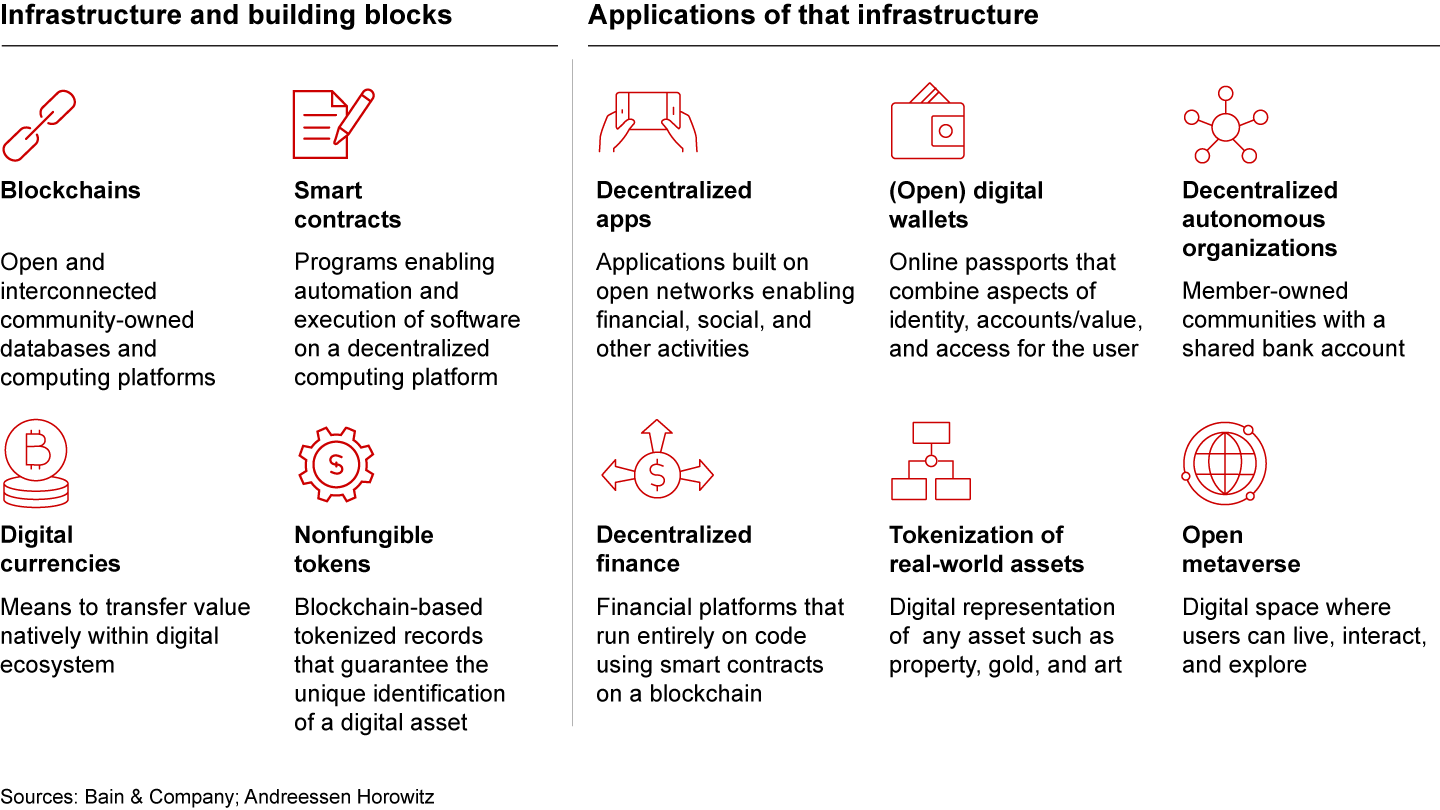
Web3—the next generation of the web that incorporates components such as blockchains, smart contracts, digital currencies, and nonfungible tokens (see Figure 1)—has quietly started to spread throughout banking.
For example, Figure is originating, servicing, and selling more than $200 million in mortgage assets per month entirely on its blockchain-enabled platform. TassatPay enables partner corporate banks to issue deposit-backed tokens that clients can use to make real-time business-to-business digital payments, with $1 trillion in transactions to date. UBS recently launched a Swiss franc–denominated, three-year digital bond that is publicly traded and settled on both blockchain-based and traditional exchanges. And DTCC’s Project Ion, an alternative equities settlement platform using distributed ledger technology, now parallel processes almost 160,000 trades on peak days.
Although these initiatives have yet to reach true scale, early adopters hope to harness aspects of web3 to reshape their economics; make banking services faster, less expensive, and more transparent for customers; and improve resiliency. They’re tackling some pervasive problems in banking—namely, a raft of slow and opaque processes leading to poor customer experiences and high costs to deliver many services. Web3, they believe, can address the shortcomings inherent in traditional banking infrastructure and massively improve efficiency—all while maintaining the robust and mature security, controls, and transparency of regulated financial institutions.
Figure 1

Globally, banks and digitally native fintechs are finding success in pilot projects, though it will take years to build full-scale applications and demonstrate the potential of web3 technologies. In a recent Bain & Company survey of senior bank executives and CEOs of web3-native firms, some 60% of the bankers and 80% of the web3 CEOs said that they’re certain web3 will disrupt activities historically performed by banks. Widespread adoption of web3 in banking, they believe, will come within five to six years on average.
Myriad opportunities if banks can avoid disintermediation
Survey respondents estimate that web3 could reduce the operational cost to deliver banking services by 15% to 25% by enabling more straight-through processing, reducing overlapping know-your-customer (KYC) burdens, and greatly reducing or eliminating manual reconciliation. The associated savings will take time to materialize given the need for a parallel infrastructure during the transition, and much of the savings will likely pass through to customers because of competition, especially in commoditized products.
Besides reducing operating costs, web3 innovations can reduce operational risk and free up capital on bank balance sheets through streamlined processes. Bankers also tell us they’re interested in launching new offerings with programmable payments and securities, intermediating a wider array of private market assets once tokenized, and harnessing higher-quality data availability for new analytics and advice. And they will be able to provide services around tokenized assets, including allowing them to be used as collateral and to manage liquidity.
Banks are well placed to capture these opportunities because of their history of complying with regulations, their strong risk management and KYC abilities, and the trust that they have earned with many customers. Web3 often involves an ecosystem approach, incorporating entire value chains and substantial coordination between institutions. Banks have done this type of thing before—for instance, with the creation of the Swift payments network, Euroclear, credit card networks, stock exchanges, and clearing houses—and many express confidence that they can do it again.
The head of a web3-native bank said that clients’ trust will help to capture opportunities. “A big chunk of our clients, even those who are familiar with digital assets, show a desire to interface with a bank. When it comes to the need of their serious finances, they want to have someone to call. They don't just want a smart contract; they want a person they trust who has evaluated the smart contract.”
At the same time, though, incumbent banks face the threat of disintermediation from fintechs, big tech companies, and new challengers. These competitors will try to capture slices of banking activities as value chains get reconfigured in a web3 context, with fewer intermediaries and more value captured by issuers and customers.
We view web3 adoption as something similar to the advent of electronic trading in terms of the amount of disruption as well as the size of the opportunity. Electronic trading created efficiencies for capital market participants, spurred higher transaction volume, and unlocked a variety of innovations and new products. Firms that invested early came out ahead; those that stuck with old approaches had to catch up, and many lost share.
As the market implements components of web3, banks have an opportunity to gain market share and generate revenue by offering better, faster, and less expensive services. Yet while web3 will make the banking system more efficient, the effect on overall profitability is uncertain as efficiencies and competition affect pricing. The central question for each bank, then, is not whether to explore web3 technologies but exactly how, where, and when to engage.
Along the S curve
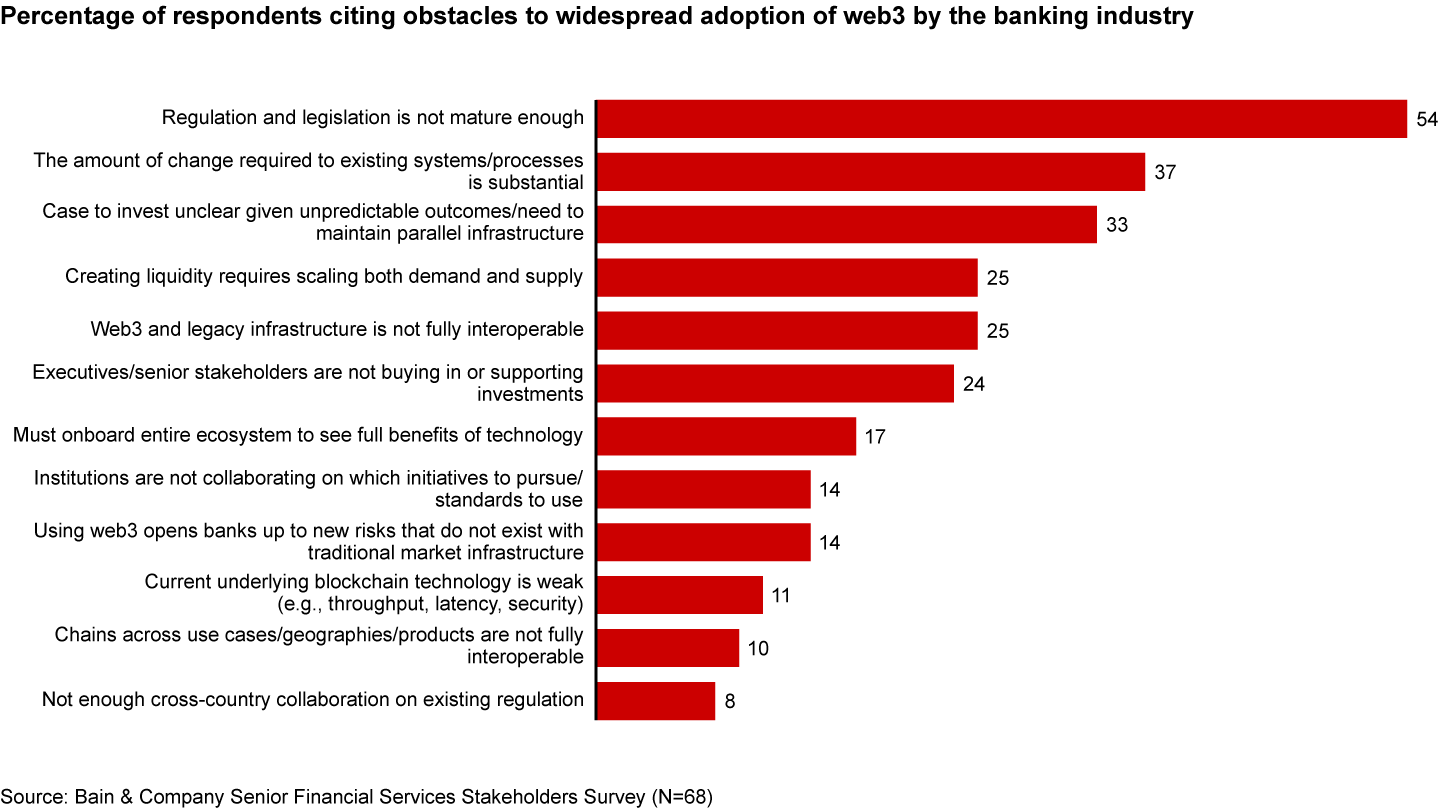
The path to widespread web3 adoption will be complicated by several barriers. To start, legislators and regulators have only begun to consider clear guidelines and rules that will be essential for incumbents to move ahead. In our survey, respondents cited nascent regulation as the major hurdle to adoption (see Figure 2).
In addition, revising established architecture will require substantial investment with a potentially long payback period. Most banks and customers consider existing infrastructure good enough. Moreover, to serve customers who do get on board, entire ecosystems must be developed, yet each participant has different goals and capabilities.
Figure 2

“We are operating in this gray space at the moment,” one technology executive at a large bank told us. “More clarity and more regulation would help a lot.”
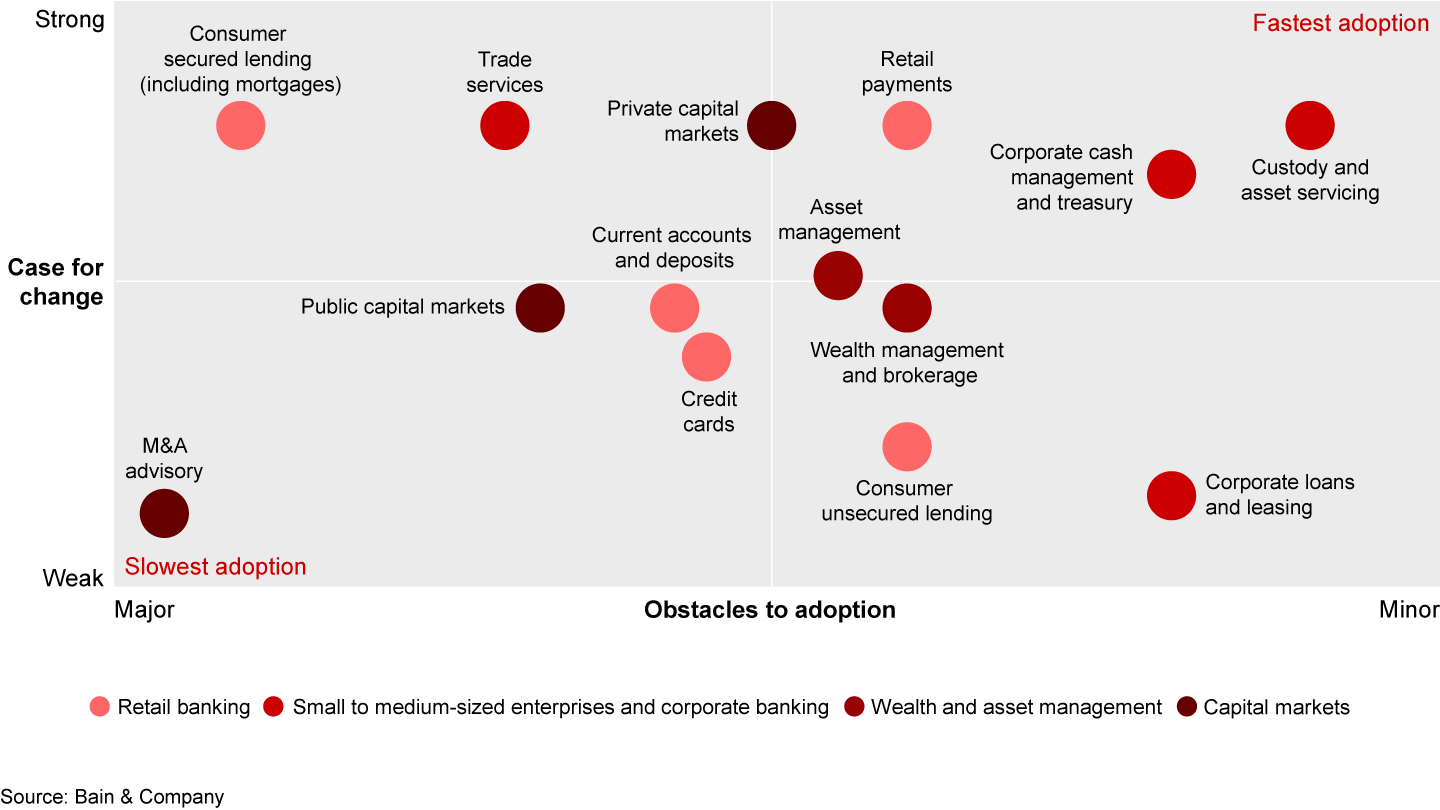
Progress through 2030 thus will tend to be gradual overall. But some jurisdictions, banking sectors, and products will move faster as adoption follows a classic S curve by use case, with overall adoption initially low then suddenly accelerating as participants reach critical mass.
The speed and ultimate level of adoption or disruption will vary by business line. Adoption looks set to occur sooner in simpler ecosystems within vertically integrated markets or where banks can act alone or in small groups, as well as in areas where existing infrastructure is limited and the potential for efficiency gains is greater.
Using those criteria, our interviews suggested that the likely candidates for early adoption are wholesale cash management and retail payments, custody and asset servicing, and private capital markets, where some companies have already made substantial progress (see Figure 3).
Figure 3

An interest in KKR’s Health Care Strategic Growth Fund, for instance, was tokenized on a public blockchain, testing more efficient and secure digital management and distribution with investors. Sygnum, a digital asset bank founded in Switzerland and Singapore, partners with 15 banks, empowering them to offer flexible, regulated crypto banking services to their clients, including modules for custody, trading, staking, tokenization, and asset management that can be integrated with existing infrastructure. JPMorgan Chase launched JPM Coin in 2019 as a tokenized representation of deposits, allowing for more efficient transfers of value and improved liquidity management via a digital ledger than with traditional cash. Although the bank currently uses JPM Coin primarily for internal transfers, it is piloting a rollout of the token to corporate clients and the hundreds of financial institutions in its Liink network for exchanging payment-related information. And a securities lending platform, HQLAx, enables institutions to transfer ownership of securities across disparate collateral pools at precise moments in time, which helps to optimize liquidity and collateral management. The platform has onboarded several major custodians and third-party agents. Even the business lines that may take longer to make the shift, including everyday retail banking, have plenty of web3 pioneers today. For example, Revolut offers retail customers the ability to buy, hold, sell, and transfer more than 80 cryptocurrencies. The challenger bank also offers the ability to “auto-exchange” fiat for crypto assets, with crypto services accounting for about 5% of global revenue.
Identity central
Our interviews made clear that realizing web3’s potential in a regulated space hinges on tying digital identity to a robust KYC framework; everyone involved in a transaction has a stake in knowing that participants are who they say they are.
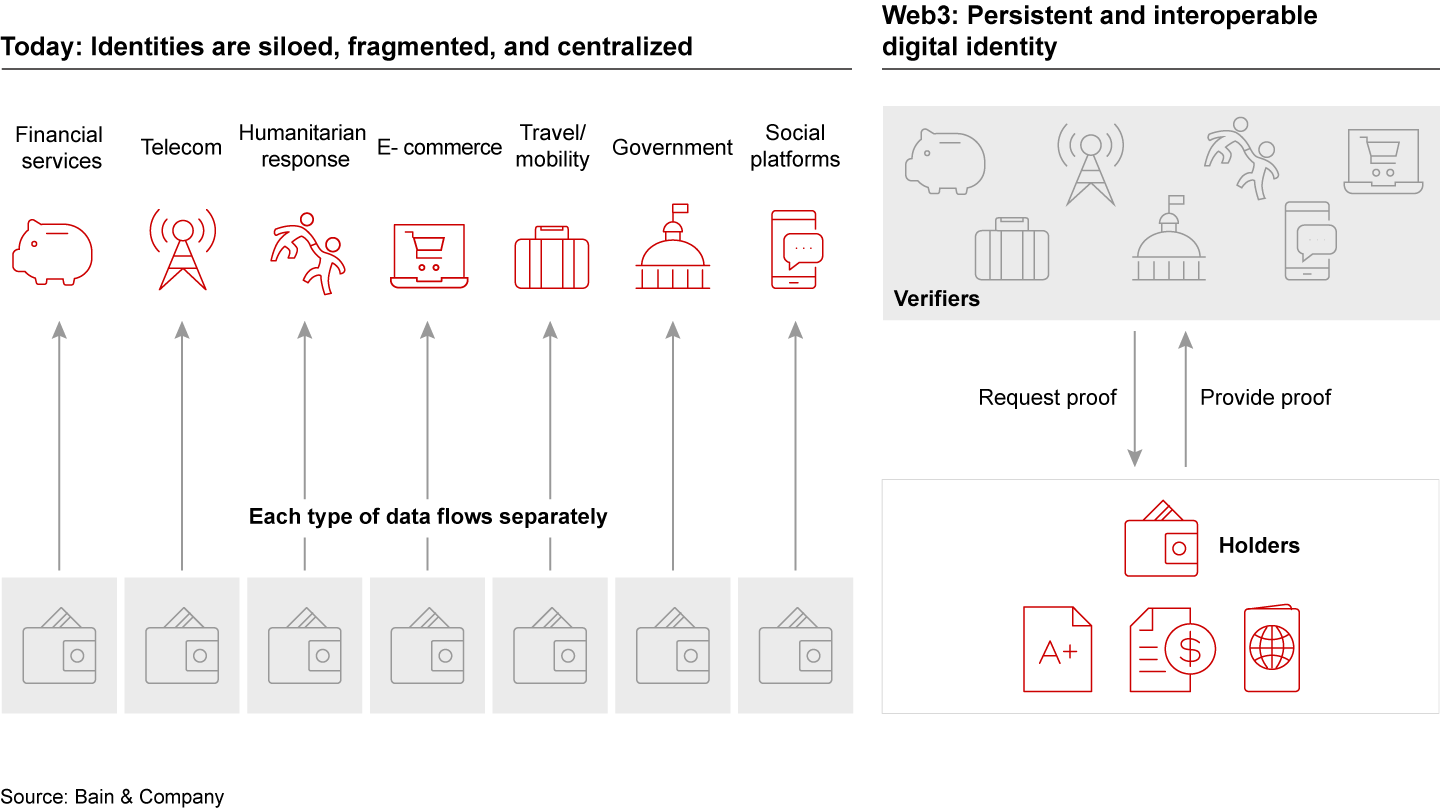
A portable and persistent digital identity would allow customers to own their data, use it across applications, and share discrete pieces with service providers. That would transform the relationship between customers and providers—making interactions more seamless, safer, and cost efficient; boosting privacy protections; and allowing for a greater customization of offerings. But this potential can be realized only if technology evolves, standards are established, and customers adopt new ways to manage their credentials. It’s likely that web3-enabled digital identity will still feature some intermediation over the next decade or so, as well as develop different types of identity solutions across customer segments and use cases.
One executive of an incumbent bank noted, “A hurdle to digital identity is that it requires organizations be willing to agree to a set of standards as well as be willing to provide information to one another. Network growth like that is such a difficult thing to achieve, so it’s going to take significant time to get something of this scale moving.”
As companies compete to shape the future of identity online, digital web3 wallets will likely play a large role. These wallets act as unified or interoperable bank accounts and digital passports that will connect users with applications by offering universal sign-in capabilities. What once was a website-specific log-in may soon require simply choosing “connect wallet.” Many of web3’s proponents hope that this new approach will enable users to directly own and control more of their data and digital goods (see Figure 4).
Figure 4

Banks have a strong claim to oversee digital identity but will have to figure out how to shepherd a broad ecosystem toward common standards. Collaborative approaches might be needed to establish a KYC and identity utility that can authenticate users, or a regulatory and governance body will need to set standards to promote interoperability.
Many organizations are developing standards and applications around identity. For example, the Decentralized Identity Foundation is developing the foundational elements necessary to establish an ecosystem for web3 identity, including standards that will enable interoperability. Oasis Labs and Equifax are building a decentralized identity management and KYC solution.
Despite the promise of decentralized and interoperable identity, if banks are unable to insert themselves at the center of this ecosystem, they could be reduced to merely providing the system’s plumbing.
Aspects to change
As web3 develops, banks will want to start thinking like disrupters because the new order is characterized by interoperability, ecosystems and partnerships, and innovation. And they will have to change certain aspects of their business.
- Operating model: Some banks are choosing to centralize web3 development in a separate business unit, while others are spreading capabilities by use case and across existing teams. We have seen more mature institutions create centralized structures; that way, they can align initiatives with the overall ambition, better track outcomes, capture technology synergies, and place big bets on high-value situations. As the market matures, however, these institutions might delegate responsibility to different business units.
A senior leader at an incumbent bank believes the operating model should include centralized decision making. “Managing it as a portfolio of federated initiatives without appropriate central authority can only go so far. The solution is central decision making around managing the architecture, portfolio, resourcing, and funding.”
- Selective ecosystems: Captive approaches to web3 will fade for most institutions as partnerships generate more value, including by plugging into or building ecosystems.
- Investment strategy: Compared with other investments that banks make, web3 investments have a long, uncertain payoff period, even as the market changes quickly. Many use cases will require coordination with other institutions. Banks must be willing to reinvent processes and cannibalize existing businesses, though this must be balanced against financial considerations, the capacity for change, and regulatory adherence.
- Talent: Web3 talent is rare and in growing demand, so banks should develop structures that will attract these individuals, including more flexibility, payment in digital currencies, and compensation tied directly to web3-initiative performance.
- Risk: Web3 will push legacy risk control frameworks to their limits, which puts a premium on risk and regulatory staff involvement at every step of product development. Web3 should offer significant improvements in risk management, but banks will need to evolve existing processes and methods as well as work with regulators to evolve relevant regulation and supervision.
No-regrets moves
Capital continues to flow into web3 companies that are eagerly innovating, and leading banks are getting a head start via hires, partnerships, risk controls, regulators, and product tests that will be difficult for laggards to surmount. Banks that wait until the market has reached an inflection point for a specific use case will be hard-pressed to catch up.
While not every bank needs to go all in now, the window to build capabilities and influence regulation and ecosystems in ways that reap benefits in the future is closing. “It’s easy to either dismiss the whole thing or to go all in and invest heavily,” a senior technology executive at a large bank noted. “The answer will be much more nuanced, with different considerations for different banks.”
A set of no-regrets moves can help prepare banks for the transition:
- Define the enterprise-level web3 ambition, and posture along a spectrum from “wait and see” to “cautious explorer” to “progressive incumbent” to “web3 leader.”
- Decide which use cases to pursue given the existing business and customer mix and accounting for the network effects and potential cross–use-case applications.
- Define a course of action for each of those use cases and an investment strategy.
- Define the right mix of build, buy, and partner to deliver the use cases.
The financial services sector has been faster to adopt many of the nascent web3 technologies and assets. But it will be a jerky, uneven ride, especially before regulatory frameworks begin to settle. Incumbent banks must manage through the uncertainty, or they risk finding themselves surpassed by faster-moving, bolder competitors.
First published in 12月 2022