
Skip to Content
  • オフィス

    オフィス

    北米・南米
    • Atlanta
    • Austin
    • Bogota
    • Boston
    • Buenos Aires
    • Chicago
    • Dallas
    • Denver
    • Houston
    • Los Angeles
    • Mexico City
    • Minneapolis
    • Monterrey
    • Montreal
    • New York
    • Rio de Janeiro
    • San Francisco
    • Santiago
    • São Paulo
    • Seattle
    • Silicon Valley
    • Toronto
    • Washington, DC
    ヨーロッパ・中東・アフリカ
    • Amsterdam
    • Athens
    • Berlin
    • Brussels
    • Copenhagen
    • Doha
    • Dubai
    • Dusseldorf
    • Frankfurt
    • Helsinki
    • Istanbul
    • Johannesburg
    • Kyiv
    • Lisbon
    • London
    • Madrid
    • Milan
    • Munich
    • Oslo
    • Paris
    • Riyadh
    • Rome
    • Stockholm
    • Vienna
    • Warsaw
    • Zurich
    アジア・オーストラリア
    • Bangkok
    • Beijing
    • Bengaluru
    • Brisbane
    • Ho Chi Minh City
    • Hong Kong
    • Jakarta
    • Kuala Lumpur
    • Manila
    • Melbourne
    • Mumbai
    • New Delhi
    • Perth
    • Shanghai
    • Singapore
    • Sydney
    • Tokyo
    全てのオフィス
  • アルムナイ
  • メディア
  • お問い合わせ
  • 東京オフィス
  • Japan | 日本語

    地域と言語を選択

    グローバル
    • Global (English)
    北米・南米
    • Brazil (Português)
    • Argentina (Español)
    • Canada (Français)
    • Chile (Español)
    • Colombia (Español)
    ヨーロッパ・中東・アフリカ
    • France (Français)
    • DACH Region (Deutsch)
    • Italy (Italiano)
    • Spain (Español)
    • Greece (Elliniká)
    アジア・オーストラリア
    • China (中文版)
    • Korea (한국어)
    • Japan (日本語)
  • Saved items (0)
    Saved items (0)

    You have no saved items.

    後で閲読、共有できるようにするためにブックマークしてください

    Explore Bain Insights
  • 業界別プラクティス
    メインメニュー

    業界別プラクティス

    • 航空宇宙、防衛、政府関連
    • 農業
    • 化学製品
    • インフラ、建設
    • 消費財
    • 金融サービス
    • ヘルスケア
    • 産業機械、設備
    • メディア、エンターテインメント
    • 金属
    • 採掘・鉱業
    • 石油、ガス
    • 紙、パッケージ
    • プライベートエクイティ
    • 公共、社会セクター
    • 小売
    • テクノロジー
    • 通信
    • 交通
    • 観光産業
    • 公益事業、再生可能エネルギー
  • 機能別プラクティス
    メインメニュー

    機能別プラクティス

    • カスタマー・エクスペリエンス
    • サステイナビリティ、 社会貢献
    • Innovation
    • 企業買収、合併 (M&A)
    • オペレーション
    • 組織
    • プライベートエクイティ
    • マーケティング・営業
    • 戦略
    • アドバンスド・アナリティクス
    • Technology
    • フルポテンシャル・トランスフォーメーション
  • Digital
  • 知見/レポート
  • ベイン・アンド・カンパニーについて
    メインメニュー

    ベイン・アンド・カンパニーについて

    • ベインの信条
    • 活動内容
    • 社員とリーダーシップ
    • プレス・メディア情報
    • クライアントの結果
    • 受賞歴
    • パートナーシップを結んでいる団体
    Further: Our global responsibility
    • ダイバーシティ
    • 社会貢献
    • サステイナビリティへの取り組み
    • 世界経済フォーラム(WEF)
    Learn more about Further
  • キャリア
    メインメニュー

    キャリア

    • ベインで働く
      キャリア
      ベインで働く
      • Find Your Place
      • ベインで活躍する機会
      • ベインのチーム体制
      • 学生向けページ
      • インターンシップ
      • 採用イベント
    • ベインでの体験
      キャリア
      ベインでの体験
      • Blog: Inside Bain
      • キャリアストーリー
      • 社員紹介
      • Where We Work
      • 成長を後押しするサポート体制
      • アフィニティ・グループ
      • 福利厚生
    • Impact Stories
    • 採用情報
      キャリア
      採用情報
      • 採用プロセス
      • 面接内容
    FIND JOBS
  • オフィス
    メインメニュー

    オフィス

    • 北米・南米
      オフィス
      北米・南米
      • Atlanta
      • Austin
      • Bogota
      • Boston
      • Buenos Aires
      • Chicago
      • Dallas
      • Denver
      • Houston
      • Los Angeles
      • Mexico City
      • Minneapolis
      • Monterrey
      • Montreal
      • New York
      • Rio de Janeiro
      • San Francisco
      • Santiago
      • São Paulo
      • Seattle
      • Silicon Valley
      • Toronto
      • Washington, DC
    • ヨーロッパ・中東・アフリカ
      オフィス
      ヨーロッパ・中東・アフリカ
      • Amsterdam
      • Athens
      • Berlin
      • Brussels
      • Copenhagen
      • Doha
      • Dubai
      • Dusseldorf
      • Frankfurt
      • Helsinki
      • Istanbul
      • Johannesburg
      • Kyiv
      • Lisbon
      • London
      • Madrid
      • Milan
      • Munich
      • Oslo
      • Paris
      • Riyadh
      • Rome
      • Stockholm
      • Vienna
      • Warsaw
      • Zurich
    • アジア・オーストラリア
      オフィス
      アジア・オーストラリア
      • Bangkok
      • Beijing
      • Bengaluru
      • Brisbane
      • Ho Chi Minh City
      • Hong Kong
      • Jakarta
      • Kuala Lumpur
      • Manila
      • Melbourne
      • Mumbai
      • New Delhi
      • Perth
      • Shanghai
      • Singapore
      • Sydney
      • Tokyo
    全てのオフィス
  • アルムナイ
  • メディア
  • お問い合わせ
  • 東京オフィス
  • Japan | 日本語
    メインメニュー

    地域と言語を選択

    • グローバル
      地域と言語を選択
      グローバル
      • Global (English)
    • 北米・南米
      地域と言語を選択
      北米・南米
      • Brazil (Português)
      • Argentina (Español)
      • Canada (Français)
      • Chile (Español)
      • Colombia (Español)
    • ヨーロッパ・中東・アフリカ
      地域と言語を選択
      ヨーロッパ・中東・アフリカ
      • France (Français)
      • DACH Region (Deutsch)
      • Italy (Italiano)
      • Spain (Español)
      • Greece (Elliniká)
    • アジア・オーストラリア
      地域と言語を選択
      アジア・オーストラリア
      • China (中文版)
      • Korea (한국어)
      • Japan (日本語)
  • Saved items  (0)
    メインメニュー
    Saved items (0)

    You have no saved items.

    後で閲読、共有できるようにするためにブックマークしてください

    Explore Bain Insights
  • 業界別プラクティス
    • 業界別プラクティス

      • 航空宇宙、防衛、政府関連
      • 農業
      • 化学製品
      • インフラ、建設
      • 消費財
      • 金融サービス
      • ヘルスケア
      • 産業機械、設備
      • メディア、エンターテインメント
      • 金属
      • 採掘・鉱業
      • 石油、ガス
      • 紙、パッケージ
      • プライベートエクイティ
      • 公共、社会セクター
      • 小売
      • テクノロジー
      • 通信
      • 交通
      • 観光産業
      • 公益事業、再生可能エネルギー
  • 機能別プラクティス
    • 機能別プラクティス

      • カスタマー・エクスペリエンス
      • サステイナビリティ、 社会貢献
      • Innovation
      • 企業買収、合併 (M&A)
      • オペレーション
      • 組織
      • プライベートエクイティ
      • マーケティング・営業
      • 戦略
      • アドバンスド・アナリティクス
      • Technology
      • フルポテンシャル・トランスフォーメーション
  • Digital
  • 知見/レポート
  • ベイン・アンド・カンパニーについて
    • ベイン・アンド・カンパニーについて

      • ベインの信条
      • 活動内容
      • 社員とリーダーシップ
      • プレス・メディア情報
      • クライアントの結果
      • 受賞歴
      • パートナーシップを結んでいる団体
      Further: Our global responsibility
      • ダイバーシティ
      • 社会貢献
      • サステイナビリティへの取り組み
      • 世界経済フォーラム(WEF)
      Learn more about Further
  • キャリア
    人気検索キーワード
    • デジタル
    • 戦略
    前回の検索
      最近訪れたページ

      Content added to saved items

      Saved items (0)

      Removed from saved items

      Saved items (0)

      Technology Report

      Why Software Companies’ Customer Success Is Failing

      Why Software Companies’ Customer Success Is Failing

      Spending on customer success is up, but customer retention is down. Post-sales teams must evolve.

      著者:Matt Eldridge, Greg Fiore, Simon Heap, and Kenzie Haygood

      • min read
      }

      レポート

      Why Software Companies’ Customer Success Is Failing
      en
      概要
      • Despite increased customer success investments, net revenue retention rates have declined for 75% of software firms in a recent Bain survey.
      • In addition, nearly two-thirds of software customers feel their post-sales needs are only being moderately addressed or worse.
      • There’s a mismatch between how vendors provide support and what customers value, particularly in technical implementation assistance.
      • Leading firms are developing a clear product and customer journey blueprint, better defining and coordinating post-sales roles, and investing in AI-enabled self-service tools.

      This article is part of Bain's 2024 Technology Report.

      Explore the report

      Software companies are grappling with a surprising disconnect: Despite significant investments in post-sales personnel since the pandemic, customer retention has suffered. Net revenue retention (NRR) rates, a measure of how well companies retain and expand revenue from existing customers over a certain period, decreased for 75% of software companies in a recent Bain survey, even as nearly 60% increased customer success spending (see Figure 1). Frustrated executives are questioning why these investments haven’t paid off and, worse yet, may have exacerbated the problem.

      Figure 1
      Net revenue retention rates have decreased for many software companies despite spending more on customer success

      It turns out a huge disconnect exists between how customers want to be served and what vendors think they need. Additionally, many vendors silo the customer success function and miss the opportunity of a streamlined post-sales package with cohesion across tech support, customer success, and professional services.

      Effective post-sales activities help buyers implement software, increase adoption, adapt their use as needed, and achieve ROI, all of which are more important than ever with the acceleration of software purchases during the pandemic and the increasing complexity of software-as-a-service (SaaS) products. Slowing post-pandemic sales and a shift from subscription- to customer usage-based pricing have further raised the stakes for retaining customers and enticing them to spend more.

      Software vendors have largely relied on customer success teams to maximize product use. In addition to customer success practitioners’ increased spending, more software companies are creating a dedicated customer success team. The share of US enterprise software companies with a customer success team reached 60% this year, up from about 40% four years ago, according to Bain analysis of LinkedIn and other data.

      To deepen customer relationships, vendors have also emphasized more proactive, specialized customer success roles, including customer success managers, technical account managers, and success architects. Meanwhile, they’ve reduced spending on reactive tech support roles through automation, which generative AI could further accelerate. Consequently, customer success roles now constitute a larger portion of the post-sales workforce (see Figure 2).

      Figure 2
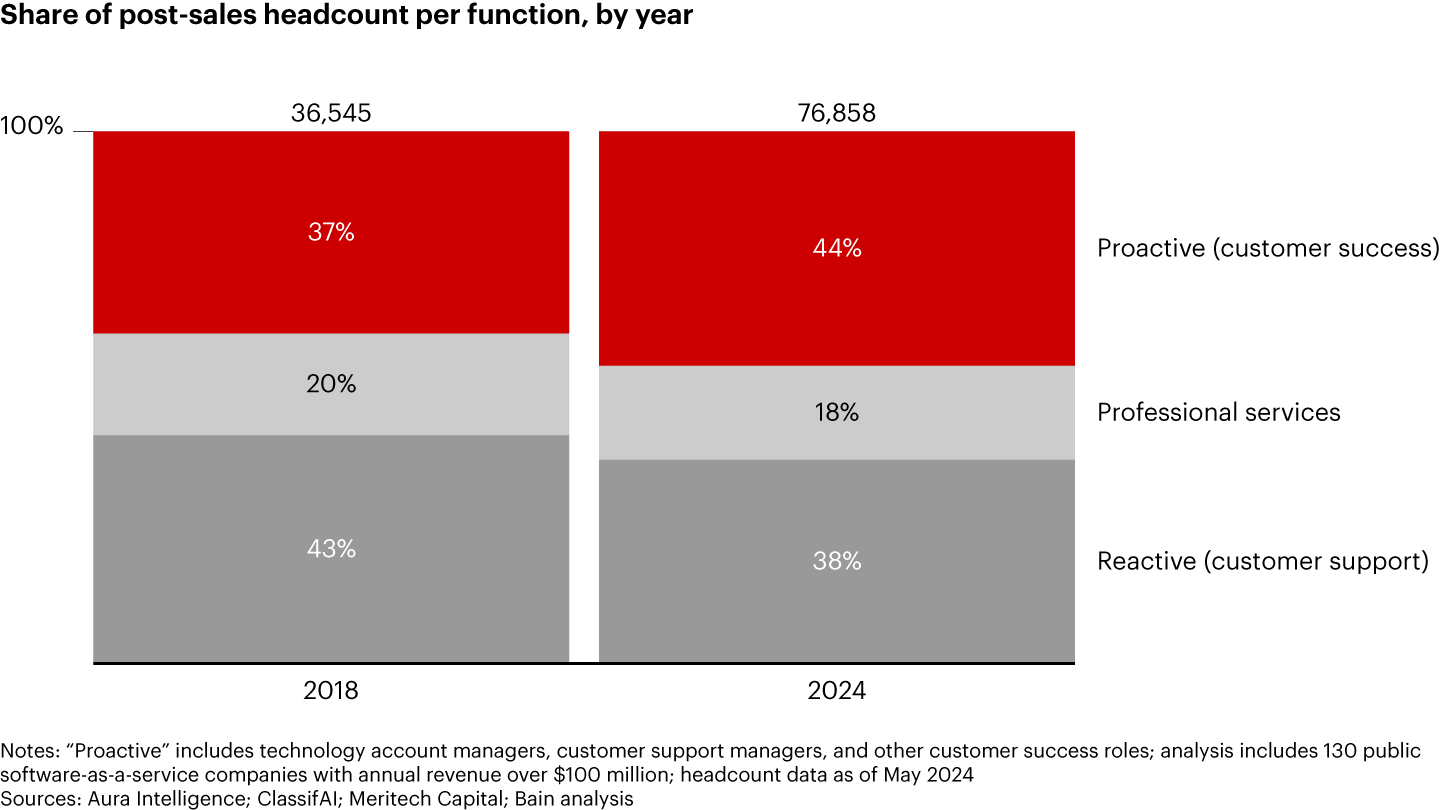
      Software vendors are emphasizing more proactive, specialized customer success roles

      However, these investments haven’t delivered the desired results. Software vendors’ deteriorating NRR rates align with our customer success survey data: nearly two-thirds of software customers feel their post-sales needs are only being moderately addressed or worse (see Figure 3).

      Figure 3
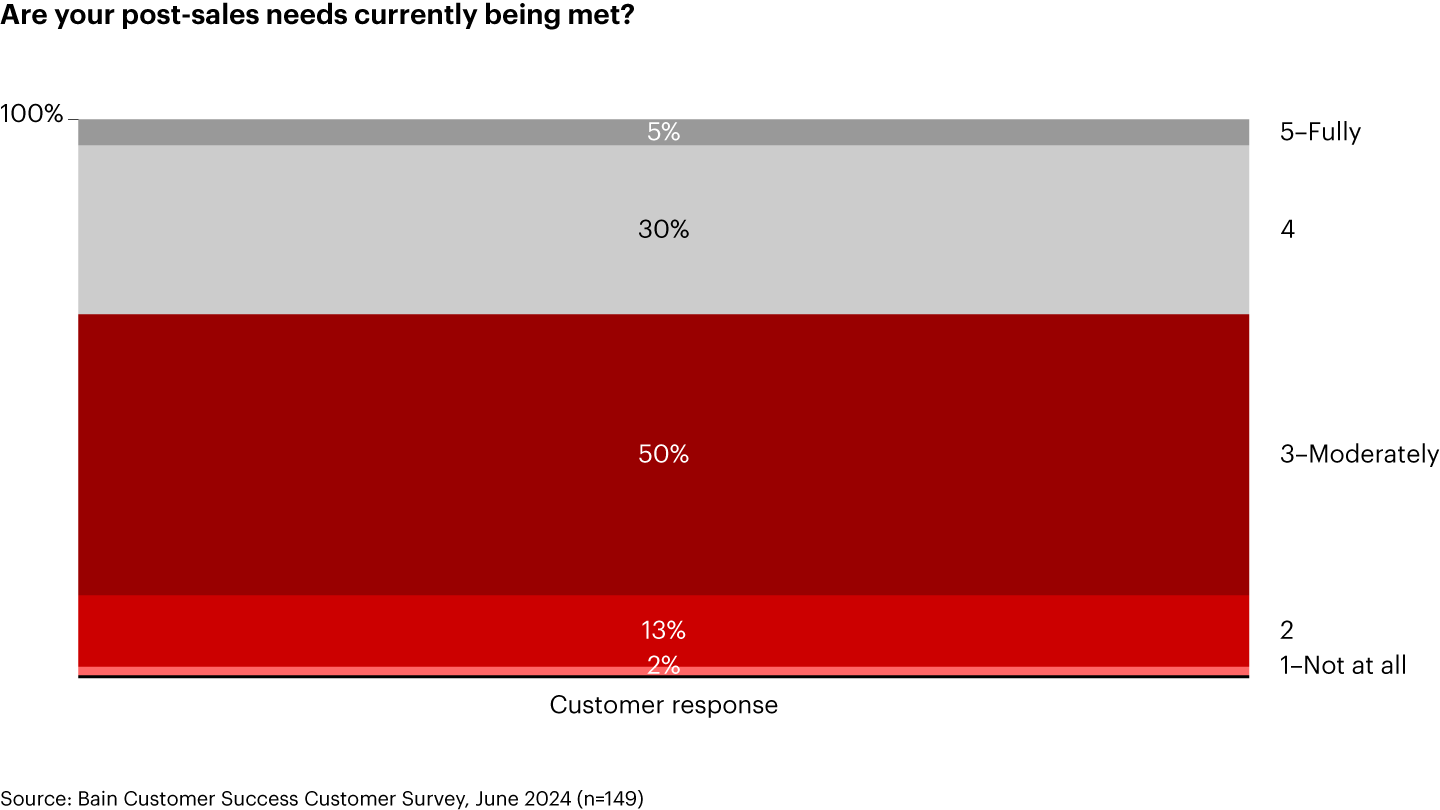
      About 65% of customers feel their post-sales needs are only being moderately addressed or worse

      Why? Our research found a mismatch between how vendors provide support and what customers value. In our recent survey, software buyers ranked assistance with technical implementation or deployment as their highest priority for customer success, while practitioners ranked it sixth (see Figure 4). Vendors often provide general assistance but have abdicated too much technical implementation to systems integration partners. Clearly, customers see a role for vendors to provide architectural support and technical implementation best practices, even if systems integrators continue to do the heavy lifting.

      Figure 4
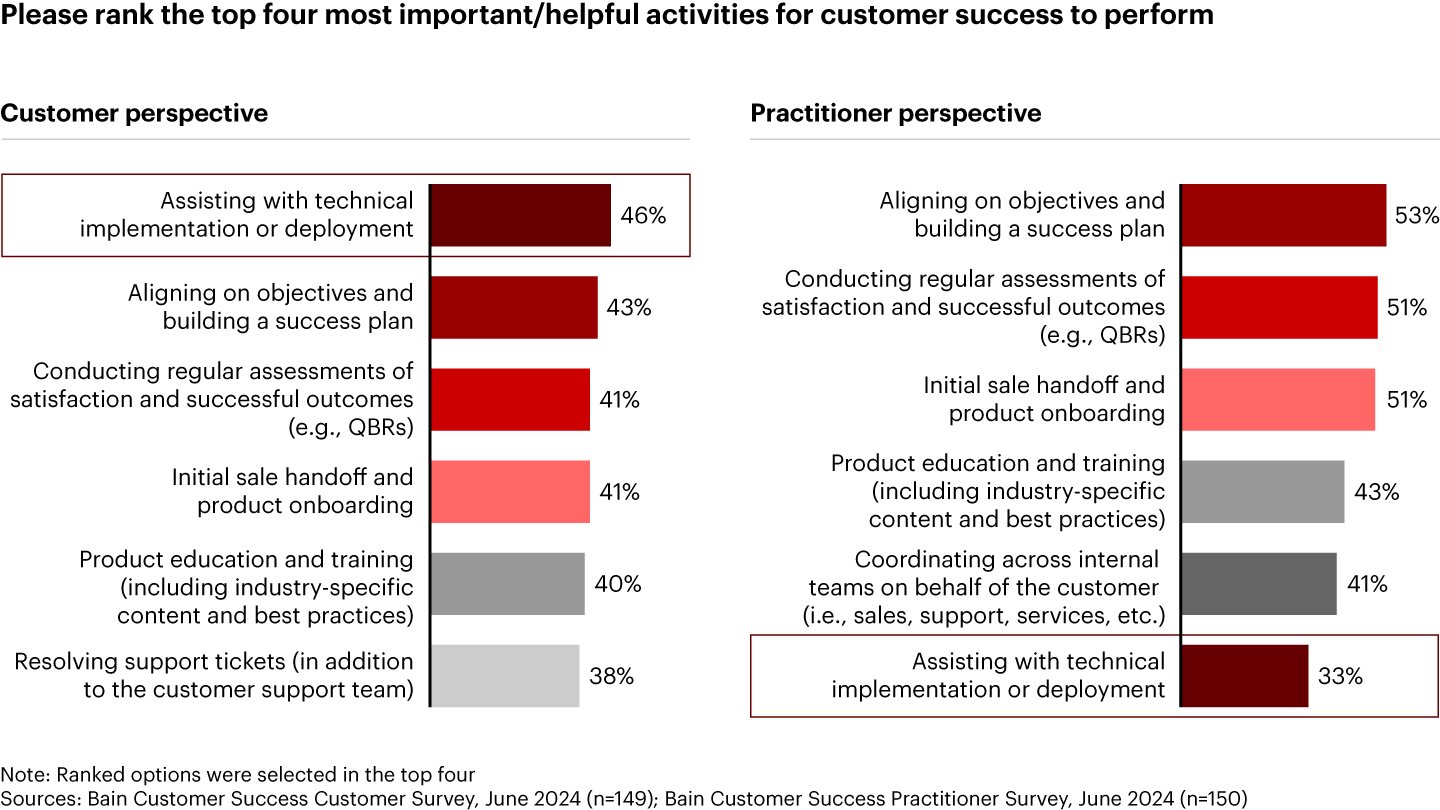
      Software buyers highly value assistance with technical implementation, but vendors see it as a lower priority in their customer success activities

      Another disconnect is that customers prefer a technical role as their primary contact for customer success, while vendors often assign a non-technical customer success manager instead, according to our survey.

      To be fair, customer success functions face intense pressure due to a broader push to reduce IT costs, increased scrutiny of internal budgets, and client procurement teams challenging add-on services such as paid, premium customer success offerings. These headwinds are compounding two long-standing challenges: It remains difficult to prove the return on customer success investments, and many of these teams are perceived as cost centers rather than revenue generators.

      That said, many vendors have hired excessively in customer success without validating their post-sales model, missing opportunities to deploy all post-sales functions more efficiently.

      What does good look like?

      Based on our work with software companies worldwide and analysis of companies with high NRR, we’ve found that the emerging leaders are focusing on the following key steps.

      1. Step into your customer’s shoes. Emerging leaders first map how customers interact with and derive value from the product, followed by mapping the broader customer journey from initial consideration through purchase, post-sales support, and renewal. It sounds like a given, but many companies’ product and engineering teams don’t articulate what the product’s value realization journey looks like or work to deeply understand customers’ needs, desired outcomes, and key touchpoints. This understanding will help post-sales teams not only focus on the moments that matter, but also identify where the product falls short. Leading companies don’t lose sight of the basic principle that product excellence is the true foundation of customer success.
      2. Redefine post-sales roles to better deliver on the customer success mandate. Blurring lines between post-sales functions has created confusion for customers and inefficiency for vendors. Leading companies are taking a blank-sheet approach: They clearly define all activities required for the customer journey, rationalizing roles from the customer’s perspective. Each role should have distinct responsibilities that collectively leave no gaps in customer success deliverables.

        Many leading companies are creating outcome-based success plans that ask customers to define what success looks like to them, which enables vendors to develop a catalog of post-sales service jobs that closely match customer needs. This improves efficiency while avoiding overly standardized activities that lose sight of the nuances of delivering value for individual customers with individual products.
      1. Coordinate the front lines. Reorganization alone won't solve customer success issues; companies must better coordinate frontline teams. A chief customer officer can help oversee coherence across the customer success, tech support, and professional services teams, but simply creating the role isn’t enough. The company must break down communication silos and design fluid handoffs between post-sales functions and partners that ensure a seamless customer experience.

        One key is to define the “swim lanes” within which each role supporting an account—including sales and post-sales—has a clear set of activities and interaction points with colleagues. This helps ensure clear accountability and a blueprint for collaboration. Leading firms have also prioritized effectively training, empowering, and managing customer success managers, recognizing their integral role in a successful customer engagement model.

        Because emerging leaders apply the right resource to the right activity at the right time, many have reduced spending while achieving better results. Unsurprisingly, our analysis found that companies with high NRR are much better than lower performers at cost-effectively deploying customer success resources.
      1. Don’t jump into generative AI applications before reassessing the underlying business process. Customer success teams that are extracting the most benefits from generative AI start by thoroughly evaluating existing business processes to identify pain points and transformational opportunities. With this foundation in place, they redesign key processes to take full advantage of generative AI and other advanced tools, ensuring that inefficiencies and existing problems aren’t automated (and thereby amplified). Leading companies are creating a comprehensive AI roadmap that strategically prioritizes use cases and quantifies the sources of productivity gains.
      2. Empower customers with digital self-service tools. Many customers prefer self-service options for training, onboarding, and support. Robust digital self-service tools can improve customer satisfaction and allow post-sales employees to spend the bulk of their time helping customers solve their greatest challenges. Generative AI can be transformational in this arena, but only if the company has a well-defined product and customer journey blueprint.

      The starting point

      Going forward, the most effective post-sales organizations will nimbly adapt to customer needs and market trends. To identify the right strategy, customer success practitioners can start by asking themselves the following questions: 

      • Which activities most affect customers’ return on software investments and subsequent purchase decisions, and how can we measure this?
      • Are we packaging monetized customer success services in a way that doesn't lose sight of the activities that spur ROI for customers?
      • Which activities are suitable for automation and digital self-service?
      • How can post-sales functions be effectively coordinated to ensure a seamless customer experience?

      Read the Next Chapter

      Updating Enterprise Technology to Scale to “AI Everywhere”

      Read our 2024 Technology Report

      Download the PDF Explore the report

      More from the report

      • Commercializing Innovation

      • Investing in a Shifting Market

      • Scope M&A

      • Sovereign AI

      • Top AI Functions

      • The AI Opportunity

      • Big and Small Computing

      • The AI Chip Shortage

      • The Software Cycle

      • AI in Tech Services

      • Deploying Generative AI

      • Software Development Efficiency

      • Customer Success

      • AI Everywhere

      著者
      • Headshot of Matt Eldridge
        Matt Eldridge
        パートナー, New York
      • Headshot of Greg Fiore
        Greg Fiore
        パートナー, San Francisco
      • Headshot of Simon Heap
        Simon Heap
        Advisory Partner, Silicon Valley
      • Headshot of Kenzie Haygood
        Kenzie Haygood
        パートナー, San Francisco
      関連業種
      • Software
      • テクノロジー
      関連するコンサルティングサービス
      • Customer Experience
      Technology Report
      Five Functions Where AI Is Already Delivering

      Spurred on by early success, companies of all sizes are increasing their spending on generative AI.

      詳細
      Technology Report
      Will Agentic AI Disrupt SaaS?

      Disruption is mandatory. Obsolescence is optional.

      詳細
      テクノロジー
      Why SaaS Stocks Have Dropped—and What It Signals for Software’s Next Chapter

      A sharp reset in valuations reflects AI-driven disruption, slowing retention, and a growing divide between incumbents and future winners.

      詳細
      Software
      Stay Relevant, Spark Energy: Pedro Arnt, CEO dLocal

      How can a hyperscaler grow at lightning speed without losing its soul? 

      詳細
      Technology Report
      State of the Art of Agentic AI Transformation

      Tech-forward enterprises have cracked the code on ROI for AI. Falling behind is riskier than ever as the next wave of agentic AI raises the stakes.

      詳細
      First published in 9月 2024
      Tags
      • Customer Experience
      • Software
      • Technology Report
      • テクノロジー

      クライアント支援事例

      サステイナビリティ、社会貢献 Can Microchips Turbocharge Sustainability Improvement?

      ケーススタディを見る

      Helping a Midsize ERP Player Compete against the Giants

      ケーススタディを見る

      顧客戦略、マーケティング Video: A Marketing Transformation Puts a Software Leader Back on Top

      ケーススタディを見る

      お気軽にご連絡下さい

      私達は、グローバルに活躍する経営者が抱える最重要経営課題に対して、厳しい競争環境の中でも成長し続け、「結果」を出すために支援しています。

      ベインの知見。競争が激化するグローバルビジネス環境で、日々直面するであろう問題について論じている知見を毎月お届けします。

      *プライバシーポリシーの内容を確認し、合意しました。

      プライバシーポリシーをご確認頂き、合意頂けますようお願い致します。
      Bain & Company
      お問い合わせ Sustainability Accessibility Terms of use Privacy Cookie Policy Sitemap Log In

      © 1996-2026 Bain & Company, Inc.

      お問い合わせ

      How can we help you?

      • ビジネスについて
      • プレス報道について
      • 採用について
      全てのオフィス