

論説

概要
- Airlines can eliminate nearly 70% of aviation emissions by 2050, largely by improving fuel efficiency and using sustainable aviation fuels, Bain research shows.
- Sustainable aviation fuel prices in 2050 will remain two to four times higher than the historical average of jet fuel.
- Hydrogen and electric propulsion will reduce less than 5% of 2050 aviation emissions, given the time required for the technologies to mature.
- Airlines’ efforts to decarbonize will increase operating costs by 8% to 18% by 2050 and significantly erode profit margins.
What happens if the technologies to reduce aviation’s carbon footprint are too costly or not ready to deploy at scale by 2050, the widely agreed target date to achieve net-zero emissions? In short: The price for air travel rises, demand drops, and air traffic growth slows or even declines. It’s a dour scenario that few governments and aviation industry executives want to contemplate. Most have embraced the optimistic view that the industry can, despite many obstacles, achieve net-zero emissions by 2050.
Our research points to a different outcome, especially if air traffic continues to grow faster than global GDP. The technologies that the industry needs to decarbonize are unlikely to be operating at scale by 2050, including next-generation green aircraft, given the current rate of fleet renewal. As a result, the industry will likely fall substantially short of its ambitious 2050 goal—barring a sufficient reduction in air traffic.
For leadership teams that are making investments and developing strategies toward a net-zero future, it's critical to understand which solutions will or will not be commercially viable and widely available by 2050. This article delves into the numbers that tell the story.
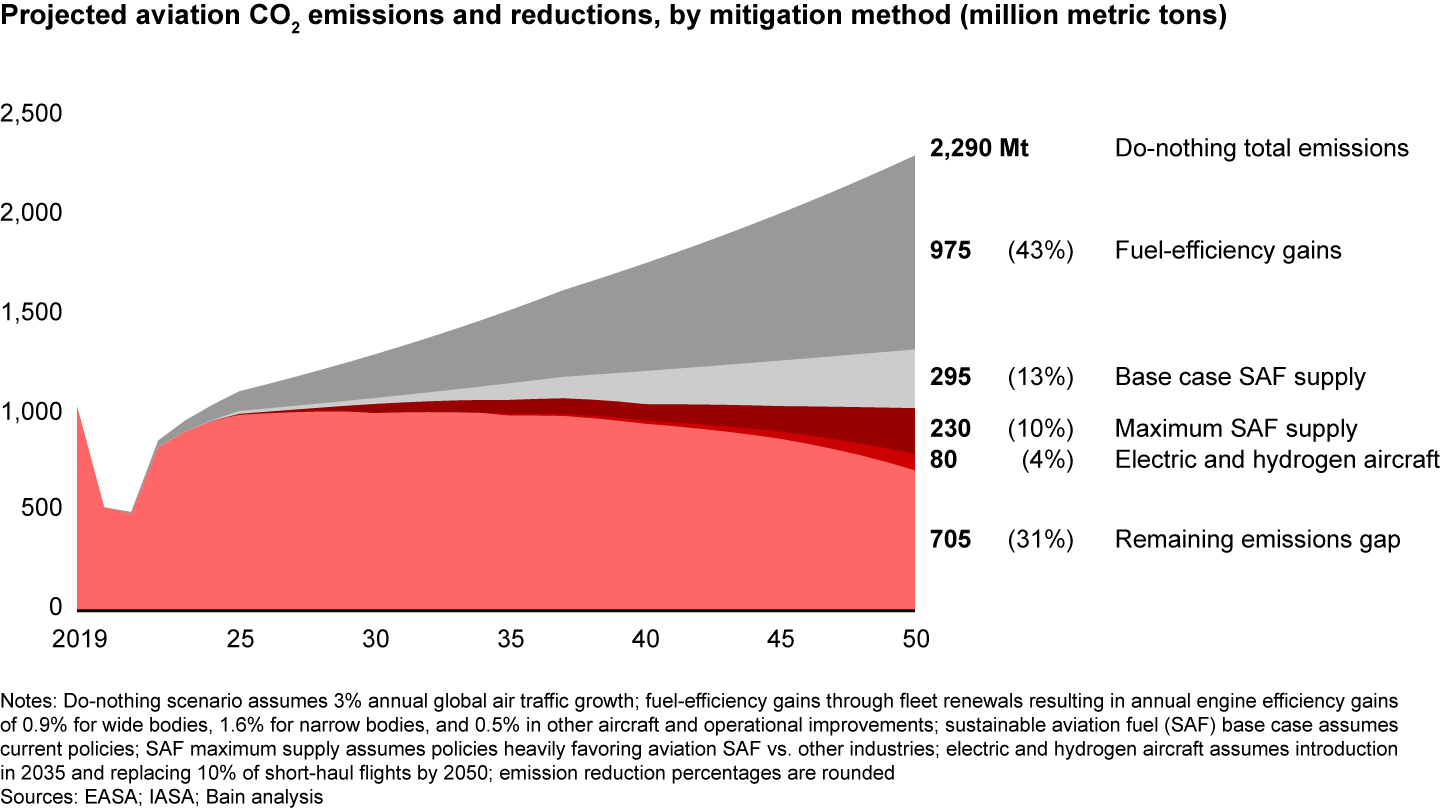
The most effective steps to reduce emissions in the next three decades are improving engine and aircraft efficiency, broader adoption of sustainable aviation fuels (SAF), and optimizing aircraft operations both in the air and on the ground. However, these solutions, together with a small contribution from new green aircraft powered by hydrogen or electricity, can only eliminate about 70% of 2050 emissions (see Figure 1). That estimate assumes that government policies shift to favor development of SAF over alternative-fuel development for other industries. It also assumes that the projections for life cycle CO₂ emissions reduction of 65% to 90% across different SAF conversion technologies (pathways) are validated over time.
Figure 1

The enormous cost of developing and deploying those solutions poses another challenge: higher prices for air travel. Our research shows the cost of decarbonizing will start increasing ticket prices as soon as 2026. That trend is likely to trim 3.5% of forecasted global demand by 2030. As the fundamental dynamics of the business shift, leadership teams will be forced to rethink their business models. The damage could be severe for companies that fail to anticipate change. Those that take a pragmatic view of decarbonization goals today will be best prepared to navigate the turbulent transition ahead.
No silver bullet
There’s no single solution for decarbonizing commercial aviation by 2050. All technologies that can contribute to the net-zero goal face challenges. Policy commitments by the US government and the European Commission can help increase the availability of SAF—and regulators consider most SAF pathways as viable options—but this cannot close the gap completely. We’ll talk more about the potential of SAF below. First, let’s look at the technologies that are likely to fall short of expectations.
Hydrogen and full-electric propulsion. Our analysis shows these two technologies combined are likely to reduce less than 5% of 2050 aviation emissions. Neither will mature fast enough to replace a substantial portion of the existing fleets in the next 30 years. And the first hydrogen and full-electric aircraft will face significant economic and technological obstacles. In the case of full-electric propulsion, battery densities are unlikely to evolve fast enough to power narrow-body or wide-body jets. Hydrogen’s low volumetric energy density requires changes to aircraft architecture, and hydrogen is difficult to transport and expensive to liquify. Both technologies require a huge level of investment and substantial changes to airport infrastructure and aircraft architecture.
Carbon offsets. Airlines can theoretically compensate for residual emissions by purchasing carbon credits to make up for greenhouse gasses. But offsets won’t help the industry reach carbon neutrality. And recent questions about offset accounting methods have undercut its viability as a solution. Several airlines such as JetBlue and EasyJet are already moving away from offsets.
A pragmatic approach
For airline leadership teams contemplating the path to net-zero emissions, there’s a pragmatic way forward that consists of leveraging more efficient engines and aircraft, securing and adopting SAF, and optimizing flight and ground operations. That approach could help the industry reduce up to 70% of CO₂ emissions by 2050, even as air traffic grows at an annual 3% pace.
Our research shows airlines can reduce CO₂ emissions by 43% through fuel efficiencies with current aircraft renewal cycles and operational improvements. A new generation of evolutionary engines and aircraft-frame design improvements would deliver 80% of these efficiency gains. Continued efforts to optimize flight and ground operations would deliver the rest. For additional improvement, airlines would need to drastically accelerate fleet renewal cycles. But an industrywide move to replace fleets ahead of schedule is unlikely given the business case for amortizing the full value of investments in aircraft.
Incorporating SAF on a wider scale could reduce CO₂ emissions by up to 23%. Without a change in current government policies, total SAF supply will be limited to about 135 million metric tons (Mt) in 2050, roughly 35% of the projected demand for global jet fuel (see Figure 2). Supply will remain constrained by the economic viability of different SAF feedstocks and competition from other industries (including energy) for biofuel feedstock.
Figure 2
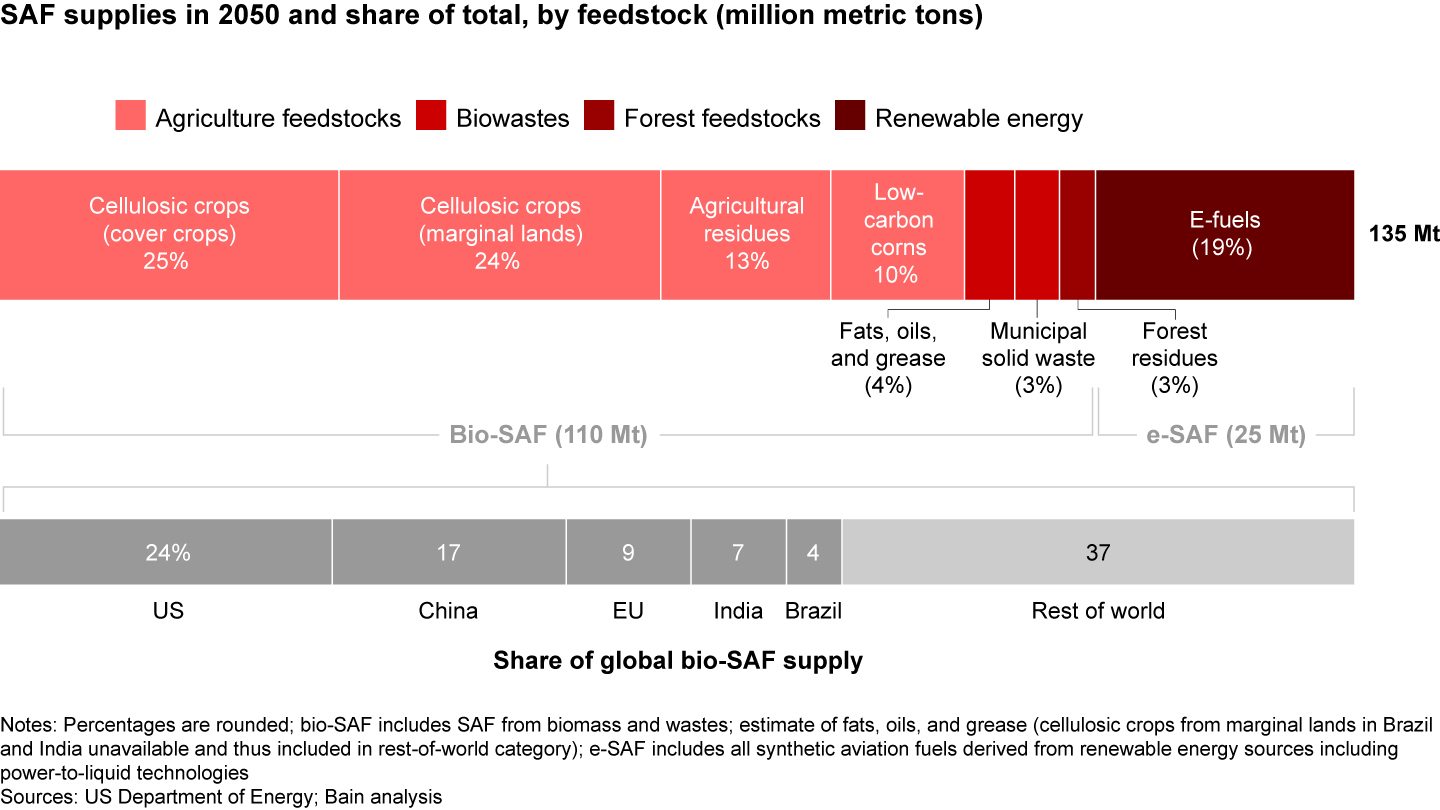

Power-to-liquids (PtL) fuel, composed of synthetically produced liquid hydrocarbons, holds promise for the future, but won’t contribute significantly to decarbonizing aviation by 2050. To be sustainable, the electricity used in the process must be produced from renewable energy sources such as solar and wind. And ideally, it should be available on a constant basis. But the supply of green electricity will be limited in the coming decades. Even if production could be increased, it is more beneficial to use green electricity to switch off high-emissions power sources such as coal or gas power plants, rather than using it to make e-fuels.
However, three government actions could significantly increase SAF supply by more than 100 Mt by 2050, bringing total SAF production to roughly 60% of global jet fuel demand. These actions include providing incentives to biofuel refineries to increase the production of SAF instead of renewable diesel (+60 Mt), prioritizing aviation for access to biofuel feedstock (+30 Mt), and directing green hydrogen to SAF refineries to boost the yield of the Fischer–Tropsch process (+15 Mt).
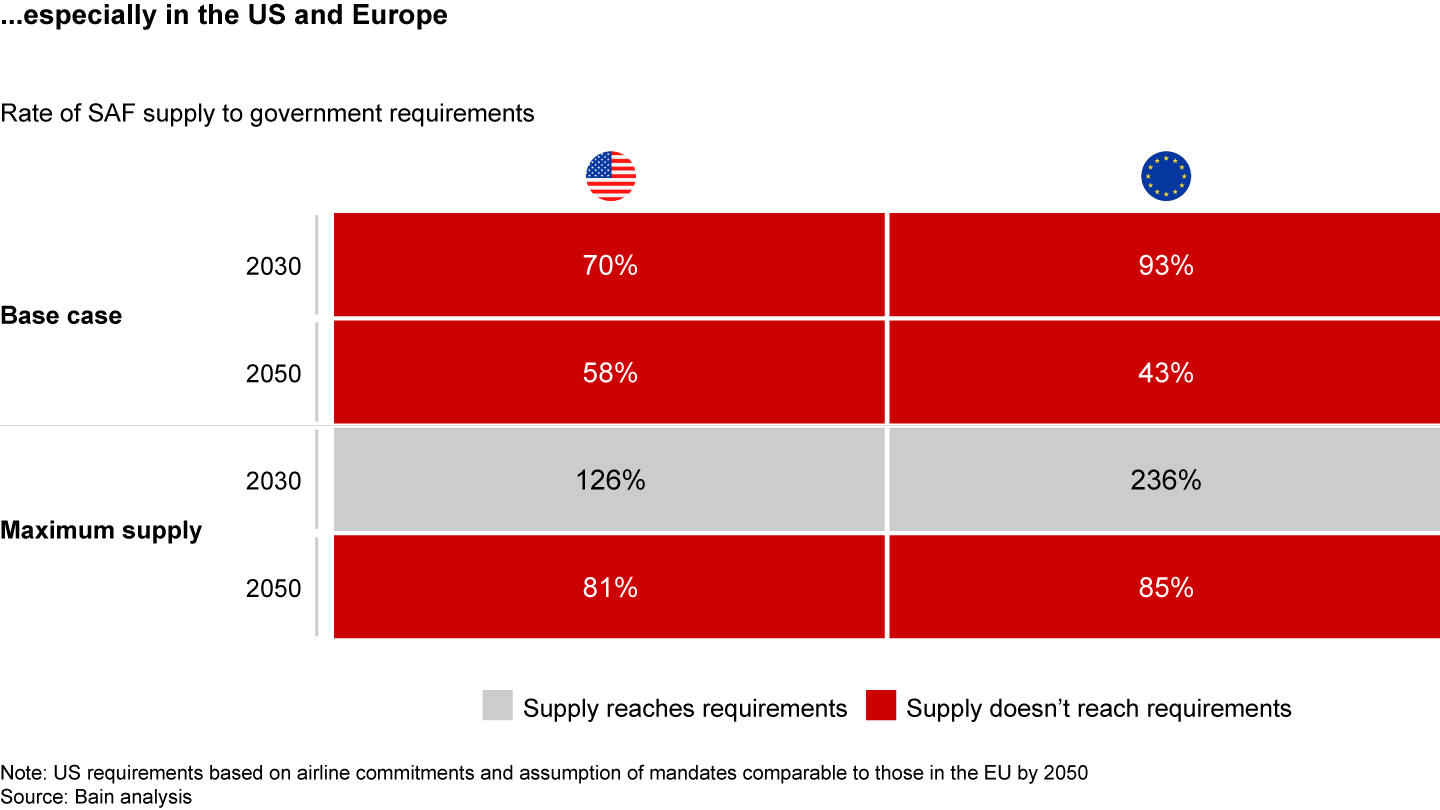
Even with strong government support, SAF supplies in 2050 are likely to fall short of government mandates, such as the recent ReFuelEU agreement in the European Union. Absent imports, the US supply would be at most 81% of commitments and the EU supply would be 85% (see Figure 3).
Figure 3a
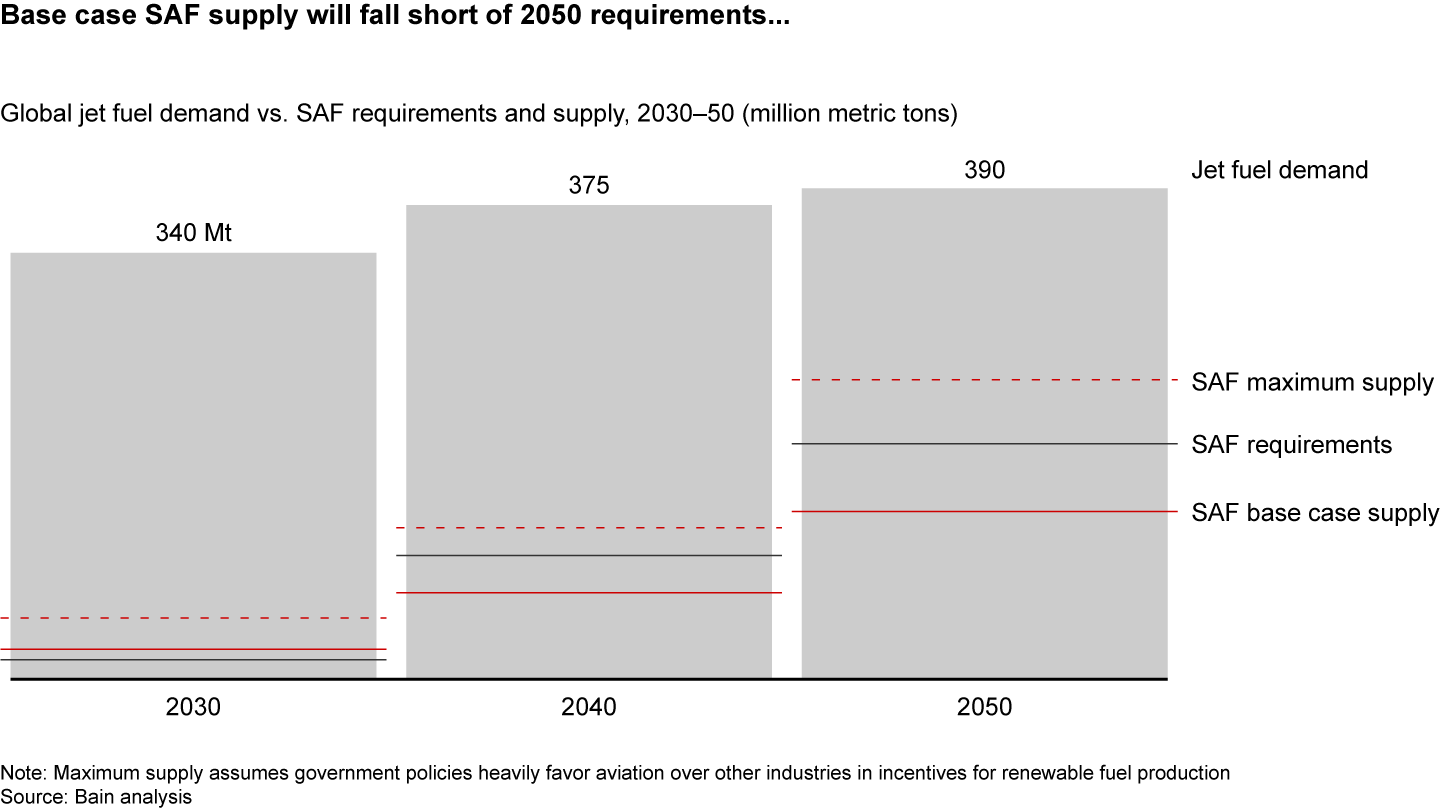

Figure 3b

Finally, many overlook the fact that the different types of SAF aren’t equally effective at reducing emissions. Compared with standard jet fuel, SAF may cut between 65% and 90% of emissions depending on the pathway, according to prevailing estimates. That’s a key consideration for leadership teams as they develop SAF supply strategies.
Given those limitations on even the most promising solutions to decarbonize aviation, the industry is likely to fall short of its goal to reach net zero by 2050—especially if air traffic continues to grow 3% or faster per year. A less palatable scenario to close the gap would be limiting air traffic growth between 0.5% and 1% annually through 2050. That calculation implies a decline in countries where the commitment to decarbonize is highest, such as in the EU. It also assumes limited use of carbon offsets on the residual emissions.
Higher costs
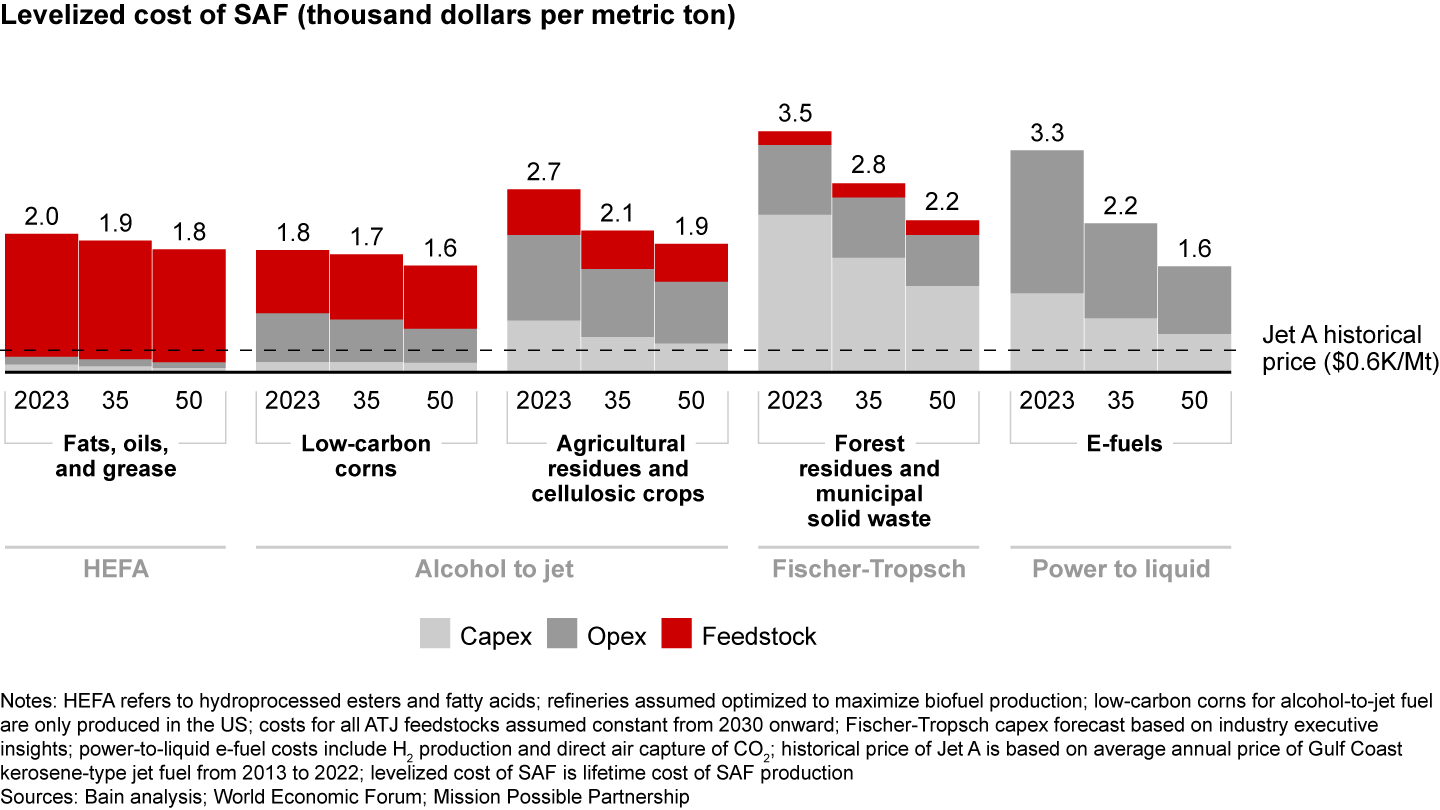
Our research shows SAF prices in 2050 will remain two to four times higher than the average historical price of Jet A fuel over the past decade, depending on the pathway (see Figure 4). Regional imbalances in supply and demand, as well as increased competition for access to biofuel feedstock, could push up SAF prices.
Figure 4

And to produce between 135 Mt and 250 Mt of SAF by 2050, the industry will need to invest $1.6 trillion to $2.1 trillion. That sum includes $1.0 trillion to $1.4 trillion to build refineries for hydroprocessed esters and fatty acids (HEFA), Fischer–Tropsch fuels, and alcohol-to-jet (ATJ) fuels. It also includes an investment of $600 billion to $700 billion in electrolysis and carbon-capture technology to develop e-fuels.
At the same time, new aircraft will cost more to buy and maintain. Higher prices for SAF and aircraft mean airlines’ overall costs are likely to increase by 8% to 18% by 2050, our research shows.
The impact of these trends on specific commercial airlines will differ based on local regulation, including government commitments to decarbonization, and the business model (e.g., full-service carrier vs. low-cost carrier, long-haul vs. short haul). The airlines most affected by increases in fuel cost—long-haul carriers, high-growth low-cost carriers, or airlines with older fleets—will have more incentives to consider adjusting fleet-renewal cycles.
To protect their margins, leading airlines are considering changes to cabin density, adjustments to fleet mix and seat count, and network plan realignment. Barring technological breakthroughs, airlines will also need to increase ticket prices. That, in turn, will affect demand in the most price-sensitive segments of the business.
Leading aviation companies can prepare for a disruptive decade ahead by taking four important steps.
- Develop a strategy to secure an affordable supply of SAF. That may include investing in fuel production (buy, build, or partner) and advocating for fair regulation or subsidies for SAFs vs. Jet A.
- Find ways to pass costs to customers, especially on less price-sensitive segments.
- Rethink fleet-renewal plans, considering the cost of decarbonization and changes in competitive dynamics, including different regional mandates for SAF.
- Mitigate the rise in operating costs. Review fleet-renewal cycles, increase cabin density, adjust fleet usage and seat count, and review network plans.
Knock-on effect across the value chain
Leading airframe manufacturers and engine OEMs are moving quickly to review their commercial approach in a more polarized world. Those that take the lead in the race to develop narrow-body green aircraft will gain a competitive edge.
Maintenance, repair, and operations companies and lessors will need to avoid exposure to older and stranded assets. Larger companies will have an advantage managing trade-offs across geographies and customers.
Governments and regulators will need to give the industry a clear roadmap to net zero, in particular on SAF and green aircraft technologies.
Aviation industry leaders can improve the prospects for decarbonization by making a strong case to governments and regulators to prioritize the development of SAF over alternative fuels for other industries.
Commercial aviation’s transition to net zero will be long and complex. Many assumptions could change as technologies evolve and the path to full decarbonization is likely to stretch beyond 2050. Regardless of the timing, commercial aviation companies are headed for unprecedented disruption. Some firms may struggle to survive. Leaders who understand the full implications of net-zero emissions and take pragmatic steps to prepare for change will be best positioned in the new era.
First published in 6月 2023