Skip to Content
  • オフィス

    オフィス

    北米・南米
    • Atlanta
    • Austin
    • Bogota
    • Boston
    • Buenos Aires
    • Chicago
    • Dallas
    • Denver
    • Houston
    • Los Angeles
    • Mexico City
    • Minneapolis
    • Monterrey
    • Montreal
    • New York
    • Rio de Janeiro
    • San Francisco
    • Santiago
    • São Paulo
    • Seattle
    • Silicon Valley
    • Toronto
    • Washington, DC
    ヨーロッパ・中東・アフリカ
    • Amsterdam
    • Athens
    • Berlin
    • Brussels
    • Copenhagen
    • Doha
    • Dubai
    • Dusseldorf
    • Frankfurt
    • Helsinki
    • Istanbul
    • Johannesburg
    • Kyiv
    • Lisbon
    • London
    • Madrid
    • Milan
    • Munich
    • Oslo
    • Paris
    • Riyadh
    • Rome
    • Stockholm
    • Vienna
    • Warsaw
    • Zurich
    アジア・オーストラリア
    • Bangkok
    • Beijing
    • Bengaluru
    • Brisbane
    • Ho Chi Minh City
    • Hong Kong
    • Jakarta
    • Kuala Lumpur
    • Manila
    • Melbourne
    • Mumbai
    • New Delhi
    • Perth
    • Shanghai
    • Singapore
    • Sydney
    • Tokyo
    全てのオフィス
  • アルムナイ
  • メディア
  • お問い合わせ
  • 東京オフィス
  • Japan | 日本語

    地域と言語を選択

    グローバル
    • Global (English)
    北米・南米
    • Brazil (Português)
    • Argentina (Español)
    • Canada (Français)
    • Chile (Español)
    • Colombia (Español)
    ヨーロッパ・中東・アフリカ
    • France (Français)
    • DACH Region (Deutsch)
    • Italy (Italiano)
    • Spain (Español)
    • Greece (Elliniká)
    アジア・オーストラリア
    • China (中文版)
    • Korea (한국어)
    • Japan (日本語)
  • Saved items (0)
    Saved items (0)

    You have no saved items.

    後で閲読、共有できるようにするためにブックマークしてください

    Explore Bain Insights
  • 業界別プラクティス
    メインメニュー

    業界別プラクティス

    • 航空宇宙、防衛、政府関連
    • 農業
    • 化学製品
    • インフラ、建設
    • 消費財
    • 金融サービス
    • ヘルスケア
    • 産業機械、設備
    • メディア、エンターテインメント
    • 金属
    • 採掘・鉱業
    • 石油、ガス
    • 紙、パッケージ
    • プライベートエクイティ
    • 公共、社会セクター
    • 小売
    • テクノロジー
    • 通信
    • 交通
    • 観光産業
    • 公益事業、再生可能エネルギー
  • 機能別プラクティス
    メインメニュー

    機能別プラクティス

    • カスタマー・エクスペリエンス
    • サステイナビリティ、 社会貢献
    • Innovation
    • 企業買収、合併 (M&A)
    • オペレーション
    • 組織
    • プライベートエクイティ
    • マーケティング・営業
    • 戦略
    • アドバンスド・アナリティクス
    • Technology
    • フルポテンシャル・トランスフォーメーション
  • Digital
  • 知見/レポート
  • ベイン・アンド・カンパニーについて
    メインメニュー

    ベイン・アンド・カンパニーについて

    • ベインの信条
    • 活動内容
    • 社員とリーダーシップ
    • プレス・メディア情報
    • クライアントの結果
    • 受賞歴
    • パートナーシップを結んでいる団体
    Further: Our global responsibility
    • ダイバーシティ
    • 社会貢献
    • サステイナビリティへの取り組み
    • 世界経済フォーラム(WEF)
    Learn more about Further
  • キャリア
    メインメニュー

    キャリア

    • ベインで働く
      キャリア
      ベインで働く
      • Find Your Place
      • ベインで活躍する機会
      • ベインのチーム体制
      • 学生向けページ
      • インターンシップ
      • 採用イベント
    • ベインでの体験
      キャリア
      ベインでの体験
      • Blog: Inside Bain
      • キャリアストーリー
      • 社員紹介
      • Where We Work
      • 成長を後押しするサポート体制
      • アフィニティ・グループ
      • 福利厚生
    • Impact Stories
    • 採用情報
      キャリア
      採用情報
      • 採用プロセス
      • 面接内容
    FIND JOBS
  • オフィス
    メインメニュー

    オフィス

    • 北米・南米
      オフィス
      北米・南米
      • Atlanta
      • Austin
      • Bogota
      • Boston
      • Buenos Aires
      • Chicago
      • Dallas
      • Denver
      • Houston
      • Los Angeles
      • Mexico City
      • Minneapolis
      • Monterrey
      • Montreal
      • New York
      • Rio de Janeiro
      • San Francisco
      • Santiago
      • São Paulo
      • Seattle
      • Silicon Valley
      • Toronto
      • Washington, DC
    • ヨーロッパ・中東・アフリカ
      オフィス
      ヨーロッパ・中東・アフリカ
      • Amsterdam
      • Athens
      • Berlin
      • Brussels
      • Copenhagen
      • Doha
      • Dubai
      • Dusseldorf
      • Frankfurt
      • Helsinki
      • Istanbul
      • Johannesburg
      • Kyiv
      • Lisbon
      • London
      • Madrid
      • Milan
      • Munich
      • Oslo
      • Paris
      • Riyadh
      • Rome
      • Stockholm
      • Vienna
      • Warsaw
      • Zurich
    • アジア・オーストラリア
      オフィス
      アジア・オーストラリア
      • Bangkok
      • Beijing
      • Bengaluru
      • Brisbane
      • Ho Chi Minh City
      • Hong Kong
      • Jakarta
      • Kuala Lumpur
      • Manila
      • Melbourne
      • Mumbai
      • New Delhi
      • Perth
      • Shanghai
      • Singapore
      • Sydney
      • Tokyo
    全てのオフィス
  • アルムナイ
  • メディア
  • お問い合わせ
  • 東京オフィス
  • Japan | 日本語
    メインメニュー

    地域と言語を選択

    • グローバル
      地域と言語を選択
      グローバル
      • Global (English)
    • 北米・南米
      地域と言語を選択
      北米・南米
      • Brazil (Português)
      • Argentina (Español)
      • Canada (Français)
      • Chile (Español)
      • Colombia (Español)
    • ヨーロッパ・中東・アフリカ
      地域と言語を選択
      ヨーロッパ・中東・アフリカ
      • France (Français)
      • DACH Region (Deutsch)
      • Italy (Italiano)
      • Spain (Español)
      • Greece (Elliniká)
    • アジア・オーストラリア
      地域と言語を選択
      アジア・オーストラリア
      • China (中文版)
      • Korea (한국어)
      • Japan (日本語)
  • Saved items  (0)
    メインメニュー
    Saved items (0)

    You have no saved items.

    後で閲読、共有できるようにするためにブックマークしてください

    Explore Bain Insights
  • 業界別プラクティス
    • 業界別プラクティス

      • 航空宇宙、防衛、政府関連
      • 農業
      • 化学製品
      • インフラ、建設
      • 消費財
      • 金融サービス
      • ヘルスケア
      • 産業機械、設備
      • メディア、エンターテインメント
      • 金属
      • 採掘・鉱業
      • 石油、ガス
      • 紙、パッケージ
      • プライベートエクイティ
      • 公共、社会セクター
      • 小売
      • テクノロジー
      • 通信
      • 交通
      • 観光産業
      • 公益事業、再生可能エネルギー
  • 機能別プラクティス
    • 機能別プラクティス

      • カスタマー・エクスペリエンス
      • サステイナビリティ、 社会貢献
      • Innovation
      • 企業買収、合併 (M&A)
      • オペレーション
      • 組織
      • プライベートエクイティ
      • マーケティング・営業
      • 戦略
      • アドバンスド・アナリティクス
      • Technology
      • フルポテンシャル・トランスフォーメーション
  • Digital
  • 知見/レポート
  • ベイン・アンド・カンパニーについて
    • ベイン・アンド・カンパニーについて

      • ベインの信条
      • 活動内容
      • 社員とリーダーシップ
      • プレス・メディア情報
      • クライアントの結果
      • 受賞歴
      • パートナーシップを結んでいる団体
      Further: Our global responsibility
      • ダイバーシティ
      • 社会貢献
      • サステイナビリティへの取り組み
      • 世界経済フォーラム(WEF)
      Learn more about Further
  • キャリア
    人気検索キーワード
    • デジタル
    • 戦略
    前回の検索
      最近訪れたページ

      Content added to saved items

      Saved items (0)

      Removed from saved items

      Saved items (0)

      レポート

      The Bank Branch and Call Center Traffic Jam

      The Bank Branch and Call Center Traffic Jam

      Why do customers keep visiting tellers and calling the contact center?

      著者:Maureen Burns, Gerard du Toit, Mark Schofield and Christy de Gooyer

      • min read
      }

      レポート

      The Bank Branch and Call Center Traffic Jam
      en

      Explore Bain’s latest Customer Loyalty in Banking insights.

      Dazed and confused

      It could be a game show bonus question: Who is more likely to call his bank contact center, a plugged-in millennial in Brooklyn or a retiree fresh off the tennis court at The Villages in Florida?

      Surprisingly, that young, bearded, plaid-shirted hipster is placing calls to his bank at 1.7 times the rate of our 70-something slice-meister. Millennials may be fluent in Siri, but they are still on the learning curve for paying bills, depositing checks, transferring money and generally resolving issues with their accounts. They also visit the bank branch fairly frequently—and not for free coffee.

      Can this really be happening in 2016? After all, retail banks have been trying to automate consumer transactions since the introduction of the ATM in 1967. Their motive is obvious: Each mobile interaction incurs a variable cost of about 10 cents, vs. $4 for a teller or call-agent interaction. And mobile has half the likelihood of annoying a customer. Yet despite the increasing power and presence of mobile devices, US banks have a long way to go to realize the promise of digital self-service. For example, nearly 90% of the 5,300 US banking consumers recently surveyed by Bain & Company visited a teller during the previous quarter, and nearly half called their bank.

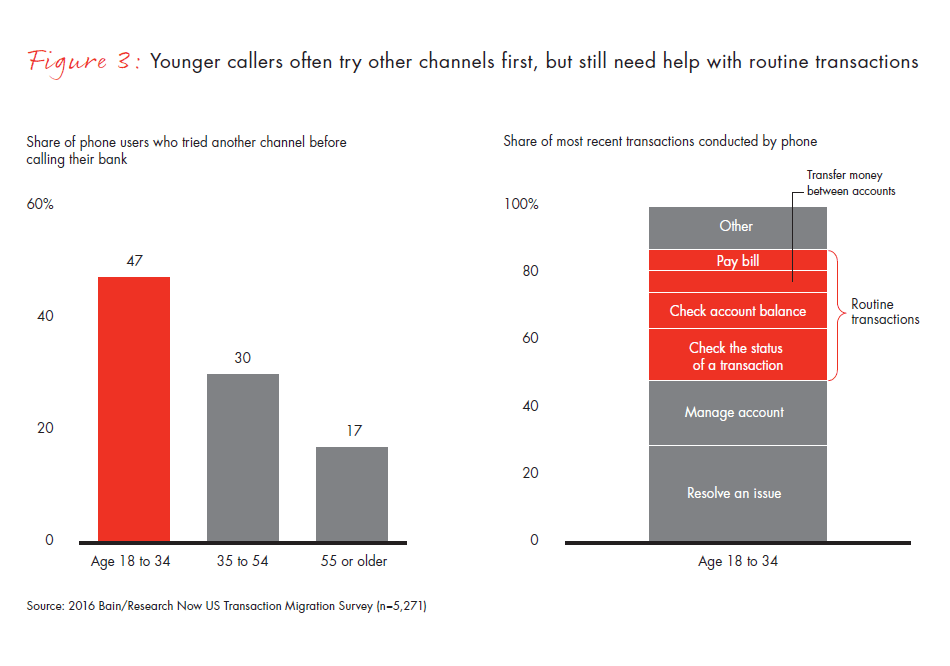
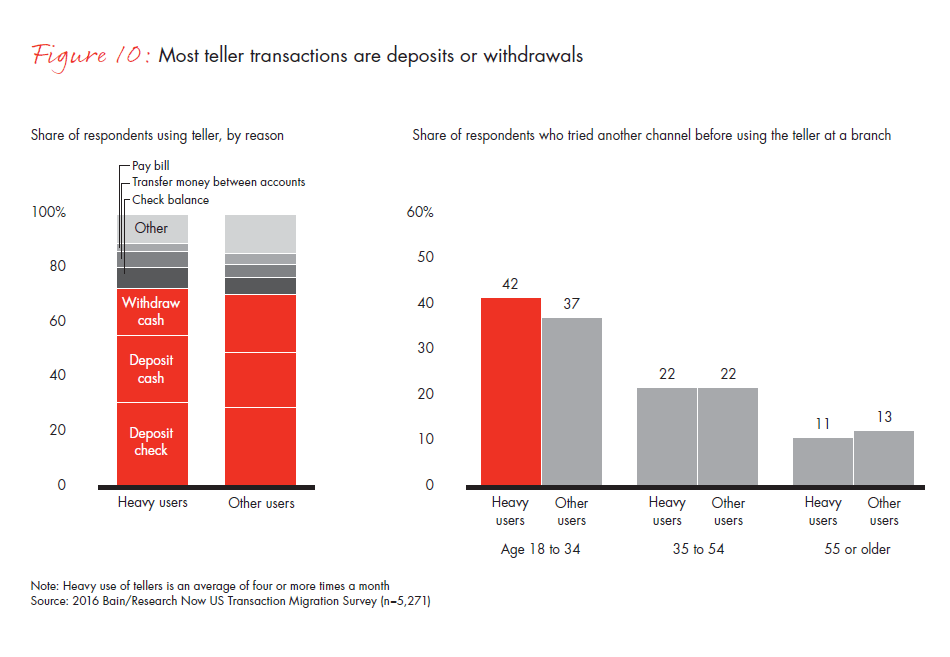
      When we analyzed the survey data to explore why this behavior persists, we found some surprising dynamics. Younger customers, while frequent mobile users, report that they find digital channels confusing or inadequate for their banking, and often need help. Among the heaviest teller users, for instance, 42% of the younger ones tried using another channel before visiting the branch.

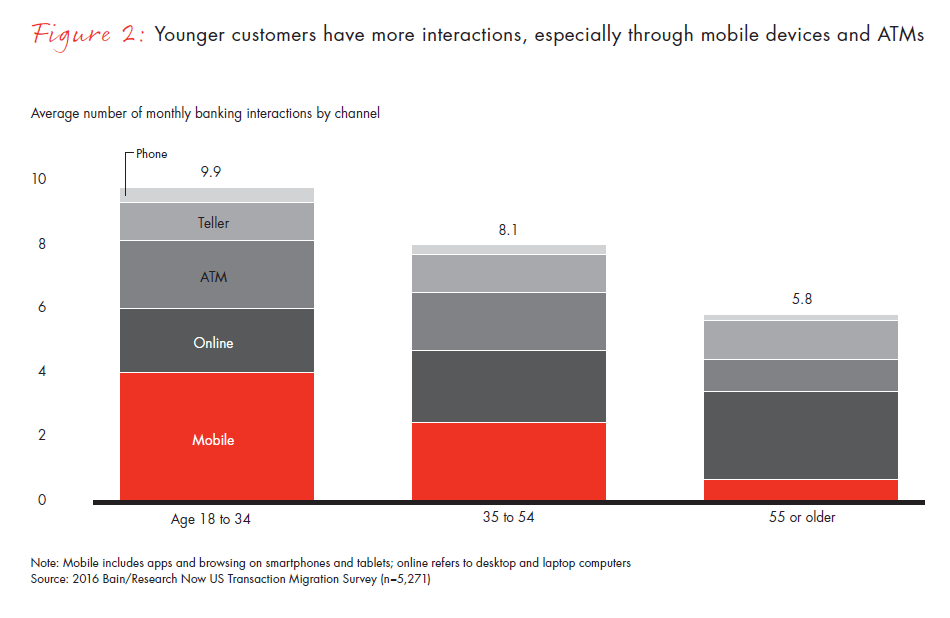
      Moreover, respondents age 18–24 make twice the number of banking interactions on average as respondents 65 and older. (The charts featured in this report sort respondents into three age categories—18–34, 35–54, and 55 and older—but our analysis included narrower age categories as well.) The large volumes from younger customers flow through numerous channels, raising costs for the bank and frustration for the customers.

      As if dealing with that flood of calls and teller visits weren’t challenging enough for banks, consider another overlooked opportunity: migrating older customers from the branch to mobile.

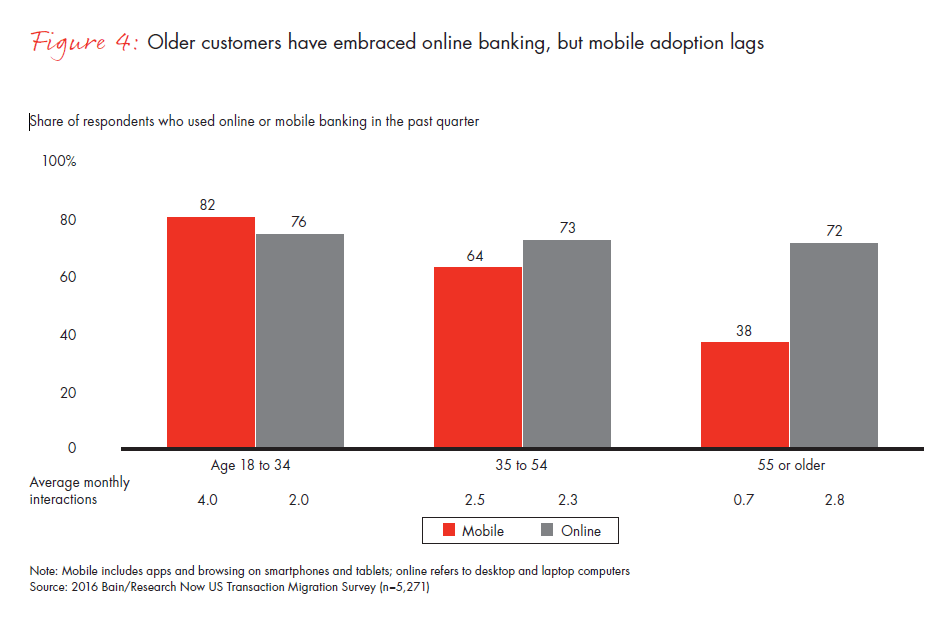
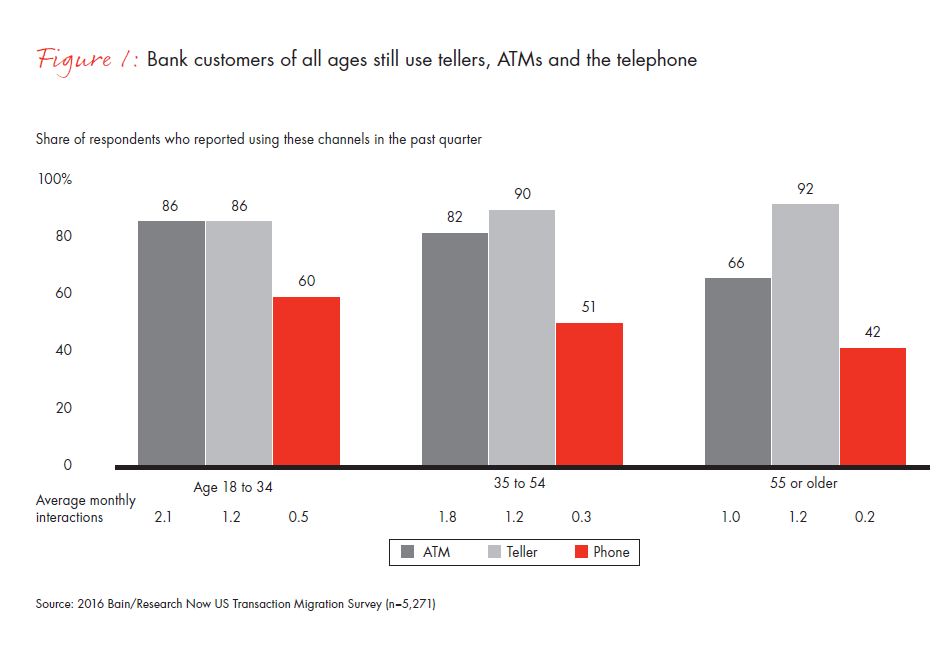
      Older customers are more likely than younger ones to visit their tellers—92% of respondents over 65 made at least one teller visit in the previous quarter vs. 84% of the youngest group. Seniors have not even fully embraced ATMs, with just 61% using the machines, compared with 87% of the youngest respondents. Seniors also are far less likely to use banking mobile apps or websites, with only 31% trying those digital channels, compared with 82% of millennials.

      customer-loyalty-in-retail-banking-2016-99x93
      RELATED REPORT
      Customer Loyalty in Retail Banking: Global Edition 2016
      There's an $11.4 billion annual savings opportunity available to largest US banks if they create strong digital channels and reduce the number of high-cost branch and call-center interactions.

      Ripe for mobile conversion


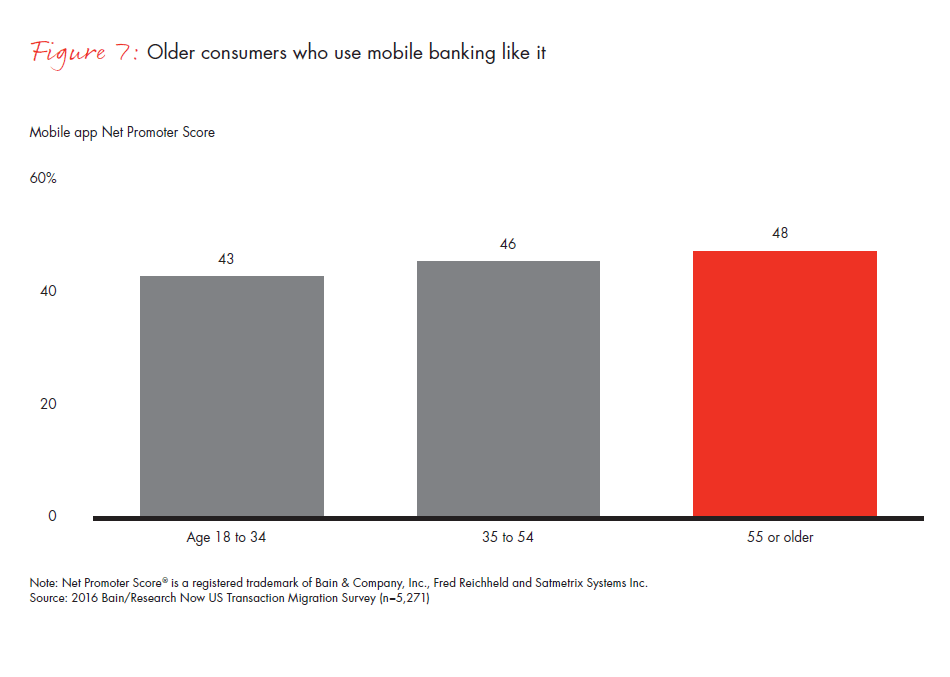
      What causes such demographic disparities? One convenient narrative, that seniors resist new technology, does not appear to apply. When older customers do use a bank mobile app, they generally like the experience, giving it a slightly higher Net Promoter Score® (a key metric of customer loyalty) than younger customers do. And older users have more banking interactions online through their computers than younger customers.

      Senior customers thus appear to be ripe for mobile conversion. They’re willing to learn new technology if banks provide them with the right help and support to do so. After all, consider how many seniors patronize Apple’s in-store Genius Bar.

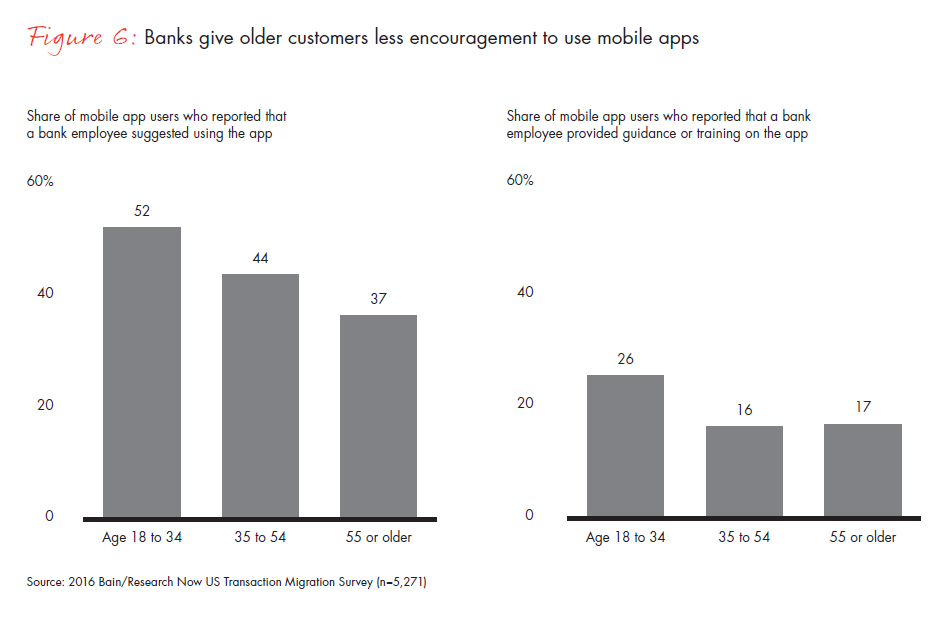
      To overcome the barriers, survey evidence suggests that banks should look within to their unconscious ageism. Only 17% of older respondents said they have received any guidance or training on how to use their bank’s mobile app, compared with 26% of young respondents. Whether some banks assume older customers are not interested, or have decided that creating an effective guidance process is too much trouble or a low priority, these banks are missing a major opportunity to shift transaction volume to lower-cost mobile channels among the people who value it the most.

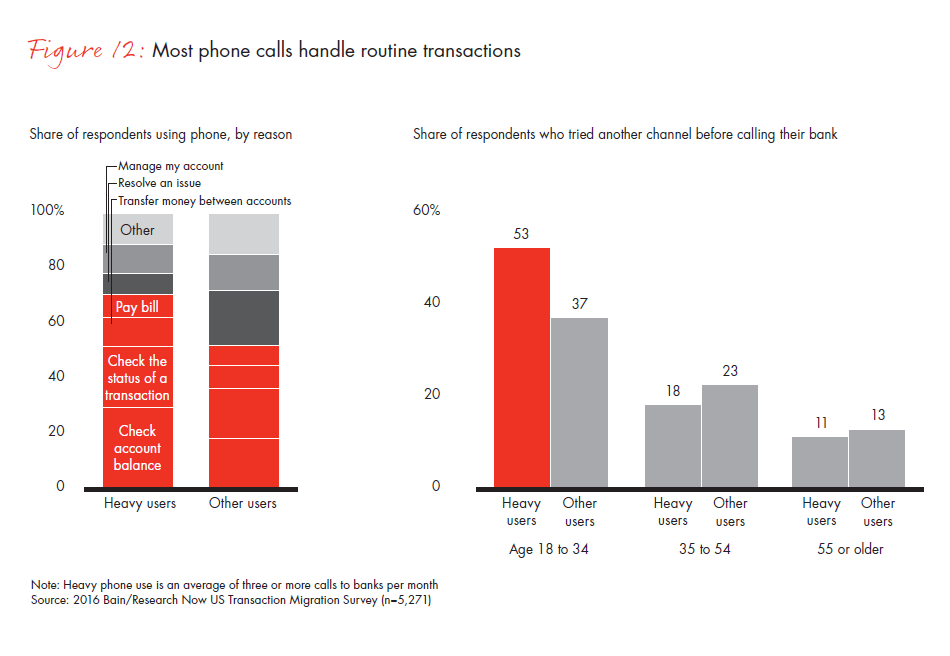
      Among customers of all ages, much of the volume in branches and call centers consists of routine interactions that could be avoided if customers felt better served by digital. Almost three-quarters of reported branch transactions and more than half of phone interactions deal with deposits, withdrawals, checking one’s account and other routine matters.

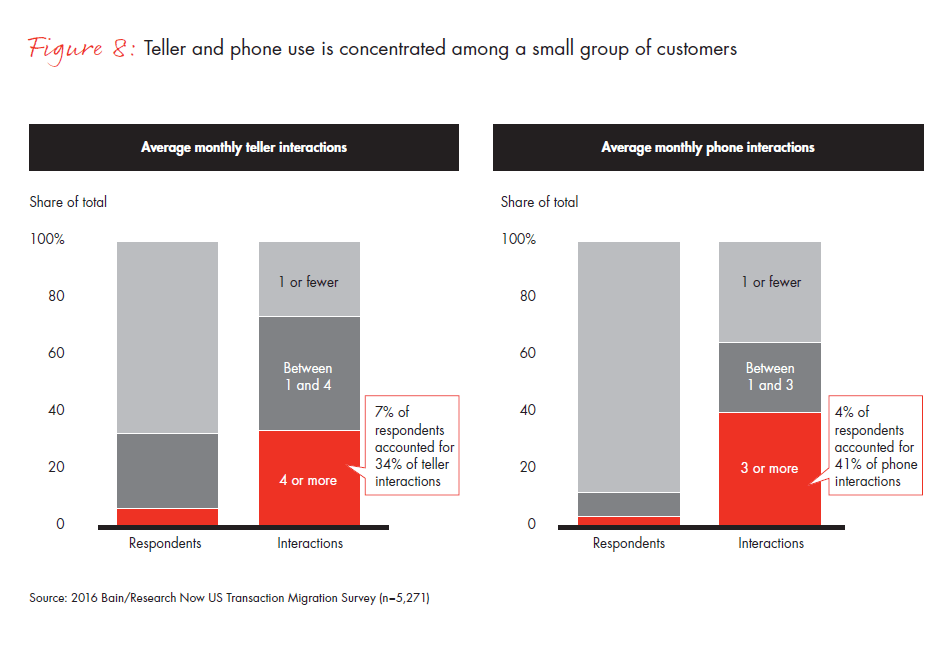
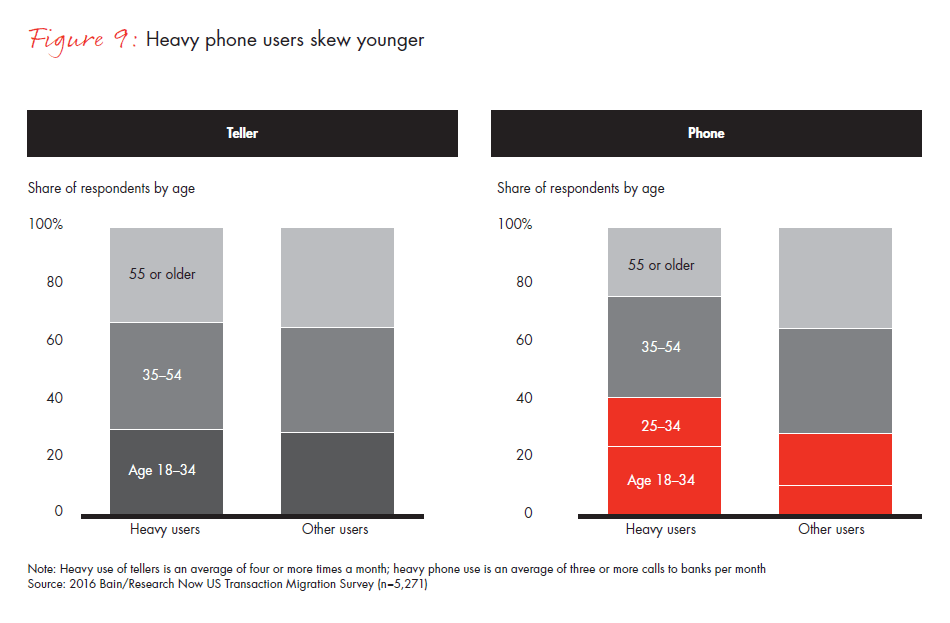
      One glimmer of hope for banks is that a relatively small share of customers account for much of the transaction activity. The most active 7% of respondents accounted for 34% of teller visits, and the most active 4% accounted for 41% of phone calls. Dealing with these groups first would be the quickest route to generating significant results.

      Two-track tactics


      Consumers’ responses suggest that banks would benefit by creating different tracks for guidance and incentives to change consumer habits: Teach the young to bank and the old to self-bank. As banks reconsider their tactics, they will want to devise interventions by frontline branch and call agents that blend education and encouragement: For example, not “why don’t you use your phone?” but “would you like to see how you could save time?”

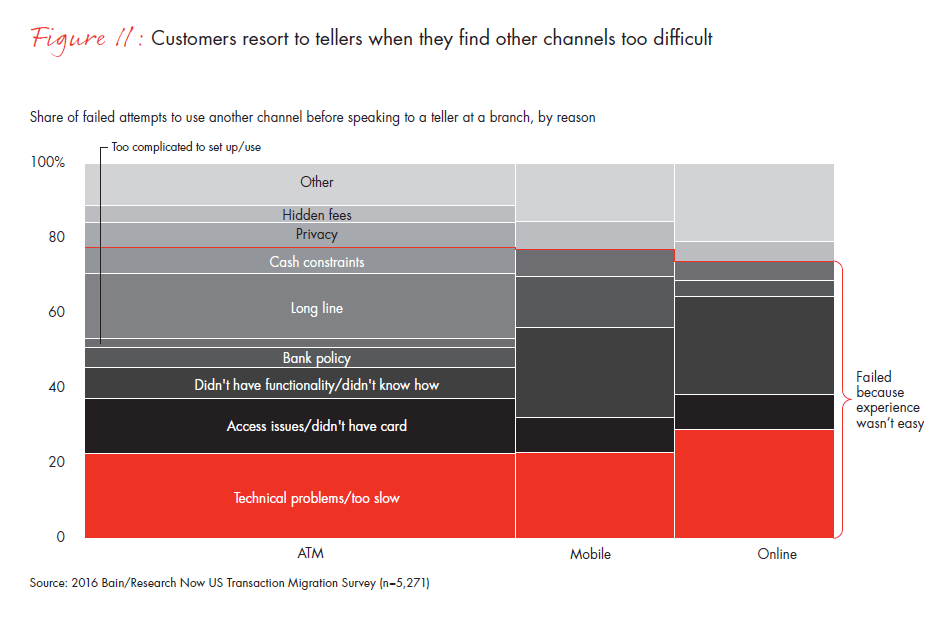
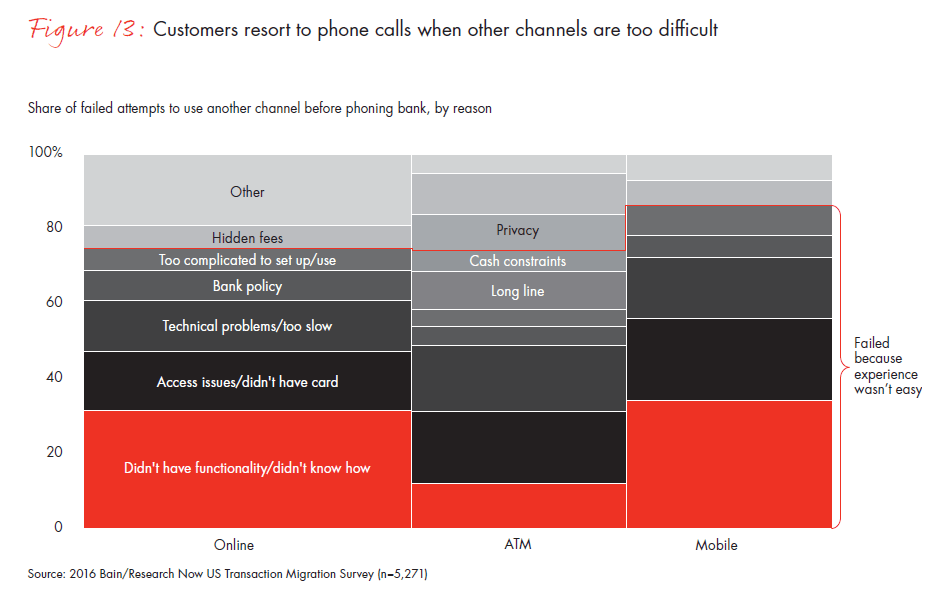
      Some retail banks have been reaching out more than others to consumers. Citi, Capital One, Regions and USAA all have higher reported guidance on mobile channels than other banks. Yet digital channels often are not as effective as banks would like; customers try them, but contend with various problems and wind up visiting a teller or calling a contact center anyway. When customers fail in their attempts to transact digitally, more than one-third cite technical problems or lack of functionality. For attempts at ATMs, long lines and technical problems were major issues.

      Tackling all the barriers to digital adoption might seem daunting, but an integrated program to spur behavior change among consumers can yield quick results. One major North American bank recently contacted heavy users of the phone channel for routine transactions; the bank made sure the communication came from an employee who personally knows the customer in question. Convincing these customers to try just one interaction through digital channels achieved a 70% conversion rate for future interactions. Multiplied over a year’s worth of interactions, that makes the extra time initially spent talking with the customer a remarkable return on investment.

      We have found that using Agile techniques to tackle the root causes of routine branch visits and phone calls is quite effective. Typically, a team consisting of frontline employees from all the relevant functions identifies any barrier to adoption of self-service technologies, then introduces rapid tests of ways to overcome the barriers, whether through changes in policy, process, training, communications or technology.

      Banks taking this approach have been able to reduce branch and call center volumes by 20% in 12 months. For a typical US bank with 1,000 branches, the savings could reach $70 million to $80 million within a year. And banks that design an easy, accessible and convenient self-service experience stand a better chance of delighting customers in the process, whether they’re web designers in Brooklyn or retired nurses in Florida.

      Methodology


      Bain & Company partnered with Research Now, an online global market-research organization, to survey consumers of US banks. The survey’s purpose was to gauge consumers’ preferences, motivations, perceptions and behaviors when interacting with their principal bank. Conducted in May 2016, the survey polled 5,271 consumers of national, regional, community and direct banks in the United States.

      1. The demographics and use of bank channels


      • The great majority of customers young and old still use tellers. ATM and phone use falls off among older segments. Young customers have the most banking interactions in total.
      • Older customers are less than half as likely as the youngest group to use mobile apps or mobile browsers to do their banking. However, they are about as likely to bank online, suggesting that they will embrace mobile technology under the right circumstances.
      • When older respondents do use smartphones or tablets to bank, they rate the experience highly—even higher than younger customers do. Younger users might be more critical of app quality, appearance and functionalities, as they are more knowledgeable about mobile apps in general.
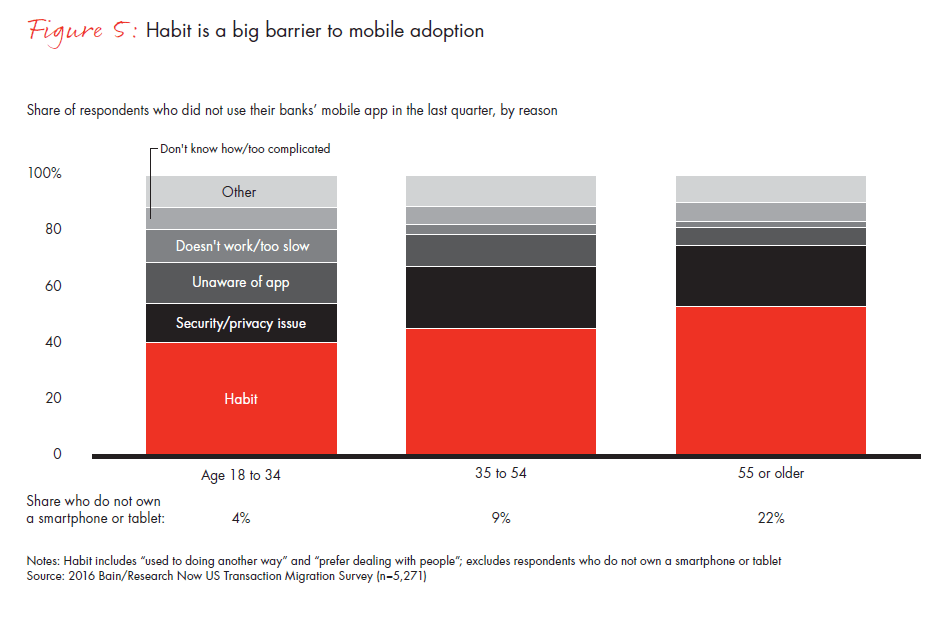
      • Consumers who do not use bank mobile apps report several reasons, notably habit, but also lack of knowledge and access issues. Older users are slightly more impeded by habit and security concerns. Banks can address most of these issues.
      • Despite the higher scores that older users give the mobile experience, this group is least likely to have received information or guidance from a bank, or to even have been made aware of mobile features. Active guidance on mobile represents a huge untapped opportunity for banks.
      bank-branch-call-center-traffic-jam-fig-01_embed

      bank-branch-call-center-traffic-jam-fig-02_embed

      bank-branch-call-center-traffic-jam-fig-03_embed

      bank-branch-call-center-traffic-jam-fig-04_embed

      bank-branch-call-center-traffic-jam-fig-05_embed

      bank-branch-call-center-traffic-jam-fig-06_embed

      bank-branch-call-center-traffic-jam-fig-07_embed

      2. What heavy service users are trying to accomplish


      • Transaction volume in both branches and contact centers tends to be driven largely by a small group of frequent users—defined as four or more teller interactions and three or more phone interactions per month. Just 7% of respondents accounted for 34% of teller interactions, and 4% of respondents accounted for 41% of phone interactions.
      • The composition of heavy users may surprise bankers. For example, heavy users of traditional channels such as tellers do not skew older, but rather about the same age as light users. And heavy phone users actually skew younger.
      • Many frequent teller users, especially younger users, did try other channels first. But more than one-third were deterred by technical problems, lack of functionality or, at ATMs, long lines.
      • Heavy phone use tends to involve routine transactions, and rarely resolution of problems. With ATMs, the problems are more diverse, ranging from concern about hidden fees to lack of a debit card. Many heavy phone users also tried other channels first.
      bank-branch-call-center-traffic-jam-fig-08_embed

      bank-branch-call-center-traffic-jam-fig-09_embed

      bank-branch-call-center-traffic-jam-fig-10_embed

      bank-branch-call-center-traffic-jam-fig-11_embed

      bank-branch-call-center-traffic-jam-fig-12_embed

      bank-branch-call-center-traffic-jam-fig-13_embed

      This report was prepared by Maureen Burns, Gerard du Toit and Mark Schofield, partners in Bain’s Financial Services practice, and Christy de Gooyer, practice area director. The authors thank Thiago Lamelo, Cameron Murphy and Anna Podolsky, who contributed to the development of this report, and John Campbell for his editorial support.

      Net Promoter Score® is a registered trademark of Bain & Company, Inc., Fred Reichheld and Satmetrix Systems, Inc.


      bank-branch-call-center-traffic-jam-fig-01_full

      bank-branch-call-center-traffic-jam-fig-02_full

      bank-branch-call-center-traffic-jam-fig-03_full

      bank-branch-call-center-traffic-jam-fig-04_full

      bank-branch-call-center-traffic-jam-fig-05_full

      bank-branch-call-center-traffic-jam-fig-06_full

      bank-branch-call-center-traffic-jam-fig-07_full

      bank-branch-call-center-traffic-jam-fig-08_full

      bank-branch-call-center-traffic-jam-fig-09_full

      bank-branch-call-center-traffic-jam-fig-10_full

      bank-branch-call-center-traffic-jam-fig-11_full

      bank-branch-call-center-traffic-jam-fig-12_full

      bank-branch-call-center-traffic-jam-fig-13_full
      著者
      • Headshot of Maureen Burns
        Maureen Burns
        パートナー, Boston
      • Headshot of Gerard du Toit
        Gerard du Toit
        パートナー, Boston
      • Mark Schofield
        Former Partner, Toronto
      • Headshot of Christy de Gooyer
        Christy de Gooyer
        Practice Vice President, Global Banking, Toronto
      関連業種
      • 金融サービス
      金融サービス
      Customer Loyalty in Retail Banking: Global Edition 2016

      Cost savings hinge on promoting mobile adoption.

      詳細
      金融サービス
      Just Make It Easy: A Guide to Loyalty in Banking

      Customers want simplicity and convenience, and often that means making interactions mobile.

      詳細
      金融サービス
      Is the Bank Branch Dead?

      Customers deserting bank branches in favor of mobile and online channels for many interactions signal that the size and nature of the branch network has to change faster and more substantially than most banks acknowledge.

      詳細
      Customer Loyalty in Banking
      Customer Behavior and Loyalty in Banking: Global Edition 2023

      Banks’ big challenge is the great unbundling by consumers.

      詳細
      金融サービス
      Six Threats Demand a New Playbook for Banks in Wealth and Asset Management

      AI, direct-to-consumer models, and the return of local priorities are redrawing industry lines.

      詳細
      First published in 11月 2016
      Tags
      • Customer Loyalty in Banking
      • 金融サービス

      クライアント支援事例

      Digital A European Banking Giant Rises to the Fintech Challenge

      ケーススタディを見る

      戦略 A financial services leader gains market confidence

      ケーススタディを見る

      チェンジ・マネジメント The change process unlocks potential and profits

      ケーススタディを見る

      お気軽にご連絡下さい

      私達は、グローバルに活躍する経営者が抱える最重要経営課題に対して、厳しい競争環境の中でも成長し続け、「結果」を出すために支援しています。

      ベインの知見。競争が激化するグローバルビジネス環境で、日々直面するであろう問題について論じている知見を毎月お届けします。

      *プライバシーポリシーの内容を確認し、合意しました。

      プライバシーポリシーをご確認頂き、合意頂けますようお願い致します。
      Bain & Company
      お問い合わせ Sustainability Accessibility Terms of use Privacy Cookie Policy Sitemap Log In

      © 1996-2026 Bain & Company, Inc.

      お問い合わせ

      How can we help you?

      • ビジネスについて
      • プレス報道について
      • 採用について
      全てのオフィス