
Skip to Content
  • オフィス

    オフィス

    北米・南米
    • Atlanta
    • Austin
    • Bogota
    • Boston
    • Buenos Aires
    • Chicago
    • Dallas
    • Denver
    • Houston
    • Los Angeles
    • Mexico City
    • Minneapolis
    • Monterrey
    • Montreal
    • New York
    • Rio de Janeiro
    • San Francisco
    • Santiago
    • São Paulo
    • Seattle
    • Silicon Valley
    • Toronto
    • Washington, DC
    ヨーロッパ・中東・アフリカ
    • Amsterdam
    • Athens
    • Berlin
    • Brussels
    • Copenhagen
    • Doha
    • Dubai
    • Dusseldorf
    • Frankfurt
    • Helsinki
    • Istanbul
    • Johannesburg
    • Kyiv
    • Lisbon
    • London
    • Madrid
    • Milan
    • Munich
    • Oslo
    • Paris
    • Riyadh
    • Rome
    • Stockholm
    • Vienna
    • Warsaw
    • Zurich
    アジア・オーストラリア
    • Bangkok
    • Beijing
    • Bengaluru
    • Brisbane
    • Ho Chi Minh City
    • Hong Kong
    • Jakarta
    • Kuala Lumpur
    • Manila
    • Melbourne
    • Mumbai
    • New Delhi
    • Perth
    • Shanghai
    • Singapore
    • Sydney
    • Tokyo
    全てのオフィス
  • アルムナイ
  • メディア
  • お問い合わせ
  • 東京オフィス
  • Japan | 日本語

    地域と言語を選択

    グローバル
    • Global (English)
    北米・南米
    • Brazil (Português)
    • Argentina (Español)
    • Canada (Français)
    • Chile (Español)
    • Colombia (Español)
    ヨーロッパ・中東・アフリカ
    • France (Français)
    • DACH Region (Deutsch)
    • Italy (Italiano)
    • Spain (Español)
    • Greece (Elliniká)
    アジア・オーストラリア
    • China (中文版)
    • Korea (한국어)
    • Japan (日本語)
  • Saved items (0)
    Saved items (0)

    You have no saved items.

    後で閲読、共有できるようにするためにブックマークしてください

    Explore Bain Insights
  • 業界別プラクティス
    メインメニュー

    業界別プラクティス

    • 航空宇宙、防衛、政府関連
    • 農業
    • 化学製品
    • インフラ、建設
    • 消費財
    • 金融サービス
    • ヘルスケア
    • 産業機械、設備
    • メディア、エンターテインメント
    • 金属
    • 採掘・鉱業
    • 石油、ガス
    • 紙、パッケージ
    • プライベートエクイティ
    • 公共、社会セクター
    • 小売
    • テクノロジー
    • 通信
    • 交通
    • 観光産業
    • 公益事業、再生可能エネルギー
  • 機能別プラクティス
    メインメニュー

    機能別プラクティス

    • カスタマー・エクスペリエンス
    • サステイナビリティ、 社会貢献
    • Innovation
    • 企業買収、合併 (M&A)
    • オペレーション
    • 組織
    • プライベートエクイティ
    • マーケティング・営業
    • 戦略
    • アドバンスド・アナリティクス
    • Technology
    • フルポテンシャル・トランスフォーメーション
  • Digital
  • 知見/レポート
  • ベイン・アンド・カンパニーについて
    メインメニュー

    ベイン・アンド・カンパニーについて

    • ベインの信条
    • 活動内容
    • 社員とリーダーシップ
    • プレス・メディア情報
    • クライアントの結果
    • 受賞歴
    • パートナーシップを結んでいる団体
    Further: Our global responsibility
    • ダイバーシティ
    • 社会貢献
    • サステイナビリティへの取り組み
    • 世界経済フォーラム(WEF)
    Learn more about Further
  • キャリア
    メインメニュー

    キャリア

    • ベインで働く
      キャリア
      ベインで働く
      • Find Your Place
      • ベインで活躍する機会
      • ベインのチーム体制
      • 学生向けページ
      • インターンシップ
      • 採用イベント
    • ベインでの体験
      キャリア
      ベインでの体験
      • Blog: Inside Bain
      • キャリアストーリー
      • 社員紹介
      • Where We Work
      • 成長を後押しするサポート体制
      • アフィニティ・グループ
      • 福利厚生
    • Impact Stories
    • 採用情報
      キャリア
      採用情報
      • 採用プロセス
      • 面接内容
    FIND JOBS
  • オフィス
    メインメニュー

    オフィス

    • 北米・南米
      オフィス
      北米・南米
      • Atlanta
      • Austin
      • Bogota
      • Boston
      • Buenos Aires
      • Chicago
      • Dallas
      • Denver
      • Houston
      • Los Angeles
      • Mexico City
      • Minneapolis
      • Monterrey
      • Montreal
      • New York
      • Rio de Janeiro
      • San Francisco
      • Santiago
      • São Paulo
      • Seattle
      • Silicon Valley
      • Toronto
      • Washington, DC
    • ヨーロッパ・中東・アフリカ
      オフィス
      ヨーロッパ・中東・アフリカ
      • Amsterdam
      • Athens
      • Berlin
      • Brussels
      • Copenhagen
      • Doha
      • Dubai
      • Dusseldorf
      • Frankfurt
      • Helsinki
      • Istanbul
      • Johannesburg
      • Kyiv
      • Lisbon
      • London
      • Madrid
      • Milan
      • Munich
      • Oslo
      • Paris
      • Riyadh
      • Rome
      • Stockholm
      • Vienna
      • Warsaw
      • Zurich
    • アジア・オーストラリア
      オフィス
      アジア・オーストラリア
      • Bangkok
      • Beijing
      • Bengaluru
      • Brisbane
      • Ho Chi Minh City
      • Hong Kong
      • Jakarta
      • Kuala Lumpur
      • Manila
      • Melbourne
      • Mumbai
      • New Delhi
      • Perth
      • Shanghai
      • Singapore
      • Sydney
      • Tokyo
    全てのオフィス
  • アルムナイ
  • メディア
  • お問い合わせ
  • 東京オフィス
  • Japan | 日本語
    メインメニュー

    地域と言語を選択

    • グローバル
      地域と言語を選択
      グローバル
      • Global (English)
    • 北米・南米
      地域と言語を選択
      北米・南米
      • Brazil (Português)
      • Argentina (Español)
      • Canada (Français)
      • Chile (Español)
      • Colombia (Español)
    • ヨーロッパ・中東・アフリカ
      地域と言語を選択
      ヨーロッパ・中東・アフリカ
      • France (Français)
      • DACH Region (Deutsch)
      • Italy (Italiano)
      • Spain (Español)
      • Greece (Elliniká)
    • アジア・オーストラリア
      地域と言語を選択
      アジア・オーストラリア
      • China (中文版)
      • Korea (한국어)
      • Japan (日本語)
  • Saved items  (0)
    メインメニュー
    Saved items (0)

    You have no saved items.

    後で閲読、共有できるようにするためにブックマークしてください

    Explore Bain Insights
  • 業界別プラクティス
    • 業界別プラクティス

      • 航空宇宙、防衛、政府関連
      • 農業
      • 化学製品
      • インフラ、建設
      • 消費財
      • 金融サービス
      • ヘルスケア
      • 産業機械、設備
      • メディア、エンターテインメント
      • 金属
      • 採掘・鉱業
      • 石油、ガス
      • 紙、パッケージ
      • プライベートエクイティ
      • 公共、社会セクター
      • 小売
      • テクノロジー
      • 通信
      • 交通
      • 観光産業
      • 公益事業、再生可能エネルギー
  • 機能別プラクティス
    • 機能別プラクティス

      • カスタマー・エクスペリエンス
      • サステイナビリティ、 社会貢献
      • Innovation
      • 企業買収、合併 (M&A)
      • オペレーション
      • 組織
      • プライベートエクイティ
      • マーケティング・営業
      • 戦略
      • アドバンスド・アナリティクス
      • Technology
      • フルポテンシャル・トランスフォーメーション
  • Digital
  • 知見/レポート
  • ベイン・アンド・カンパニーについて
    • ベイン・アンド・カンパニーについて

      • ベインの信条
      • 活動内容
      • 社員とリーダーシップ
      • プレス・メディア情報
      • クライアントの結果
      • 受賞歴
      • パートナーシップを結んでいる団体
      Further: Our global responsibility
      • ダイバーシティ
      • 社会貢献
      • サステイナビリティへの取り組み
      • 世界経済フォーラム(WEF)
      Learn more about Further
  • キャリア
    人気検索キーワード
    • デジタル
    • 戦略
    前回の検索
      最近訪れたページ

      Content added to saved items

      Saved items (0)

      Removed from saved items

      Saved items (0)

      The Visionary CEO’s Guide to Sustainability

      Building Resilience in Your Business Strategy: Four Imperatives for Leaders

      Building Resilience in Your Business Strategy: Four Imperatives for Leaders

      Traditional approaches to resilience don’t rise to today’s challenges.

      著者:David Knipe, Dunigan O'Keeffe, Eric Beranger-Fenouillet, and Aadarsh Baijal

      • min read
      }

      レポート

      Building Resilience in Your Business Strategy: Four Imperatives for Leaders
      en
      At a Glance
      • Traditional approaches to resilience focus on near-term risks, exposing companies to the threats of long-term challenges.
      • These blind spots can leave executives overconfident about their companies’ resilience, when most have yet to be tested.
      • Leaders take a broad approach that includes strategic, operational, and supply chain resilience, in addition to managing the environmental risks to physical assets.

      This article is part of Bain’s 2023 CEO Sustainability Guide

      Explore the report

      We hear a lot about the need for resilience these days, but this is actually nothing new. Businesses have long faced two types of disruption. The first is unpredictable but not unprecedented major events, things like Covid-19 or the Fukushima disaster. The second is known disruptions like climate change, which play out over long periods of time and bring with them additional uncertainties, such as how the world will achieve net zero, which technologies will win and lose, and which new businesses will grow and which will decline.

      Businesses must be resilient in the face of both sorts of disruption if they are to thrive amid uncertainty. Today, cultivating resilience should be top of mind for CEOs, executive teams, and boards as they lead through one of the most volatile and uncertain periods the world has seen for some time.

      Resilience is likely to be one of the most critical strategic differentiators of any company’s success moving forward. But traditional corporate approaches to resilience don’t rise to today’s challenges. They focus too much on near-term risks, without fully recognizing the potential impacts up and down the value chain, well beyond individual company boundaries. They usually make very limited use of advanced predictive tools, which could help identify some of those risks. And they fail to connect risks to the organization’s long-term strategic goals and economic model.

      These narrow approaches can leave blind spots and create a false sense of security. Bain recently asked executives in the energy and natural resource sector about their confidence in navigating five types of threats, spanning from the physical effects of climate change through to technological vulnerabilities, input shortages, and bottlenecks (see Figure 1). Confidence across the board appears surprisingly high, especially as many of these threats continue to escalate. 

      Figure 1
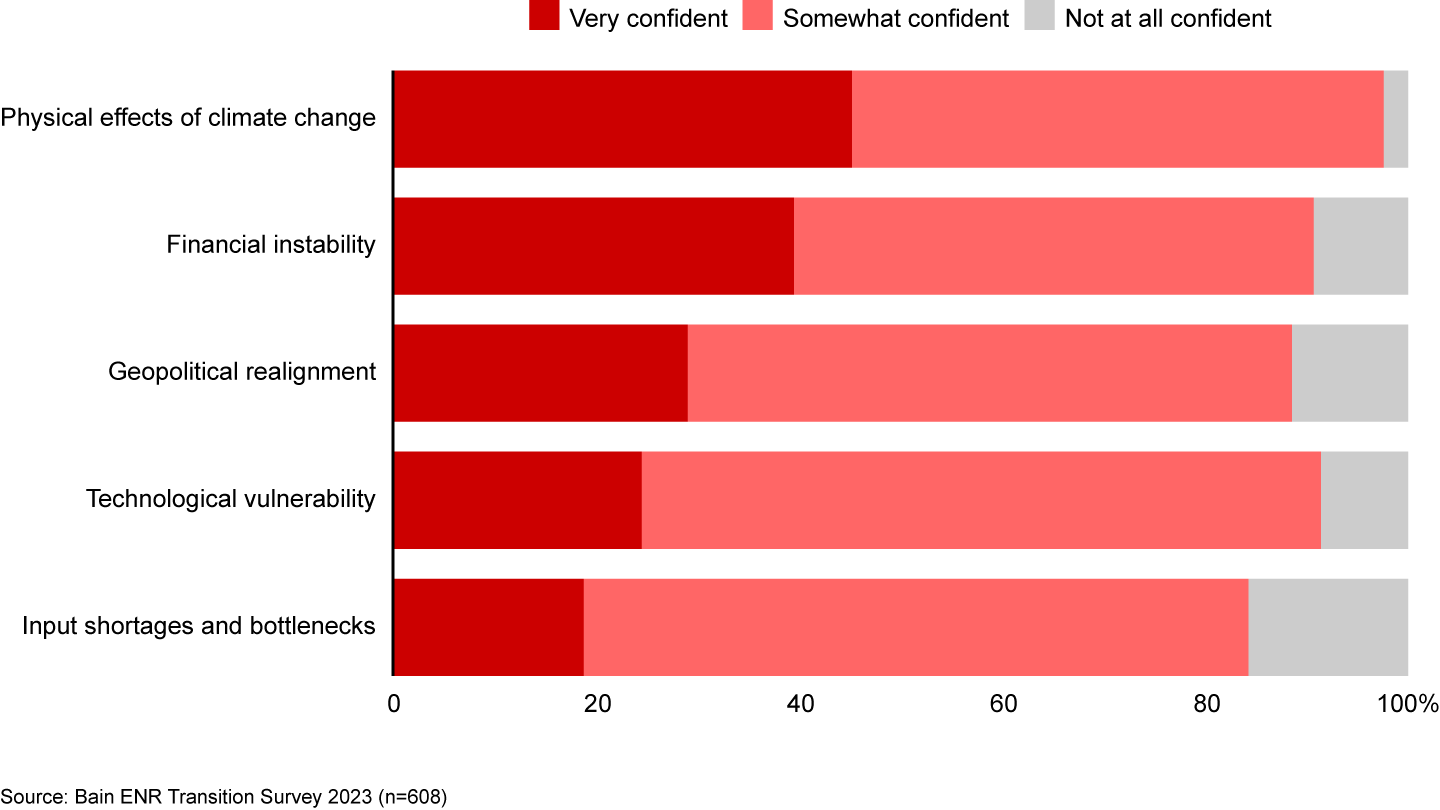
      Nearly all executives said they were very or somewhat confident in their ability to manage the physical effects of climate change

      These high numbers could reflect an overconfidence that’s not entirely justified by the limited investments most firms are making in resilience. People often fail to accurately assess the magnitude and likelihood of rare events, such as the physical effects of climate change, since most have not experienced them firsthand.

      Leading companies take a comprehensive approach that includes strategic, operational, and supply chain resilience, in addition to managing the environmental risks to physical assets.

      Strategic resilience

      All strategy is formed amid some level of uncertainty, potentially handicapping a firm in several ways. Overconfidence can lead to corporate myopia; under-confidence can leave firms in paralysis. Either scenario can stall action until it’s too late to prevent a bad outcome. 

      "Existing assets are vulnerable to the instabilities ultimately caused by climate change and shortage of resources."

      Vice president, new energy company, Europe

      It’s rare that the losers in a transforming industry are really blindsided by change. More often, they fail to set a strategic direction that can adapt to shifting conditions. Leading firms start with a view of the future: What will customers need 30 years out? This approach can help companies set a long-term vision, free from the constraints of current practices and portfolios. Successful teams then plan for their long-term reference case, while continuously monitoring the environment and correcting course as necessary along the way.

      Even among companies that invest in long-term scenario planning, few consider the “corner scenarios”—events that are possible but much less likely, like unexpected policy shocks or losing access to capital markets. Planners often shelve these scenarios because they don’t want to invest time developing detailed plans for conditions that are unlikely to occur.

      But ignoring high-risk scenarios is, increasingly, a shortsighted strategy. Stress testing a company’s capabilities has never been more essential, and it’s one of the ways that planners can locate the extreme corners, in order to understand the implications and potential opportunities of low-probability, high-risk scenarios.

      Operational resilience

      Reducing Scope 1 and 2 emissions helps ensure long-term commercial viability in several ways. First, it positions a company to be closer to compliance as regulations or carbon taxes increase. Closely related, it helps preserve an asset’s social license to operate, making it less susceptible to being targeted as a significant carbon emitter. It can also extend the working life span of the asset, given updates that renew operational capability. Reducing emissions signals all of these benefits to investors who are considering the long-term viability of businesses, especially in rapidly changing sectors.

      In addition to ensuring resilience for operations, companies also have to ensure that their decarbonization programs are resilient and can adapt to changing conditions. In this context, resilience means the ability to persevere not only through extreme weather events but also economic downturns, changes in technology, and other unpredictable barriers. Some companies are moving quickly to gain front-runner status while others are taking a wait-and-see approach, aiming to take advantage of more efficient technologies and economies of scale.

      "User needs are changing, and this needs to be taken into consideration during innovation. ESG is a clear user need, so it has to be embedded in strategy while driving innovation and customer acquisition. In terms of funding, this is also becoming a must."

      CEO, manufacturing company, Turkey

      Supply chain resilience

      Once the purview of the COO and purchasing functions, supply chain resilience has risen to the highest levels of the corporate agenda over the past few years. The pandemic, a semiconductor shortage, and war in Ukraine are among the crises that have exposed vulnerable supply chains. Quality and price are still table stakes, but increasingly supply chain executives are investing to improve flexibility and resilience (see Figure 2).

      Figure 2
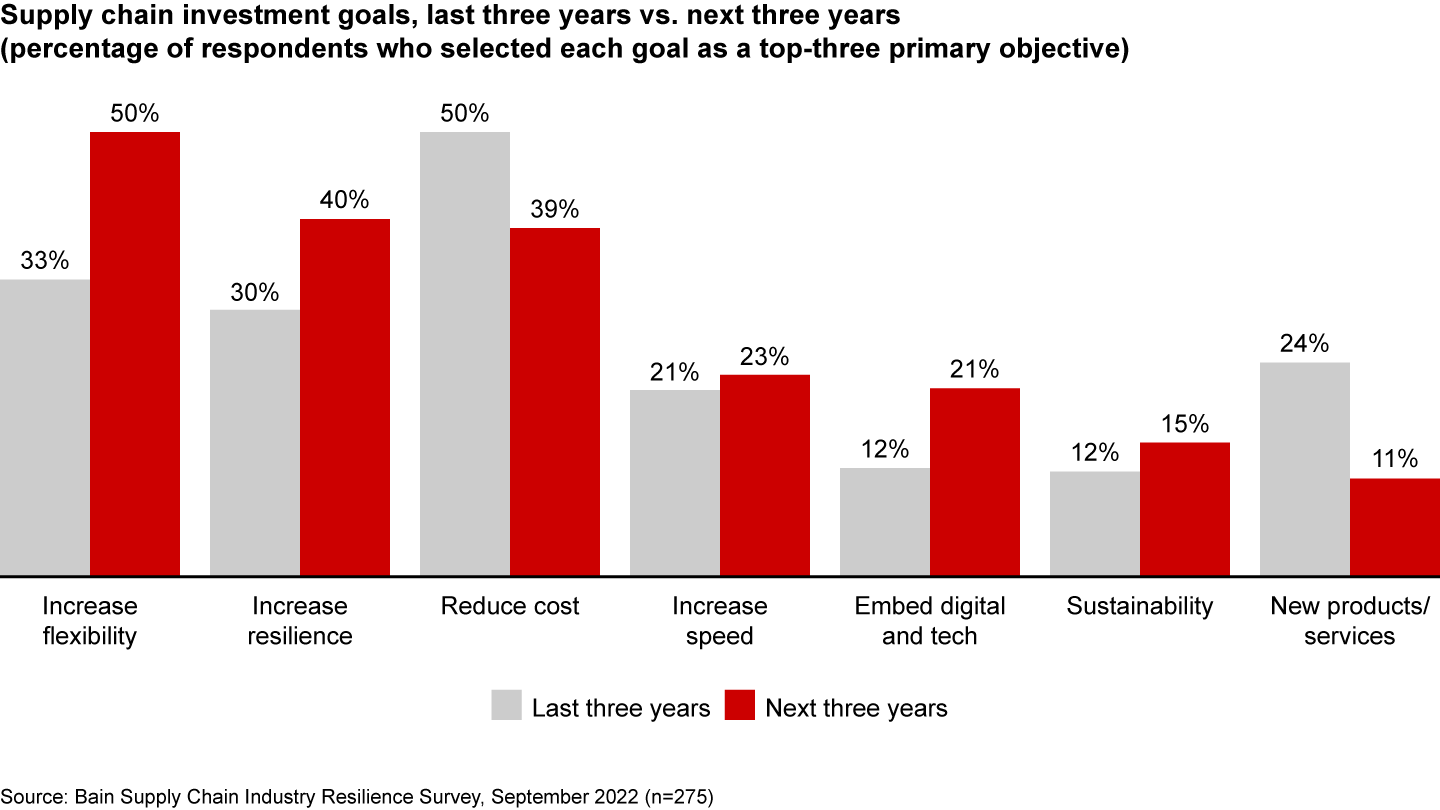
      Flexibility and resilience are more becoming more important to supply chain executives

      Supply chain resilience means different things in different sectors, but in general it’s the ability to proactively minimize risk, absorb inevitable shocks, and quickly recover from setbacks to lessen the impact on operations. Taking a holistic view of the entire chain can help companies identify the most important risks to the business and then assess the likelihood of each. Comparing strengths to competitors’ can help companies find opportunities to differentiate while mitigating their impacts on the environment.

      Physical resilience

      Many companies are already experiencing the effects of climate change on their operations. For example, in 2022, Apple and Intel suffered a weeklong shutdown of some production facilities in Sichuan, China, where a drought stalled multiple hydropower plants. But many businesses underestimate the likelihood of physical climate risk events and their exposure to them, relying on a narrow set of risk-transfer tools (for example, insurance or financial hedges) rather than a broader set of strategic and operational levers for building resilience.

      "The human being only reacts when the problem is at the door and he has no other choice. The giant threat of climate change is not so tangible, because it occurs slowly, over long periods of time."

      Global head of sustainability, digital finance company, Spain

      Power utility Southern California Edison, for example, has been working for more than a decade to manage the effects of climate change on its power grid and generation assets, which include more frequent wildfires and droughts that jeopardize the viability of hydroelectric power. To address these risks, SCE embarked on a detailed assessment of climate risks to its assets, operations, and services across its 50,000-square-mile service area. The results helped SCE reprioritize capital investments for new infrastructure that can withstand more intense flooding and storms, extreme temperatures, and more severe wildfires. SCE says it invests about $5 billion each year to maintain and improve its grid, and that by the end of 2021 it had reduced wildfire risk by about 70% compared with pre-2018 expectations.

      A more proactive approach to resilience starts with a systemic look across the entire value chain, using analytical tools to estimate risks today and in the future. Companies can then focus on practical actions to adapt to these risks and make decisions about which assets or facilities to protect and what strategic changes may be necessary to survive and thrive. The changes may include revising capital planning processes, restructuring or nearshoring the supply chain, or advocating for new policy solutions.

      Read the Next Chapter

      The Energy Transition’s Other Big Puzzle: Making the Math Work

      Read our 2023 CEO Sustainability Guide

      Explore the full report Download PDF
      著者
      • Headshot of David Knipe
        David Knipe
        Alumni, London
      • Headshot of Dunigan O'Keeffe
        Dunigan O'Keeffe
        パートナー, San Francisco
      • Headshot of Eric Beranger-Fenouillet
        Eric Beranger-Fenouillet
        パートナー, Middle East
      • Headshot of Aadarsh Baijal
        Aadarsh Baijal
        パートナー, Singapore
      関連業種
      • エネルギー、天然資源
      • リスク、ファイナンス、制度
      • 化学製品
      • 金属、鉱業
      • 公益事業、再生可能エネルギー
      • 産業財、サービス
      • 石油、ガス
      • 農業
      関連するコンサルティングサービス
      • オペレーション
      • サステイナビリティ、社会貢献
      • サプライチェーン
      コンサルティングサービス
      • Climate Change
      CEO's Guide to Sustainability
      Winning in the Energy Transition, One Step at a Time

      Forget 2050. The next 5 to 15 years will make or break the race to net zero.

      詳細
      CEO's Guide to Sustainability
      How to Master the Art of Selling Sustainability

      Our survey of 500 B2B buyers and sellers shows a widening chasm on sustainability. A new industrial sales model is needed to close this buy-sell gap.

      詳細
      エネルギー、天然資源
      Energy’s Capital Projects Reset: Faster, Smarter, Leaner

      As costs rise and delays abound, executives are rethinking their approaches to capital projects.

      詳細
      Climate Change
      Financing Climate Solutions in Brazil

      A study conducted by Bain, in partnership with BNDES, highlights both the challenges and the opportunities to accelerate the climate transition.

      詳細
      COO insights
      How AI Is Starting to Transform Circular Packaging

      There are 15 AI use cases companies across the value chain can use today to accelerate circularity.

      詳細

      Introduction

      • The Questions Every CEO Needs to Ask About Sustainability

      Levers of Change: Technology, Behavior, Policy

      • Selling Sustainability Means Decoding Consumers

      • Does a Purpose Help Brands Grow?

      • Lower Costs, Faster Adoption: Closing the Sustainable Innovation Gap

      • The Future Is Circular: How Companies Can Prepare to Grow in a Changing World

      • Leading with Vision: Harnessing the Climate Policy Response

      Sector Perspectives

      • Building Resilience in Your Business Strategy: Four Imperatives for Leaders

      • The Energy Transition’s Other Big Puzzle: Making the Math Work

      • Can Food and Agriculture Companies Raise Their Game?

      • Fires, Floods, and Loans: How Banks Can Deal with Increasing Climate Risks

      Making It Happen

      • Building a Data-Based Stakeholder Strategy

      • Operations and Supply Chain Decarbonization: Lower Emissions, Higher Performance

      • Making Business Do Better for Everyone

      • Organizing for Sustainability

      • A Talent Strategy for Sustainability: Skills Matter, but Mindset Is Everything

      First published in 11月 2023
      Tags
      • CEO's Guide to Sustainability
      • Climate Change
      • COO insights
      • エネルギー、天然資源
      • オペレーション
      • サステイナビリティ、社会貢献
      • サプライチェーン
      • リスク、ファイナンス、制度
      • 化学製品
      • 金属、鉱業
      • 公益事業、再生可能エネルギー
      • 産業財、サービス
      • 石油、ガス
      • 農業

      クライアント支援事例

      An Environmental Services Company Captures Massive Savings from a Merger

      ケーススタディを見る

      戦略 New products propel profitability for metals manufacturer

      ケーススタディを見る

      顧客戦略、マーケティング Revitalizing a utility's market position with customer loyalty

      ケーススタディを見る

      お気軽にご連絡下さい

      私達は、グローバルに活躍する経営者が抱える最重要経営課題に対して、厳しい競争環境の中でも成長し続け、「結果」を出すために支援しています。

      ベインの知見。競争が激化するグローバルビジネス環境で、日々直面するであろう問題について論じている知見を毎月お届けします。

      *プライバシーポリシーの内容を確認し、合意しました。

      プライバシーポリシーをご確認頂き、合意頂けますようお願い致します。
      Bain & Company
      お問い合わせ Sustainability Accessibility Terms of use Privacy Cookie Policy Sitemap Log In

      © 1996-2026 Bain & Company, Inc.

      お問い合わせ

      How can we help you?

      • ビジネスについて
      • プレス報道について
      • 採用について
      全てのオフィス