
Skip to Content
  • オフィス

    オフィス

    北米・南米
    • Atlanta
    • Austin
    • Bogota
    • Boston
    • Buenos Aires
    • Chicago
    • Dallas
    • Denver
    • Houston
    • Los Angeles
    • Mexico City
    • Minneapolis
    • Monterrey
    • Montreal
    • New York
    • Rio de Janeiro
    • San Francisco
    • Santiago
    • São Paulo
    • Seattle
    • Silicon Valley
    • Toronto
    • Washington, DC
    ヨーロッパ・中東・アフリカ
    • Amsterdam
    • Athens
    • Berlin
    • Brussels
    • Copenhagen
    • Doha
    • Dubai
    • Dusseldorf
    • Frankfurt
    • Helsinki
    • Istanbul
    • Johannesburg
    • Kyiv
    • Lisbon
    • London
    • Madrid
    • Milan
    • Munich
    • Oslo
    • Paris
    • Riyadh
    • Rome
    • Stockholm
    • Vienna
    • Warsaw
    • Zurich
    アジア・オーストラリア
    • Bangkok
    • Beijing
    • Bengaluru
    • Brisbane
    • Ho Chi Minh City
    • Hong Kong
    • Jakarta
    • Kuala Lumpur
    • Manila
    • Melbourne
    • Mumbai
    • New Delhi
    • Perth
    • Shanghai
    • Singapore
    • Sydney
    • Tokyo
    全てのオフィス
  • アルムナイ
  • メディア
  • お問い合わせ
  • 東京オフィス
  • Japan | 日本語

    地域と言語を選択

    グローバル
    • Global (English)
    北米・南米
    • Brazil (Português)
    • Argentina (Español)
    • Canada (Français)
    • Chile (Español)
    • Colombia (Español)
    ヨーロッパ・中東・アフリカ
    • France (Français)
    • DACH Region (Deutsch)
    • Italy (Italiano)
    • Spain (Español)
    • Greece (Elliniká)
    アジア・オーストラリア
    • China (中文版)
    • Korea (한국어)
    • Japan (日本語)
  • Saved items (0)
    Saved items (0)

    You have no saved items.

    後で閲読、共有できるようにするためにブックマークしてください

    Explore Bain Insights
  • 業界別プラクティス
    メインメニュー

    業界別プラクティス

    • 航空宇宙、防衛、政府関連
    • 農業
    • 化学製品
    • インフラ、建設
    • 消費財
    • 金融サービス
    • ヘルスケア
    • 産業機械、設備
    • メディア、エンターテインメント
    • 金属
    • 採掘・鉱業
    • 石油、ガス
    • 紙、パッケージ
    • プライベートエクイティ
    • 公共、社会セクター
    • 小売
    • テクノロジー
    • 通信
    • 交通
    • 観光産業
    • 公益事業、再生可能エネルギー
  • 機能別プラクティス
    メインメニュー

    機能別プラクティス

    • カスタマー・エクスペリエンス
    • サステイナビリティ、 社会貢献
    • Innovation
    • 企業買収、合併 (M&A)
    • オペレーション
    • 組織
    • プライベートエクイティ
    • マーケティング・営業
    • 戦略
    • アドバンスド・アナリティクス
    • Technology
    • フルポテンシャル・トランスフォーメーション
  • Digital
  • 知見/レポート
  • ベイン・アンド・カンパニーについて
    メインメニュー

    ベイン・アンド・カンパニーについて

    • ベインの信条
    • 活動内容
    • 社員とリーダーシップ
    • プレス・メディア情報
    • クライアントの結果
    • 受賞歴
    • パートナーシップを結んでいる団体
    Further: Our global responsibility
    • ダイバーシティ
    • 社会貢献
    • サステイナビリティへの取り組み
    • 世界経済フォーラム(WEF)
    Learn more about Further
  • キャリア
    メインメニュー

    キャリア

    • ベインで働く
      キャリア
      ベインで働く
      • Find Your Place
      • ベインで活躍する機会
      • ベインのチーム体制
      • 学生向けページ
      • インターンシップ
      • 採用イベント
    • ベインでの体験
      キャリア
      ベインでの体験
      • Blog: Inside Bain
      • キャリアストーリー
      • 社員紹介
      • Where We Work
      • 成長を後押しするサポート体制
      • アフィニティ・グループ
      • 福利厚生
    • Impact Stories
    • 採用情報
      キャリア
      採用情報
      • 採用プロセス
      • 面接内容
    FIND JOBS
  • オフィス
    メインメニュー

    オフィス

    • 北米・南米
      オフィス
      北米・南米
      • Atlanta
      • Austin
      • Bogota
      • Boston
      • Buenos Aires
      • Chicago
      • Dallas
      • Denver
      • Houston
      • Los Angeles
      • Mexico City
      • Minneapolis
      • Monterrey
      • Montreal
      • New York
      • Rio de Janeiro
      • San Francisco
      • Santiago
      • São Paulo
      • Seattle
      • Silicon Valley
      • Toronto
      • Washington, DC
    • ヨーロッパ・中東・アフリカ
      オフィス
      ヨーロッパ・中東・アフリカ
      • Amsterdam
      • Athens
      • Berlin
      • Brussels
      • Copenhagen
      • Doha
      • Dubai
      • Dusseldorf
      • Frankfurt
      • Helsinki
      • Istanbul
      • Johannesburg
      • Kyiv
      • Lisbon
      • London
      • Madrid
      • Milan
      • Munich
      • Oslo
      • Paris
      • Riyadh
      • Rome
      • Stockholm
      • Vienna
      • Warsaw
      • Zurich
    • アジア・オーストラリア
      オフィス
      アジア・オーストラリア
      • Bangkok
      • Beijing
      • Bengaluru
      • Brisbane
      • Ho Chi Minh City
      • Hong Kong
      • Jakarta
      • Kuala Lumpur
      • Manila
      • Melbourne
      • Mumbai
      • New Delhi
      • Perth
      • Shanghai
      • Singapore
      • Sydney
      • Tokyo
    全てのオフィス
  • アルムナイ
  • メディア
  • お問い合わせ
  • 東京オフィス
  • Japan | 日本語
    メインメニュー

    地域と言語を選択

    • グローバル
      地域と言語を選択
      グローバル
      • Global (English)
    • 北米・南米
      地域と言語を選択
      北米・南米
      • Brazil (Português)
      • Argentina (Español)
      • Canada (Français)
      • Chile (Español)
      • Colombia (Español)
    • ヨーロッパ・中東・アフリカ
      地域と言語を選択
      ヨーロッパ・中東・アフリカ
      • France (Français)
      • DACH Region (Deutsch)
      • Italy (Italiano)
      • Spain (Español)
      • Greece (Elliniká)
    • アジア・オーストラリア
      地域と言語を選択
      アジア・オーストラリア
      • China (中文版)
      • Korea (한국어)
      • Japan (日本語)
  • Saved items  (0)
    メインメニュー
    Saved items (0)

    You have no saved items.

    後で閲読、共有できるようにするためにブックマークしてください

    Explore Bain Insights
  • 業界別プラクティス
    • 業界別プラクティス

      • 航空宇宙、防衛、政府関連
      • 農業
      • 化学製品
      • インフラ、建設
      • 消費財
      • 金融サービス
      • ヘルスケア
      • 産業機械、設備
      • メディア、エンターテインメント
      • 金属
      • 採掘・鉱業
      • 石油、ガス
      • 紙、パッケージ
      • プライベートエクイティ
      • 公共、社会セクター
      • 小売
      • テクノロジー
      • 通信
      • 交通
      • 観光産業
      • 公益事業、再生可能エネルギー
  • 機能別プラクティス
    • 機能別プラクティス

      • カスタマー・エクスペリエンス
      • サステイナビリティ、 社会貢献
      • Innovation
      • 企業買収、合併 (M&A)
      • オペレーション
      • 組織
      • プライベートエクイティ
      • マーケティング・営業
      • 戦略
      • アドバンスド・アナリティクス
      • Technology
      • フルポテンシャル・トランスフォーメーション
  • Digital
  • 知見/レポート
  • ベイン・アンド・カンパニーについて
    • ベイン・アンド・カンパニーについて

      • ベインの信条
      • 活動内容
      • 社員とリーダーシップ
      • プレス・メディア情報
      • クライアントの結果
      • 受賞歴
      • パートナーシップを結んでいる団体
      Further: Our global responsibility
      • ダイバーシティ
      • 社会貢献
      • サステイナビリティへの取り組み
      • 世界経済フォーラム(WEF)
      Learn more about Further
  • キャリア
    人気検索キーワード
    • デジタル
    • 戦略
    前回の検索
      最近訪れたページ

      Content added to saved items

      Saved items (0)

      Removed from saved items

      Saved items (0)

      論説

      Calling on Procurement to Add More Value to Insurance Claims Management

      Calling on Procurement to Add More Value to Insurance Claims Management

      Close collaboration between procurement and business units can reduce claims costs while raising customer advocacy.

      著者:Klaus Neuhaus, Richard Fleming, Gerry Mattios, Thomas Lagner and Philipp Weiherl

      • min read
      }

      論説

      Calling on Procurement to Add More Value to Insurance Claims Management
      en

      Insurance companies face increased pressure from investors to demonstrate that they can grow while controlling costs. Claims handling, a historically undermanaged area, deserves a new look. Given the low priority assigned to claims handling in the past, many insurers face a capabilities gap: Category strategies do not exist, and fewer than two-thirds of claims are fully transparent to insurers’ own staff.

      A broader, more strategic approach to claims procurement allows insurers to make step-change improvements. The most advanced procurement functions add substantial value by becoming strategic partners with claims organizations. For instance, they might jointly choose the most suitable loss adjusters.

      One global property and casualty (P&C) insurer based in the Asia-Pacific region optimized its claims management substantially through this approach, reducing fees and indemnity spending by about 7% per year. Investors rewarded these improvements with a higher valuation of the business.

      The virtues of collaboration

      Procurement has long been viewed as a back-office function that mostly pushes purchase orders. Yet nearly all of benefits come from embedding procurement in claims management at the beginning of the process, especially for large categories such as medical providers, loss adjusters and repairers.

      Because the procurement and claims functions bring different expertise to the table, insurers realize major benefits from close collaboration:

      • reduced fees, with rates at competitive levels relative to other insurers;
      • optimized payouts that are appropriate for the claim amount; and
      • higher customer satisfaction and advocacy.

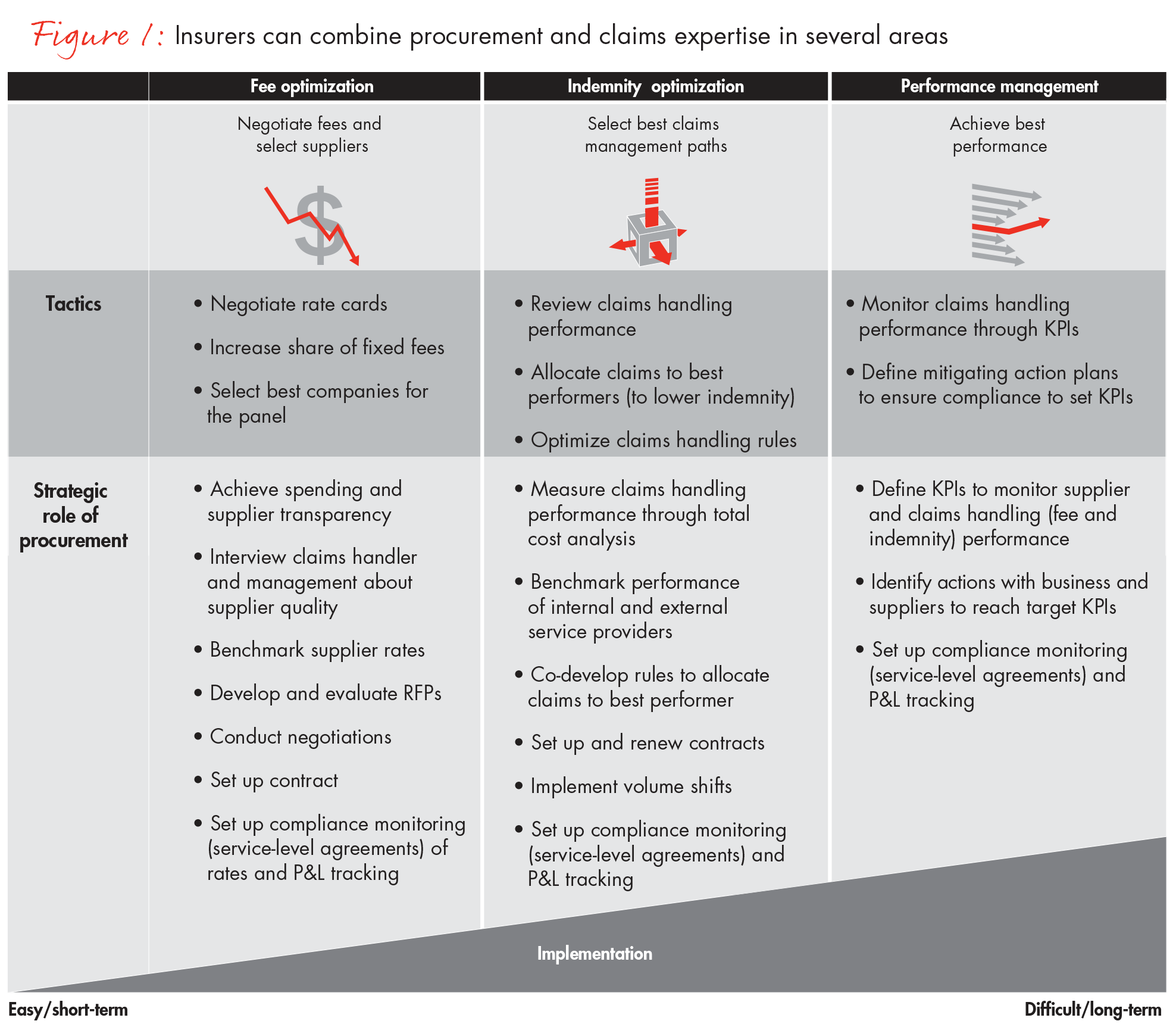
      Combining procurement and claims expertise in several areas and throughout the claims episode gives insurers an advantage (see Figure 1). For example, the two functions can work together to be more systematic and rigorous about selecting vendors and negotiating fees. In demand control, compliance and allocating claims volumes to different vendors, they can identify the best-performing firms and define rules to assign cases. Finally, they can rigorously track vendors’ performance to ensure consistent results over the contract period.

      insurance-claims-procurement-fig01_embed

      Optimizing claims legal services

      Claims legal services presents one of the most attractive categories for cost optimization. The spending level is high, including not only law firm fees and expenses (15% of spending), but also the related indemnity payments influenced by law firms (85% of spending). In our experience, insurers can achieve a 10% to 20% savings.

      Best-in-class insurers set up a joint claims and procurement approach as basis for success. They then conduct a detailed supplier due diligence, which includes deriving a supplier score and conducting a total cost analysis (TCA). The supplier score integrates several streams of information, such as claims handler interviews and supplier presentations. Incumbent and potential new law firms are rated on a numeric scale and on different dimensions, such as expertise, customer satisfaction, innovation, strategic partnership and financial stability.

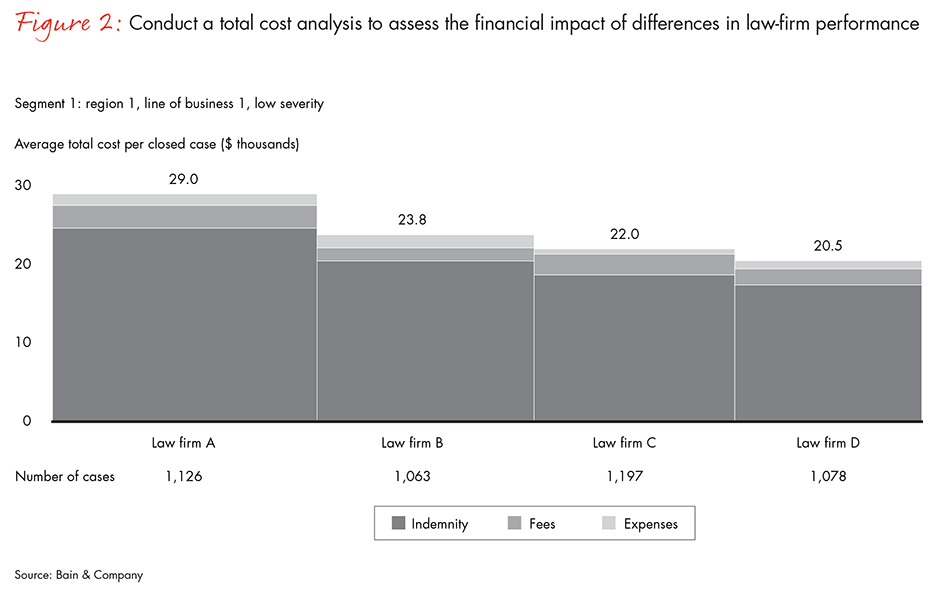
      The TCA assesses financial performance of law firms in like-for-like segments, such as auto liability claims with low severity in rural Texas. Typical criteria include location, case type and severity. Insurers derive the average total cost per claim, including fees, expenses and indemnity payments per law firm in those comparable segments (see Figure 2).

      insurance-claims-procurement-fig02_embed

      In the next phase, the procurement and claims groups work together to conduct a well-orchestrated negotiation process and agree on a selection of suppliers. These negotiations aim not only to improve pricing levels and schemes, such as moving to fixed prices for certain segments or introducing new incentives, but also to build strategic partnerships. Procurement, together with the business stakeholders, should develop a detailed plan covering negotiation strategy, risk assessment, communications and negotiation meeting agendas.

      The combined rigor of the TCA, supplier scores and negotiations equips insurers to make an objective decision on a final panel setup that will deliver significant financial benefits and high-quality services. The final panel will comprise law firms that have proven that they offer the best value, and each will be used for different segments.

      An Australian insurer’s review of a panel for one of its businesses enabled the company to reduce the number of law firms from 15 to 10, from which subpanels were formed for each line of business. The insurer reduced spending by 20%, even as it increased the supplier score by selecting the best performers.

      Finally, best in-class insurers continually manage the selected law firms. This includes data-driven performance monitoring, as well as experience sharing between law firms and claims handlers, in order to improve claims handling and reduce the total cost per claim.

      Making deft use of third-party administrators in auto insurance

      Auto claims management can yield up to 20% savings when the business and procurement group undertake a joint approach to optimize fees and indemnity for the many cases that can be standardized.

      Sourced services range from outsourcing the full claims handling process with third-party administrators (TPAs) to negotiating contracts with providers along each step in the value chain, from assessors to body shop networks, parts providers and rental car agencies.

      TPAs handle motor claims from end to end and have a major effect on the cost of repair and on customer experience. In the case of an accident, they are the main contact for policyholders and thus have a big influence on customers’ perceptions of the insurer.

      At the same time, the insurer may face above-average repair costs if the TPA relies on an expensive repair network that takes a day or two longer than the industry average, leading to higher spending on rental cars. In the worst case, this not only raises indemnity cost, but also degrades the customer experience, as the higher price does not guarantee better service.

      Despite these challenges, outsourcing auto claims handling can be highly effective. TPAs are better placed than insurers to keep up with process and technological advances, because they handle claims for numerous insurers. They can respond more flexibly to fluctuations in demand for notice of losses. They have greater access to repair networks and staff.

      We have seen insurers initially save up to 15% to 20% on fee and indemnity with a TPA, as well as enhance customer experience by choosing a strong performer. Further savings accrue from taking on other steps in the value chain, such as setting up framework agreements with parts and paint distributors and putting in place global contracts for windshields.

      Organizing for collaboration

      Unlocking value through procurement requires procurement and claims management teams to commit to a close collaboration. Making the procurement function a truly strategic partner with the business removes a burden from the claims team, allowing it to focus on what it does best. It pays for procurement and business teams to get to know the other’s priorities before engaging in a cost-reduction program that may have major business implications. For example, during budgeting and annual business planning, the teams benefit by synchronizing their objectives and delivery timelines.

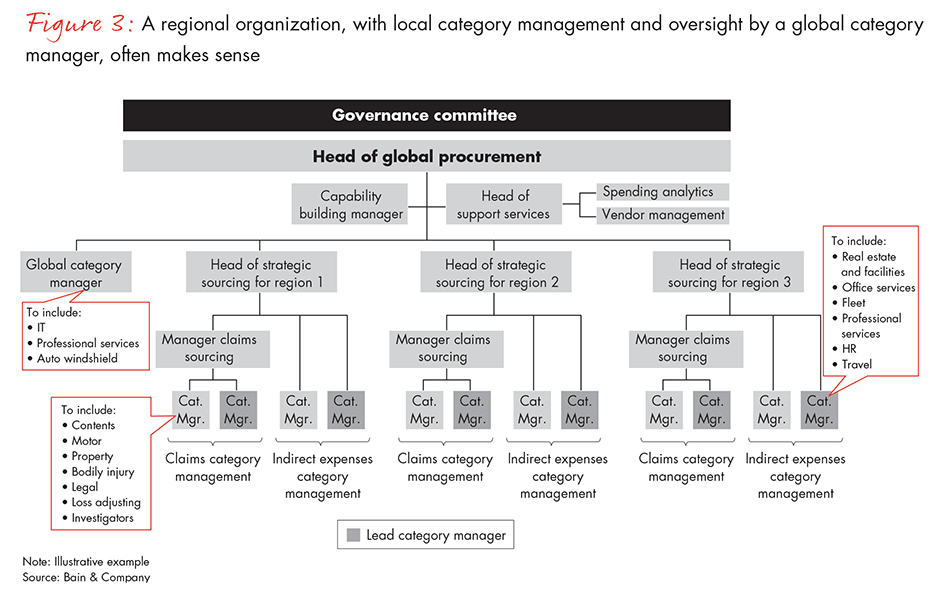
      Leading insurers give organizational clarity to procurement by assigning a chief procurement officer, who reports to the chief financial officer or chief operating officer and builds a strong rapport with the head of claims. Generally, it makes sense to organize procurement by regions (see Figure 3) but have category management take place at a local level, with oversight by a global category manager.

      Many insurance firms have overlooked the huge potential to unlock value through a rigorous, collaborative approach. Companies willing to take this approach can realize substantial cost savings, a faster and more streamlined claims management process and more satisfied customers.

      insurance-claims-procurement-fig03_embed

      Klaus Neuhaus is a partner with Bain & Company based in Düsseldorf. Richard Fleming is a partner based in New York. Gerry Mattios is a principal based in Beijing. Thomas Lagner and Philipp Weiherl are managers based in Munich. They are affiliated with Bain’s Financial Services practice.


      insurance-claims-procurement-fig01_full

      insurance-claims-procurement-fig02_full

      insurance-claims-procurement-fig03_full
      著者
      • Headshot of Klaus Neuhaus
        Klaus Neuhaus
        パートナー, Dusseldorf
      • Headshot of Richard Fleming
        Richard Fleming
        パートナー, Sydney
      • Headshot of Gerry Mattios
        Gerry Mattios
        パートナー, Singapore
      • Philipp Weiherl
        Alumni, Munich
      関連業種
      • 金融サービス
      関連するコンサルティングサービス
      • 購買・調達
      金融サービス
      中小企業向けバンキング戦略
      詳細
      銀行
      Retail Banks Wake Up to Digital Lending

      Our benchmark survey highlights the capability gaps and the potential for banks to defend their profit pools.

      詳細
      金融サービス
      Five Imperatives for Navigating Turbulence in the Payments Ecosystem

      How merchant acquirers can evolve from financial utility to technology partner.

      詳細
      金融サービス
      Six Strategies to Help Your Company Weather Inflation

      Lessons from a study of 5,700 global businesses.

      詳細
      金融サービス
      Six Threats Demand a New Playbook for Banks in Wealth and Asset Management

      AI, direct-to-consumer models, and the return of local priorities are redrawing industry lines.

      詳細
      First published in 5月 2016
      Tags
      • 金融サービス
      • 購買・調達

      クライアント支援事例

      サステイナビリティ、社会貢献 Voluntary Carbon Markets: A Bank Moves Early to Seize the Opportunity

      ケーススタディを見る

      業績改善 Lean Six Sigma solves a commercial bank's growth problem

      ケーススタディを見る

      IT Bridging the Gap Between Business and Technology

      ケーススタディを見る

      お気軽にご連絡下さい

      私達は、グローバルに活躍する経営者が抱える最重要経営課題に対して、厳しい競争環境の中でも成長し続け、「結果」を出すために支援しています。

      ベインの知見。競争が激化するグローバルビジネス環境で、日々直面するであろう問題について論じている知見を毎月お届けします。

      *プライバシーポリシーの内容を確認し、合意しました。

      プライバシーポリシーをご確認頂き、合意頂けますようお願い致します。
      Bain & Company
      お問い合わせ Sustainability Accessibility Terms of use Privacy Cookie Policy Sitemap Log In

      © 1996-2026 Bain & Company, Inc.

      お問い合わせ

      How can we help you?

      • ビジネスについて
      • プレス報道について
      • 採用について
      全てのオフィス