

論説

概要
- Bain research shows that supply chain executives plan to double the share of revenue from circular products and services by 2030.
- Executives recognize that circularity is a strategic issue, but they don’t agree on how to prioritize it.
- Suppliers are critical partners in circularity initiatives—yet 60% of companies said getting them involved was a challenge.
Corporate leadership teams are grappling with an unprecedented number of challenges, including global supply shortages, geopolitical tensions, and inflation. At the same time, the climate crisis and unsustainable resource consumption demand immediate attention. At current consumption rates, humanity is using the equivalent of 1.75 times the earth’s natural resources each year. The solution, a circular economy, will fundamentally reshape industries—and it’s already underway.
Circularity represents a decoupling of economic growth from resource consumption. For companies, it means conserving materials, extending a product’s lifetime through repair and reuse, and ultimately recycling. It also includes improving utilization through new business models, such as those that offer products as a service and sharing economy platforms.
Bain & Company research conducted in partnership with the World Economic Forum shows that business leaders increasingly feel a sense of urgency about embracing circularity. Circular disruption is underway in many industries, often led by new entrants with innovative business models. In a recent survey of senior executives, we found that leadership teams grow more aware that they are vulnerable to circular disruption the more time they spend preparing for it. Supply chain executives in our study are planning to double the share of revenue from circular products and services by 2030.
While the threat of disruption is a strong call to action, leaders also recognize that well-designed circular products and business models can boost growth, cut costs, and build resilience, all while preparing the enterprise for a low-carbon future. More than half the executives we surveyed view circularity as a prerequisite for being best in class in the future. And as more and more businesses embrace circular business models, the benefits to society will multiply. Research shows that 21 key circularity initiatives could help cut global carbon dioxide emissions by 39%, and a circular economy could increase Europe’s GDP 0.5% by 2030.
The case for circularity is clear. However, the path to a circular business model is uncharted territory for most companies. It requires sweeping change, and achieving progress can feel painstakingly slow. Our research highlights that reality. But a handful of leaders are overcoming the obstacles and making significant gains. This brief examines executives’ perspectives on the transition to a circular strategy, as well as their progress to date, and offers a pragmatic agenda to help leadership teams get started.
New ways of thinking
Developing circular products or strategies requires new ways of thinking—an approach that industry insurgents often wield to their advantage. BlaBlaCar, a French carpooling platform, for example, identified wasted vehicle capacity as a hidden asset. Its sharing service platform doubles vehicle occupancy and dramatically cuts travelers’ CO2 footprint. Since its launch in 2006, the company has garnered 100 million members in 22 countries, making it the world’s leading community-based travel network. Its latest round of funding valued BlaBlaCar at $2 billion.
Innovative circular business models also focus on new phases of product use, whether through resale, repair, or recovery. The RealReal, founded in 2011 in the US, has helped pioneer a booming global market in preowned luxury goods by selling authenticated brands such as Gucci and Burberry, online and in shops. The RealReal has more than 24 million users, and industry forecasts project the market for secondhand luxury goods to reach €70 billion by 2025, up from €33 billion in 2021.
French start-up Back Market sells refurbished electronics, including smartphones and computers, backed by quality control and support services. The pioneering company has helped change consumer views about buying preowned electronics, raising more than $1 billion in funding since its launch in 2014. Its latest venture round valued the company at $5.7 billion, about four times the market capitalization of Currys, the UK’s largest omnichannel consumer electronics retailer.
Insurgents have two things in common. They address environmental challenges by reducing material consumption and cutting greenhouse gas emissions, and they set up a strong commercial foundation that is scalable. Of course, it’s easier and quicker for a start-up to disrupt an industry’s value chain than it is for an established industry leader. Younger companies don’t have long-standing profit pools to defend or capital-intensive assets for which they must maximize returns.
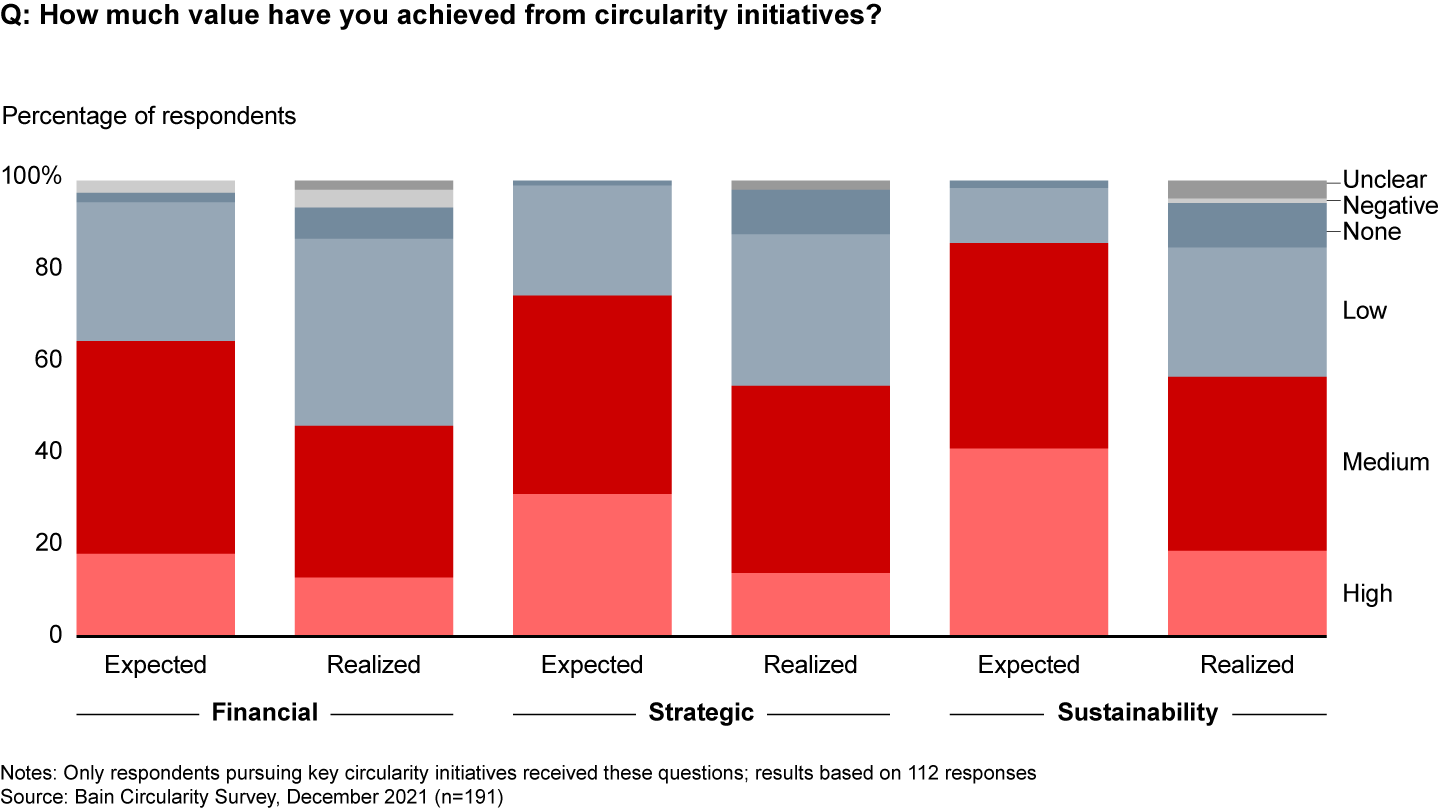
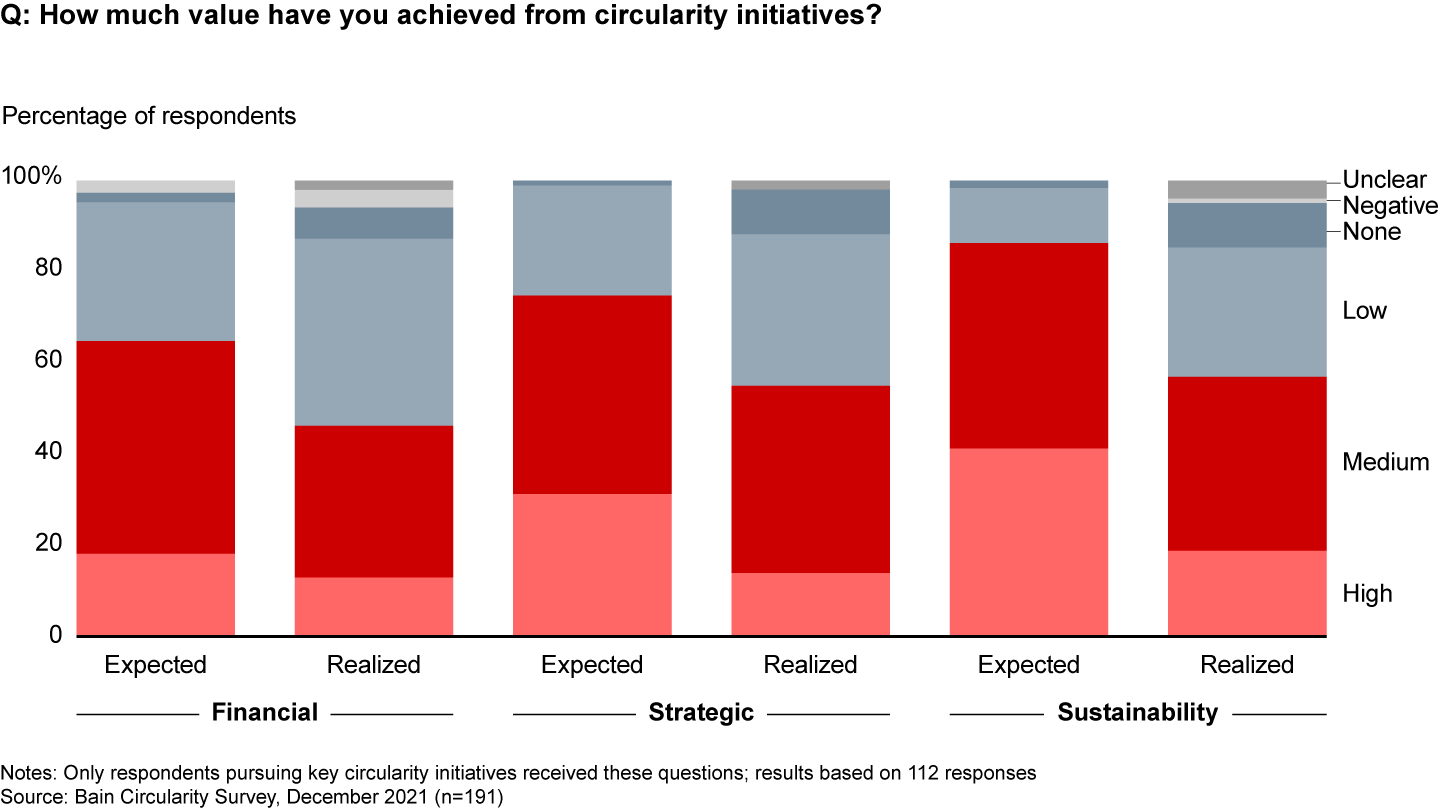
Most larger firms have set broad sustainability targets, but few have specific circularity goals. And executives who have launched circularity initiatives say the outcomes fall short of financial, strategic, and sustainability expectations (see Figure 1). That shortfall threatens to delay the shift to circular business models and, worse, may prompt leadership teams to deprioritize such initiatives altogether.
Figure 1
Key challenges
One of the key obstacles to launching circularity initiatives is internal alignment across business functions. While executives recognize that circularity is a strategic issue, they don’t agree on how to prioritize it relative to other initiatives. Sales, marketing, and finance executives consider circularity to be more of a priority than their operations and supply chain colleagues do—even though operations and supply chain executives consider themselves to be much more involved in circularity initiatives (see Figure 2).
Figure 2
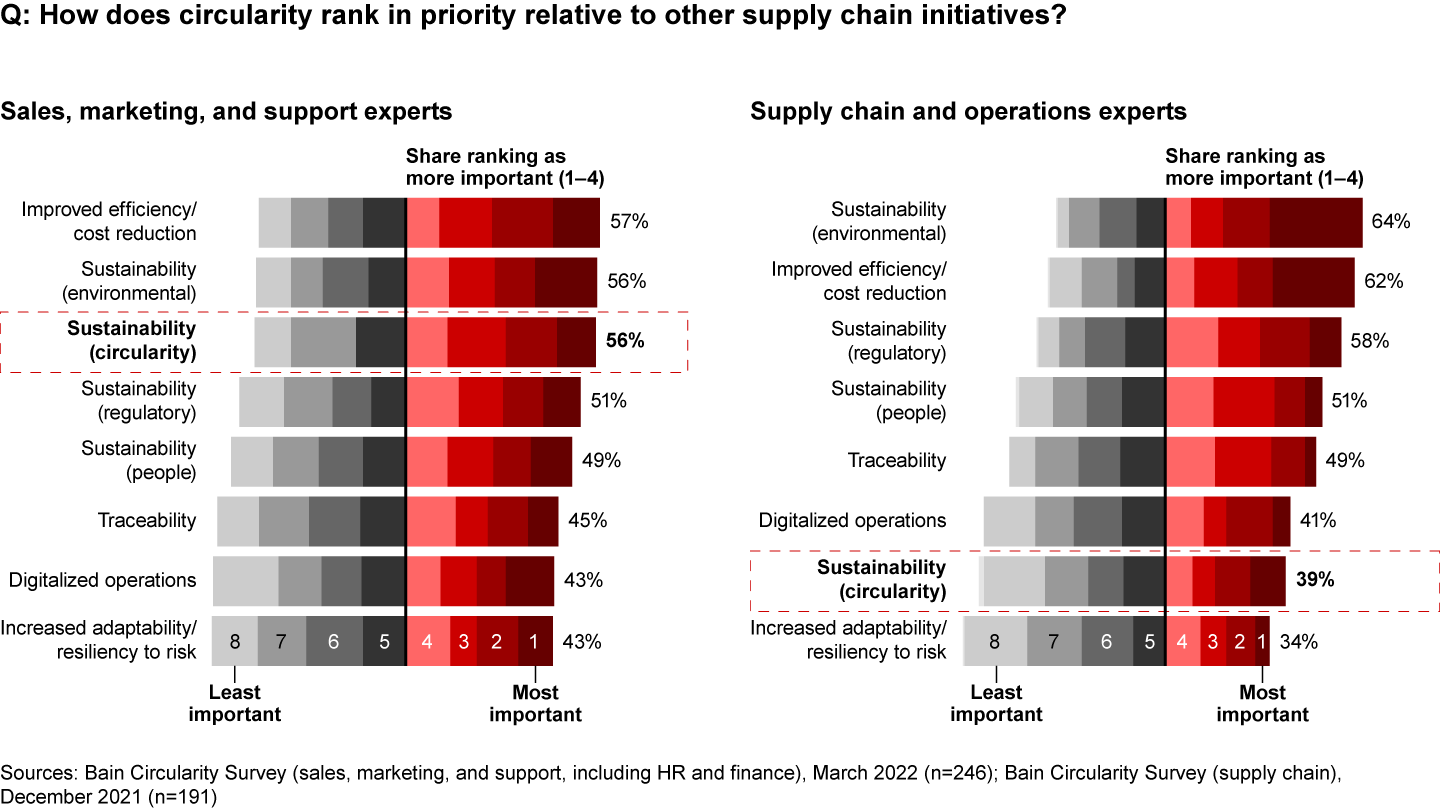

The reason for that disconnect is likely that supply chain and operations managers are more acutely aware of the challenges and the costs of creating circular processes and products. In fact, supply chain executives say circularity initiatives are getting lost in a mix of other priorities, including sustainability, resilience, and efficiency initiatives. Conversely, sales and marketing executives see firsthand the customer demand and growth potential for circular solutions.
A related challenge is building the right cross-functional team to implement a circular strategy. Many companies take one of two approaches: bottom up or top down. Each tends to falter for different reasons.
Bottom-up strategies typically focus on one or two operations-based circular opportunities within an existing value chain. They tend to be small, incremental, one-off pilots that struggle to show clear value. And they are not designed to scale across the entire business.
By contrast, top-down strategies that span the full value chain often fail because they are too high level and too generic to translate into concrete initiatives. New business models and successful circularity initiatives require precise and detailed cross-functional coordination. In our experience, leadership teams often overlook that step. As a result, top-down strategies typically lack an implementation platform, governance structures, and aligned incentives. Finally, in many situations, the unit or function that bears the cost and execution challenges of circularity initiatives doesn’t capture the value directly.
Leaders pursue these two approaches simultaneously and make sure teams connect to push change throughout the organization. They make parts of their existing business circular at scale while deploying cross-functional teams to radically reimagine the business for a circular future 5 to 10 years from now. We call this combination a “today-forward and future-back” perspective. Importantly, it ensures that each action today also links to the firm’s future vision. That establishes a positive reinforcing cycle, with near-term progress building toward long-term value creation.
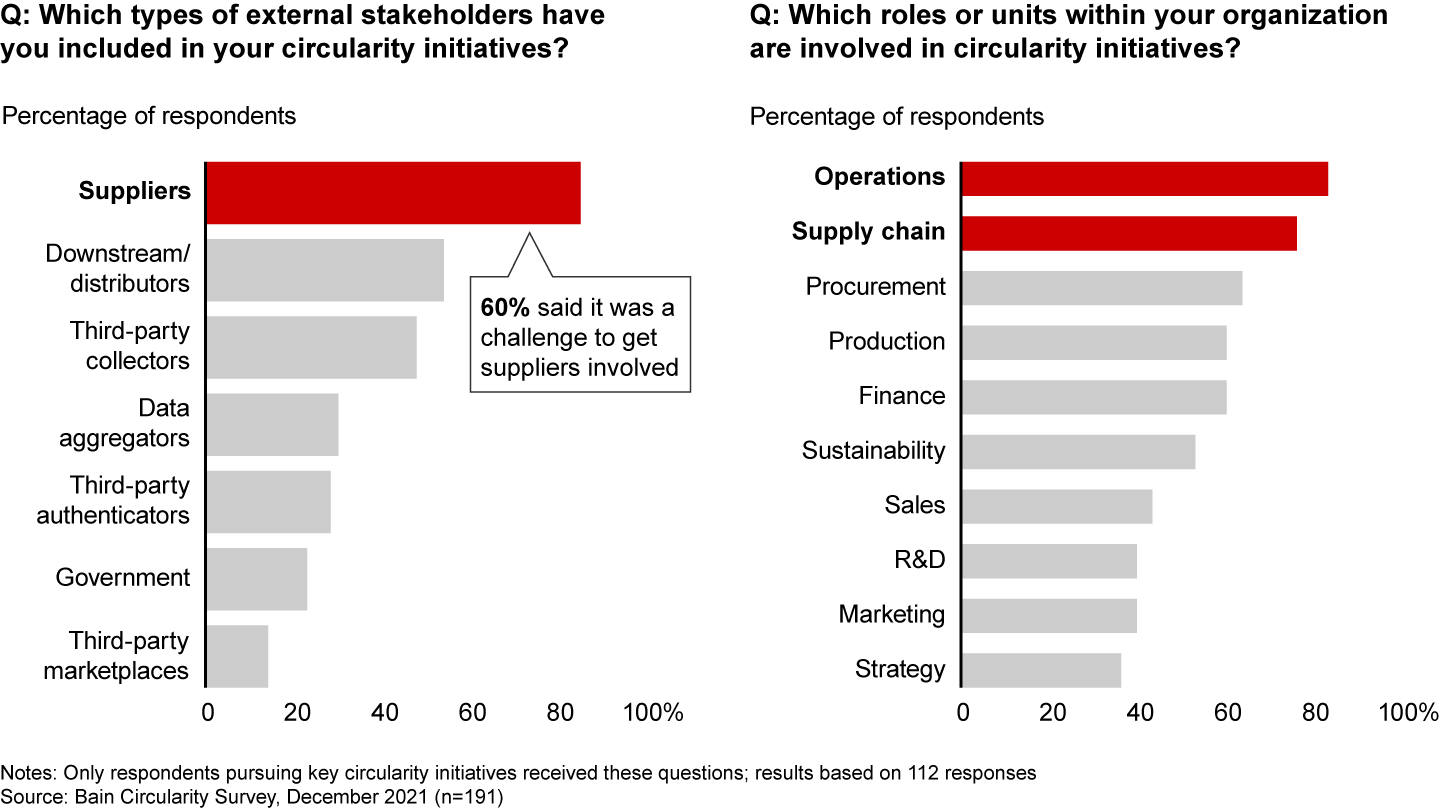
Another obstacle for circularity initiatives is getting the needed engagement from a broad set of external stakeholders. Suppliers rank as the most vital external partners in circularity initiatives, but 60% of companies said getting them involved was a challenge (see Figure 3).
Figure 3
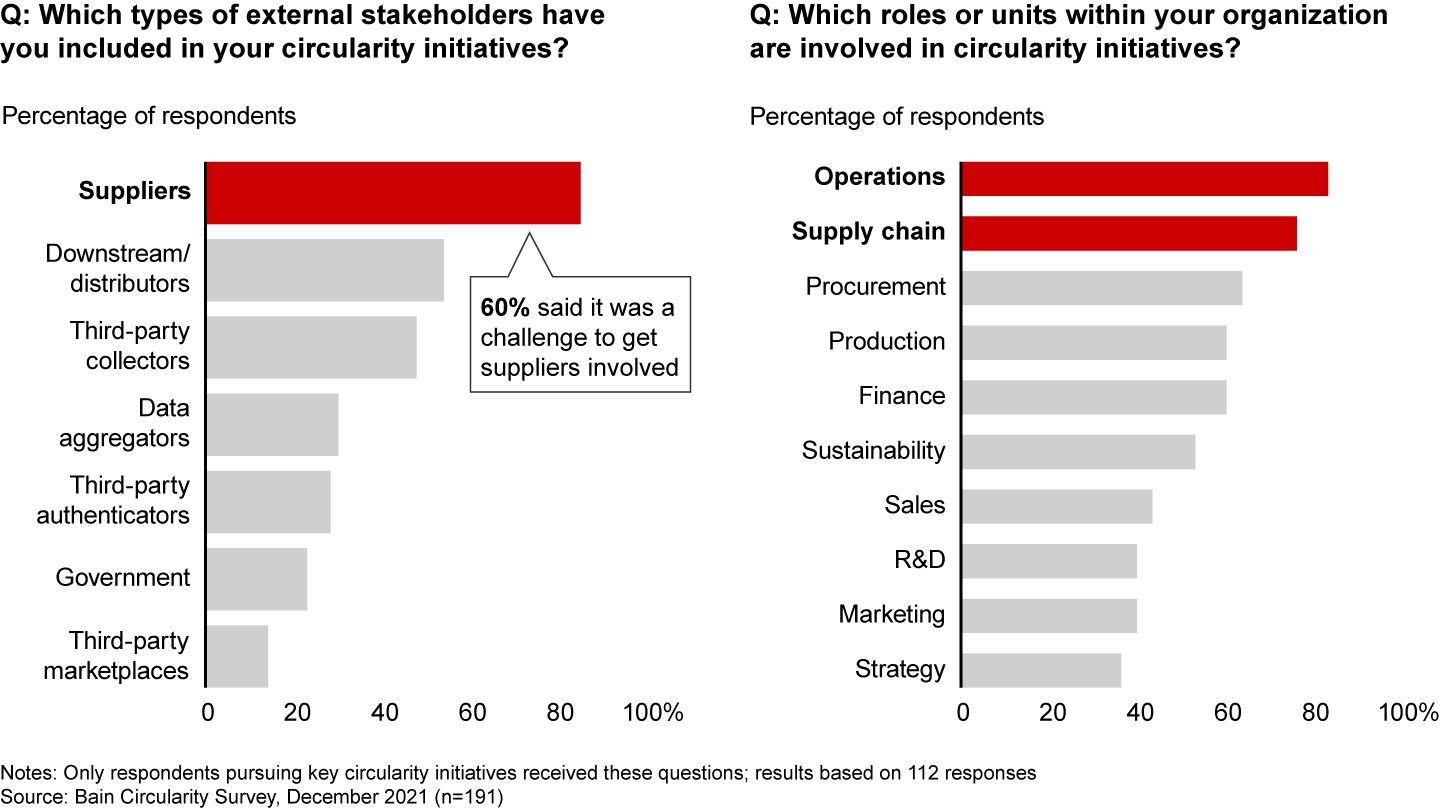
In fact, our research shows that the No. 1 barrier for companies pursuing circularity is the lack of a coherent ecosystem of peer companies, suppliers, industry consortia, technology and data partners, NGOs, and regulators. This type of ecosystem, aligned around a shared ambition, is a vital foundation for the shift to a circular strategy.
Of course, many other issues can impede progress, including competing priorities, concerns about cannibalizing new product sales, and insufficient technology capabilities.
While executives remain confident that they will achieve their broader targets for sustainability and circularity, some of this confidence may be misplaced. More than 40% of respondents who are highly confident of success said they do not have a detailed and budgeted plan.
A way forward
Despite the considerable operational challenges of a circular business transition, leading multinationals are showing that progress is possible. These frontrunners establish measurable goals for the overall share of circular products and services they plan to attain, as well as target levels of recycled content, reuse, and recycling. Consumer goods giant Unilever, for example, has targeted 100% reusable, recyclable, or compostable packaging by 2025. Michelin has pledged that, by 2048, its tires will be made using 80% sustainable materials and every tire will be recycled.
Leading companies also set specific revenue targets for circular products and services. By 2023, Michelin aims to generate €700 million a year from selling its tires as a service, charging for outcomes instead of the tires themselves. Schneider Electric recently surpassed its goal of generating 75% of product revenue from its Green Premium line, which provides detailed information on products’ regulatory compliance, material content, environmental impact, and circularity attributes.
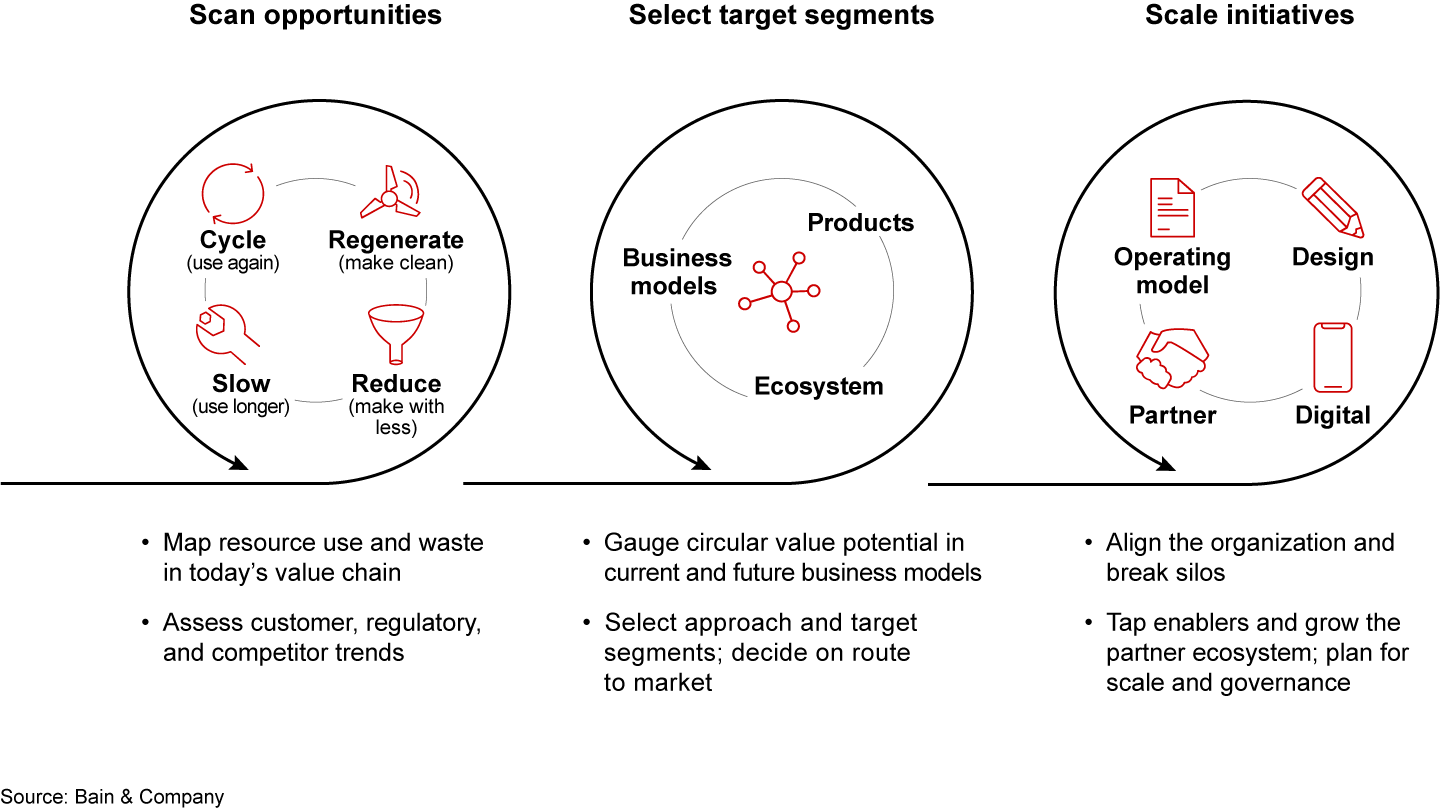
In our experience, leaders who are pioneering the transition to circular business strategy do three things well. They map the potential for circular flows in their existing value chain, select the options that create the most value, and start scaling a circular business and ecosystem (see Figure 4).
Figure 4

Avoiding common obstacles
Anticipate disruption. Assume your core business will be disrupted by innovative rivals or upstarts with a circular business model, and work backward from that scenario to identify circular opportunities. Imagining how the industry is likely to change can help leadership teams think creatively about the shift. While reimagining the future business model, leaders start improving circularity throughout the organization. They map resource use and waste in the current value chain and explore potential for circular flows that create new value (see Figure 5).
Figure 5
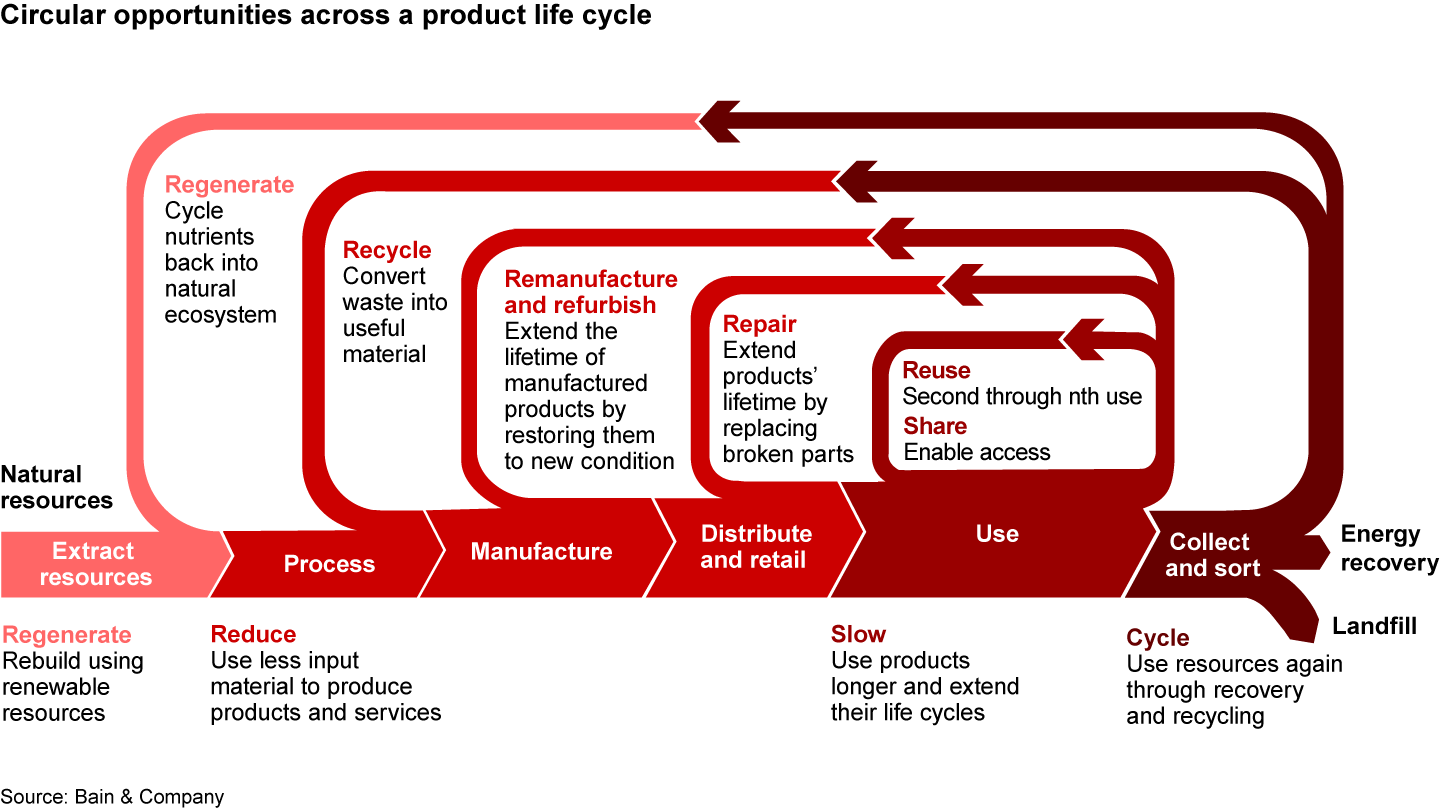

Initiatives that build circularity into existing products and processes can lay the foundation for a future business model. They may include switching to renewable and recycled inputs, developing circular product design, or extending product life through buyback programs, repair, remanufacturing, and resale. Importantly, successful circular strategies focus on opportunities that are scalable and create repeatable models.
Ultimately, regulation will become a key catalyst for change and disruption. Companies that get ahead of the curve by launching circular strategies and business models will be in a strong position to partner with governments to speed the transition.
One major vehicle maker, for example, set out to understand what future material flows across its value chain would look like in a circular economy. The leadership team studied materials sourcing, component manufacture and production, vehicle use, and end-of-life options. The shift from internal combustion to electric drivetrains made the analysis doubly complex. The leadership team also lacked data and transparency on its upstream supply chain.
Despite those challenges, the effort to map out value creation in a future circular setting delivered powerful insights. The vehicle maker identified several attractive opportunities to sharply reduce resource consumption. One case involved remanufacturing and reuse of parts and components. Another focused on cutting emissions by using more recycled content. A third sought to enhance profitability by capturing value from battery end-of-life processing and reduced overall material costs.
Identify new value-creation nodes. Assess how value creation will shift as the industry goes circular, and locate new control points in the value chain. Companies that anticipate how circular disruption will ripple through their value chain can get a head start designing a business model that captures new value. Commercial models that cater to changing customer expectations, for example, can unlock substantial sustainability gains.
Services are likely to be a strong engine of circular growth. Many companies have discovered that their customers are eager to switch from buying products that need service to buying access to the product as part of a service package that offers guaranteed reliability, availability, and a take-back option. For manufacturers, selling products as a service offers full control over circular processes that extend a product’s life, such as reuse and remanufacturing. And those processes reduce the need for new goods.
Service-led initiatives also allow manufacturers to monetize a longer product life span through markets for sharing products, second-life resales, and repairs. And at the end of a product’s life, they are able to capture the full value from components and materials. Finally, new service businesses can support circularity by providing financing, insurance, logistics, and certification.
The global vehicle maker mentioned above created a cross-functional team to analyze the industry shift toward service-based business models and how those models would affect its profit pools. That information was critical to framing strategic choices on circular revenue models, production processes, and supplier relationships. The leadership team realized that a business model offering vehicles as a service, for example, delivered greater value when it included remanufacturing and component reuse. With full control over maintenance schedules, the company would be able to reduce material use and cut carbon emissions.
Plan to scale. Build solutions on scalable platforms that suppliers and other external partners can use. Companies can’t solve circularity on their own, so it’s important to develop platforms that allow for seamless data sharing across the entire value chain.
Traceability, for instance, can enable circularity by creating transparent material flows in real time throughout the product life cycle. But transparency requires a systems and data infrastructure that can seamlessly connect ecosystem members and data sources. The leadership team at one major global retailer understood that imperative when they set out to develop QR code–based digital product identities in collaboration with a technology company. Their solution captured relevant data throughout the product life cycle, from production to sale to reuse. It also enabled product authentication, removing barriers to resale, extending product life, and ultimately reducing fashion waste. The pilot may become an industry standard, magnifying its impact.
While the retailer developed the initiative in a precompetitive environment, there are many examples of industry coalitions establishing industry-wide platforms and standards to support the shift to circularity. For instance, the EU funded the Buildings as Material Banks project, bringing together 15 European companies and organizations to accelerate systemic adoption of circular practices in the building industry.
Companies also are aligning on voluntary systems for extended producer responsibility in many markets, to support better collection, sorting, and recycling of plastic and other consumer goods packaging. For example, 10 consumer goods companies in Malaysia set up the Malaysian Recycling Alliance in January 2021 as an industry-led circular economy initiative. When the Ellen MacArthur Foundation published a paper calling for extended producer responsibility in packaging, more than 100 businesses—including Coca-Cola, Unilever, and Walmart—as well as more than 50 NGOs and other organizations, endorsed it.
Industry-led initiatives also can provide a strong platform for companies to build and strengthen their own partnership ecosystem.
The journey ahead
It’s a daunting moment for leadership teams. The magnitude of change for each individual business is enormous, and achieving a circular economy is likely to take a decade or longer. Our research shows that those who have started implementing circular business strategies are more worried about pulling it off than those who have not yet begun. Less than half of supply chain and operations respondents feel confident they will hit their goals, compared with over 80% of sales, marketing, and finance respondents.
But circularity leaders are overcoming many hurdles and building momentum for change. They are breaking the challenge into manageable steps that allow them to start down the path and achieve a series of initial successes. They set forth with a clear strategy backed by a deep understanding of material flows in their value chain and industry-specific risks and opportunities. Above all, these leaders prime their organizations for circular transformation and design a series of initiatives that are set up to scale.
There is no understating the challenge, but the rewards too will be substantial. Early movers that build a successful circular business model in the coming years will gain a powerful strategic advantage. These leaders will be poised to disrupt their own industries and win a growing share of new markets. Above all, companies with cutting-edge experience in circularity will be in the strongest position to sustainably meet their customers’ needs.
First published in 5月 2022