

論説

概要
- Online sales of appliances grew at a 10.5% annual pace between 2015 and 2019 compared with less than 1% growth at retail outlets.
- Bain & Company research shows one-quarter of global consumers are more willing to buy appliances online than prior to Covid-19.
- More than 45% of consumers are willing to pay a premium price for an appliance if it includes additional services such as same-day repair.
E-commerce was poised to transform the white goods industry before Covid-19 struck. But the pandemic is speeding change. Consumers are flocking to online platforms to buy everything, including large appliances. Direct-to-consumer channels are now powering a growing share of large appliance sales, putting manufacturers under intense pressure to reshape their strategies.

Macro Surveillance Platform
For more detail on the business implications of coronavirus from Bain’s Macro Trends Group, log on to the Macro Surveillance Platform. Learn more about the platform >
A recent Bain survey of 6,077 global consumers shows 26% are more willing to buy appliances online than they were prior to the pandemic (see Figure 1). A significant shift in consumer behavior could increase online purchases of white goods to 40% of total industry sales by 2025, up from 15%–20% today. Overall, consumers are likely to switch to digital sales channels two to five years faster than anticipated in forecasts made prior to the pandemic.
Figure 1


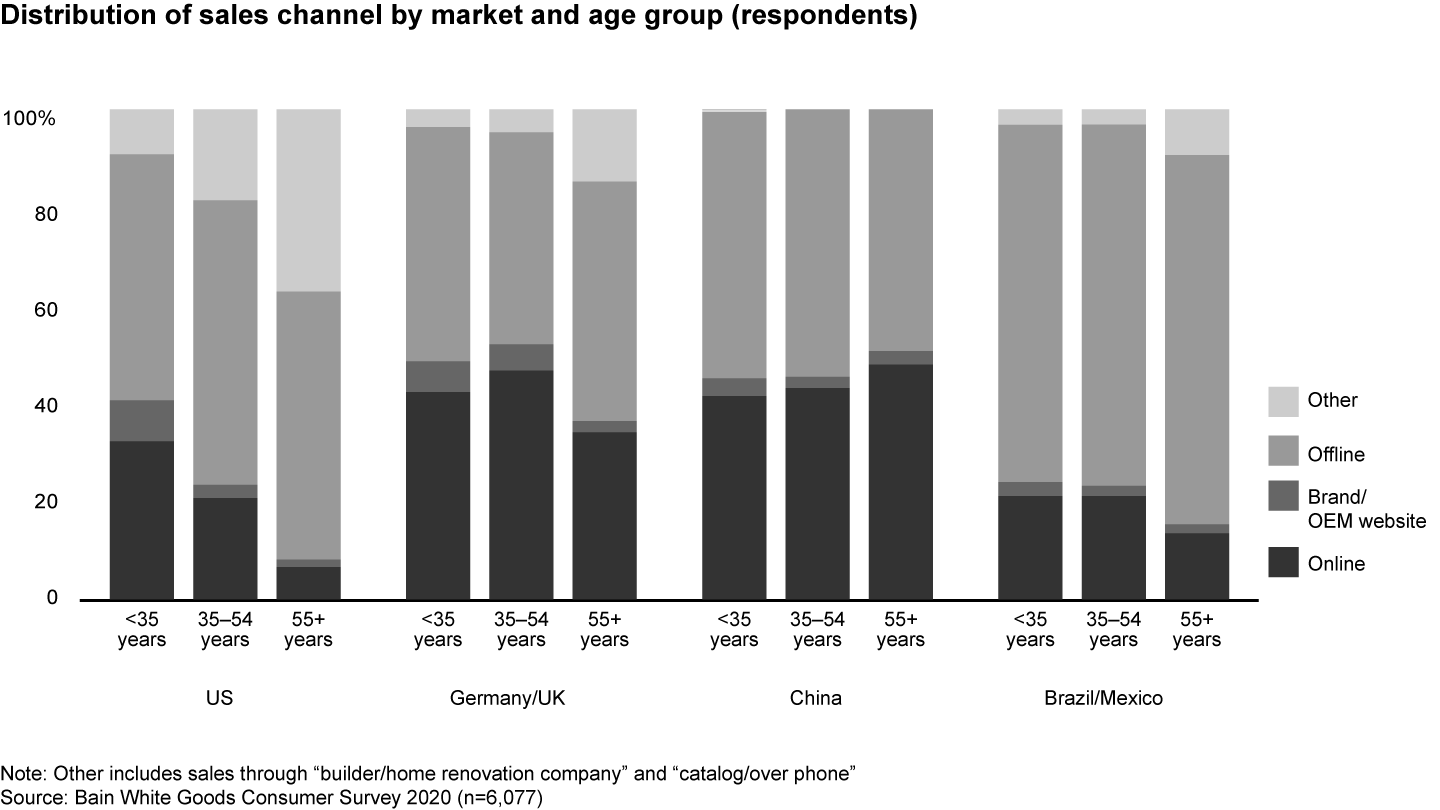
For manufacturers, the message is clear. Digital sales and marketing savvy will be vital to maintaining share of market. Already digital channels deliver the bulk of industry growth: Online sales grew at a 10% annual clip between 2014 and 2019, compared with almost no growth at retail outlets. In the coming decade, Internet-savvy consumers, especially younger ones, will accelerate the industry shift toward digital sales (see Figure 2).
Figure 2

In this fast-changing landscape, e-commerce retailers pose a major challenge to appliance manufacturers. As more consumers shift online, retail stores will lose market share and the white goods industry is likely to consolidate.
Leading manufacturers are rapidly developing an omnichannel retail strategy to compete in an increasingly digital market. In addition to traditional retail outlets, they have begun collaborating with large online platforms such as Amazon and Alibaba as well as local and regional e-commerce challengers and investing in well-designed direct-to-consumer channels. At the same time, they are speeding the development of connected appliances, laying the foundation for a wide array of future digital services. These first movers aim to use digital tools to build loyalty, create lifelong client relationships, strengthen their brand image and capture a larger slice of after-sales services.
Connect with customers
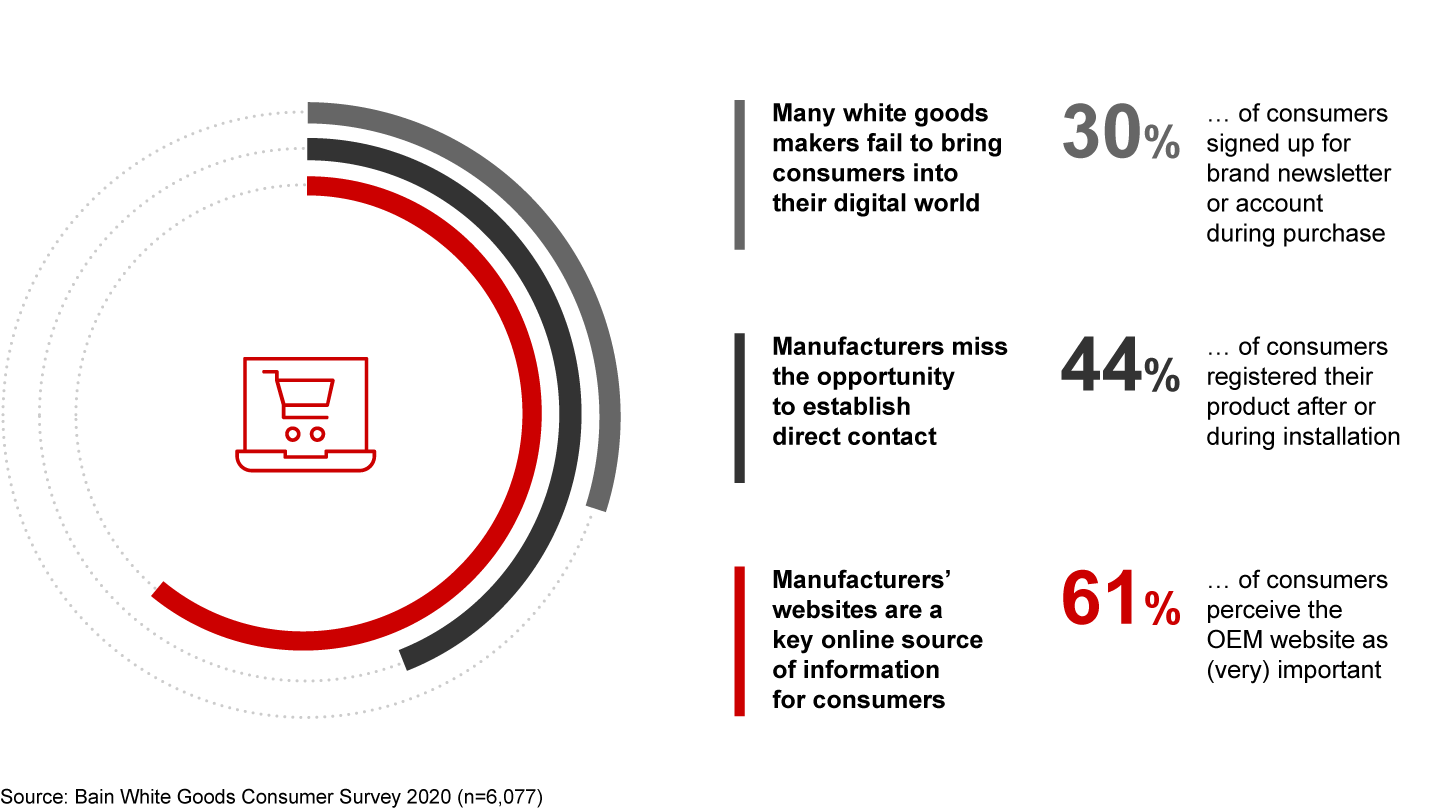
Appliance manufacturers sit on a treasure trove of information about their products, but many miss the opportunity to establish direct contact with potential customers early in the purchase process. More than 60% of consumers say manufacturers’ websites are a key online source of information for them, but only 30% signed up for a brand newsletter or account during the purchase process, and 56% failed to register their product during or after installation (see Figure 3).
Figure 3

Manufacturers that lag in building direct-to-consumer relationships early in the purchase process will be less effective at direct marketing and sales of add-on services, consumables and upgrades. Covid-19 has shown how vital a digital link can be for appliance makers and their customers. In the midst of the pandemic lockdown, one major white goods company had difficulty communicating to its customers that its service team was available to repair failed appliances in homes. The problem: Few customers had opted in to direct communications with the company. Future winners will excel at connecting with customers before, during and after a sale. Strong customer ties, in turn, will allow them to build a rich database of insights about consumer purchasing behavior.
Test and learn
As change accelerates, successful manufacturers are investing in digital marketing, tapping social media and launching direct-to-consumer channels. Digital tools allow companies to connect faster and more effectively with different segments of consumers. Leaders are increasing their return on marketing investments by shifting away from traditional multimillion-dollar national marketing campaigns to hundreds of smaller test-and-learn campaigns tailored to specific consumer groups. Cross-functional Agile teams rapidly apply lessons learned and speed decision making.
Take the case of a global appliance maker that launched a direct-to-consumer marketing campaign in the midst of Covid-19 to promote purifying water filters. The mailing, which was sent to customers registered on its website, delivered powerful results. Traffic to the company’s website rose dramatically—the number of visits in one month matched the total for the previous year—and water filter sales increased fivefold compared with the same period a year earlier.
Direct-to-consumer marketing helps build a vital link to individuals prior to a purchase, paving the way for increased post-sale interactions. Digital channels make it easier for customers to report a problem, share appliance data ahead of a service call, arrange or reschedule an appointment and provide feedback. Those experiences, in turn, can improve a brand’s image and help sell new services, or persuade buyers to remain loyal when it’s time for a replacement purchase.
Leading appliance makers also are developing new business and service models linked to online marketing. A pay-per-performance service contract might give customers priority service if their appliance breaks down as opposed to their waiting in line for an appointment. Another variation is paying a low monthly fee that covers any future repair. Appliance makers may offer consumers a contract to supply washing detergent or other consumables.
New digital services for kitchen appliances include access to interactive recipes, step-by-step cooking guides and membership in culinary communities, all designed to engage users.
E-commerce challenge
Traditional appliance manufacturers that have long relied on physical retail outlets face a key challenge mastering the universe of online sales that e-commerce rivals have pioneered. As white goods customers turn increasingly to digital sales channels, e-commerce giants such as Amazon and Alibaba could become a dominant market force. They already wield strong existing relationships and are experts at connecting individually with consumers, reacting quickly to changing preferences, providing intuitive online shopping experiences such as one-click buying options, and deriving market insights from the treasure trove of consumer data they generate.
Amazon Basics, Amazon’s small household appliances brand, launched in 2009, markets reasonably priced items such as vacuum cleaners and heaters and receives high ratings. The company also has started to sell larger Amazon-branded white goods in selected markets. As Amazon begins to build a portfolio of kitchen and laundry appliances, its mastery of supply chain and delivery networks is likely to prove daunting competition, pushing industry prices down further and setting a high standard for online competition.
A winning strategy
Traditional manufacturers can speed their shift to digital marketing and sales by following six guidelines.
Build an omnichannel sales model. Combine flagship stores with traditional third-party retailers, an enhanced company website, direct-to-consumer channels and online retailers. The rapid growth and success of Coolblue, a $1.8 billion Dutch e-commerce consumer goods retailer, highlights the power of an omnichannel model. Founded in 1999, the company started with specialized webshops, but quickly combined them under one brand and has opened 10 physical stores that provide customers comprehensive advice on appliances and other consumer goods, product testing, a pickup point and after-sale service. Sales data shows the retail stores provide strong additional value, enhancing the retailers’ ability to delight customers: Coolblue’s online sales are significantly higher in areas less than an hour’s drive from its physical shops.
Simplify the portfolio. Many younger consumers have difficulty sorting through the wide range of appliance models manufacturers offer, as well as their huge number of features. On average, 41% of buyers under age 35 feel overwhelmed when choosing an appliance model. Leaders have started to streamline product and brand portfolios and make them easier for customers to navigate.
Invest in digitally connected appliances. Connected appliances allow consumers to manage white goods through one central platform and application. Our research shows 25% of buyers rate Wi-Fi capability and connectivity of their appliances as important. Catering to these customers can give manufacturers a competitive edge as products and services go increasingly digital. Our research shows 53% of consumers would buy appliances offering smart services or apps that can help in managing daily chores.
Create digital experiences and services that add value. Leaders already are starting to build connected-appliance ecosystems to build new value into their products and increase consumer loyalty. Electrolux’s Vintec, a maker of temperature-controlled wine cabinets, recently launched Oeno, a virtual wine cellar management app that keeps track of a customer’s wines and provides sommelier-style advice on when to open bottles, pairing wine with meals, and serving temperatures. It can also order wine and restock automatically.
Get customer onboarding right. Successful appliance manufacturers take care to delight their customers during the initial setup and first use of an appliance. That helps ensure that buyers register their products and link into the manufacturers' digital universe from the start. Our survey showed only 44% of customers register their device, and most do not have any significant follow-up interaction with the manufacturer. Leaders deliver value-adding services and experiences while onboarding customers to kindle long-term customer relationships.
Build a portfolio of high-margin services. Service and repair represent a large after-sales opportunity for appliance makers. Care contracts offering same-day repair or worry-free packages for cleaning and maintenance increase customer satisfaction, revenue and loyalty. Our survey showed 76% of consumers rate same-day repair as the most value-adding service, and more than 45% are willing to pay a premium for an appliance if bundled with valued services that go beyond the warranty, such as same-day repair (see Figure 4).
Figure 4
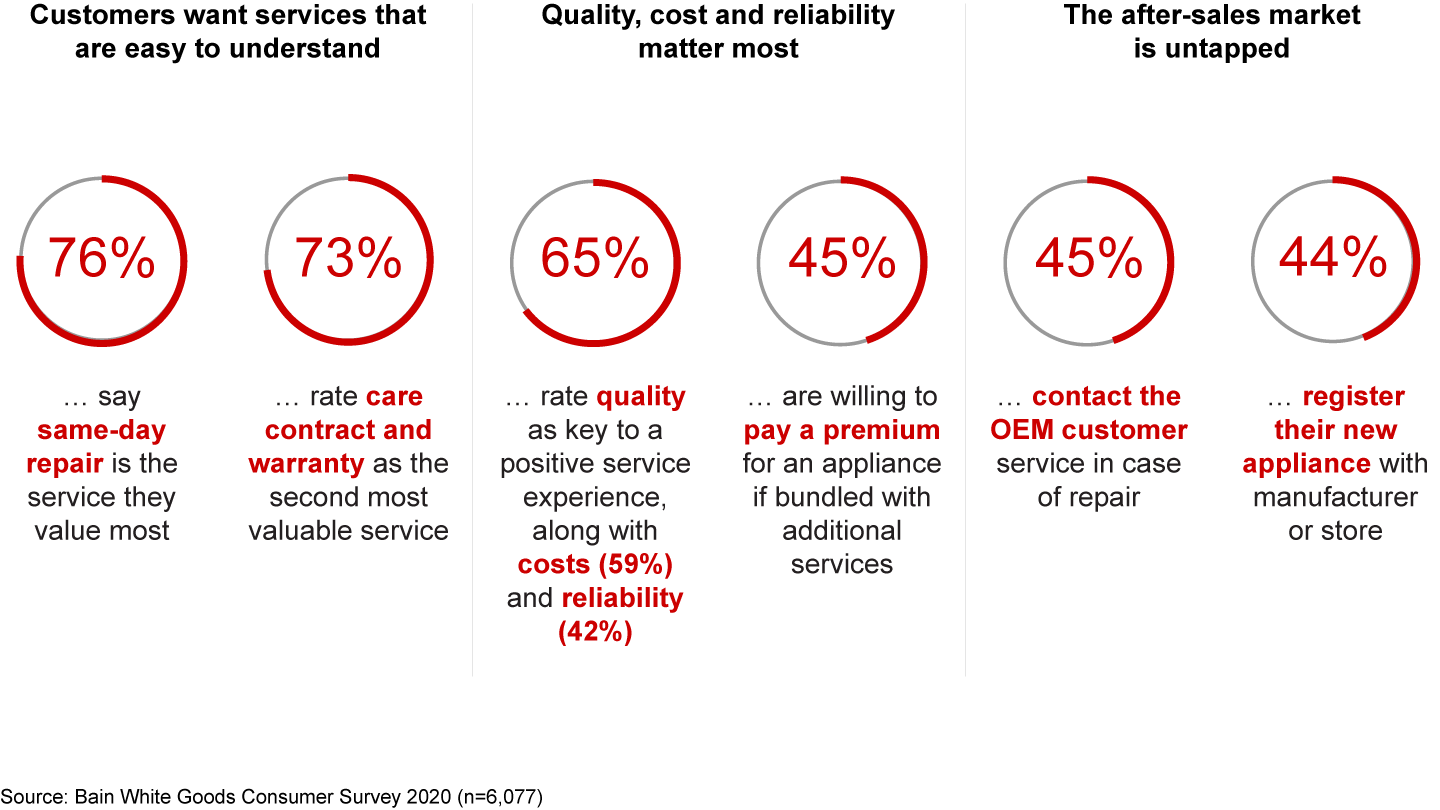

When it comes to consumer satisfaction, installation is the first critical interaction, and a good experience can encourage consumers to register the product and consider service contracts that go beyond the warranty. More than 50% of consumers we surveyed said they care about warranties, but 66% don’t see or understand the benefit to registering their appliance. Any service event is an opportunity for a manufacturer to strengthen its direct link to customers. When white goods break down, 45% of consumers contact the original equipment manufacturer (OEM) service team, which is another opportunity to establish a direct relationship with customers, build loyalty and increase profits. In the case of a defective appliance, for example, manufacturers can use the event as a moment of truth, surprising clients with rapid and superior service.
In an increasingly competitive market, loyalty counts. For years, white goods makers have assumed quality products would deliver a base of satisfied customers. But with online sales surging, traditional brands will need to work harder to win loyalty. Many have a much lower Net Promoter Score℠ among young buyers and online buyers. E-commerce retailers such as Coolblue routinely track customers’ Net Promoter Scores. To compete effectively in a direct-to-consumer universe, manufacturers will need to understand their scores by targeted customer segments and geographies.
The white goods industry faces rapid transformation as the pandemic accelerates the shift to digital sales. Digital tools will reshape sales, marketing and even products as OEMs connect directly with consumers and a growing number of appliances are connected to the Internet. White goods retailers that build strong, direct consumer relationships and focus their strategy on a closer digital relationship with clients will be best positioned to win in the coming decade.
Net Promoter®, NPS®, NPS Prism®, and the NPS-related emoticons are registered trademarks, and Net Promoter Score℠, NPSx℠, and Net Promoter System℠ are service marks of Bain & Company, Inc., NICE Systems, Inc., and Fred Reichheld.

Coronavirus
The global Covid-19 pandemic has extracted a terrible human toll and spurred sweeping changes in the world economy. Across industries, executives have begun reassessing their strategies and repositioning their companies to thrive now and in the world beyond coronavirus.
First published in 12月 2020