

論説

概要
- Nimble pricing behavior from Amazon and other online sellers has raised the imperative for everyone else to develop dynamic pricing capabilities.
- But dynamic pricing is more than just a defensive action. Pricing leaders use volatility to their advantage, capturing opportunities in market fluctuations and forcing competitors to chase their pricing moves.
- Building better pricing capabilities is about more than improving processes, technology and communication. Pricing leadership requires improving your understanding of customer needs, competitors’ behavior and market economics.
“Speed is the new currency of business.”—Marc Benioff, Salesforce
Dynamic pricing is not a new strategy. For decades, companies in travel and transportation have systematically set and modified prices based on shifting market and customer factors. Anyone who buys plane tickets should be familiar with this type of dynamic pricing, but what about other industries? Does dynamic pricing have a role? Increasingly, the answer is yes. At some level, all pricing is dynamic pricing. Companies just have not managed it as such, often missing opportunities to capture value or prevent lost market share. However, new forces at work have greatly increased the urgency and call to action to make dynamic pricing a core capability of the business.
The Amazon effect
Amazon has pushed retailers online and into a fiercely competitive pricing environment, one where the e-commerce giant changes the price of some consumer products on average more than 70 times per year, depending on demand and other variables.
Now, the consumer pricing strategy defined by Amazon and others online is reshaping business-to-business (B2B) commerce standards as well. Increasingly, B2B customers expect their suppliers to provide an online sales experience at least as good as they get from Amazon or other consumer retailers. If you can track your $10 pizza from your phone, why shouldn’t you be able to track your $50,000 shipment?
Online sales in the US could reach $1.2 trillion and account for 13.1% of all B2B sales by 2021, according to Forrester Research. Distributors of IT, industrial and medical supplies already face intense pressure from Amazon Business, which surpassed $10 billion in annual sales just three years after its launch. The leading industrial distributor in the United States, W.W. Grainger, was quick to slash prices following Amazon’s foray into its space.
Of course, adopting dynamic pricing shouldn’t be viewed as strictly a defensive move. Whether or not a business is affected directly by Amazon, it should be exploring opportunities to improve its pricing in response to changing market conditions. Dynamic pricing takes many forms, from fuel pricing based on daily weather and traffic patterns, to chemicals pricing based on weekly import and export activity, or technology pricing based on dozens of customer and market attributes.
The rise of digital pricing tools can help companies capture this value by enabling increasingly precise and proactive pricing strategies. These pricing solutions, combined with access to more and better data on market conditions and customer preferences, bring dynamic pricing within reach of most companies. No wonder that the market for such tools is growing rapidly—20% in 2017, according to Gartner.
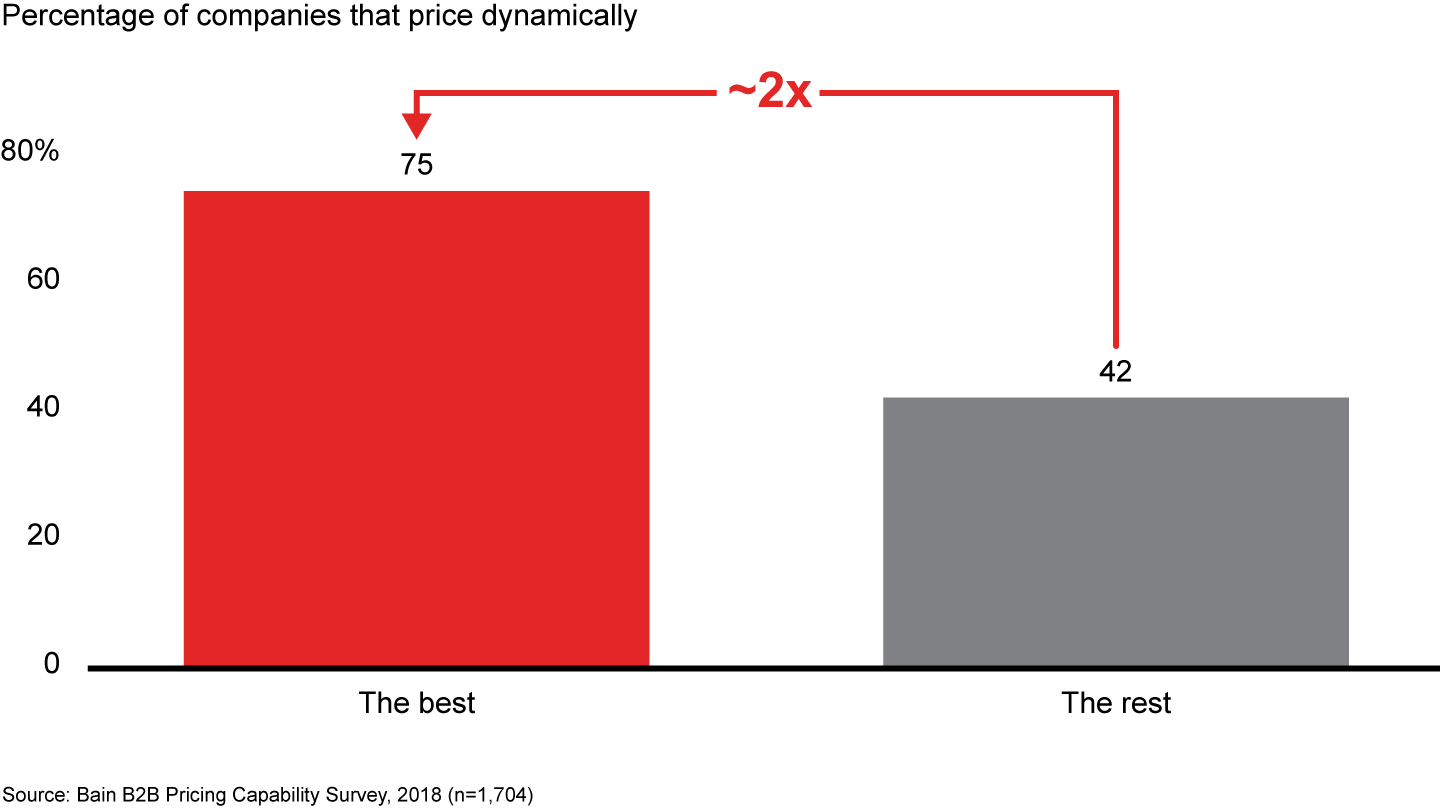
Research by Bain & Company indicates that pricing leaders are nearly twice as likely to already be using dynamic pricing, reacting quickly to changes in the market and taking advantage of upswings and downturns (see Figure 1).
Figure 1

The fight, therefore, is certainly one worth pursuing.
Building the advantage
But how does one get started? Pricing is a complex discipline, frequently lacking a functional owner or clear process for change. Conflicting objectives, such as whether to emphasize growth or volume, can make investment difficult. A poor understanding of customer needs and their willingness to pay limits confidence in the mandate for change. However, Bain experience has shown that if a company is not actively managing price today, it is leaving 200–400 basis points in operating profit on the table. The magnitude of the benefit makes the journey worthwhile.
Companies that have successfully built dynamic pricing capabilities are able to answer three questions clearly.
- Do you know where you are heading? Start with a clear pricing strategy. Dynamic pricing, like any pricing capability, must align with a company’s broader strategy. For example, if an airline’s strategy is to maximize revenue on every flight, its pricing strategy should help fill every seat by adjusting prices. Route, seasonality, customer type, competition and macroeconomic influences all play a role. For cargo the approach is even more complex. The airline must attempt to manage yield on a cargo hold that is first filled with an unknown quantity of passenger bags, and an unknown amount of US mail. The remainder can be sold for freight movement. Meanwhile, space and weight constraints must be accounted for. The dynamic model may differ, but the objective is the same—maximize the revenue for every flight.
Process manufacturing companies face a different challenge, as they seek to balance revenue, market share and asset utilization through the commodity cycle. Leading price increases in an upturn and managing price declines in a downturn helps maintain profit performance throughout the full cycle. For one chemical company we worked with, the challenge was how to manage the complex supply and demand cycles for chlorine gas and caustic soda, which are by-products of each other, with prices that shift almost exactly opposite to each other. Multiple strategies are possible: Companies can deliberately choose a volume play to maximize capacity utilization or a premium service play, emphasizing security of supply and innovative packaging to make transportation and consumption of the materials easier, cheaper and safer. In this case, executives chose to position their company as a premium provider, given their smaller scale. Dynamic pricing became a critical capability to maximize margins at each step of the cycle, ensuring they still maintained the right premium at the bottom of the cycle while expanding that market premium in tight supply environments.
- How fast do you need to move? Recognize volatility and examine how much your company would gain from closing the gap.
How many indicators (cost, supply, demand, competitor actions or inventory) matter, and how frequently do they shift?
Dynamic pricing models vary in complexity, from simple, rules-based pricing updated periodically to sophisticated, real-time models. For example, in fuels pricing, having the ability to change street price multiple times per day can help incorporate market factors that mathematics alone cannot predict, such as competitor reactions to a significant change in wholesale price. However, in specialty chemicals, input contracts may have a longer lead time and, therefore, weekly updates to market factors driving price may still create an advantage. In deciding what type of model is right, executives have to consider a range of factors (see Figure 2).
Figure 2Analyzing the frequency and form of inputs helps companies determine what type of pricing model to implement 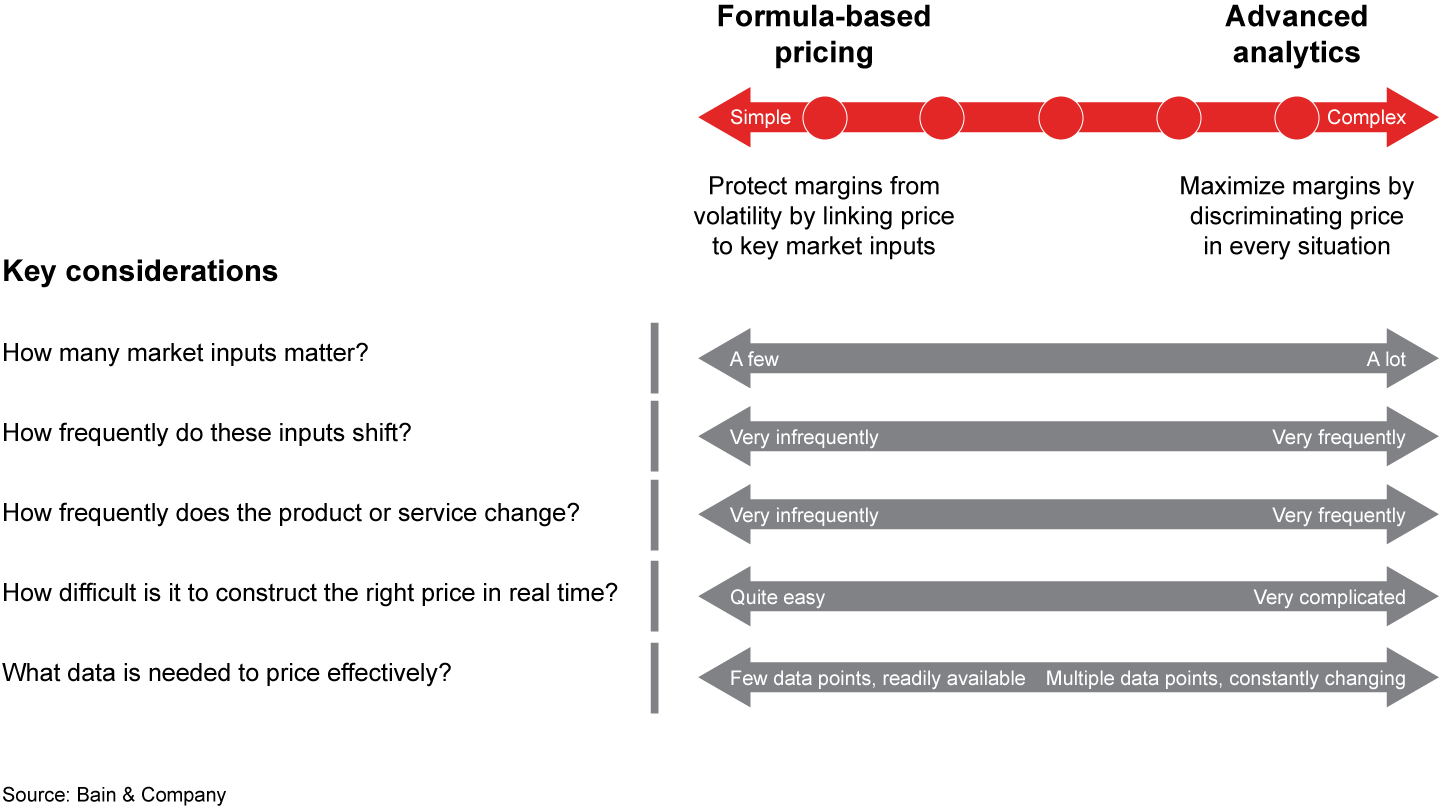

One auto manufacturer needed to account for many inputs, including product characteristics, financing conditions, licensing data and competitive intelligence. The complexity of these inputs, lack of data and an imprecise understanding of how inputs interacted with price made it difficult to set dealer incentives. Thus, the manufacturer made decisions about incentives based on tribal knowledge and guesses. Recognizing the opportunity to make better use of dynamic pricing, the company built a machine-learning model to decipher the causal relationships between dealer incentives, market dynamics and the resulting effect on monthly sales. Armed with the new dynamic pricing model, the manufacturer could react quickly to changing market and competitive conditions. Further, the model allowed them to accurately predict the impact that dealer incentives would have on vehicle sales.
It’s also important to continually revisit the pricing model and update the tools and process as needed. One real estate company had implemented a pricing model but failed to reassess it for several years. The pricing team recognized high volatility in the space and had implemented a dynamic model, but higher quality market and property data was changing the paradigm. When the team revisited its dynamic pricing model, it added more accurate supply and demand inputs, detailed floor plan variables and building amenities, resulting in a 3.5% revenue increase.
How much do you stand to gain by better anticipating and reacting to changes?
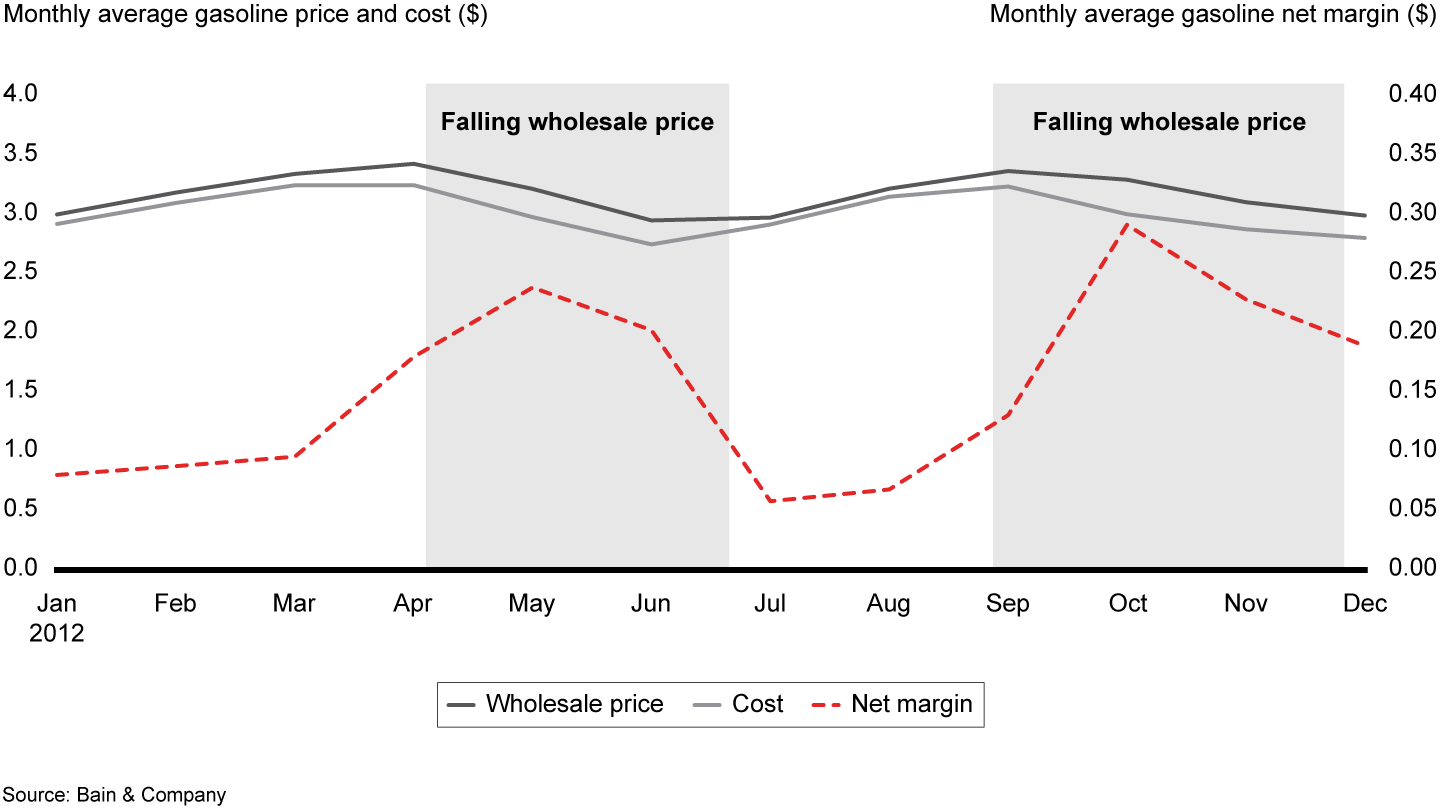
A company selling fuel found that profitability dipped whenever raw material costs rose (see Figure 3). Through a pricing diagnostic and prototype, the company measured potential margin uplift from addressing this issue. They found that price increases didn’t reduce sales volumes much, and the difference was offset by better margins. An improved model was rolled out, contributing to a 10% profitability increase.
Figure 3

- What does your organization need to make it a reality? Start with the people, processes and fast flow of information, then lock down your dynamic pricing guidance with an advanced pricing tool.
Process and operating model. Without clear decision rights, dedicated resources and appropriate governance, companies will struggle to carry out effective dynamic pricing. One chemicals company had adequate pricing tools, but had faulty processes. The company collected data across many departments, and not always in usable or portable formats. Most importantly, the data was not shared with pricing decision makers fast enough to use it effectively.
Executives took steps to improve both the data structure and supporting operating model. First, they created a data lake linking relevant data sets across the business. Then they instituted a weekly pricing forum with representation across functions, including sales, procurement, marketing and finance. Finally, they set up robust reporting mechanisms to highlight where each group was meeting earnings targets and where to push (or back off) on price. The changes enabled faster information sharing, and a greater commitment from each group.
Technology. Too many B2B companies still rely on outdated technology or analog solutions, but making the investment in advanced digital pricing solutions can pay off quickly. For example, at one equipment manufacturer, frontline sales teams were still quoting clients with spreadsheets that had little connection to ever-shifting underlying price drivers. The company needed a quoting tool that could calibrate prices across customer types and value propositions, across more than 10 countries and dozens of sites.
The manufacturer turned to an enterprise pricing software vendor, implementing a cloud-based, configurable quoting solution, accessible to nontechnical sales talent. The program helped increase operating income by more than 2.5% within the first year, owing to more dynamic and accurate list prices, as well as improved negotiation recommendations. Nearly a thousand frontline sales reps quickly adopted the tool.
Training and communications. As with any change in process or behavior, a strong communication plan and rigorous training programs are essential for success. Effective communication plans deliver consistent messaging on the pricing strategy across the organization, and engage sponsors in telling success stories through highly visible forums. Frontline huddles and small-format workshops can then address questions and concerns. Training programs can include structured forums, individualized coaching, best practice sharing and refresher courses.
Getting started
For anyone feeling left behind, the good news is that few companies have truly gotten it right so far: Our research shows that only 18% of B2B companies price dynamically. Now is the time to grab the advantage. Pricing is a discipline that continues to improve over time; therefore, getting there first can deliver significant and sustained benefits over the competition. Given the tangible nature of the payoff, wasted time is wasted profit. The payback is nearly immediate and ongoing, assuming a continued focus.
First, avoid feeling like a victim of volatility. Recognize the potential in building your capabilities to price in ways that match the commercial cycle of your industry, whether that requires monthly or hourly reactions. Start with simple rules-based pricing based on the most critical external factors, and adjust price points to protect margins and prevent share loss in the face of change.
Next, use volatility to your advantage. Target price-sensitive segments and keep the competition on their back foot responding to pricing changes. Seize the opportunities presented by market shocks.
Finally, learn to excel at finding the right price for the moment. Leaders in dynamic pricing discriminate price in every situation, taking into consideration as many variables as possible and supported by digital tools that they have learned to master.
Being adaptive in B2B pricing matters more than ever. If your pricing strategy cannot respond to shifting market conditions, it’s no longer a question of whether you will be disrupted but when. Building the capabilities for dynamic pricing requires an investment in upgrading data, tools, process and governance. The journey to excellence involves years of investment. Are you ready to begin?
Ron Kermisch and David Burns are partners with Bain & Company’s Customer Strategy & Marketing practice, and Chuck Davenport is an expert vice president in that practice. All three are leaders in Bain’s pricing work. They are based in Boston, Chicago and Atlanta, respectively.
The authors would like to thank Nate Hamilton, a principal in Boston; Monica Oliver, a manager in Boston; and Paulina Celedon, a consultant in Atlanta, for their contributions to this work.
First published in 2月 2019