

論説

概要
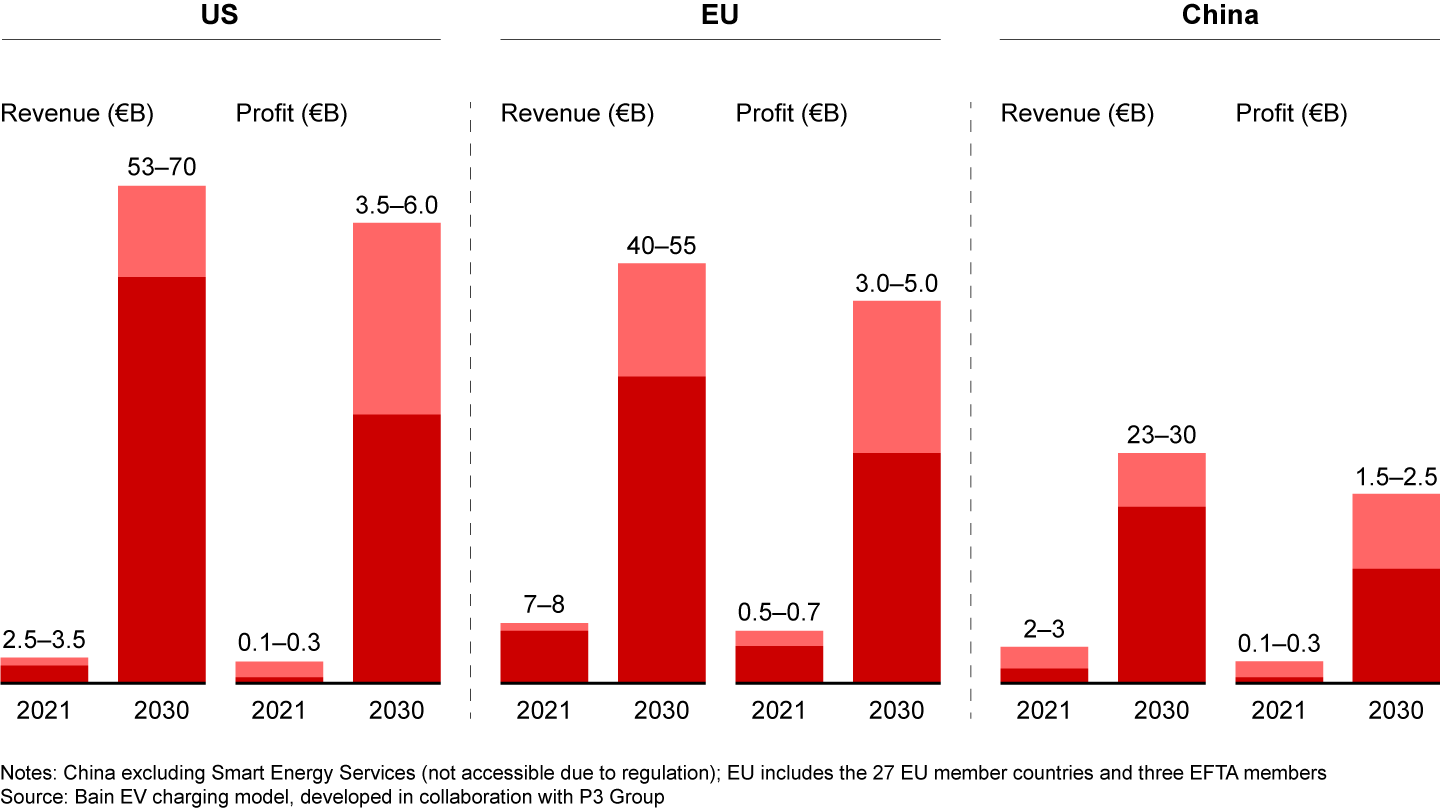
- In the US, Europe, and China, the profit pool for the EV charging sector is likely to grow to between €8 billion and €13.5 billion by 2030.
- Smart energy services will represent roughly one-third of the total profit pool by 2030.
- Leaders are developing strategies for uncertainty based on scenario modeling to stay nimble in an early-stage EV charging market.
Electric vehicles (EVs) are set to reshape the automotive and mobility industries—faster than anticipated. Countries worldwide have already introduced ambitious green energy targets and supported the transition to EVs. Now, the Ukraine war has accelerated those efforts and prompted many Western governments to further reduce their dependence on Russian oil and gas.
EV charging infrastructure and services critical to the adoption of battery-powered EVs (BEVs) are a huge and strategic new business opportunity. Bain research shows revenue and profit pools for EV charging in Europe, the US, and China will grow dramatically by 2030 (see Figure 1). Importantly, these profit pools will differ by region, based on their location in the EV charging value chain and the charging occasion.
Figure 1

Many market segments are still at an early stage and will take years to develop, so decisions and investments today will play a significant role in determining the long-term winners. However, leaders will need the ability to react flexibly as customer behaviors and regulations evolve.
Leading companies take a strategic approach to EV charging. They leverage their strengths and capabilities and base investments on profit pool forecasts. Many have formed partnerships to deliver a seamless customer experience—ensuring that charging apps, networks, and payment systems work reliably in every location. As with other early stage-markets where developments are difficult to predict, leaders use scenario models and watch for turning points. Those strategic moves help avoid the risk of ending up with stranded assets in the future.
Where to compete
Companies interested in the EV charging market face three key decisions about where to compete: the charging occasion, the part of the EV charging value chain, and the region. The choices each leadership team makes will determine the ecosystem partners it needs.
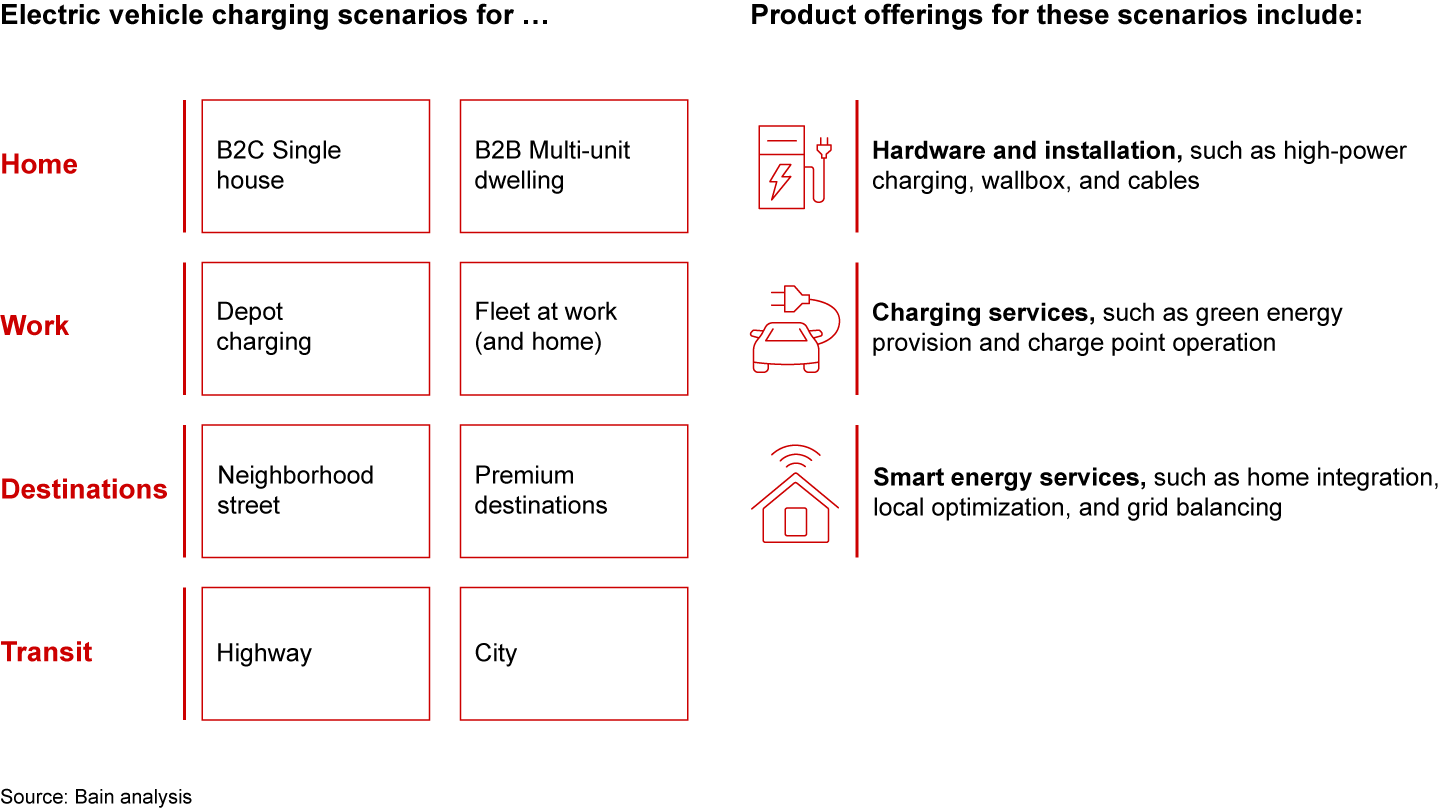
Charging occasions include home, work, destination, or transit. In the near term, a lot of investment will flow into building up the required EV charging infrastructure. In transit charging, profitability will depend on the ability to achieve high utilization rates. Winning in this sector will require a large capital expenditure on a network of convenient, reliable, fast-charging stations (150-plus kilowatt) that deliver an excellent customer experience.
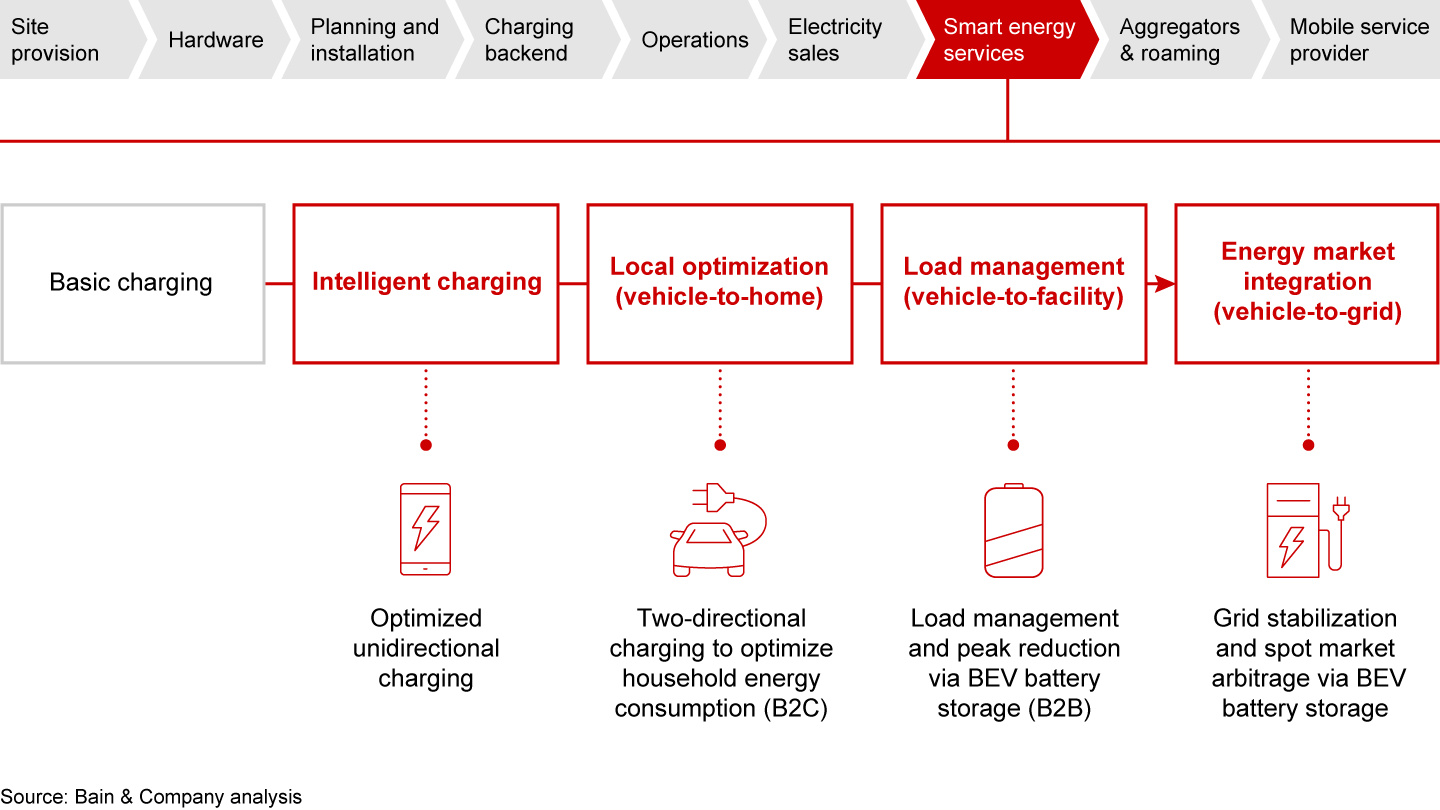
But in the future, the largest profit pool for home and work charging will likely be linked to next-generation smart energy services, including vehicle-to-grid and vehicle-to-home EV charging (see Figures 2 and 3). These services will become increasingly important as the volume of solar and wind energy grows because production is sporadic, and it is difficult to efficiently store irregular streams of electricity. Vehicle-to-grid and vehicle-to-home charging allow electricity companies to harness the storage capacity in car batteries to better balance supply and demand. Companies that succeed in the burgeoning market for home and work charging will be best positioned to compete in this future EV charging market for smart energy services.
Figure 2
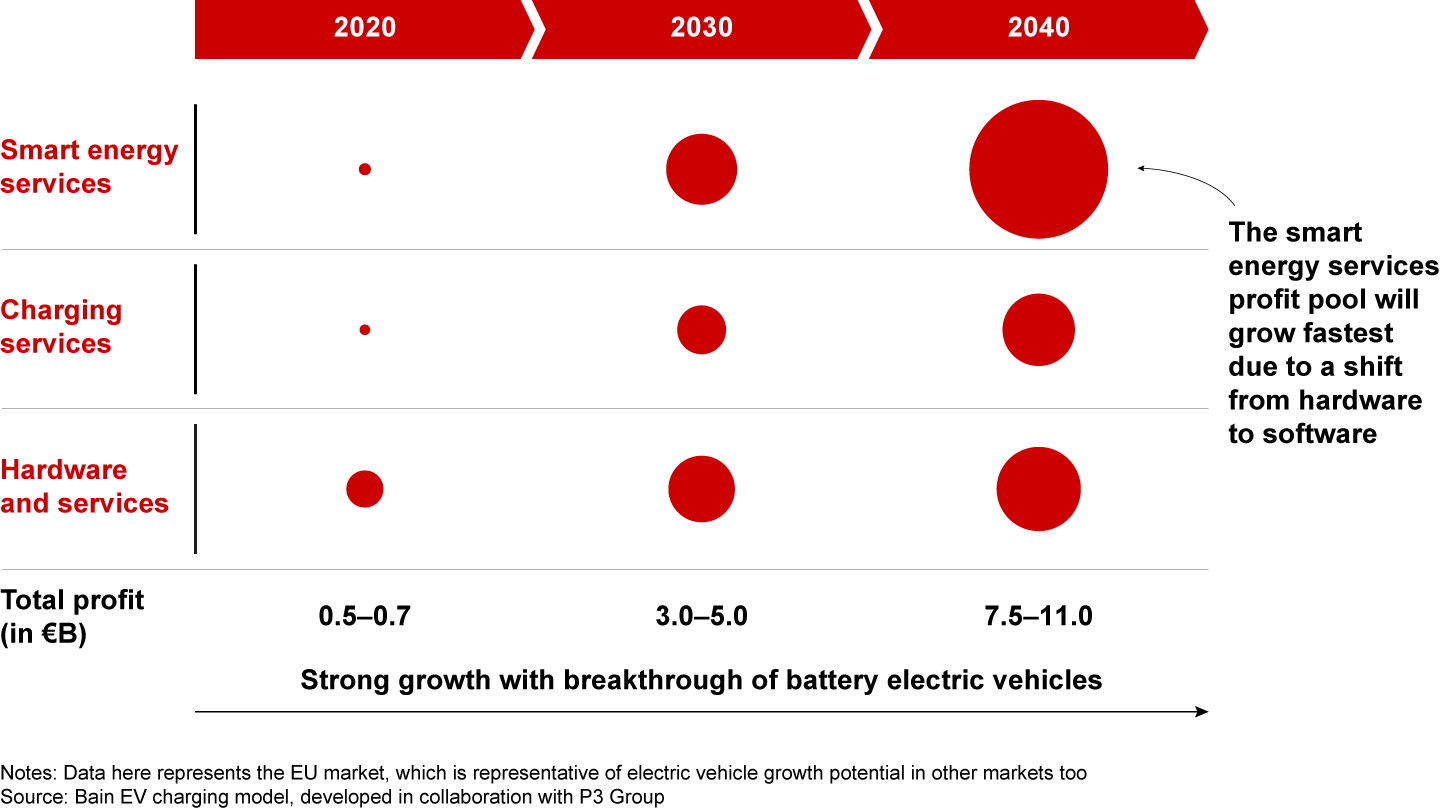

Figure 3

From an EV charging value chain perspective, the profit pool growth in the coming decade will be strong in the three main EV charging segments—hardware and installation, charging services, and smart energy services. In the US, Europe, and China, the combined sector is likely to grow to between €8 billion and €13.5 billion by 2030, with smart energy services leading the growth and representing roughly one-third of the total profit pool.
A complex market
EV charging is a complex sector. Market characteristics vary significantly by country, location for charging, company position in the overall EV charging value chain, and business model. To compete effectively, leadership teams need to understand each market’s specific characteristics and provide a smooth and consistent customer experience (see Figure 4).
Figure 4

Participants in the new charging ecosystem include automakers, oil and gas firms, utility companies, equipment manufacturers, software firms, charge-point operators, retailers, EV charging infrastructure funds, and start-ups. Each has a different set of assets and incentives and a different role in the broader ecosystem. Those differences create an opportunity to align incentives and form partnerships.
We see seven distinct business models in the emerging EV charging ecosystem (see Figure 5). The simplest model is one focused purely on hardware or software. Others bundle different elements of the charging EV charging value chain. Charging solution providers, for example, combine hardware, planning, and installation. Charge-point operators install and operate charging stations. The US-based company ChargePoint Inc. provides an open charging network that serves all electric car models and offers a one-stop shop for businesses that want to install a charger, including annual subscriptions for tools, data, payment processing, and driver support.
Figure 5
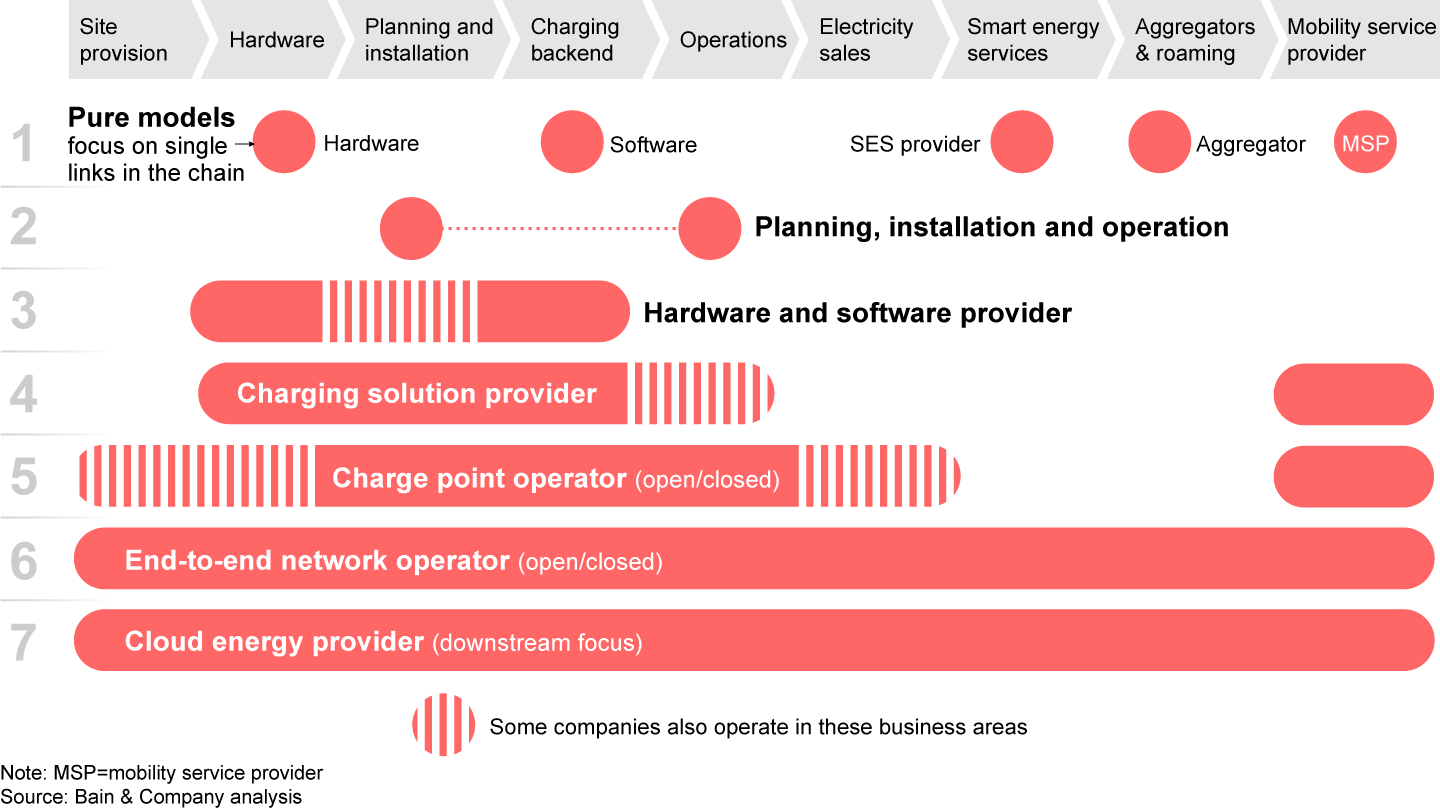

Capital markets currently award a higher value to integrated business models, such as Tesla’s and ChargePoint’s. They place a lower value on pure hardware providers, assuming that over time, equipment is likely to become a lower-margin commodity business.
Regional differences
Leading companies are already adapting their business models to geographical differences. The EV charging markets in Europe, the US, and China will differ based on the share of electric car sales, local driving and charging habits, predominant housing type, and market regulation. By 2030, for example, BEVs are forecast to make up 55% of total car sales in Europe, compared with 40% in China and 32% in the US.
The predominant type of housing in a specific market is another important factor influencing charging solutions, as people in single-family homes are able to charge more frequently at home. The EV charging market for single-family-home charging products will be bigger in the US, where 82% of the population live in single-family homes, compared with 60% in the European Union and 37% in the relevant urban regions of China.
Regulation also will play an important role in developing the smart energy services market and define the conditions allowing individuals to charge their EV batteries or supply energy back into the power grid when their cars are at home. In the US, electricity sales regulations vary from state to state. That complex patchwork of rules will significantly affect vehicle-to-grid services strategies and could slow widespread adoption. The European Union aims to create a policy framework to improve energy storage and expand services, while China’s market will remain strongly regulated and concentrated. These conditions will likely accelerate the development of smart energy services.
Charging occasions
Profitability in EV charging differs based on the charging occasion.
Transit charging
High-speed transit charging stations require heavy capital expenditure—$30,000 to $150,000 per unit, depending on configuration. As a result, site location, utilization rates, and reliability will be critical. Transit charging sites that are conveniently situated close to a major highway, for example, will have the highest utilization rates. Typically, companies with the most profitable charging stations have utilization rates of 15% or higher over a 24-hour period.
Winners in high-speed charging will offer a seamless, convenient customer experience, including basics like reliable chargers, the ability to preorder a charge pole, convenient payment solutions, and no waiting. They will also partner to ensure additional services that support high utilization rates. Operators that provide a differentiated experience beyond charging, such as covered parking spaces, Wi-Fi access, quick-service restaurants, and clean restrooms, will have an edge.
Home charging
Best-in-class home charging will include bidirectional, inexpensive AC hardware and ultra-convenient installation service soon after customers purchase an electric car. By combining basic charging with smart energy services through a home energy management system, leaders will provide valuable additional services, including the ability to save electricity and protect against power outages. Automakers and dealers are well-positioned to bundle an EV charger installation with the car sale and educate the consumer. Other potential contenders include companies with customer relationships such as local utilities or telecom providers.
Destination charging
What matters most in destination charging is selecting highly frequented locations such as supermarkets or restaurants and the right type of charger for the site. For shopping malls where customers are likely to spend three to four hours, for example, fast AC 11 or 22 kilowatt chargers are adequate and the most economical solution. The optimum solution for fast-food restaurants, where people tend to spend 30 minutes or less, is a DC charger with at least 50 to 150 kilowatts. As with transit charging, destination charge points need to be highly reliable and offer competitive prices.
Work charging
Offices and other work locations require chargers that are easy to operate and low cost. Employers and their billing services will need to decide whether to include home charging as an employee benefit.
Companies that manage fleets of electric light commercial vehicles and buses will require large-scale depots for charging. That raises several challenges such as ensuring depots have enough power to charge many vehicles overnight. Fleet managers, who have little experience with depot charging, will need to solve those issues in collaboration with power grid operators, utilities, or specialized charging companies.
Smart energy services
Providers of next-generation smart energy services will need to offer electricity companies access to a sufficient number of parked cars (at home, at work, or in a depot) to create a powerful energy reserve capable of balancing grid demand. They also must provide smart home or facility devices and an extensive, secure IT platform for intelligent charging—vehicle to home, vehicle to facility, or vehicle to grid. That includes powerful cloud-based software that can help predict how many cars will plug into the network and what time they will access the service. Leaders will work with grid operators to help them use electric car charging to stabilize the network system. The value of that service to utilities will depend on the size of the charging platform and other factors, like fluctuations in energy generation (from renewable sources like solar or wind power) and the ability to balance power peaks in the grid.
To partner or not
Leading companies in the US, Europe, and China already are developing consortia to provide a broad array of solutions, including home, transit, and destination charging, as well as smart home applications and solar power. Dealers are teaming up with installers, smart home providers are working with charging services, and cities are collaborating with oil and gas companies and utilities.
Teaming up to offer EV charging allows companies to achieve scale advantages in an emerging market, and that’s a key advantage. But the optimum strategy within each market will depend on a company’s goals, skills, and ability to finance growth. Take the example of Ionity, a joint venture of global automakers including BMW Group, Ford Motor Company, Hyundai Motor Group, Mercedes-Benz, and Volkswagen Group, which aims to accelerate the development of a fast-charging network along Europe’s major highways. Large consortia like Ionity allow members to share the capital expenditure on EV charging infrastructure and generate profits faster in a nascent market. Partnerships may also benefit from best-of-breed equipment and capabilities.
But to succeed, alliances must keep the customer at the center of the offering and ensure a great user experience. Several companies have managed to do both those things despite going it alone. For example, automaker Tesla has created a proprietary charging ecosystem, including wall connectors for home charging and storage, solar panels for the roof, a global network of highway superchargers, and destination charging sites. In addition to providing all the EV charging infrastructure, the company ensures that its charging universe is seamlessly interconnected. Tesla’s vehicle navigation automatically locates superchargers along a programmed route and incorporates charging into the trip plan. And before the car reaches the charger, the battery is preconditioned for optimal charging performance. Payment is handled automatically with credit card details that are linked to the user’s Tesla account.
Shell is also investing in its own EV charging infrastructure but through a series of acquisitions. In 2019, Shell purchased The Sonnen Group, a manufacturer of smart residential energy storage systems, and in 2021, it purchased Ubitricity, a leading provider of street charging systems for EVs.
In the coming decade, the EV charging ecosystem worldwide will expand dramatically. Future winners are moving fast to build partnerships to secure the best locations and digital platforms to provide a seamless charging service. Importantly, these leaders are defining uncertainties in the EV charging market and designing scenario-based strategies that will allow them to pivot quickly when consumer behaviors or regulations shift. Companies that take this approach will be in a stronger position to turn the challenges of an emerging EV charging market to their advantage.
The authors would like to thank Markus Hackmann and Johanna Heckmann from P3 Group for their valuable contributions to this brief. P3 is a technology strategy adviser and a Bain ecosystem partner with deep technical expertise in electric vehicles and charging.
First published in 7月 2022