
Skip to Content
  • オフィス

    オフィス

    北米・南米
    • Atlanta
    • Austin
    • Bogota
    • Boston
    • Buenos Aires
    • Chicago
    • Dallas
    • Denver
    • Houston
    • Los Angeles
    • Mexico City
    • Minneapolis
    • Monterrey
    • Montreal
    • New York
    • Rio de Janeiro
    • San Francisco
    • Santiago
    • São Paulo
    • Seattle
    • Silicon Valley
    • Toronto
    • Washington, DC
    ヨーロッパ・中東・アフリカ
    • Amsterdam
    • Athens
    • Berlin
    • Brussels
    • Copenhagen
    • Doha
    • Dubai
    • Dusseldorf
    • Frankfurt
    • Helsinki
    • Istanbul
    • Johannesburg
    • Kyiv
    • Lisbon
    • London
    • Madrid
    • Milan
    • Munich
    • Oslo
    • Paris
    • Riyadh
    • Rome
    • Stockholm
    • Vienna
    • Warsaw
    • Zurich
    アジア・オーストラリア
    • Bangkok
    • Beijing
    • Bengaluru
    • Brisbane
    • Ho Chi Minh City
    • Hong Kong
    • Jakarta
    • Kuala Lumpur
    • Manila
    • Melbourne
    • Mumbai
    • New Delhi
    • Perth
    • Shanghai
    • Singapore
    • Sydney
    • Tokyo
    全てのオフィス
  • アルムナイ
  • メディア
  • お問い合わせ
  • 東京オフィス
  • Japan | 日本語

    地域と言語を選択

    グローバル
    • Global (English)
    北米・南米
    • Brazil (Português)
    • Argentina (Español)
    • Canada (Français)
    • Chile (Español)
    • Colombia (Español)
    ヨーロッパ・中東・アフリカ
    • France (Français)
    • DACH Region (Deutsch)
    • Italy (Italiano)
    • Spain (Español)
    • Greece (Elliniká)
    アジア・オーストラリア
    • China (中文版)
    • Korea (한국어)
    • Japan (日本語)
  • Saved items (0)
    Saved items (0)

    You have no saved items.

    後で閲読、共有できるようにするためにブックマークしてください

    Explore Bain Insights
  • 業界別プラクティス
    メインメニュー

    業界別プラクティス

    • 航空宇宙、防衛、政府関連
    • 農業
    • 化学製品
    • インフラ、建設
    • 消費財
    • 金融サービス
    • ヘルスケア
    • 産業機械、設備
    • メディア、エンターテインメント
    • 金属
    • 採掘・鉱業
    • 石油、ガス
    • 紙、パッケージ
    • プライベートエクイティ
    • 公共、社会セクター
    • 小売
    • テクノロジー
    • 通信
    • 交通
    • 観光産業
    • 公益事業、再生可能エネルギー
  • 機能別プラクティス
    メインメニュー

    機能別プラクティス

    • カスタマー・エクスペリエンス
    • サステイナビリティ、 社会貢献
    • Innovation
    • 企業買収、合併 (M&A)
    • オペレーション
    • 組織
    • プライベートエクイティ
    • マーケティング・営業
    • 戦略
    • アドバンスド・アナリティクス
    • Technology
    • フルポテンシャル・トランスフォーメーション
  • Digital
  • 知見/レポート
  • ベイン・アンド・カンパニーについて
    メインメニュー

    ベイン・アンド・カンパニーについて

    • ベインの信条
    • 活動内容
    • 社員とリーダーシップ
    • プレス・メディア情報
    • クライアントの結果
    • 受賞歴
    • パートナーシップを結んでいる団体
    Further: Our global responsibility
    • ダイバーシティ
    • 社会貢献
    • サステイナビリティへの取り組み
    • 世界経済フォーラム(WEF)
    Learn more about Further
  • キャリア
    メインメニュー

    キャリア

    • ベインで働く
      キャリア
      ベインで働く
      • Find Your Place
      • ベインで活躍する機会
      • ベインのチーム体制
      • 学生向けページ
      • インターンシップ
      • 採用イベント
    • ベインでの体験
      キャリア
      ベインでの体験
      • Blog: Inside Bain
      • キャリアストーリー
      • 社員紹介
      • Where We Work
      • 成長を後押しするサポート体制
      • アフィニティ・グループ
      • 福利厚生
    • Impact Stories
    • 採用情報
      キャリア
      採用情報
      • 採用プロセス
      • 面接内容
    FIND JOBS
  • オフィス
    メインメニュー

    オフィス

    • 北米・南米
      オフィス
      北米・南米
      • Atlanta
      • Austin
      • Bogota
      • Boston
      • Buenos Aires
      • Chicago
      • Dallas
      • Denver
      • Houston
      • Los Angeles
      • Mexico City
      • Minneapolis
      • Monterrey
      • Montreal
      • New York
      • Rio de Janeiro
      • San Francisco
      • Santiago
      • São Paulo
      • Seattle
      • Silicon Valley
      • Toronto
      • Washington, DC
    • ヨーロッパ・中東・アフリカ
      オフィス
      ヨーロッパ・中東・アフリカ
      • Amsterdam
      • Athens
      • Berlin
      • Brussels
      • Copenhagen
      • Doha
      • Dubai
      • Dusseldorf
      • Frankfurt
      • Helsinki
      • Istanbul
      • Johannesburg
      • Kyiv
      • Lisbon
      • London
      • Madrid
      • Milan
      • Munich
      • Oslo
      • Paris
      • Riyadh
      • Rome
      • Stockholm
      • Vienna
      • Warsaw
      • Zurich
    • アジア・オーストラリア
      オフィス
      アジア・オーストラリア
      • Bangkok
      • Beijing
      • Bengaluru
      • Brisbane
      • Ho Chi Minh City
      • Hong Kong
      • Jakarta
      • Kuala Lumpur
      • Manila
      • Melbourne
      • Mumbai
      • New Delhi
      • Perth
      • Shanghai
      • Singapore
      • Sydney
      • Tokyo
    全てのオフィス
  • アルムナイ
  • メディア
  • お問い合わせ
  • 東京オフィス
  • Japan | 日本語
    メインメニュー

    地域と言語を選択

    • グローバル
      地域と言語を選択
      グローバル
      • Global (English)
    • 北米・南米
      地域と言語を選択
      北米・南米
      • Brazil (Português)
      • Argentina (Español)
      • Canada (Français)
      • Chile (Español)
      • Colombia (Español)
    • ヨーロッパ・中東・アフリカ
      地域と言語を選択
      ヨーロッパ・中東・アフリカ
      • France (Français)
      • DACH Region (Deutsch)
      • Italy (Italiano)
      • Spain (Español)
      • Greece (Elliniká)
    • アジア・オーストラリア
      地域と言語を選択
      アジア・オーストラリア
      • China (中文版)
      • Korea (한국어)
      • Japan (日本語)
  • Saved items  (0)
    メインメニュー
    Saved items (0)

    You have no saved items.

    後で閲読、共有できるようにするためにブックマークしてください

    Explore Bain Insights
  • 業界別プラクティス
    • 業界別プラクティス

      • 航空宇宙、防衛、政府関連
      • 農業
      • 化学製品
      • インフラ、建設
      • 消費財
      • 金融サービス
      • ヘルスケア
      • 産業機械、設備
      • メディア、エンターテインメント
      • 金属
      • 採掘・鉱業
      • 石油、ガス
      • 紙、パッケージ
      • プライベートエクイティ
      • 公共、社会セクター
      • 小売
      • テクノロジー
      • 通信
      • 交通
      • 観光産業
      • 公益事業、再生可能エネルギー
  • 機能別プラクティス
    • 機能別プラクティス

      • カスタマー・エクスペリエンス
      • サステイナビリティ、 社会貢献
      • Innovation
      • 企業買収、合併 (M&A)
      • オペレーション
      • 組織
      • プライベートエクイティ
      • マーケティング・営業
      • 戦略
      • アドバンスド・アナリティクス
      • Technology
      • フルポテンシャル・トランスフォーメーション
  • Digital
  • 知見/レポート
  • ベイン・アンド・カンパニーについて
    • ベイン・アンド・カンパニーについて

      • ベインの信条
      • 活動内容
      • 社員とリーダーシップ
      • プレス・メディア情報
      • クライアントの結果
      • 受賞歴
      • パートナーシップを結んでいる団体
      Further: Our global responsibility
      • ダイバーシティ
      • 社会貢献
      • サステイナビリティへの取り組み
      • 世界経済フォーラム(WEF)
      Learn more about Further
  • キャリア
    人気検索キーワード
    • デジタル
    • 戦略
    前回の検索
      最近訪れたページ

      Content added to saved items

      Saved items (0)

      Removed from saved items

      Saved items (0)

      レポート

      Healthcare Exits: Private Equity Funds Dominate, but Corporates Step Up

      Healthcare Exits: Private Equity Funds Dominate, but Corporates Step Up

      Funds make more quick flips and partial exits.

      著者:Jason Slocum and Kara Murphy

      • min read
      }

      レポート

      Healthcare Exits: Private Equity Funds Dominate, but Corporates Step Up
      en
      概要
      • Global healthcare PE exits rose to 126 in 2019, up from 112 in 2018. Disclosed deal value rose to $40.8 billion, from $31.6 billion in 2018, as the value of IPOs increased by 72%.  
      • The median holding period held steady at 4.3 years, in line with the lowest level since 2009.
      • PE funds also made more quick flips and partial exits. The first quartile of holding periods declined from 3.6 years in 2014 to 3.0 years in 2019.
      • Sponsor-to-sponsor transactions remained the highest share of exits, representing 53% in 2019.

      This article is part of Bain’s 2020 Global Healthcare Private Equity and Corporate M&A Report. Explore the contents of the report here or download the PDF to read the full report.

      Tracking historical norms, exit volume and value held relatively steady in 2019, following a spike in activity from 2012 to 2015 (see Figure 11). Exit volume rose slightly to 126 in 2019, up from 112 in 2018, while disclosed exit value increased to $40.8 billion, compared with $31.6 billion. A 72% increase in IPO exit values vs. 2018 helped drive the increase in exit value as several high-profile assets went public.

      Figure 11
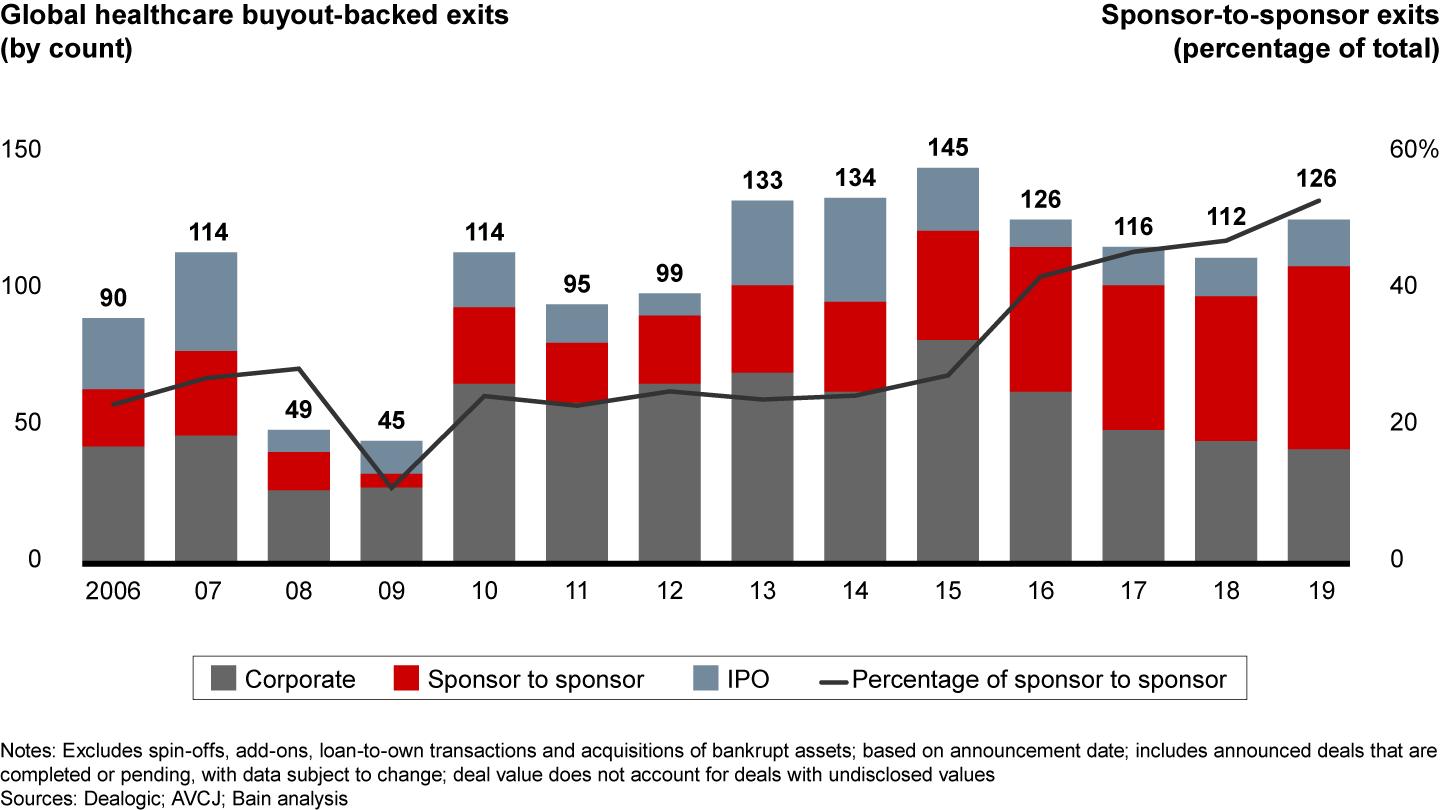
      Exit count rebounded after a few years in decline
      Holding periods continued their second year at steady levels, as investors offloaded recession-vintage assets
      Holding periods continued their second year at steady levels, as investors offloaded recession-vintage assets

      Sponsor-to-sponsor exits remained the most prominent channel at around 53% of all exits in 2019, a significant increase from earlier in the decade. This trend stems from the overhang of capital dedicated to healthcare, as well as the industry’s strong returns and resilience at any stage of the economic cycle. 

      The share of corporate deals declined slightly to 33% from 40% in 2018. Corporate buyers were particularly interested in biopharma and medtech, as industry leaders bought smaller companies with novel R&D assets or medical devices.

      IPOs, meanwhile, were most common in biopharma, particularly with smaller-stage companies. These companies often come with regulatory approval risk, and the fan of outcomes tends to be too wide for the risk tolerance of PE sponsors.

      Flip it quickly, but keep a piece of it

      After a time of longer holding periods following the recession, typical holding periods have returned to the standard three to five years. The median holding period across all exits held steady at 4.3 years in 2019, compared with 4.1 years in 2018, which was the lowest since 2009 (see Figure 12). This indicates investors have offloaded the tail of their pre-recession assets, returning portfolios to a healthier position.

      Figure 12
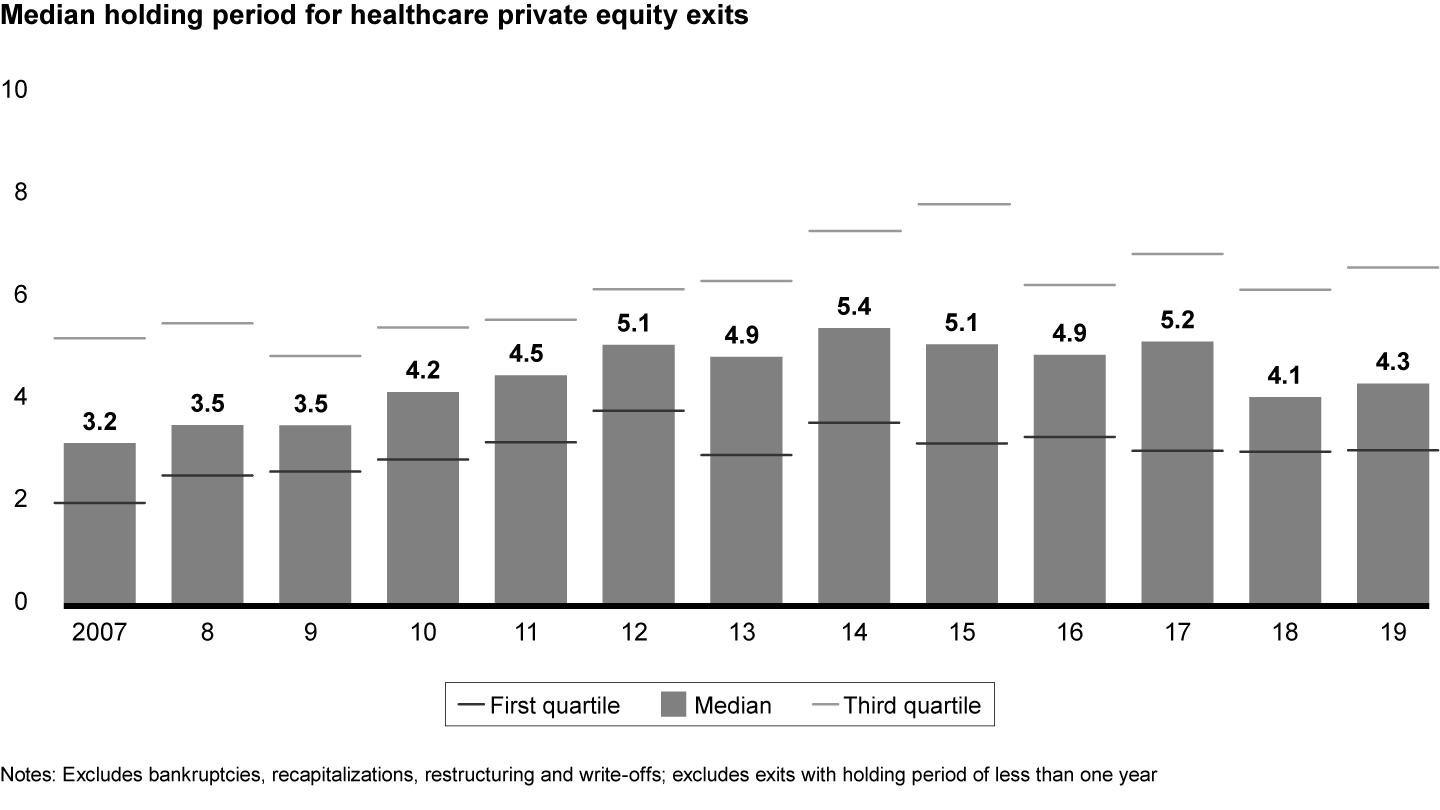
      Holding periods continued their second year at steady levels, as investors offloaded recession-vintage assets
      Holding periods continued their second year at steady levels, as investors offloaded recession-vintage assets
      Holding periods continued their second year at steady levels, as investors offloaded recession-vintage assets

      We would also note the increasing popularity of quick flips, or assets held for less than three years. The first quartile of holding periods has declined from 3.6 years in 2014 to 3.0 years in 2019. As private capital deployed to healthcare piles up faster than the number of assets, sponsors have more chances to resell high-quality assets. An example was EQT’s exit after only two years from Clinical Innovations, a medical device company focused on labor and delivery and neonatal intensive care, to Patricia Industries-owned Laborie Medical Technologies, for $525 million.

      With quick flips, we also see sellers sometimes retaining a minority stake in the asset, keeping some long-term upside potential while also locking in high returns for current funds. For example, Bain Capital sold Waystar to EQT and CPPIB after only three years, but retained minority investment as a testament to the growth trajectory and long-term value it perceived in the business.

      Biopharma and medtech exits continue to differ from those in the provider and payer sectors. In biopharma and medtech, sales to corporates, or IPOs, are more prevalent. By contrast, provider and payer sectors both feature a high concentration of sponsor-to-sponsor deals, with some corporate activity (see Figure 13).

      Figure 13
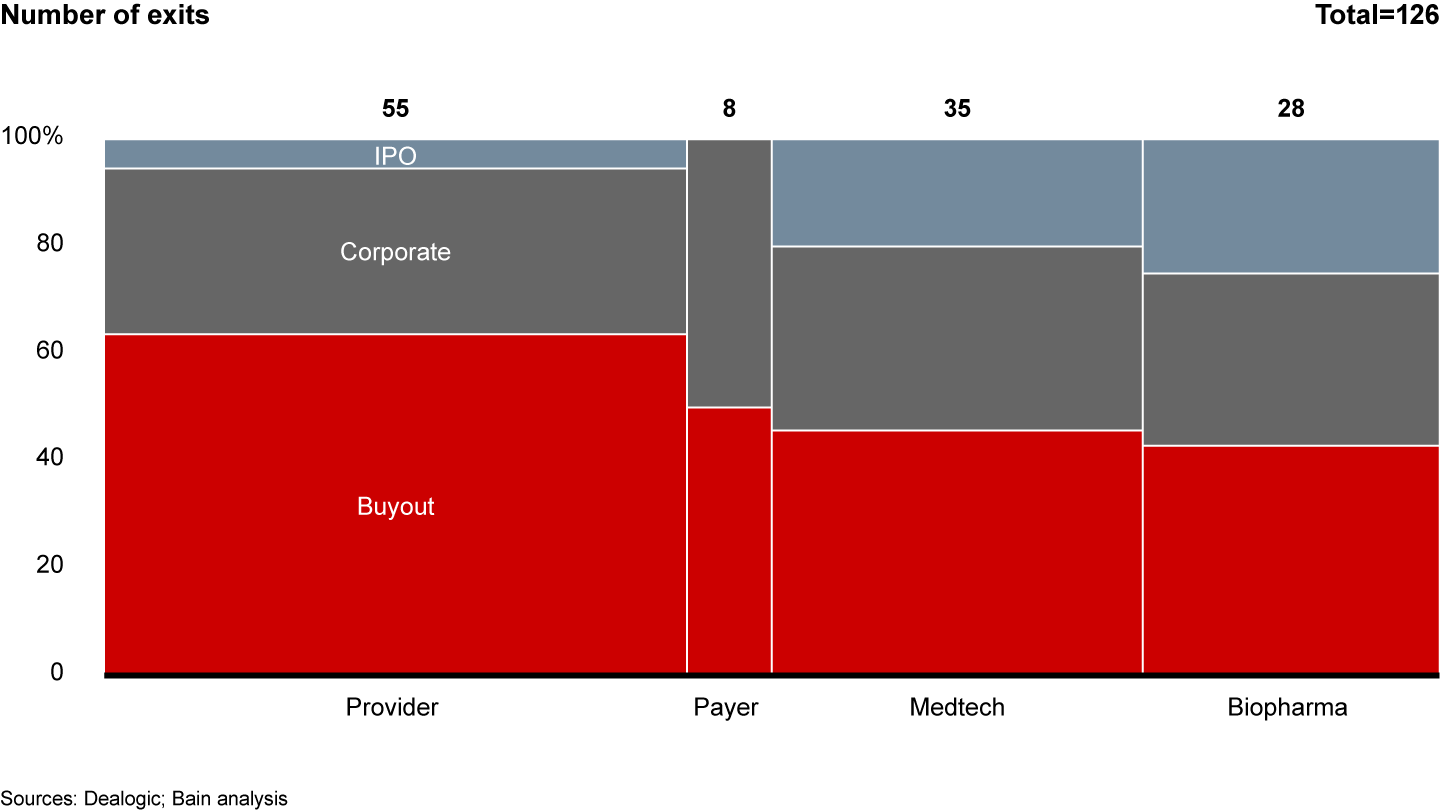
      Payer and provider exit deals mainly take the sponsor-to-sponsor buyout route
      Payer and provider exit deals mainly take the sponsor-to-sponsor buyout
      Payer and provider exit deals mainly take the sponsor-to-sponsor buyout

      Providers and related services often stay with PE funds

      Sponsor-to-sponsor exits prevail in the provider and related services sector. Few large corporates are natural acquirers for multigeography assets. With a long record of buy-and-build strategies, sponsors have a proven value creation plan they can rely on to underwrite deal theses.

      For example, JAB Holding bought National Veterinary Associates from Ares Management and OMERS. In one of the largest vision services deal to date, Atlas Partners and CDPQ sold Capital Vision Services (operating as MyEyeDr.), a provider of full-service vision care services, to Goldman Sachs for $2.7 billion.

      Payer and related services command high prices

      While there were relatively few payer exits in 2019, they represented 15% of disclosed deal value because they commanded high prices. Just as in the provider sector, many exits go to sponsors; however, in the payer sector, an equal share of exits also go to corporates.

      Large corporates used acquisitions to diversify their revenue, build scale in adjacent non-risk-bearing revenue streams, and create efficiencies in their current business model. Equian, a payment integrity service between payers and providers, was acquired by UnitedHealth Group for $3.2 billion, and Anthem acquired Beacon Health Options, a provider of behavioral health services, from Bain Capital for an undisclosed amount.

      On the other hand, large PE investments here have focused on financing flows, reducing the cost of self-funded employee plans and supporting Medicare Advantage. For instance, New Mountain Capital exited Convey Health Solutions, a payer services company that offers administrative software for government-sponsored health plans and administration of supplemental benefits for Medicare Advantage plans, in a sale to TPG.

      Medtech and related services: Corporates’ incentives to outbid private equity in devices

      The medtech sector claims a high share of corporate exits because large corporates have structural incentives to outbid PE funds in key segments like pure medtech devices, whereas financial sponsors often can compete well for outsourced and noncore functions.

      Corporate buyers want to build category leadership in specific therapeutic areas as well as expand the number of therapeutic areas covered by their portfolios, to leverage existing call points and manufacturing. In an environment where shareholders reward revenue growth over profit margin expansion, corporate buyers remain motivated to use M&A as a lever to raise revenues.

      While these conditions make it difficult for sponsors to compete for deals, they also give sponsors an exit route of selling their assets to corporates. In the largest healthcare exit of 2019, Apax Partners, CPPIB and PSP Investments sold Acelity, a medical equipment and supplies manufacturer, to 3M for $6.7 billion. Another exit saw H.I.G. Capital, Morgenthaler, and Thomas, McNerney & Partners sell Vertiflex, the developer of a minimally invasive device used to treat lumbar spinal stenosis, to Boston Scientific for $465 million.

      Medtech did not see much IPO activity during the year. One phenomenon that could make IPOs viable is the rise of consumer medtech. Clayton Dubilier & Rice and Kleiner Perkins, for instance, backed SmileDirectClub, an affordable direct-to-consumer dental aligners service, which raised $1.3 billion in an IPO. 

      Biopharma and related services: A high share of IPOs plus corporate acquisitions

      The biopharma sector saw a high share of corporate acquirers, and also had the highest share of IPOs. As nascent biopharma firms come closer to starting clinical trials, they often go public to allow their venture investors to exit as well as prepare for the development and clinical trial costs associated with bringing a novel drug to market. In many cases, they prefer IPOs to adding private funds, because public equity tends to come at a lower cost of capital than private equity, and public investors typically get less involved in management decisions.

      This is why KKR-backed BridgeBio Pharma, a pharmaceutical company specializing in gene therapy services, made an IPO for $348.5 million, and Bain Capital sold SpringWorks Therapeutics, a pharmaceutical company applying precision medicine to rare diseases and cancer, in an IPO for $162 million. 

      Outlook: Strong activity even if a downturn occurs

      We expect to see sustained strong exit activity among buyout firms and corporates, with partial exits popular for sponsors seeking to get the best of both worlds by locking in quick gains while still retaining upside potential. Sponsors will also be looking for ways to change the profiles of companies for exit, including identifying hidden data assets and potential analytics offerings that can provide supplemental or game-changing revenue streams.

      Assuming no downturn, holding periods should remain at their current levels. Yet even in the case of a recession, sponsor activity is likely to stay strong. PE funds and their LPs must continuously deploy capital, and healthcare has proved to be a relatively safe haven in a recessionary environment.

      This article is part of Bain’s 2020 Global Healthcare Private Equity and Corporate M&A Report. Explore the contents of the report here or download the PDF to read the full report.

      Read the Next Section

      2020 and Beyond: Strong Fundamentals Will Keep Healthcare Deals Going Strong

      著者
      • Headshot of Jason Slocum
        Jason Slocum
        Alumni, Boston
      • Headshot of Kara Murphy
        Kara Murphy
        パートナー, Boston
      関連業種
      • プライベートエクイティ
      • ヘルスケア
      コンサルティングサービス
      • Due Diligence
      • Exit Planning
      • Portfolio Value Creation
      ヘルスケア
      Healthcare Private Equity Market 2019: The Year in Review

      Another solid year means healthcare expanded its share of overall deal activity.

      詳細
      ヘルスケア
      2020 and Beyond: Strong Fundamentals Will Keep Healthcare Deals Going Strong

      But private equity investors will have to sharpen their focus on operations.

      詳細
      Global Healthcare Private Equity Report
      Welcome Letter: Healthcare Private Equity and Corporate M&A Report 2020

      Investors focus on creating good returns even if they don’t rely on expansion of multiples.

      詳細
      Global Healthcare Private Equity Report
      Healthcare Private Equity Market 2025: Resurgence and Record Growth

      Healthcare private equity investment posted a very strong year for deal value and volume, paired with a strong rebound in exits.

      詳細
      Global Healthcare Private Equity Report
      What Differentiates Winning Healthcare IT Investments

      Amidst continued high-valuation multiples and competitive deal processes, a disciplined focus on value-creation levers distinguishes winning bids and successful exits.

      詳細
      First published in 3月 2020
      Tags
      • Due Diligence
      • Exit Planning
      • Global Healthcare Private Equity Report
      • Portfolio Value Creation
      • プライベートエクイティ
      • ヘルスケア

      クライアント支援事例

      Smart Pricing Helped a Private Equity Firm Unlock More Value

      ケーススタディを見る

      戦略 Review focuses biotech on portfolio potential

      ケーススタディを見る

      業績改善 Finding profit potential in a struggling private equity portfolio company

      ケーススタディを見る

      お気軽にご連絡下さい

      私達は、グローバルに活躍する経営者が抱える最重要経営課題に対して、厳しい競争環境の中でも成長し続け、「結果」を出すために支援しています。

      ベインの知見。競争が激化するグローバルビジネス環境で、日々直面するであろう問題について論じている知見を毎月お届けします。

      *プライバシーポリシーの内容を確認し、合意しました。

      プライバシーポリシーをご確認頂き、合意頂けますようお願い致します。
      Bain & Company
      お問い合わせ Sustainability Accessibility Terms of use Privacy Cookie Policy Sitemap Log In

      © 1996-2026 Bain & Company, Inc.

      お問い合わせ

      How can we help you?

      • ビジネスについて
      • プレス報道について
      • 採用について
      全てのオフィス