

論説

概要
- Bain research signals 17 important trends transforming field service.
- Big data is transforming the way industrial companies design services.
- Service champions outperform followers by more than 20% on many critical metrics such as first-time-right rates.
For capital-intensive industries, field service has become critical to growth and profitability. Leading companies are harnessing new pricing models, data, and savvier frontline teams to transform the way they deliver service in the field—and significantly improve their performance.
Written in collaboration with
Written in collaboration with

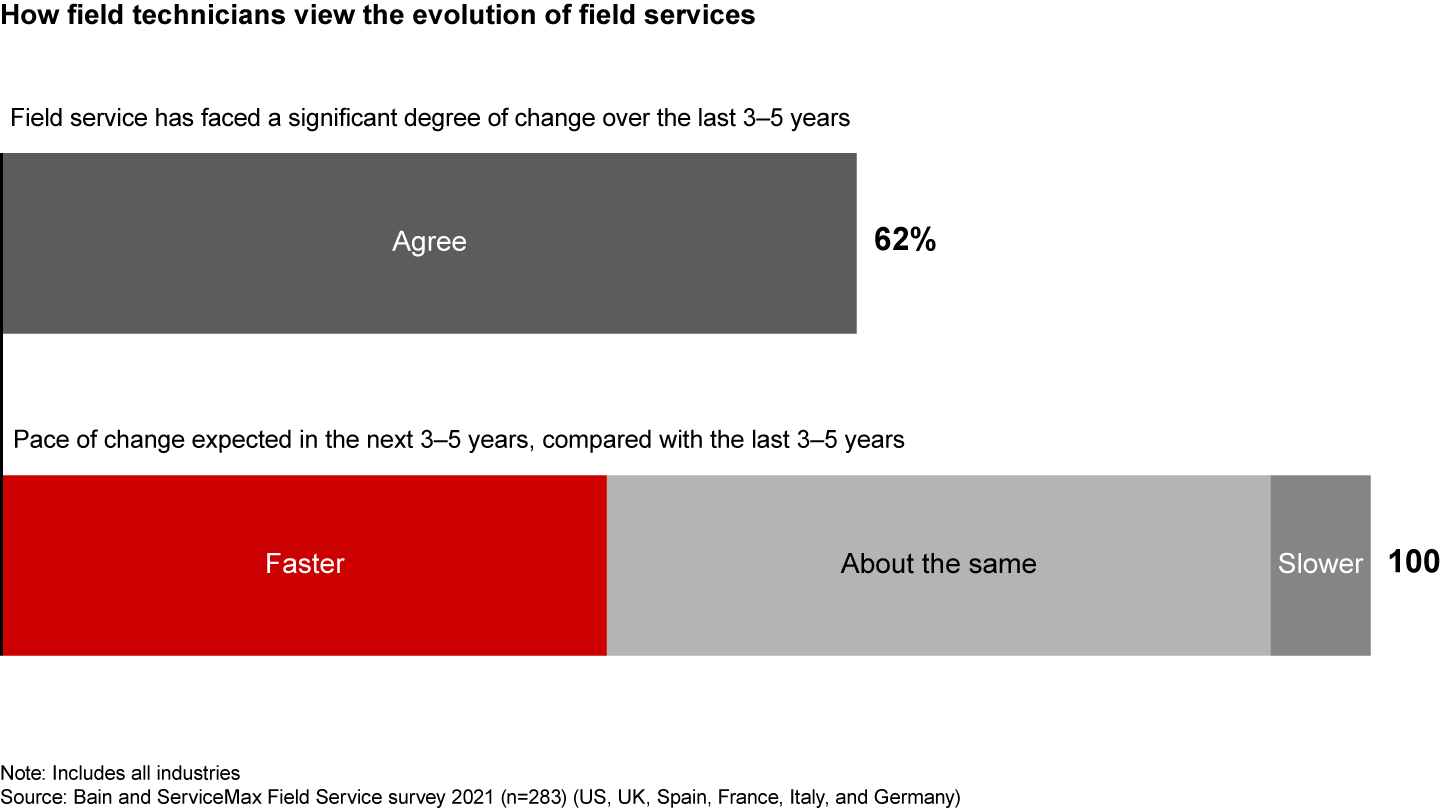
Though field service has been evolving for years, disruptions caused by Covid-19 have accelerated companies’ investment in technology and their shift to new commercial models. Bain research shows more than 60% of field technicians grappled with significant change in their working environment the last three to five years, and 93% believe change will continue at the same rapid clip or increase in the next three to five years (see Figure 1).
Figure 1

That’s raising the stakes for companies that have been slow to rethink their service strategy. Service leaders outperform laggards on multiple dimensions. Our research shows, on average, that service leaders deliver higher service revenues (11 percentage points) and margins (16 percentage points) than followers. They also score 18 percentage points higher in customer satisfaction.
And when it comes to field service performance—a key success factor—service champions outperform followers by more than 20% across many critical metrics, such as mean time to repair, first-time-right rates, customer satisfaction, and cost to deliver. The performance gap between leaders and followers is likely to increase in the coming decade as a growing number of companies reshape their field service capabilities for a new era.
Key trends
Many leadership teams in capital-intensive industries are understandably feeling overwhelmed by the number of commercial, operational, technological, and talent factors demanding their attention. Our research points to 17 important trends that are transforming field service (see Figure 2). While companies need to understand all these forces, some trends are more pressing. In our view three matter most: a shifting commercial landscape, the ability to harness vast amounts of data, and the increasing complexity of frontline work.
Figure 2
Why are these trends so critical? On the commercial front, increased cost pressure has made traditional pricing models (based on billed man-hours) less attractive for customers. Increasingly, companies want solutions that minimize their risk and provide more predictability, including outcome-based offerings.
At the same time, big data is transforming the way companies design services. New technologies, connected equipment, and cloud-based platforms generate and exchange data continuously, creating a valuable trove of information about customers and their equipment. Leading companies analyze the data to derive insights and design more competitive service models, including optimal service schedules and offerings tailored to customers’ needs.
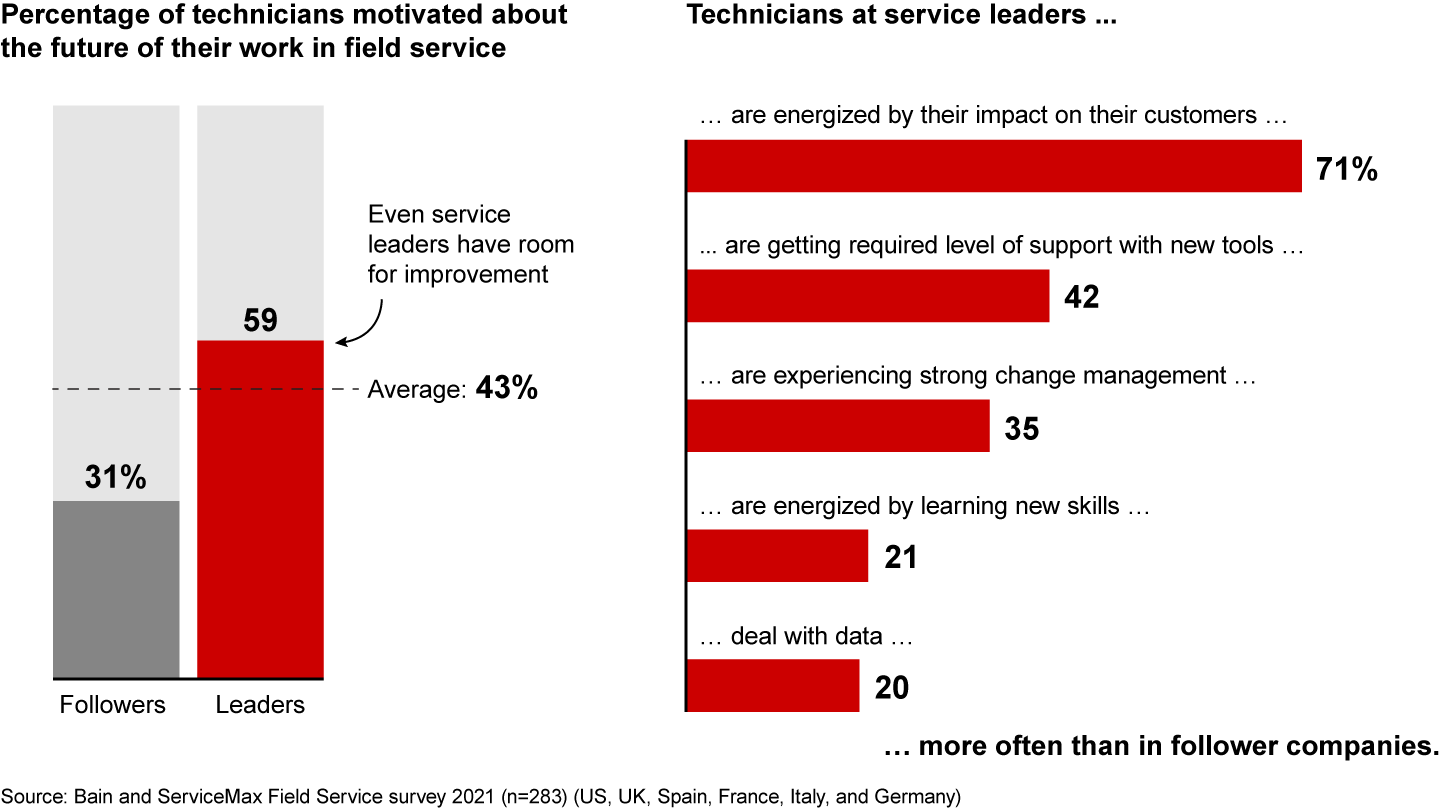
Finally, frontline service work has become increasingly complex, requiring executives to rapidly rethink talent management. Many workers will need retraining as digital tools proliferate, and in some cases, companies will need to recruit fresh talent to address the growing demand for new skills. Some frontline workers already perceive the proliferation of digital tools as a threat. Overall, growing uncertainty related to this shift has left 57% of technicians feeling unmotivated (see Figure 3).
Figure 3

Getting started
Service leaders are setting themselves apart from the competition by making service a key component of their strategy and a primary source of value for the company. For companies with a heavy focus on equipment sales, the shift to a new generation of services may require a significant change in the company’s culture. As a result, many firms have not ventured beyond basic service that addresses fundamental customer needs, such as repairing equipment when it breaks down.
Specifically, leaders implement four key changes in their service strategy. They improve basic capabilities, develop new commercial models, wield data to optimize service offerings, and make service talent a top priority. These strategic steps are interrelated. Gathering the right data helps companies understand their costs and determine the price right for service. That knowledge, in turn, helps them figure out the right commercial model. Once the leadership team has the optimum commercial model, frontline workers deliver service more efficiently.
To highlight just how beneficial a new service strategy can be, let’s take a closer look at how a couple of successful global companies are implementing these changes.
Renewed focus on service basics. Service leaders excel at the basic foundations of good service, such as safety, compliance, and getting the job right the first time. They also challenge themselves to do even better. In the wake of Covid-19 disruptions, leaders are putting a new focus on service basics.
Take the case of a global technology company with an impressive first-time-right rate of more than 95%. Despite its winning performance, the service team was determined to improve its own track record in areas particularly relevant to the customer, such as the time needed to complete a repair. Their effort was so successful that the leadership team added a speed element to its service offering. Two-thirds of the company’s contracts now guarantee a resolution within four hours for a price premium. Customers rewarded the company’s commitment to first time right and speed, with a best-in-class Net Promoter Score℠ of more than 80%.
New commercial models. Successful companies are launching outcome-based services to increase service revenues and profits. One global engineering firm that builds and maintains industrial plants overcame slow service revenue growth by incorporating outcome-based offerings into its service portfolio. Wielding data collected from its installed based, the company identified important ways to improve plant efficiency. That paved the way for service contracts that guarantee an improvement in operating efficiency and pay the engineering firm a percentage of the savings (for example, from the reduction in energy consumption). The outcome-based offerings triggered significant growth in service revenue and profitability.
Harnessing data to design new services offerings. Most companies rely on data from the installed base of machinery to improve their own performance. But service leaders make use of this data to create additional services, tailored to customers’ needs. Take the example of a global industrial engineering and manufacturing company seeking to upgrade an underdeveloped service business that lagged the competition. The leadership team launched an ambitious program to double the service revenue of one of its largest divisions in five years. The flagship initiative of the program depended on harnessing data and constantly monitoring the performance of customer equipment.
Applying artificial intelligence to data produced by the equipment, the service team developed valuable insights on wrong usage, factors that increase the risk of breakdown, and timing service visits to avoid breakdowns. Those insights helped customers reduce maintenance cost and improve equipment performance. At the same time, they helped the engineering company continually improve product design and manufacturing processes. The data-based service initiative has quickly become one of the largest revenue and margin contributors to the program and is expected to double service revenue for the division in the next few years.
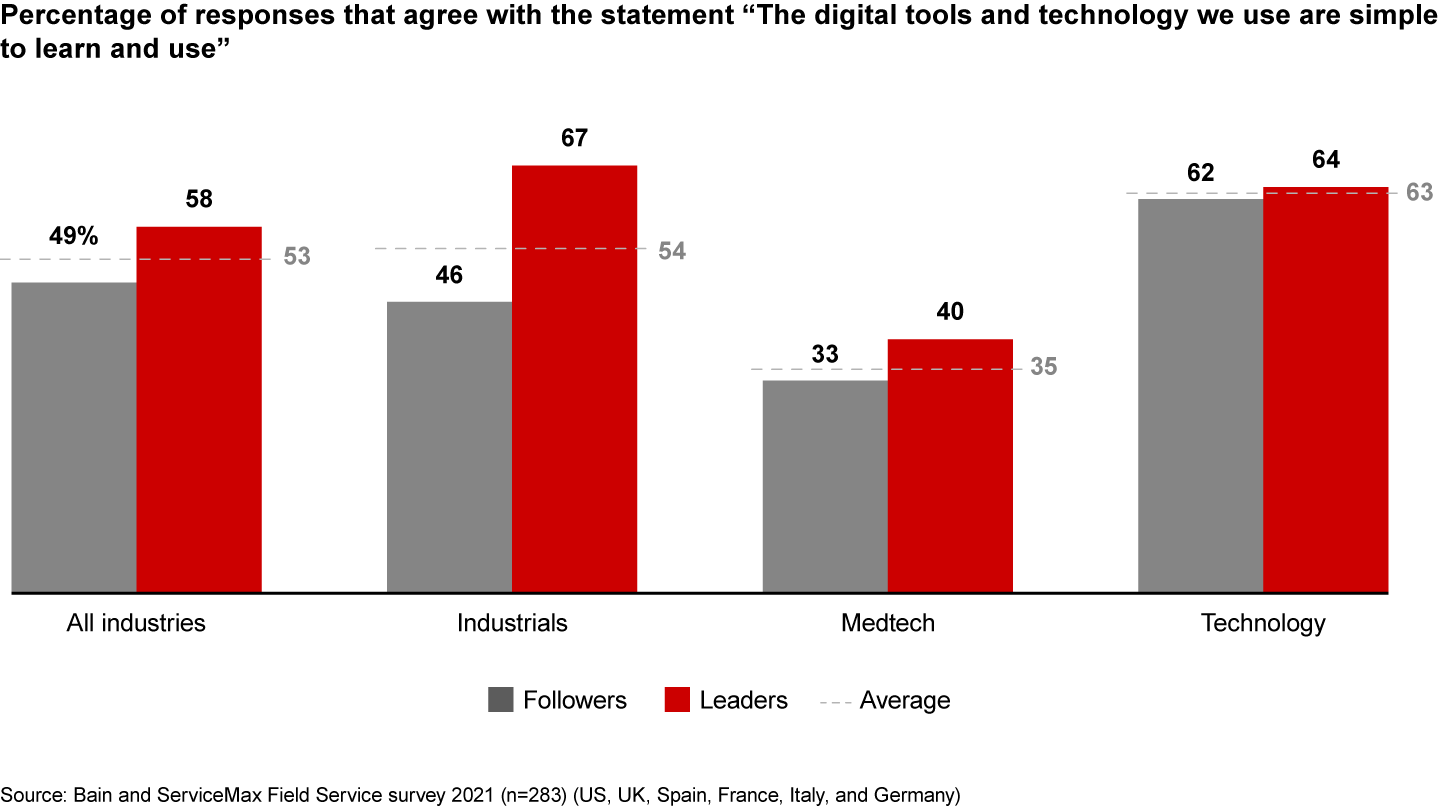
Making service talent a priority. Frontline workers are bearing the brunt of the change in field services. Our research shows nearly 50% of technicians on average find their tools and technology difficult to use. And that’s just one factor transforming work on the front line (see Figure 4). To ensure technicians have the resources they need and remain motivated, service leaders are making frontline talent a priority, including hiring, development, and retraining.
Figure 4

To increase motivation and engagement on the front line, a global industrial components company invested in a battery of initiatives to provide the field force with critical new capabilities and attractive compensation packages. It also launched initiatives to inspire the field service team. One involved publishing success stories and news from the front line internally—a move that generated strong enthusiasm and positive feedback from workers. It also helped technicians take a more active role in the selling process.
Monday morning 8 AM
In capital-intensive industries, field service will play an increasingly important role in commercial performance. Companies that develop outcome-based pricing models, make the most of new technologies and data, and make service talent a top priority will build a strong competitive advantage.
Each company will chart an individual path as it adapts to changes in the service landscape. But four high-gain questions can help leadership teams get started developing a field service strategy that will strengthen performance.
- What capabilities do we need to develop new pricing models?
- Does our data strategy include gathering and analyzing information to optimize processes and service offerings?
- Do we need additional operational capabilities to support our service strategy?
- Have we assessed what it will take for our field force organization to succeed in a rapidly changing market?
Net Promoter Score℠ is a service mark of Bain & Company, Inc., Satmetrix Systems, Inc., and Fred Reichheld.

ServiceMax’s mission is to help customers keep the world running with software to manage mission-critical industrial assets in the field. ServiceMax’s mobile apps and cloud-based software provide field service teams a complete view of equipment. By optimizing field service operations, companies can better manage service complexity, support faster growth, and run more profitable businesses.
First published in 9月 2021