Skip to Content
  • オフィス

    オフィス

    北米・南米
    • Atlanta
    • Austin
    • Bogota
    • Boston
    • Buenos Aires
    • Chicago
    • Dallas
    • Denver
    • Houston
    • Los Angeles
    • Mexico City
    • Minneapolis
    • Monterrey
    • Montreal
    • New York
    • Rio de Janeiro
    • San Francisco
    • Santiago
    • São Paulo
    • Seattle
    • Silicon Valley
    • Toronto
    • Washington, DC
    ヨーロッパ・中東・アフリカ
    • Amsterdam
    • Athens
    • Berlin
    • Brussels
    • Copenhagen
    • Doha
    • Dubai
    • Dusseldorf
    • Frankfurt
    • Helsinki
    • Istanbul
    • Johannesburg
    • Kyiv
    • Lisbon
    • London
    • Madrid
    • Milan
    • Munich
    • Oslo
    • Paris
    • Riyadh
    • Rome
    • Stockholm
    • Vienna
    • Warsaw
    • Zurich
    アジア・オーストラリア
    • Bangkok
    • Beijing
    • Bengaluru
    • Brisbane
    • Ho Chi Minh City
    • Hong Kong
    • Jakarta
    • Kuala Lumpur
    • Manila
    • Melbourne
    • Mumbai
    • New Delhi
    • Perth
    • Shanghai
    • Singapore
    • Sydney
    • Tokyo
    全てのオフィス
  • アルムナイ
  • メディア
  • お問い合わせ
  • 東京オフィス
  • Japan | 日本語

    地域と言語を選択

    グローバル
    • Global (English)
    北米・南米
    • Brazil (Português)
    • Argentina (Español)
    • Canada (Français)
    • Chile (Español)
    • Colombia (Español)
    ヨーロッパ・中東・アフリカ
    • France (Français)
    • DACH Region (Deutsch)
    • Italy (Italiano)
    • Spain (Español)
    • Greece (Elliniká)
    アジア・オーストラリア
    • China (中文版)
    • Korea (한국어)
    • Japan (日本語)
  • Saved items (0)
    Saved items (0)

    You have no saved items.

    後で閲読、共有できるようにするためにブックマークしてください

    Explore Bain Insights
  • 業界別プラクティス
    メインメニュー

    業界別プラクティス

    • 航空宇宙、防衛、政府関連
    • 農業
    • 化学製品
    • インフラ、建設
    • 消費財
    • 金融サービス
    • ヘルスケア
    • 産業機械、設備
    • メディア、エンターテインメント
    • 金属
    • 採掘・鉱業
    • 石油、ガス
    • 紙、パッケージ
    • プライベートエクイティ
    • 公共、社会セクター
    • 小売
    • テクノロジー
    • 通信
    • 交通
    • 観光産業
    • 公益事業、再生可能エネルギー
  • 機能別プラクティス
    メインメニュー

    機能別プラクティス

    • カスタマー・エクスペリエンス
    • サステイナビリティ、 社会貢献
    • Innovation
    • 企業買収、合併 (M&A)
    • オペレーション
    • 組織
    • プライベートエクイティ
    • マーケティング・営業
    • 戦略
    • アドバンスド・アナリティクス
    • Technology
    • フルポテンシャル・トランスフォーメーション
  • Digital
  • 知見/レポート
  • ベイン・アンド・カンパニーについて
    メインメニュー

    ベイン・アンド・カンパニーについて

    • ベインの信条
    • 活動内容
    • 社員とリーダーシップ
    • プレス・メディア情報
    • クライアントの結果
    • 受賞歴
    • パートナーシップを結んでいる団体
    Further: Our global responsibility
    • ダイバーシティ
    • 社会貢献
    • サステイナビリティへの取り組み
    • 世界経済フォーラム(WEF)
    Learn more about Further
  • キャリア
    メインメニュー

    キャリア

    • ベインで働く
      キャリア
      ベインで働く
      • Find Your Place
      • ベインで活躍する機会
      • ベインのチーム体制
      • 学生向けページ
      • インターンシップ
      • 採用イベント
    • ベインでの体験
      キャリア
      ベインでの体験
      • Blog: Inside Bain
      • キャリアストーリー
      • 社員紹介
      • Where We Work
      • 成長を後押しするサポート体制
      • アフィニティ・グループ
      • 福利厚生
    • Impact Stories
    • 採用情報
      キャリア
      採用情報
      • 採用プロセス
      • 面接内容
    FIND JOBS
  • オフィス
    メインメニュー

    オフィス

    • 北米・南米
      オフィス
      北米・南米
      • Atlanta
      • Austin
      • Bogota
      • Boston
      • Buenos Aires
      • Chicago
      • Dallas
      • Denver
      • Houston
      • Los Angeles
      • Mexico City
      • Minneapolis
      • Monterrey
      • Montreal
      • New York
      • Rio de Janeiro
      • San Francisco
      • Santiago
      • São Paulo
      • Seattle
      • Silicon Valley
      • Toronto
      • Washington, DC
    • ヨーロッパ・中東・アフリカ
      オフィス
      ヨーロッパ・中東・アフリカ
      • Amsterdam
      • Athens
      • Berlin
      • Brussels
      • Copenhagen
      • Doha
      • Dubai
      • Dusseldorf
      • Frankfurt
      • Helsinki
      • Istanbul
      • Johannesburg
      • Kyiv
      • Lisbon
      • London
      • Madrid
      • Milan
      • Munich
      • Oslo
      • Paris
      • Riyadh
      • Rome
      • Stockholm
      • Vienna
      • Warsaw
      • Zurich
    • アジア・オーストラリア
      オフィス
      アジア・オーストラリア
      • Bangkok
      • Beijing
      • Bengaluru
      • Brisbane
      • Ho Chi Minh City
      • Hong Kong
      • Jakarta
      • Kuala Lumpur
      • Manila
      • Melbourne
      • Mumbai
      • New Delhi
      • Perth
      • Shanghai
      • Singapore
      • Sydney
      • Tokyo
    全てのオフィス
  • アルムナイ
  • メディア
  • お問い合わせ
  • 東京オフィス
  • Japan | 日本語
    メインメニュー

    地域と言語を選択

    • グローバル
      地域と言語を選択
      グローバル
      • Global (English)
    • 北米・南米
      地域と言語を選択
      北米・南米
      • Brazil (Português)
      • Argentina (Español)
      • Canada (Français)
      • Chile (Español)
      • Colombia (Español)
    • ヨーロッパ・中東・アフリカ
      地域と言語を選択
      ヨーロッパ・中東・アフリカ
      • France (Français)
      • DACH Region (Deutsch)
      • Italy (Italiano)
      • Spain (Español)
      • Greece (Elliniká)
    • アジア・オーストラリア
      地域と言語を選択
      アジア・オーストラリア
      • China (中文版)
      • Korea (한국어)
      • Japan (日本語)
  • Saved items  (0)
    メインメニュー
    Saved items (0)

    You have no saved items.

    後で閲読、共有できるようにするためにブックマークしてください

    Explore Bain Insights
  • 業界別プラクティス
    • 業界別プラクティス

      • 航空宇宙、防衛、政府関連
      • 農業
      • 化学製品
      • インフラ、建設
      • 消費財
      • 金融サービス
      • ヘルスケア
      • 産業機械、設備
      • メディア、エンターテインメント
      • 金属
      • 採掘・鉱業
      • 石油、ガス
      • 紙、パッケージ
      • プライベートエクイティ
      • 公共、社会セクター
      • 小売
      • テクノロジー
      • 通信
      • 交通
      • 観光産業
      • 公益事業、再生可能エネルギー
  • 機能別プラクティス
    • 機能別プラクティス

      • カスタマー・エクスペリエンス
      • サステイナビリティ、 社会貢献
      • Innovation
      • 企業買収、合併 (M&A)
      • オペレーション
      • 組織
      • プライベートエクイティ
      • マーケティング・営業
      • 戦略
      • アドバンスド・アナリティクス
      • Technology
      • フルポテンシャル・トランスフォーメーション
  • Digital
  • 知見/レポート
  • ベイン・アンド・カンパニーについて
    • ベイン・アンド・カンパニーについて

      • ベインの信条
      • 活動内容
      • 社員とリーダーシップ
      • プレス・メディア情報
      • クライアントの結果
      • 受賞歴
      • パートナーシップを結んでいる団体
      Further: Our global responsibility
      • ダイバーシティ
      • 社会貢献
      • サステイナビリティへの取り組み
      • 世界経済フォーラム(WEF)
      Learn more about Further
  • キャリア
    人気検索キーワード
    • デジタル
    • 戦略
    前回の検索
      最近訪れたページ

      Content added to saved items

      Saved items (0)

      Removed from saved items

      Saved items (0)

      レポート

      How India Shops Online 2023

      How India Shops Online 2023

      An insight into the e-retail landscape and the emerging trends shaping the market

      著者:Arpan Sheth, Shyam Unnikrishnan, Manan Bhasin, and Abhishek Raj

      • min read
      }

      レポート

      How India Shops Online 2023
      en
      概要
      • E-retail has been a disruptive force in global retail. Online-first retailers now make up to two-thirds of the sales generated by the ten largest global retailers—a three-fold increase over the last decade. This trend underscores the importance of the online channel in modern retail, demonstrating a notable shift in consumer preferences.
      • The Covid-19 pandemic has been an inflection point for e-retail adoption globally. The surge in online shopping induced by the pandemic has largely persisted across markets, albeit to varying degrees. In mature markets like the US and China, the annual uptick in e-retail penetration is only slightly lower or comparable to pre-pandemic levels. However, India has witnessed an acceleration in e-retail penetration following the pandemic.
      • This year, we will examine five major themes that are shaping e-retail in India: long-term growth fundamentals, shopper micro-segments, emerging business models, focus on profitability, and the growing role of cutting-edge artificial intelligence.

      Solid foundations: India’s long-term growth fundamentals are robust

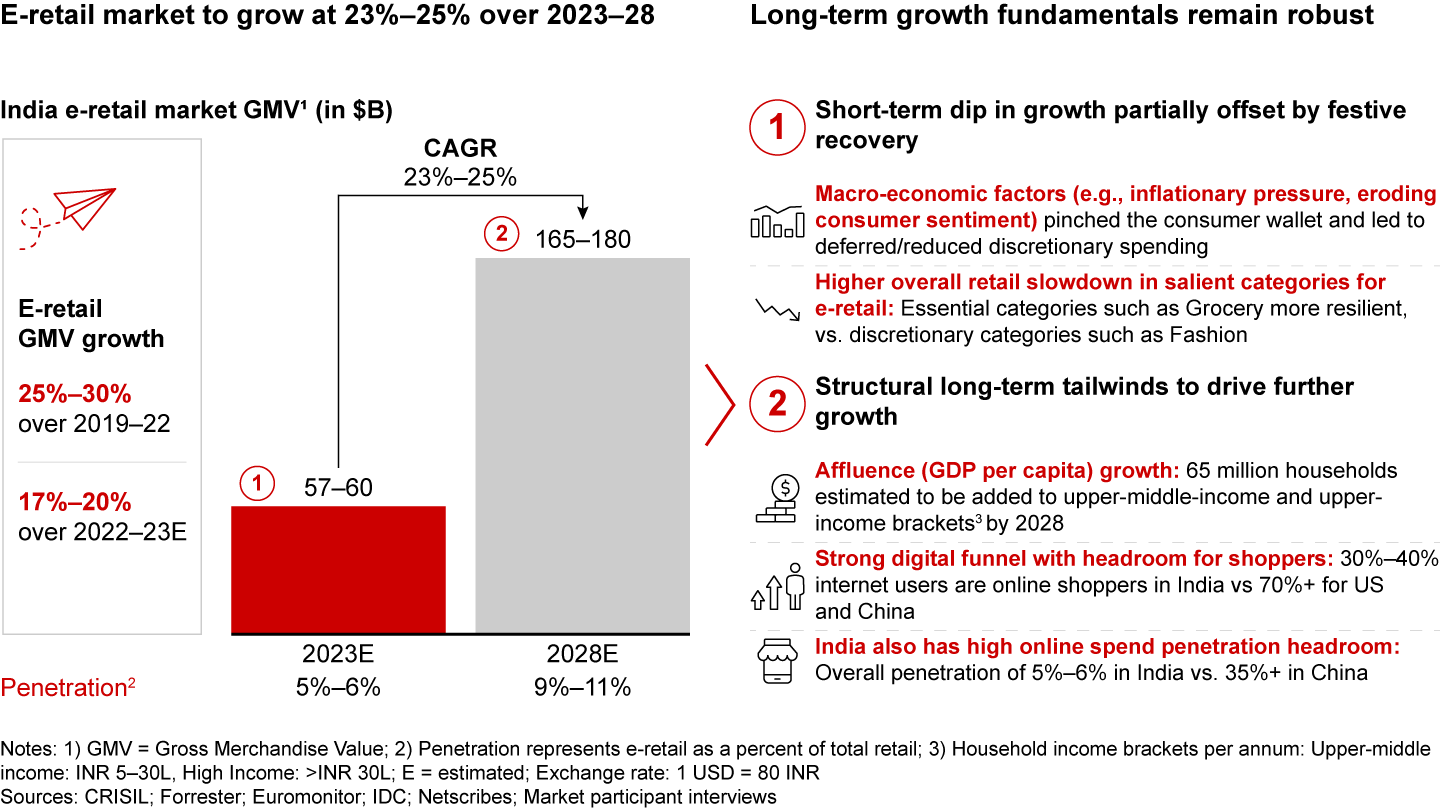
      India’s e-retail market is estimated to scale to $57–$60 billion in 2023, adding $8–$12 billion annually since 2020. The market is estimated to grow by 17%–20% from 2022 to 2023, which is slower than the 25%–30% historic growth rate. The short-term dip was driven by inflationary pressures. This pinched the consumer wallet and eroded consumer sentiment, thereby deferring or reducing discretionary spending.

      Written in collaboration with

      Written in collaboration with

      flipkart-new-55.png


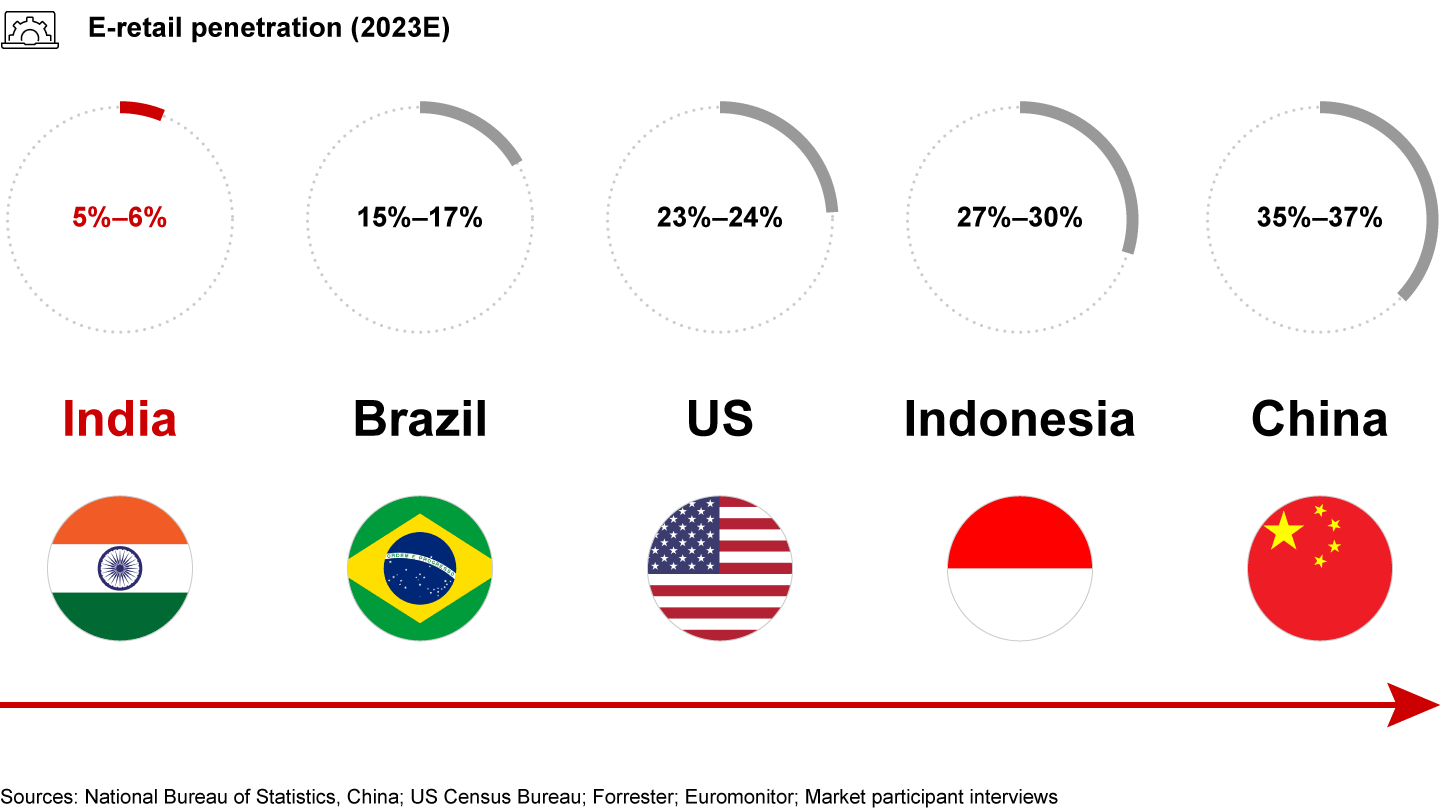
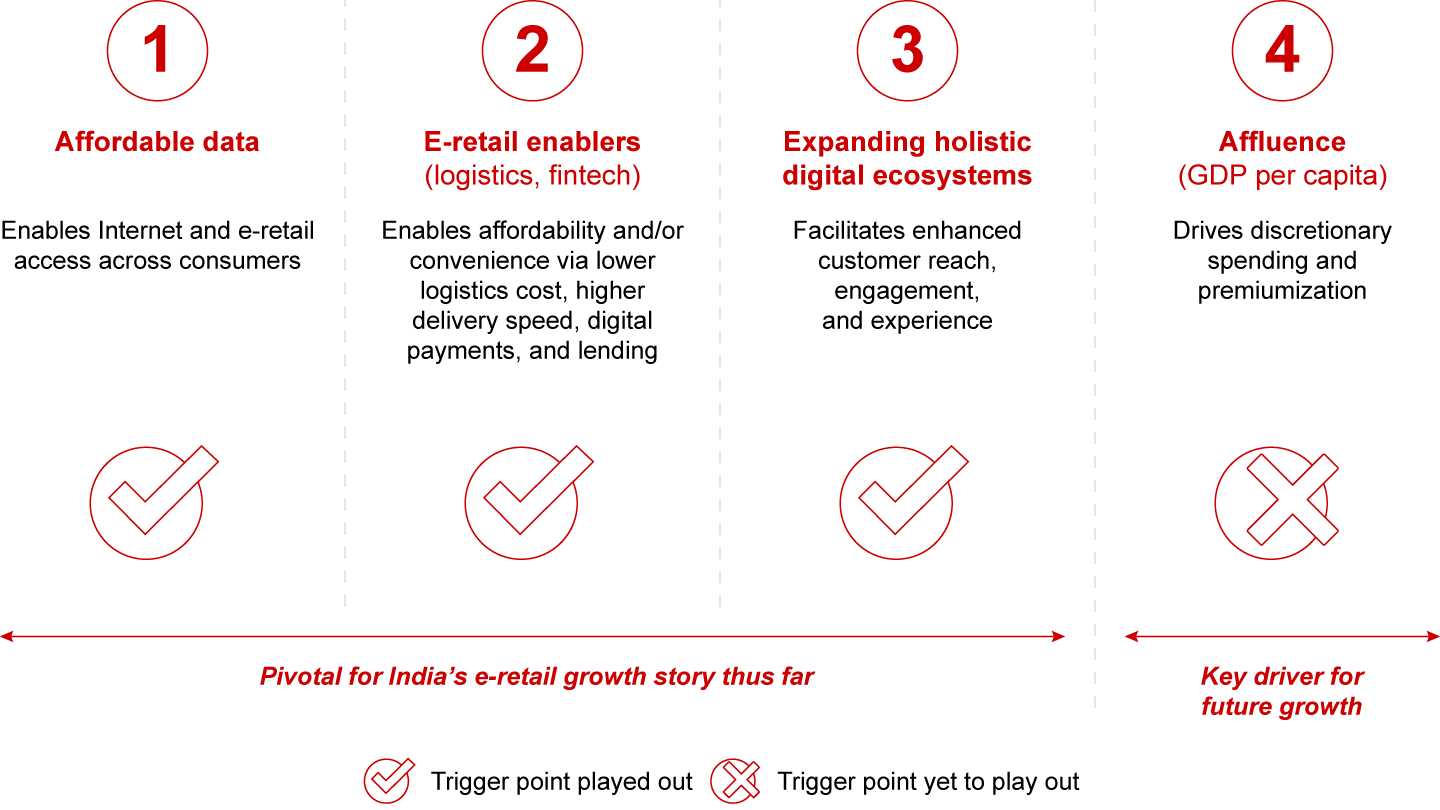
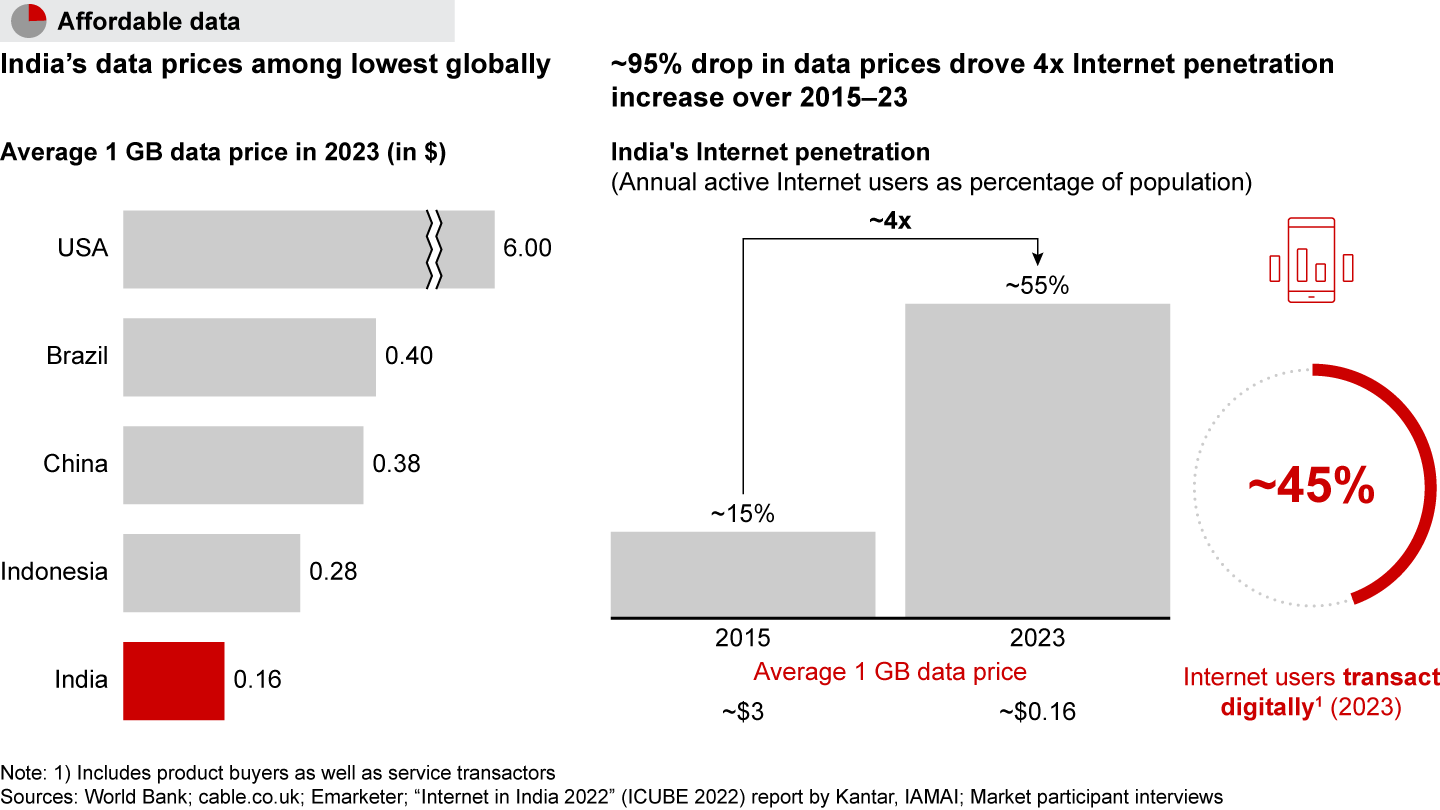
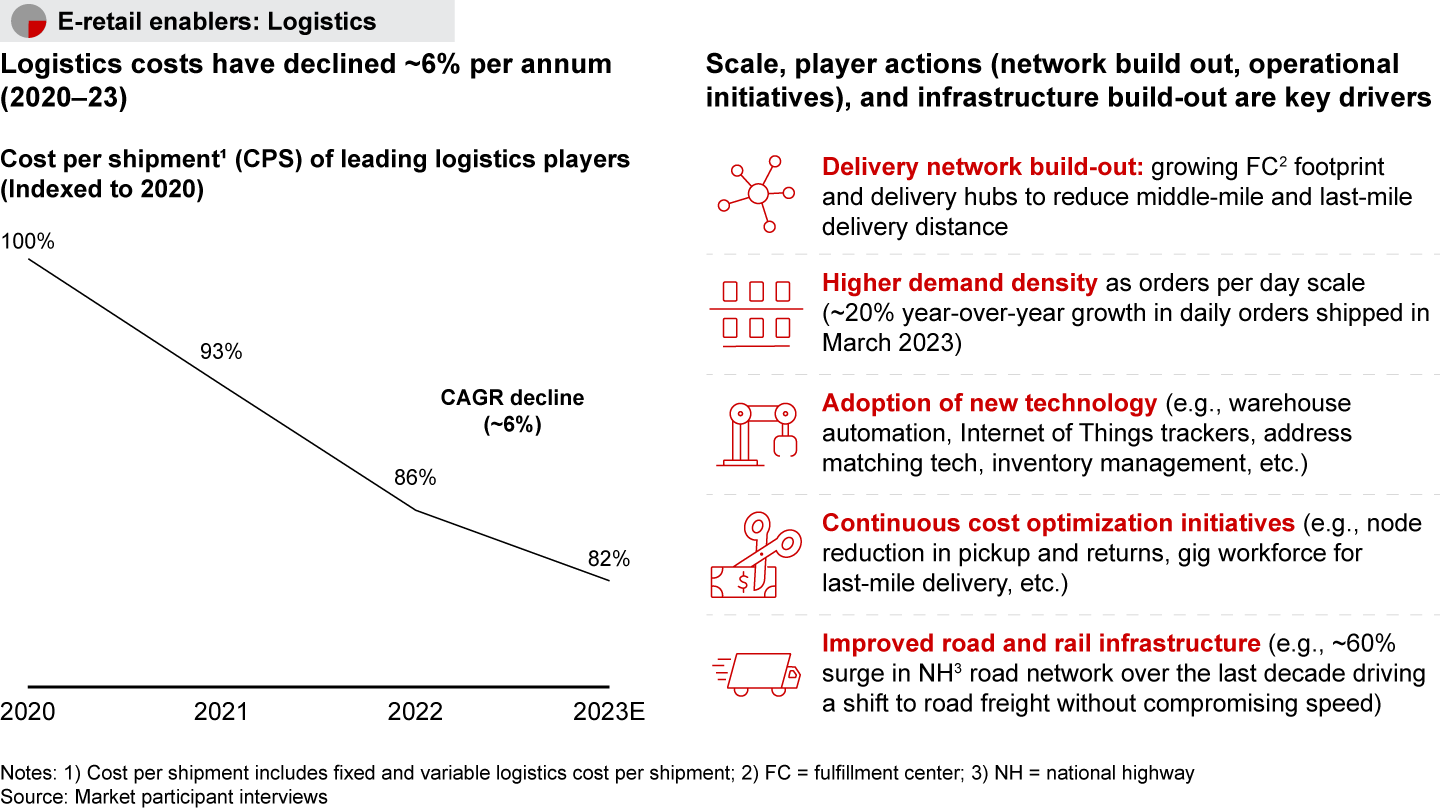
      Despite slower than typical growth, online adoption grew steadily over the last year. However, there is still massive headroom for growth. Overall, online spending is only 5%–6% of total retail in India vs. 23%–24% in US and 35%+ in China. Three out of four trigger points for e-retail growth have played out in India: increased physical and digital access through cheaper data and logistics reach; enhanced affordability and convenience through lower logistics costs; and the emergence of digital ecosystems.

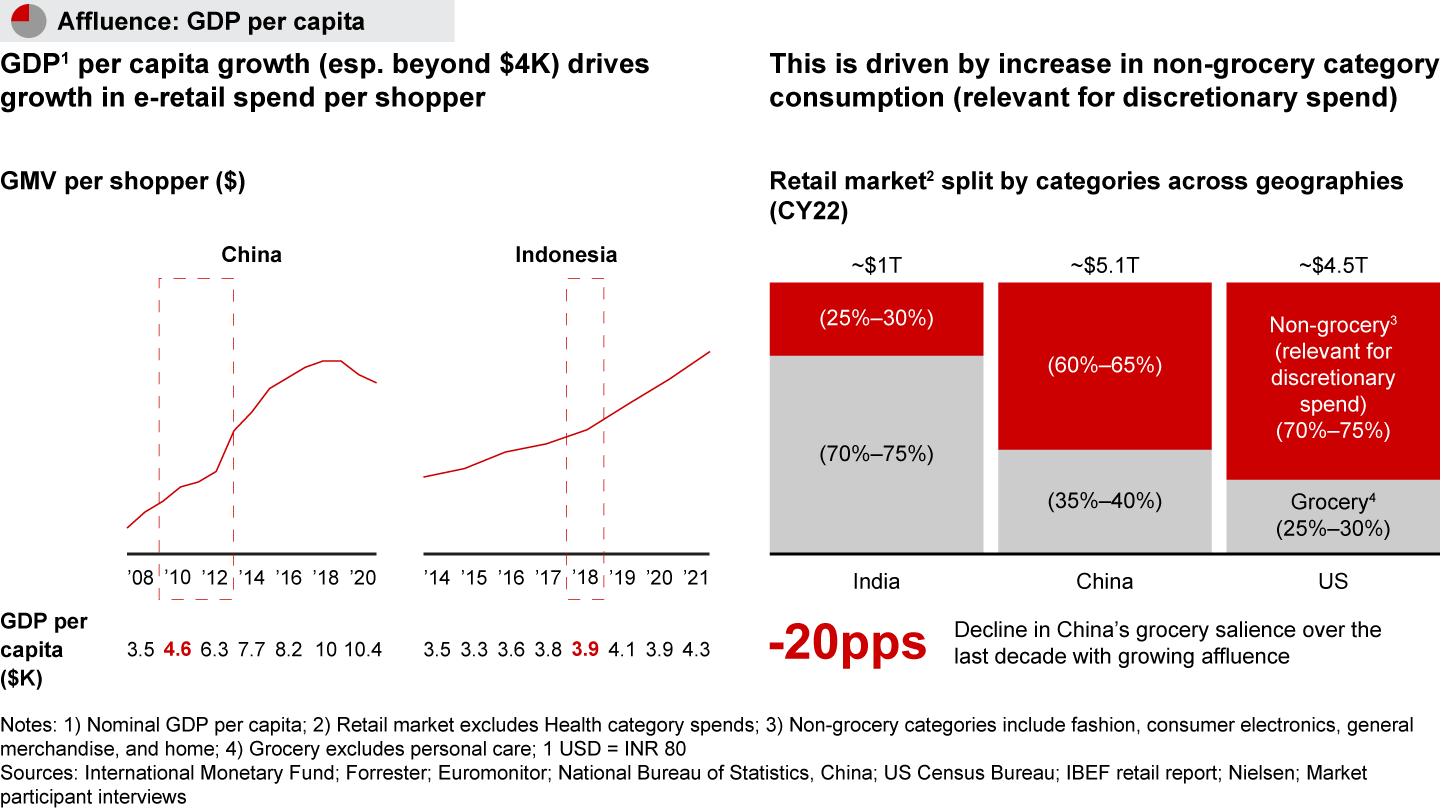
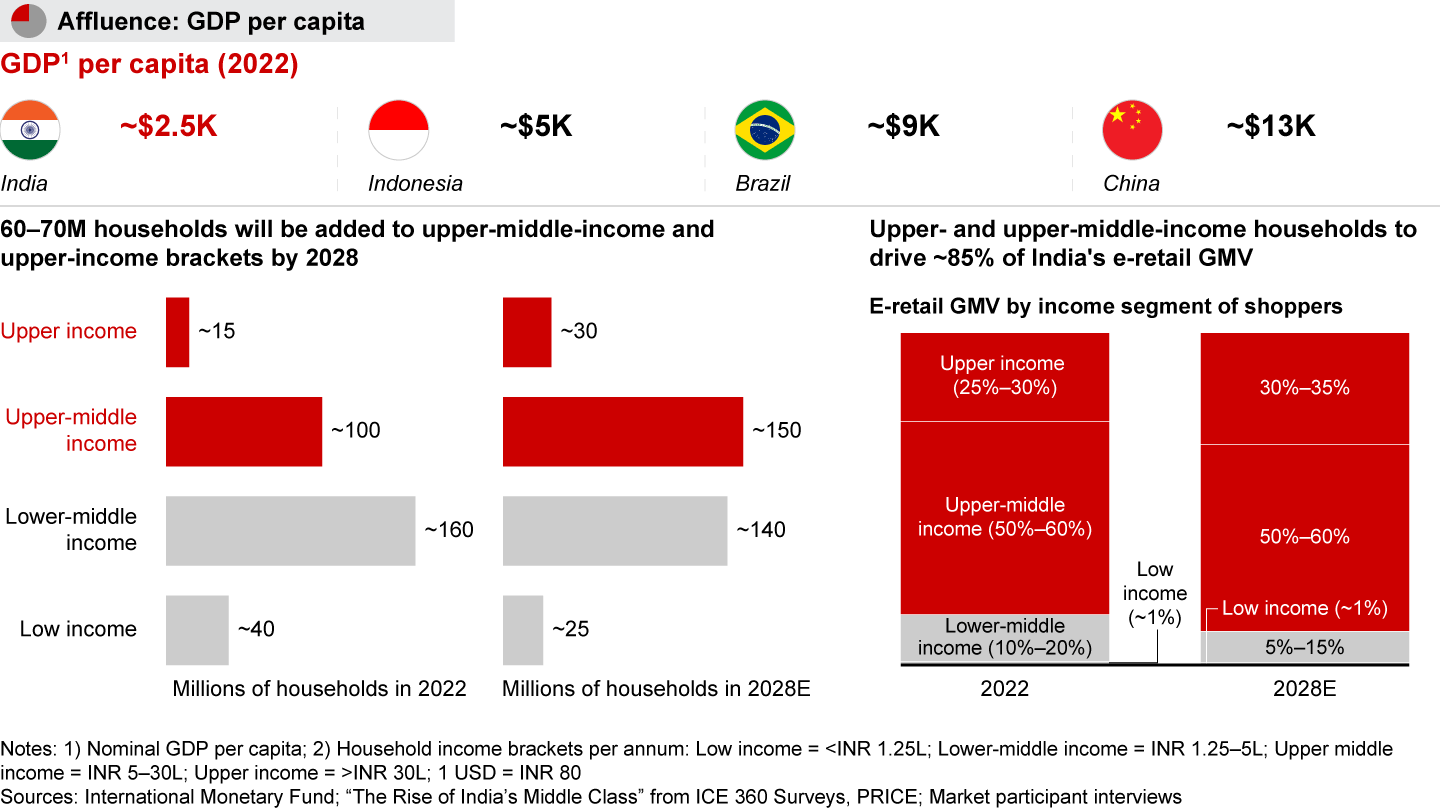
      The fourth trigger point, affluence, is yet to be fully realized. Growth in GDP per capita will be critical to unlock e-retail growth over the next decade. Typically, when GDP per capita crosses the threshold of approximately $4,000, it drives a sharp increase in online spending per shopper and discretionary spending. In India, an estimated 60–70 million households will join the upper-middle- and upper-income cohorts, which in turn are likely to account for at least 85% of e-retail spending by 2028. Government initiatives such as the Open Network for Digital Commerce will further propel the growth of e-retail in India.

      Thus, India’s e-retail market is expected to bounce back to 23%–25% growth levels and reach over $160 billion by 2028.

      An evolving landscape: Diverse consumer micro-segments served via a growing seller base

      India’s annual transacting e-retail shopper base is estimated to scale to 230–250 million people in 2023. Over 100 million of these shoppers were added over the last three years.

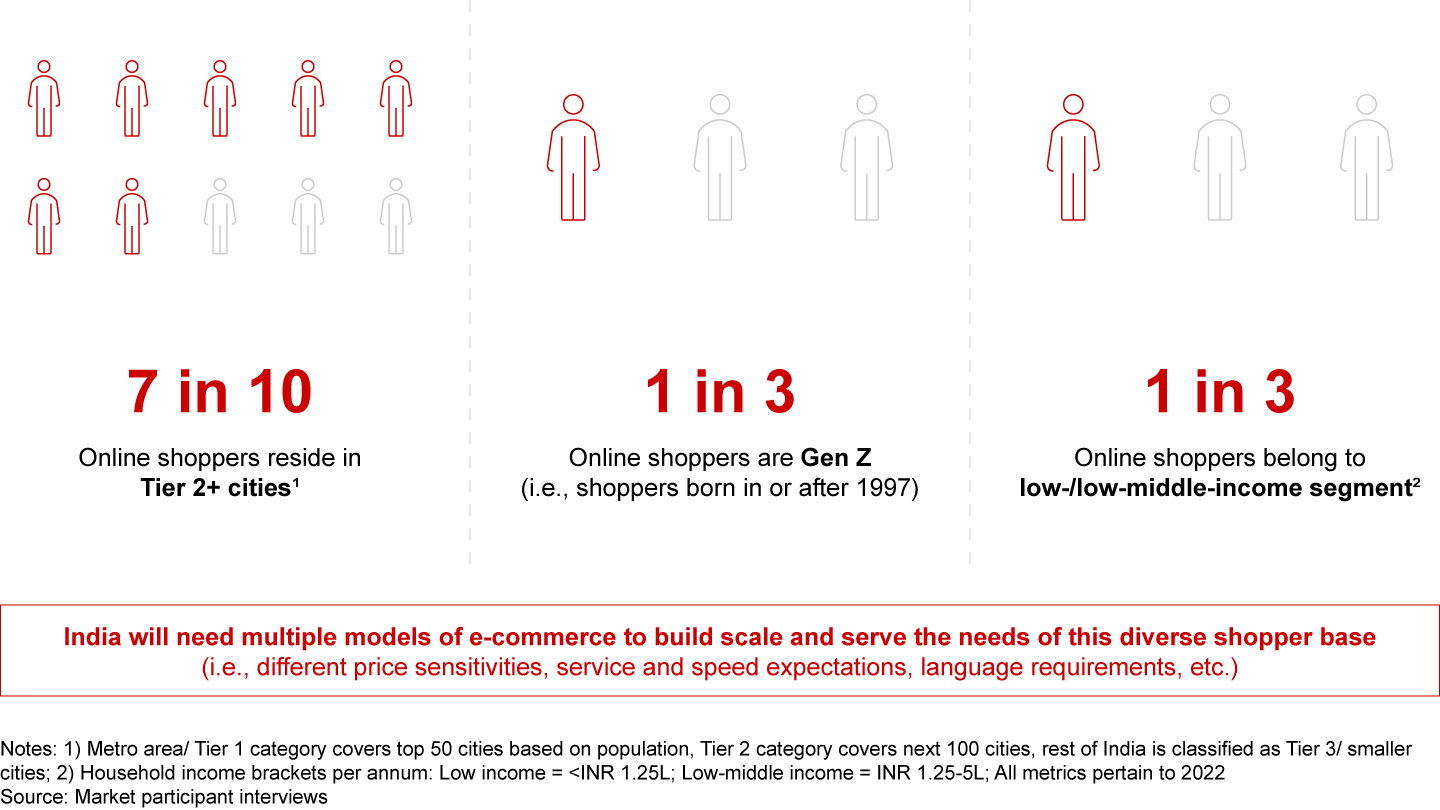
      Diverse consumer micro-segments have become more salient. Now, 7 out of 10 online shoppers reside in Tier 2+ cities, and a third of online shoppers are part of Gen Z (born in or after 1997). About a third of online shoppers come from low-income or low-middle-income cohorts.

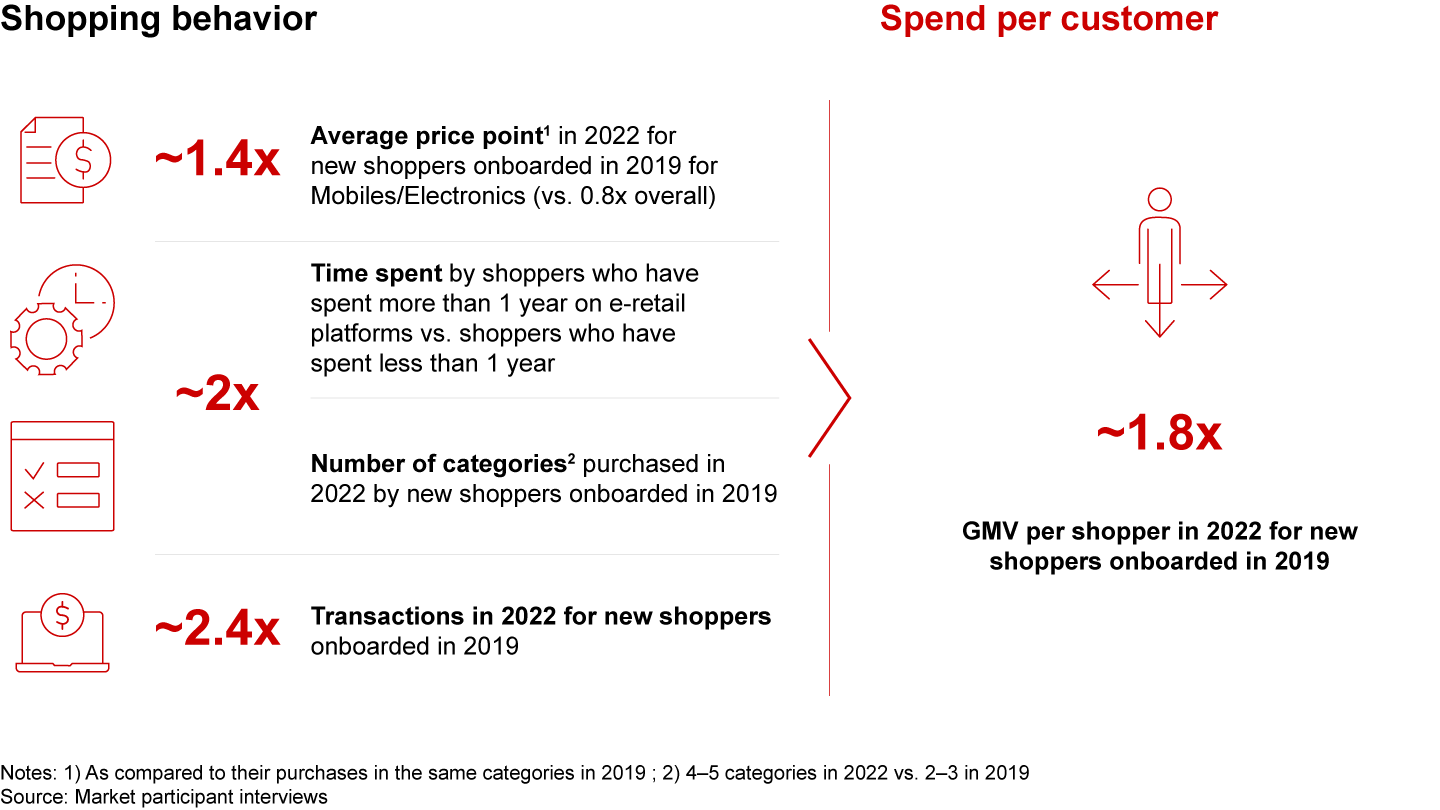
      Simultaneously, there is a growing base of mature shoppers. Over 100 million shoppers participated in e-retail in 2019. Shoppers that were onboarded in 2019 have doubled their engagement, frequency of purchases, and spending on digital platforms over the past three years.

      In the coming decade, e-retail growth will be driven by adding new shoppers and by growing online spending per shopper. E-retail platforms are investing as much in retention (the core thesis behind digital ecosystems) as they are in new shopper acquisition (via value selection and voice/vernacular offerings).

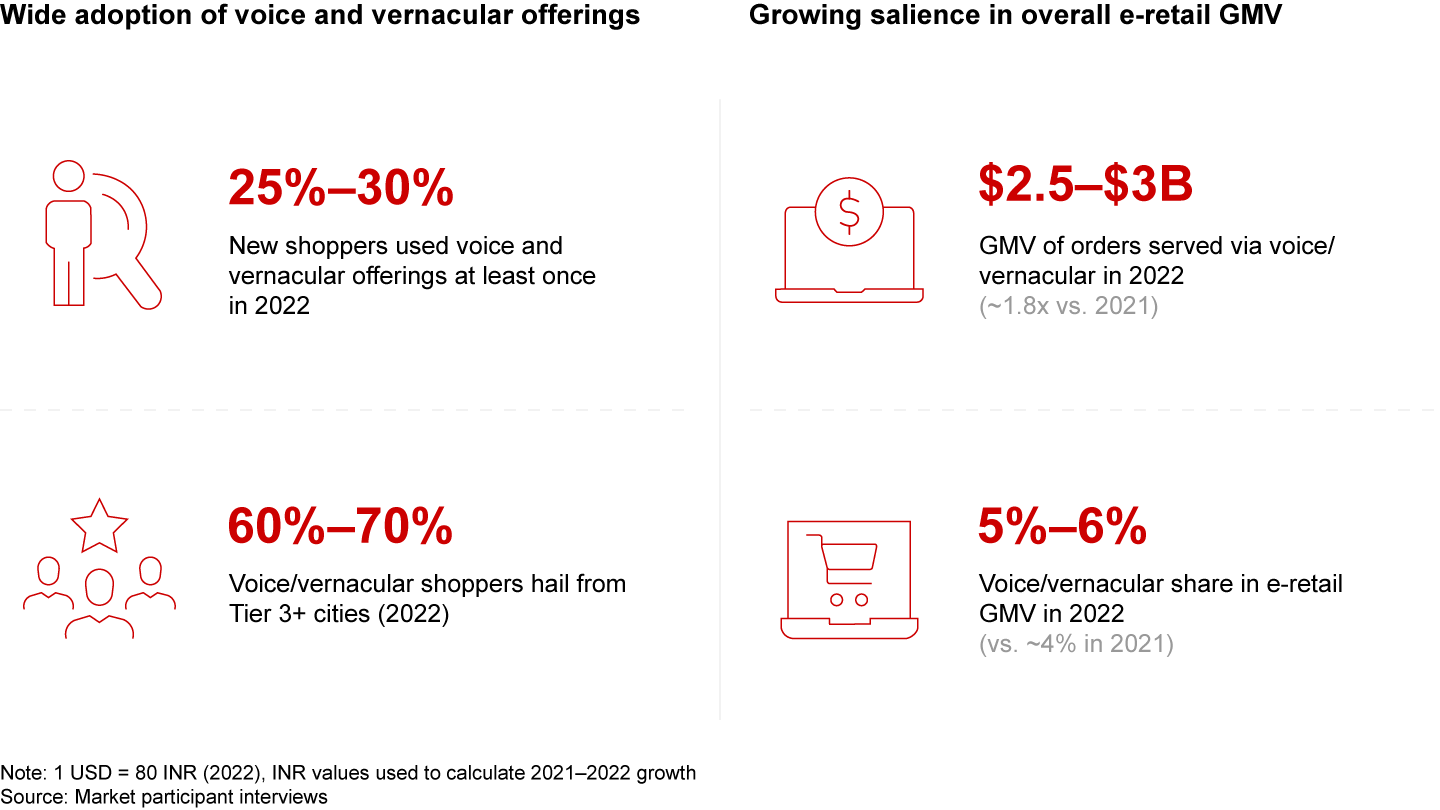
      India will need multiple models to build, scale, and serve the needs of this diverse shopper base, which has varying price sensitivities, service and speed expectations, and language requirements. For example, voice and vernacular offerings are popular among new shoppers from smaller cities. About 25%–30% of first-time shoppers used these offerings in 2022, and about 60%–70% of voice/ vernacular users hailed from Tier 3+ cities.

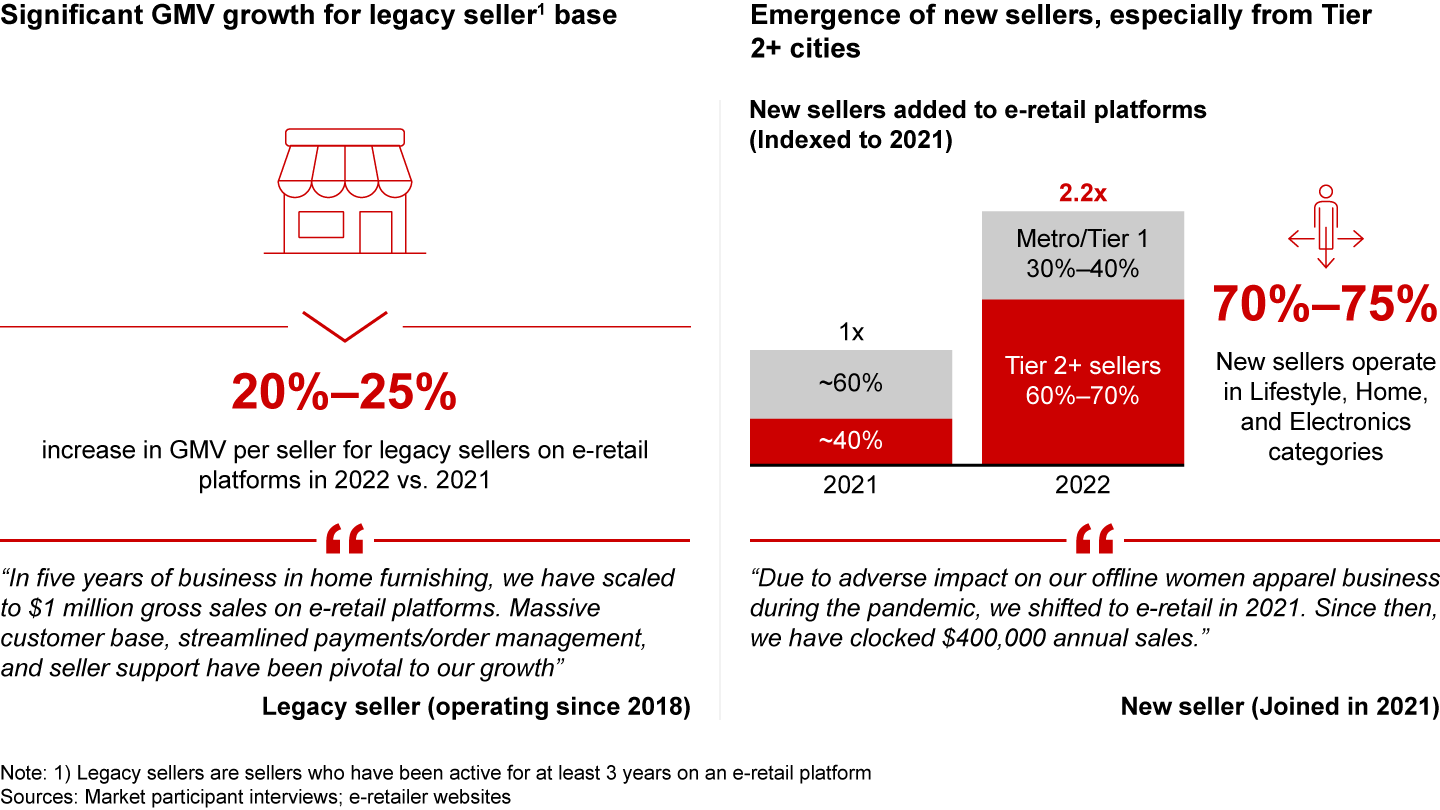
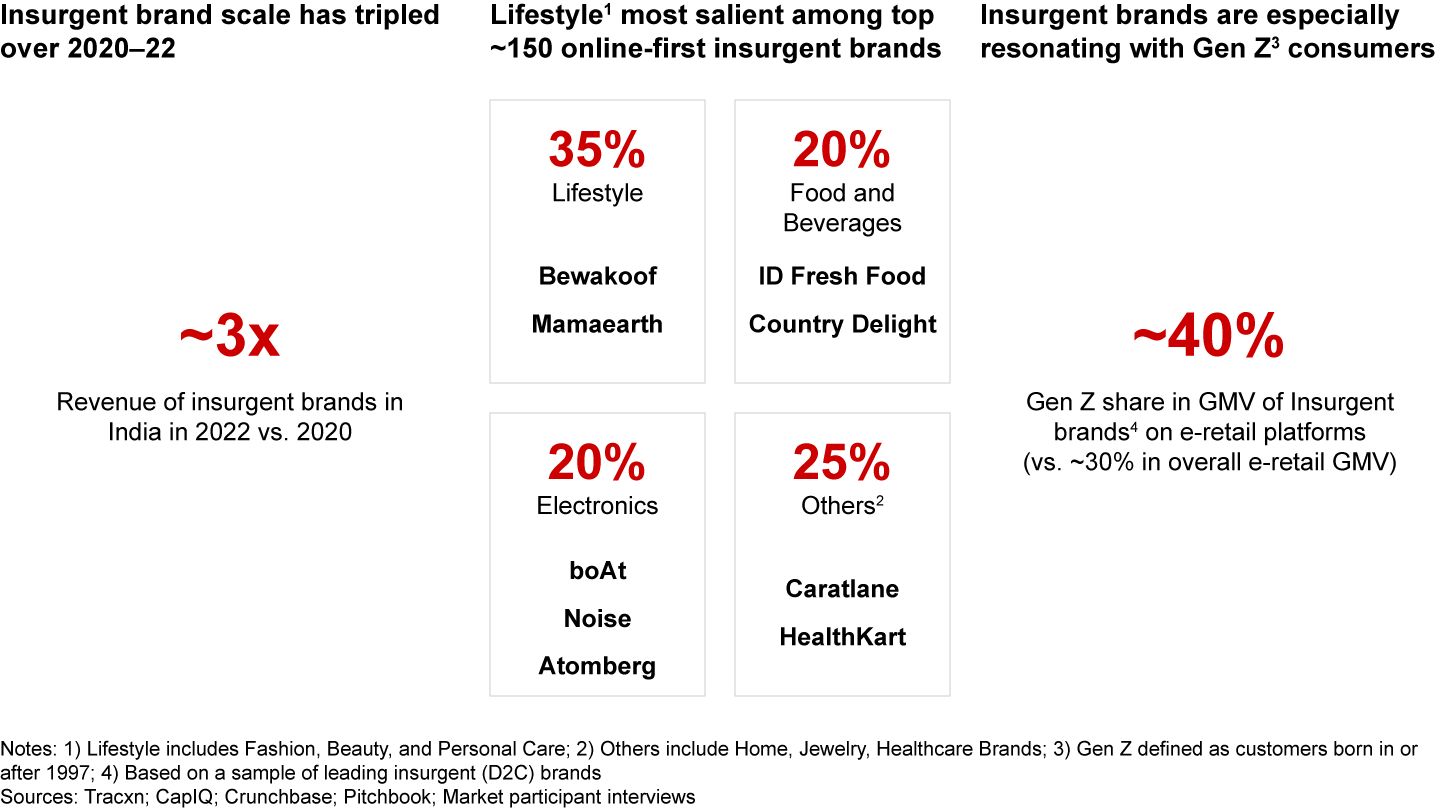
      The seller ecosystem is also exploding to cater to these consumers. Twice as many sellers were added in 2022 compared to 2021. Two-thirds came from Tier 2+ cities, and three-fourths operate in the lifestyle, home, and electronics categories. Insurgent online-first brands have emerged as a fast-growing seller cohort, with more than threefold revenue growth from 2020 to 2022. These brands resonate especially with Gen Z consumers.

      Waves of change: New business models are emerging to serve consumer needs

      This dynamic landscape created an opportunity for e-retailers and startups to test and scale new and innovative business models. Four e-retail models—quick-commerce (Q-commerce), hyper-value commerce, inspiration-led commerce (live commerce), and fast fashion—are emerging, and are at different levels of maturity.

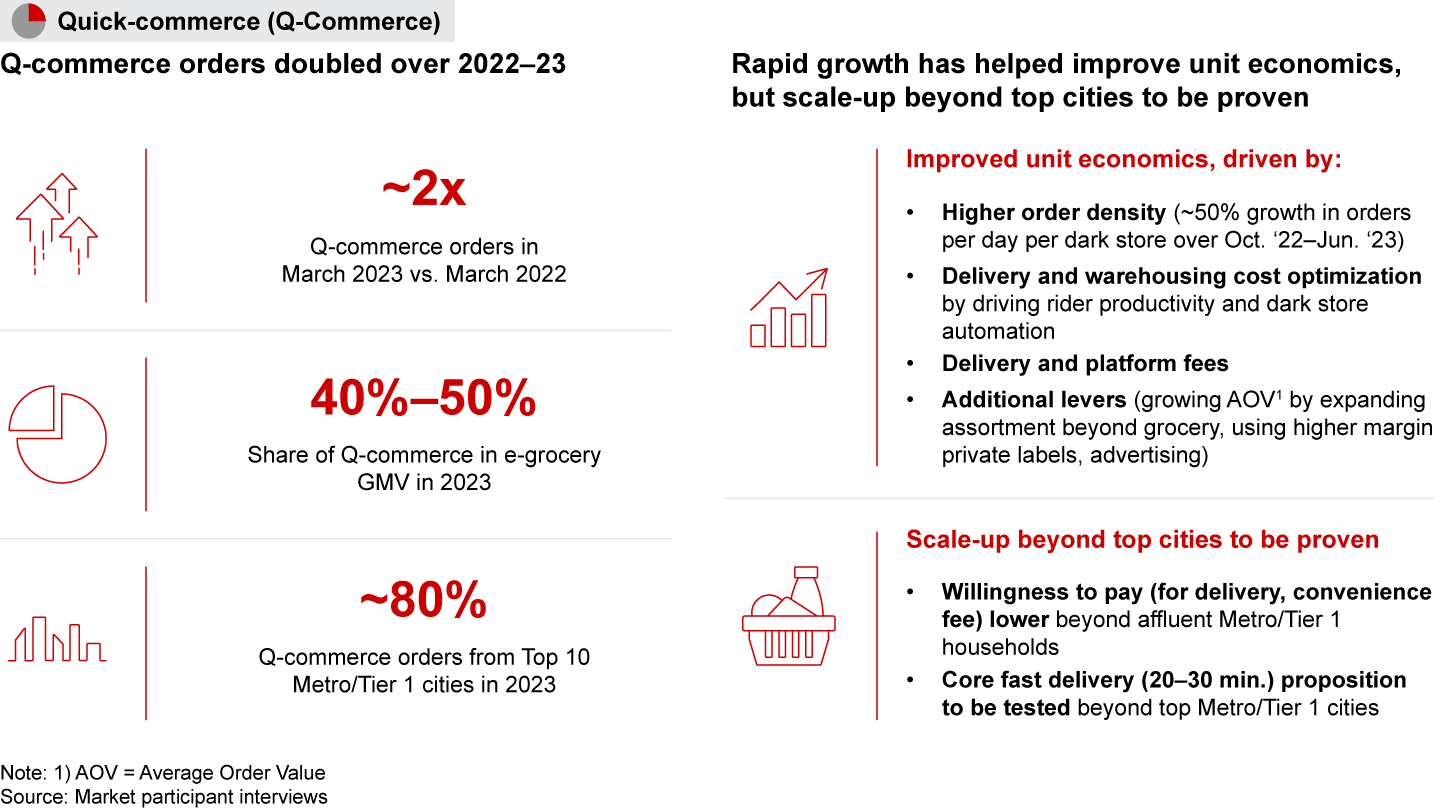
      • Q-commerce platforms offer hyper-convenience and rapid delivery (typically under 30 minutes). Globally, a series of quick-commerce upstarts emerged, raising substantial capital over 2020–22. The majority of these players have struggled to scale profitably. The story in India has been somewhat different. Q-commerce orders doubled over the last year, and now account for 40%–50% of India’s e-grocery spend. Leading Indian players have improved unit economics through a combination of scale, average order value growth, higher order density, and value-added fees. However, this is currently largely a metro/Tier 1 phenomenon. The top 10 cities account for approximately 80% of orders. Scaling beyond top metro/Tier 1 cities is possible but unproven.
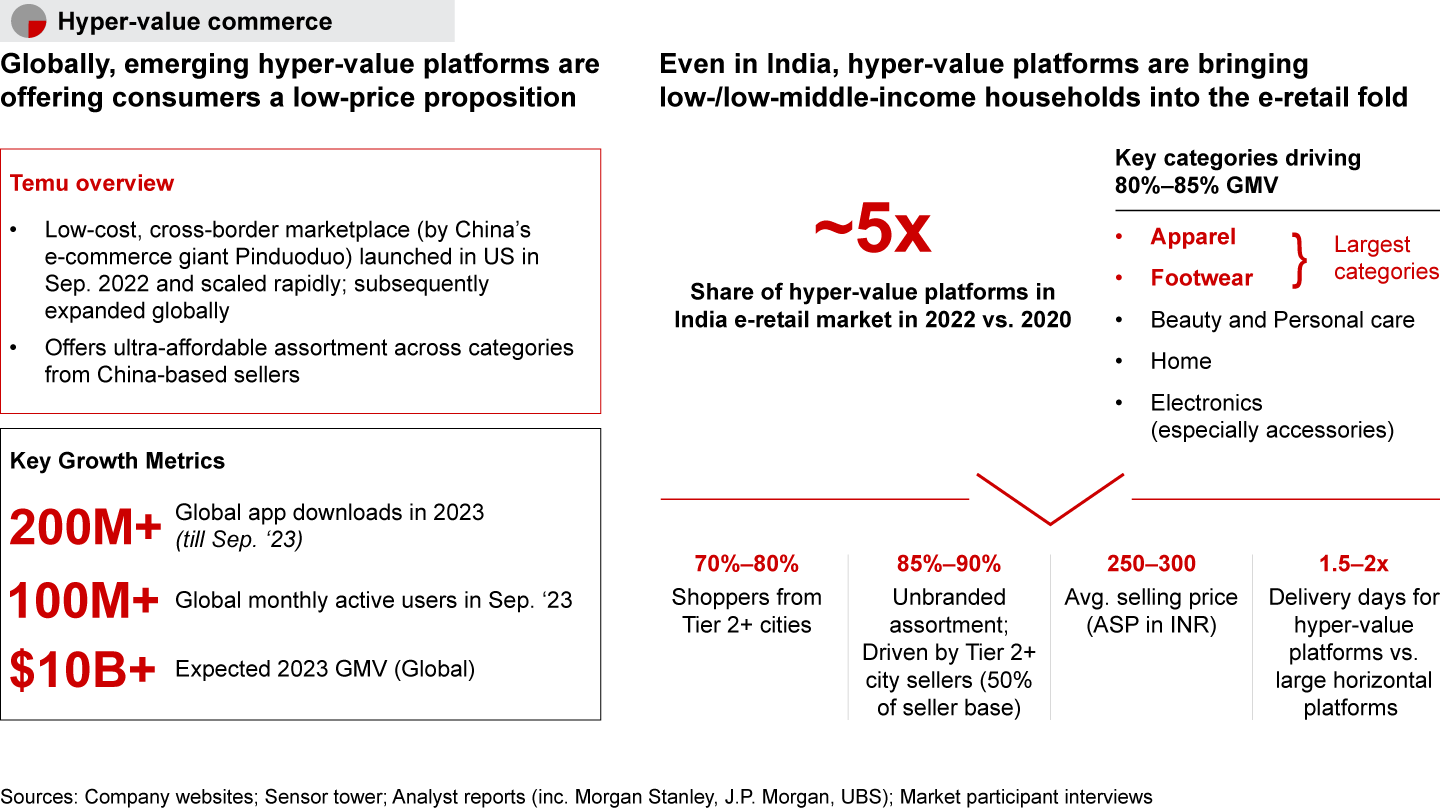
      • Hyper-value platforms deliver value to consumers, primarily by offering an unbranded assortment at ultra-low price points. Globally, the best example of a hyper-value platform is Temu, a cross-border marketplace launched by Chinese e-retailer Pinduoduo. Temu had over 200 million app downloads in 2023. In India, hyper-value platforms have seen accelerated growth. Their share of overall e-retail grew five-fold between 2020–22. These platforms appeal most to shoppers from Tier 2+ cities (which account for 70%–80% of shoppers) and low- or low-middle-income households.
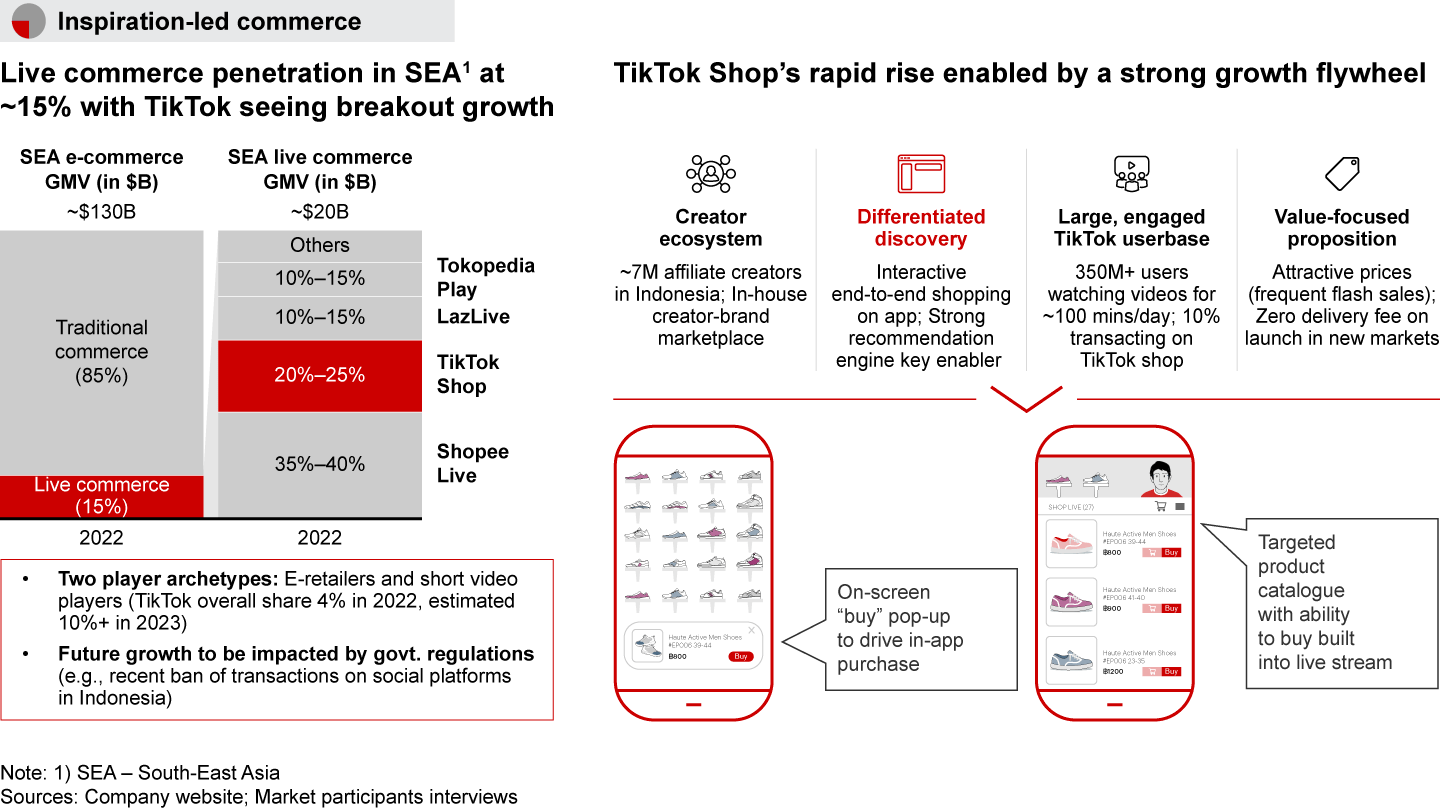
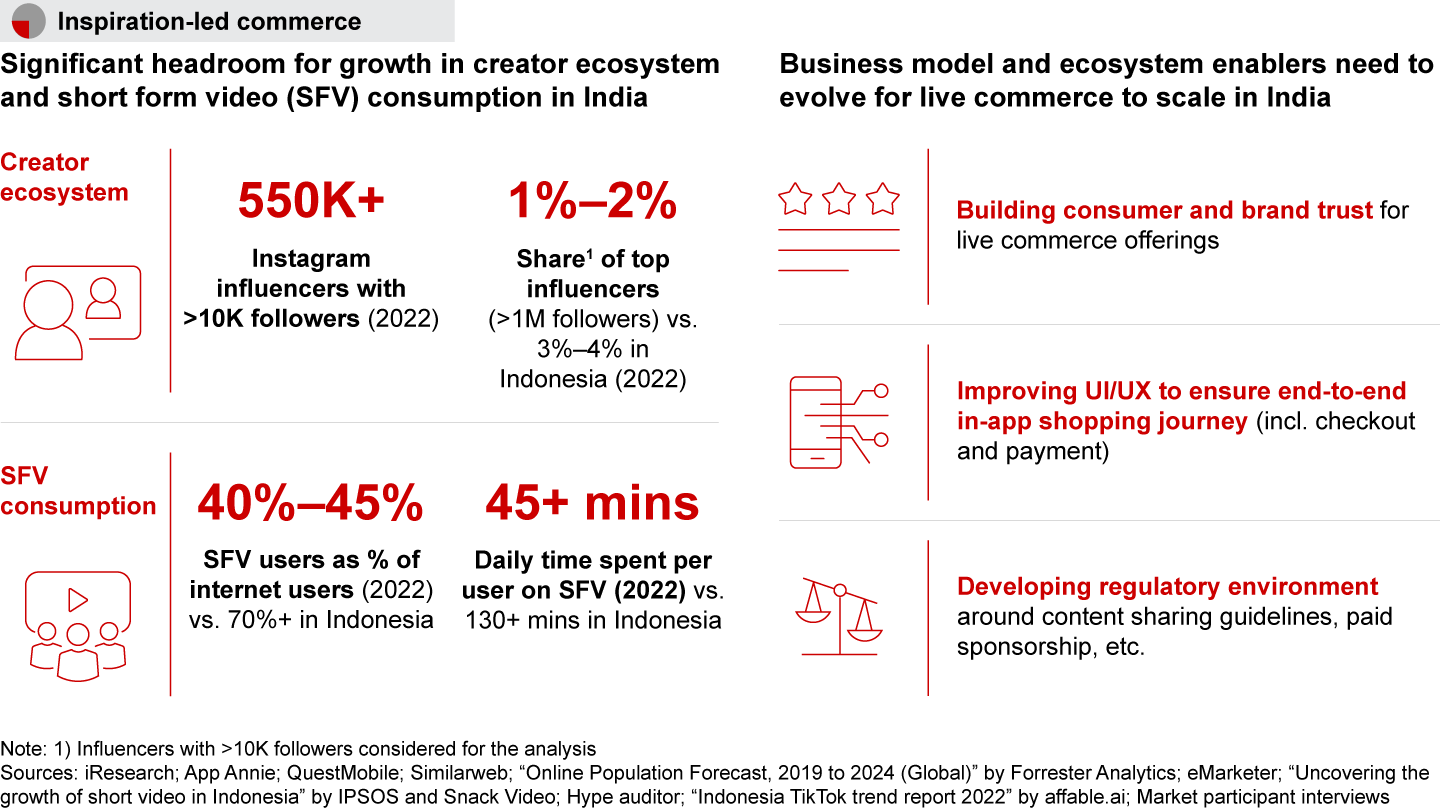
      • Inspiration-led commerce (live commerce) has grown rapidly in markets like Southeast Asia, where it accounted for approximately 15% of gross merchandise value (GMV) in 2022. Globally, both e-retailers and short video players are looking to capitalize on this trend. The most notable player in this field is TikTok Shop, which quickly scaled to 4% of Southeast Asia’s e-retail GMV in 2022. TikTok benefited from a unique growth flywheel created by its customer and creator franchise, differentiated discovery (powered by a best-in-class recommendation engine), and value-led proposition. In India, however, the model remains nascent.
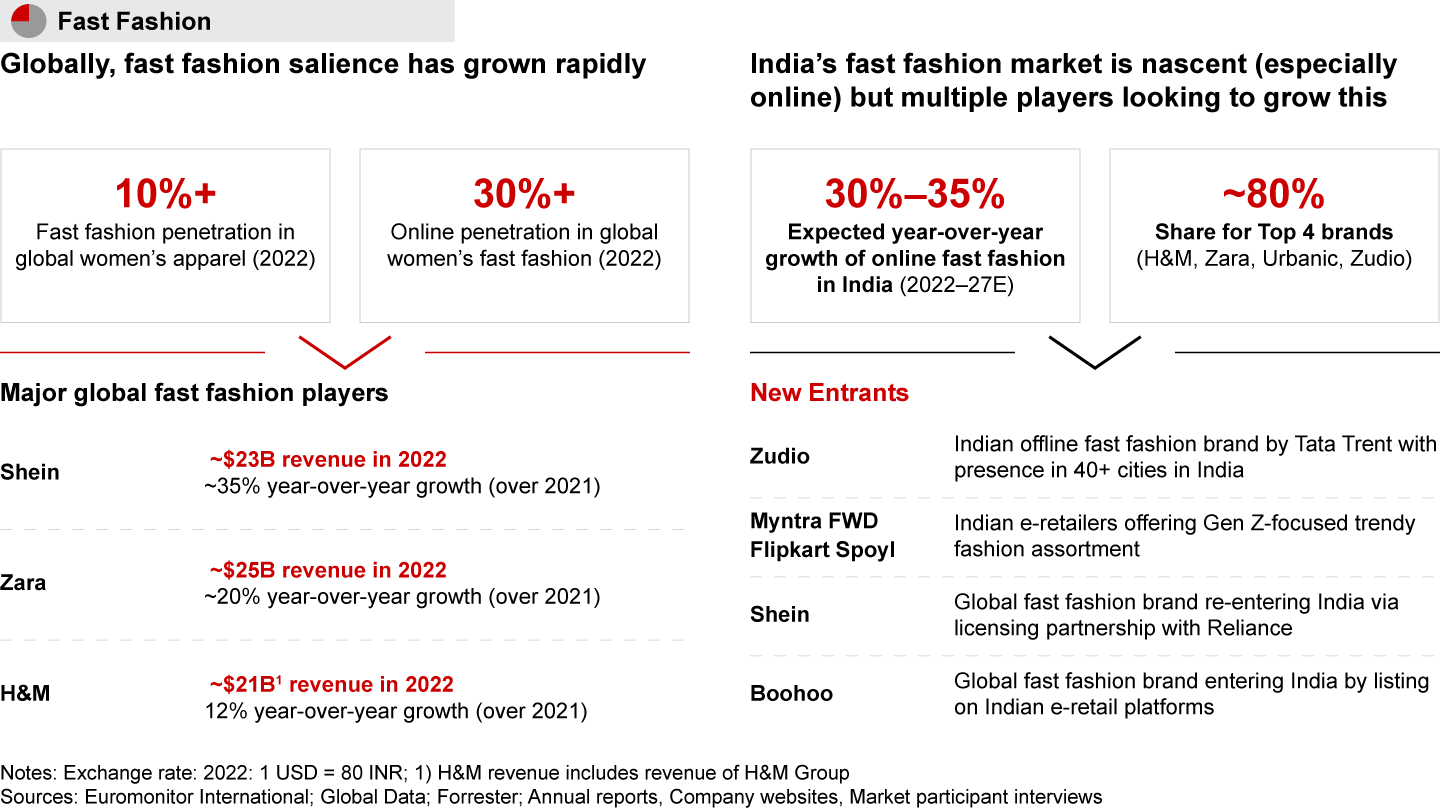
      • Fast fashion is another rapidly growing global phenomenon, accounting for over 1 in 10 dollars spent on women’s apparel. Online-first players such as Shein and omni-channel players such as Zara and H&M have each scaled to more than $20 billion in revenue. India’s fast fashion market is nascent but expected to grow at 30%–35% per annum between 2022 and 2027. Recent investments are bound to give this model a boost. Tata invested in scaling Zudio, Reliance has partnered with Shein, and Flipkart Group has entered this space with Spoyl (Flipkart) and FWD (Myntra).

      Sustainable growth: Increased focus on profitability and monetization

      The e-retail industry has seen a growing emphasis on profitability in recent years. Multiple retailers, such as Pinduoduo, Coupang (South Korea), and Shopee (Southeast Asia), achieved positive EBITDA over the last two years.

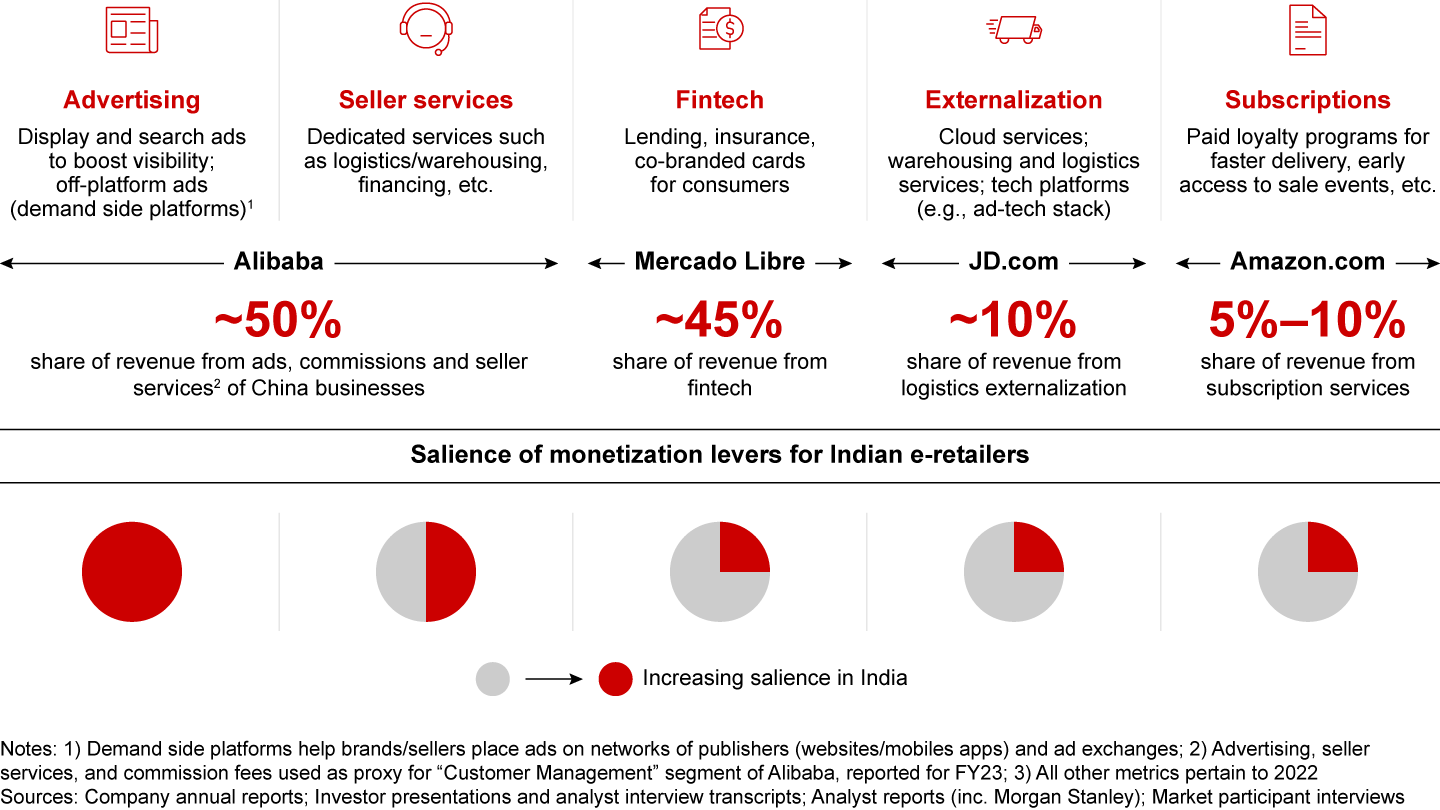
      Beyond continued improvement in fundamental business economics, e-retailers have amped up their focus on monetization and deployed five key monetization levers: advertising, seller services, fintech, externalization of services (e.g., logistics, cloud), and subscription-based loyalty programs. Interestingly, the core monetization engine for global platforms has been different. For example, fintech contributes around 45% of Mercado Libre’s revenues via Mercado Pago, whereas advertising and seller services accounts for around 50% of Alibaba’s revenues.

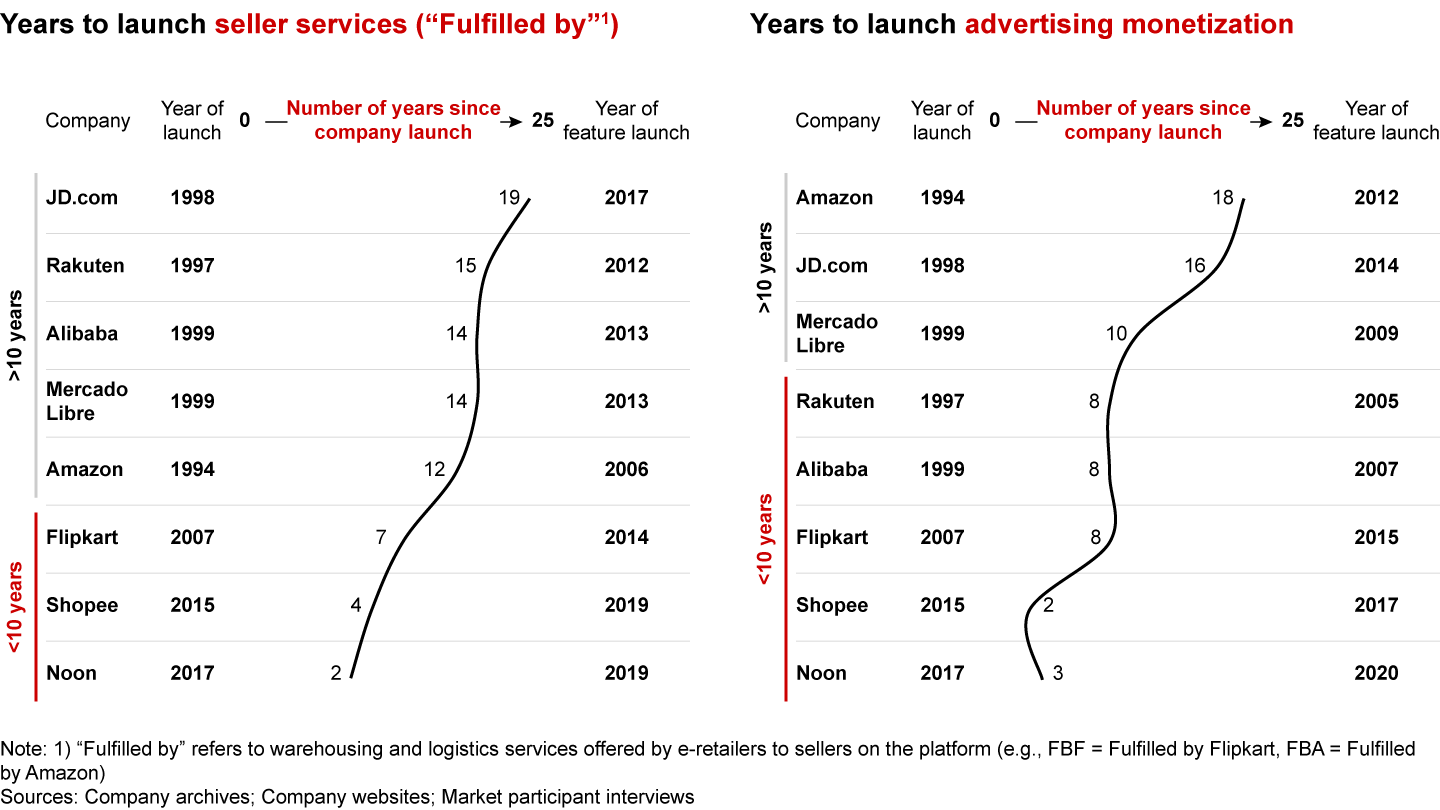
      The amount of time platforms take to launch monetization levers has dropped drastically over the last decade. Younger e-retailers such as Noon in the Middle East and Shopee in Southeast Asia spent only 2–4 years to launch levers like “fulfilled by x” and advertising, whereas mature platforms such as Amazon.com and JD.com took 16–18 years.

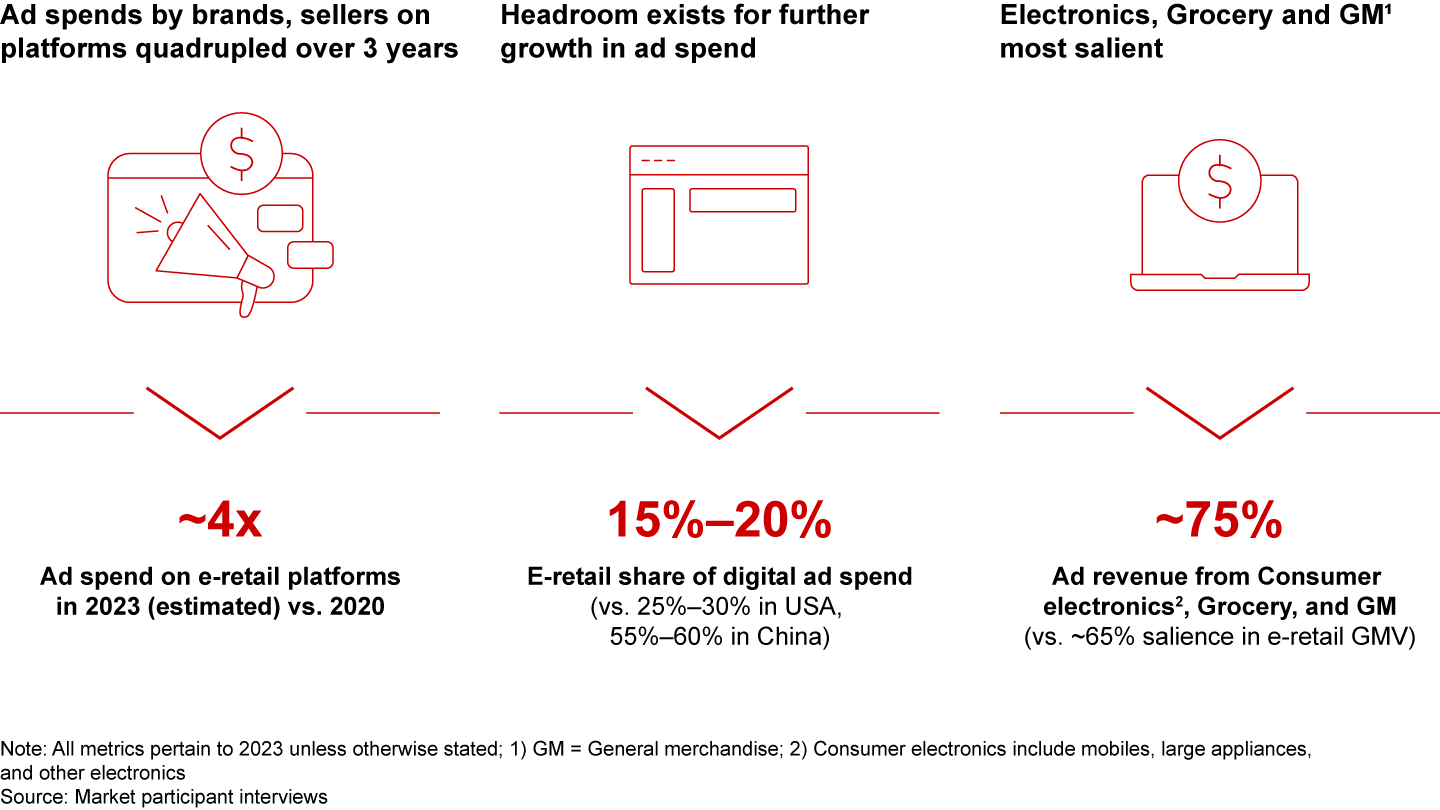
      In India, advertising-led monetization continues to be the most salient. Advertising spending by brands and sellers on e-retail platforms has grown four-fold in three years. Yet, there exists massive headroom. In India, e-retail only accounts for 15%–20% of digital ad spending, compared to 25%–30% in the US and 55%–60% in China. An increasing number of brands and sellers recognize the value of this medium.

      Generative AI: A transformative enabler

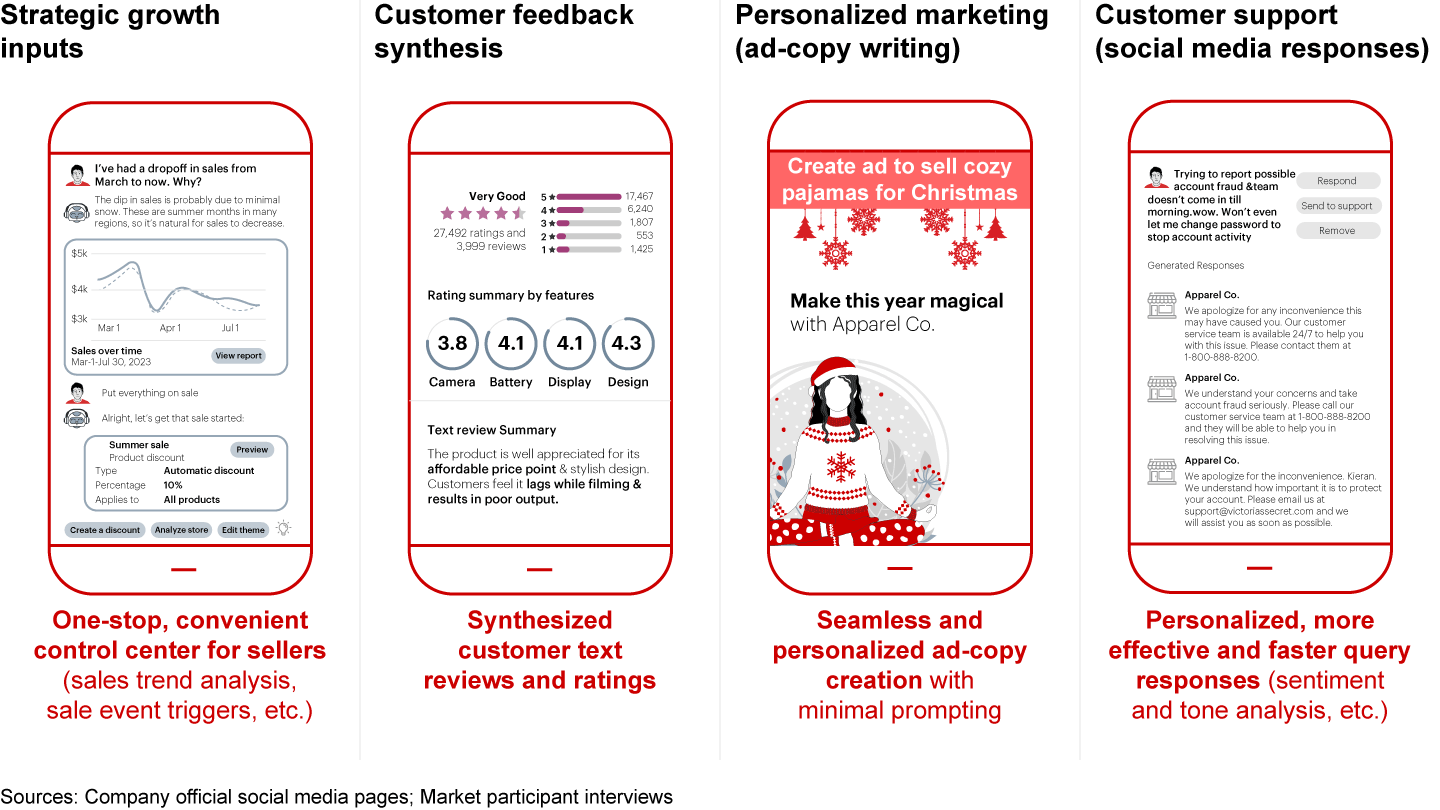
      Generative AI will fundamentally alter the e-retail experience. A series of high-impact use cases are emerging that will positively impact the shopper and seller journeys. E-retailers are looking at the technology to disrupt five areas: discovery, seller enablement, targeted marketing, customer support, and business efficiency.

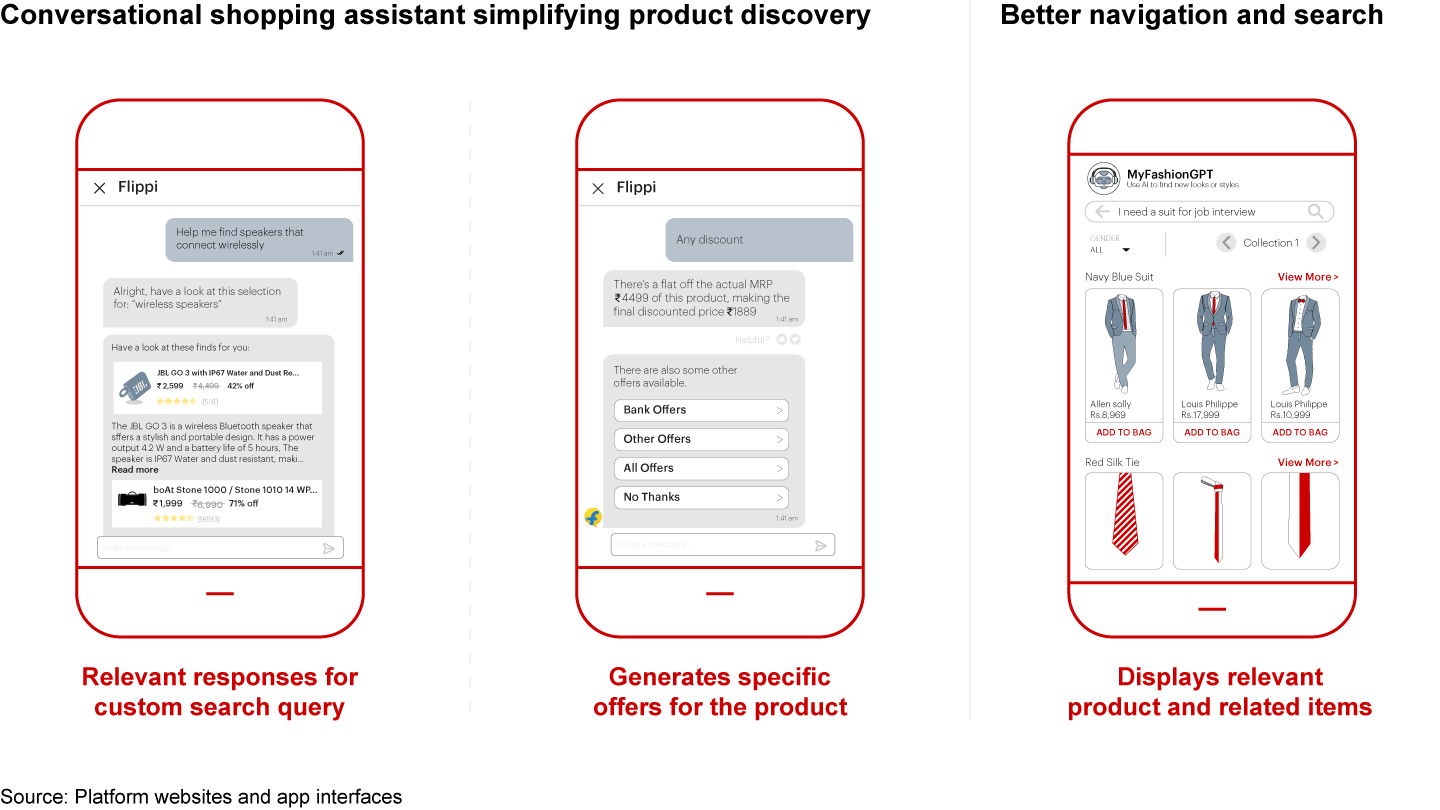
      Global e-retailers have adopted multiple use cases, from designing personalized advertising campaigns to using chatbots for faster customer service. Flipkart Group has been the torchbearer of generative AI applications in India’s e-retail space, with multiple live experiments. Most notable are end-to-end virtual shopping assistant “Flippi” by Flipkart and smart search tool “MyFashion GPT” by Myntra; these aim to make online shopping even more akin to the offline shopping experience.

      Future generative AI applications hold immense potential in e-retail and could transform the shopper journey entirely. The technology can have a high impact on multi-modal consumer journeys, powered by individual users’ personal preferences.

      E-retail has made an indelible impact on the country: it has democratized shopping, helped small and medium-sized business grow, and created scalable employment. The next chapter in India’s e-retail growth promises to be even more exhilarating, as the industry pushes boundaries and pioneers new frontiers.

      Solid foundations: India’s long-term growth fundamentals are robust

      Figure 1
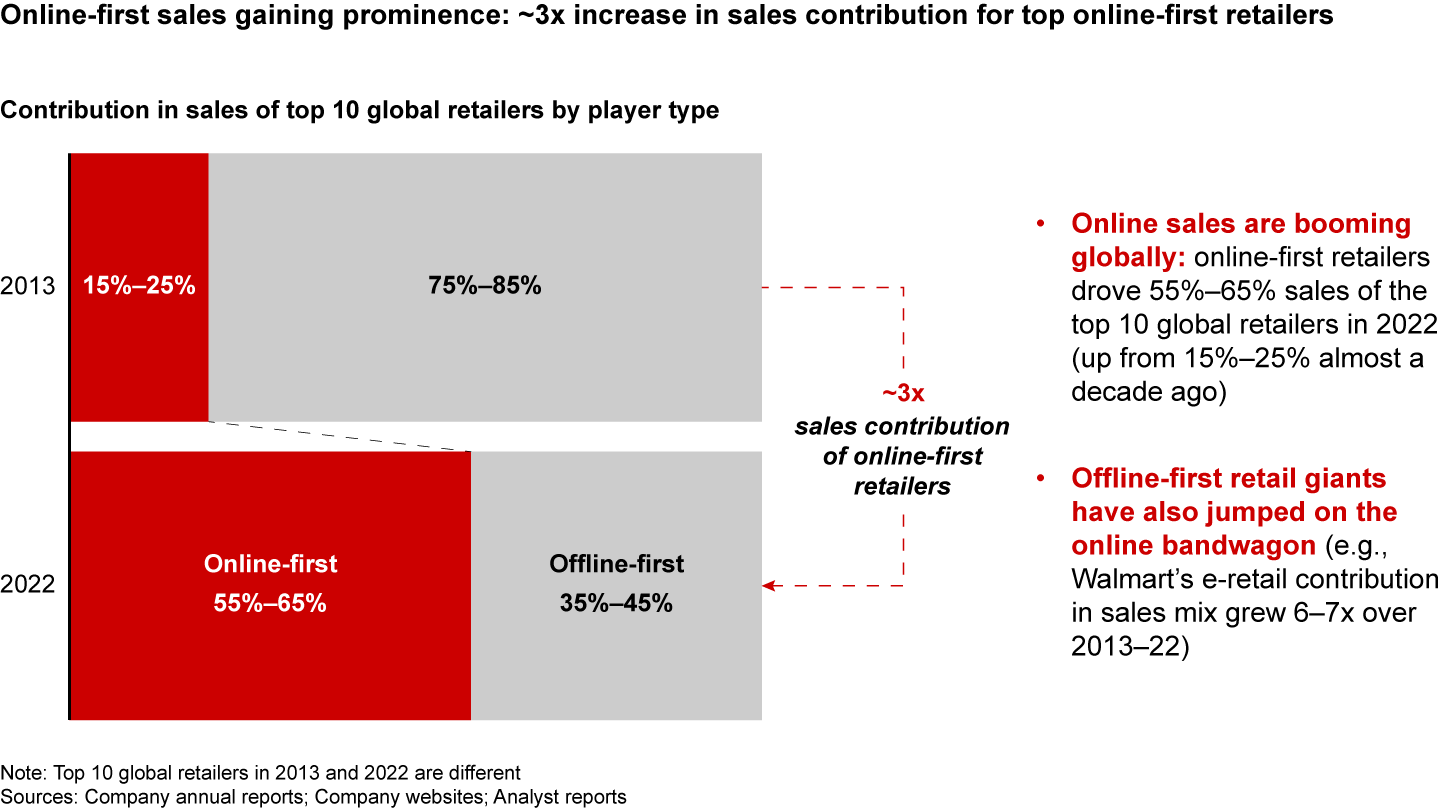
      Globally, e-retail boomed over the last decade
      Figure 2
      Covid-19 accelerated e-retail adoption with some markets sustaining uptick
      Figure 3
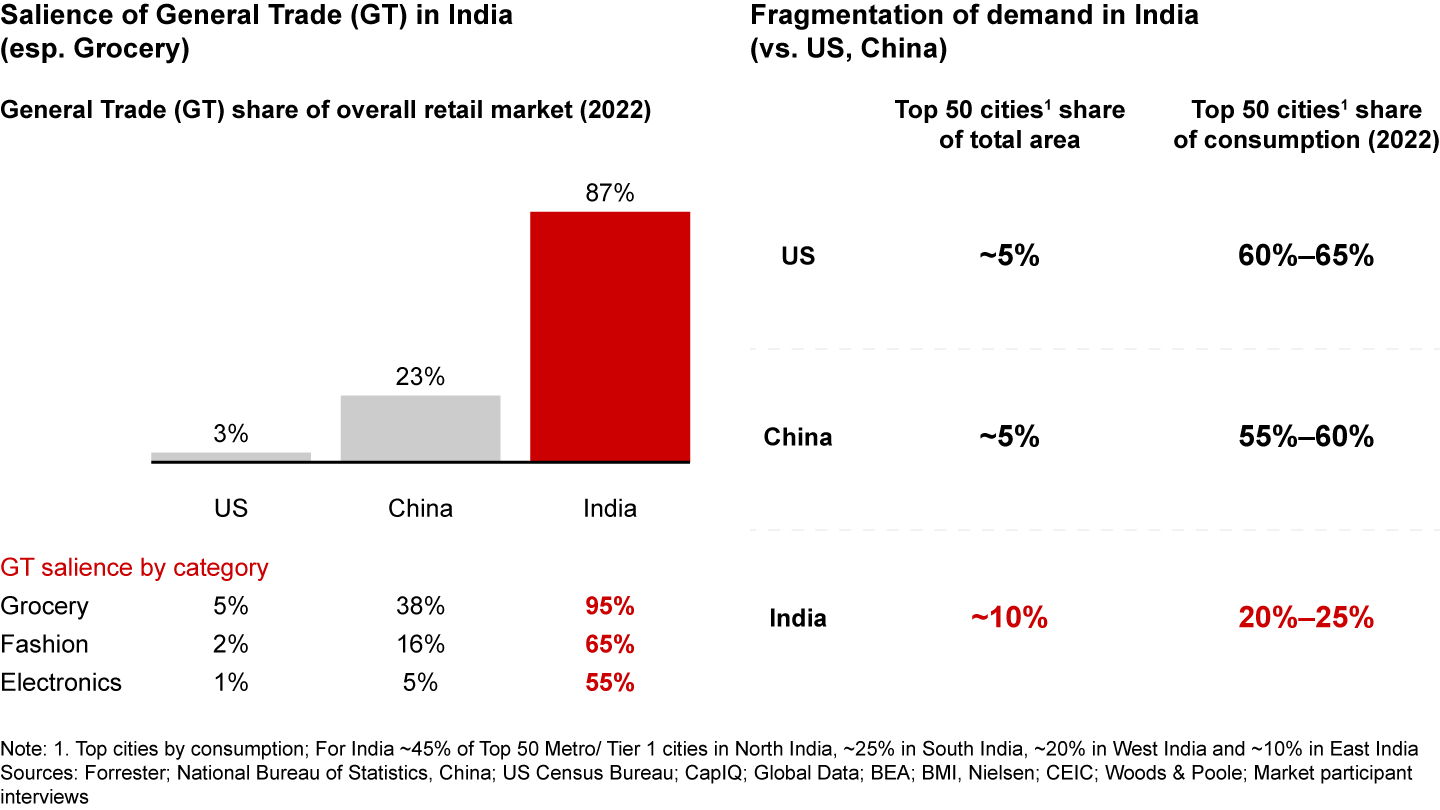
      In India, e-retailers are adapting to unique structural characteristics
      In India, e-retailers are adapting to unique structural characteristics
      In India, e-retailers are adapting to unique structural characteristics
      Figure 4
      Indian e-retail has grown $8–$12 billion annually since 2020 and is now at $57–$60 billion
      Indian e-retail has grown $8–$12 billion annually since 2020 and is now at $57–$60 billion
      Indian e-retail has grown $8–$12 billion annually since 2020 and is now at $57–$60 billion
      Figure 5
      E-retail comprises 5%–6% of total retail spend in India, indicating massive growth headroom
      Figure 6
      Three out of four trigger points for e-retail penetration have been met
      Figure 7
      Digital access is nearly pervasive in India, thanks to low data prices
      Digital access is nearly pervasive in India, thanks to low data prices
      Digital access is nearly pervasive in India, thanks to low data prices
      Figure 8
      Lower logistics costs helped e-retailers expand reach, deliver faster to customer
      Figure 9
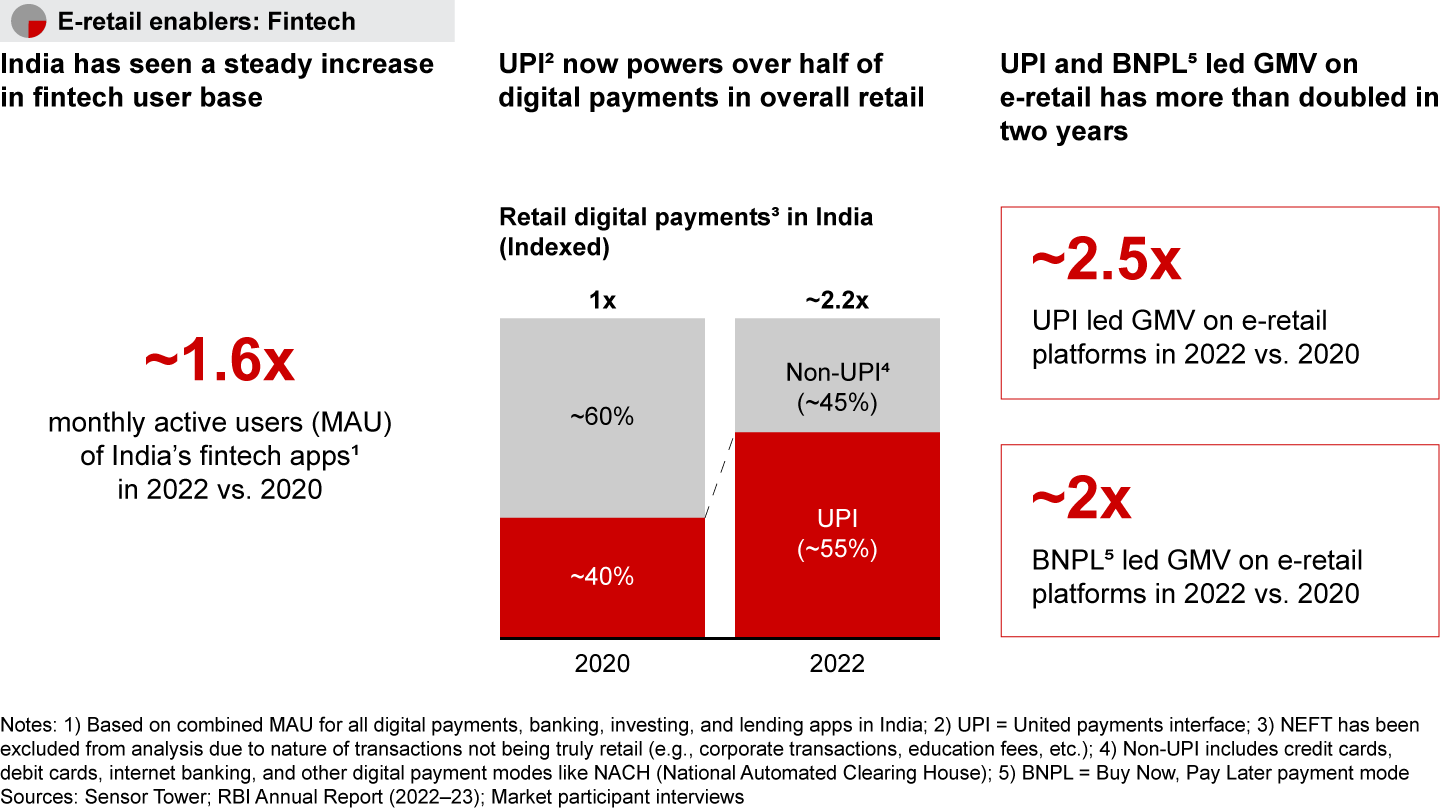
      Fintech growth enhanced affordability and convenience; UPI powers more than half of digital retail payments
      Figure 10
      Affluence will spark e-retail growth and shift consumption
      Affluence will spark e-retail growth and shift consumption
      Affluence will spark e-retail growth and shift consumption
      Figure 11
      As GDP per capita rises, it will unlock spending and boost e-retail growth

      An evolving landscape: Diverse consumer micro-segments served via a growing seller base

      Figure 12
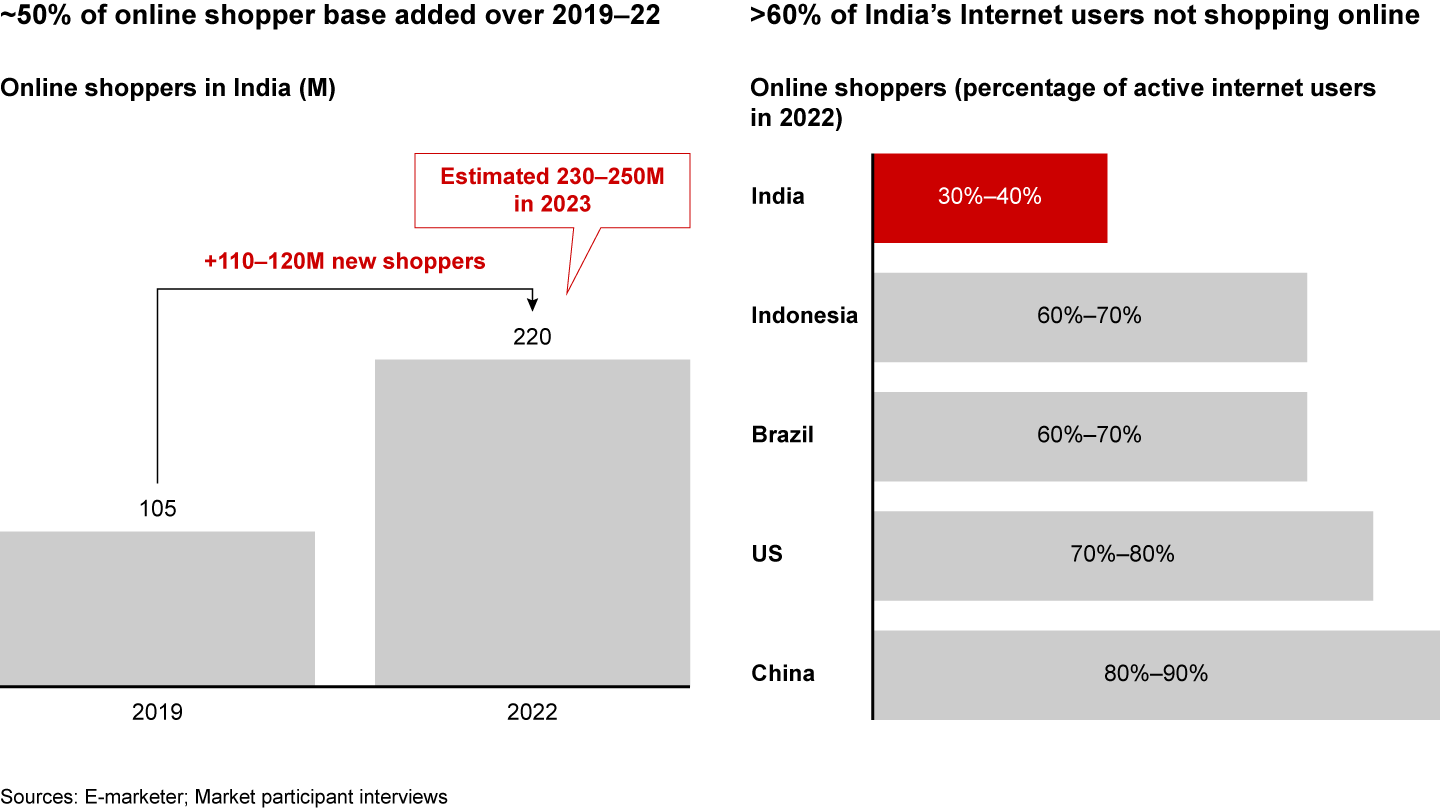
      India added ~120 million online shoppers over 2019–22 and still has room to grow
      Figure 13
      Distinct consumer micro-segments remain salient for e-retailers
      Figure 14
      Voice and vernacular offerings helped e-retailers onboard and engage new shoppers
      Voice and vernacular offerings helped e-retailers onboard and engage new shoppers
      Voice and vernacular offerings helped e-retailers onboard and engage new shoppers
      Figure 15
      E-retail spending per customer doubled over the past three years
      Figure 16
      The seller ecosystem is evolving to serve new and mature digital shoppers
      The seller ecosystem is evolving to serve new and mature digital shoppers
      The seller ecosystem is evolving to serve new and mature digital shoppers
      Figure 17
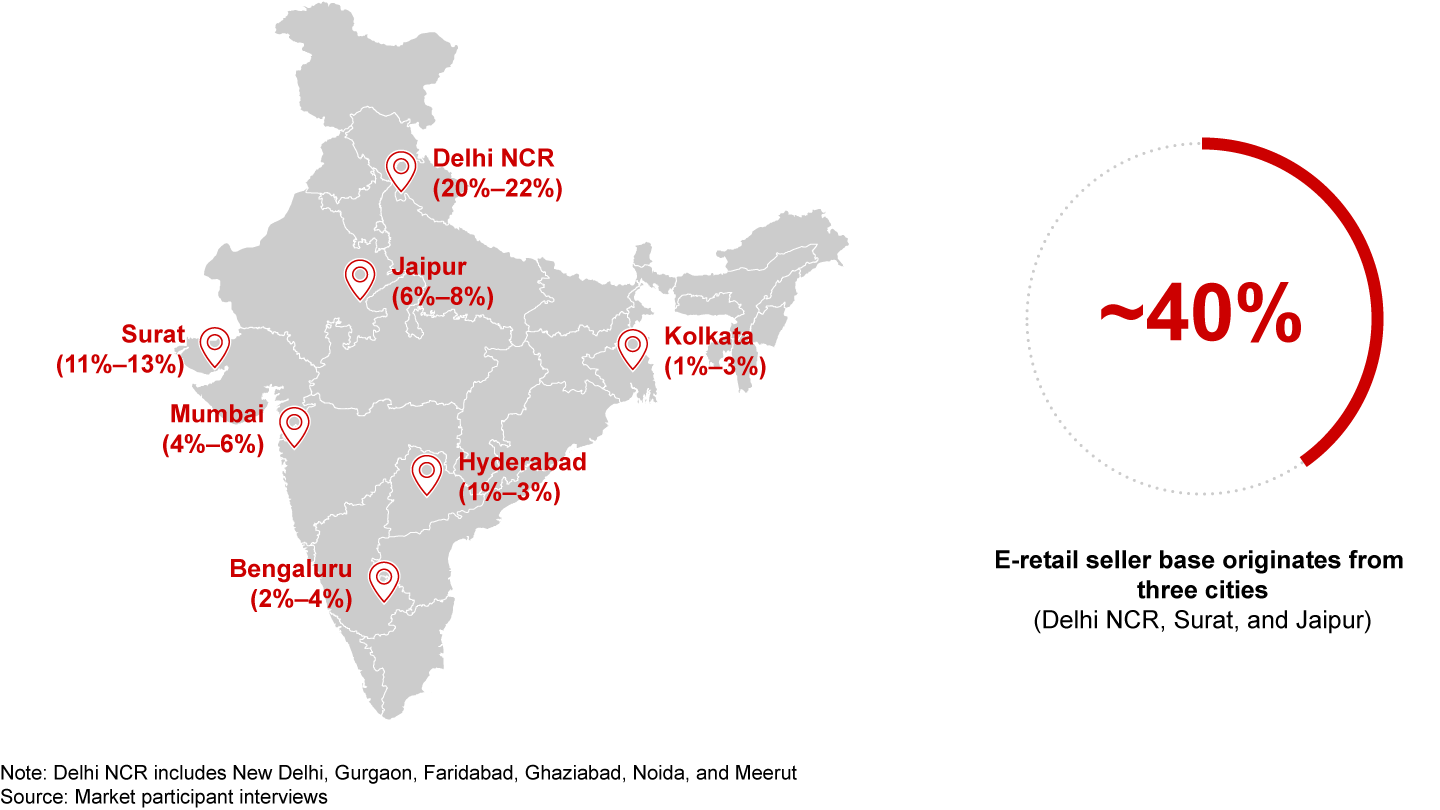
      In India, more than half of the seller base hails from seven cities, creating seller hubs
      Figure 18
      Insurgent online-first brands are growing fast
      Figure 19
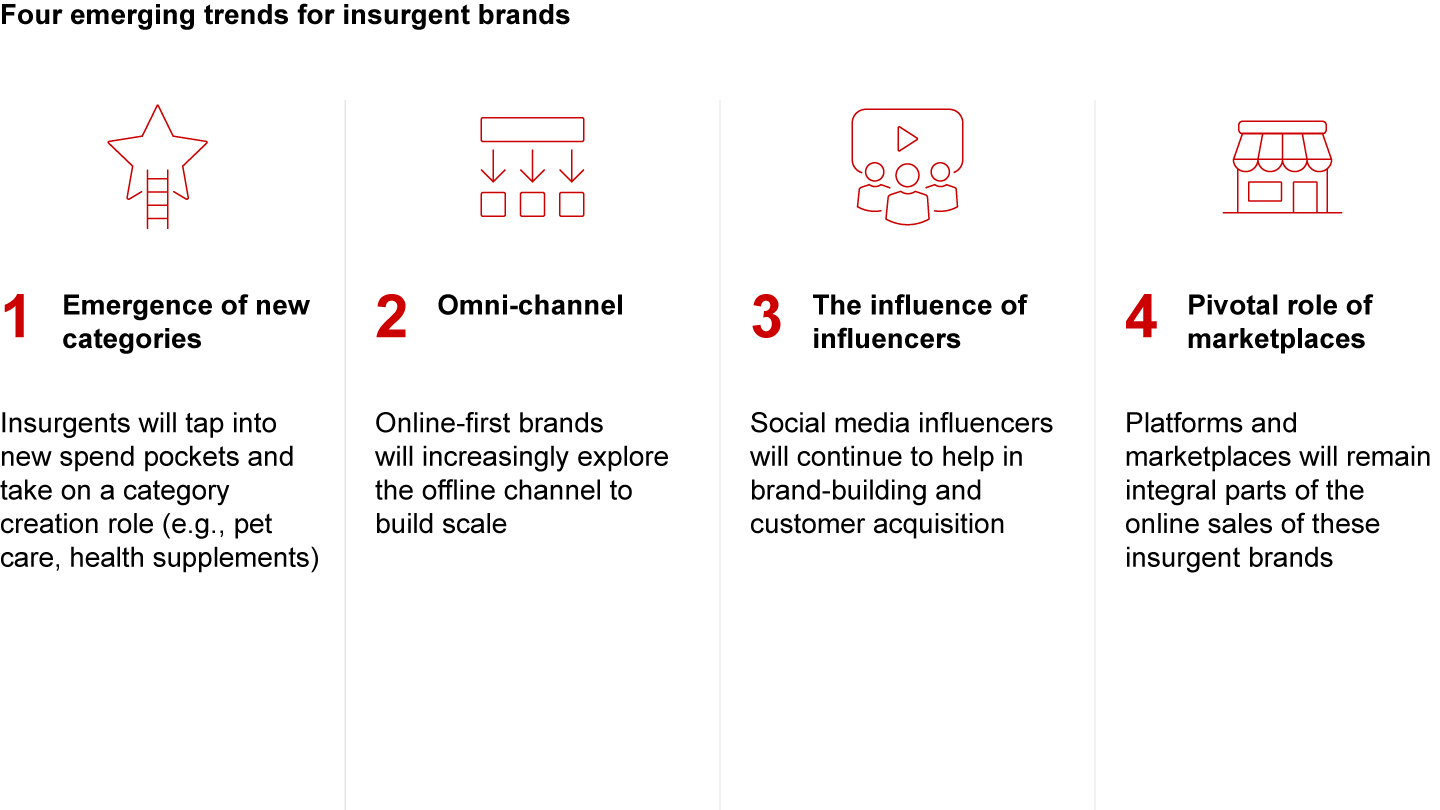
      Insurgent brands leverage e-retail for growth, even as they adopt omni-channel strategies

      Waves of change: New business models are emerging to serve consumer needs

      Figure 20
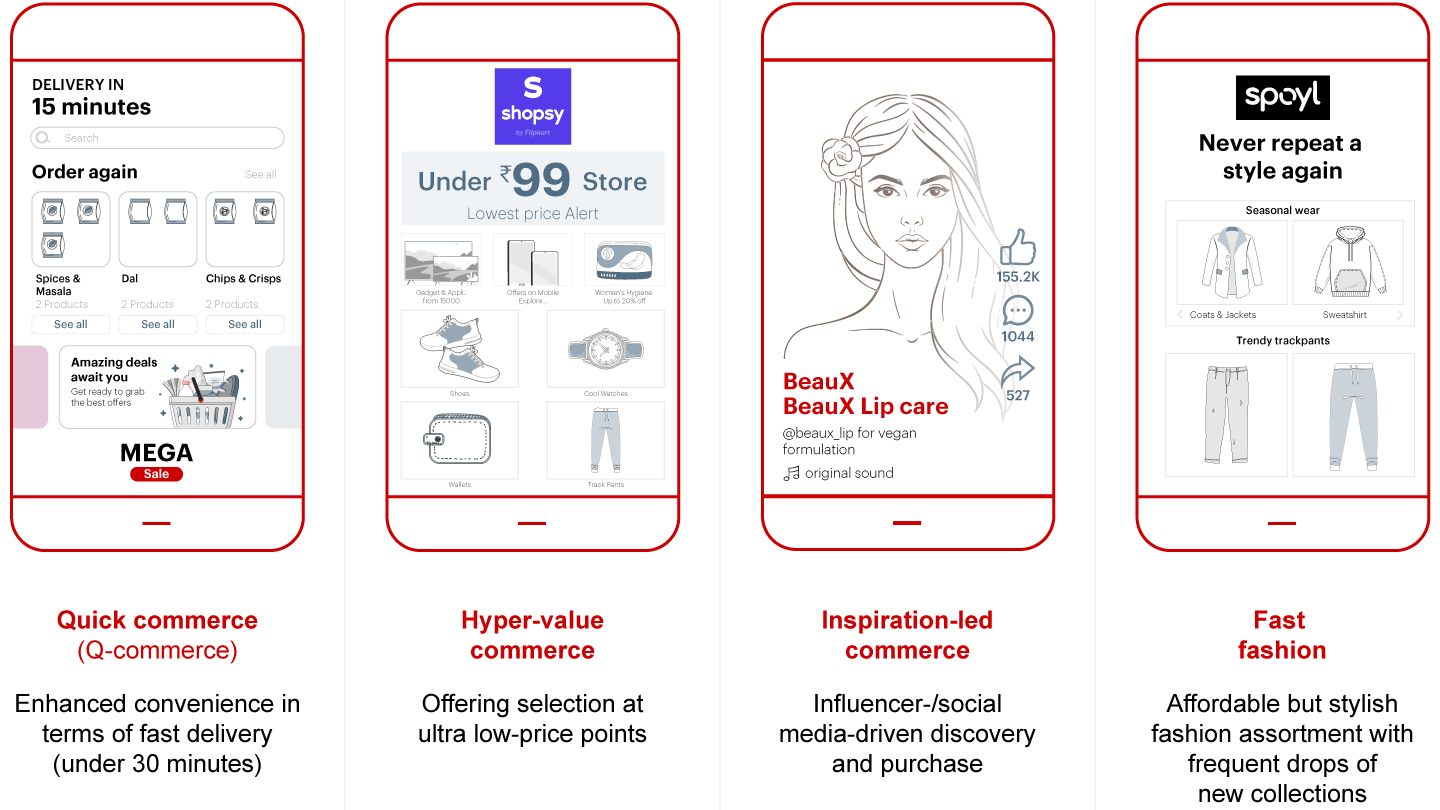
      Four new e-retail business models are emerging
      Four new e-retail business models are emerging
      Four new e-retail business models are emerging
      Figure 21
      Q-commerce will account for 40%–50% of e-grocery GMV in 2023
      Figure 22
      Hyper-value platforms have grown five-fold in India
      Figure 23
      Inspiration-led commerce has scaled globally, TikTok Shop being the best example
      Inspiration-led commerce has scaled globally, TikTok Shop being the best example
      Inspiration-led commerce has scaled globally, TikTok Shop being the best example
      Figure 24
      The live commerce market is nascent in India
      The live commerce market is nascent in India
      The live commerce market is nascent in India
      Figure 25
      Indian retailers are experimenting with fast fashion, which has surged globally

      Sustainable growth: Increased focus on profitability and monetization

      Figure 26
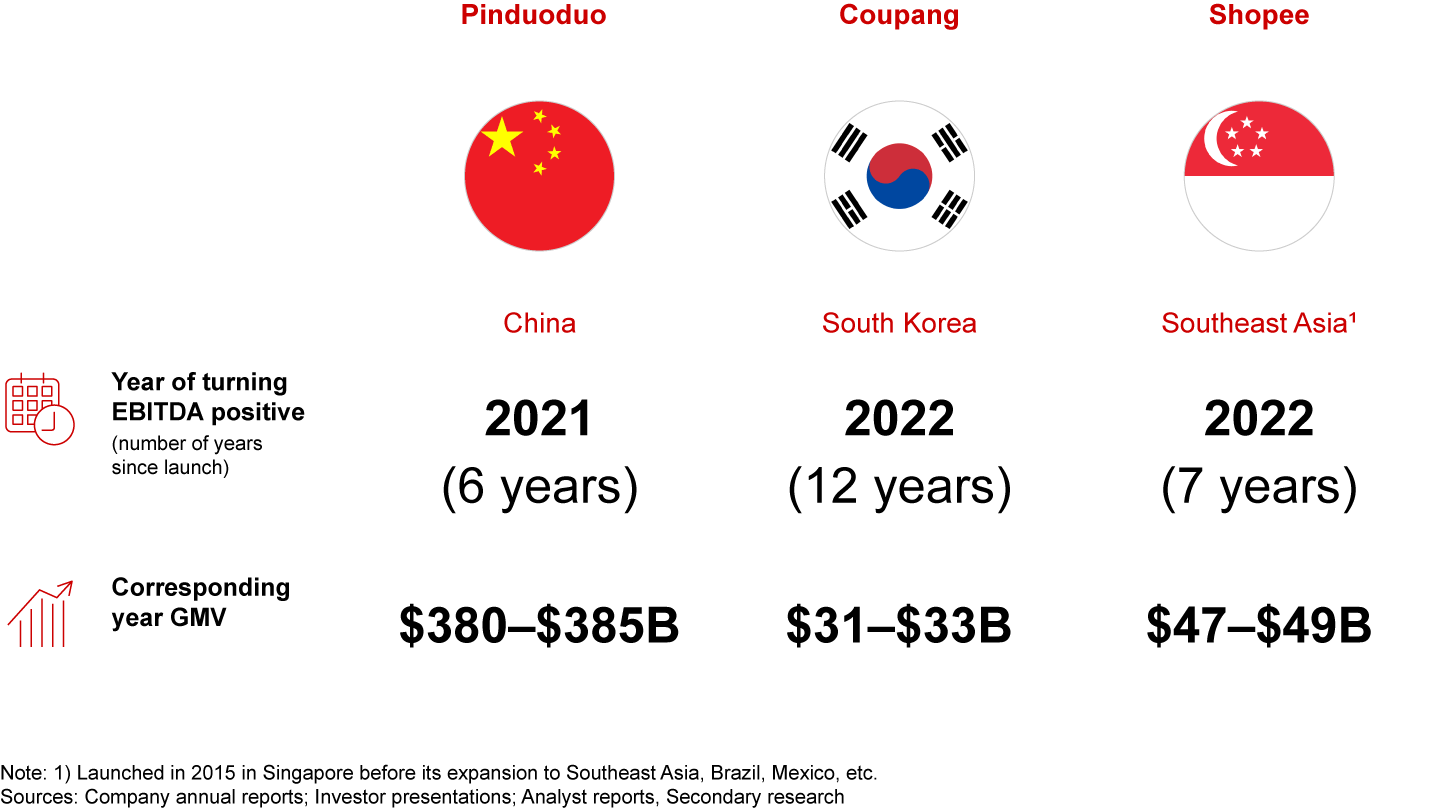
      Multiple e-retailers have become profitable at scale in the last decade
      Multiple e-retailers have become profitable at scale in the last decade
      Multiple e-retailers have become profitable at scale in the last decade
      Figure 27
      Industry leaders dramatically reduced the time it takes to launch monetization levers
      Figure 28
      Global e-retailers use multiple monetization levers, but advertising is the core lever in India
      Figure 29
      E-retail ad spending quadrupled, yet there’s still massive potential for growth

      Generative AI: A transformative enabler

      Figure 30
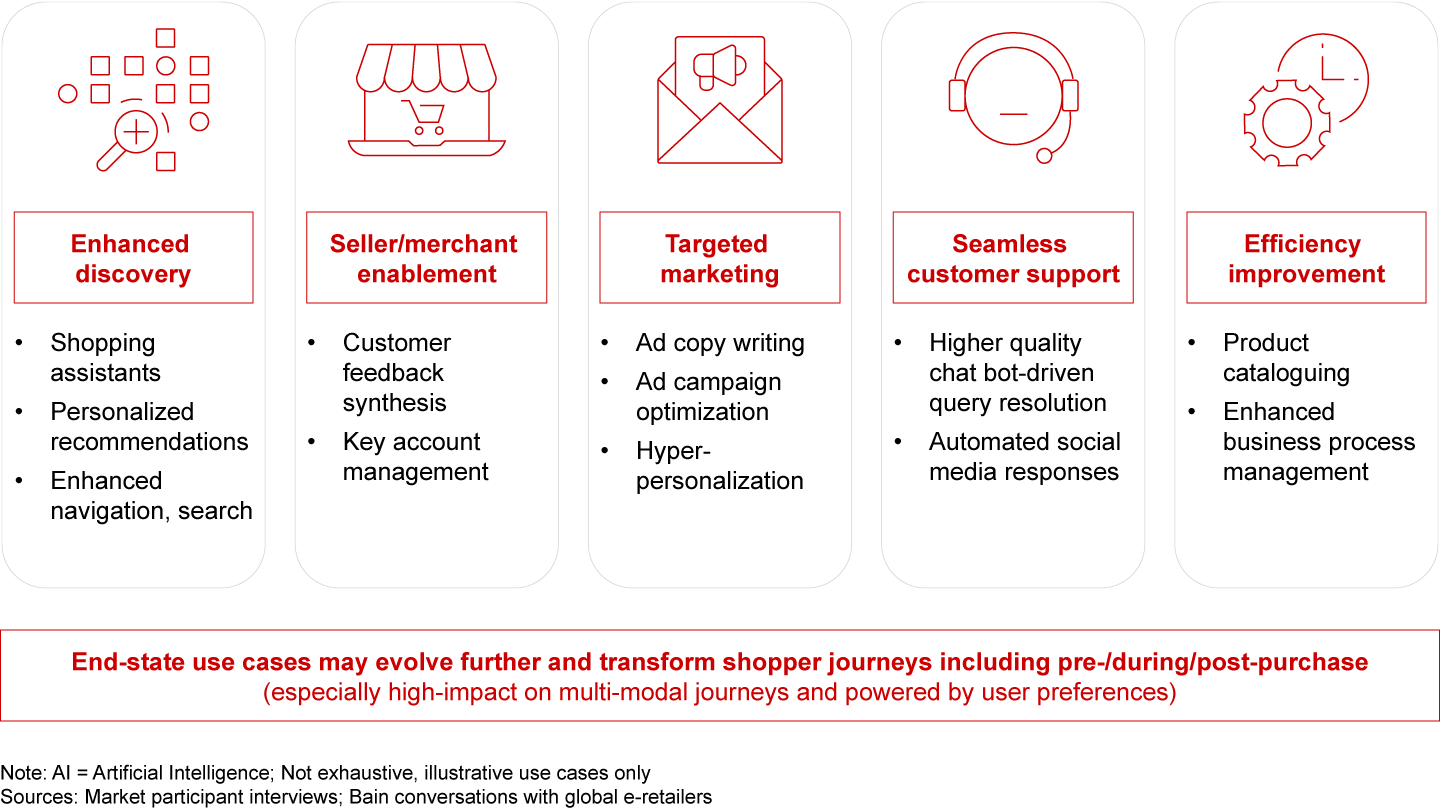
      Generative AI will fundamentally change e-retail
      Generative AI will fundamentally change e-retail
      Generative AI will fundamentally change e-retail
      Figure 31
      Certain e-commerce platforms have launched shopping assistants to make product discovery easier
      Figure 32
      Global e-retailers are building generative AI solutions for seller enablement


      • Acknowledgments

        The authors thank Sankalp Mehrotra (Vice President, Monetization), Sarah Gideon (Vice President, Corporate Affairs), Saptarshi Basu (Director, Analytics), Kanika Tiwari (Associate Director, Growth & Partnerships, Monetization), Sonia Parveen (Senior Manager, Corporate Affairs), Siddhant Singh (Senior Manager, Product Marketing, Ads), Mayank Thakur (Manager, Analytics), and other members of the Flipkart Analytics team; and Punit Parekh, Amandeep Gupta, Anubhav Garg, and Shubham Bansal from Bain & Company for their contributions to the insights in this report; and Bain & Company global partners for their expertise and input. The team would like to thank all the companies, executives, employees, and experts who shared their perspectives to develop this report, including Flipkart, for sharing valuable e-commerce insights.

      • About Flipkart

        The Flipkart Group is one of India’s leading digital commerce entities and includes group companies Flipkart, Myntra, Flipkart Wholesale, Flipkart Health+, and Cleartrip.

        Started in 2007, Flipkart has enabled millions of sellers, merchants, and small businesses to participate in India’s digital commerce revolution. With a registered customer base of more than 500 million, Flipkart’s marketplace offers over 150 million products across 80+ categories. Today, there are over 14 lakh sellers on the platform, including Shopsy sellers. With a focus on empowering and delighting every Indian by delivering value through technology and innovation, Flipkart has created lakhs of jobs in the ecosystem while empowering generations of entrepreneurs and MSMEs. Flipkart is known for pioneering services such as Cash on Delivery, No Cost EMI and easy returns, which are customer-centric innovations that have made online shopping more accessible and affordable for millions of Indians.

      著者
      • Headshot of Arpan Sheth
        Arpan Sheth
        パートナー, Washington, DC
      • Headshot of Shyam Unnikrishnan
        Shyam Unnikrishnan
        パートナー, Bengaluru
      • Headshot of Manan Bhasin
        Manan Bhasin
        パートナー, Mumbai
      • Headshot of Abhishek Raj
        Abhishek Raj
        Senior Director, Strategy and Operations, Mumbai
      関連業種
      • 小売
      • 消費財
      消費財
      US Consumer Health Update

      Upper-income earners seem to be adopting a defensive position but are not yet reporting negative spending intentions.

      詳細
      消費財
      Weight-Loss Drug Users Spend Less on Groceries, Fast Food

      GLP-1 drugs result in notable drops in food spending. By 2030, as many as one in four Americans may have tried them.

      詳細
      消費財
      Adapting to Channel Evolution: Opportunities and Challenges for FMCG

      China Shopper Report 2025, vol. 2

      詳細
      消費財
      How Tariffs Are Shaping US Consumer Behavior

      Pricing fears have eased a little, but more shoppers say they are accelerating purchases.

      詳細
      消費財
      Embracing the “Do-Say” Gap

      Three pragmatic questions that shift sustainability from ambition to action.

      詳細
      First published in 12月 2023
      Tags
      • 小売
      • 消費財

      クライアント支援事例

      サステイナビリティ、社会貢献 A Manufacturer Vows to “Push to Zero” Carbon Emissions

      ケーススタディを見る

      顧客戦略、マーケティング Designing a Sales Compensation Plan Based on an Unusual Metric

      ケーススタディを見る

      戦略 Focus on core delivers growth for retailer

      ケーススタディを見る

      お気軽にご連絡下さい

      私達は、グローバルに活躍する経営者が抱える最重要経営課題に対して、厳しい競争環境の中でも成長し続け、「結果」を出すために支援しています。

      ベインの知見。競争が激化するグローバルビジネス環境で、日々直面するであろう問題について論じている知見を毎月お届けします。

      *プライバシーポリシーの内容を確認し、合意しました。

      プライバシーポリシーをご確認頂き、合意頂けますようお願い致します。
      Bain & Company
      お問い合わせ Sustainability Accessibility Terms of use Privacy Cookie Policy Sitemap Log In

      © 1996-2026 Bain & Company, Inc.

      お問い合わせ

      How can we help you?

      • ビジネスについて
      • プレス報道について
      • 採用について
      全てのオフィス