
Skip to Content
  • オフィス

    オフィス

    北米・南米
    • Atlanta
    • Austin
    • Bogota
    • Boston
    • Buenos Aires
    • Chicago
    • Dallas
    • Denver
    • Houston
    • Los Angeles
    • Mexico City
    • Minneapolis
    • Monterrey
    • Montreal
    • New York
    • Rio de Janeiro
    • San Francisco
    • Santiago
    • São Paulo
    • Seattle
    • Silicon Valley
    • Toronto
    • Washington, DC
    ヨーロッパ・中東・アフリカ
    • Amsterdam
    • Athens
    • Berlin
    • Brussels
    • Copenhagen
    • Doha
    • Dubai
    • Dusseldorf
    • Frankfurt
    • Helsinki
    • Istanbul
    • Johannesburg
    • Kyiv
    • Lisbon
    • London
    • Madrid
    • Milan
    • Munich
    • Oslo
    • Paris
    • Riyadh
    • Rome
    • Stockholm
    • Vienna
    • Warsaw
    • Zurich
    アジア・オーストラリア
    • Bangkok
    • Beijing
    • Bengaluru
    • Brisbane
    • Ho Chi Minh City
    • Hong Kong
    • Jakarta
    • Kuala Lumpur
    • Manila
    • Melbourne
    • Mumbai
    • New Delhi
    • Perth
    • Shanghai
    • Singapore
    • Sydney
    • Tokyo
    全てのオフィス
  • アルムナイ
  • メディア
  • お問い合わせ
  • 東京オフィス
  • Japan | 日本語

    地域と言語を選択

    グローバル
    • Global (English)
    北米・南米
    • Brazil (Português)
    • Argentina (Español)
    • Canada (Français)
    • Chile (Español)
    • Colombia (Español)
    ヨーロッパ・中東・アフリカ
    • France (Français)
    • DACH Region (Deutsch)
    • Italy (Italiano)
    • Spain (Español)
    • Greece (Elliniká)
    アジア・オーストラリア
    • China (中文版)
    • Korea (한국어)
    • Japan (日本語)
  • Saved items (0)
    Saved items (0)

    You have no saved items.

    後で閲読、共有できるようにするためにブックマークしてください

    Explore Bain Insights
  • 業界別プラクティス
    メインメニュー

    業界別プラクティス

    • 航空宇宙、防衛、政府関連
    • 農業
    • 化学製品
    • インフラ、建設
    • 消費財
    • 金融サービス
    • ヘルスケア
    • 産業機械、設備
    • メディア、エンターテインメント
    • 金属
    • 採掘・鉱業
    • 石油、ガス
    • 紙、パッケージ
    • プライベートエクイティ
    • 公共、社会セクター
    • 小売
    • テクノロジー
    • 通信
    • 交通
    • 観光産業
    • 公益事業、再生可能エネルギー
  • 機能別プラクティス
    メインメニュー

    機能別プラクティス

    • カスタマー・エクスペリエンス
    • サステイナビリティ、 社会貢献
    • Innovation
    • 企業買収、合併 (M&A)
    • オペレーション
    • 組織
    • プライベートエクイティ
    • マーケティング・営業
    • 戦略
    • アドバンスド・アナリティクス
    • Technology
    • フルポテンシャル・トランスフォーメーション
  • Digital
  • 知見/レポート
  • ベイン・アンド・カンパニーについて
    メインメニュー

    ベイン・アンド・カンパニーについて

    • ベインの信条
    • 活動内容
    • 社員とリーダーシップ
    • プレス・メディア情報
    • クライアントの結果
    • 受賞歴
    • パートナーシップを結んでいる団体
    Further: Our global responsibility
    • ダイバーシティ
    • 社会貢献
    • サステイナビリティへの取り組み
    • 世界経済フォーラム(WEF)
    Learn more about Further
  • キャリア
    メインメニュー

    キャリア

    • ベインで働く
      キャリア
      ベインで働く
      • Find Your Place
      • ベインで活躍する機会
      • ベインのチーム体制
      • 学生向けページ
      • インターンシップ
      • 採用イベント
    • ベインでの体験
      キャリア
      ベインでの体験
      • Blog: Inside Bain
      • キャリアストーリー
      • 社員紹介
      • Where We Work
      • 成長を後押しするサポート体制
      • アフィニティ・グループ
      • 福利厚生
    • Impact Stories
    • 採用情報
      キャリア
      採用情報
      • 採用プロセス
      • 面接内容
    FIND JOBS
  • オフィス
    メインメニュー

    オフィス

    • 北米・南米
      オフィス
      北米・南米
      • Atlanta
      • Austin
      • Bogota
      • Boston
      • Buenos Aires
      • Chicago
      • Dallas
      • Denver
      • Houston
      • Los Angeles
      • Mexico City
      • Minneapolis
      • Monterrey
      • Montreal
      • New York
      • Rio de Janeiro
      • San Francisco
      • Santiago
      • São Paulo
      • Seattle
      • Silicon Valley
      • Toronto
      • Washington, DC
    • ヨーロッパ・中東・アフリカ
      オフィス
      ヨーロッパ・中東・アフリカ
      • Amsterdam
      • Athens
      • Berlin
      • Brussels
      • Copenhagen
      • Doha
      • Dubai
      • Dusseldorf
      • Frankfurt
      • Helsinki
      • Istanbul
      • Johannesburg
      • Kyiv
      • Lisbon
      • London
      • Madrid
      • Milan
      • Munich
      • Oslo
      • Paris
      • Riyadh
      • Rome
      • Stockholm
      • Vienna
      • Warsaw
      • Zurich
    • アジア・オーストラリア
      オフィス
      アジア・オーストラリア
      • Bangkok
      • Beijing
      • Bengaluru
      • Brisbane
      • Ho Chi Minh City
      • Hong Kong
      • Jakarta
      • Kuala Lumpur
      • Manila
      • Melbourne
      • Mumbai
      • New Delhi
      • Perth
      • Shanghai
      • Singapore
      • Sydney
      • Tokyo
    全てのオフィス
  • アルムナイ
  • メディア
  • お問い合わせ
  • 東京オフィス
  • Japan | 日本語
    メインメニュー

    地域と言語を選択

    • グローバル
      地域と言語を選択
      グローバル
      • Global (English)
    • 北米・南米
      地域と言語を選択
      北米・南米
      • Brazil (Português)
      • Argentina (Español)
      • Canada (Français)
      • Chile (Español)
      • Colombia (Español)
    • ヨーロッパ・中東・アフリカ
      地域と言語を選択
      ヨーロッパ・中東・アフリカ
      • France (Français)
      • DACH Region (Deutsch)
      • Italy (Italiano)
      • Spain (Español)
      • Greece (Elliniká)
    • アジア・オーストラリア
      地域と言語を選択
      アジア・オーストラリア
      • China (中文版)
      • Korea (한국어)
      • Japan (日本語)
  • Saved items  (0)
    メインメニュー
    Saved items (0)

    You have no saved items.

    後で閲読、共有できるようにするためにブックマークしてください

    Explore Bain Insights
  • 業界別プラクティス
    • 業界別プラクティス

      • 航空宇宙、防衛、政府関連
      • 農業
      • 化学製品
      • インフラ、建設
      • 消費財
      • 金融サービス
      • ヘルスケア
      • 産業機械、設備
      • メディア、エンターテインメント
      • 金属
      • 採掘・鉱業
      • 石油、ガス
      • 紙、パッケージ
      • プライベートエクイティ
      • 公共、社会セクター
      • 小売
      • テクノロジー
      • 通信
      • 交通
      • 観光産業
      • 公益事業、再生可能エネルギー
  • 機能別プラクティス
    • 機能別プラクティス

      • カスタマー・エクスペリエンス
      • サステイナビリティ、 社会貢献
      • Innovation
      • 企業買収、合併 (M&A)
      • オペレーション
      • 組織
      • プライベートエクイティ
      • マーケティング・営業
      • 戦略
      • アドバンスド・アナリティクス
      • Technology
      • フルポテンシャル・トランスフォーメーション
  • Digital
  • 知見/レポート
  • ベイン・アンド・カンパニーについて
    • ベイン・アンド・カンパニーについて

      • ベインの信条
      • 活動内容
      • 社員とリーダーシップ
      • プレス・メディア情報
      • クライアントの結果
      • 受賞歴
      • パートナーシップを結んでいる団体
      Further: Our global responsibility
      • ダイバーシティ
      • 社会貢献
      • サステイナビリティへの取り組み
      • 世界経済フォーラム(WEF)
      Learn more about Further
  • キャリア
    人気検索キーワード
    • デジタル
    • 戦略
    前回の検索
      最近訪れたページ

      Content added to saved items

      Saved items (0)

      Removed from saved items

      Saved items (0)

      The Visionary CEO’s Guide to Sustainability

      How Sustainability Is Creating B2B Growth

      How Sustainability Is Creating B2B Growth

      Our survey of B2B buyers and sellers finds growth leaders using sustainability to create commercial value while laggards focus on compliance.

      著者:Torsten Lichtenau, Yelena Ageyeva-Furman, Mattias C. Karlsson, Emily Kasavana, David Schottland, and Jan Budde

      • min read
      }

      レポート

      How Sustainability Is Creating B2B Growth
      en
      概要
      • Even as ESG backlash dominates headlines, sustainability is having a significant positive business impact on 90% of B2B growth leaders.
      • Half of B2B customers already give more business to sustainable suppliers, and that will increase to two-thirds within three years.
      • Leaders leverage sustainability to differentiate their offerings, future-proof their business, and grow the top line.
      • Leaders are significantly more likely to embed sustainability into customer conversations, sales plays, and salesforce incentives.

      This article is part of Bain's 2025 CEO Sustainability Guide

      EXPLORE THE REPORT

      There have been plenty of pessimistic headlines about sustainability this past year: sustainability dropping on the CEO agenda; governments pulling back on subsidies; public backlash against aspects of environmental, social, and corporate governance (ESG). One could expect this talk to be reflected in action, especially by frontline salespeople, and for companies to postpone, or at least reduce, their efforts to sell sustainable products.

      Quite the contrary. Our survey of more than 750 business-to-business (B2B) automotive, packaging, chemicals, machinery, metals, and construction and building products companies operating around the world finds sustainability firmly on the commercial agenda. The reason for this “do-say gap” for companies continuing to act even as they speak less about sustainability is the business value they get from it.

      Frontline salespeople—those with direct exposure to the performance of sustainable products—continue to prioritize sustainability. This is particularly true among companies with year-over-year revenue growth greater than that of their peers. By several criteria, these leaders are much better at leveraging sustainable products to drive the top line than laggards, companies with revenue growth less than that of their peers.

      Ninety percent of leaders expect sustainability to have a positive impact on their business over the next three years compared with 60% of laggards (see Figure 1). Leaders in all regions, even those where governments have stepped back, see sustainability as a catalyst for positive business impact. The gap between leaders and laggards is most pronounced in the Americas and India while the difference is smaller in Europe, where there is regulatory support.

      Figure 1
      Across regions, revenue growth leaders see sustainability boosting their business
      visualization
      Source: Bain B2B Customer Survey, April 2025 (N=753)

      Nevertheless, misperceptions about sustainability continue to hold companies back. Debunking these myths is critical to optimizing B2B sales organizations.

      Myth: Sustainability is flatlining.

      Reality: Companies are increasingly pragmatic, and sustainability has tangible commercial momentum.

      Revenue growth leaders prioritize selling sustainable products because their buyers reward them for it. Among customers surveyed, half already buy more from their more sustainable suppliers, and nearly 70% plan to accelerate those purchases over the next three years (see Figure 2). While the number of companies de-listing suppliers that don’t meet sustainability criteria has decreased since our last survey, half expect to stop working with those suppliers over the next three years. Buyers say that by 2028, sustainability will be the second-most important purchasing criterion—just after quality.

      While buyers want sustainability, their focus has shifted. They are now more concerned with the sustainability of a supplier’s product offering—that is, the products and services they are buying—than the sustainability of a supplier’s operations. Over the next three years, customers we surveyed expect the “sustainability of offers” to move from their fourth purchasing criteria to their second, leapfrogging “price” and “service levels” (“quality” will continue to be No. 1). While they expect to be increasingly focused on the sustainability of products and services they are buying, their focus on the sustainability of suppliers’ operations is expected to hold steady at No. 5—just ahead of “reputation, scale, and resilience.”

      It's a sign that companies are becoming more pragmatic, focusing on how sustainability directly influences their business and can be a source of differentiation with their own customers. As this continues, sellers need to adjust and prepare for a meaningful volume shift toward more sustainable offerings.

      Figure 2
      Companies are doing more business with sustainable suppliers and will leave suppliers that don’t meet their sustainability criteria
      visualization
      Source: Bain B2B Customer Survey, April 2025 (n=445)

      Myth: Sustainability is a cost center.

      Reality: Companies with the strongest revenue growth are also the most successful at selling through sustainability.

      Leading companies see sustainability not as philanthropy or compliance but as good business. While revenue laggards surveyed still see sustainability as a compliance cost, 60% to 70% of high-growth companies expect sustainable offerings to help them differentiate, future-proof their business, and grow their revenue (see Figure 3).

      Growth leaders are already benefiting from the shift in customer purchasing priorities, with strong revenue growth contributions from sustainable products across B2B sectors and the potential to capture additional market share as the importance of sustainable offerings continues to rise.

      Price premiums are another source of revenue growth. More than 80% of B2B buyers report paying a premium in their most recent purchase of a sustainable product. One in three is willing to pay more than 5% extra today, and more than 60% say that they will be willing to pay that in three years.

      Figure 3
      Leading suppliers use sustainability to differentiate and grow, laggards to comply
      visualization
      visualization
      Source: Bain B2B Customer Survey, April 2025 (n=433)

      Myth: Selling sustainable products is just like selling anything else.

      Reality: It demands a different mindset, skills, and tools.

      Effectively selling sustainability starts with better understanding what customers truly value, yet many sellers struggle with this. Only 34% believe that they have significant knowledge of their customers’ sustainability needs.

      Sellers also misunderstand their customers’ sustainability priorities. They overestimate how much customers care about safety, and they underestimate the importance to customers of reducing Scope 3 emissions—that is, those emissions directly embedded in the products they buy (see Figure 4).

      Furthermore, sellers too often have a poor grasp of the sustainability benefits of their own offerings: 59% of suppliers believe that their salesforce does not understand how their sustainable products outperform conventional options in terms of carbon and associated economic benefits for customers.

      Figure 4
      Suppliers tend to misunderstand their customers’ sustainability priorities
      visualization
      Source: Bain B2B Customer Survey, April 2025 (left-hand chart n=445; right-hand chart n=433)

      Buyers notice. Only half of them say that the products they are pitched adequately support their sustainability goals. Sometimes, that’s a product issue; other times, sales teams are targeting the wrong customers. After struggling to sell its sustainable material, a chemicals company broadened its prospecting, adding more than 100 relevant segments outside its traditional market. Using AI, the company developed a way to identify high-potential customers in high-potential segments with characteristics indicating that they might pay a premium for sustainability. The company then customized its messaging and sales plays for those specific targets.

      Growth leaders outperform laggards on a number of critical sales capabilities. These include talent, marketing, and incentives that equip their teams to lead consultative, sustainability-focused conversations (see Figure 5).

      Figure 5
      Leading companies invest in the right sales capabilities
      visualization
      Source: Bain B2B Customer Survey, April 2025 (n=433)

      What should executives do now?

      Clear best practices are emerging for turning sustainability into commercial value. Growth leaders are quickly mastering how to weave sustainability into their sales approach, and it’s giving them a meaningful competitive edge (see Figure 6).

      Figure 6
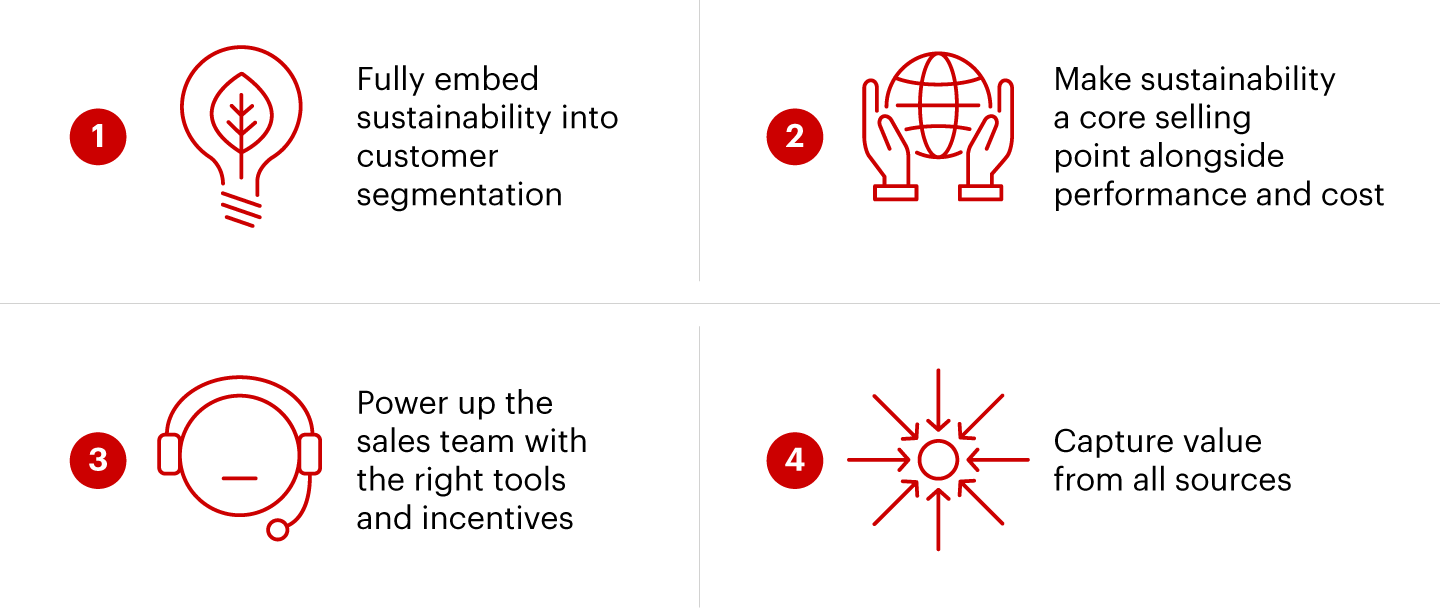
      Companies should focus on building four capabilities
      出所 Bain & Company

      Companies that build their sustainability toolkit to grow will be well positioned to capture the upside. They are focusing on building four capabilities.

      Fully embed sustainability into customer segmentation. At a minimum, every company must understand its customers’ sustainability priorities, targets, and progress. This includes their carbon and circularity ambitions as well as other business-specific goals, such as biodiversity and water-use reduction. These priorities must then be combined with traditional customer segmentation to create clear customer priorities.

      Leaders go further, pulling together external and internal data on customers’ sustainability priorities and performance—including how their customers market their own sustainable offerings—then applying AI analysis to identify critical segments and building dynamic customer profiles that boost commercial success.

      Make sustainability a core selling point alongside performance and cost. At a minimum, spell out how your sustainable offerings meet customers’ needs better than traditional offerings would.

      Leaders articulate a clear business case that quantifies the sustainability benefits of their products with the same rigor as their performance and cost. This includes illustrating how their products help customers achieve their own sustainable goals, such as meeting regulations, enhancing their consumer claims, and achieving their own corporate targets.

      Power up the sales team with the right tools and incentives. At a minimum, educate your teams on how to start the sustainability conversation with customers, on what your sustainable offerings are, and on how to articulate the sustainability key performance indicators of your products.

      Leaders deploy AI and digital tools to train the salesforce on sustainability basics and company offerings, on how to build differentiated sales plays for customers with high sustainability commitments, and generally make it easy for the salesforce to articulate the business case for customers.

      Capture value from all sources. At a minimum, companies should use sustainable offerings to build better customer relations, improve customer retention, and preserve their price point.

      Leaders, however, capture all sources of value. They use sustainability to gain share vs. the competition, sell to more attractive customer segments, and earn a price premium for a superior product. Their prices reflect the full value their products offer customers—for example, the customer’s internal carbon price.

      As sustainability is integrated into the way buying decisions are made, commercial models must evolve. Leading companies recognize this shift. They treat sustainability not just as a compliance imperative but as a lever for growth and differentiation. They’re investing with intent—in data, capabilities, and commercial talent—to compete where it counts. By putting sustainability at the heart of their go-to-market strategy, they’re positioning themselves to lead in a fundamentally changing marketplace.

      Read the Next Section

      AI and Sustainability: Shaping What’s Next

      Read our 2025 CEO Sustainability Guide

      EXPORE THE REPORT DOWNLOAD THE PDF

      More from the report

      • Embracing the “Do-Say” Gap

      • What’s Still Stopping Consumers from Living Sustainably?

      • How Sustainability Is Creating B2B Growth

      • AI and Sustainability: Shaping What’s Next

      • The CEO Playbook for Climate Resilience

      • Decarbonization That Works: Five Key Actions in Private Equity

      • Why Leaders Must Focus on Carbon Removal Markets Now

      • Circular Business Models Unlock New Profit and Growth

      • Can Food Companies Unwrap a New Strategy?

      著者
      • Headshot of Torsten Lichtenau
        Torsten Lichtenau
        パートナー, London
      • Headshot of Yelena Ageyeva-Furman
        Yelena Ageyeva-Furman
        パートナー, London
      • Headshot of Mattias C. Karlsson
        Mattias C. Karlsson
        パートナー, Stockholm
      • Headshot of Emily Kasavana
        Emily Kasavana
        パートナー, Denver
      • Headshot of David Schottland
        David Schottland
        パートナー, New York
      • Headshot of Jan Budde
        Jan Budde
        Practice Senior Manager, Frankfurt
      関連業種
      • Metals
      • インフラ、建設、建築
      • エネルギー、天然資源
      • 化学製品
      • 産業機械
      • 産業財、サービス
      • 自動車
      • 林産品(林業)、紙、パッケージ
      関連するコンサルティングサービス
      • Customer Experience
      • サステイナビリティ、社会貢献
      エネルギー、天然資源
      Top Performers Unlock More Revenue from Sustainability

      Across global industries, leaders are capturing more revenue from sustainable products—and some expect the momentum to build.

      詳細
      Customer Experience
      What’s Still Stopping Consumers from Living Sustainably?

      Overloaded consumers want to act sustainably, but underwhelming solutions leave them wishing for better choices.

      詳細
      エネルギー、天然資源
      Corporate Climate Stocktake 2023

      A sophisticated picture of business progress toward net zero to date, underscoring critical areas of focus for COP28 discussions.

      詳細
      Customer Experience
      The Sustainability Puzzle: What Do Consumers Really Want?

      How businesses can unlock the challenge of helping consumers live sustainably.

      詳細
      産業財、サービス
      AI Is Revolutionizing Industrial Operations

      Supply chain planning, procurement enhancements, manufacturing optimization, and engineering augmentation are emerging AI opportunities.

      詳細
      First published in 9月 2025
      Tags
      • Customer Experience
      • Metals
      • インフラ、建設、建築
      • エネルギー、天然資源
      • サステイナビリティ、社会貢献
      • 化学製品
      • 産業機械
      • 産業財、サービス
      • 自動車
      • 林産品(林業)、紙、パッケージ

      クライアント支援事例

      戦略 A Steel Company Seeks to Regain Market Leadership

      ケーススタディを見る

      戦略 A Conglomerate Charts a New Global Strategy

      ケーススタディを見る

      Digital Tata Steel Helps Home Builders Break New Ground

      ケーススタディを見る

      お気軽にご連絡下さい

      私達は、グローバルに活躍する経営者が抱える最重要経営課題に対して、厳しい競争環境の中でも成長し続け、「結果」を出すために支援しています。

      ベインの知見。競争が激化するグローバルビジネス環境で、日々直面するであろう問題について論じている知見を毎月お届けします。

      *プライバシーポリシーの内容を確認し、合意しました。

      プライバシーポリシーをご確認頂き、合意頂けますようお願い致します。
      Bain & Company
      お問い合わせ Sustainability Accessibility Terms of use Privacy Cookie Policy Sitemap Log In

      © 1996-2026 Bain & Company, Inc.

      お問い合わせ

      How can we help you?

      • ビジネスについて
      • プレス報道について
      • 採用について
      全てのオフィス