

論説

At a Glance
- Technologies to produce green commodities will reach commercial maturity in 3 to 5 years.
- By 2030, up to 25% of European steel could be produced using low-carbon technologies.
- As the market develops, leaders will watch for signals that point to pivotal shifts in demand.
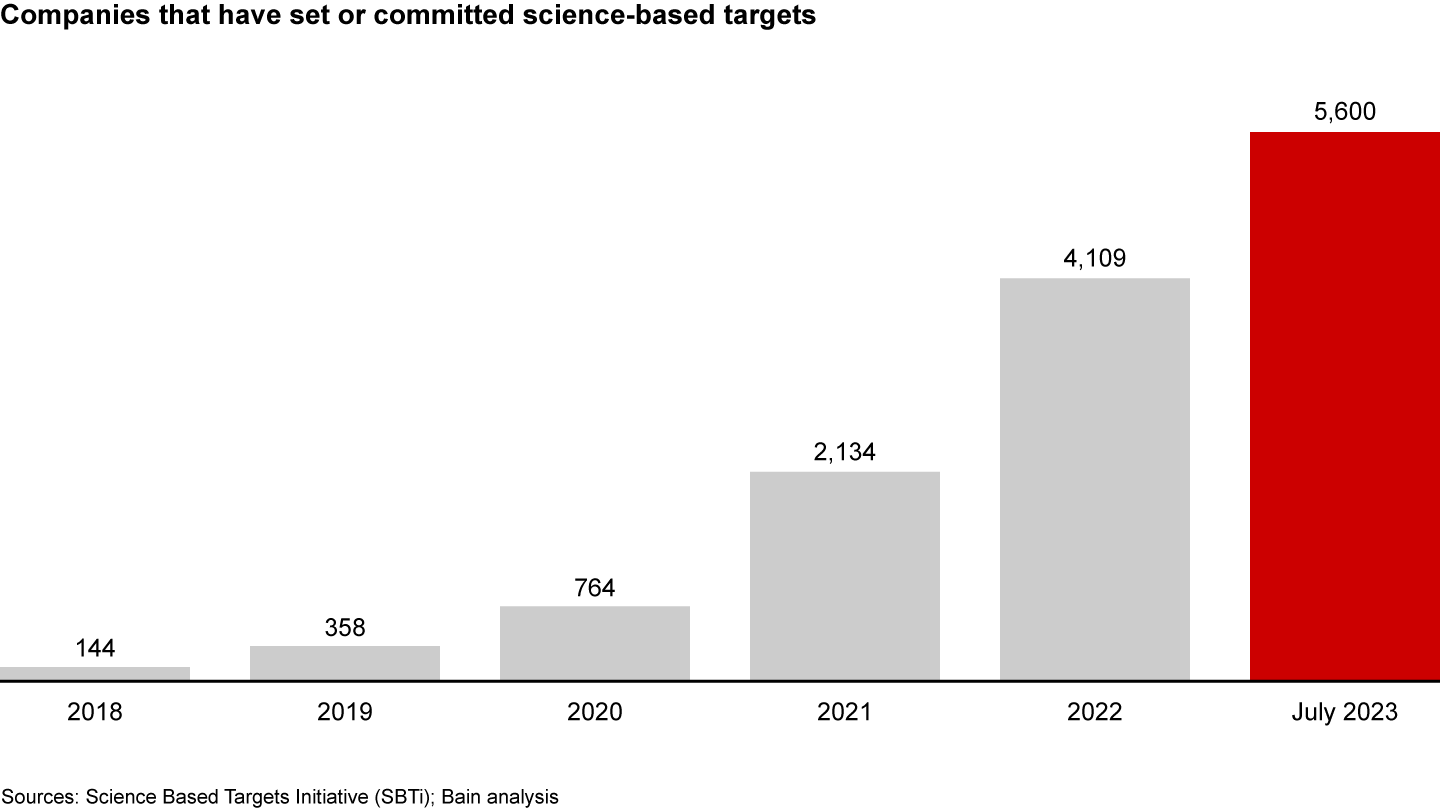
The shift to green commodities has begun. Metals, chemicals, polymers, and biofuels produced with little or no carbon emissions are headed to market. In 10 to 15 years, they are likely to be the norm. Although the transition has just started, the pace of change is accelerating. In 2022, the number of companies committed to science-based decarbonization targets nearly doubled from 2021 and rose more than fivefold over 2019 (see Figure 1).
Figure 1

But producers face multiple challenges kick-starting demand for green commodities. Sustainable alternatives to steel, aluminum, and other raw materials are expensive to produce and priced at a premium. The future market will be vast, yet producers remain uncertain about how quickly it will develop and which customers to target first. That’s a common challenge with many new technologies.
Leading producers are navigating the transition by partnering with customers in the vanguard that are ready to incorporate green raw materials into their products. They are also adapting their commercial strategies to help stimulate near-term demand and accelerate the transition. These producers understand that establishing an early leadership position in sustainable commodities will secure long-term market advantages. By moving along the experience curve faster than the competition, first movers will push costs down, leverage subsidies more effectively, and gain a competitive edge before the market for low-carbon raw materials expands and green commodities become mass-market products in the 2030s.
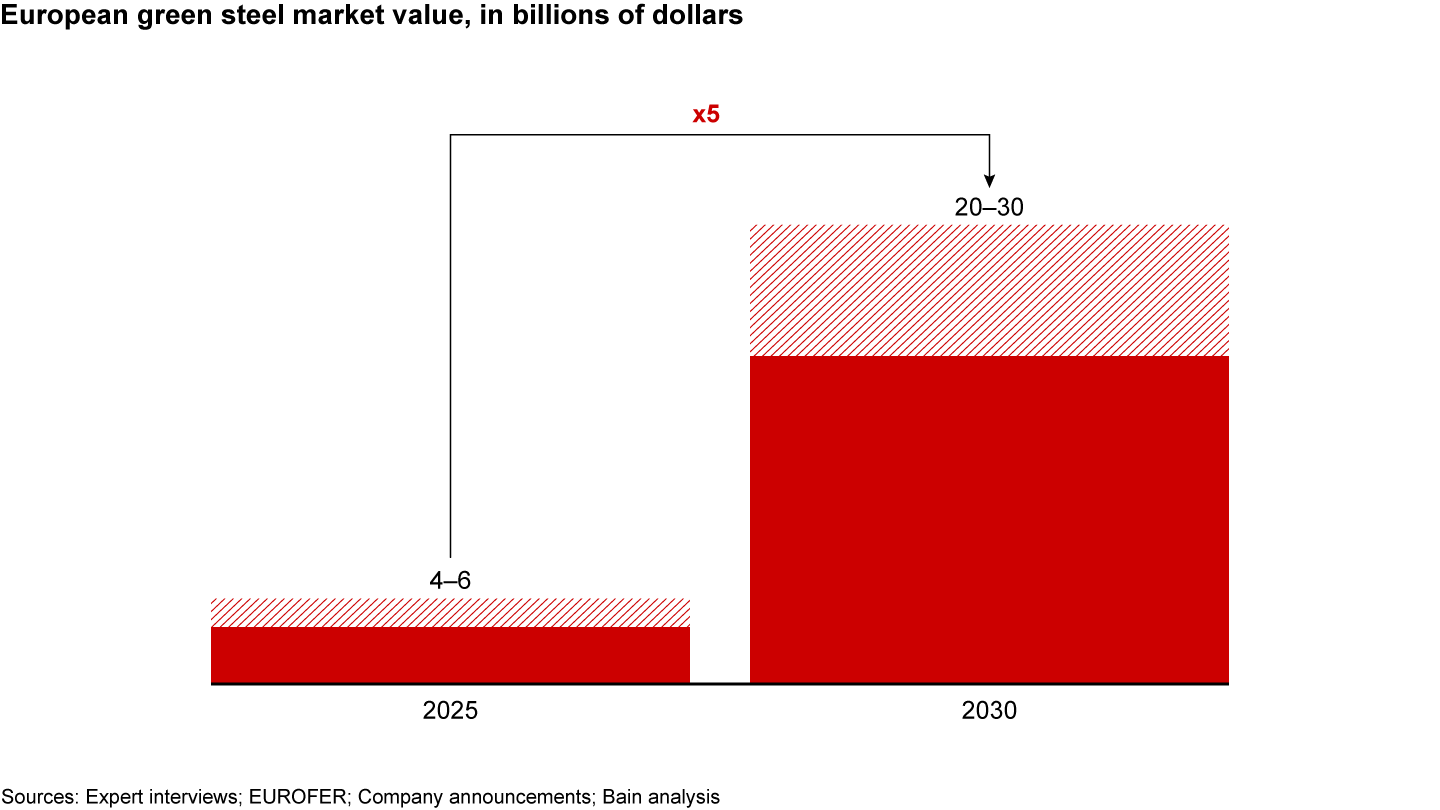
Given the size of traditional commodity markets, green commodities are likely to reach impressive scale quickly. For example, we expect between 15% and 25% of European steel production to be low carbon by 2030, or about 25 million to 35 million metric tons. Based on expected prices, that volume represents a $20 billion to $30 billion market (see Figure 2).
Figure 2

A market in the making
Commodity producers have started making large investments in sustainable metal technologies and production facilities. Many of these will reach commercial maturity in three to five years. For example, H2 Green Steel is building a greenfield plant in northern Sweden to produce steel with a hydrogen-based process powered by renewable energies. The process will reduce carbon emissions from the outset by 90% compared to traditional steel-making methods, with the aim of reducing emissions to zero. The company, which recently secured €3.5 billion in debt funding for the investment, aims to start commercial production in 2025 and reach an output of 5 million tons of green steel in 2030.
German steel producer Salzgitter is investing more than $1 billion to start converting an existing steel plant to run on green hydrogen. The company plans to introduce the new technology to its steel plants in stages, with a goal of cutting 95% of emissions from its steel production by 2033. Similarly, Alcoa and Rio Tinto are codeveloping a technology to produce virgin aluminum with no direct carbon emissions. Their joint venture to commercialize the new process, Elysis, aims to begin installations around 2024.
Low-carbon production processes that do not require huge investments in new technologies and new factories are already in use. Recycling steel scrap, for example, is comparatively easy to decarbonize by purchasing renewable energy. Start-ups and established industrial companies are working on other commodities such as green ammonia or biofuels.
Managing the transition
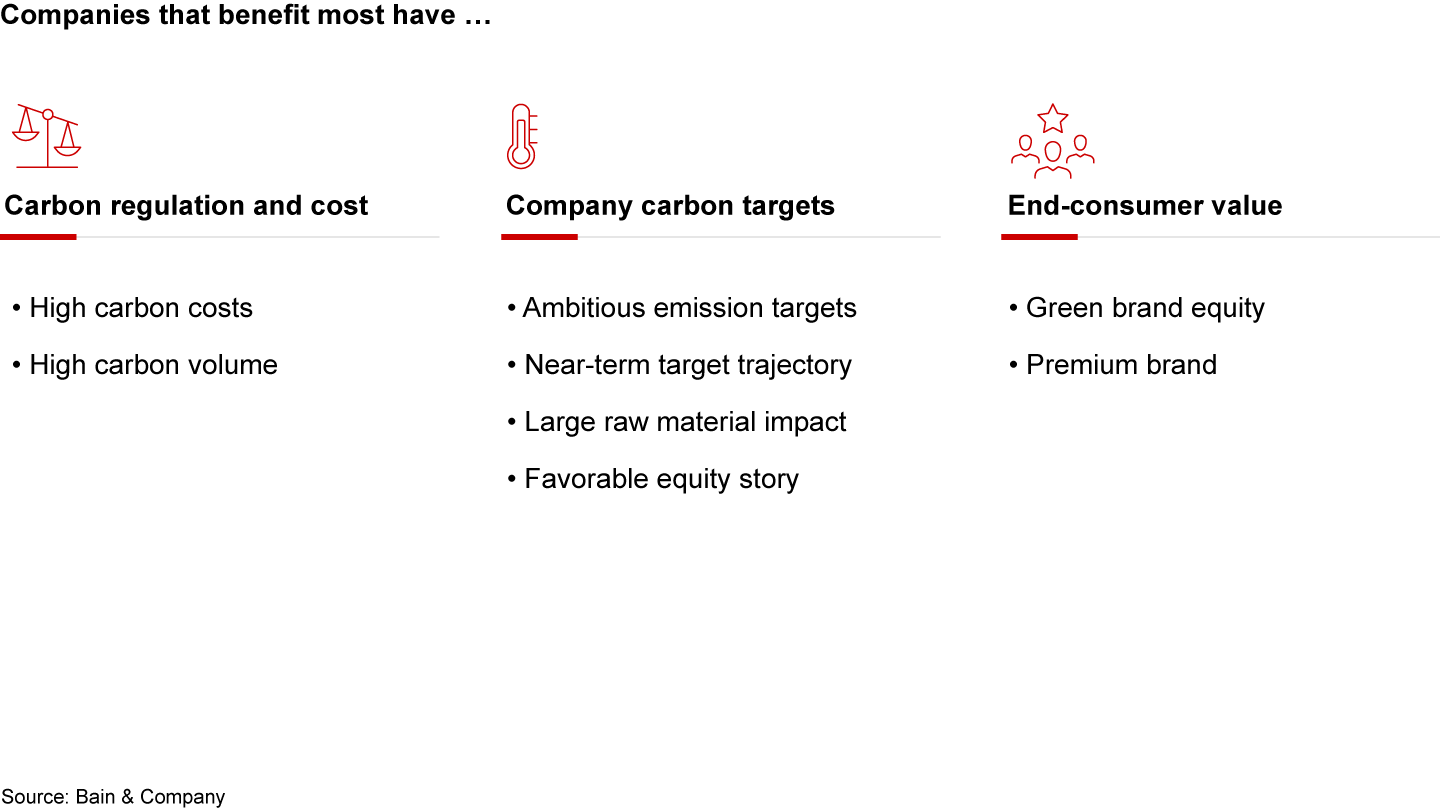
Manufacturers that stand to benefit most from decarbonizing their operations will fuel the initial demand for low-carbon raw materials (see Figure 3). As demand for sustainable metals and chemicals grows, supply shortages may increase the premium that producers can charge for them.
Figure 3

The future winners will continually adapt their commercial strategies and models to the evolving market for green commodities. Our analysis suggests a turning point is likely sometime after 2030 when sustainable metals and chemicals become more widely available. Ultimately, premiums will disappear as these new goods become commodities.
A few key guidelines can help leadership teams position themselves for success as demand for green commodities grows.
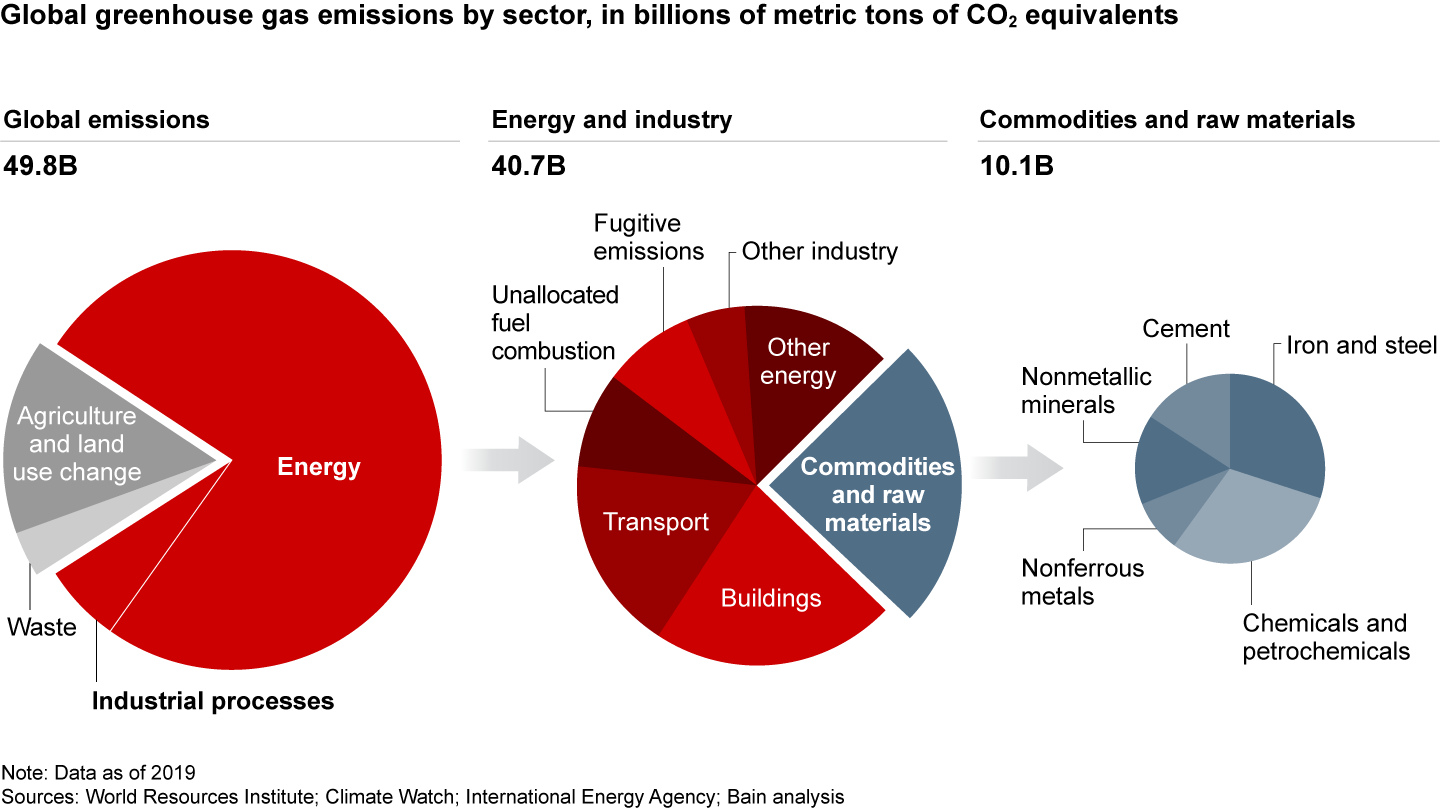
Focus on the early adopters. Commodities typically make up a large proportion of a manufacturer’s carbon footprint. Determine the role of low-carbon materials in each customer’s overall carbon transition to help identify potential sources of demand. For example, steel production accounts for more than 6% of greenhouse gas emissions (see Figure 4). Companies that use a substantial amount of steel in their products are likely to be receptive to a low-carbon alternative to reduce emissions.
Figure 4

Producers that understand the customer’s value chain and decarbonization goals are better able to identify potential early adopters and make a strong case for switching to green commodities. In autos with internal combustion engines, for instance, steel typically accounts for 40% to 45% of the original equipment manufacturers’ (OEMs’) upstream Scope 3 emissions—those resulting from assets that are not owned or controlled by the company but are part of the value chain. Aluminum accounts for 5% to 10% of Scope 3 emissions. So, for traditional automakers, steel and aluminum are likely to be top decarbonization priorities.
In electric vehicles, however, battery cells make up most of the upstream emissions (35% to 40%), with steel and aluminum accounting for a combined 20% to 25%. That means electric vehicle OEMs are likely to focus first on greener battery cells as opposed to low-carbon metals.
In addition to reducing emissions, manufacturers may also benefit from green commodities in boosting their sustainability credentials with consumers. Manufacturers likely to benefit most from switching to green metals and chemicals are those that have a high internal cost of carbon, substantial emissions, ambitious decarbonization targets, and a strong commitment to the company’s environmental image.
Premium-brand companies can gain a marketing edge with consumers by letting them know their products are built with sustainable commodities. For instance, Elysis, the joint venture between Rio Tinto and Alcoa to develop carbon-free aluminum, developed associations with several premium-brand companies prior to full-scale commercialization. Apple partnered with Elysis early, using low-carbon aluminum produced during the development stage in some of its products. Starting in 2022, Apple began using Elysis’ aluminum in the iPhone SE. Audi uses Elysis’ low-carbon aluminum for the wheels of its electric e-tron GT model, an electric sports car. The commercial partnerships with Apple and Audi helped ensure demand as Elysis ramped up production.
Companies that consider sustainability a vital distinction from the competition need green commodities to maintain their image and price premium with consumers. Wind energy giant Vestas has committed to a 45% reduction in Scope 3 emissions by 2030. Half of the company’s carbon emissions come from the steel used to make its wind turbines.
Adapt the value proposition and sales capabilities. Low-carbon commodities deliver value by helping customers build a brand, by differentiating a company from its competitors, and by decarbonizing their supply chain. Once leaders determine the benefit of green products for customers, they tailor their value proposition and communication strategy accordingly. To provide the right capabilities and focus on value, they consider each customer individually.
Commercial and production teams should work together on pricing and capacity decisions. Often, these teams work in silos, leading to a suboptimal allocation of supply to customers. At the same time, forward-looking producers build new capabilities and sales resources to target frontrunners. They understand that winning requires a different approach to sales, marketing, and communication than those used for traditional commodities. Direct customer contact is a more effective way of selling differentiated products, for instance. By contrast, companies that only trade in commodities typically require limited sales capabilities.
Leaders in the transition to green commodities have begun to train sales teams, educate customers on the value of decarbonization, form direct relationships with customers, and establish partnerships. Take the case of H2 Green Steel: At the time of its Series B funding round, the company had already presold 60% of its initial volumes, with some customers also taking equity in the firm. Securing sales prior to production helps assure demand before the market takes off.
The first companies to use green commodities will set the standards for their industry and lead change. Producers of sustainable materials that build relationships with these first movers may be rewarded with price premiums. However, the largest value in partnering with frontrunners lies in gaining experience to move down the cost curve and accelerating the mass-market demand shift. Engaging with market influencers including regulators and nongovernmental organizations (NGOs), such as the First Movers Coalition, can also help build a mass market.
Monitor the signposts. To stay one step ahead of a developing market, leaders identify signposts that will signal pivotal changes in demand and link actions to each one. Such signposts include impending regulations mandating the use of low-carbon inputs. For example, steel and aluminum producers should keep a close eye on the Scope 3 targets of their customers, including those in the automotive, construction, white goods, and machinery sectors. Rising Scope 3 targets will likely lead to higher demand for green commodities. One tactic for monitoring the signpost would be to track company announcements among core customers. Producers that anticipate these pivotal moments improve the speed and quality of decision making.
Successful producers rapidly adapt commercial strategies when signals point to a shift in demand or supply. One global metals producer, for example, identified three scenarios for the speed of green metal adoption as part of its go-to-market model. The scenarios were based on the outlook for government regulation and customer demand. The model enabled the executive team to estimate the total demand for different types of green metals by each end customer and industry, as well as their own position on the production cost curve.
That information will allow the company to react quickly as scenarios evolve. If governments impose regulations that are stricter than expected, the leadership team has a clear view of which customer segments will be affected, how regulations are likely to alter their own costs and competitors’ costs, and what steps will help them benefit from the change.
Industrial companies have just begun the transition to green raw materials, but the shift is likely to accelerate in the next few years. Producers that understand the value proposition for low-carbon commodities and adapt their go-to-market strategies will have an inside track moving rapidly down the experience curve. The winners in this future market will help fuel early demand and enjoy premiums while gaining an advantage as the market for green commodities matures.
First published in 8月 2023