

論説

概要
- Executing a digital transformation is a top priority for many companies, yet success remains elusive for most. Only 12% of corporate transformations achieve their targets, and digital transformations are even more challenging.
- We recently surveyed more than 1,200 global executives to identify the few key factors that differentiate digital leaders from digital laggards.
- Digital leaders are fast, particularly at decision making and execution, enabling them to experiment and pivot when necessary. They identify and organize around the technology trends that matter most. And they’re adept at orchestration, moving effectively from experimentation to full-scale transformation.
If you are reading this, it’s likely that you already know how important digital is for your company, and you probably know firsthand how hard it is to pull off a digital transformation.
In Bain & Company’s most recent Digital Insights annual survey of more than 1,200 senior executives, 54% of respondents predict digital will have a significant impact on their industry over the next five years. As industries reshape and companies change, many will struggle. Bain research has found that only 12% of all corporate transformations achieve their targets, and, while we are in the early days with many stories still being written, digital transformations appear even harder.
While there is still a lot of progress to be made on digital, there are lessons to learn from the companies managing their digital transformations well, including what distinguishes the emerging digital leaders from the digital laggards.
In our annual survey, these differences between the leaders and laggards emerge quite clearly. The two groups operate in different ways and with different results. Some 80% of executives at digital leaders say they have successfully met at least half of their digital goals, compared with fewer than 20% for digital laggards. Digital leaders do that by excelling at three things:
- They are fast, making decisions quickly enough to stay ahead of the market and executing plans with the speed needed for success.
- They define digital at the right level, organizing around a small number of trends that really matter in their industry.
- They excel at orchestration, getting the right processes and assets in place to successfully scale digital transformation across their enterprise.
Fast decision making and execution
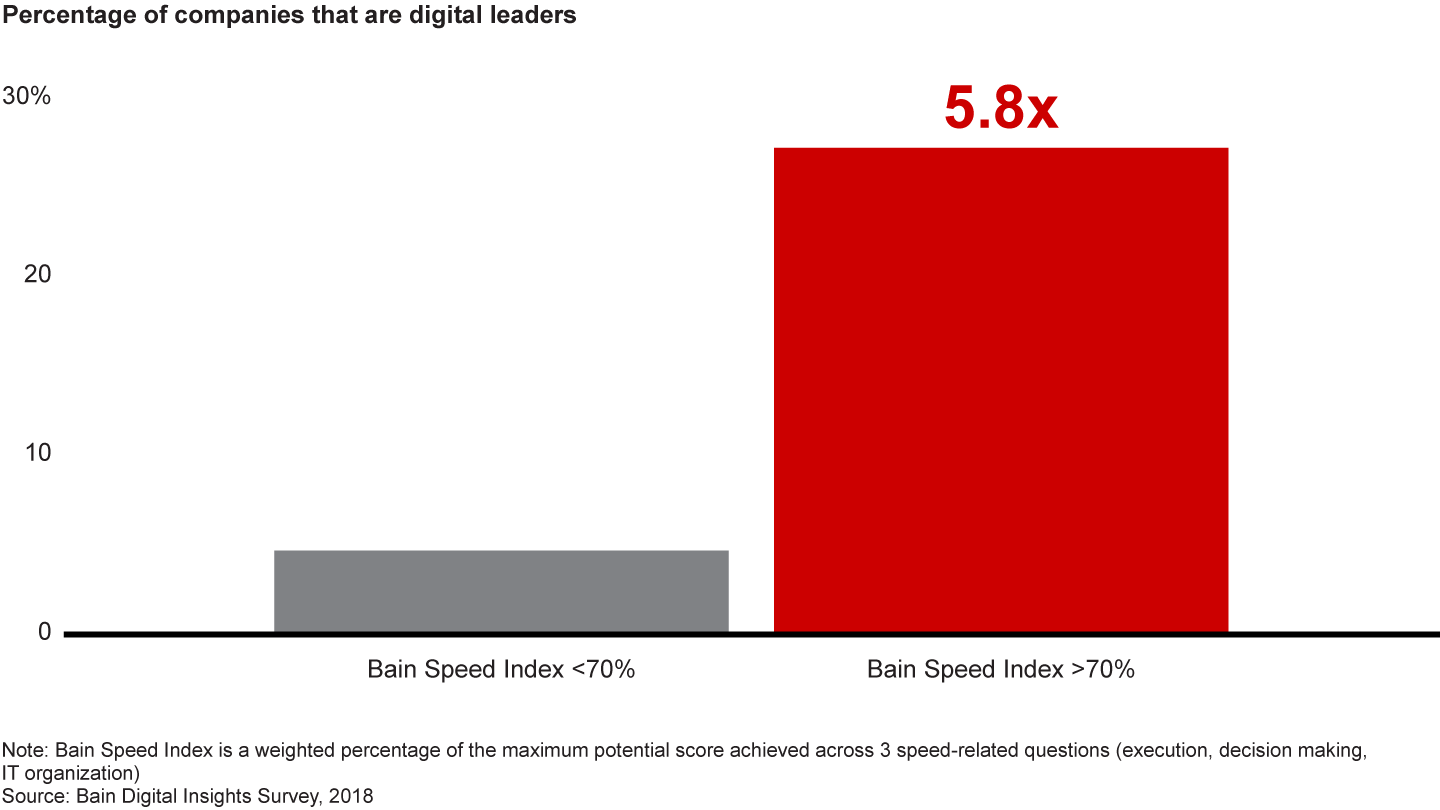
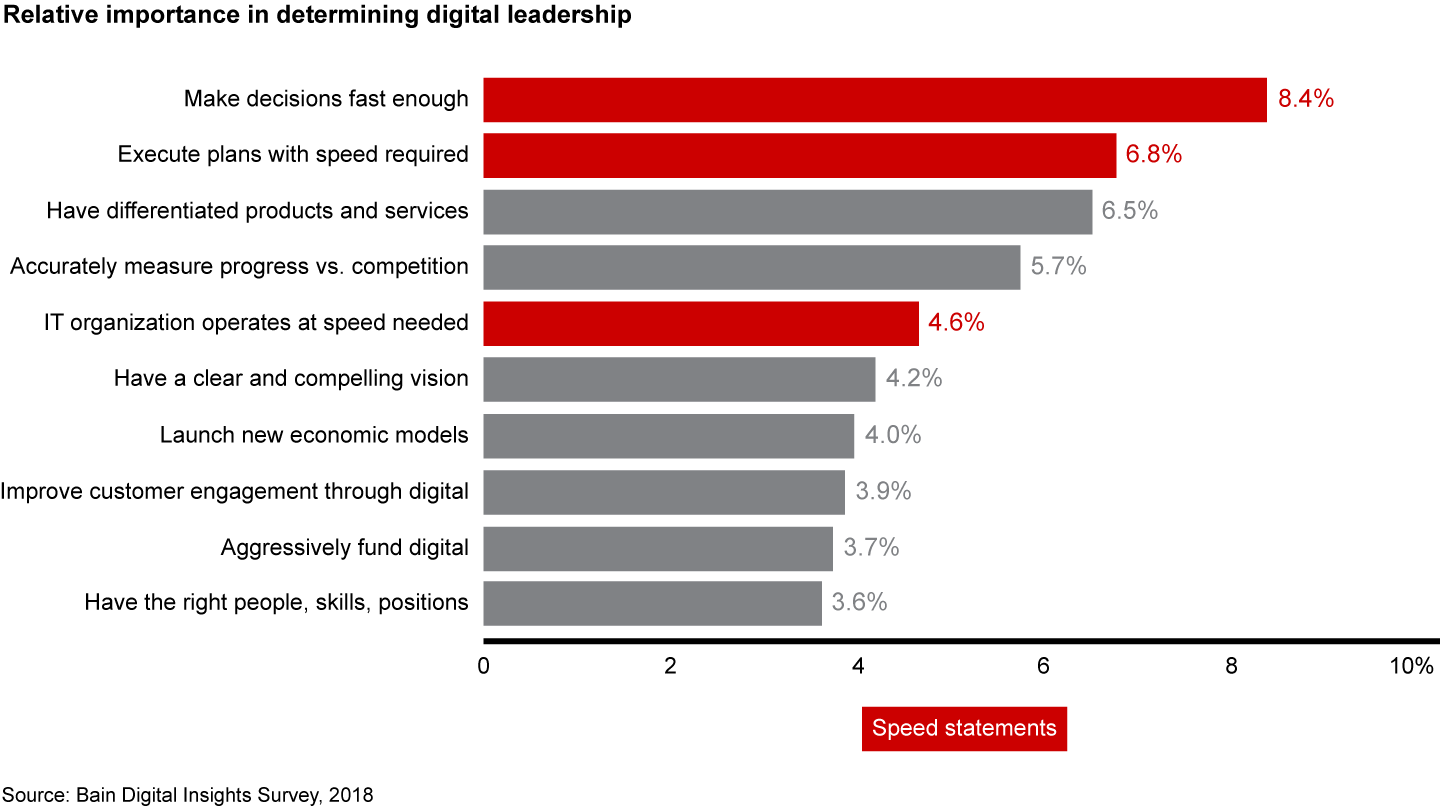
That speed matters is conventional business wisdom. It’s become such a common observation that managers could be forgiven for tuning it out. Our research confirms that speed is critical: Three of the top five differences between leaders and laggards relate to speed, and speed leaders are six times more likely to be digital leaders (see Figure 1). But perhaps more useful is how the data helps us define speed in a more granular way, one that provides insight executives can act on.
Figure 1

Survey responses show that speed has the most impact in three specific situations: making decisions fast enough, executing plans at the required speed and having an IT organization that can operate as quickly as needed (see Figure 2).
Figure 2

Fast companies make a decision and then get started, understanding that they may have to launch based on imperfect information and pivot multiple times along the way. At Amazon, CEO and founder Jeff Bezos encourages employees to think of decisions as either one-way doors—those decisions that are irreversible or nearly so—or two-way doors that can be undone. Recognizing that many, if not most, decisions are actually two-way doors encourages managers to take calculated risks and move with speed, even without perfect information. “If you’re good at course correcting, being wrong may be less costly than you think, whereas being slow is going to be expensive for sure,” Bezos wrote in his 2016 letter to shareholders.
Think of the journey as a series of stepping-stones—the tactical, near-term actions that start to move an organization in the right direction. Stepping-stones are not simply about step-by-step progress; they are a way to move forward while allowing for adaptation along the way. It’s not necessary—and with digital often not possible—to know exactly where you’re going on day one. The endgame may never be clear, but companies that are able to act quickly and then adapt have the best chance of shaping and succeeding in a future that is not preordained.
This can require a paradigm shift for large companies that are used to long-range planning, a need for visibility and predictability for shareholders, and established decision-making cycles. Unless you’re a digital native, improving your ability to move quickly to action without being certain of the endgame will probably require new ways of working.
Companies looking to build speed can focus on breaking digital transformation into manageable pieces, testing and learning from their trials. Corporate leaders can accelerate the pace of their transformation and increase its chance of success by concurrently executing multiple micro-battles, discrete time-boxed initiatives that rapidly bring strategic choices to action.
For this to work, leaders need to focus on:
- empowering individuals;
- spotting patterns;
- sharing lessons across teams;
- shifting resources to support winners as their success becomes clear through data and experience;
- skipping ahead when better versions of a given unit test successfully; and
- pivoting or shutting down trials when they fail.
By breaking initiatives into small, incremental steps, micro-battles foster innovation by reducing risk and making it easy to test and learn. One large multinational chemicals company, for example, deployed micro-battles to improve its complex operations. Starting with a single plant, the company developed an analytics prototype that could be tested and refined over a series of short, iterative cycles (often called sprints). After determining which elements could be scaled, the company is now rolling out aspects of the prototype to other locations where subsequent micro-battles can further refine it.
Organize around a limited number of important trends
Too often the term “digital” is amorphous and ill-defined. As a result it has become almost meaningless. Some companies are too deep in the weeds. For them, digital is about individual technologies like cybersecurity software or 3-D printing, so tightly focused on individual technologies that they fail to connect the dots into a coherent customer proposition with impact. Others are too far up in the clouds, and think of digital at such a high level that it becomes disconnected from their product, value proposition and front line.
Defining digital at the right level—neither too high nor too low—is a matter of hitting the right altitude between these extremes. One large global vehicle manufacturer has gotten it right. The CEO avoids using the term “digital” at all, instead focusing on automation, connectivity and electromobility. The company established centers of excellence that help each of its business units translate those three themes into clear strategic priorities relevant for their organizations. Connectivity, for example, goes well beyond the vehicle, to include the driver, the dealers and their OEM partners. The whole supply chain is connected. Each center of excellence cuts across the company’s many brands and helps each business create its own strategy. With electromobility, all resulting plans involve electric vehicles, but each is tailored to a particular customer base.
If you are looking to test whether you are working at the right digital altitude, consider how succinctly you can describe your digital approach. A digital strategy so fine-tuned that it can be explained in three to five words is a worthy goal.

Digital Readiness Survey
This mini version of the Bain Radar 360 Strategy GPS diagnostic provides a quick snapshot of your digital readiness and guides you on next steps.
Mastering orchestration
This year, as they have before, respondents told us that the single most important aspect of digital transformation isn’t great strategy or even great technology, but orchestration. Orchestration is what you need to scale from experimentation to full digital transformation, and when it comes to digital success it is twice as important as strategy and three times as important as systems and technology, according to our survey.
Companies that do orchestration well consistently display certain skills. First, they are able to scale change. As mentioned earlier, micro-battles are a critical tool for helping organizations scale innovation with speed. They break initiatives down into component parts and create well-structured teams to take charge of change, speeding up decision making and execution, the crucial skills of digital leaders. Leaders in orchestration also centrally set direction or at least establish guardrails within which to operate, but simultaneously empower the front line to innovate. These companies have leaders who align the enterprise on a clear vision, and who build critical engagement by cultivating a better understanding of technology and the “art of the possible” at all levels. And their leaders successfully make the case externally for their digital investment, communicating how the company can compete against digital natives and others.
Another important area that consistently differentiates champions of orchestration is their ability to find new and better ways of evaluating performance. Return on investment (ROI) has long been the measure determining any corporate initiative’s success, but digital progress is not always best evaluated by ROI, particularly short-term ROI. Other measures, such as future net asset value, or operational metrics that better reflect how well an effort is working, are often better. And it’s not always about playing offense, where investments are geared toward new sources of revenue or profit growth. Digital investments are often about playing defense—protecting the business against cannibalization or obsolescence—and companies need a way to account for those defensive measures as well.
The benefit of digital investments may be measured in multiple ways. If they are meant to boost experimentation, for example, it can be an innovation-killer to look for a financial payoff too soon. One financial services company decided to customize how it evaluates the results of each digital effort. The company’s digital team built an Apple Watch app in just 30 days. It was deemed a success for earning greater than 80% customer satisfaction. When the company’s auto experience team created its own mobile app, its success was measured by the fact that it had dramatically improved customer engagement and contributed to the highest conversion rate in US auto lending.
Finding smart alternatives to ROI can be key to solving one of the stickiest orchestration puzzles: ensuring that internal funds shift from old businesses to new digital activities, and managing the implications of those changes.
Looking ahead
Companies can improve their odds of success in digital transformation by taking three concrete steps toward becoming digital leaders:
- Identify where you stand relative to peers, particularly related to speed.
Where are you on your digital journey? How fast are you moving? Which gaps are critical to fill?
- Clarify the role of digital for your industry today and envision the impact it will have in the future.
Where will digital truly transform your industry? How will your company play to win in that digital future? What are the steps you need to take today to begin the journey, even if the future isn’t entirely clear?
- Tackle orchestration issues from day one.
How do you successfully move from experimentation to transformation? Are you sequencing and measuring progress against clear indicators of digital transformation? Is your executive team aligned behind a common digital ambition? Have you engaged the broader company in that vision? Are you building a critical mass of digital practitioners? How do you fund digital bets?
Digital leaders know they have embarked on an ongoing journey, and must consistently merge strategy with more tactical considerations. They don’t have time for complacency. Their digital transformation has only begun. Click here to get started assessing your position.
Nate Anderson is a partner in Bain & Company’s Digital practice and is based in the Chicago office. Dunigan O’Keeffe is the leader of Bain’s Strategy practice in the Americas and is based in San Francisco. Ouriel Lancry is Bain & Company’s digital transformation officer and coleads the Global Digital practice. He is based in the firm’s Chicago office.
First published in 8月 2019