
Skip to Content
  • オフィス

    オフィス

    北米・南米
    • Atlanta
    • Austin
    • Bogota
    • Boston
    • Buenos Aires
    • Chicago
    • Dallas
    • Denver
    • Houston
    • Los Angeles
    • Mexico City
    • Minneapolis
    • Monterrey
    • Montreal
    • New York
    • Rio de Janeiro
    • San Francisco
    • Santiago
    • São Paulo
    • Seattle
    • Silicon Valley
    • Toronto
    • Washington, DC
    ヨーロッパ・中東・アフリカ
    • Amsterdam
    • Athens
    • Berlin
    • Brussels
    • Copenhagen
    • Doha
    • Dubai
    • Dusseldorf
    • Frankfurt
    • Helsinki
    • Istanbul
    • Johannesburg
    • Kyiv
    • Lisbon
    • London
    • Madrid
    • Milan
    • Munich
    • Oslo
    • Paris
    • Riyadh
    • Rome
    • Stockholm
    • Vienna
    • Warsaw
    • Zurich
    アジア・オーストラリア
    • Bangkok
    • Beijing
    • Bengaluru
    • Brisbane
    • Ho Chi Minh City
    • Hong Kong
    • Jakarta
    • Kuala Lumpur
    • Manila
    • Melbourne
    • Mumbai
    • New Delhi
    • Perth
    • Shanghai
    • Singapore
    • Sydney
    • Tokyo
    全てのオフィス
  • アルムナイ
  • メディア
  • お問い合わせ
  • 東京オフィス
  • Japan | 日本語

    地域と言語を選択

    グローバル
    • Global (English)
    北米・南米
    • Brazil (Português)
    • Argentina (Español)
    • Canada (Français)
    • Chile (Español)
    • Colombia (Español)
    ヨーロッパ・中東・アフリカ
    • France (Français)
    • DACH Region (Deutsch)
    • Italy (Italiano)
    • Spain (Español)
    • Greece (Elliniká)
    アジア・オーストラリア
    • China (中文版)
    • Korea (한국어)
    • Japan (日本語)
  • Saved items (0)
    Saved items (0)

    You have no saved items.

    後で閲読、共有できるようにするためにブックマークしてください

    Explore Bain Insights
  • 業界別プラクティス
    メインメニュー

    業界別プラクティス

    • 航空宇宙、防衛、政府関連
    • 農業
    • 化学製品
    • インフラ、建設
    • 消費財
    • 金融サービス
    • ヘルスケア
    • 産業機械、設備
    • メディア、エンターテインメント
    • 金属
    • 採掘・鉱業
    • 石油、ガス
    • 紙、パッケージ
    • プライベートエクイティ
    • 公共、社会セクター
    • 小売
    • テクノロジー
    • 通信
    • 交通
    • 観光産業
    • 公益事業、再生可能エネルギー
  • 機能別プラクティス
    メインメニュー

    機能別プラクティス

    • カスタマー・エクスペリエンス
    • サステイナビリティ、 社会貢献
    • Innovation
    • 企業買収、合併 (M&A)
    • オペレーション
    • 組織
    • プライベートエクイティ
    • マーケティング・営業
    • 戦略
    • アドバンスド・アナリティクス
    • Technology
    • フルポテンシャル・トランスフォーメーション
  • Digital
  • 知見/レポート
  • ベイン・アンド・カンパニーについて
    メインメニュー

    ベイン・アンド・カンパニーについて

    • ベインの信条
    • 活動内容
    • 社員とリーダーシップ
    • プレス・メディア情報
    • クライアントの結果
    • 受賞歴
    • パートナーシップを結んでいる団体
    Further: Our global responsibility
    • ダイバーシティ
    • 社会貢献
    • サステイナビリティへの取り組み
    • 世界経済フォーラム(WEF)
    Learn more about Further
  • キャリア
    メインメニュー

    キャリア

    • ベインで働く
      キャリア
      ベインで働く
      • Find Your Place
      • ベインで活躍する機会
      • ベインのチーム体制
      • 学生向けページ
      • インターンシップ
      • 採用イベント
    • ベインでの体験
      キャリア
      ベインでの体験
      • Blog: Inside Bain
      • キャリアストーリー
      • 社員紹介
      • Where We Work
      • 成長を後押しするサポート体制
      • アフィニティ・グループ
      • 福利厚生
    • Impact Stories
    • 採用情報
      キャリア
      採用情報
      • 採用プロセス
      • 面接内容
    FIND JOBS
  • オフィス
    メインメニュー

    オフィス

    • 北米・南米
      オフィス
      北米・南米
      • Atlanta
      • Austin
      • Bogota
      • Boston
      • Buenos Aires
      • Chicago
      • Dallas
      • Denver
      • Houston
      • Los Angeles
      • Mexico City
      • Minneapolis
      • Monterrey
      • Montreal
      • New York
      • Rio de Janeiro
      • San Francisco
      • Santiago
      • São Paulo
      • Seattle
      • Silicon Valley
      • Toronto
      • Washington, DC
    • ヨーロッパ・中東・アフリカ
      オフィス
      ヨーロッパ・中東・アフリカ
      • Amsterdam
      • Athens
      • Berlin
      • Brussels
      • Copenhagen
      • Doha
      • Dubai
      • Dusseldorf
      • Frankfurt
      • Helsinki
      • Istanbul
      • Johannesburg
      • Kyiv
      • Lisbon
      • London
      • Madrid
      • Milan
      • Munich
      • Oslo
      • Paris
      • Riyadh
      • Rome
      • Stockholm
      • Vienna
      • Warsaw
      • Zurich
    • アジア・オーストラリア
      オフィス
      アジア・オーストラリア
      • Bangkok
      • Beijing
      • Bengaluru
      • Brisbane
      • Ho Chi Minh City
      • Hong Kong
      • Jakarta
      • Kuala Lumpur
      • Manila
      • Melbourne
      • Mumbai
      • New Delhi
      • Perth
      • Shanghai
      • Singapore
      • Sydney
      • Tokyo
    全てのオフィス
  • アルムナイ
  • メディア
  • お問い合わせ
  • 東京オフィス
  • Japan | 日本語
    メインメニュー

    地域と言語を選択

    • グローバル
      地域と言語を選択
      グローバル
      • Global (English)
    • 北米・南米
      地域と言語を選択
      北米・南米
      • Brazil (Português)
      • Argentina (Español)
      • Canada (Français)
      • Chile (Español)
      • Colombia (Español)
    • ヨーロッパ・中東・アフリカ
      地域と言語を選択
      ヨーロッパ・中東・アフリカ
      • France (Français)
      • DACH Region (Deutsch)
      • Italy (Italiano)
      • Spain (Español)
      • Greece (Elliniká)
    • アジア・オーストラリア
      地域と言語を選択
      アジア・オーストラリア
      • China (中文版)
      • Korea (한국어)
      • Japan (日本語)
  • Saved items  (0)
    メインメニュー
    Saved items (0)

    You have no saved items.

    後で閲読、共有できるようにするためにブックマークしてください

    Explore Bain Insights
  • 業界別プラクティス
    • 業界別プラクティス

      • 航空宇宙、防衛、政府関連
      • 農業
      • 化学製品
      • インフラ、建設
      • 消費財
      • 金融サービス
      • ヘルスケア
      • 産業機械、設備
      • メディア、エンターテインメント
      • 金属
      • 採掘・鉱業
      • 石油、ガス
      • 紙、パッケージ
      • プライベートエクイティ
      • 公共、社会セクター
      • 小売
      • テクノロジー
      • 通信
      • 交通
      • 観光産業
      • 公益事業、再生可能エネルギー
  • 機能別プラクティス
    • 機能別プラクティス

      • カスタマー・エクスペリエンス
      • サステイナビリティ、 社会貢献
      • Innovation
      • 企業買収、合併 (M&A)
      • オペレーション
      • 組織
      • プライベートエクイティ
      • マーケティング・営業
      • 戦略
      • アドバンスド・アナリティクス
      • Technology
      • フルポテンシャル・トランスフォーメーション
  • Digital
  • 知見/レポート
  • ベイン・アンド・カンパニーについて
    • ベイン・アンド・カンパニーについて

      • ベインの信条
      • 活動内容
      • 社員とリーダーシップ
      • プレス・メディア情報
      • クライアントの結果
      • 受賞歴
      • パートナーシップを結んでいる団体
      Further: Our global responsibility
      • ダイバーシティ
      • 社会貢献
      • サステイナビリティへの取り組み
      • 世界経済フォーラム(WEF)
      Learn more about Further
  • キャリア
    人気検索キーワード
    • デジタル
    • 戦略
    前回の検索
      最近訪れたページ

      Content added to saved items

      Saved items (0)

      Removed from saved items

      Saved items (0)

      レポート

      Motivations for Work Are Changing
      en

      It’s perhaps unsurprising that Nikola Tesla and John Maynard Keynes foresaw a gradual disappearance of work when one considers what happened in the decades prior to their predictions. Between 1870 and 1930, the average weekly hours of a nonagricultural worker in the US fell by a quarter, from 59.5 to 44.5 (see Figure 1.1).

      At the onset of the Industrial Revolution, the working week was as long as physically bearable. Survival was the primary motive for work for all but a fortunate few. That all began to change as industrialization brought immense advances in living standards. By the early 20th century, working hours were falling, allowing more workers to spend their time as they chose.

      フルレポートのダウンロードはこちら (PDF)

      As growth decelerated in the West in the latter part of the last century, this trend began to taper, although it persists today. For instance, one study of time use in the UK found that average weekly leisure time increased by seven hours for men and five hours for women from 1961 to 2000. The average time spent caring for children also increased, by four hours a week for both men and women.
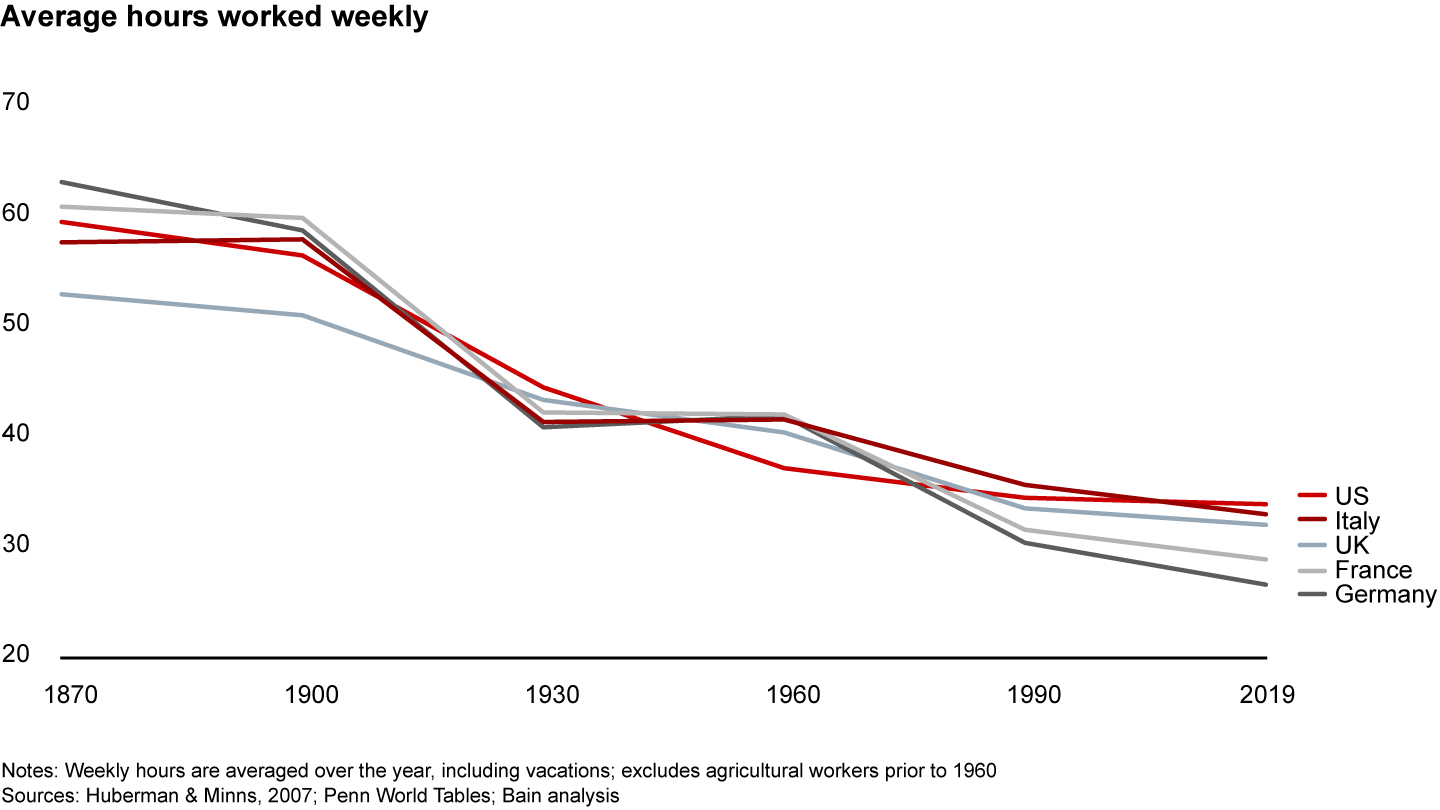
      Figure 1.1
      Rising prosperity has reduced the time that people need to spend working

      In addition, the subjective importance that we place on our jobs compared with other life factors has declined across successive generations. According to the World Values Survey, younger generations place a lower importance on work relative to leisure time compared with respondents in older generations who completed the survey at the same age (see Figure 1.2). The only outlier is Generation X—who were hit particularly hard by the 2007–09 financial crisis in terms of wealth and career prospects. We found a similar pattern in the importance of work compared with family.
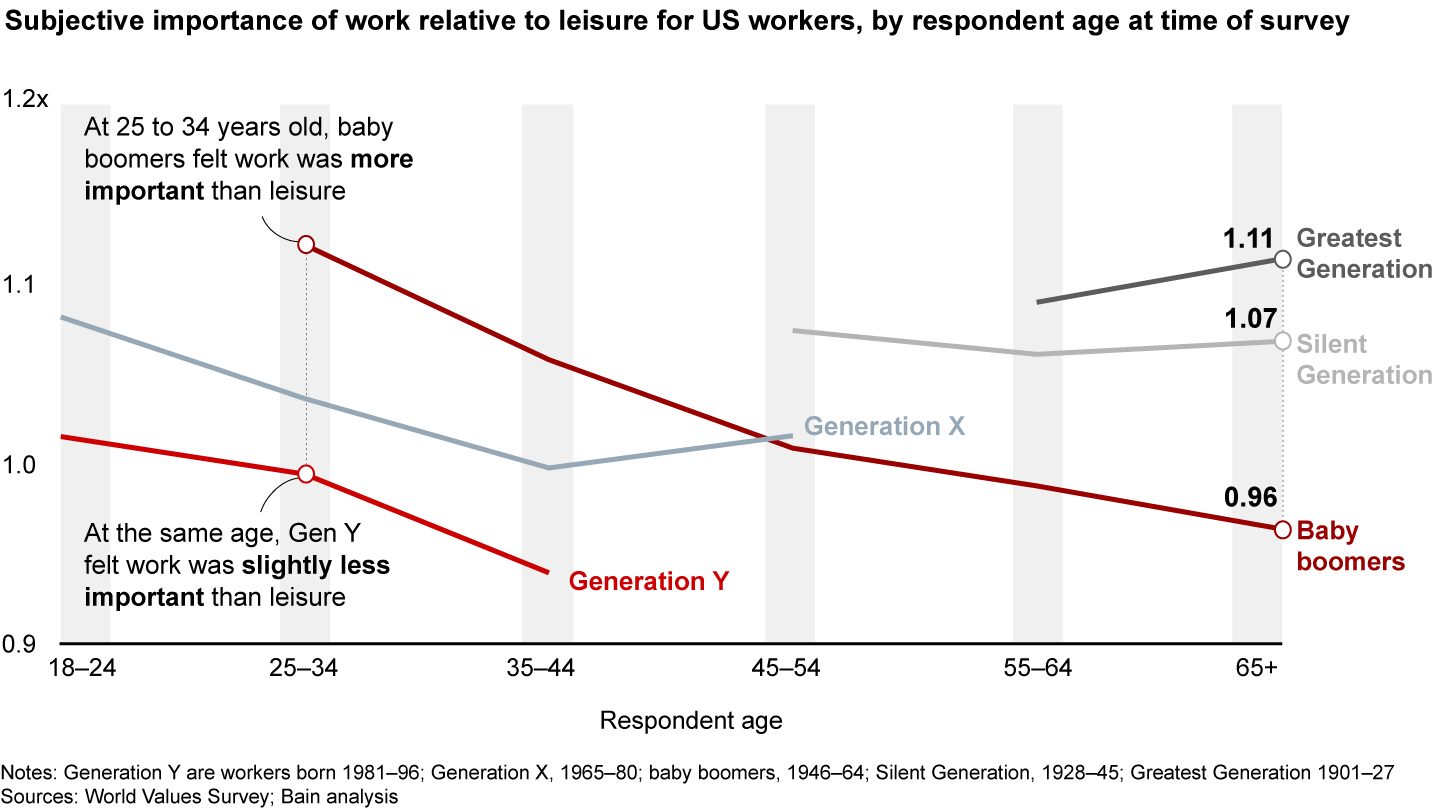
      Figure 1.2
      The importance placed on work relative to leisure has declined across generations

      This trend is not confined to the West. In general, as countries grow their GDP, workers gain greater economic freedom to spend time on other pursuits (see Figure 1.3). For instance, workers in China and India are also starting to place less importance on work relative to leisure.
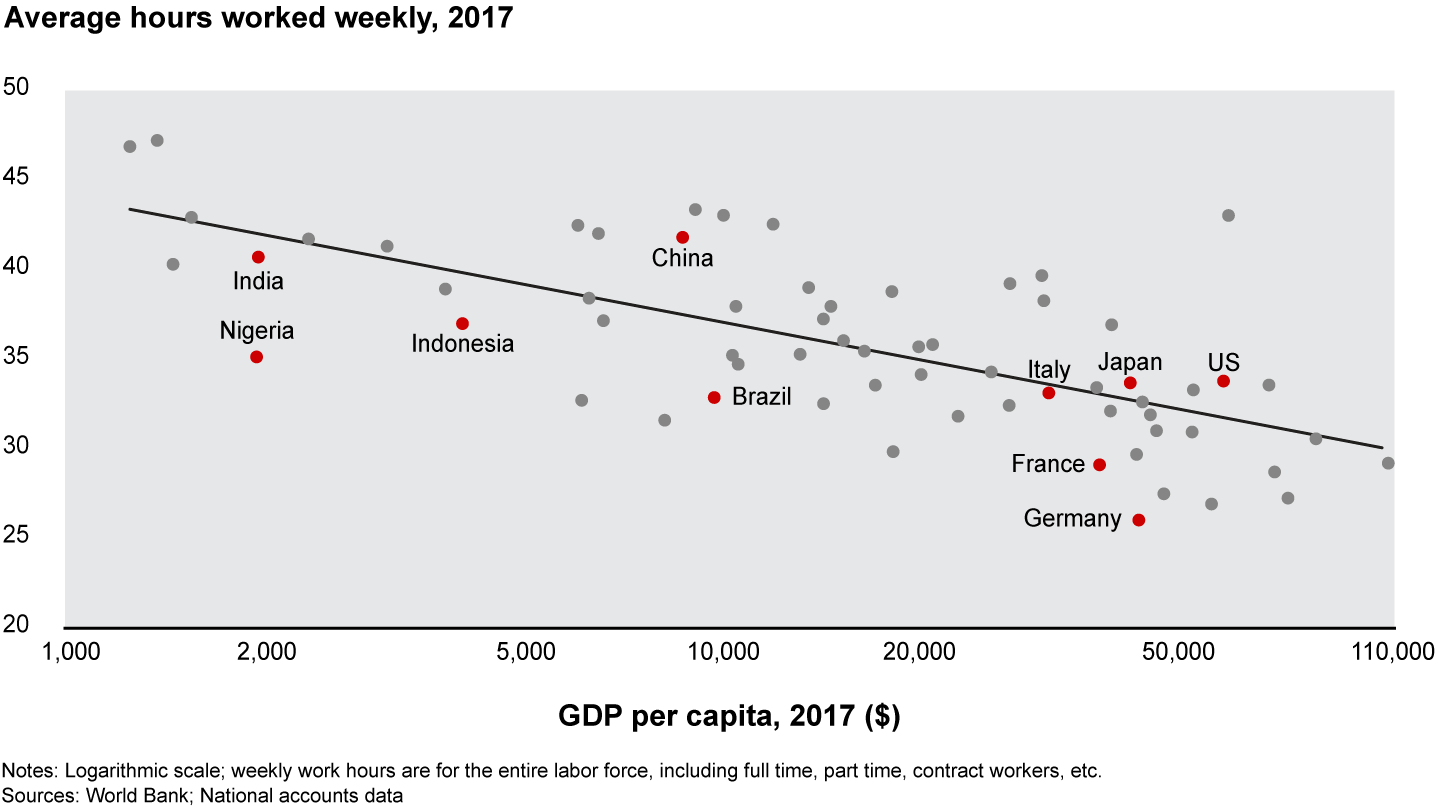
      Figure 1.3
      Hours of work tend to decline as countries become richer

      Does this mean that Tesla and Keynes were simply too early in their predictions of the demise of work? We expect not. As of 2017, only 28% of Americans said they would stop working altogether if they had enough money for the rest of their lives—down from 34% in 1995. As workers have become richer, they’ve recognized that a job can serve more than their basic economic needs. Globally, the richer a country, the lower the share of the population that believe a job is “just a way of earning money” (see Figure 1.4).
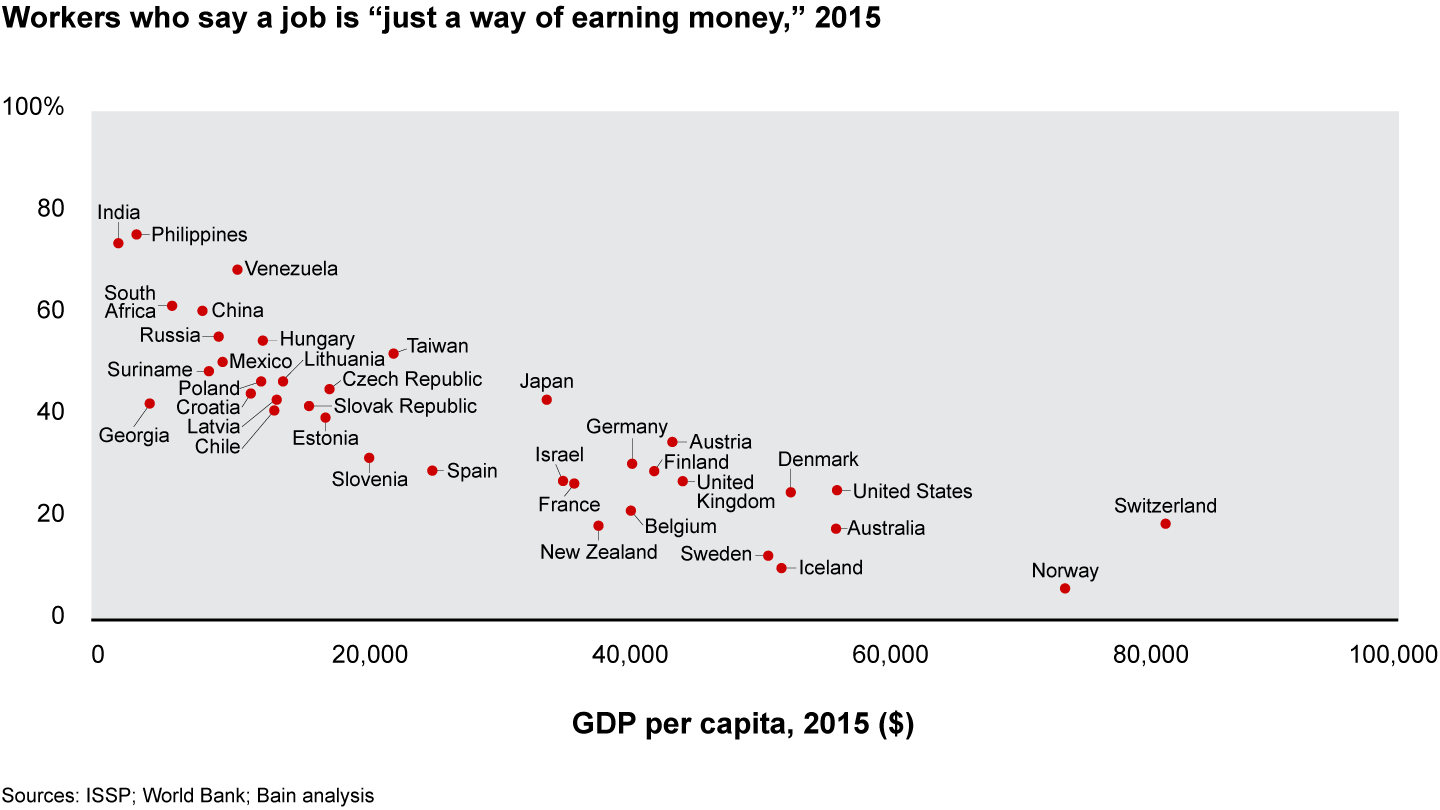
      Figure 1.4
      As incomes rise, our reasons for working extend beyond money

      According to our survey, only 22% of workers globally rank compensation as the thing that matters most to them in a job (see Figure 1.5). This isn’t to say that people will accept a job without fair pay: Compensation still ranks higher than all other job attributes, including interesting work at 15% and an inspiring company at 5%. It also ranks in the top three factors for 56% of respondents. But it’s evident that a coin-operated view of workers, where firm leaders see employment as a purely financial transaction, underestimates the deeper human motivations for work. And dissatisfied workers rank compensation higher than satisfied workers, suggesting that money is more often a source of demotivation for workers who feel underpaid than it is a source of inspiration for others.
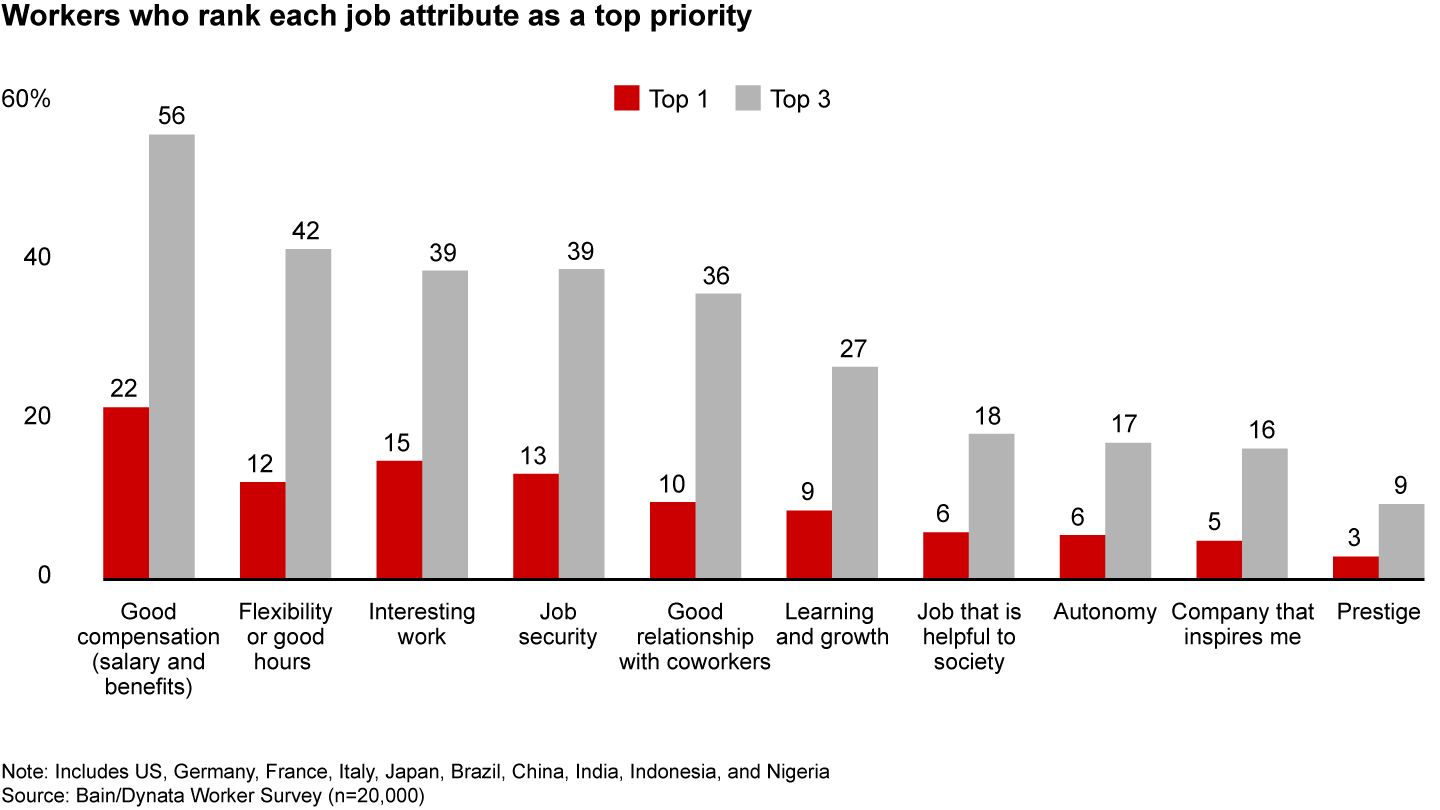
      Figure 1.5
      While workers rank compensation first over any other job attribute, it’s the top priority for one in five workers

      In rich countries, several social changes have likely broadened workers’ expectations around the needs a job should fulfill. As community institutions, such as sports clubs and volunteer associations, have declined in prominence, work has become a more important source of social connection. Similarly, as religious observance has fallen in the US and Europe, new generations of workers may have turned to their careers to provide a sense of higher purpose.

      “In general, as countries grow their GDP, workers gain greater economic freedom to spend time on other pursuits.”

      A shift in the nature of social class, which is now primarily reflected in one’s occupation, has also likely played a role in this change. Looking at the US, there’s been an inversion of the relationship between income and hours worked over the past century (see Figure 1.6). Far from the idle leisure class of bygone eras, the upper echelons of today’s society work the longest hours of all. Busyness is now a sign of status and importance. Those at the bottom of the income hierarchy work the least hours, as they are often unable to secure the stable full-time employment they desire (for more on this, see “Technological Change Is Blurring the Boundaries of the Firm”).
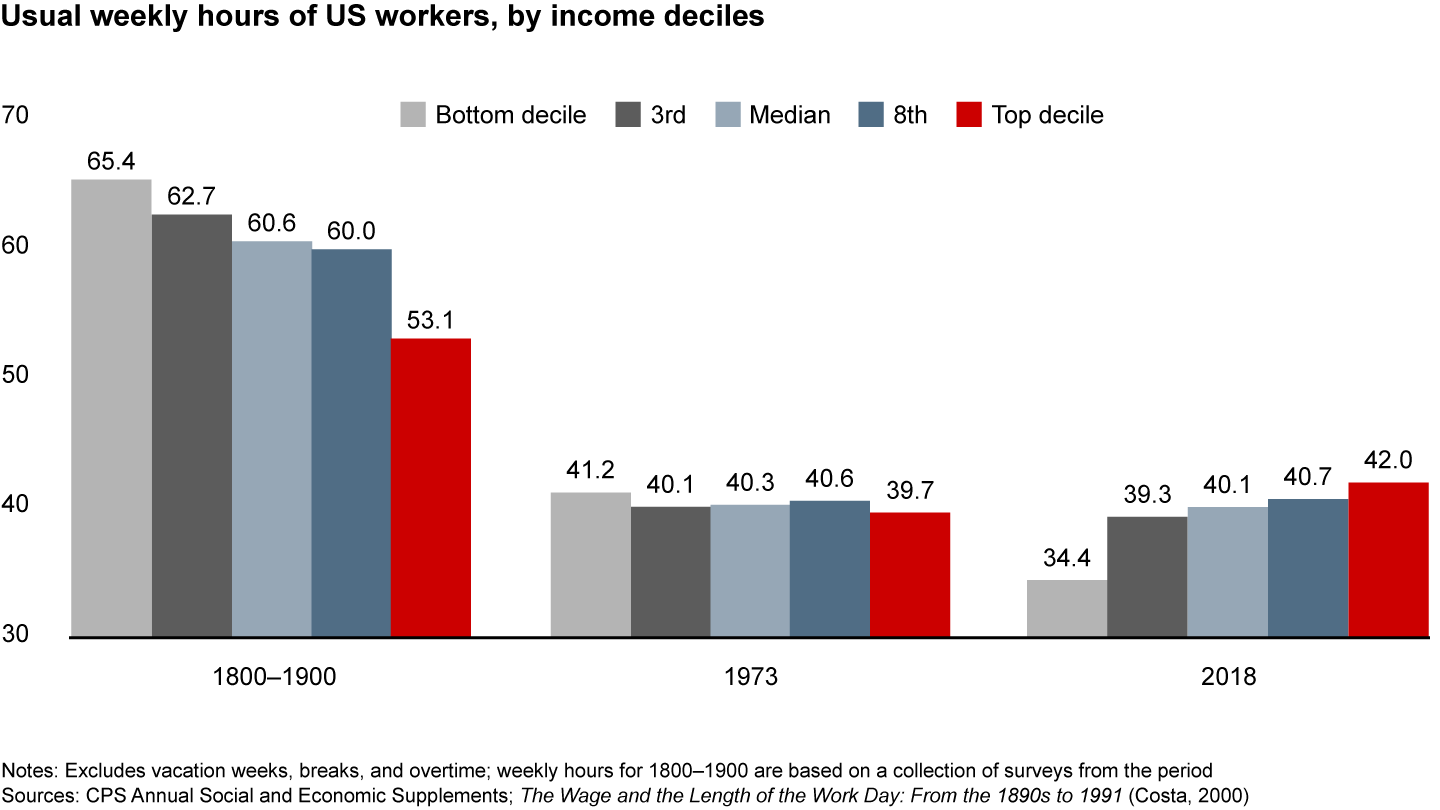
      Figure 1.6
      The relationship between income and number of working hours has flipped over the past century

      As the world has become richer, workers have increasingly shifted their focus from survival to meaning, with profound implications for how we think about work. Importantly, individuals can find a sense of purpose in many places, whether in a sense of achievement and upward mobility, mastery of a skill set, directly helping others, or simply being fully present in family life (for more, see the next chapter, "Beliefs about What Makes a 'Good Job' Are Diverging").

      Quiz

      What Type of Worker Are You?

      Six worker archetypes can help business leaders understand the messy world of individual personalities.

      Continue Reading

      Beliefs about What Makes a “Good Job” Are Diverging

      About the Research

      Data powered by Dynata, a leading global first-party data and insights platform.

      著者
      • Headshot of Andrew Schwedel
        Andrew Schwedel
        パートナー, New York
      • Headshot of James Root
        James Root
        パートナー, Hong Kong
      • Headshot of James Allen
        James Allen
        Advisory Partner, London
      • Headshot of John Hazan
        John Hazan
        パートナー, Paris
      • Eric Almquist
        Former Advisory Partner, Boston
      • Thomas Devlin
        Former Director, Bain Futures, London
      • Headshot of Karen Harris
        Karen Harris
        Managing Director, Macro Trends Group, New York
      企業の未来像
      AI and Power: A Marriage of Necessity

      Tech and utilities are an unlikely pair, but how well they balance data center electricity demand and finite energy resources will have huge implications.

      詳細
      企業の未来像
      How to Feed AI’s Hunger for Power

      The explosive growth of artificial intelligence will need a lot of electricity from a utility industry that hasn’t seen demand grow for 20 years.

      詳細
      企業の未来像
      The Working Future In Gulf Cooperation Council Countries

      It's time to humanize how we think about work to appeal to today's talent.

      詳細
      企業の未来像
      Automation May Not Come for Everyone's Job After All

      Uniquely human skills are becoming more important as the composition of the workforce shifts.

      詳細
      企業の未来像
      Working Women and the War for Talent

      By addressing deeply rooted gender imbalances, firms can overcome the labor shortage.

      詳細
      First published in 1月 2022
      Tags
      • Leadership & Talent
      • 企業の未来像
      • 戦略
      • 組織

      クライアント支援事例

      戦略 A Bold New Strategy Restores a Bank to a Leadership Position

      ケーススタディを見る

      組織 A Video Game Company Levels Up With a New Operating Model

      ケーススタディを見る

      組織 組織改革により、グローバルメーカーの収益性を回復

      ケーススタディを見る

      お気軽にご連絡下さい

      私達は、グローバルに活躍する経営者が抱える最重要経営課題に対して、厳しい競争環境の中でも成長し続け、「結果」を出すために支援しています。

      ベインの知見。競争が激化するグローバルビジネス環境で、日々直面するであろう問題について論じている知見を毎月お届けします。

      *プライバシーポリシーの内容を確認し、合意しました。

      プライバシーポリシーをご確認頂き、合意頂けますようお願い致します。
      Bain & Company
      お問い合わせ Sustainability Accessibility Terms of use Privacy Cookie Policy Sitemap Log In

      © 1996-2026 Bain & Company, Inc.

      お問い合わせ

      How can we help you?

      • ビジネスについて
      • プレス報道について
      • 採用について
      全てのオフィス