

論説

概要
- Nearly 80% of global investors say they focus more on sustainability now than they did five years before.
- Some of the world’s largest private equity funds are selling assets that do not meet environmental or social investing guidelines.
- A review of more than 2,000 studies showed a strong correlation between the performance of environmental, social and governance funds and positive investment returns.
The idea that investors can improve society while seeking solid returns is rapidly gaining ground. Many private equity (PE) funds are incorporating environmental, social and governance (ESG) goals into their strategies, and public interest in ethical investing has taken off. New publications track social and responsible investing, and the media eagerly depict large and small investors helping to make the world a better place.
Beyond the buzz, a wealth of data corroborates the trend. The number of fund managers who have signed the United Nations-supported Principles for Responsible Investment (PRI) grew to more than 2,000 in 2018 from 1,200 in 2013. The $82 trillion in assets under management by these signatories increased by a compound annual rate of 19% in the same period. Of 22,000 investors worldwide, 78% said they place more emphasis on sustainability now than they did five years before, according to Schroders 2017 Global Investor Study.
Ethical investing is rooted in long-term trends
The shift to sustainable portfolios and impact investing reflects growing public concern about global challenges such as climate change, plastics pollution, deforestation, social inequality or access to water. Retail investors, especially the millennial generation and women, are increasingly demanding that companies expose ethical issues linked to their investments. Millennials are twice as likely as the overall population to buy products from sustainable companies, according to Morgan Stanley’s Institute for Sustainable Investing. With an estimated $30 trillion of wealth expected to change hands from baby boomers to millennials in the next 30 years, the stakes for investors are huge.
Greater transparency and ESG focus in company reports is helping fuel the ethical investing trend. More than 90% of the world’s 250 largest companies published corporate social responsibility (CSR) or sustainability reports in 2018, compared with 45% in 2002. A number of governments support greater financial disclosure requirements through, for example, the Taskforce on Climate-Related Financial Disclosures. The group develops recommendations for clear and consistent disclosure and enables companies to more effectively measure and evaluate their own risks and those of suppliers and competitors. A few progressive governments and groups have begun pursuing legal action against companies that flout good ESG practices.
Social and environmental impact improves financial returns
While pressure is growing on fund managers to pay greater attention to environmental and social issues, many also realize that ESG and impact investing can generate strong financial returns. For years, investors assumed a commitment to environmental, social and governance performance would automatically lower profits—and many Asia-Pacific investors still believe that.
However, a growing number of studies are disproving it. A comprehensive 2015 review by the German investment fund DWS and the University of Hamburg of more than 2,000 studies found that 63% showed a strong correlation between ESG performance and positive returns, while 10% showed a negative effect.
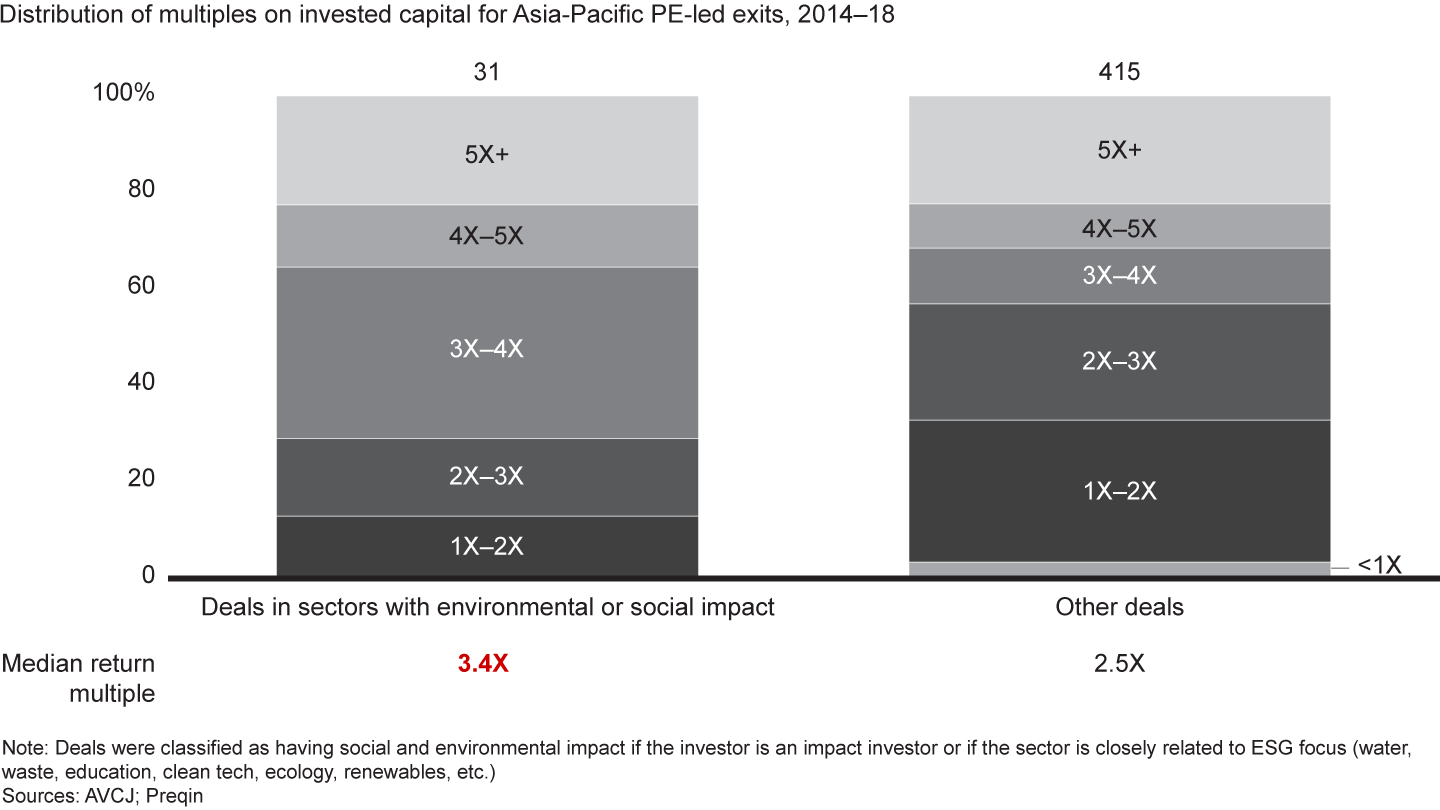
It is too early to know if private equity impact deals can consistently generate returns that match investors’ expectations. But there are some promising signs. We took a sample of about 450 PE-led exits conducted in the past five years in the Asia-Pacific region and isolated those that either involved impact funds or focused on sectors that score high on ESG, including clean tech, ecology, renewables, education, waste or water. Interestingly, the median multiple on invested capital was 3.4 for deals with social and environmental impact, compared with 2.5 for other deals. We also saw lower variability in returns for these deals (see Figure 1). Of course, these companies tend to be smaller and funds hold them longer, which affects their absolute returns and internal rate of return (IRR). And one could argue as well that some of these sectors benefit from strong growth. But the findings are an important signal for a market strongly focused on financial profits.
Figure 1

Private equity funds take action
As public concern about the environment and social issues grows, private equity funds are starting to act—to mitigate risks to their finances and reputations and to build sustainable portfolios.
Limited partners (LPs) are now making ESG a priority. In 2017, Japan’s Government Pension Investment Fund, the world’s largest pension fund, with $1.5 trillion in assets under management, required its fund managers to incorporate environmental, social and governance factors into investment practice and to become PRI signatories. It also announced plans to allocate 10% of its funds to socially and environmentally responsible investments. Some of the world’s largest PE funds are also selling assets that do not meet environmental or social investing guidelines. For instance, New Zealand’s NZ Super Fund SWF divested $650 million in fossil-fuel investments in 2017, providing a strong signal to the market and adding momentum to the Global Fossil Fuel Divestment and Clean Energy Investment Movement. In Southeast Asia, Khazanah and Temasek are among the leaders in ESG investing.
With an eye to mounting investor concerns about the environment and social issues in the public equity market, LPs are increasingly insisting that private equity funds consider ESG factors in investment decisions. Bain’s 2019 Asia-Pacific private equity survey found that 60% of Asia-Pacific-focused general partners (GPs) feel increased pressure from their investors to focus more on ESG.
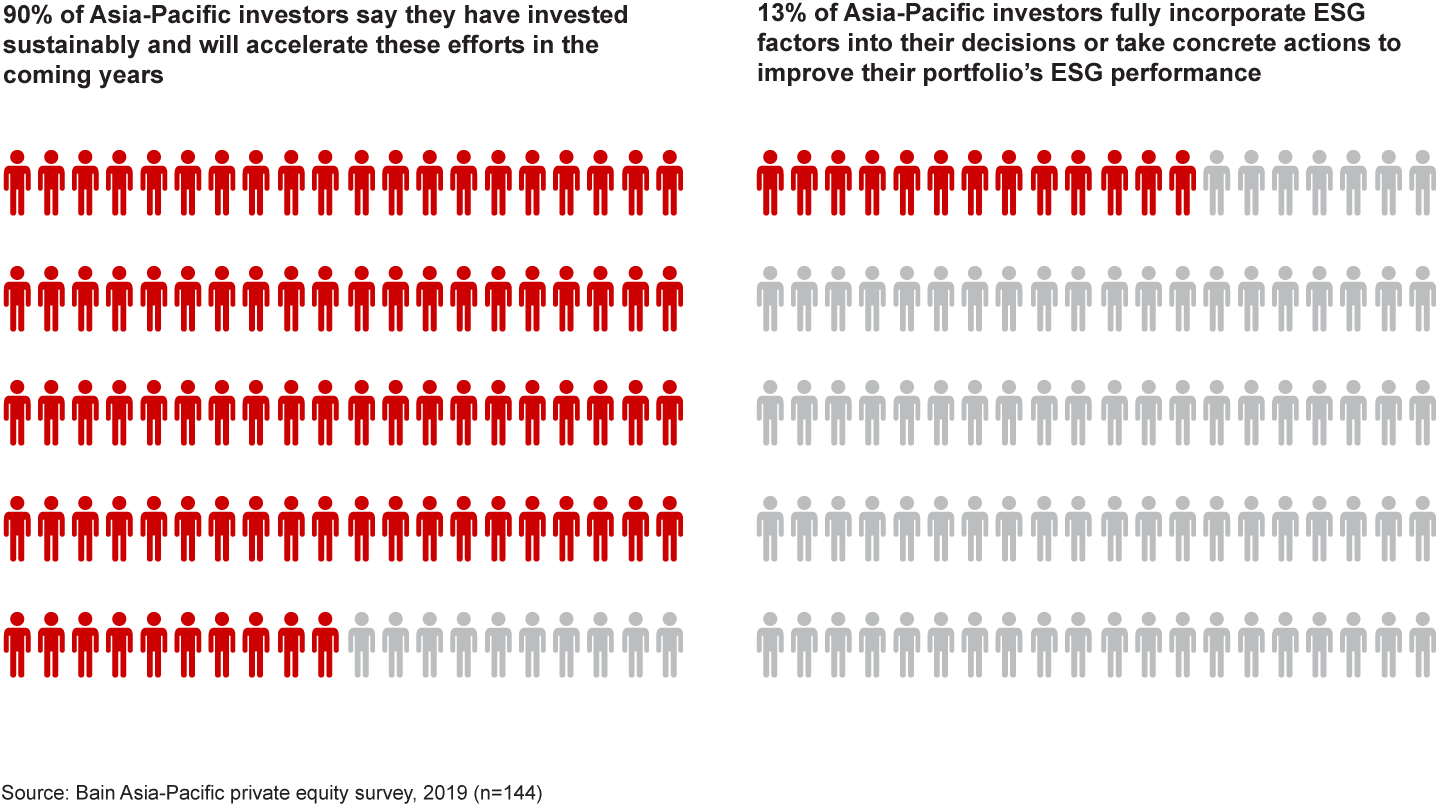
In response, global and Asian GPs are scrambling to demonstrate that they comply with ESG guidelines and that they are doing more deals that advance ESG principles. About 90% of the Asia-Pacific GPs we surveyed have accelerated their effort to invest sustainably over the past three to five years. The same number of funds plan to increase their effort and focus on sustainability in the next three to five years. However, this effort is still nascent, and some of it is simply lip service, instead of real action. According to Preqin, 55% of Asian LPs still do not have an ESG investing policy for private equity. And 60% of Asian PE funds do not require their portfolio companies to report on ESG issues or responsible investment. Our research shows that only 13% of Asia-Pacific GPs say they have fully integrated ESG considerations at the investment committee level or take concrete actions to improve the ESG performance of their portfolio (see Figure 2).
Figure 2

Impact investing, which dedicates capital to companies that generate social or environmental benefits, also is on the rise and attracting a growing number of PE funds. What used to be the terrain of core impact investors like Bamboo Capital Partners or LeapFrog Investments now is luring some of the largest PE funds, including TPG, KKR and Bain Capital. TPG’s $2 billion Rise Fund 1 was the largest pool of capital dedicated to social and environmental impact when it closed in 2017. KKR is fund-raising for a $1 billion Global Impact Fund, with India as a key investment destination. Overall, impact investing still represents a small share of total fund-raising, but it is growing, and Asia-Pacific has an important share of the pie.
Where to start
Fund managers keen to adopt an ESG focus often feel confused about the right approach. One reason is that investors and the media use the labels—ESG investing, social and responsible investing, and impact investing—interchangeably, blurring the boundaries between different aims.
For the sake of clarity, we distinguish between ESG-focused investors and impact investors as follows (see Figure 3):
Figure 3
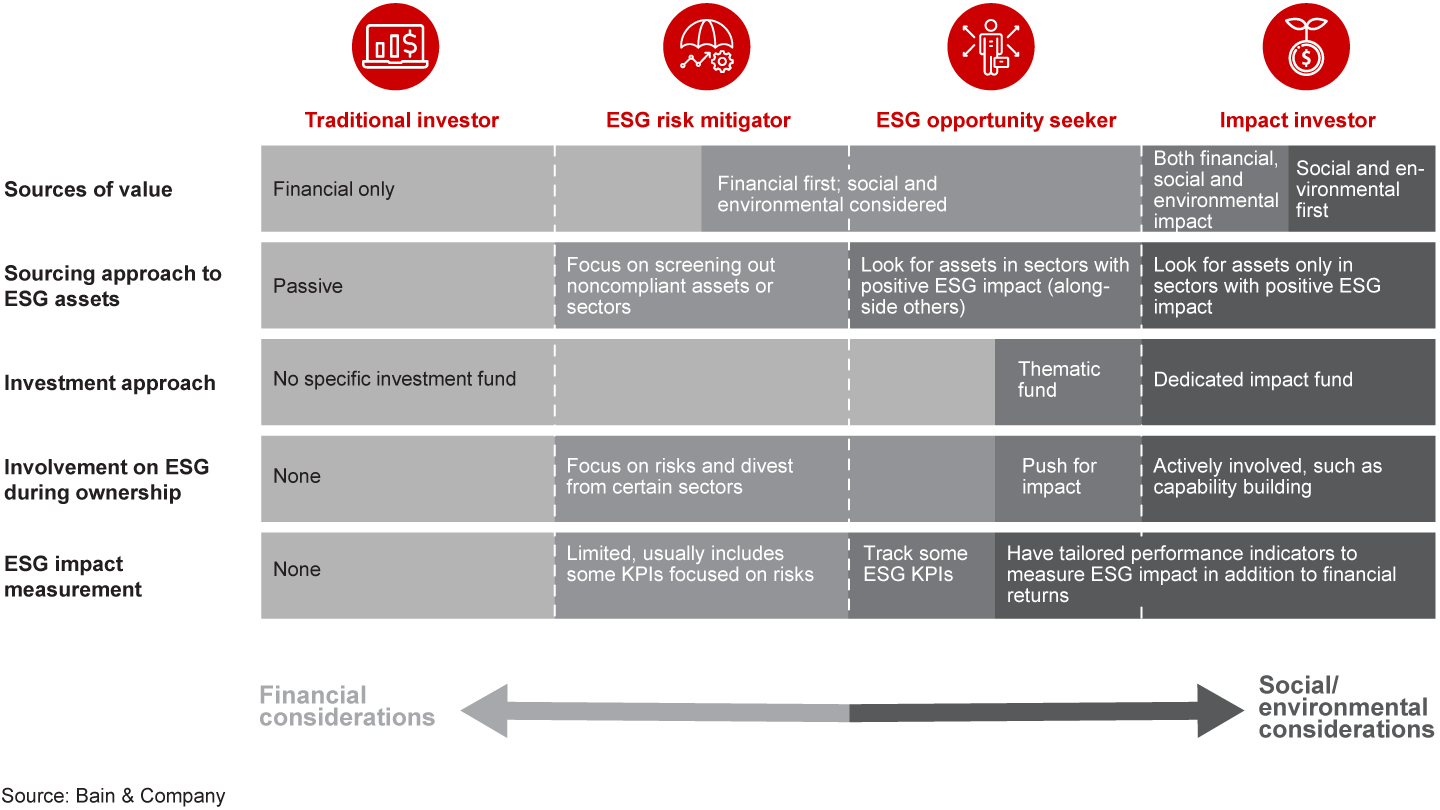

ESG risk mitigators evaluate ESG compliance and risks during due diligence and ownership, focusing on all or only a subset of ESG issues. They typically exclude investments in a number of countries, sectors or companies, and some help their portfolio companies with ESG-related work.
ESG opportunity seekers look for investment opportunities to support environmental, social or governance progress. Some work with their portfolio companies to increase their environmental or social impact, and almost all pursue investments in ESG-linked sectors such as renewables, waste management and education.
Both types of ESG investment leaders in Asia focus on risks and opportunities. But no one strategy fits all. Singapore’s Temasek pledged in 2014 to advance the sustainability agenda through its Ecosperity platform. The haze that enveloped Southeast Asia in 2015 increased Temesek’s commitment to work with portfolio companies and partners on environmental issues and social inclusion, giving a strong signal to the market. In 2016, the fund set up the Sustainability & Stewardship Group outside the investment group, with the mandate to lead the firm’s efforts in these areas. Temesek’s initiatives include managing and integrating ESG factors into the investment analysis and understanding ESG risks and opportunities in the portfolio, based on defined criteria. The fund also invests in capability building, to address long-term challenges affecting Singapore and the region. Temasek now takes direct stakes in impact funds and companies.
Government-linked investors are not the only ones leading the way. Emerging-market fund Actis, with $7.8 billion under management, has a dedicated ESG team that seeks opportunities to create long-term and sustainable value. Its due diligence process highlights gaps in ESG management to be addressed after acquisition. Actis then works with its portfolio companies to strengthen ESG performance, embedding ESG value-creation commitments into 200-day plans. The management team also tracks ESG key performance indicators at each portfolio company.
Permira, a global fund with €7.5 billion under management and an extensive presence in Asia, uses ESG criteria to screen assets and rejects those that are too risky. During due diligence, it assesses a company’s ESG track record and includes environmental and social impact in its 100-day post-investment plan.
Impact investors, unlike ESG investors, invest only in assets with significant social and environmental impact. They build ESG capabilities at portfolio companies, and most develop tailored performance indicators to measure ESG impact in addition to financial returns.
LeapFrog Investments began as an impact investment fund providing microinsurance to the poor, helping finance small business investments. Its first fund, which closed in 2010, raised $135 million and was oversubscribed by 35%. LeapFrog subsequently closed a second fund of $400 million and is now raising a third fund. Its mission has broadened to investing in high-growth companies making significant social impact while generating top-tier returns.
Today, LeapFrog focuses primarily on financial services and healthcare in Asia and Africa and typically invests $10 million to $50 million. The Asia-based investment team assists value creation by providing portfolio companies with deep operational and management experience. LeapFrog Labs, a nonprofit R&D hub, helps portfolio firms win grants for innovation investments that are too risky for commercial lenders. LeapFrog has invested in more than 20 companies and says revenues of its portfolio companies have grown an average of 40% a year since investment, while creating more than 122,000 jobs. Though it is still too early to see a return track record, the fund has several successful exits, such as Bima, a microinsurance business that it exited through a trade sale to Allianz in 2018.
Laying the groundwork
ESG and impact investing can help funds stand out in a crowded market. They ensure portfolios will be sustainable in the coming decades and can generate top returns. But before fund managers start seeking opportunities, they need to get a few things right.
An important first step is ensuring the leadership team aligns on a vision for environmental and social impact, and on balancing ESG goals with financial returns. The leadership also needs to agree on the right investment model, based on its values, differentiated capabilities and sector attractiveness.
Finally, funds need to choose reliable measures to evaluate their environmental and social impact. The United Nations’ Sustainable Development Goals provides a framework with 17 clearly defined objectives, which can help funds focus on tangible ESG goals. To measure results, however, no single approach works for all funds. The criteria are likely to be different for ESG risk mitigators, ESG opportunity seekers and impact investors.
That said, industry-specific ESG benchmarking standards are starting to emerge, including business impact analysis and the Global Impact Investing Ratings System. Sophisticated investors such as TPG Rise and LeapFrog have developed their own measures of impact, based on a single indicator. LeapFrog’s Financial, Impact, Innovation and Risk Management framework integrates financial and operational performance indicators and governance indices benchmarked to global best-practice standards. TPG Rise’s Impact Multiple of Money calculates the net positive social and environmental impact created by a company’s products in 30 areas aligned with the UN’s Sustainable Development Goals. TPG’s investment committee evaluates the impact alongside financial and business factors throughout the deal cycle.
Environmental and social considerations will play a bigger role in investment decisions in the coming decade as part of a fundamental societal shift. Alarm bells are ringing in capitals around the world, and governments are increasingly committed to tackling global environmental and social challenges. Just a decade ago, PE investing mostly involved risk-return considerations, where risk assessments already included most material ESG risks and return meant only IRR. Impact funds were microscopic in size and positioned on the margin of the industry.
Today, the number of impact firms is increasing, and no private equity fund can do without an ESG policy. In the coming years, we expect more GPs to incorporate ESG and impact considerations into their strategies. Ultimately, greater commitment to environmental and social goals will help private equity funds create financial returns while having a positive impact on the world.
Kiki Yang coleads Bain & Company’s Asia-Pacific Private Equity practice and is based in the Hong Kong office. Usman Akhtar leads Bain’s Southeast Asia Private Equity practice and is based in Jakarta. Johanne Dessard is practice director in Bain’s Global Private Equity practice and is based in the firm’s Dubai office. Axel Seemann is an advisory partner in Bain’s Private Equity and Social & Public Sector practices. He is based in the Munich office.
First published in 4月 2019