

論説

概要
- Cost productivity leaders grow total shareholder returns at more than two and a half times the rate of the average company.
- Zero-Based Redesign (ZBR) helps companies rethink cost structures and redesign how work gets done, boosting their odds of long-term success.
- ZBR strengthens an organization’s capabilities in ways that boost competitive differentiation while streamlining functions that are less critical.
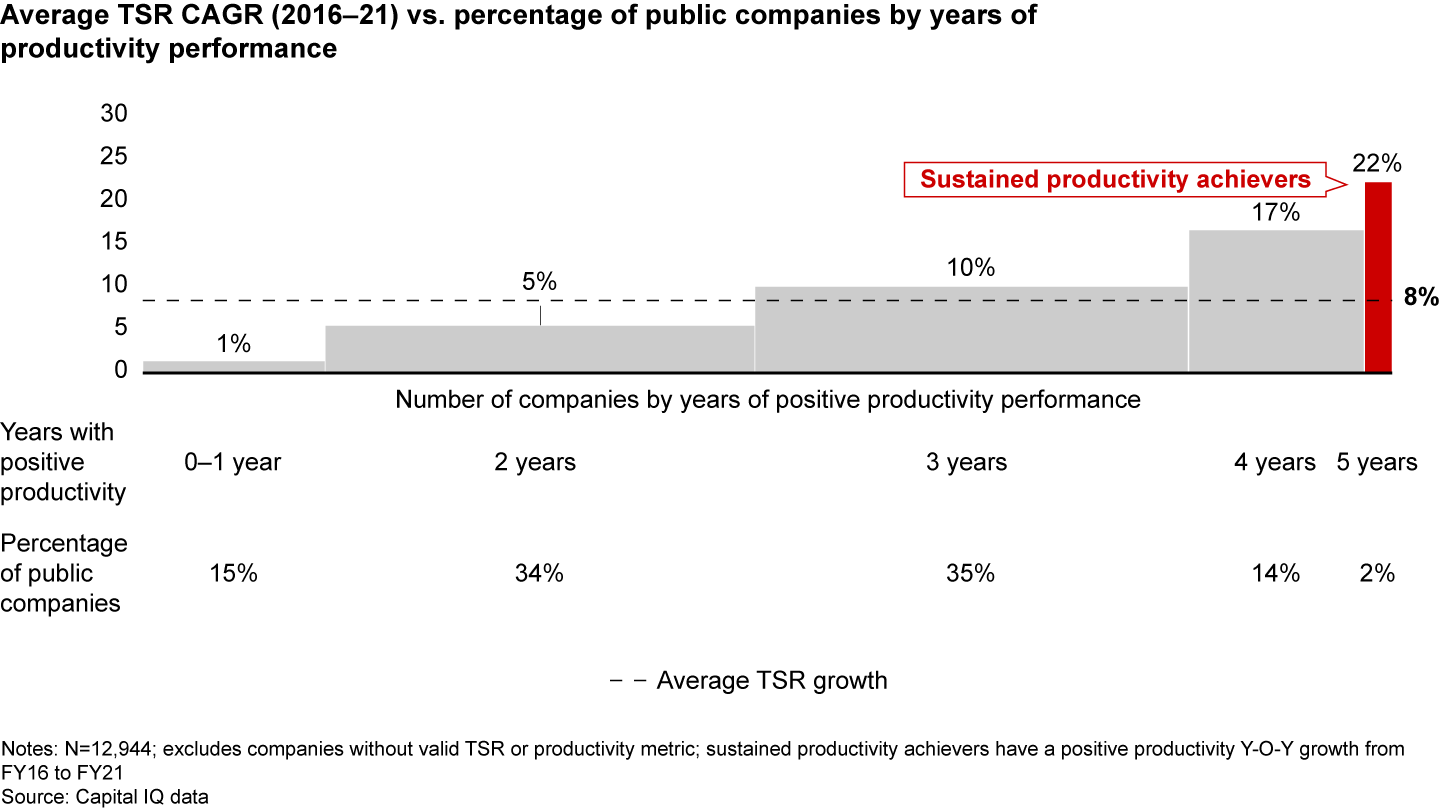
As companies reckon with more challenging macroeconomic conditions (see the Bain Brief “The New Recession Playbook”), many are putting performance improvement higher on their corporate agenda. Bain research shows that even in periods of economic growth, the best-performing companies are those that pursue strong productivity gains. When they succeed, cost productivity programs not only improve margins, revenues, and employee engagement, but also boost shareholder gains. For example, companies with the longest period of sustained productivity during 2016–21 grew total shareholder returns by 22%—more than two and a half times the rate of the average company (see Figure 1). The link between cost productivity leadership and shareholder returns holds across industries as diverse as aerospace and retail.
Figure 1

However, only the top companies achieve those results. While 90% of executives we surveyed have a cost program in place, 75% report failing to achieve cost productivity targets—with 44% of those companies missing their targets by more than 50%.
If the odds of success are so low, what are cost productivity leaders doing right? For one thing, they excel at setting a clear direction while acknowledging that they need a program to deliver sustainable structural change. They also shape their strategy and investment posture in an industry and market context, differentially investing to become “best in cost” for low-value-added capabilities and “best in class” for capabilities that can give them a competitive advantage.
In addition, they take a today-forward, future-back approach, optimizing current operations while also developing future productivity applications. They embed new technologies early and use a zero-based mindset, continually rethinking processes and costs from scratch to generate efficiencies. Finally, they build the organizational capabilities to sustain results—empowering talent, harnessing a productivity-conscious culture, and aligning incentives.
This comprehensive approach to cost optimization, so critical in companies that are responding to industry and market turmoil, is embedded in Zero-Based Redesign (ZBR), a practical yet game-changing way for companies to radically reform their cost structures, particularly fixed overhead costs, as they fundamentally redesign how work gets done. ZBR creates value rapidly while implementing long-term structural change. Companies use the process to envision and design the ideal state of the functions that will support the strategy (we refer to it as the “what”) as well as the way those activities can be performed in the most effective and efficient way (the “how”).
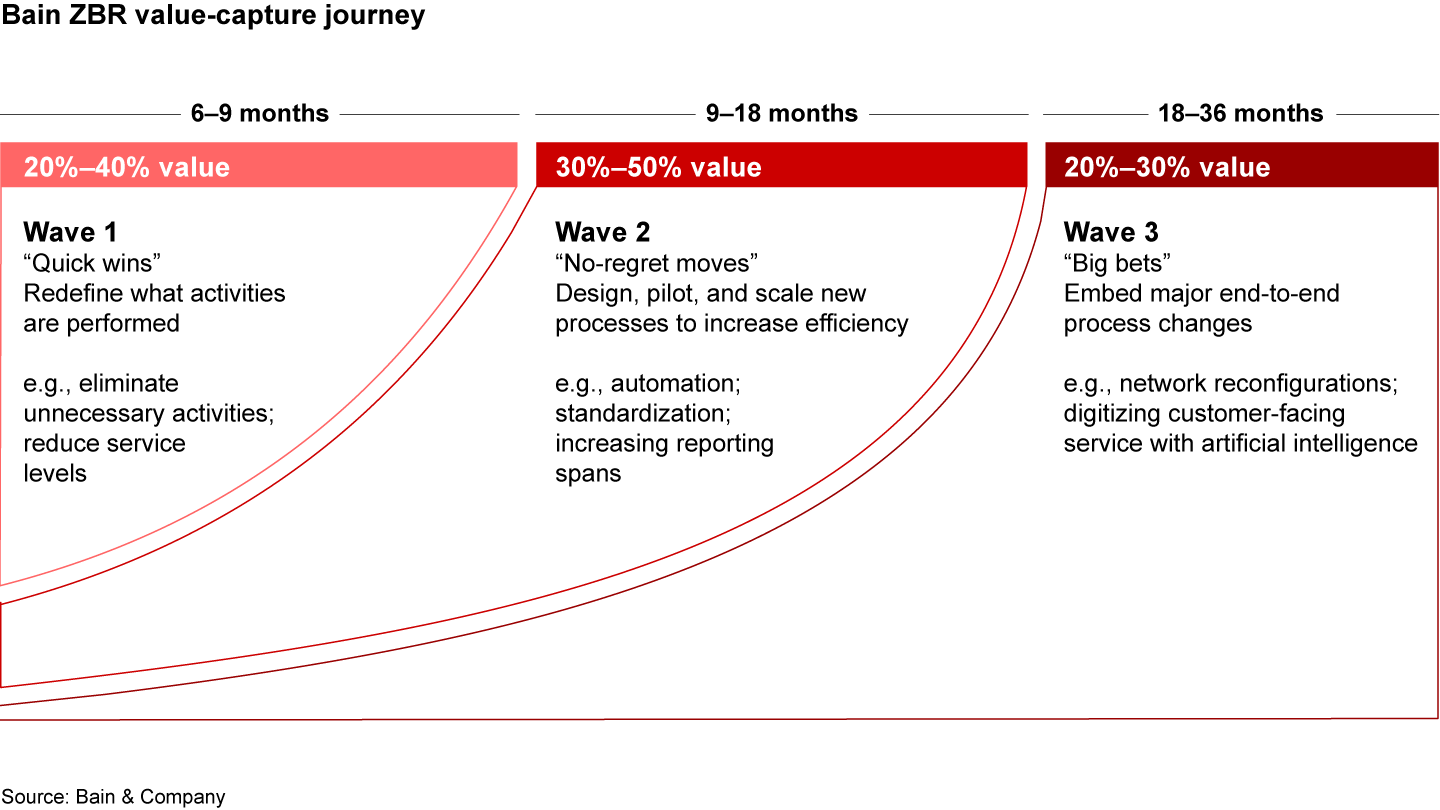
In our experience, companies that deploy ZBR quickly cut as much as 25% of spending on overhead and support functions while boosting efficiency and competitiveness. ZBR allows companies to adapt cost structures to an evolving strategy. It gives them the ability to adjust the cost optimization as required, making incremental improvements in some areas, for example, and step-change improvements in others (see Figure 2).
Figure 2

The process starts by reenvisioning the business and asking what activities and resources are needed to compete under current and future market conditions (three to five years), as opposed to what needs to be trimmed or removed. ZBR examines every area of spending with a more complete set of tools than targeted cost-cutting. The approach also analyzes which activities should be performed and at what levels and frequency, as well as how they could be better performed—potentially moved offshore, outsourced, streamlined, standardized, or automated with refined organizational structure and responsibilities.
The ZBR approach strengthens capabilities in ways that provide powerful competitive differentiation, while streamlining less critical functions. When a company uses ZBR to redesign the pared-down activities, the risk of unintended consequences is lower because the approach is so comprehensive. For example, executives can be confident that they are not cutting costs in one part of an organization only to find that the root cause was somewhere else.
Finally, ZBR defines an optimum future-state and avoids successive rounds of targeted cost-cutting that can drain employee morale. A clean-slate approach can be daunting. However, we have found that companies that transform their cost structure through ZBR generally follow a common set of actions (see Figure 3).
Figure 3
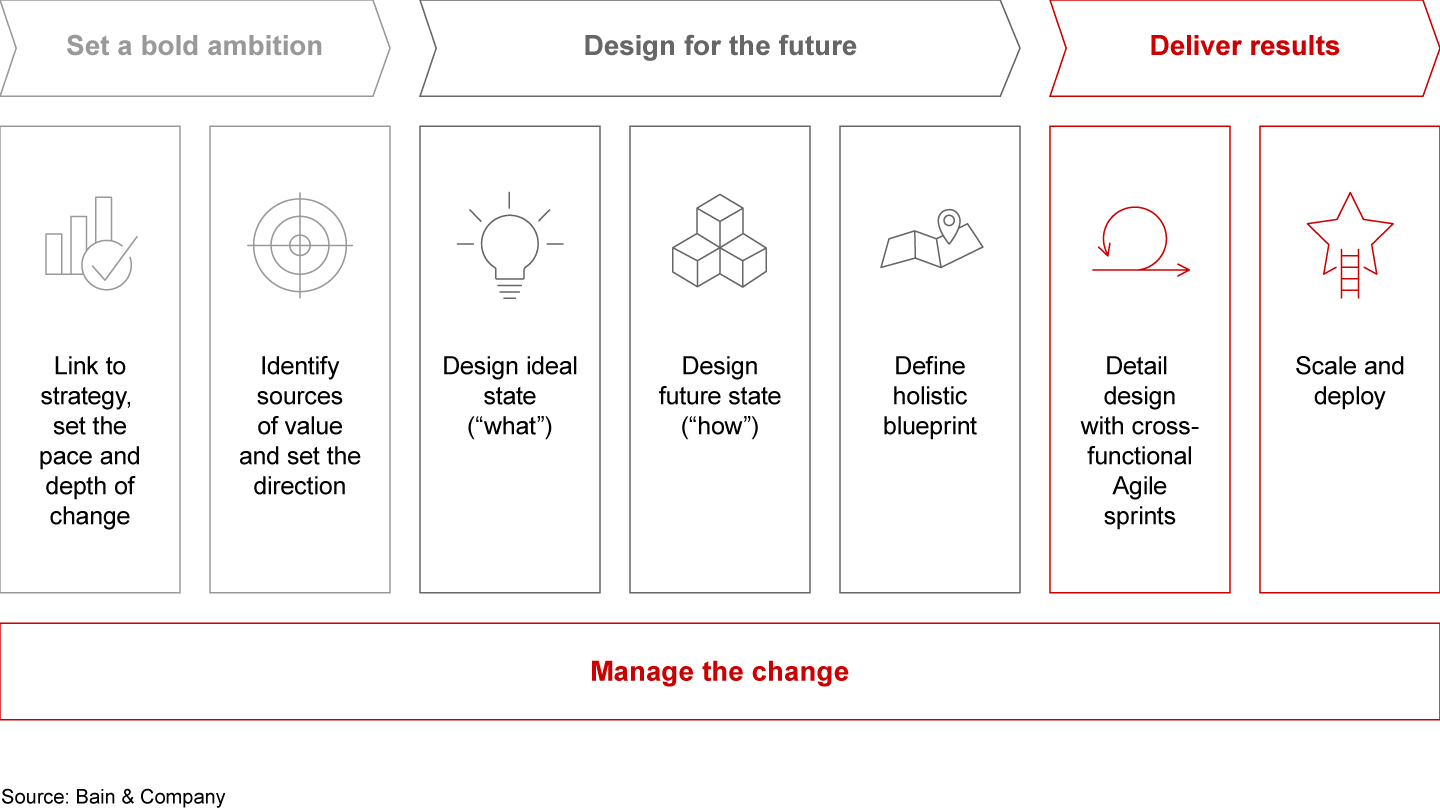

1. Align leadership around a bold ambition. A ZBR program is effective only if it is tightly linked to strategy. It starts by understanding the basics. What’s the rationale for the program? A C-suite leadership team clarifies the company’s two- to three-year strategy and aligns high-level ZBR objectives to that strategy. The leadership team also adapts the speed and depth of change to the company’s ambition and culture. For example, when considering the scope of the effort, the company can choose to redesign selected functions and spending areas instead of addressing costs on a companywide basis.
Once such decisions are made, a core team is formed, comprising experienced project leaders from various parts of the organization. That team reports to a corporate steering committee and an executive sponsor. As the program gains momentum, more people take part in initiative teams, with as much as 5% of staff providing input on the work.
2. Identify sources of value and set direction. The new ZBR team begins the process of identifying the sources of value by collecting data to create visibility, benchmark opportunities, understand complexity, and assess the company’s digital capability. That effort generates a cost map of the existing state by activity and functions as well as benchmarks, a complexity scorecard, and a digital readiness scorecard.
An important part of this step involves comparing the current state with external best practices, and then redefining a function’s mission and orienting the function to up-to-date objectives and current business challenges. For example, a finance function’s mission might shift from “provide world-class financial support to management” to “provide efficient, low-cost transactional support while ensuring top-quartile decision support services.” Having identified the new mission, the team then sets a direction to support it—the investment posture, design principles, and cost targets—and mobilizes the organization for the change.
3. Design an ideal state that will best support the company’s strategy (the “what”). Having set a bold ambition, the company begins the process of designing for the future. The team envisions each function in an ideal state, starting with a blank sheet of paper. It is an opportunity to explore which activities are necessary and which can be removed, or which service levels can be reduced to match evolving company needs. This step redefines the work that is essential. It focuses the organization on the work that customers (internal and external) care about, and on eliminating the unnecessary and non-value-added work that provides limited return on investment.
In traditional cost-cutting exercises, most companies skip this step (and go straight to step 4). They largely just squeeze their existing set of activities into a new budget envelope, striving to make existing activities more efficient without determining whether they add value for customers.
4. Design the future state (the “how”). Once the team has defined activities to keep, it then determines how those activities can be performed in the most effective and efficient way. That involves reimagining end-to-end processes and running analytical simulations of new processes. It’s an opportunity to review the integrated operating model and to define new structures, accountabilities, ways of working, and cost envelopes. Senior executives take all the data and analysis collected by the various teams and design the organization needed to support the future state. The leadership must ensure that the design is consistent with organizational best practices for spans, layers, and effective decision making.
5. Define a holistic blueprint. A blueprint integrates the what and the how and translates that strategy into future state organizational requirements. It provides sufficient detail to guide more distributed design by a broader set of participants and defines the mobilization plan for the next phase.
6. Detail design. With the overall blueprint in hand, the next step is to complete the design and deliver results. Companies launch cross-functional Agile teams to redesign, prototype, and test. They reprioritize initiatives based on the impact each one will have on overall effectiveness and value.
7. Scale and deploy. At this stage, companies translate changes into units of activity that can be implemented, prioritizing initiatives in the backlog, sequencing deployment waves, and training additional teams on Agile methodology. The Results Delivery office trains, deploys, and monitors scaling teams. That requires developing a risk mitigation plan, an implementation roadmap, and an updated sprint backlog.
8. Manage the change. The final step is deploying the Results Delivery office to monitor line implementation teams, communicate achievements, track savings, embed new capabilities, and sustain the cultural change.
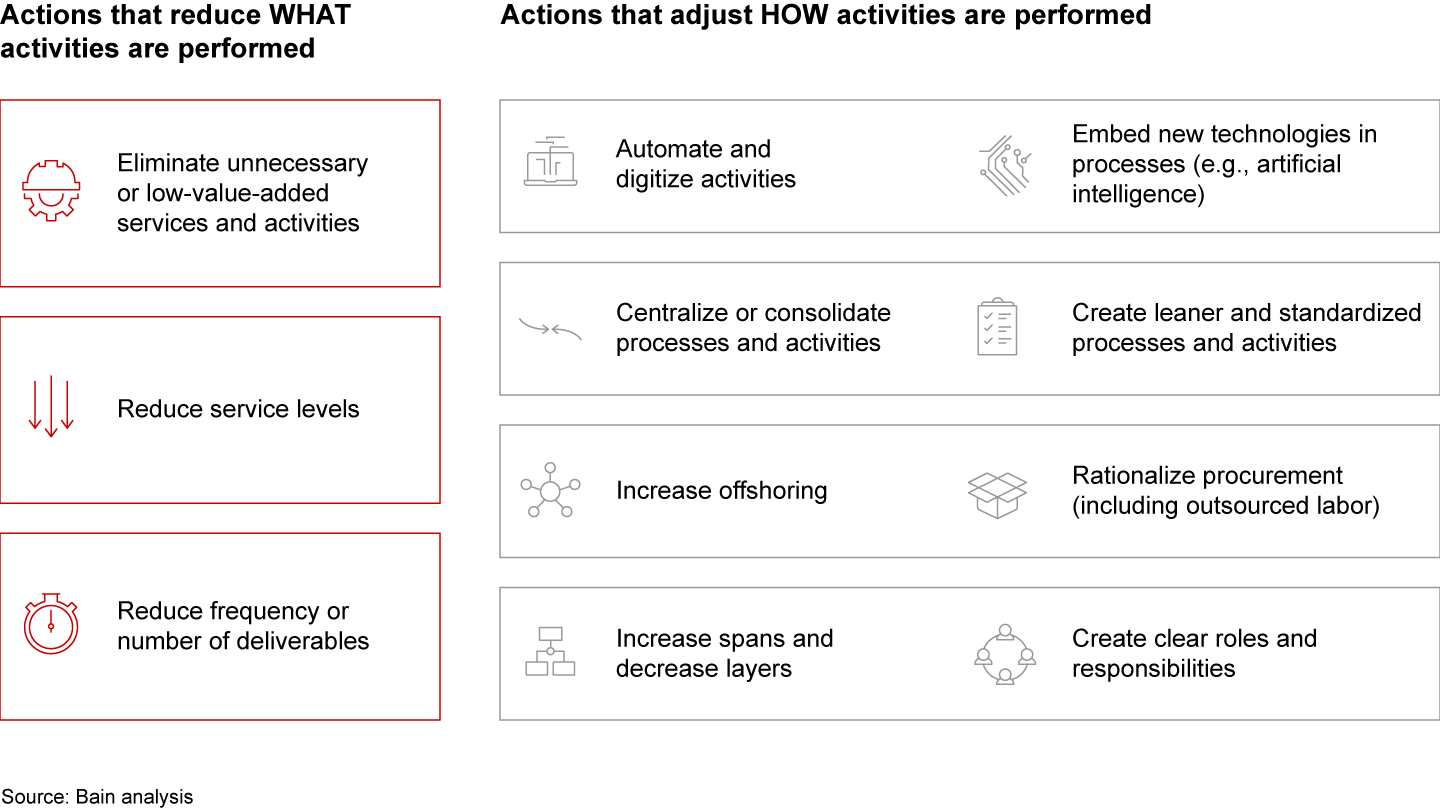
When companies follow these steps, they gain the full benefits of ZBR by making breakthrough changes to what work is done and how it gets done (see Figure 4). They eliminate unnecessary services or activities—and streamline those that seem “nice to have” but don’t add much value. That reduces service levels and the frequency or number of deliverables. The leadership team adjusts how activities are performed, embedding automation, centralizing and consolidating processes, standardizing activities, and rationalizing procurement. They increase spans and reduce layers, clarifying roles and responsibilities in the process.
Figure 4

The scale of the effort may sound daunting, but in practice the actions build on one another in a systematic way, resulting in a focus that typically achieves a dramatic transformation for the business.
To see how it works in action, let’s look at the experience of one global medtech manufacturer.
The company had been struggling to contain overhead costs and operational complexity that was hampering its ability to respond to customer and stakeholder needs. The problem was particularly acute in the IT department. During years of rapid growth, the size and global reach of the company expanded, and so did its IT spending. The IT department created a ZBR team to lead the program. In workshops, the team examined the strengths and weaknesses of the current IT department, comparing its efficiency and effectiveness with peers. After taking into account industry benchmarks, future needs, and the revamped strategic agenda, the leadership team set a goal of reducing IT costs by 25%. The company dissected its entire IT function, ultimately halting some activities and projects, decreasing service levels on others and redesigning processes that helped it reach maximum efficiency.
Along with a revised mission statement that included cost advantage and innovative use of technology, the ZBR team identified six areas of focus: IT service offerings, capabilities, processes, application and software management, organization, and governance. The team analyzed costs of the existing state, created an ideal state, and compared them with estimated top-down cost savings for 24 existing activities in application development, maintenance, and infrastructure. The team then used these estimates to identify the largest savings opportunities and build future state designs from the bottom up.
Two large opportunities were third-party maintenance contracts and PC support and management. As the team learned, the company frequently paid for higher service levels than were needed. For example, after upgrading its enterprise resource planning software, the company was able to lower the maintenance tier from premium to standard, generating savings of more than 15%. At the same time, many full-time employees had multiple and often redundant computers. Scaling back both of those areas helped IT pare down costs without compromising service and still deliver fast, tangible savings. In two years, the IT department had completed its plan and reduced spending by 25%, freeing up resources and improving effectiveness in critical support areas.
The company also brought its quality function through the ZBR process. The quality function’s costs had grown beyond peer benchmarks. Leadership was ready to scale back but needed to do so without compromising service delivery. They found opportunities to automate customer complaint functions and move some work offshore, as well as quick results gained by streamlining and coordinating audits, meetings, and approval processes. In the end, the company realized savings of more than 20%.
Monday morning 8 AM
Leadership teams grappling with high costs and complexity, and aiming for a step change in performance, can ask a few key questions to determine whether ZBR can help achieve their goals:
- Has your company grown through a series of acquisitions or mergers, resulting in unnecessary overhead costs?
- Have industry dynamics (such as regulatory reform) put pressure on profits?
- Has overhead grown or become more complex without the company achieving significant added scale?
- Are you struggling with process complexity and slow decision making?
- How recession-proof is your company?
First published in 9月 2022