

論説

概要
- Attempts to digitalize documentary trade finance have fallen short because each project has focused only on a narrow slice of the entire process.
- Blockchain-powered platforms, by contrast, hold promise to provide trade participants an end-to-end digital process and an easier, faster, less-expensive proposition.
- To realize the potential of blockchain, industry participants will need to agree on networks with common standards and business rules.
- Certain institutions also need to play a role as “superconnectors”—large banks, government agencies or other trusted parties that will serve as a bridge among networks to share critical information.
Banks and technology firms have tried for a couple of decades to digitalize the documentary trade finance process, but most transactions today still rely on paper. Now they are trying again—but this time, armed with better technology. Blockchain (a type of distributed ledger technology) promises to deliver scalable global networks that enable easier, faster and more efficient digital transactions for all parties involved in an international trade transaction.
Written in collaboration with
Written in collaboration with

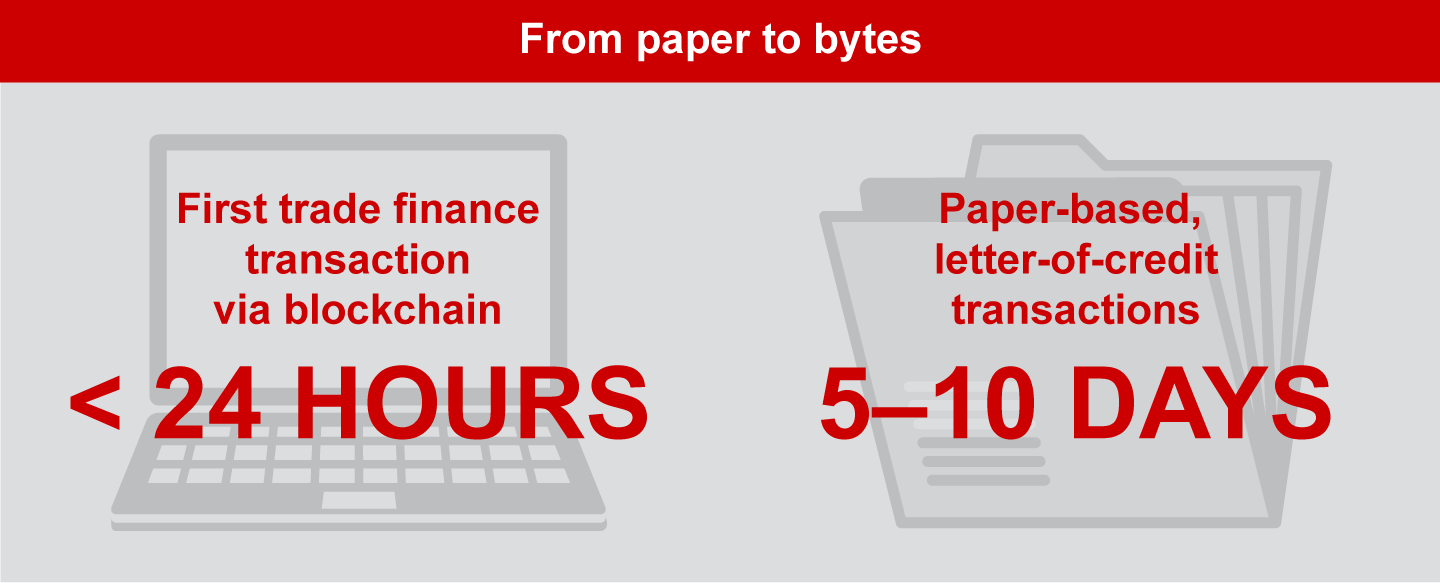
In May, the banks HSBC and ING carried out the first commercially viable trade finance transaction via blockchain, for a Cargill shipment of soybeans from Argentina to Malaysia. The transaction, on a single shared platform, took less than 24 hours to complete after details were shared with the banks, compared with 5 to 10 days for conventional paper-based, letter-of-credit transactions (see the sidebar “Behind the first fully digitized letter-of-credit transaction”).
Letters of credit, also known as documentary credits, are among the most popular instruments in international trade. They represent a written liability in which a bank, on behalf of a buyer, assures a seller the payment will be made according to the agreement in place. The added risk mitigation can stimulate more trade, especially if improvements underpinned by blockchain make the products more attractive. Bain & Company estimates that blockchain could increase global trade volumes by $1.1 trillion by 2026, from the current base of $16 trillion.
But in this next stage, it is essential to heed the lessons of why previous attempts to digitalize documentary trade have had limited impact.
Lost on digital islands
Consider two of the more prominent solutions introduced about five years ago. A bank payment obligation, or BPO, is a digital alternative provided by Swift, the global cooperative relied on for secure communication between banks. BPO uses automated data checking of standardized data sets, rather than stacks of paper. Likewise, MT 798, an authenticated message service to exchange trade data between companies and member banks of Swift, has been in place for eight years. While these efforts have successfully digitalized a slice of the trade process, their reach has been limited. These standards have been too bank-focused, and asked for too many changes by companies to understand and accept a new risk playbook. And they did not come together into a single platform that could be scaled up. As a result, our conversations with many of the relevant bankers indicate that relatively few corporate clients have adopted these methods. The same pattern has applied to various electronic bills of lading and e-airway bills by e-trading systems.
Banks have invested in digitalization mainly in their specific parts of the process, such as digital channels; integration with internal systems so that corporate clients no longer need to sign paper application forms or provide wet ink signatures on loan repayment instructions; or in optical character recognition to digitize paper documents for processing by internal operations. The common thread running through these procedures is their narrow appeal. But the end-to-end trade process is broader than an application or instruction. It requires the digitalization of all parties in the trade life cycle, including customs agents, shippers and port authorities.
Banks find it challenging to invest in external systems on top of their existing investments in digital trade channels and back-office systems. Other vendors have also been trying for decades to provide digital platforms to connect these parties, but banks are hesitant to offer a private solution they do not own or control, as these solutions could pose risks to their reputation or operations and have limited appeal to their clients. Logistics providers have offered platforms to digitalize the logistics process, but the platforms do not link to the financial side of the transaction.
The array of processes to date, in short, do not communicate well with each other. They are digital islands, with paper often serving as a bridge to each island.

Bringing Trade Finance Into the Digital Age
How blockchain can help revitalize documentary trade.
Meanwhile, the proportion of global trade using documentary credit has declined from about 50% in the 1970s to about 15% today. Much of that volume moved into open account trading, in which goods are shipped and delivered before payment is due, usually in 30 to 90 days. Several factors account for the shift:
• Cost. Current forms of documentary trade have higher costs, with fees ranging from 0.125% to 1% of a transaction’s total cost. That is significant for the biggest users of documentary trade, commodity trading companies, whose profit margins are thin.
• Risk. Once an exporter and importer have established a relationship, they have less need for risk mitigation from banks. And the development of global supply chains and trade between large global multinationals with high levels of trust naturally leads to increased use of open account trade products and the ability to access financing.
• Inconvenience. The need to submit multiple documents and wait for them to be checked and processed fosters inconvenience, long turnaround times and the need for cooperation of trade service providers, government bodies, logistics companies and internal departments. One error, and the process must restart to find a new agreement or accept the error. In fact, errors are the norm, with roughly two-thirds of transactions requiring rework or acceptance of a documentation error.

Diego Santamaria: Rebooting a Digital Solution to Trade Finance
Companies that can effectively use blockchain technology to digitalize their operations can come out ahead of the pack.
How blockchain would revive documentary trade
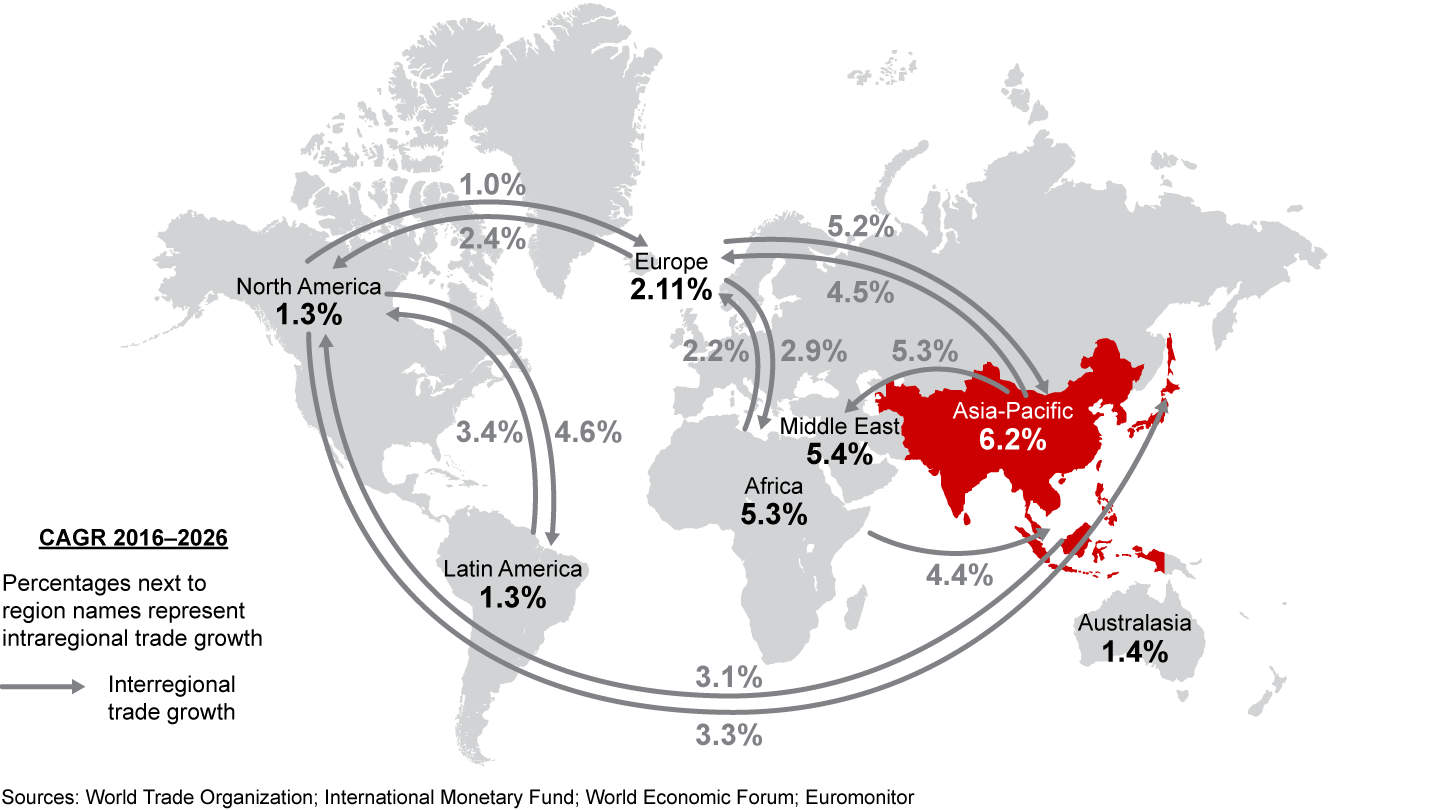
Nevertheless, documentary trade continues to play a critical role, particularly as trade expands in less mature regions of Asia-Pacific, Africa and Latin America (see Figure 1). These markets have greater perceived risk and uncertainty about payment from a buyer or delivery from a seller. While most companies using letters of credit trade commodities such as energy products, chemicals, grains and flowers—all high-volume shipments that require bank intermediation—major corporations also use letters of credit in these regions for shipments to business customers.
Figure 1

For banks, moreover, fees and financing from documentary trade still constitute a major source of revenues. The top 10 global trade banks had $5.8 billion in trade finance-product revenues for 2017, according to the analytics company Coalition. Bain estimates that blockchain-based solutions could increase the global banking industry’s annual revenue from documentary trade financing by $2 billion by 2026, on top of about $8 billion in annual revenue without blockchain. That lift would reflect banks financing more documentary trade transactions, attracting business not currently participating in cross-border trade, and companies selectively shifting from open account to documentary transactions for greater risk mitigation.
Blockchain promises to address the current bottlenecks in trade finance and thereby radically redefine global trade processes, through these potential benefits (see Figure 2):
Figure 2
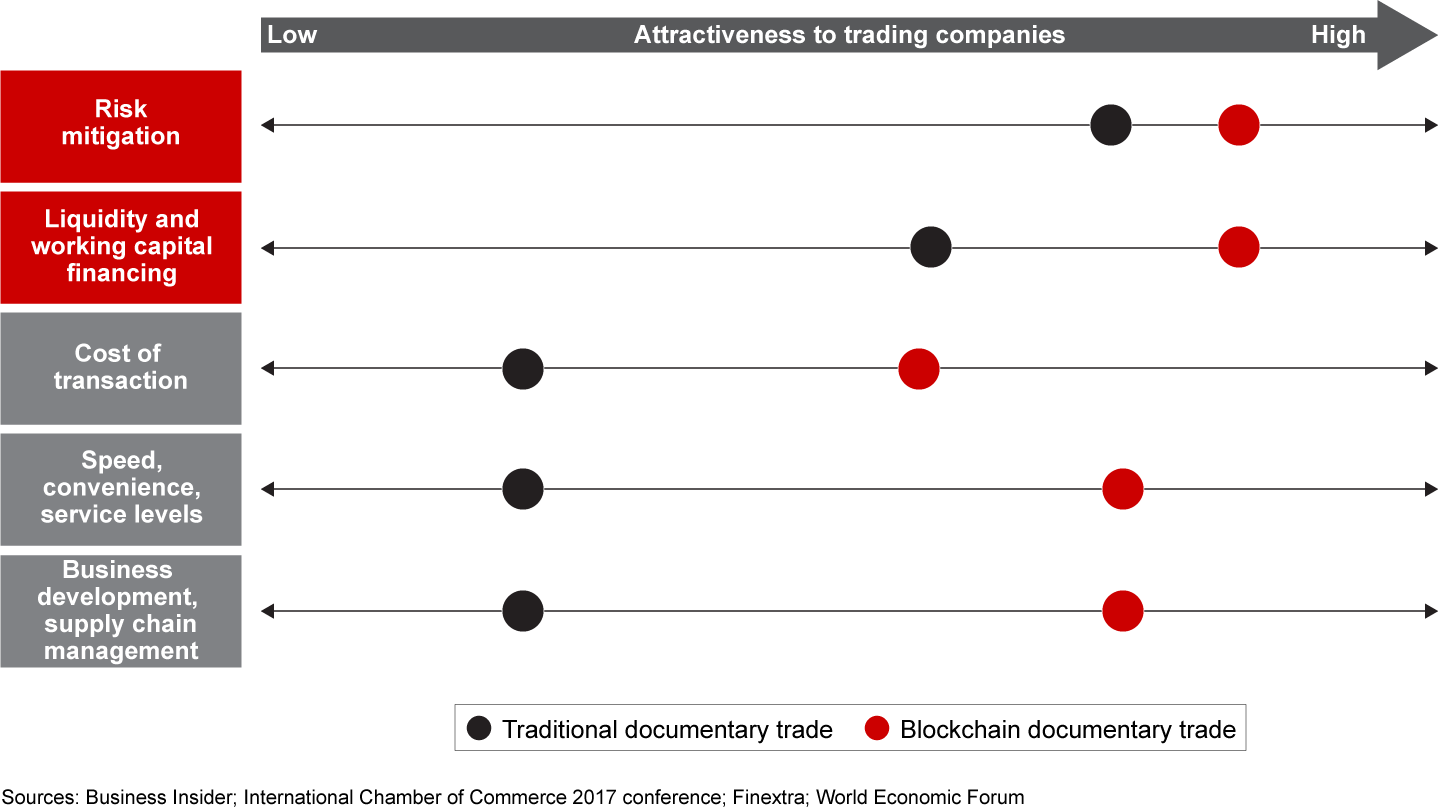

Figure 3
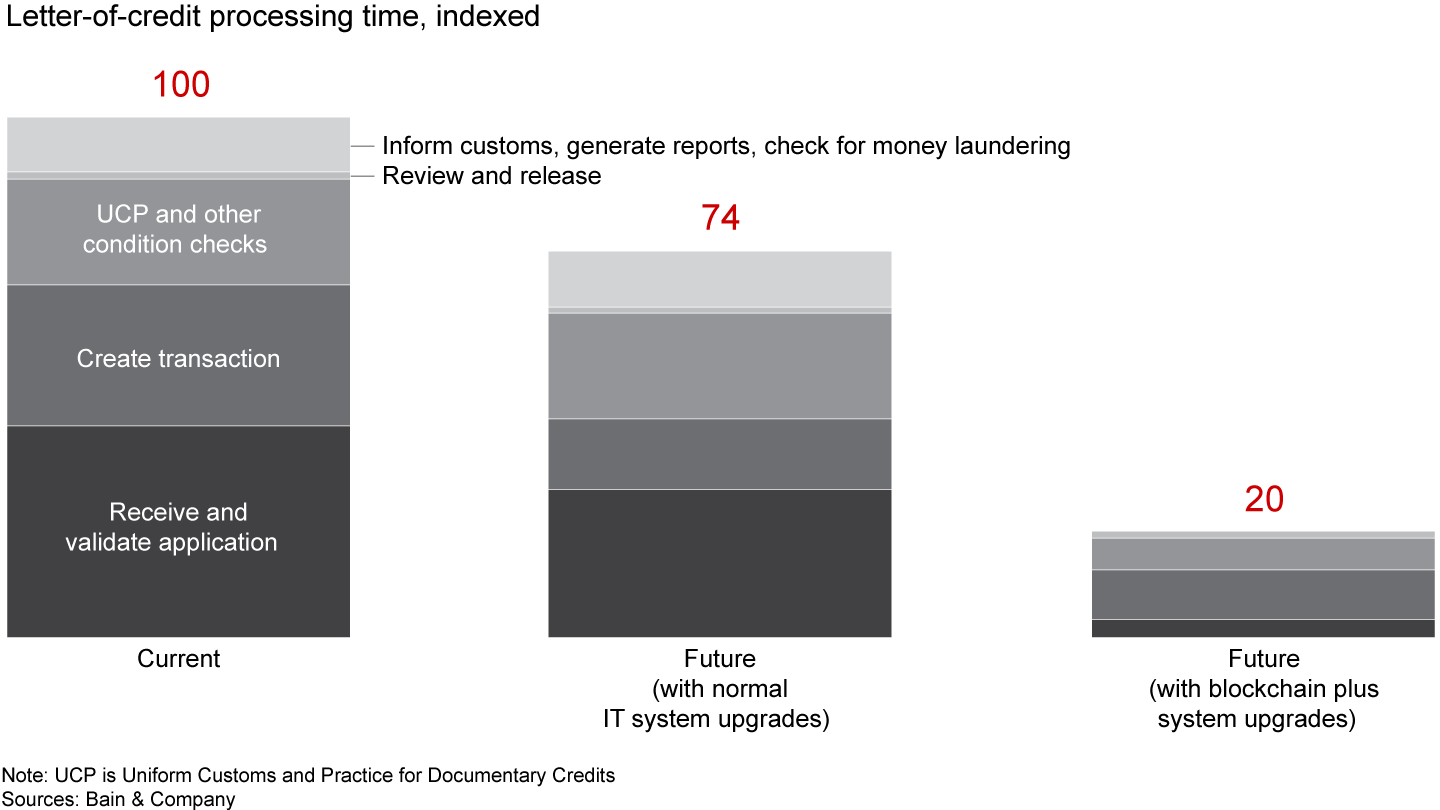

• better service, including faster turnaround times, extended cut-off times and longer servicing hours (see Figure 3);
• lower processing costs for banks and other ecosystems participants;
• more trade financing made available by bridging the gap between perceived and actual risk;
• faster financing decisions;
• a way for each participant to see all the steps involved from purchase order to payment, which improves how businesses manage their risks and cash flow;
• an accurate representation of each record, which can be validated instantly;
• freed-up working capital through reduced friction, whose benefits will need to be shared by both buyer and seller; and
• speeded up supply chain decisions for clients.
A number of potentially scalable blockchain platforms are becoming available (see "Many banks are adopting major, scalable blockchain platforms"). They range from the Voltron project, in which at least 10 banks are assessing the formation of a trade business network using R3’s Corda platform, to logistics firms collaborating with IBM.

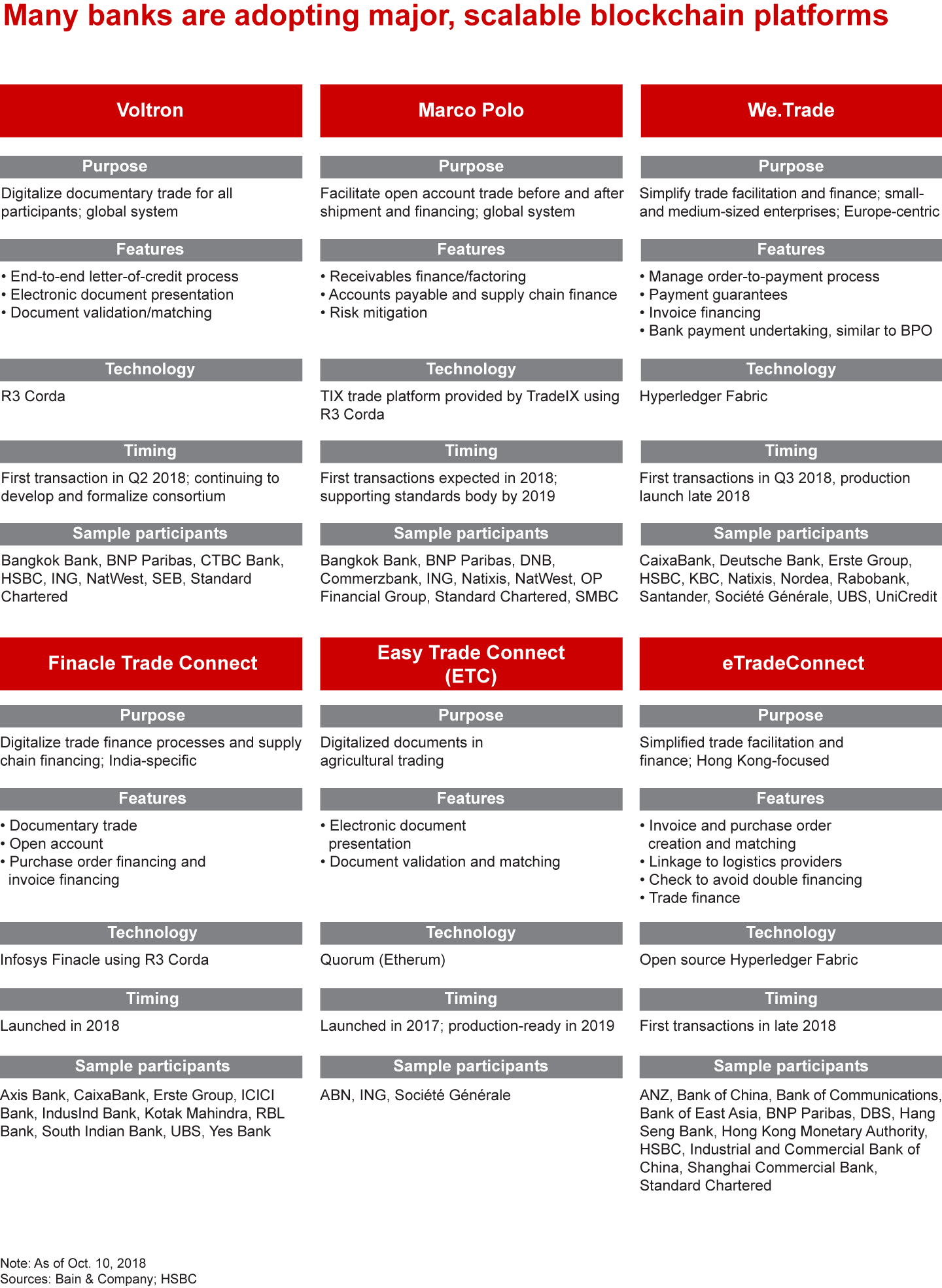
While each of these networks uses different technical standards and business rules, they all will have an operator that runs the network on behalf of the members. Business blockchain networks will need an operator because they will be permissioned, with each member having a verified identity, unlike a public network such as Bitcoin. In some cases, the operator will be the primary member, such as an agricultural commodities firm running the network for all the participants in its supply chain. In other cases, members such as banks will set up an entity to run it for them. Business networks may also use services from third parties, such as e-presentation services from Bolero, essDOCS or eTitle, to facilitate the trade process.
Building a network of networks
The danger for these developing platforms is that with each trying to do something different, they repeat the pattern of forming digital islands as they move toward production versions. To realize the potential of blockchain, platform developers and participants should learn from the past, avoiding the fragmentation that limits benefits for the trade ecosystem and thus prevents widespread adoption. Instead, real progress will hinge on taking a different approach built on three principles.
Think big. Widespread adoption will require collaboration and significant investment from all of the ecosystem participants, including trading companies, logistics and shipping firms, banks and customs authorities. Consortiums should halt their silo development and instead form a larger, more valuable network, consolidating the initiatives that fail to gain broad support and making those initiatives that do gain support interoperable with each other. The decentralized nature of the technology offers the promise of collaboration among competitors and other situations where there is less than full trust. Banks in a network, for instance, will need to agree on a set of technology standards and business rules.
Since the platform is essentially a utility that provides end-to-end digitalization from procurement to payments, each will need to develop common standards for the technology and for business processes. Governance should be structured to encourage adoption and use by all participants in the ecosystem. And it will require significant investment to build out the utility and integrate it with existing IT systems.
Start small. An aspiring platform should start with a small set of innovators and early adopters that are heavy users of documentary trade, and should focus on one corridor with meaningful trade volumes, such as India to Europe. The best early adopters will know they have problems and actively try to fix them.
Then add a legally binding transfer of goods or title to those goods. That’s typically done today through paper bills of lading from ship owners, although legal standards now exist for electronic bills of lading. The platform can expand with other select companies that are heavy users of letters of credit, such as commodities traders, focused on specific trade corridors.
Grow fast. While one global trade network might be ideal, it is not likely to materialize, at least in the medium term. The more likely outcome is a network of networks, some for mainly banks, some for shippers, some serving individual industries or countries (see the sidebar “What trade finance networks will look like”). Each of those individual networks will need sufficient scale and market participation in order to create value. And different networks may have different rules and shared data, so it will be difficult for them to connect together. While it will be much easier if they use the same underlying platform, rather than different technologies, we also see the need for other types of network interoperability.
Enter the superconnector
We see a need for certain institutions to play a role as “superconnectors”—trusted parties that will serve as a bridge among networks (see Figure 4). Large banks, with their historical function as trusted intermediaries and with sufficient scale to invest in the technology, could be well placed to play this role, especially banks that belong to more than one network. Superconnectors will share information between, say, a shipping network and an oil and gas network. The shipping network tracks the flow of goods and deals with customs documents, while the oil and gas network tracks data pertinent to the producer sending the oil and the refiner receiving it. These business networks, which are private permissioned networks, will use blockchain for several tasks such as know-your-customer compliance and cross-border payments.
Figure 4
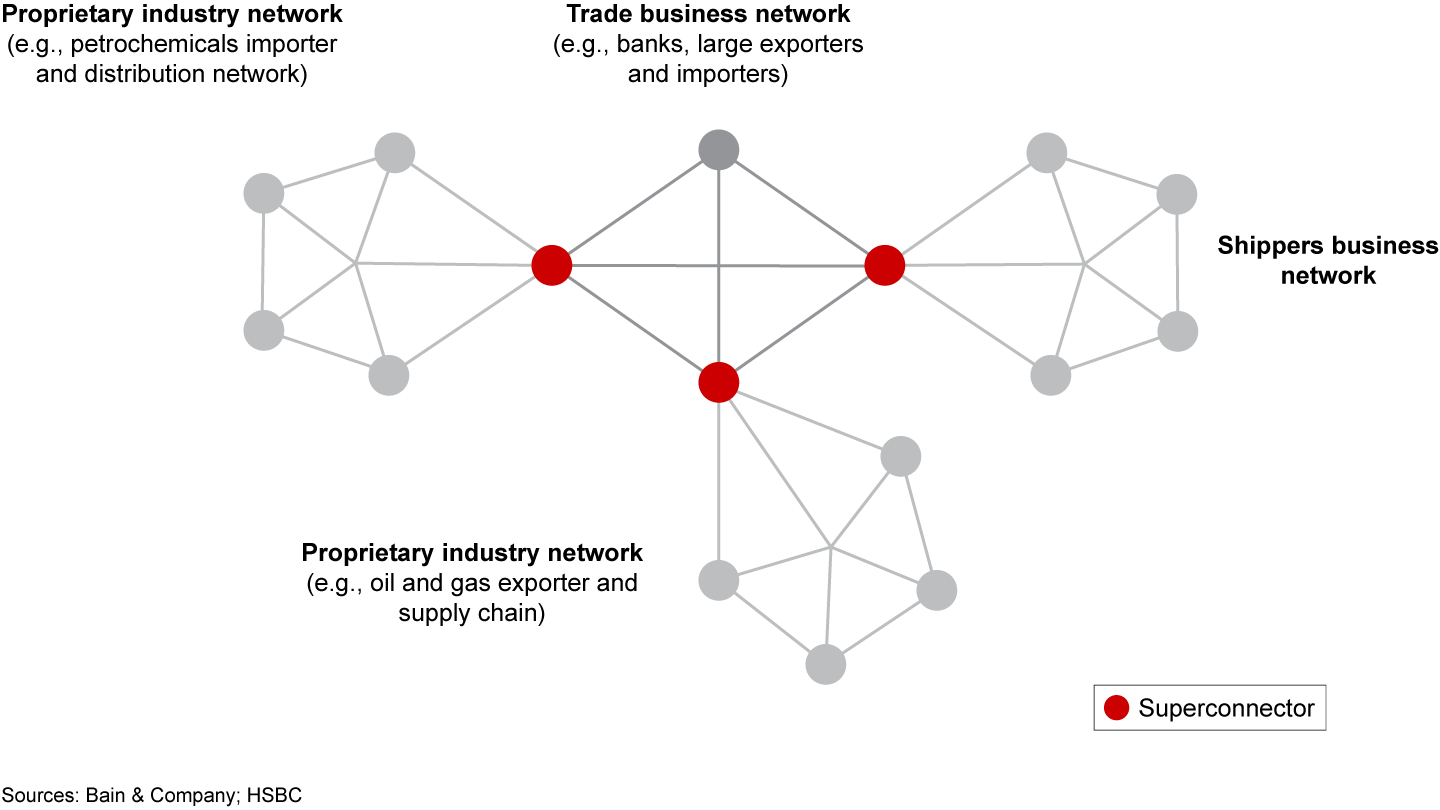

A bank that is a member of multiple networks can also add information on financing and collateral. It would be a natural superconnector, in part because accessing more networks provides the bank with more information that helps it reduce risk. Banks also are trusted, regulated entities. Other entities might also serve as superconnectors, such as customs or other government agencies, business network operators or major technology firms. Superconnectors would need to develop rules on how to operate across networks. Fortunately, there are emerging efforts to establish those rules, such as the standards recommended by the Universal Trade Network.
The business case for adopting blockchain in documentary trade is clear cut: increase trade efficiency, mitigate risk and expand trade to smaller companies and regions with less robust trade mechanisms. Past efforts to introduce transformative digital technologies have faltered because they have produced narrow, uncoordinated solutions that each benefits only a small set of participants. Only a more collaborative effort, with networks that can connect seamlessly on a single technology platform, will meet the demand for trade finance and allow global trade to reach its full potential.
Behind the first fully digitized letter-of-credit transaction
For years, banks and technology firms have tried in fits and starts to digitalize the documentary trade finance process. Now they are trying again, armed with blockchain, a type of distributed ledger technology.
Cargill’s soybean shipment in May 2018 was the first live end-to-end trade finance transaction on a scalable application for a fully digitized letter of credit, using blockchain. HSBC Singapore acted as the issuing bank for Cargill Singapore, and ING Geneva acted as the nominated bank for Cargill Switzerland.
The entire flow mirrors the existing letter-of-credit process. That process involved a number of steps: agreement on terms of a letter of credit, the application, the issuance, the advising, the amendment request and its approval, the document presentation, the discrepancy resolution and the bill-settlement instructions. The actual documents included a charter bill of lading, a packing list and an invoice. Remarkably, documentation exchange and checking time took place in less than 24 hours, compared with the typical period of 5 to 10 days for a conventional, paper-based process. Both banks hope that using blockchain will minimize fraud risks in letters of credit, and reduce steps in the process by automating procedures.
“We took a highly manual, complex transaction and made it more secure and efficient,” said Rani Misra, regional treasurer at Cargill. “We see the exciting potential of extending this technology into other areas of our financial ecosystem.”
What trade finance networks will look like
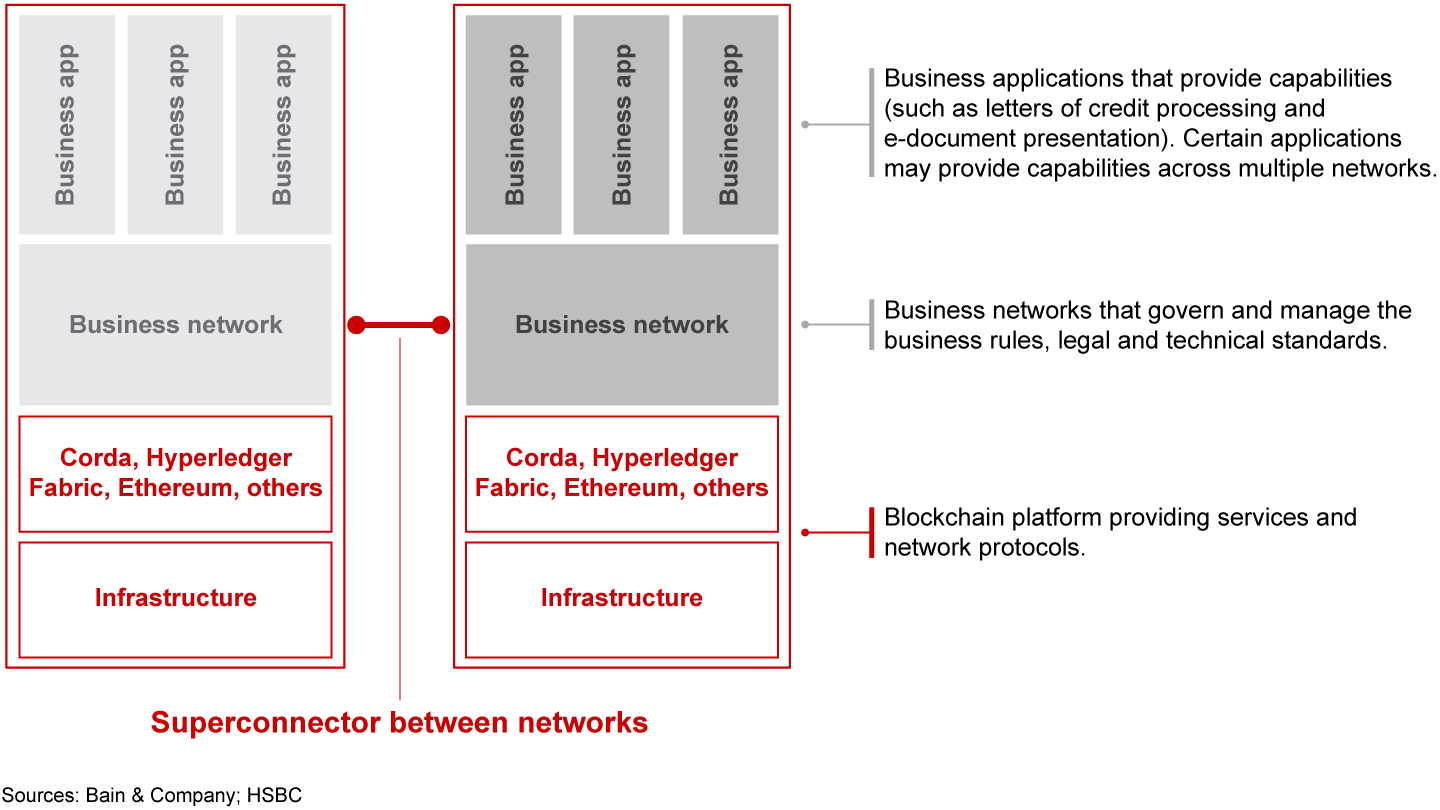
In the evolution of blockchain for trade finance, having a single global trade network might be ideal, but that probably will not occur anytime soon. The more likely outcome is a network of networks. As these digital business networks develop, they will share some common traits (see Figure). Each will have technology standards and business rules to govern member interactions. They typically are tied to a single blockchain platform, such as R3 Corda or Hyperledger Fabric. And they may offer apps providing bespoke services such as e-presentation of trade documents or services that transcend multiple networks, such as know-your-customer utilities.
These networks are not likely to replace existing trade systems that provide other capabilities required by banks, including workflow management, or client and bank user reporting. However, the networks will do what current back-office trade systems cannot: enable participants to share data and documents between participants in real time and a secure fashion, creating a true and valid digital record.
There are different options for how the networks will integrate with existing banks systems. Some banks will run parallel to the existing systems with limited integration, others might get embedded into back-office systems to simplify connectivity and minimize the investment required.


Written in collaboration with HSBC
HSBC Holdings plc, the parent company of HSBC Group, is headquartered in London. HSBC serves customers worldwide from approximately 3,900 offices in 67 countries and territories in our geographical regions: Europe, Asia, North America, Latin America, and Middle East and North Africa. With assets of $2,607 billion at 30 June 2018, HSBC is one of the world’s largest banking and financial services organizations.
In Australia, this document is for distribution by HSBC BANK AUSTRALIA LIMITED ABN 48 006 434 162 AFSL 232595 (for retail and wholesale clients, as defined under the Corporations Act) and/or THE HONGKONG AND SHANGHAI BANKING CORPORATION LIMITED, SYDNEY BRANCH ABN 65 117 925 970 AFSL 301737 (for wholesale clients only), (individually and together “HSBC”), and is intended for reference and illustrative purposes only. It does not constitute an offer or advice for you to purchase from or otherwise enter into a transaction with HSBC or any of its subsidiaries or affiliates.
Sen Ganesh and Thomas Olsen are partners with Bain & Company’s Financial Services practice. Joshua Kroeker is Director and Blockchain Lead at HSBC Commercial Banking. Venkatraman P is Director and Global Head of Documentary Trade at HSBC. They are based, respectively, in Bangkok, Singapore, Hong Kong and Hong Kong.
First published in 10月 2018