

論説

At a Glance
- A growing gap between US defense requirements and defense budgets will increase the role of private capital in the industry.
- Promising investment areas include technologies with both defense and commercial markets, high-volume platforms and systems, and sectors with affordability challenges.
- The value of venture capital deals in the defense industry has grown 18-fold in the past 10 years, outstripping deal value in other industries.
- Disruptive venture-backed companies with compelling technologies and competitive cost levels are positioned to take market share.
Private capital is poised to play a critical role in the modernization of the US defense industry. As battlefield demands shift, the government is seeking to accelerate investment in advanced technologies and encourage disruption. Private capital will help the US close the investment gap, innovate faster, and improve the affordability of defense platforms and systems.
Venture capital and private equity firms can add value in two key areas. Disruptive start-ups need growth-oriented investments to develop new capabilities and achieve step-change improvements in cost and time to market. In particular, private capital can play a key role in reducing the cost of delivering battlefield outcomes (sometimes called “cost per effect”). More mature companies will require investment to increase manufacturing scale and production capacity, improve on-time delivery, and bring unit costs down.
Many investors have been wary of the defense sector, given its high barriers to entry, low unit volumes, high customer concentration, and atypical go-to-market costs. Defense companies also must grapple with government budget uncertainty and political shifts. These factors make self-funded corporate investment in long-term research and development more difficult. However, firms that can navigate these challenges will have the opportunity to get a stake in fast-growing companies at a critical juncture for the industry.
The funding gap
Preparing for military threats across different regions is expensive. As global tensions rise and potential confrontations grow more complex, the US and its allies are sprinting to increase their defense capabilities and production capacity. Meeting the challenge will require a step change in funding for advanced technologies, defense platforms, and manufacturing.
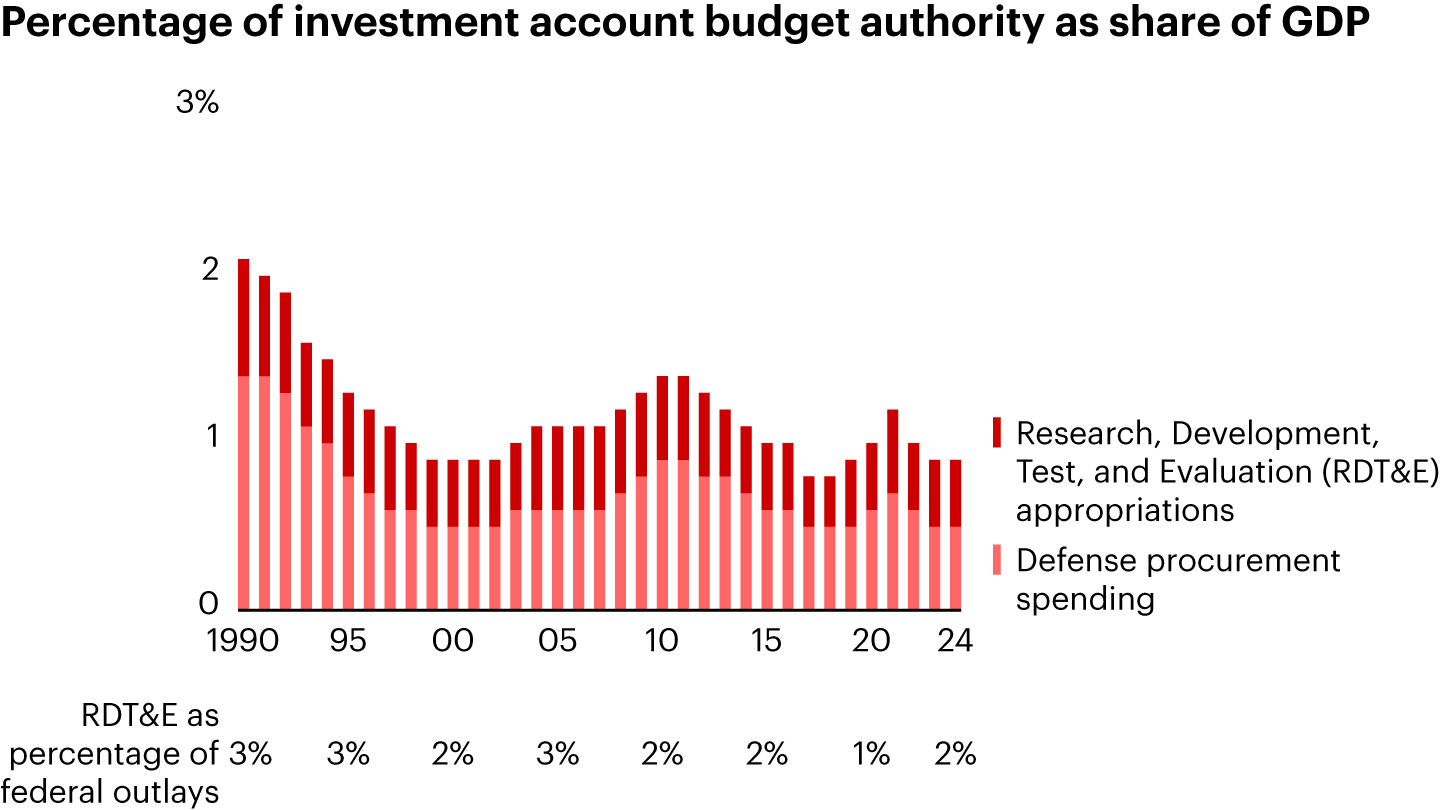
These requirements are growing at the same time fiscal constraints and inflation are crowding out real investment. The total US defense budget has declined for decades as a percentage of gross domestic product, and government R&D as a proportion of GDP is now well below the post–Cold War levels of the early 1990s (see Figure 1). Defense planners face the added challenge of safeguarding broad geographic areas with high-cost legacy capabilities, often to address newer, low-cost threats.
Figure 1

注 Fiscal years; 2024 data subject to continuing resolution
Sources: DOD Comptroller; US Bureau of Economic Analysis; Whitehouse.gov; US Treasury; Federal Reserve Bank of PhiladelphiaCompany-funded R&D by defense-focused companies has not filled the gap. The top five prime defense contractors working directly for the US Department of Defense (DOD) spend only 3% of their total revenue on R&D, a small fraction of the US Research, Development, Test, and Evaluation (RDT&E) budget and an even smaller fraction of nondefense commercial R&D investment. By contrast, the top seven commercial technology companies invest 11% of their much larger revenue bases in R&D.
A new approach
The DOD has set out to improve affordability, speed to prototype and capability, on-time delivery, and defense industrial capacity. In its first National Defense Industrial Strategy, announced in January 2024, the DOD underscored the need to diversify its supplier base and adopt more flexible acquisition strategies that make it easier for new entrants and commercial companies to invest in and serve defense markets.
The DOD is using two key tools to achieve these objectives and reward company-funded investment. The first is alternative contract structures, such as fixed-price contracts and other transaction authorities (OTAs). Fixed-price contracts reward risk-taking by creating incentives for achieving outcomes and reducing costs. OTAs are alternative contracting mechanisms that facilitate access to new and commercial technologies outside of standard, and more cumbersome, government acquisition pathways. Good examples of these approaches are the Space Development Agency’s fixed-price small satellite contracts and the Defense Innovation Unit’s use of OTAs to support rapid prototyping and adoption of commercial technologies.
The second tool includes new mission and program architectures, such as “as a service” contract structures that compensate suppliers for outcomes instead of products, or innovation funds that transfer development risk to suppliers but create demand signals that encourage suppliers to accept that risk. In fiscal year 2024, for example, the Defense Innovation Unit’s Replicator program channeled $500 million to nontraditional competitors to rapidly develop and prototype novel autonomous capabilities such as air and sea drones. The program also provided funding for volume production.
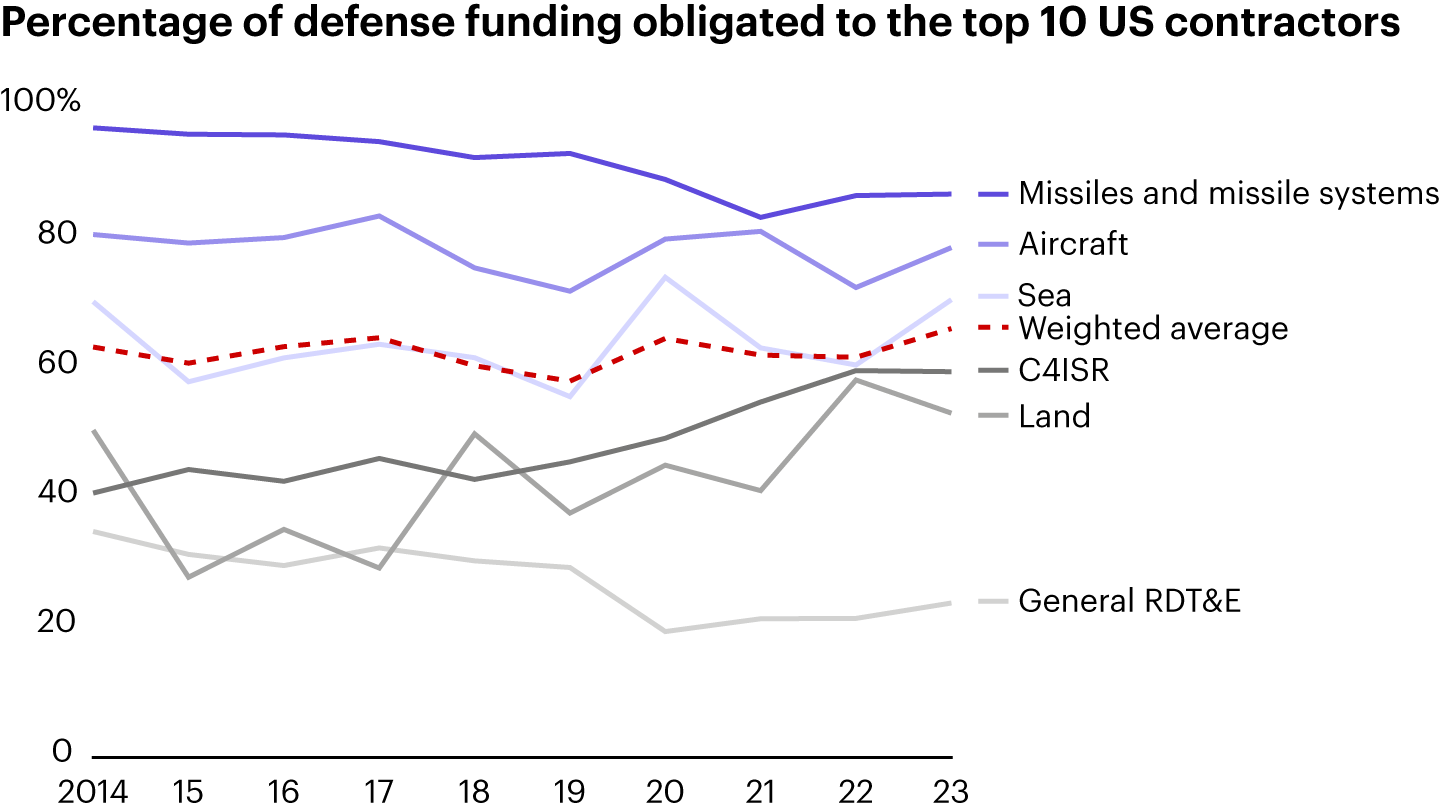
To date, these new structures have produced only a modest change in the share of the defense sector market held by new entrants. The top 10 defense contractors, for example, have retained their share of defense procurement and RDT&E spending (about 65% across key segments) over the past 10 years, despite significant investment in new entrants and early-stage development (see Figure 2). As a result, the DOD is likely to increase its buying flexibility to further support innovation and competition.
Figure 2

注 Top 10 US contractors include Boeing, Northrop Grumman, Raytheon, Lockheed Martin, BAE Systems, L3Harris Technologies, General Dynamics, Textron, Huntington Ingalls Industries, and General Atomics; data from unclassified contracts only; general RDT&E includes Research, Development, Test, and Evaluation contracts whose applications could not be aligned with end-use domains or applications (e.g., early-stage research); C4ISR is Command, Control, Communications, Computers, Intelligence, Surveillance, and Reconnaissance
Sources: DACIS; FPDSIn addition, the ratio of fixed-price contracts to cost-plus contracts has remained roughly unchanged over the past 10 years, and OTAs still represent a small portion of defense spending—roughly 3% of total investment and about 11% of RDT&E in fiscal year 2023. Another obstacle is the classic “valley of death,” in which companies win R&D and prototyping contracts but fail to make the transition to production contracts, often because of limited capability to manage the government contracting process or produce at scale. Without greater flexibility in DOD purchasing methods, new entrants will struggle to gain a significant share of overall procurement spending.
Private capital’s role
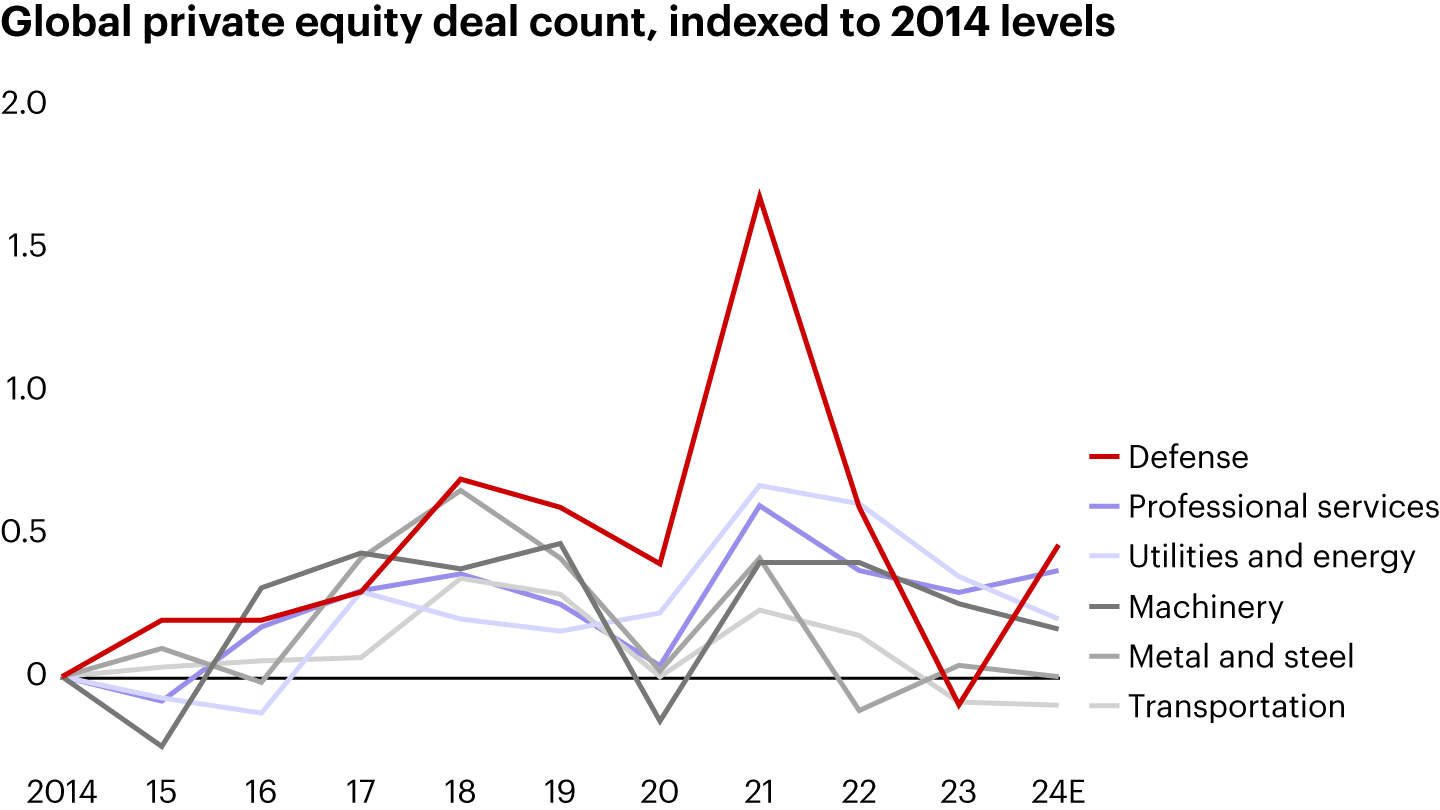
The role of private capital in defense has increased over the past 15 years. Private equity investments reached record volumes and value in 2021, in line with the growth of private equity in other industrial sectors (see Figure 3). Most deals involved companies with significant commercial and industrial businesses, which broaden revenue streams and exit opportunities. Deal theses for larger companies have centered around portfolio optimization and operational improvement. Those for smaller companies have often focused on organic and inorganic growth followed by sales to strategic acquirers (e.g., Arlington Capital Partners’ planned sale of BlueHalo to AeroVironment, Carlyle’s sale of Novetta to Accenture Federal Services).
Figure 3

Note: Deal count excludes countries where the US and its allies do not fund defense contracting
出所 DealogicHowever, there are relatively few examples of scale private equity investments in companies that primarily serve defense markets. All five of the largest private equity deals in aerospace and defense in 2023 and 2024 were primarily commercial or civil, including Arcline’s acquisition of Kaman and TJC’s purchase of L3Harris Commercial Aviation Solutions. Large defense-focused companies typically have concentrated customer bases, considerable exposure to single programs, and sources of growth that differ from those in commercial markets. These factors make it more challenging for general partners and limited partners to commit capital.
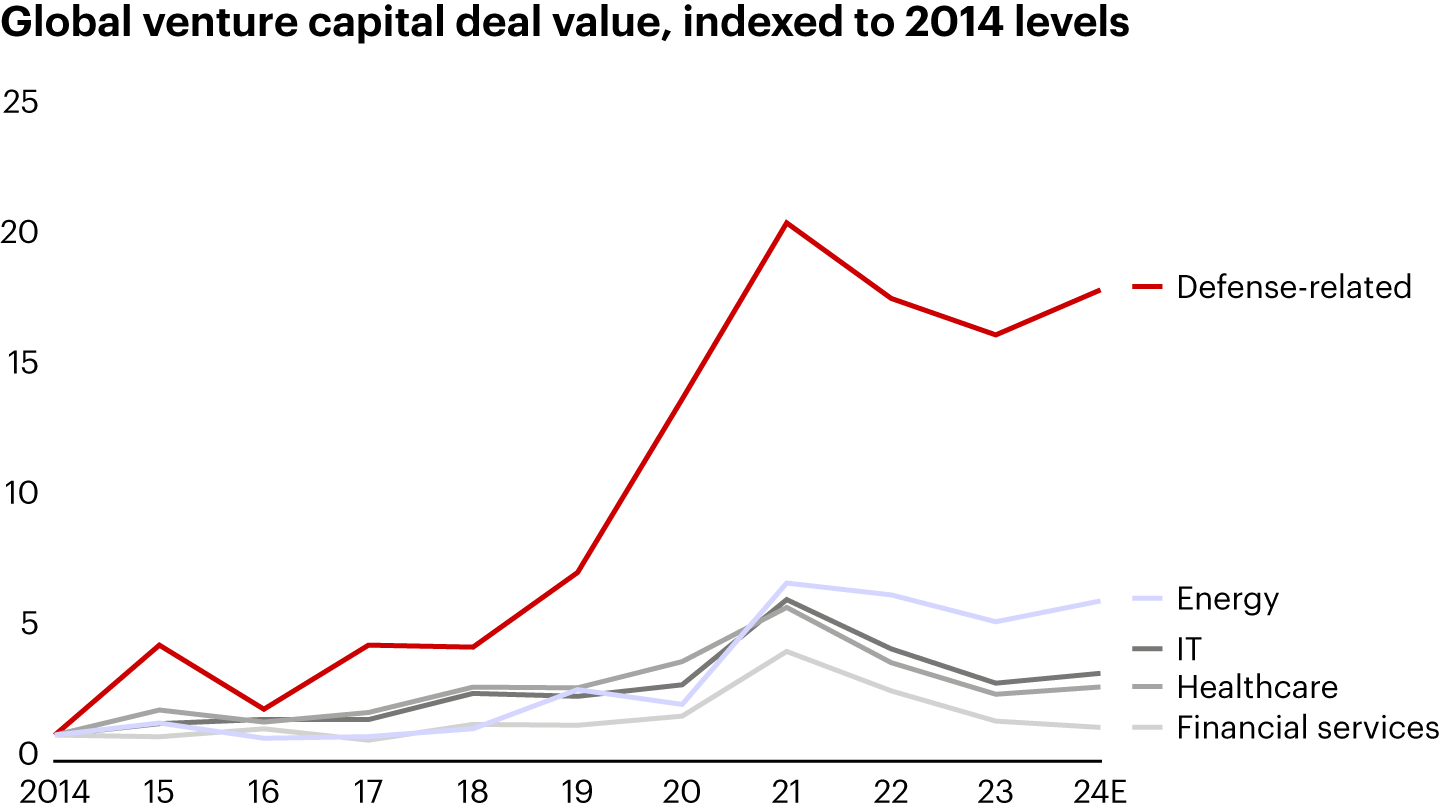
In contrast, the value of venture capital deals in the defense sector has increased 18-fold in the past 10 years, significantly ahead of deal value in other industries (see Figure 4). That growth results from multiple factors, including the DOD’s efforts to engage and fund early-stage companies and the increasing convergence of commercial and defense technologies. In the coming decade, government funding can play an important role in supporting early-stage businesses developing new products with long commercialization timelines. The success of nontraditional private entrants like Palantir, SpaceX, and Anduril, which have achieved significant defense market share (beyond prototyping), will encourage further investment.
Figure 4

Note: Deal value excludes countries where the US and its allies do not fund defense contracting
出所 PitchBookPrivate equity focus areas
The most attractive defense segments for private equity investors are those with high barriers to entry, defensible intellectual property (IP), and the potential for supplier differentiation on technical capabilities. All of these characteristics support cash flow stability and growth. Business areas with fragmented market share offer private equity funds more opportunity to build share and develop economies of scale. Finally, investors should look for businesses in which scale and operational improvements can enhance production, cost, and customer outcomes.
Tier 2 and 3 defense suppliers often have some of these characteristics. Increased regulatory scrutiny of large-scale corporate M&A also heightens the competitiveness of outside capital. Private equity investment is likely to grow in defense electronics, distribution and logistics services, component manufacturing, and aftermarket parts and services. Recent examples include Arcline’s investments through its portfolio company Quantic, Cerberus’s investment in Vivace, and AE Industrial Partners’ Blue Raven platform.
Growth investor focus areas
Venture capital and growth equity investments are likely to increase in defense businesses that also serve commercial markets. Companies that target unmet government needs and count cost reduction and speed to market as top objectives will be particularly attractive. Investors will also gravitate to segments with high unit volume potential and flexible government buying behavior. Venture capital will be most effective in areas where government investment is fragmented and future product architectures are uncertain. Those factors reduce the likelihood that traditional incumbents will participate.
Specifically, venture and growth equity investors are likely to fund companies in areas such as small uncrewed aerial systems, uncrewed maritime vessels, low-cost and proliferated space sensors, and enabling technologies like artificial intelligence. Uncrewed systems like aerial drones are especially well suited to outside investment given high uncertainty in terms of mission architectures, an affordability imperative, greater customer appetite for risk, and overlap with commercial technologies. Recent deals include Andreessen Horowitz’s investment in Saronic Technologies and the US Innovative Technology Fund and Riot Ventures’ investments in Shield AI.
These investments are high risk, and many early-stage companies that receive innovation funding will fail to make the transition to volume production. Successful investors will closely monitor signposts that provide evidence of sustainable changes in customer buying behavior. Two important changes to watch for are the successful execution of the US Air Force’s Collaborative Combat Aircraft program (particularly by Anduril Industries) and increased US Navy adoption of uncrewed assets and nontraditional mission architectures.
Identifying winners
Successful private equity investors will focus on companies with proprietary IP, long-term incumbency built on customer advocacy, leading market shares in niche segments, sound operations at the site level, and intelligent use of commercial technologies to boost competitive advantage.
Growth investors will look for companies that can achieve step-change improvements in cost and speed and that have a path to winning production contracts. Promising early-stage companies leverage dual-use technologies and build management teams that can navigate the complexity of serving both markets. They also offer products that appeal to the US DOD’s military end users while nurturing strong relationships with procurement decision makers and innovation-oriented customers.
As the role of private capital in the defense sector grows, incumbent suppliers will seek to strengthen their own competitive advantages, improve on-time delivery, lower cost, and partner with new entrants and commercial companies. The boldest will replace existing products with disruptive ones that better meet customer needs. Both incumbents and new entrants will benefit from increased government commitment to affordability, capacity growth, and speed to market.
First published in 12月 2024