

論説

概要
- Having taken urgent steps to survive in the early days of the Covid-19 pandemic, companies now face the need to retool their costs.
- Our executive survey identified five themes that will drive the new cost imperative: automation and digitalization, simplicity, new ways of working, operational resilience, and visibility and accountability.
- The best companies will prioritize these themes into one to three bold, focused moves, picking the elements of cost and cash where retooling can have the biggest impact.
The pandemic that virtually overnight changed every industry demands that all companies take a new and more strategic look at costs.
Most companies took the immediate steps needed to survive in the early days of the crisis, to protect the business and ensure continuity. Now they face a more difficult challenge: creating a cost and cash strategy that will serve them not only during the uncertain recovery—as costs return faster than revenues for many companies—but also for a new normal of increased margin pressures and the need for greater resilience and agility as market dynamics shift.

Macro Surveillance Platform
For more detail on the business implications of coronavirus from Bain’s Macro Trends Group, log on to the Macro Surveillance Platform. Learn more about the platform >
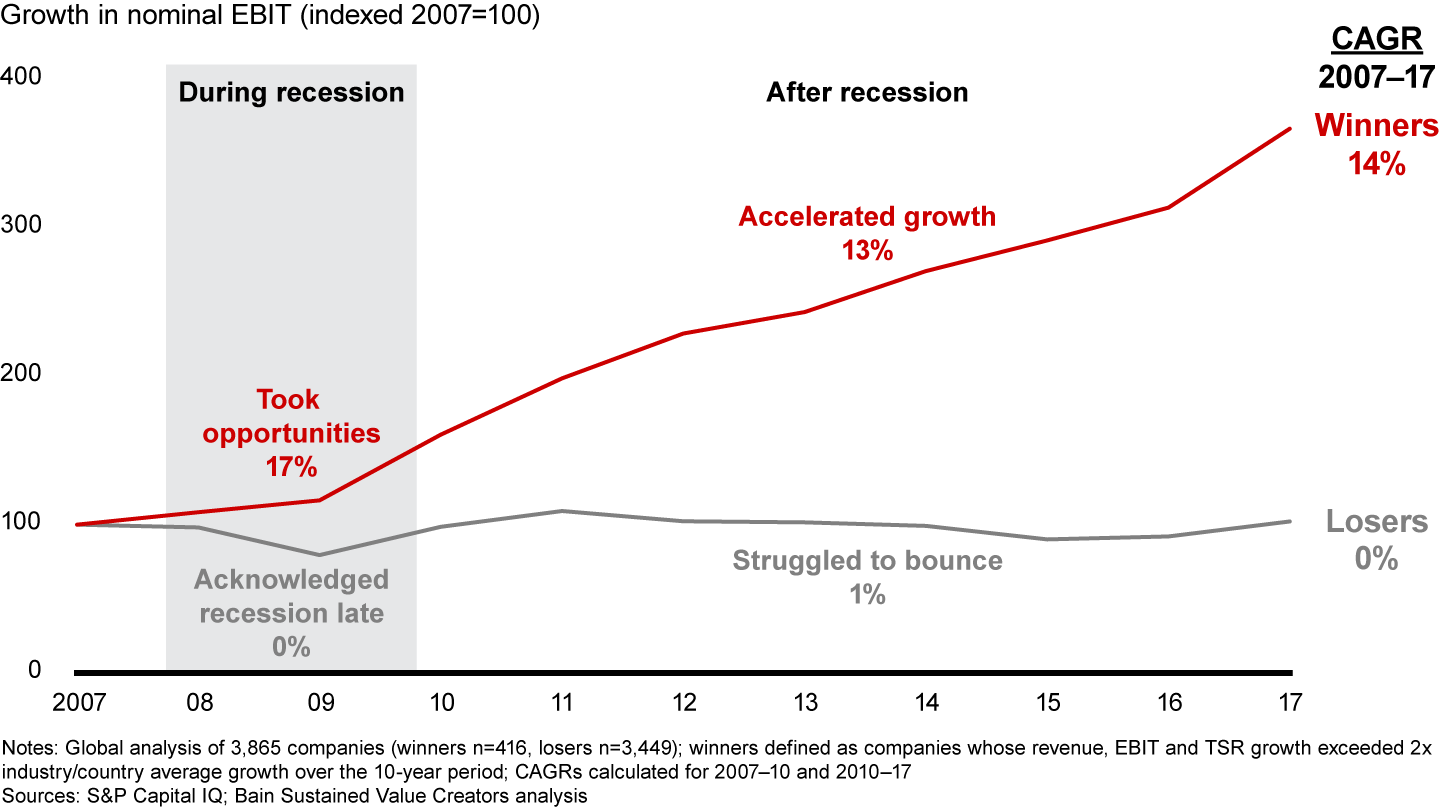
Our analysis of past global shocks, such as the financial crisis of 2008–2009, shows that recoveries are critical inflection points, either setting up companies for a strong bounce back and years of continued market share gains, or relegating them to a path of sluggish growth. About 20% of companies that play offense during downturns through such moves as strategic cost transformation are able to accelerate their growth trajectory, outgrowing their peers by nearly four times, with the biggest advances in performance achieved during downturns (see Figure 1).
Figure 1

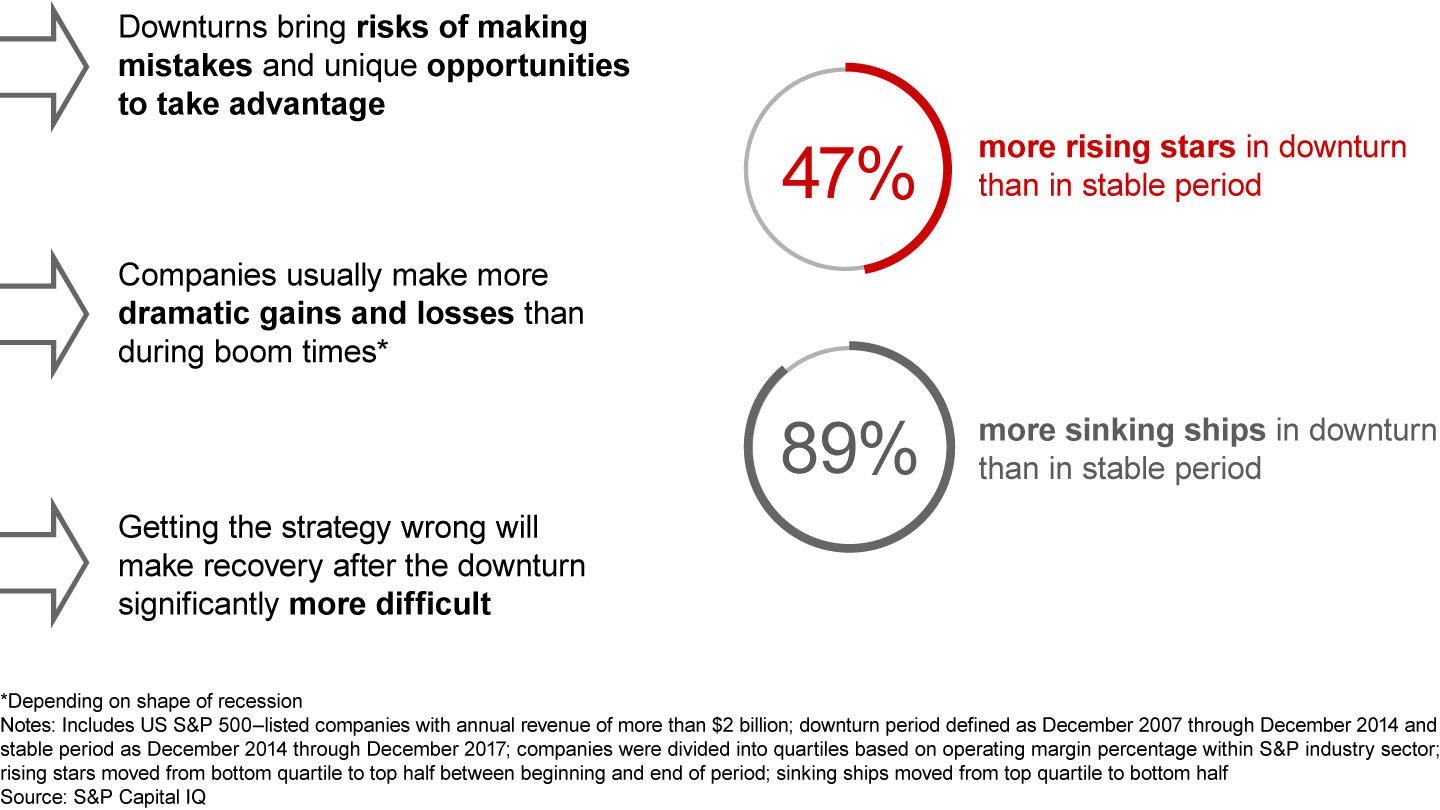
Indeed, companies see more dramatic gains and losses in crises than in boom times (see Figure 2). There are 47% more rising stars and 89% more sinking ships in downturn periods than during stable times. (Rising stars are S&P 500–listed companies with annual revenue in excess of $2 billion that moved from the bottom quartile to the top half; sinking ships moved from the top quartile to the bottom half.)
Figure 2

The five big themes
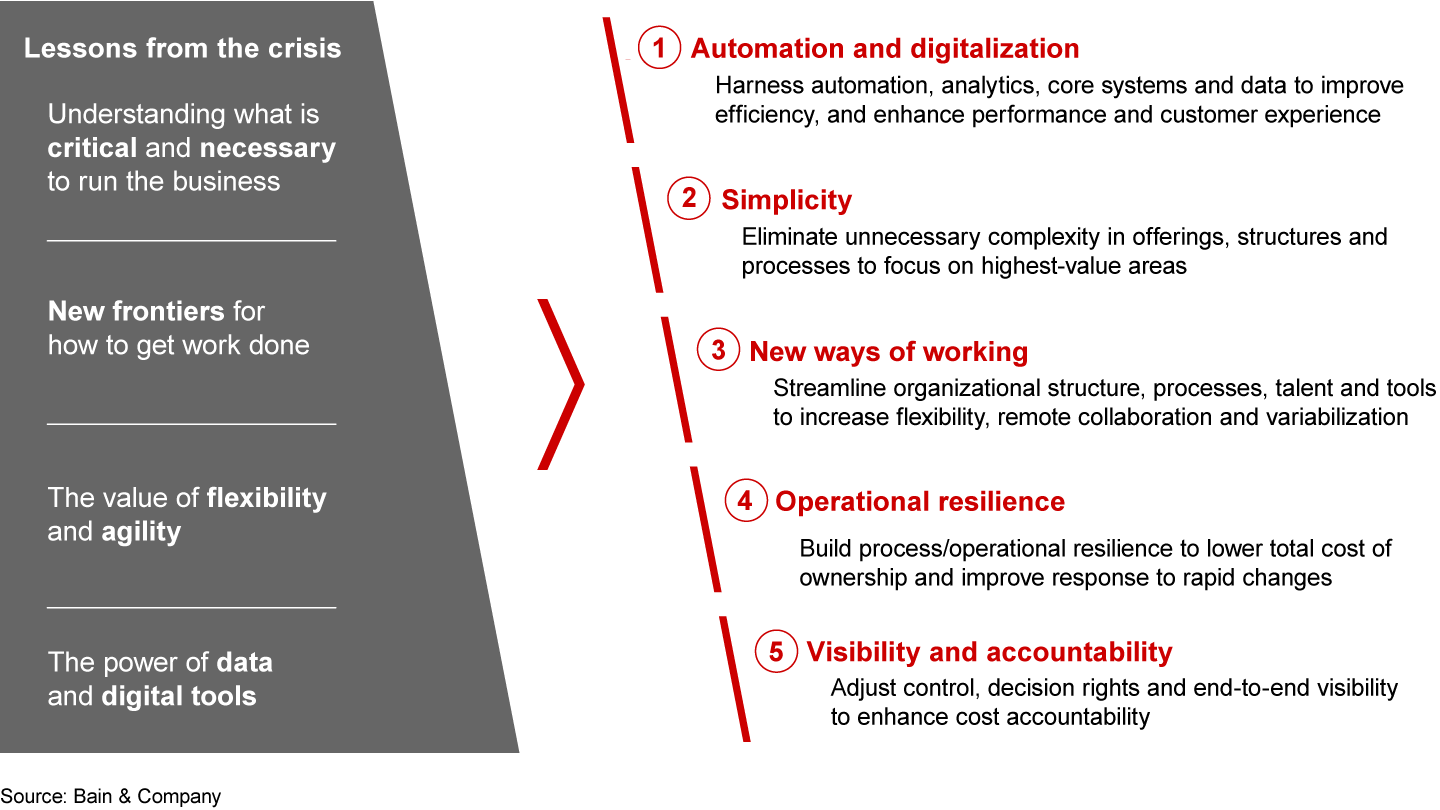
While the global financial crisis and other past shocks provide some insight into what winners do, the current crisis is different in many ways. What does a company need to think about now, in addition to those previous lessons? What are the big, high-value opportunities? We asked nearly 150 executives across industries to identify the two cost-restructuring areas that they view as most important for their companies’ recovery. Their responses helped us identify five big themes that will drive the new cost imperative (see Figure 3).
Figure 3

Automation and digitalization
This is one of the main areas we see clients focusing on today, given its potential to fundamentally retool the organization and change the cost bar. More than half of the executive respondents (52%) cited automation and digitalization as a critical enabler of their recovery planning and a catalyst for making gains that will allow them to outpace competitors. Companies hope to use automation, analytics, core systems and big data to improve efficiency and make faster decisions, enhancing performance and the customer experience. One company set a bold target to make 75% of all repeatable processes either automation enabled or supported.
Some companies are emerging as early winners. One insurance company had experimented with automation for years, but fragmented efforts inhibited scale benefits. Unifying and accelerating automation deployment was a strategic priority for 2020, with a target of generating $1 billion in savings over five years from more than 60 initiatives. The arrival of the Covid-19 pandemic convinced the company to speed up its timelines for automating processes such as criteria validation and claims processing. Expedited improvements have now put the company on the path to reap millions in annual savings starting in the first year.
Similarly, an appliance company that shifted much of its sales to an e-commerce model during the pandemic is now escalating its investment in automation to support a threefold increase in direct-to-consumer sales. The company is rapidly deploying tools to enhance inventory management and short-term demand sensing, among other capabilities.
Simplicity
The need for simplicity is not new, but it is particularly relevant today, as Covid-19 forces a new level of focus on the most important parts of the business. Snack maker Mondelēz International, for example, plans to eliminate one in every four products in its portfolio to streamline manufacturing. The appliance company mentioned earlier has swiftly reduced its product portfolio by 20%, in a radical move jointly led by its manufacturing and logistics teams.
Simplification in the face of necessity goes beyond product ranges and into business processes and organizational structure. In a well-known vicious cycle, business and product complexity begets process complexity, which in turn begets organizational complexity. In the current situation, it is not just the companies most negatively impacted by the crisis that are attacking complexity. We see businesses that have largely benefited from the crisis—from tech companies to those selling vitamins and supplements—focusing on product and business-line reduction to unlock process and organizational complexity and radically retool the cost base.
New ways of working
The pandemic rapidly accelerated transitions that have been a long time coming. Companies are swiftly changing their operating models to reflect the new realities of a post–Covid-19 world, in which telecommuting and virtual meetings will be widely used long after the pandemic ends. These companies are streamlining their organizational structure, processes and talent while embedding tools to increase flexibility. New ways of working was a key theme to enable retooling the cost base for 37% of the executives surveyed.
HDFC Bank now plans to move a significant number of its non-customer-facing personnel to work from home, a shift that will help the company better address changing consumer preferences and take advantage of service operations. A B2B company is moving its sales model away from all but the most necessary in-person meetings, aiming to benefit from an upside it discovered during the pandemic: Inside sales allows reps to cover more customers and—done the right way—is preferred by both customers and the salesforce.
Operational resilience
Operational weaknesses exposed during the pandemic led 20% of the respondents to cite resilience as a critical cost theme. Companies across industries were caught off guard by global supply chain disruptions, highlighting the importance of balancing lean supply chains and operational resilience to weather future shocks. Many are now building processes that lower the total cost of ownership and improve their ability to respond to rapid changes.
Visibility and accountability
Cost and cash visibility was another big shortcoming that surfaced during the crisis—and companies were forced to improve rapidly. As a result, many executives cited the importance of maintaining and embedding changes made while also improving control, decision rights, and end-to-end visibility to enhance cost and cash accountability. They are changing what information is available and where decisions are made as they make real accountability a core component of their retooled cost structures.
Where to start
These five big cost-retooling themes can affect all elements of a company’s cost base and cash position. Companies should prioritize the themes into one to three bold, focused moves, picking the elements of cost and cash where retooling can have the biggest impact. That means, for example, that after considering the likely impact of the themes on customers, competitors and the company itself, leaders may choose a bold move around new ways of working supported by automation and digitalization. They would look across all functions and business units—procurement, supply chain, sales and marketing, service and support, and others—to find key opportunities to retool the cost base.
In G&A, many companies are taking a fresh look at their desired cost structure—right-sizing real estate holdings for the new reality of a permanent shift to work from home, for example. Morgan Stanley’s CEO reported that the bank has “proven we can operate with no footprint.” Tata Consultancy Services announced that 75% of its employees would permanently work from home by 2025. (The industry average was 20% before the crisis.) Companies across industries will improve resilience by pursuing global business services that protect them from disruption, relying on digitalization and automation to achieve more value faster.
In procurement, the best companies will improve spending visibility and reduce spending in direct and indirect categories, rethinking their purchasing strategy to avoid supply chain disruptions. That means consolidating spending by determining the true number of suppliers required and potential discounts from suppliers hungry for business, for example.
In cash management, bold companies are managing cash up front to make sure they’re in a strong position to accelerate through the recovery while investing in retooling for the future. Cash management is not only a reflexive initial crisis response. Many companies now see the need to build stronger cash management, net working capital optimization and capital deployment capabilities for the future. That requires eliminating manual, uncoordinated cash management processes and implementing new ones that support real-time, rapid decision making and accurate forecasting. Most healthy companies don't have a culture focused on cash management. It's a new mindset, requiring new visibility and a new set of behaviors.
How to do it
Zero-based thinking
The clean-sheet approach has helped companies across many business cycles radically reform cost structures and fully redesign their businesses to support their strategy. Now, as they retool for a future that will look nothing like the past, a zero-based methodology can help identify the substantial and sustainable changes required for the post–Covid-19 world. It will allow companies to shape their strategy and investment posture in an industry and market context, differentially investing to become “best in cost” for low-value-added capabilities and “best in class” for capabilities that can give them a competitive advantage. By taking a today-forward/future-back approach to zero-based redesign (ZBR), they optimize current operations while also developing future productivity applications (see the Bain Brief “Radical Change through Zero-Based Redesign”).
To help them accelerate out of the downturn, companies can use the five big themes to define the ideal end state and specific targets in their ZBR efforts. They assess how those themes will affect their customers, competitors and thus the company itself, which will inform their bold aspirations in the new world.
Companies begin the ZBR process by assessing their current state of affairs—not only in terms of the numbers (P&L and balance sheet) but, crucially, what they learned during the crisis that they can leverage going forward. They will identify up to three areas in which they can invest to outperform competitors, and then decide where to radically reduce cost. The zero-based approach also enables them to reduce complexity and chart the most effective path toward increased automation, building a new set of capabilities to ensure costs do not come back.
When a travel company rethought its business and economic model to better meet future customer and supplier needs, it redefined essential roles for the new world. It simplified the service delivery structure and used a zero-based approach to realign customer and market priorities. Similarly, when a bank defined its retooling initiatives early in its crisis response, it also made sure that future recovery actions matched the company’s new, long-term strategy. It shifted a significant portion of its workers to permanent work from home, investing in the required IT and building its recovery plans so that only critical workers would come back to the office.
Be agile
Successfully retooling the cost base requires transparency, scrutiny and adaptability—the principles of agile. Companies deliver their cost transformations more efficiently and effectively by adopting agile principles. That means promoting test-and-learn approaches; instilling line-owned, line-led delivery; and taking other steps to improve flexibility.
Companies that outpace competitors will create more agile teams and spread the principles of agile throughout the organization, even to the parts that must remain bureaucratic. They will reduce the wait times that stall delivery by breaking big, lengthy programs into smaller “problems” with rapid feedback loops. These companies will maintain a sense of urgency and anticipate the next crisis.
Agile is a proven way to deliver results, and ZBR helps ensure that those results are bold and sustained. Combined, they keep a cost-conscious culture alive, preventing costs from creeping back in. It’s a one-two punch that will define the winners in the recovery and beyond.

Coronavirus
The global Covid-19 pandemic has extracted a terrible human toll and spurred sweeping changes in the world economy. Across industries, executives have begun reassessing their strategies and repositioning their companies to thrive now and in the world beyond coronavirus.
First published in 8月 2020