
Skip to Content
  • オフィス

    オフィス

    北米・南米
    • Atlanta
    • Austin
    • Bogota
    • Boston
    • Buenos Aires
    • Chicago
    • Dallas
    • Denver
    • Houston
    • Los Angeles
    • Mexico City
    • Minneapolis
    • Monterrey
    • Montreal
    • New York
    • Rio de Janeiro
    • San Francisco
    • Santiago
    • São Paulo
    • Seattle
    • Silicon Valley
    • Toronto
    • Washington, DC
    ヨーロッパ・中東・アフリカ
    • Amsterdam
    • Athens
    • Berlin
    • Brussels
    • Copenhagen
    • Doha
    • Dubai
    • Dusseldorf
    • Frankfurt
    • Helsinki
    • Istanbul
    • Johannesburg
    • Kyiv
    • Lisbon
    • London
    • Madrid
    • Milan
    • Munich
    • Oslo
    • Paris
    • Riyadh
    • Rome
    • Stockholm
    • Vienna
    • Warsaw
    • Zurich
    アジア・オーストラリア
    • Bangkok
    • Beijing
    • Bengaluru
    • Brisbane
    • Ho Chi Minh City
    • Hong Kong
    • Jakarta
    • Kuala Lumpur
    • Manila
    • Melbourne
    • Mumbai
    • New Delhi
    • Perth
    • Shanghai
    • Singapore
    • Sydney
    • Tokyo
    全てのオフィス
  • アルムナイ
  • メディア
  • お問い合わせ
  • 東京オフィス
  • Japan | 日本語

    地域と言語を選択

    グローバル
    • Global (English)
    北米・南米
    • Brazil (Português)
    • Argentina (Español)
    • Canada (Français)
    • Chile (Español)
    • Colombia (Español)
    ヨーロッパ・中東・アフリカ
    • France (Français)
    • DACH Region (Deutsch)
    • Italy (Italiano)
    • Spain (Español)
    • Greece (Elliniká)
    アジア・オーストラリア
    • China (中文版)
    • Korea (한국어)
    • Japan (日本語)
  • Saved items (0)
    Saved items (0)

    You have no saved items.

    後で閲読、共有できるようにするためにブックマークしてください

    Explore Bain Insights
  • 業界別プラクティス
    メインメニュー

    業界別プラクティス

    • 航空宇宙、防衛、政府関連
    • 農業
    • 化学製品
    • インフラ、建設
    • 消費財
    • 金融サービス
    • ヘルスケア
    • 産業機械、設備
    • メディア、エンターテインメント
    • 金属
    • 採掘・鉱業
    • 石油、ガス
    • 紙、パッケージ
    • プライベートエクイティ
    • 公共、社会セクター
    • 小売
    • テクノロジー
    • 通信
    • 交通
    • 観光産業
    • 公益事業、再生可能エネルギー
  • 機能別プラクティス
    メインメニュー

    機能別プラクティス

    • カスタマー・エクスペリエンス
    • サステイナビリティ、 社会貢献
    • Innovation
    • 企業買収、合併 (M&A)
    • オペレーション
    • 組織
    • プライベートエクイティ
    • マーケティング・営業
    • 戦略
    • アドバンスド・アナリティクス
    • Technology
    • フルポテンシャル・トランスフォーメーション
  • Digital
  • 知見/レポート
  • ベイン・アンド・カンパニーについて
    メインメニュー

    ベイン・アンド・カンパニーについて

    • ベインの信条
    • 活動内容
    • 社員とリーダーシップ
    • プレス・メディア情報
    • クライアントの結果
    • 受賞歴
    • パートナーシップを結んでいる団体
    Further: Our global responsibility
    • ダイバーシティ
    • 社会貢献
    • サステイナビリティへの取り組み
    • 世界経済フォーラム(WEF)
    Learn more about Further
  • キャリア
    メインメニュー

    キャリア

    • ベインで働く
      キャリア
      ベインで働く
      • Find Your Place
      • ベインで活躍する機会
      • ベインのチーム体制
      • 学生向けページ
      • インターンシップ
      • 採用イベント
    • ベインでの体験
      キャリア
      ベインでの体験
      • Blog: Inside Bain
      • キャリアストーリー
      • 社員紹介
      • Where We Work
      • 成長を後押しするサポート体制
      • アフィニティ・グループ
      • 福利厚生
    • Impact Stories
    • 採用情報
      キャリア
      採用情報
      • 採用プロセス
      • 面接内容
    FIND JOBS
  • オフィス
    メインメニュー

    オフィス

    • 北米・南米
      オフィス
      北米・南米
      • Atlanta
      • Austin
      • Bogota
      • Boston
      • Buenos Aires
      • Chicago
      • Dallas
      • Denver
      • Houston
      • Los Angeles
      • Mexico City
      • Minneapolis
      • Monterrey
      • Montreal
      • New York
      • Rio de Janeiro
      • San Francisco
      • Santiago
      • São Paulo
      • Seattle
      • Silicon Valley
      • Toronto
      • Washington, DC
    • ヨーロッパ・中東・アフリカ
      オフィス
      ヨーロッパ・中東・アフリカ
      • Amsterdam
      • Athens
      • Berlin
      • Brussels
      • Copenhagen
      • Doha
      • Dubai
      • Dusseldorf
      • Frankfurt
      • Helsinki
      • Istanbul
      • Johannesburg
      • Kyiv
      • Lisbon
      • London
      • Madrid
      • Milan
      • Munich
      • Oslo
      • Paris
      • Riyadh
      • Rome
      • Stockholm
      • Vienna
      • Warsaw
      • Zurich
    • アジア・オーストラリア
      オフィス
      アジア・オーストラリア
      • Bangkok
      • Beijing
      • Bengaluru
      • Brisbane
      • Ho Chi Minh City
      • Hong Kong
      • Jakarta
      • Kuala Lumpur
      • Manila
      • Melbourne
      • Mumbai
      • New Delhi
      • Perth
      • Shanghai
      • Singapore
      • Sydney
      • Tokyo
    全てのオフィス
  • アルムナイ
  • メディア
  • お問い合わせ
  • 東京オフィス
  • Japan | 日本語
    メインメニュー

    地域と言語を選択

    • グローバル
      地域と言語を選択
      グローバル
      • Global (English)
    • 北米・南米
      地域と言語を選択
      北米・南米
      • Brazil (Português)
      • Argentina (Español)
      • Canada (Français)
      • Chile (Español)
      • Colombia (Español)
    • ヨーロッパ・中東・アフリカ
      地域と言語を選択
      ヨーロッパ・中東・アフリカ
      • France (Français)
      • DACH Region (Deutsch)
      • Italy (Italiano)
      • Spain (Español)
      • Greece (Elliniká)
    • アジア・オーストラリア
      地域と言語を選択
      アジア・オーストラリア
      • China (中文版)
      • Korea (한국어)
      • Japan (日本語)
  • Saved items  (0)
    メインメニュー
    Saved items (0)

    You have no saved items.

    後で閲読、共有できるようにするためにブックマークしてください

    Explore Bain Insights
  • 業界別プラクティス
    • 業界別プラクティス

      • 航空宇宙、防衛、政府関連
      • 農業
      • 化学製品
      • インフラ、建設
      • 消費財
      • 金融サービス
      • ヘルスケア
      • 産業機械、設備
      • メディア、エンターテインメント
      • 金属
      • 採掘・鉱業
      • 石油、ガス
      • 紙、パッケージ
      • プライベートエクイティ
      • 公共、社会セクター
      • 小売
      • テクノロジー
      • 通信
      • 交通
      • 観光産業
      • 公益事業、再生可能エネルギー
  • 機能別プラクティス
    • 機能別プラクティス

      • カスタマー・エクスペリエンス
      • サステイナビリティ、 社会貢献
      • Innovation
      • 企業買収、合併 (M&A)
      • オペレーション
      • 組織
      • プライベートエクイティ
      • マーケティング・営業
      • 戦略
      • アドバンスド・アナリティクス
      • Technology
      • フルポテンシャル・トランスフォーメーション
  • Digital
  • 知見/レポート
  • ベイン・アンド・カンパニーについて
    • ベイン・アンド・カンパニーについて

      • ベインの信条
      • 活動内容
      • 社員とリーダーシップ
      • プレス・メディア情報
      • クライアントの結果
      • 受賞歴
      • パートナーシップを結んでいる団体
      Further: Our global responsibility
      • ダイバーシティ
      • 社会貢献
      • サステイナビリティへの取り組み
      • 世界経済フォーラム(WEF)
      Learn more about Further
  • キャリア
    人気検索キーワード
    • デジタル
    • 戦略
    前回の検索
      最近訪れたページ

      Content added to saved items

      Saved items (0)

      Removed from saved items

      Saved items (0)

      The Visionary CEO’s Guide to Sustainability

      Selling Sustainability Means Decoding Consumers

      Selling Sustainability Means Decoding Consumers

      We asked more than 23,000 global consumers what they really want. What we found will surprise you.

      著者:François Faelli, John Blasberg, Leah Johns, and Zara Lightowler

      • min read
      }

      レポート

      Selling Sustainability Means Decoding Consumers
      en
      At a Glance
      • New research by Bain’s Global Consumer Lab has helped us understand consumers’ views on sustainability and how they are influencing buying behavior.
      • Companies selling sustainability need to acknowledge and address a fragmented consumer base—not assume that developed-market or younger consumers are more concerned about the environment, for example.
      • Different consumer segments define sustainability differently, and many make choices based on misconceptions.
      • Companies tend to focus on technology adoption when devising strategic plans, but regulations and consumer behavior are moving just as quickly and have as big an impact.

      This article is part of Bain’s 2023 CEO Sustainability Guide

      Explore the report

      To understand the important implications of climate change on consumer behavior, we surveyed more than 23,000 global consumers about a broad set of sustainability issues. We asked them what they care about now, what they know, and what they buy (and don’t buy). We followed that up with extensive conjoint analysis and ethnographic research, speaking directly to hundreds of consumers. The counterintuitive findings are relevant for consumer-facing businesses as diverse as brands, retailers, and airlines, as well as for business-to-business companies in everything from industrials to chemicals to packaging, whose customers ultimately sell to consumers.

      Across markets and consumer segments, our research revealed dramatic—and unexpected—variations in consumers’ behavior and relationship to sustainability, and how their views are rewriting the rules for companies.

      What we found

      Worldwide, 64% of consumers reported high levels of concern about sustainability (see Figure 1). And that sentiment is increasing. The majority of these consumers told us that their worries have intensified over the past two years and that their concern was first prompted by extreme weather.

      Figure 1
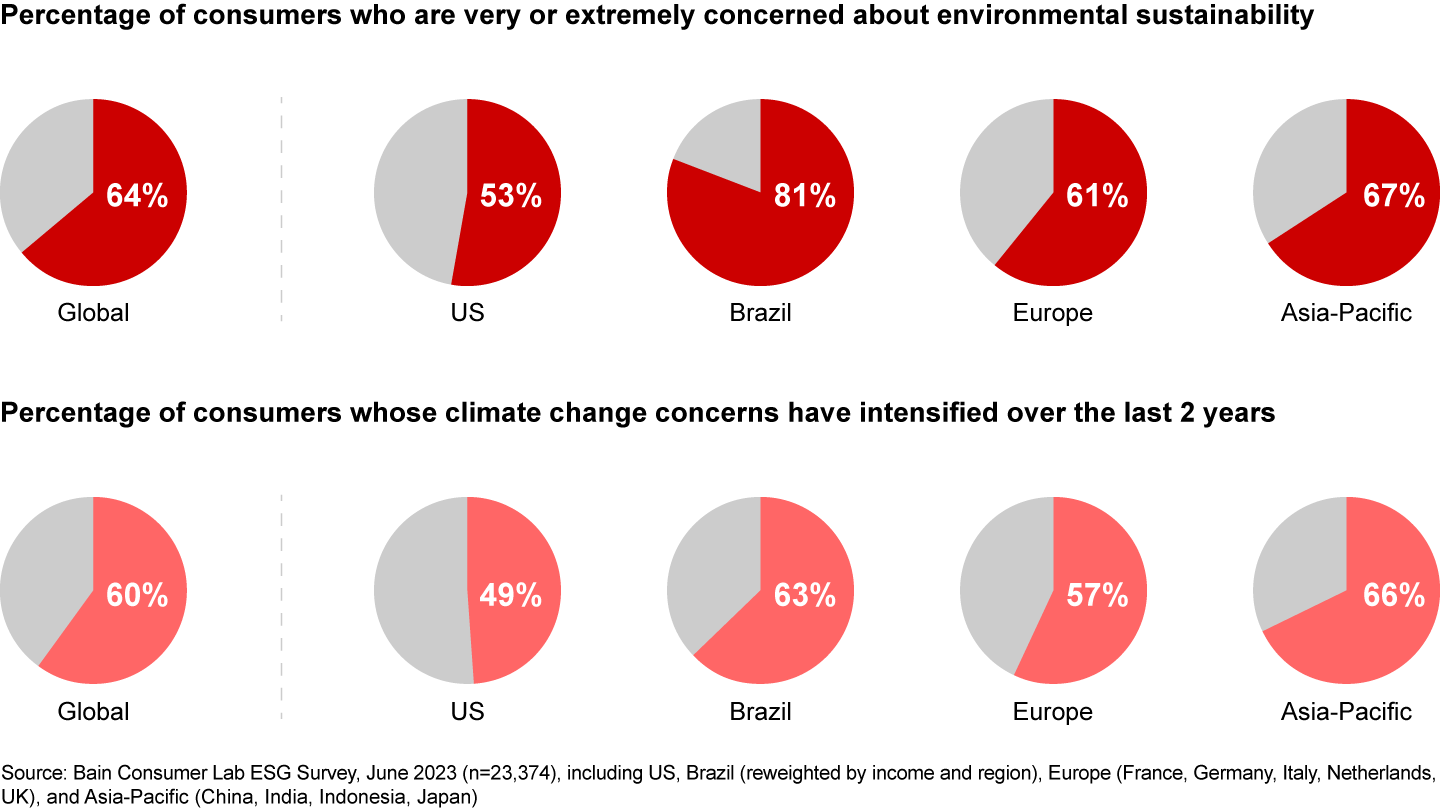
      Globally, 64% of consumers are highly concerned about sustainability, and their worries are mounting

      Our research found that 79% of consumers in fast-growing markets like China, India, and Indonesia are concerned about environmental sustainability, compared with 55% in developed markets like the US and Europe (see Figure 2).

      Figure 2
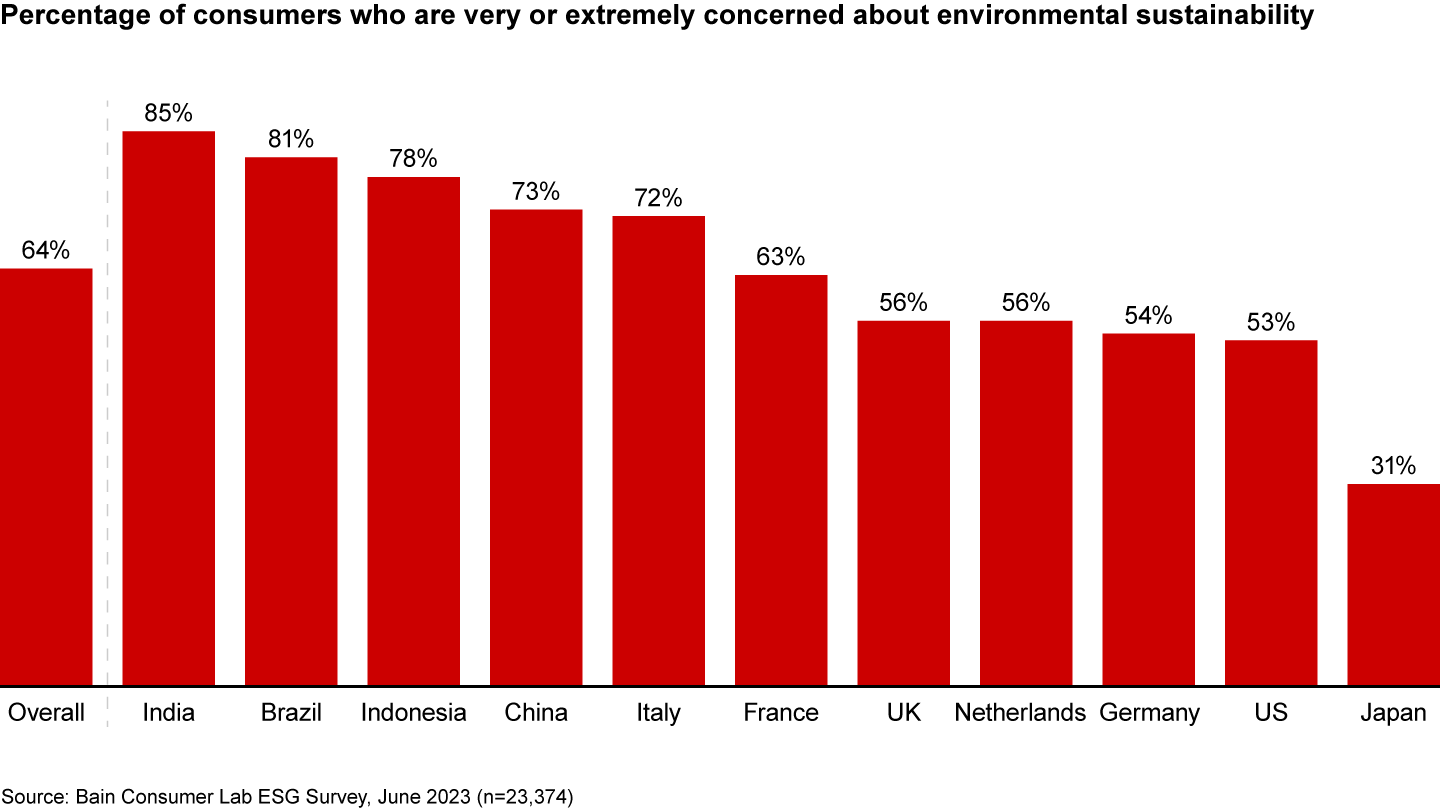
      Consumers in fast-growing markets are more concerned about sustainability than those in developed markets

      Many companies have long viewed younger consumers as more focused on sustainability than their older counterparts, but the reality is not as clear-cut. For example, 72% of Gen Z consumers and 68% of boomers globally are very or extremely concerned about the environment, but in countries as diverse as India, France, and Japan, boomers are more concerned.

      In the US, 96% of consumers agree that the climate is changing. Among those concerned about the environment, 85% of self-described liberal voters are very or extremely concerned about climate change, compared with 39% of conservative voters. Yet conservatives worry about specific issues such as water, biodiversity loss, and air pollution relatively more than liberals, who worry more about climate change (see Figure 3).

      Figure 3
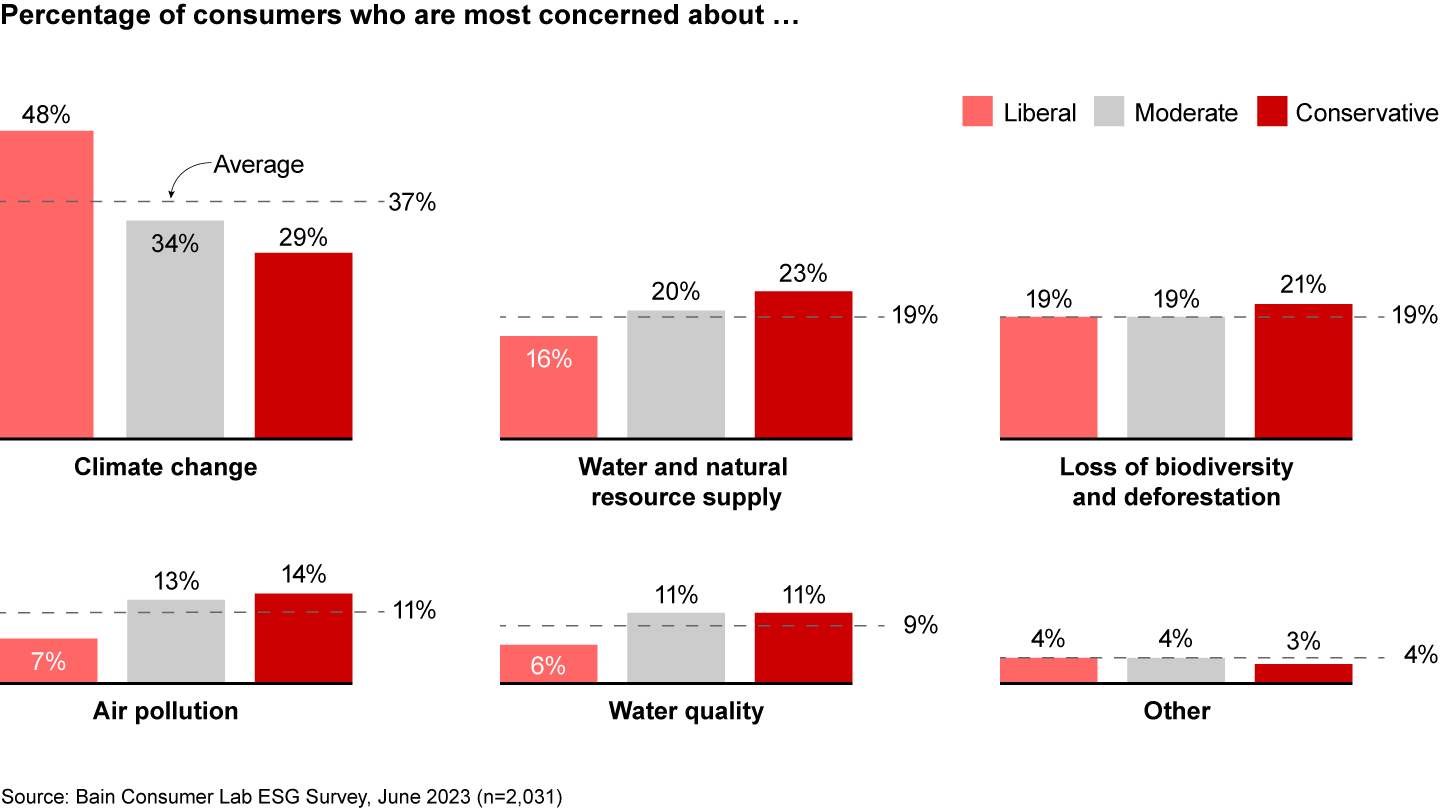
      Among those concerned about the environment in the US, liberals are more worried about climate change; for conservatives, natural resources and biodiversity are more important

      As those concerns grow, consumers are looking to make environmentally sound choices and are willing to pay more for sustainable products. Yet, they often run into barriers. For example, consumers in the US are willing to pay an average premium of 11% for products with a minimized environmental impact (see Figure 4). However, 28% is the average premium for products marketed as sustainable in the US.

      Figure 4
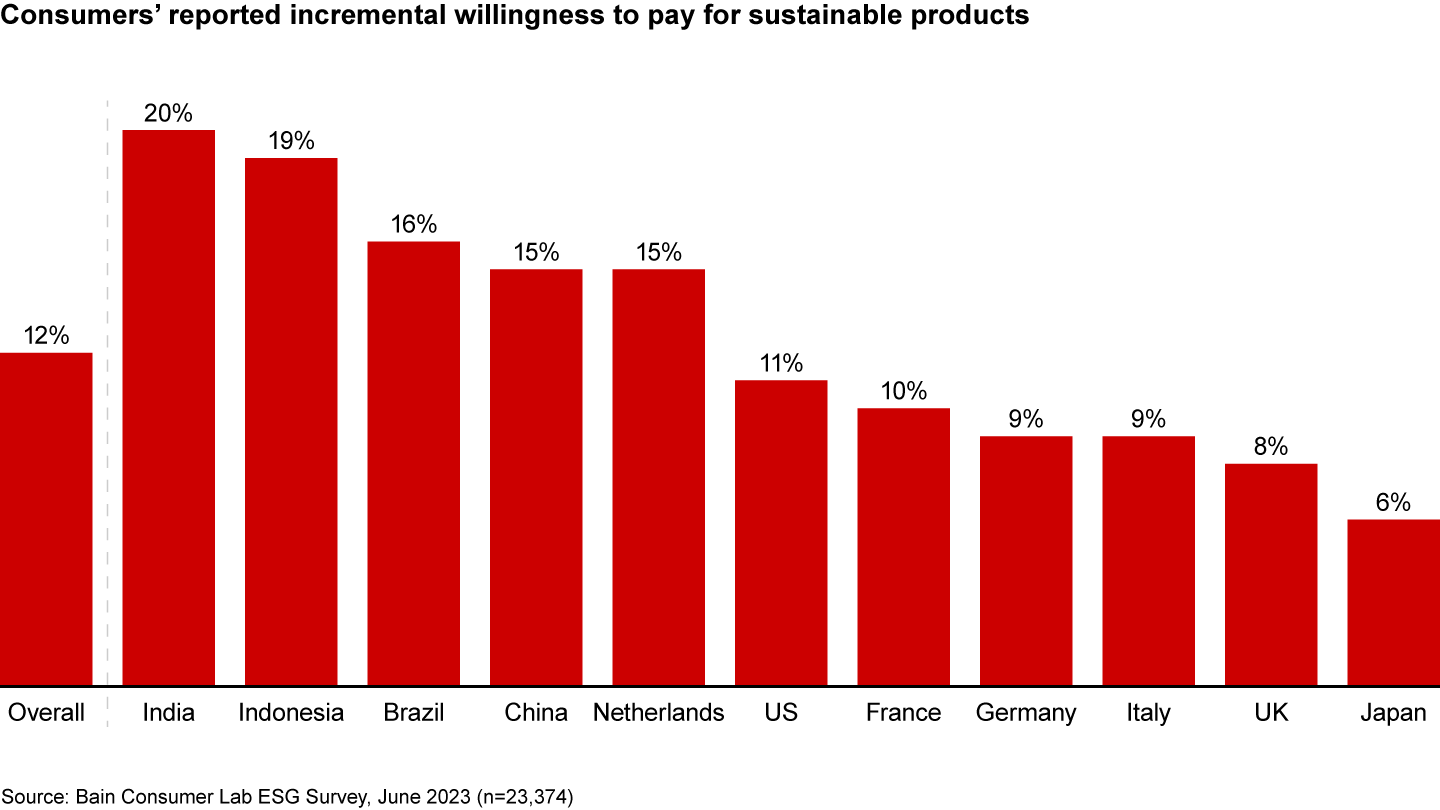
      Consumers report that they’re willing to pay more for sustainable products

      In our survey, 50% of consumers said sustainability is one of their top four key purchase criteria when shopping. Yet they may be making decisions based on misconceptions—significantly lowering the number of truly sustainable purchases. When asked to determine which of two given products generated higher carbon emissions, consumers were wrong or didn’t know about 75% of the time.

      In addition to such “unknown unknowns,” consumers adopt different definitions of sustainability. Globally, 50% of consumers consider how products are used when thinking about sustainability. These consumers are more concerned about how a product can be reused, its durability, and how it will minimize waste. In contrast, most companies sell sustainable goods based on factors such as how they are made, their natural ingredients, and the farming practices deployed. These factors cause many consumers to conflate “sustainable” with “premium.”

      One result of this disconnect: Almost half of all developed-market consumers believe that living sustainably is too expensive. By comparison, roughly 35% of consumers in fast-growing markets believe that it is.

      Cultural norms and financial realities play a big role in consumer behaviors. In fast-growing markets, individuals can become more sustainable by going with the grain of society—by buying at local shops, generating less waste, and eating a traditionally plant-heavy diet, for example. In developed markets, embracing a sustainable lifestyle means going against the grain of a consumption culture by avoiding excessive purchasing as well as readily available and affordable conveniences.

      Consumer behavior can change more quickly than many companies anticipate, with external factors such as government regulation heavily influencing the market. China began offering financial incentives on electric vehicles in 2009; now 19% of Chinese consumers report driving an electric car, compared with 8% of consumers globally. In England, the use of single-use supermarket plastic bags has fallen 98% since the government began requiring retailers to charge for them in 2015.

      インフォグラフィック

      Ten Surprises from Our Sustainability Research

      We surveyed more than 23,000 consumers globally about sustainability. Who’s most concerned, what they’re willing to pay, and what’s shifting behavior may surprise you.

      What this means for companies

      The momentum behind sustainability and dynamic shifts in consumer behavior have profound implications for any company. We see four critical areas of focus.

      Devise a future-proof and flexible strategy. It’s undeniable that what’s important to consumers is changing faster than companies can keep up. Few companies plan beyond the typical 3-year strategic planning window, and even those that do look out 5 to 10 years tend to focus on expectations for technology adoption. These plans fail to fully consider two other factors that move just as rapidly and with as big an impact: regulations and consumer behavior.

      Acknowledge a fragmented consumer base. Another lesson from our research points to the need to deaverage consumers. Traditional assumptions about consumers and sustainability no longer apply. For example, it’s wrong to assign more importance to developed markets and to younger consumers, or to assume that all consumers take the same approach to sustainability or define it the same way. Companies need to innovate products and design propositions that appeal to different segments—local markets, consumers with different definitions of sustainability, and consumers with a range of purchasing motivations. Only the most passionate consumers make sustainability their sole purchasing criterion. Most base their choices on a combination of factors, from price to convenience to how a product will fit into their lifestyle. The challenge for companies is to strategically align sustainability with the key purchase criteria of the category without forcing trade-offs.

      And when selling sustainability to frugal consumers, companies need to think of ways to maintain touchpoints while offering them products that last longer or can be reused (in other words, selling them less of the product). Instead of simply selling a greener version of a product at a premium, companies need to take care of the rest of the equation, factoring in circularity, lifestyle, and economics.

      Test and learn to determine what works—and repeat. In such a fluid environment, companies can lean aggressively on marketing experimentation, using digital tools to quickly test the sustainability messages that resonate with different segments and adapt accordingly. It’s a way to help consumers gain enough clarity to make decisions that are consistent with their values. For companies, experimentation reveals new data and insights at a deep, specific level, complementing traditional marketing research. Leaders in marketing experimentation often can prove or disprove a hypothesis within weeks. Once established at scale, a robust experimentation capability can enhance marketing-mix or econometric modeling and bring teams closer to their customers. It’s a recipe for both higher marketing ROI and stronger sales growth (see “Can Marketing Experimentation Become Your Superpower?”).

      Get out in front of regulations. As we’ve seen throughout the world, government policy inevitably becomes a huge contributor to changing consumer behavior. Countries as diverse as Japan and Lithuania offer solar rebates. No fewer than 85 jurisdictions around the world have implemented a form of sugar tax. Across all industries, companies need to be at the forefront of helping to shape the regulations affecting their business. As global warming progresses, government intervention will grow bolder. A company’s ability to anticipate policy shifts and build future-proof portfolios will help determine whether it can outpace competitors.

      Powered by

      The Global Consumer Lab

      Develop a deeper understanding of your customers, beyond their shopping baskets.

      Read the Next Chapter

      Does a Purpose Help Brands Grow?

      Read our 2023 CEO Sustainability Guide

      Explore the full report Download PDF
      著者
      • Headshot of François Faelli
        François Faelli
        パートナー, Brussels
      • Headshot of John Blasberg
        John Blasberg
        パートナー, Boston
      • Headshot of Leah Johns
        Leah Johns
        Practice Director, Global Consumer Lab, Lisbon
      • Headshot of Zara Lightowler
        Zara Lightowler
        パートナー, London
      関連業種
      • 小売
      • 消費財
      関連するコンサルティングサービス
      • Brand Strategy
      • Customer Experience
      • サステイナビリティ、社会貢献
      • 顧客戦略、マーケティング
      • 戦略
      サステイナビリティ、社会貢献
      Living Sustainably: Do You Walk the Talk?

      Are you an Eco-vangelist, a Climate Cynic, or somewhere in between? Take our interactive quiz to find out.

      詳細
      CEO's Guide to Sustainability
      From Sustainability Commitments to Impact: Four Pragmatic Questions for Visionary CEOs

      Amid competing priorities, CEOs and consumers still say sustainability matters. By acting now, companies can set the stage for profitable growth.

      詳細
      消費財
      US Consumer Health Update

      Upper-income earners seem to be adopting a defensive position but are not yet reporting negative spending intentions.

      詳細
      戦略
      After Years of Customer Loyalty Programs in Insurance, What Works, and What’s Next?

      Based on Bain’s 10 years of research, five themes describe the progress and challenges of earning customers’ advocacy in an increasingly digital experience.

      詳細
      CEO's Guide to Sustainability
      The Sustainability Puzzle: What Do Consumers Really Want?

      How businesses can unlock the challenge of helping consumers live sustainably.

      詳細

      Introduction

      • The Questions Every CEO Needs to Ask About Sustainability

      Levers of Change: Technology, Behavior, Policy

      • Selling Sustainability Means Decoding Consumers

      • Does a Purpose Help Brands Grow?

      • Lower Costs, Faster Adoption: Closing the Sustainable Innovation Gap

      • The Future Is Circular: How Companies Can Prepare to Grow in a Changing World

      • Leading with Vision: Harnessing the Climate Policy Response

      Sector Perspectives

      • Building Resilience in Your Business Strategy: Four Imperatives for Leaders

      • The Energy Transition’s Other Big Puzzle: Making the Math Work

      • Can Food and Agriculture Companies Raise Their Game?

      • Fires, Floods, and Loans: How Banks Can Deal with Increasing Climate Risks

      Making It Happen

      • Building a Data-Based Stakeholder Strategy

      • Operations and Supply Chain Decarbonization: Lower Emissions, Higher Performance

      • Making Business Do Better for Everyone

      • Organizing for Sustainability

      • A Talent Strategy for Sustainability: Skills Matter, but Mindset Is Everything

      First published in 11月 2023
      Tags
      • Brand Strategy
      • CEO's Guide to Sustainability
      • Customer Experience
      • サステイナビリティ、社会貢献
      • 顧客戦略、マーケティング
      • 小売
      • 消費財
      • 戦略

      クライアント支援事例

      サステイナビリティ、社会貢献 A Manufacturer Vows to “Push to Zero” Carbon Emissions

      ケーススタディを見る

      顧客戦略、マーケティング Inspiring retail employees to think and act like owners

      ケーススタディを見る

      戦略 Focus on core delivers growth for retailer

      ケーススタディを見る

      お気軽にご連絡下さい

      私達は、グローバルに活躍する経営者が抱える最重要経営課題に対して、厳しい競争環境の中でも成長し続け、「結果」を出すために支援しています。

      ベインの知見。競争が激化するグローバルビジネス環境で、日々直面するであろう問題について論じている知見を毎月お届けします。

      *プライバシーポリシーの内容を確認し、合意しました。

      プライバシーポリシーをご確認頂き、合意頂けますようお願い致します。
      Bain & Company
      お問い合わせ Sustainability Accessibility Terms of use Privacy Cookie Policy Sitemap Log In

      © 1996-2026 Bain & Company, Inc.

      お問い合わせ

      How can we help you?

      • ビジネスについて
      • プレス報道について
      • 採用について
      全てのオフィス