

Global Private Equity Report

概要
- Inflation dominated the conversation in 2022 as rates rose sharply and asset prices fell on cue.
- With central bankers in an increasingly difficult position, investors can count on a more challenging rate regime in the months ahead.
- Firms can do a lot to mitigate inflation’s impact, but, in many cases, it will come down to the blocking and tackling of taking market share and boosting top-line performance.
This article is part of Bain’s 2023 Global Private Equity Report
A year ago, as accelerating inflation began to signal the end of the easy money era in global finance, we noted the fundamental quandary this posed for investors: Interest rates and asset prices tend to move in opposite directions. When discount rates fall, asset prices rise and vice versa.
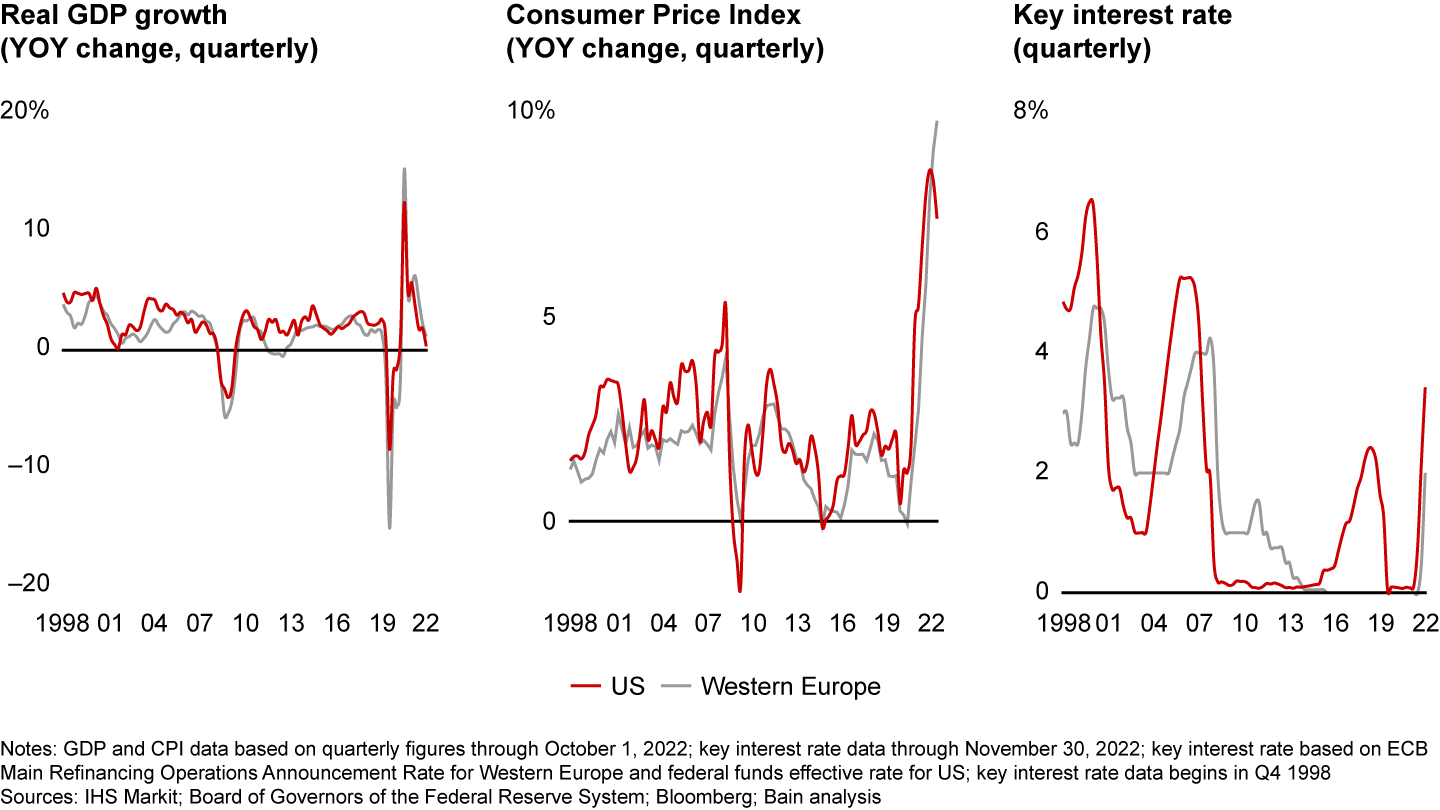
This mechanism dominated the investment world in 2022’s second half. After two decades of cashing in on steadily falling interest rates, investors ran into a brick wall when rates reversed course. Rising prices—made worse by the shocks to commodity and energy prices following Russia’s invasion of Ukraine—prompted sharp rate increases from central bankers around the world (see Figure 1). The move was most pronounced in the US, where tight labor markets and rising wages threatened to entrench inflation at unacceptably high levels.
Figure 1

As if on cue, equity prices plunged. The S&P 500 finished 19% lower in 2022 while the Nasdaq dropped 33%. Just five stocks—Microsoft, Apple, Alphabet, Meta, and Amazon—together lost almost $3.7 trillion in market value over the course of the year. For private equity investors who have long relied on multiple expansion to drive returns, the rate reversal created a new reality: In the future, returns will rely to a much greater extent on generating revenue and margin improvement—not just buying low and selling high.
Trying to predict the direction of prices or inflation is a fool’s errand. But we do know that central banks are in an increasingly uncomfortable position. Aging populations are steadily shrinking the labor force in many countries, limiting economic growth potential unless automation can pick up the slack. Companies are onshoring supply chains to enhance stability but adding cost in the bargain. The situation in most developed countries is defined by a high debt-to-GDP ratio and structural fiscal deficits taken on to support social spending. That forces central banks to “print money” to finance fiscal shortfalls.
All of these factors create inflationary pressures at the very time central bankers are trying to contain inflation. And in the case of national debts, raising rates can worsen the problem. Higher rates mean a higher interest expense on those borrowings, increasing debt burdens. For central banks, the only option is to try to navigate the narrow passage between boosting rates sufficiently to contain inflation but not so much as to crush economic activity or widen deficits.
Economists see three possible outcomes of this balancing act: a hard landing, where aggressive rate hikes trigger a global recession; a soft landing, where central banks hold rates high enough to contain inflation but low enough to keep economic growth alive; and stagflation, where bankers keep rates low enough to preclude an outright recession but too low to contain inflation. The latter outcome would present a 1970s redux—low growth, moderate to high inflation, and a stagnant economy.
Planning amid such uncertainty will clearly be a challenge in 2023 and beyond. But regardless of which scenario plays out, several factors appear certain:
- Demographics. Because populations are aging in most developed countries, labor markets will be tighter over the next decade than they were over the past decade, especially at the entry level. Many companies in labor-intensive industries will have a hard time finding employees, which will lead to either rising wages or higher capital expenditures to fund investments in automation. This could exert particular pressure on labor-intensive sectors like healthcare, although it could also open investment opportunities in companies like Medical Solutions, a travel nurse staffing firm bought by Centerbridge and the Canadian pension fund CDPQ for $2.3 billion in 2021.
- Government budget pressures. Businesses with high revenue exposure to government payers (again, think healthcare) may find their budgets under mounting pressure given overall fiscal challenges.
- Materials costs. The broad shift to onshoring supply chains may increase input costs for businesses—not a given but certainly something to watch. At the same time, energy expenses may face two sets of pressures: supply constraints in many regions (most notably Europe) and the added cost of investment required to transition away from fossil fuel sources.
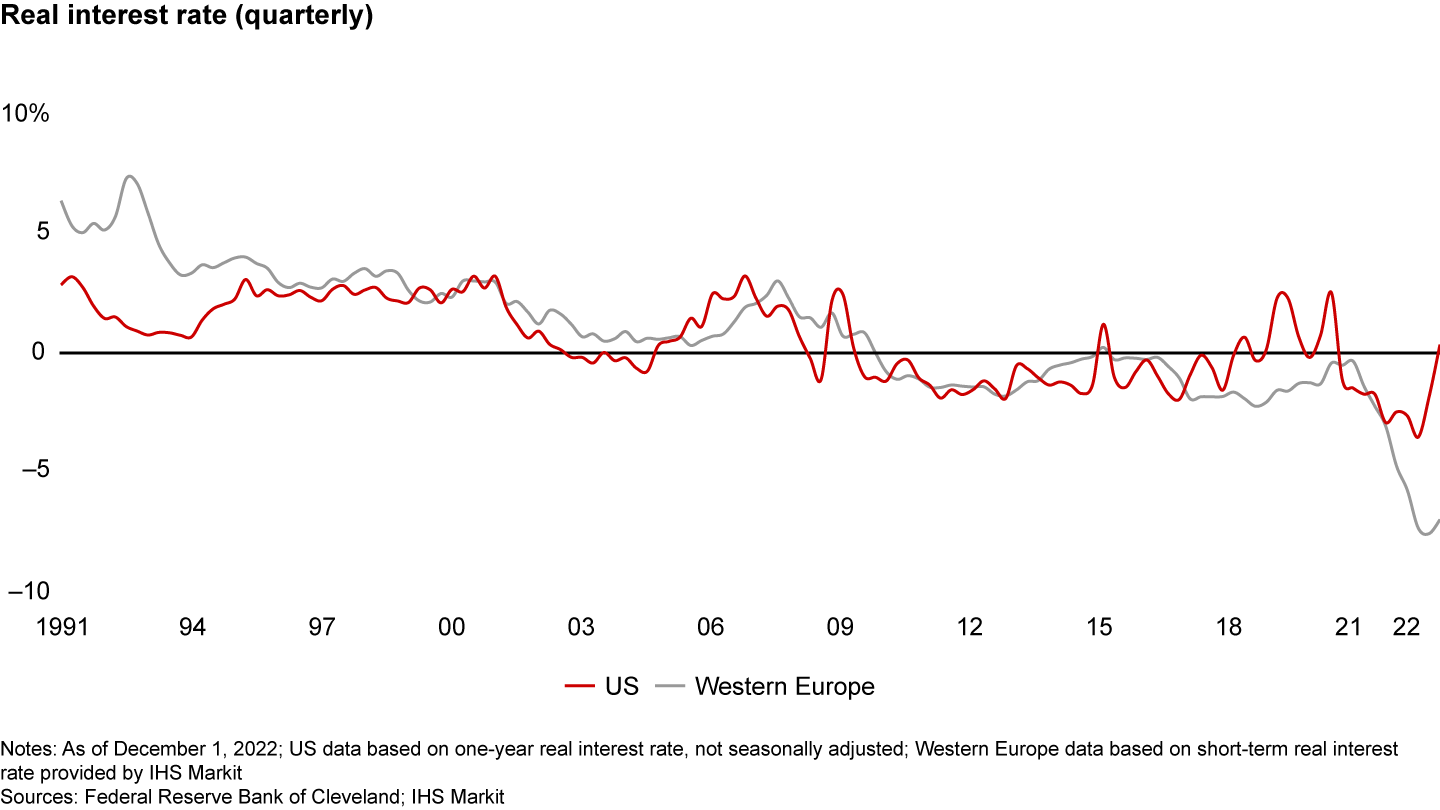
- Interest costs. The historically unprecedented zero-to-negative interest rate environment has come to an end. Regardless of exactly where rates end up, we can assume that interest rate risk is higher rather than lower. Despite the sharp increases over the past year, rates remain below historical levels (see Figure 2).
Figure 2

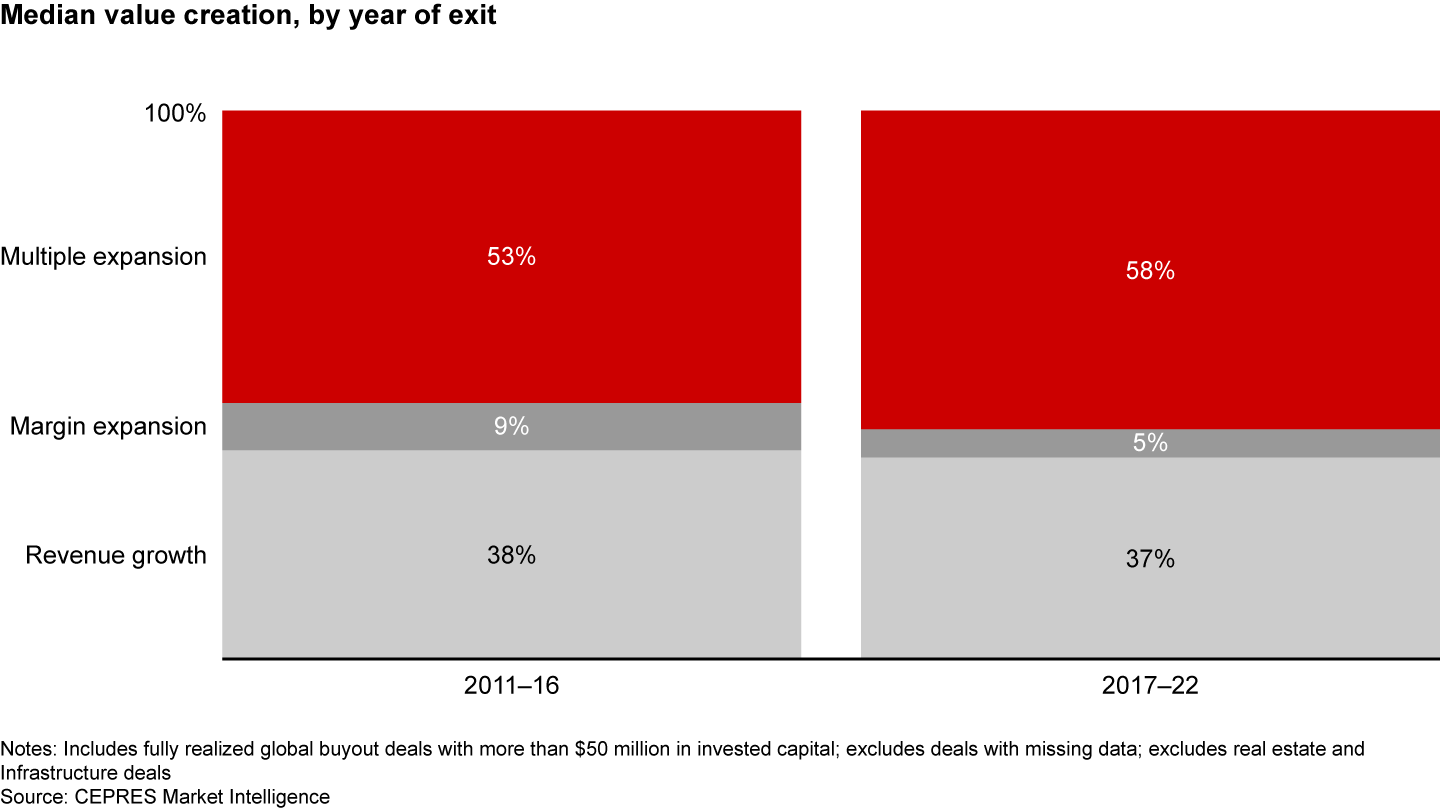
Higher rates and inflationary pressures pose a twin threat for general partners. The data is clear: Private equity returns have come largely from multiple expansion in recent years, rather than from revenue and margin growth (see Figure 3). But GPs won’t have that luxury moving forward, as higher rates continue to put downward pressure on asset prices. That means returns will increasingly have to come from growth in earnings before interest, taxes, depreciation, and amortization (EBITDA). Yet slowing market expansion and inflationary cost pressures will likely make those gains harder to come by.
Figure 3

Part of winning in this environment will involve finding ways to adjust to these new macro pressures in several key areas:
- Invest in automation. Given the demographic issues and rising cost of labor, this is a recipe for long-term success. It will help sustain or improve margins, creating a cost position that will make it easier to profitably gain market share.
- Invest in supply chain redundancy and security. This adds cost, but, as we saw during the pandemic, it can also prevent debilitating supply shocks to the business—a critical consideration given geopolitical tensions, weather and climate issues, and the potential for unforeseen events like Covid-19.
- Manage balance sheet risk. With interest rates in flux (yet biased toward “higher for longer”), it’s more important than ever to lock in favorable rates whenever possible. It is also critical to be cautious of overall leverage. While there’s no way of knowing which scenario will unfold, the next 24 months will present the highest risk of a truly hard landing since the global financial crisis. That makes it a dangerous time to go all in on leveraged cyclical assets.
- Target customer groups and industries with lower price sensitivity. Which groups in your customer mix are least likely to balk at cost pass-throughs? Think more “private sector” and “affluent,” less “commodity.”
- Build your organic growth story. Outside of emerging technologies, ebbing GDP growth and stagnant-to-declining populations will limit market expansion in many industries. That means growth will have to come at the expense of competition. Strategies to gain share and add addressable markets through adjacency expansion will become the core tools for successful PE investors.
Success will be less about piling on “max leverage” and playing multiple arbitrage and more about improving operating leverage and generating organic growth.
This last point is probably the most underestimated way to drive value at portfolio companies. We’ll say it again: The best way to generate differentiated performance in a slow-growth environment is by taking market share from competitors.
For many GPs, this isn’t a core competency, and few portfolio company CEOs give it the attention, investment, and resourcing needed to really move the needle. Often, it requires building capabilities in areas like pricing, salesforce optimization, and market definition—the bread-and-butter aspects of business improvement. It is also critical to approach the challenge systematically, creating repeatable processes, not one-off initiatives.
One North American building products distributor is typical of a PE-owned company that for years took advantage of abundant low-cost capital. Growth came from acquiring local distributors, putting them on a common ERP system, and wringing out costs through scale purchasing and facilities consolidation. Eventually, however, the M&A opportunity began to peter out. The company had to find a way to grow organically in those local markets, which called on distributorships to raise their game commercially.
A key insight was defining where the real opportunity lay. An analysis of spending patterns in the market showed the biggest opening was to increase the share of wallet with existing customers. That’s because most building contractors buy materials job to job, with no long-term contracts. They tend to rotate purchases between two to four suppliers to keep them on their toes, but they often favor one of them with the largest share of their business.
Becoming that go-to supplier evolved into the company’s singular focus. C-level executives made share gain the definition of success and dedicated sufficient management time and investment to get there. An analysis of where the distributorships were falling short really came down to execution—too often, the primary salesperson was unavailable, and the customer didn’t know whom else to call. Orders weren’t always complete and on time, or dispute resolution took too long.
To solve these problems, the company took a holistic approach. Using a market analytics tool, it identified its highest-potential customers based on their probable future spending (not just what they spent last year) and then created a team-based system to cover them differentially. It made sure clients knew whom to contact and built redundancy within the team so no calls went unanswered. It drew a clear definition of what on-time delivery meant and devised a no-excuses checklist system to make sure orders were complete. It deployed a roving troubleshooter in the market to resolve the inevitable simple problems on the spot. For bigger ones, the company set up a new way to resolve disputes that prioritized keeping a contractor’s job moving and determining fault later.
The internal teams were cross-functional, including someone from every part of the business—sales, delivery drivers, warehousing, management. They met weekly to celebrate success and cocreate solutions. It turned out there was plenty to celebrate; none of it was rocket science, but results took off. In its two pilot markets, the company’s market share popped by 1.25 times in the first quarter after implementation, while comparable revenues rose 30%. Now the company is rolling out the team-based system nationally.
The current macro environment presents risks for any business, public or private. Yet, historically, private equity has outperformed the public markets across a broad range of interest rate and economic conditions. Ensuring that continues in this cycle will require a pivot in how most firms generate performance. Success will be less about piling on “max leverage” and playing the multiple arbitrage game. It will be more about improving operating leverage and generating organic growth. The most effective firms are already in motion. They are organizing themselves to boost exit multiples from the inside out by driving real improvements in EBITDA.
More from the report
Read our 2023 Global Private Equity Report
First published in 2月 2023