

論説

At a Glance
- The number of global corporations with Net Zero goals increased 200% between 2019 and 2020—yet fewer than half are on track to deliver on those commitments.
- Although eliminating emissions as much as possible is a critical part of achieving Net Zero goals, carbon offsets will play an important strategic role in compensating for hard-to-abate emissions.
- Southeast Asia has some of the world’s most valuable investable carbon stock, and avoiding deforestation in the region represents a valuable source of carbon offsets, as well as important community and biodiversity benefits.
- With carbon markets scaling globally, the potential offsets generated in the region may offer $10 billion in economic activity annually by 2030.
- Companies must consider how offsets fit into a wider carbon strategy that, at the minimum, meets Net Zero goals, but also moves beyond this to create value through business model and product innovation (e.g., carbon-free products).
The move to Net Zero has become a race as governments, corporations, and societies increasingly advance more ambitious targets to decarbonise and act against climate change. Yet the unspoken reality is that few CEOs or leaders have clear plans to deliver on these goals. Much progress needs to be made to decarbonise at scale and within the timelines proposed.
Although this would not be the first time ambitious stretch targets have been proposed without a clear plan to deliver, the scale of collective ambition here is unprecedented. China, the US, and the European Union have all announced landmark Net Zero targets, backed by significant financial investments in climate plans, clean energy, and infrastructure. Coalitions of businesses have pledged their commitment as well. Between 2019 and 2020, the number of global corporations with Net Zero goals increased 200%. As of today, more than 1,500 companies have committed to Net Zero—and nearly a quarter of these are from Asia Pacific, according to Science Based Targets initiative.
However, few corporations are on track to deliver on their current promises, and no one solution exists to close the gap. Instead, a holistic approach that pulls multiple tactics at once will be needed.
- Strategic levers are transformative actions that companies can take to rebalance their assets and shift product portfolios to low- or zero-carbon models. Think green product designs, carbon-free business models, optimised production or sales footprints, renewable investments, supply chain optimisation, and new technologies, among other methods.
- Operational levers are executed at the line level and on shop floors. These levers involve asset upgrades and process adjustments to improve energy efficiency, switch to clean energy generation, and streamline business and people operations, such as by reducing travel or using green catering services.
- Offset levers achieved by buying and retiring greenhouse gas emissions offsets via voluntary carbon markets are critical for companies to address last-mile emissions that are difficult or impossible to abate. Carbon offsets enable companies to compensate for these emissions by enabling reduction or removal of greenhouse gas emissions that take place elsewhere.
Every company is different. But although the recipe for a successful Net Zero effort varies, the ingredients are the same: Measure and understand your current carbon footprint, mitigate emissions to the greatest extent possible, and offset hard-to-abate last-mile emissions.
Offsetting—what, when, and how
Offsets are sold and traded through voluntary carbon markets: unregulated marketplaces that enable companies to compensate for hard-to-abate emissions. This market-based mechanism enables distribution and allocation of capital to actors who can most effectively and efficiently reduce carbon.
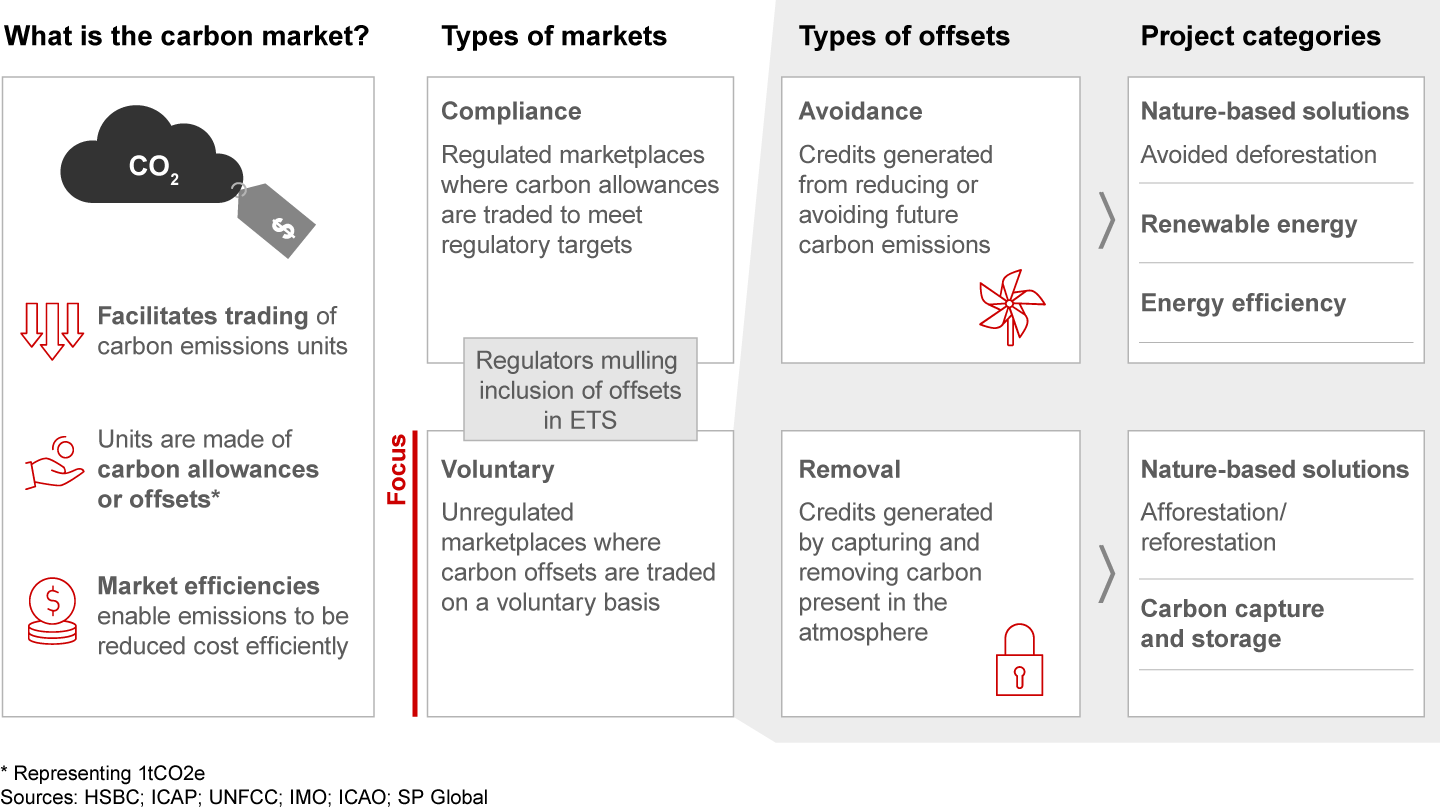
Projects that generate offsets generally fall into two categories: avoidance or removal (see Figure 1). Today, most projects are avoidance projects; many strategies to remove greenhouse gases tend to be immature and costly to deploy at scale. In the longer term, both nature-based removal (e.g., afforestation) and technology-based removal (e.g., carbon capture and storage) will be key to achieving Net Zero goals.
Figure 1

Although the role of offsetting is important and has clear benefits for corporations, Net Zero journeys need to use this solution within clear guardrails:
- Deliver additionality. Project developers must prove that carbon reduction would not have happened in the absence of the offset or offset project.
- Ensure no leakage. The issued offset should not simply shift emissions to another location or sector where they remain uncontrolled or uncounted.
- Ensure permanence. Sequestered carbon needs to stay out of the atmosphere and should not re-enter the atmosphere for a reasonable and stated length of time.
- Verify impact. Rigorous due diligence by independent third parties is needed to measure and certify the impact of carbon reduction or removal.
- Avoid overreliance. Critically, corporations must not rely solely on offsets without exploring other levers to reduce or remove their emissions footprint. Failing to do so can lead to greenwashing accusations and erode stakeholders’ trust in the company.
Scaling (and trading) carbon markets
Carbon markets support reduction of global carbon emissions by facilitating trade in emission units, also known as credits. These credits take the form of allowances or offsets. Each credit represents an avoidance or removal unit of greenhouse gas emission. Credits are principally traded in two types of markets: compliance markets, where corporations trade allowances to comply with set government regulations, or voluntary markets, where companies contribute to reduce carbon as part of private projects.
The compliance market contains many marketplaces. The market currently has 24 emissions trading systems operating in various jurisdictions and more than $270 billion in tradeable value.
The more modest voluntary market saw less than $1 billion in traded credits in 2020 but has substantial room to grow. Given that 15% of the world’s tropical forests are concentrated in Southeast Asia—which also faces the highest rate of deforestation (1.2% loss per year)—the region is a prime location for high-quality, investable carbon offset projects.
The (voluntary) carbon markets opportunity
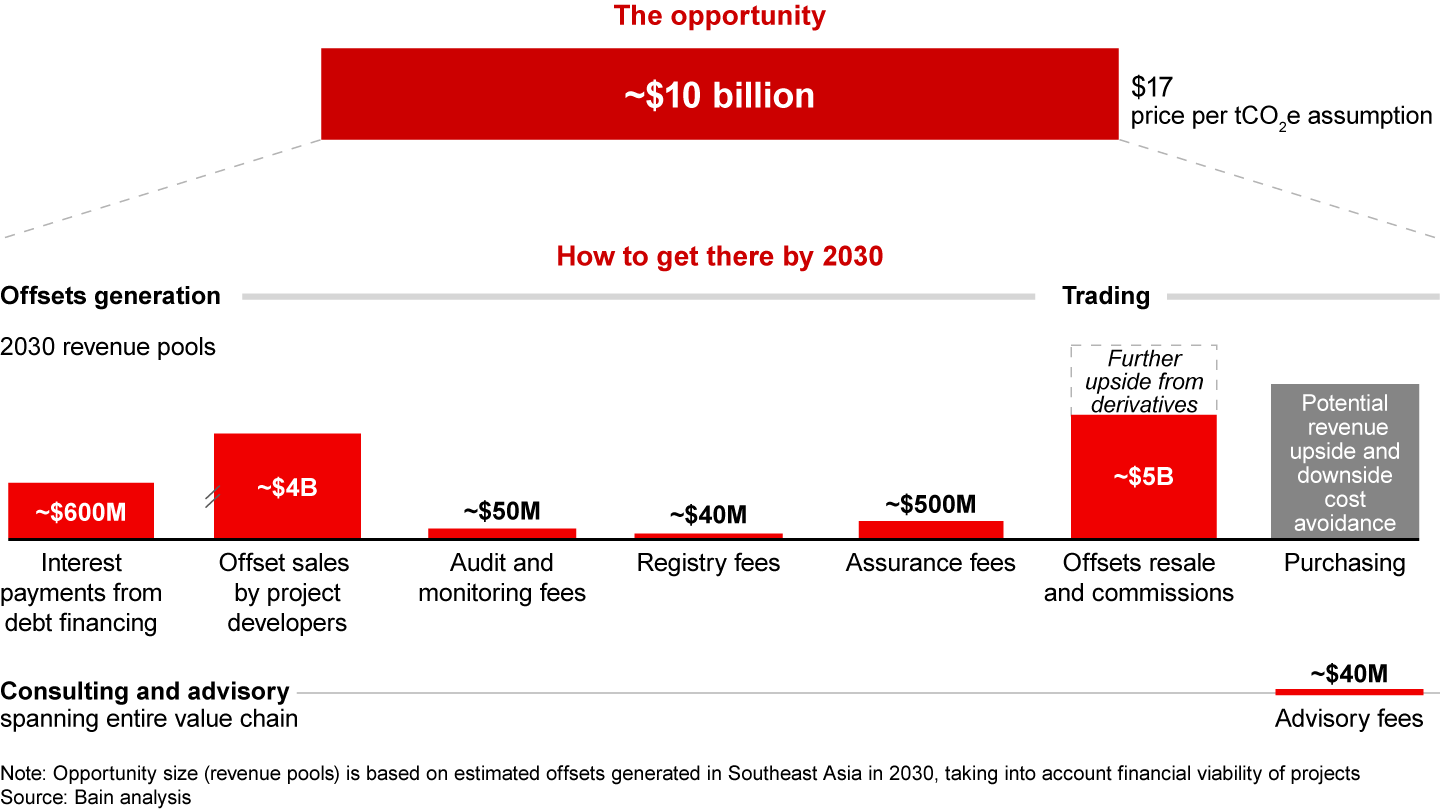
The voluntary market is in its early stages but holds significant promise. Currently, the global average price for carbon offsets is approximately $3 per tonne, with the price expected to rise significantly in coming years. Conservatively, we expect prices to be about $17 per tonne by 2030—a value that some premium credits are already fetching. To meet targets set forth in the Paris Agreement without a breakthrough in direct carbon removal, the price of offsets could exceed $50 per tonne under some scenarios.
The business incentive is drawing new players into the carbon market. That’s welcome news. Everyone—debt financers, project developers, auditors, registries, quality oversight boards, traders, and (of course) buyers—is needed to address the climate challenge. All told, Southeast Asia’s offset market could create $10 billion in economic opportunities annually by 2030 (see Figure 2).
Figure 2

Inaction also has consequences. Significant reputational, regulatory, strategic, and financial impacts lie ahead for businesses that ignore climate change and continue to rely on finite resources.
Navigating and scaling the Southeast Asian voluntary carbon market
Despite the inherent potential—in particular for natural climate solutions—and need, today’s Southeast Asian voluntary carbon market is inefficient, with many scalability issues. Overcoming these issues requires addressing four challenges. Much work is underway to do so.
Unlocking and scaling supply
Offset projects tend to be siloed and lack the frontline capabilities to scale, with a limited number of trusted project developers. Long lead times (a minimum development cycle of three to seven years) for most projects act as a further barrier to financing, as they conflict with traditional funds’ demand for quick returns.
New models of funding, involving partnerships between private, public, and non-governmental sectors (e.g., New Forests’ Tropical Asia Forest Fund) are a critical part of the solution.
Improving integrity
Offset credits today vary wildly in quality, with a limited link to prices leading to low trust amongst buyers. Key factors are fragmented markets and infrequent, unreliable assurance due to the high cost of (onsite) monitoring.
Innovation is emerging, with several start-ups developing tech-enabled assurance and verification (e.g., AI satellite imagery). Such capabilities heavily reduce assurance costs and increase trust.
Establishing infrastructure
High risk and low liquidity are critical barriers to participation in the carbon markets today. The majority of Southeast Asia offsets transactions go through brokers or directly from developers, with wide variance in margins and little correlation with quality. Further, the carbon futures market is ad hoc and immature.
Carbon credit trading exchanges can address this problem by standardising margins, increasing market efficiencies, improving access to high-quality offsets, and establishing a derivatives market to improve liquidity. Technologies such as blockchain-based tokenisation act as a critical enabler for exchanges to securitise carbon credits to increase visibility and transparency.
Overcoming regulation challenges
Many regulation challenges remain. Regional challenges include a lack of government support and inconsistent policies. On an international level, unresolved issues exist around Article 6 of the Paris Agreement and the legitimacy of offsets.
At its core, Article 6 determines whether countries can use voluntary carbon markets to reach Net Zero emissions goals, paving the way to an international carbon market in which countries that cannot meet their emissions targets can buy credits from countries that have reached theirs.
Critics of Article 6 worry about double counting, additionality, and complacency that might result in failure to deliver on the increased ambition and progress of emissions reduction. (Article 6 is a key point on the agenda for the upcoming COP26 in Glasgow, scheduled for November 2021.)
Despite uncertainties, the general sentiment is that the voluntary carbon markets will play a critical role in the global journey to Net Zero. In fact, leaders of G7 nations reaffirmed their support for “high-integrity carbon markets” at the G7 summit in June 2021. The question simply remains—to what capacity?
Hence, none of these challenges are reason for inaction.
Companies must decide how to best position their carbon markets strategy
Based on resources and climate ambition, those who want to enter the carbon markets can choose from four participation models:
- Balanced purchasers are the most cost-conscious. These companies focus on using offsets as a mechanism to satisfy regulatory requirements or customer demands. Companies in this group need to carefully balance cost considerations without compromising the quality of their offsets, or they run the risk of greenwashing accusations. Most companies partner with carbon offset advisers to ensure quality of offsets.
- Engaged participants proactively manage climate risks beyond current regulations. Keeping a view on the long term, these companies might consider paying a premium for additional tech-based assurance and monitoring. These participants begin to drive the market towards high-quality offsets. They will need to invest time and resources to carefully select the right offset projects that are not only of high quality but also align with the company’s mission.
- Investors directly access, invest, and monetise offset projects, treating carbon as an emerging asset class. They can leverage their position to secure demand. Through key learnings in trading and project development, investors lay the foundation for further business-building.
- Innovators are turning Net Zero into a competitive advantage. These companies embed Net Zero efforts into their business models, build new businesses in the carbon markets, and develop carbon-free product offerings. Where does your company stand—and should it remain in that category? The answer depends on your Net Zero ambition, focus, and willingness to make strategic choices. Those just starting out on their Net Zero journey, with limited resources, may start off as purchasers, with a focus on risk mitigation and efficiency. However, this participation model may evolve as both the company’s carbon markets strategy and its internal capacity mature to start building a competitive advantage.
Moving forward
Regardless of industry, company size, and ambition, the time to act is now. The cost of complacency is far greater than the risk of not getting it perfect.
Every company’s Net Zero—and, consequently, offsets—strategy should include these critical components:
- a clear understanding of the cost of carbon emissions and the potential P&L impact;
- a holistic approach to decarbonisation, aligned with business ambitions;
- a quantitative assessment and prioritisation of Net Zero levers, including a defined role for offsets that avoids overreliance;
- a systematic, value-driven approach to offsets that ensures offset quality; and
- a robust price-hedging and risk-management framework.
Climate change is a global problem and requires a collective response. Although offsets are not a silver bullet for decarbonisation, they serve as an important lever on the pathway to Net Zero. As business practices are transformed more broadly to achieve Net Zero, offsets—and the carbon markets that provide them—present exciting opportunities, both environmentally and economically.
First published in 8月 2021