

Global Private Equity Report

概要
- SPACs took the IPO market by storm in 2020, and private equity firms were right in the mix.
- But SPAC economics, which favor sponsors and premerger shareholders, have raised serious questions about long-term performance.
- Market demands for better long-term incentives are turning up the heat on sponsors to find better merger partners through improved screening and due diligence.
This article is part of Bain's 2021 Global Private Equity Report.
The only thing that multiplied faster than SPAC IPOs in 2020 were heated opinions on the market spectacle, both pro and con. On the pro side: Special-purpose acquisition companies, or SPACs, are proving to be a speedier, more certain way to take a company public. Con: The economics heavily benefit the sponsor and redeeming IPO investors while significantly diluting nonredeeming public shareholders.
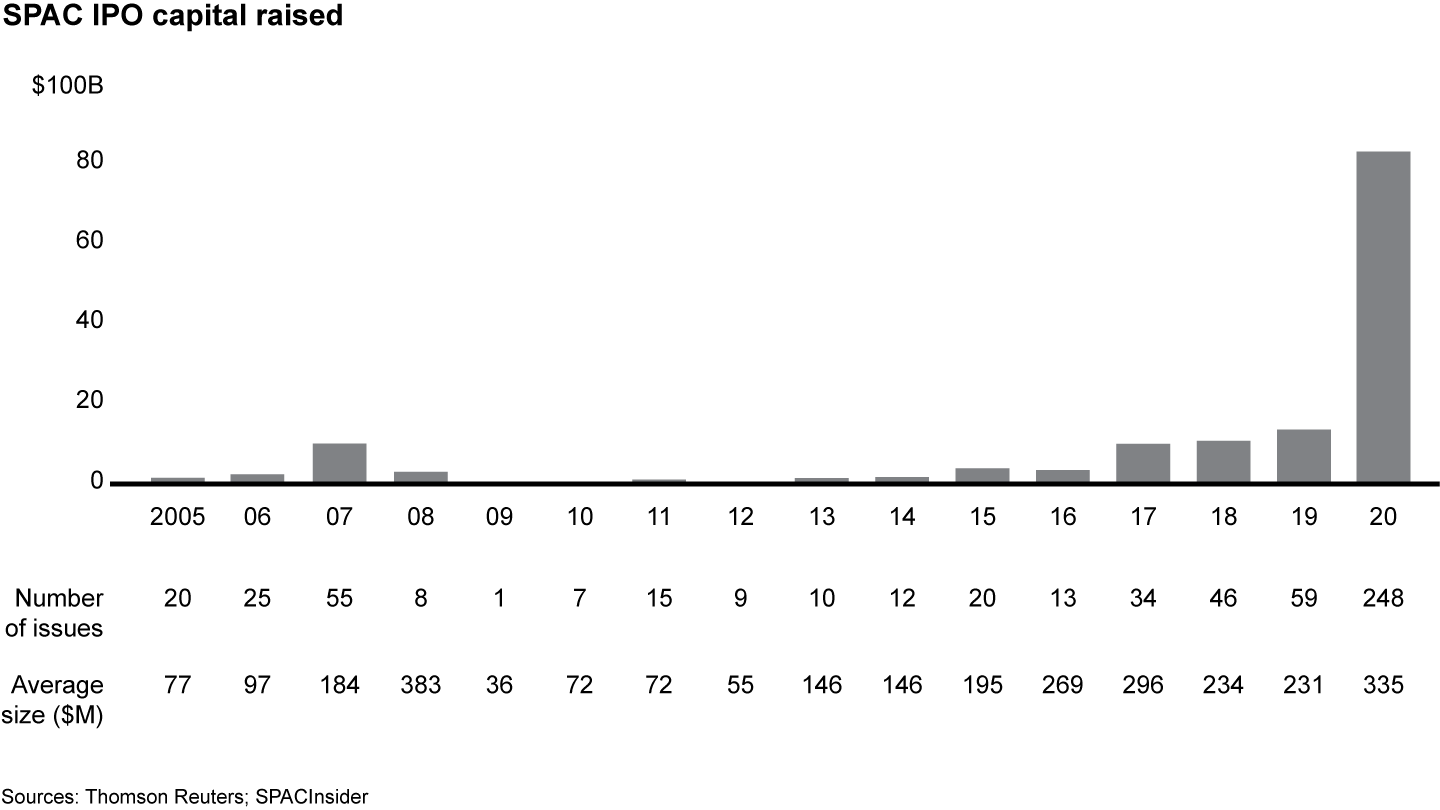
What’s indisputable is that SPACs are red hot. Having died out after the global financial crisis, these vehicles found new life a few years ago and then exploded back onto the financial scene in 2020, raising a stunning $83 billion in fresh capital, more than six times the previous record set just a year earlier (see Figure 1). The momentum carried over into 2021, with 91 SPACs raising another $25 billion in January alone.
Figure 1

Private equity firms and hedge funds have jumped in enthusiastically on the sponsor side, with well-known funds raising around $20 billion in 2020. Since 2015, two of the most active PE sponsors, The Gores Group and TPG, have separately raised a total of $4.82 billion through 11 SPACs. Apollo raised $1.45 billion with three SPACs over the six months ending in January 2021. PE funds have been active “sellers” to SPACs as well. In one of 2020’s biggest transactions, Blackstone and CVC took Paysafe public in a SPAC-facilitated deal worth $9 billion.
The backdrop for this upwelling of SPAC interest is the ongoing surge in the public equity markets coupled with a long decline in the appetite for traditional IPOs. Public company multiples are at or near all-time highs, yet the number of listed companies today is half of what it was in 1996, and IPOs are down 85% since then. More and more companies are balking at the cost, hassle and uncertainty of the typical IPO process. SPACs and other innovations like direct listings are starting to fill the void.
A structure with issues
SPACs are shell companies with no operations that raise capital through an initial public offering and then use the proceeds to fund one or more mergers that form the basis of the ongoing public entity. They typically have 18 to 24 months to find an acquisition target and often draw in other sources of financing along the way―most often, private investments in public equity (PIPE deals).
IPO investors get a share of stock, usually worth $10 at the start, and partial warrants to buy additional shares at an exercise price of $11.50. In return for funding what is essentially a blank check, investors have the option to get their initial investment back while keeping the warrants. And if the SPAC times out, they automatically get a refund, plus interest.
The economics of this arrangement are highly attractive for sponsors. That’s another big reason activity spiked in 2020. Typically, the SPAC sponsor receives 20% of the equity (known as the “promote”) for a token capital contribution. The sponsor pays for underwriting and other fees, but the endeavor is largely risk free as long as the SPAC entity completes a merger. Even if the postmerger share price sinks, the promote offers a large cushion against losses. If the price goes up, the warrants sweeten the deal.
The initial investors in these IPOs, meanwhile, have their own rich incentives. Dominated by a group of hedge funds known as the “SPAC Mafia,” they use SPACs as a source of free warrants and rights. According to research by Stanford Law professor Michael Klausner and NYU School of Law professor Michael Ohlrogge, these funds redeem or sell their IPO stock before target mergers are consummated 97% of the time, on average, but retain and trade the warrants, leading to returns greater than 11% in the deals studied. Redemptions commonly leave the SPAC with only 25%–50% of the capital it initially raised. To fill in the gap and build enough additional capital for a larger acquisition, SPAC sponsors usually turn to PIPE financing to get transactions over the line.
The research by Klausner and Ohlrogge shows that while sponsors and the SPAC Mafia profit handsomely in these arrangements, longer-term shareholders, on average, have not. Looking at completed mergers between January 2019 and June 2020, the research shows that SPACs lost 12% of their value within six months of the merger, while the Nasdaq rose roughly 30%. After 12 months, the average drop was 35%.
We took our own look at the data for all 121 SPAC mergers from 2016 to 2020, comparing their end-to-end performance (pre- and postmerger) to equivalently timed investments in the S&P 500 through January 25, 2021. We found that SPAC returns seem to be improving in aggregate, but individual performance is still highly variable, and any gains are skewed to the premerger period.
Of the 121 SPAC mergers we studied, more than 60% have lagged the S&P 500 since their merger dates, with 50% trading down postmerger.
We looked first at the 58 SPACs that completed mergers between 2016 and 2019 (see Figure 2). If you split a $1 million investment evenly between them, you’d have an aggregate $1.46 million—or a 46% gain—by the merger dates. Equally timed investments in the S&P 500 would yield an aggregate $1.17 million, suggesting that the SPAC strategy is superior. Postmerger, however, the story takes a sharp turn. By January 25 of this year, SPAC performance had fallen off 14%, leaving you with $1.25 million, while the S&P soared 40%, boosting your investment to $1.65 million.
Figure 2
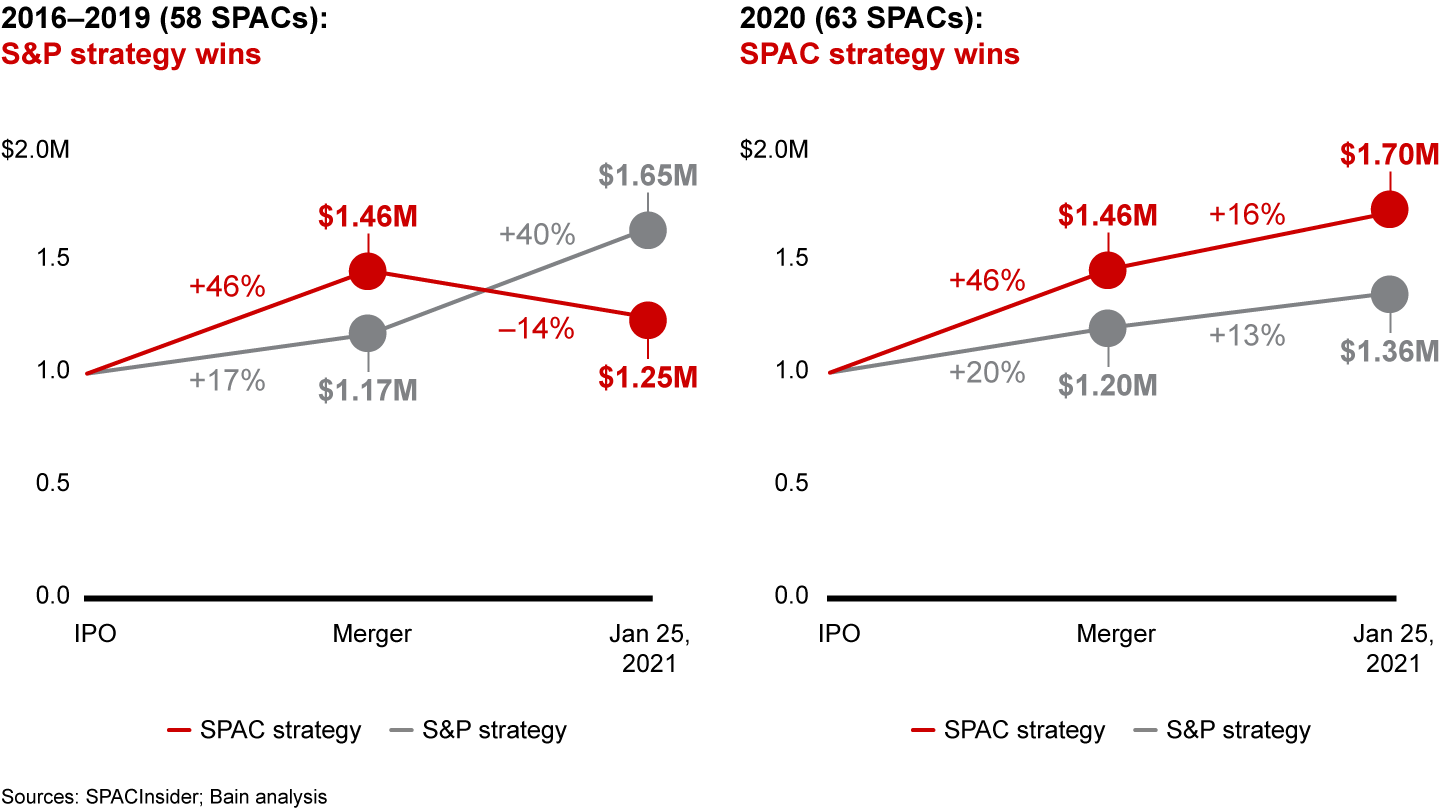

The 63 SPACs completed in 2020 show some improvement, but it is still early days; 60% of them transacted their mergers in the fourth quarter, making it difficult to draw close comparisons with SPACs that have traded postmerger for longer. A $1 million investment split evenly between the 2020 cohort would have given you an aggregate $1.46 million by the merger date (vs. $1.20 million for the S&P strategy). Postmerger, however, the SPAC strategy holds up much better, producing $1.70 million by January 25 (a 16% gain) vs. $1.36 million for the S&P strategy (13%).
Notably, 68% of the superior SPAC performance among the 2020 cohort came premerger, when trading is dominated by hedge funds. It’s also true that the bulk of the postmerger gains through January 25 can be attributed to a small minority of high-flying deals such as Betterware (+324% postmerger), Open Lending (+173%), HighPeak Energy (+165%), DraftKings (+165%), Diginex (+139%), MP Materials (+116%) and Eos Energy (+107%). A full 40% of the 2020 SPACs, meanwhile, lost an average of 32% postmerger.
All of this validates the SPAC Mafia strategy: Buy at the IPO and earn risk-free gains by selling winners and redeeming the rest for cash. Then hold onto warrants to capture additional risk-free gains from the few—but extreme—postmerger winners. For longer-term or postmerger shareholders, SPAC performance falls off substantially.
Real-time evolution
Can a structure like this endure to play a meaningful long-term role in the capital markets? Despite the problems, there are several compelling reasons to believe it can.
First, there’s a clear market need―companies and investors are clamoring for alternatives to the traditional IPO. Second, the Klausner/Ohlrogge research shows that returns for SPACs run by established, high-quality managers have been significantly better than the average, suggesting that growing professionalism may improve results. Finally, market pressure is already forcing sponsors to structure SPACs in new ways that make them more equitable for all stakeholders and focused on long-term performance. That may eventually to create a more stable ecosystem.
SPAC structures are evolving in two important ways:
- Amid heavy competition for companies to bring public, sponsors are sweetening deal terms to both reduce dilution overall and to align stakeholder incentives longer term. On the extreme end, Bill Ackman’s Pershing Square Tontine Holdings has no promote. Other SPACs—like Executive Network Partnering Corporation and Periphas Capital Partnering Corporation—are embracing a new structure called CAPS, innovated by Evercore. This structure starts with a lower promote (5%) that can grow over time if the stock performs. Some SPACs are even requiring redeeming IPO investors to surrender their warrants or rights.
- Capital structures to augment the initial IPO funding are also shifting. Rather than relying solely on third-party PIPE dollars, some SPAC IPOs are including large forward purchase agreements underwritten by well-heeled sponsors who precommit to filling any capital void left by redemptions. SPACs sponsored by Apollo, Starboard Value and Dragoneer, among others, have featured large forward purchase agreements.
As these trends play out, SPAC sponsors will have more exposure to long-term company performance, both through the initial at-risk capital and the forward purchase agreement. That will dial up the pressure to focus on more than just closing a deal and moving on—an attitude that has plagued SPAC deals in the past. In the current overheated environment, any likely target with a public-company profile has SPAC sponsors lining up at the door. To win, successful sponsors will have to balance their effort across three equally important jobs.
Find a deal and get it done before the clock strikes midnight. SPAC sponsors are getting significantly better at this. From 2006 to 2010, the SPAC success rate in finding deals was 50%. That rate jumped to 85% in the 2016–18 time frame. As encouraging as that is, the volume of SPAC IPOs in 2020 and early 2021 was like nothing the industry has ever seen, dramatically increasing the competition for targets. The front-runners will be the SPACs that come to market with a strong point of view on what they want to buy and hit the ground running with a focused search. That requires robust sector screening to get a jump on potential targets.
Pick a good company that can excel in the public markets long term. Of the 121 SPAC mergers we studied, more than 60% have lagged the S&P 500 since their merger dates, with 50% trading down postmerger. Over 40% of the 121 stocks were trading below their $10 IPO price as of January 25. These are troubling data points, especially as the incentives for SPAC sponsors shift toward rewarding long-term performance. As pressure to produce share appreciation grows, sponsors will have to bring stronger due diligence capabilities to the party to analyze and vet their highest-potential targets. The big wins will involve underwriting ways to turn a good company into a great one.
Boost performance through management expertise, talent networks and world-class value-creation planning. With hundreds of SPACs in the market, price discovery on any given asset will be very efficient. Top returns will eventually accrue not just to great deal people but to those who know what to do with companies once they buy them to boost the share price. Sponsors trying to capitalize on long-term incentives need to assemble the right team, align around a value-creation hypothesis predeal, and then work closely with management (and outside help when needed) to structure and implement the right value-creation initiatives, building an equity story that resonates in the public markets.
For one PE-backed SPAC focused on the fintech sector, this process began with an extensive early-stage effort to identify, screen and evaluate potential targets (see Figure 3). Even within the narrow fintech focus, there was substantial value in framing and prioritizing the most attractive seams within the sector and then using both analytics and industry experience to fully capture specific trends and identify sources of alpha.
Figure 3
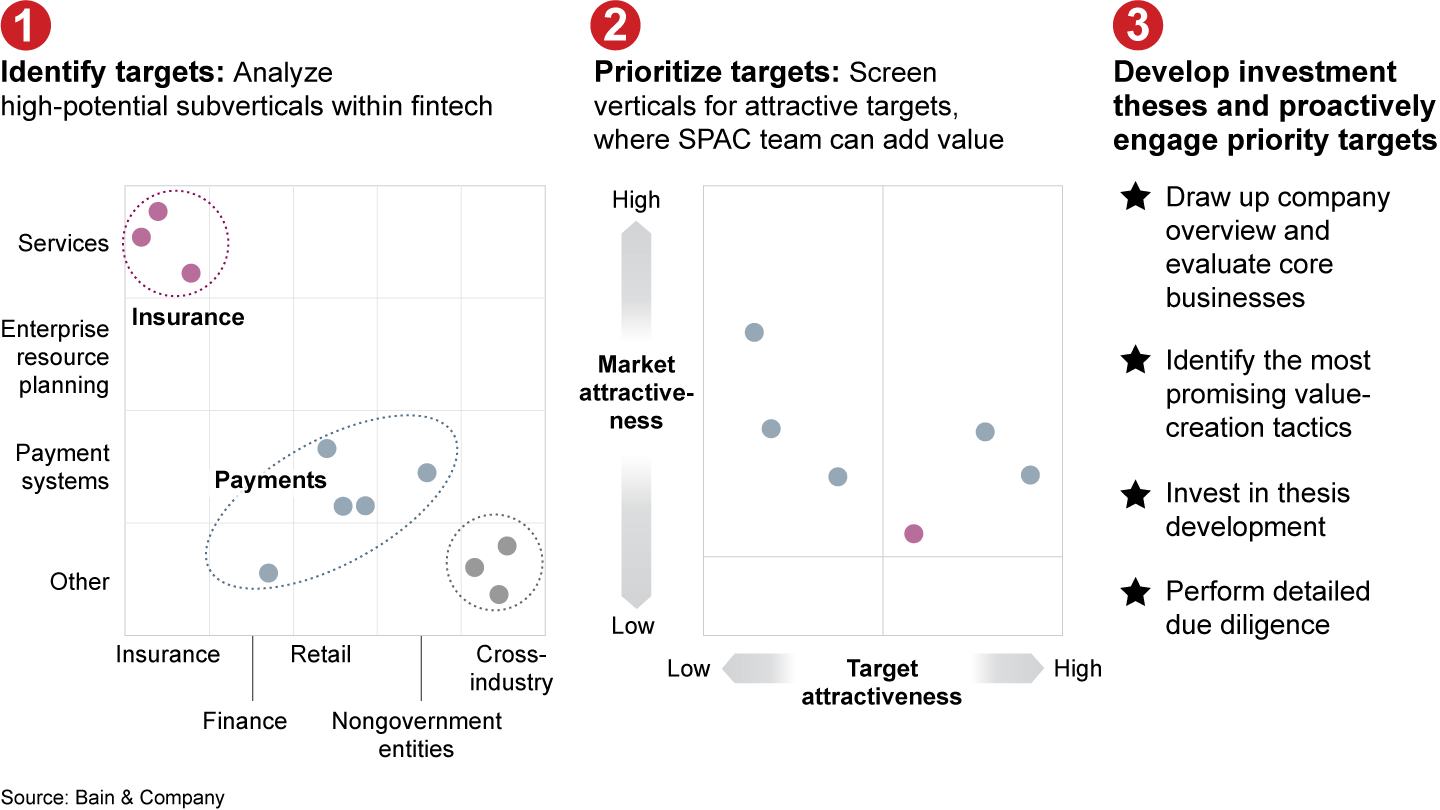

With external support, the deal team segmented targets based on product or service offering and customer base (fintech software, payments solutions, etc.) and then ran market screens focused on multiple success factors. That led to an analysis of each high-potential target, focusing on the company’s operations, management and prospects. This level of clarity before the IPO allowed the SPAC team to focus its approach and align on a differentiated pitch to targets. That let them move quickly in the offering’s aftermath to approach the highest-potential targets with a convincing value-creation hypothesis calibrated to produce immediate upside in a hot market for public equities.
Whether SPACs persist or flame out will surely hinge on performance. Increasingly, that will depend on whether professional managers can come to dominate the battlefield. As the incentives shift from short-term dealmaking to longer-term performance, the game is changing. The edge will go to sponsors who can screen the best targets and underwrite the most compelling value-creation plans.
More from the report
Read our 2021 Global Private Equity Report
First published in 3月 2021