

論説

概要
- Everything-as-a-service (XaaS) offers vital growth opportunities for network service providers in the B2B space: a $400 billion-plus addressable market by 2025.
- Network service providers can win a good piece of that, but must vie with hyperscale players like Google and Amazon and with nimble insurgents, some of whom are better positioned in customers’ eyes.
- Telcos need to evolve their network and commercial capabilities—and partner wisely—to seize selective growth opportunities and avoid wholesale commoditization.
The telecommunications industry is structurally challenged. For more than a decade, network service providers (NSPs) have endured an exponential increase in demand for data, but simultaneously suffered an erosion in the price that consumers and businesses will pay for these services. Just as challenging has been the decline of traditional profit centers including voice, SMS messaging and pay TV as customers embrace global “over-the-top” providers that deliver services directly over the Internet.
In response, network operators have radically simplified their offerings, and begun to apply digital technologies and improve capital effectiveness. In addition, several major M&A deals focused on reducing costs have already proceeded in Europe and Asia, and others will surely follow if regulators consent.
While necessary, none of these steps in isolation constitute a sustainable growth strategy, however. With an eye to growing profitably from the core, forward-thinking NSPs have started to focus some of their energy on enterprise customers again as both managed services and “everything-as-a-service” (XaaS) begin to contribute to a partial renaissance of the business-to-business (B2B) markets. As the name implies, everything-as-a-service is a broad term for the long list of on-demand services delivered via cloud architecture.
A $400 billion market that’s addressable but hotly contested
From an NSP perspective, XaaS includes products that should be regarded as core-of-the-core, including unified communications as a service (UCaaS) and software-defined wide area networks (SD-WAN) that make it possible to operate networking hardware on commercially available, lower-cost Internet connections and at the same time offer a range of adjacent offerings spanning security, mobile device and applications performance management, infrastructure hosting and the Internet of Things (see Figure 1).
Figure 1
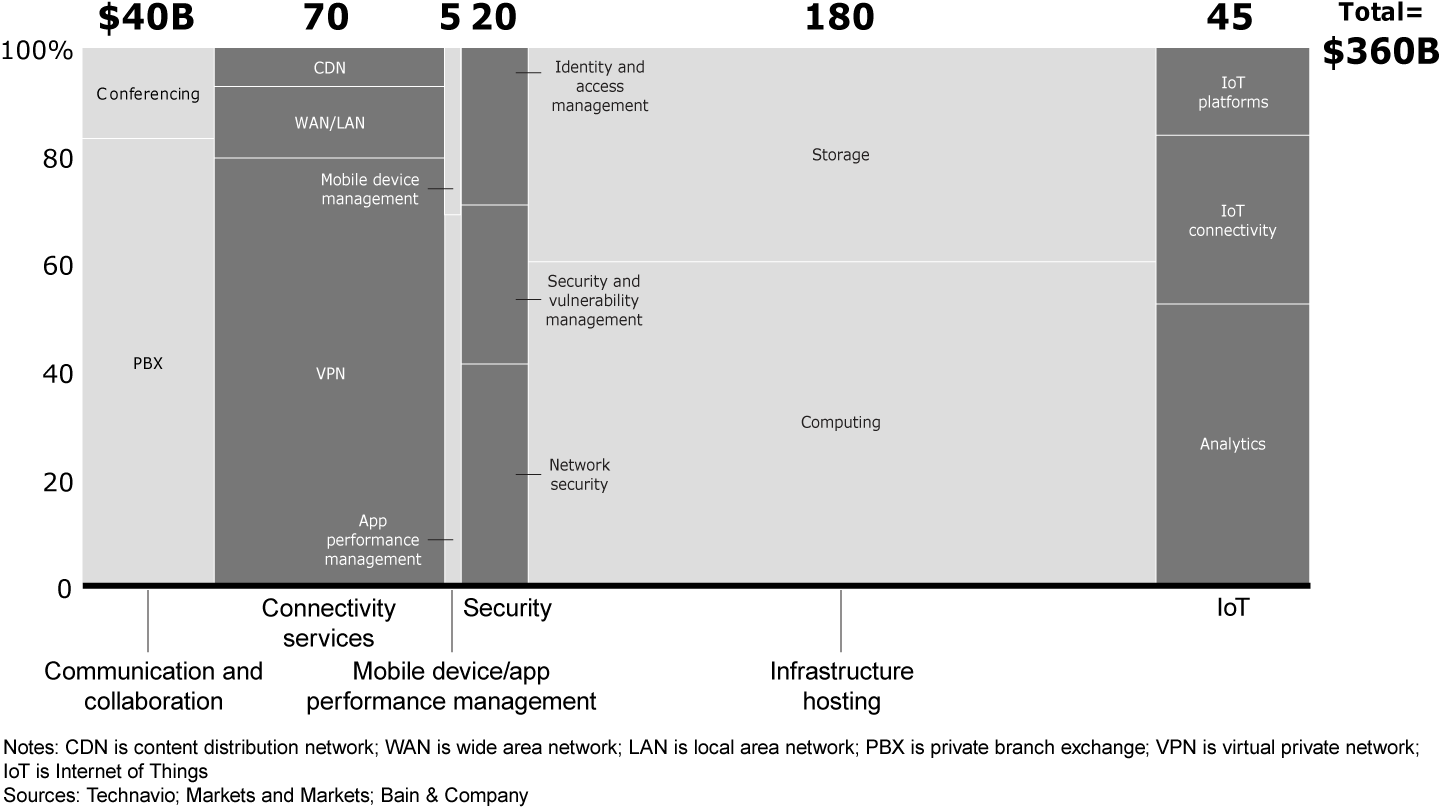

Much of this business is already out of reach due to the scale and prior moves of massive hyperscale companies like Google, Facebook and Amazon, which aim not only to lead the public cloud and cloud services industries, but to expand into numerous related businesses as well. Even so, Bain & Company estimates that the XaaS market available to NSP will be a more than $400 billion opportunity by 2025. Our research shows that by 2025, more than half of telecom B2B revenue growth will have been derived from XaaS models if these companies adopt strategies that differentiate them from hyperscale cloud players (see Figure 2).
Figure 2
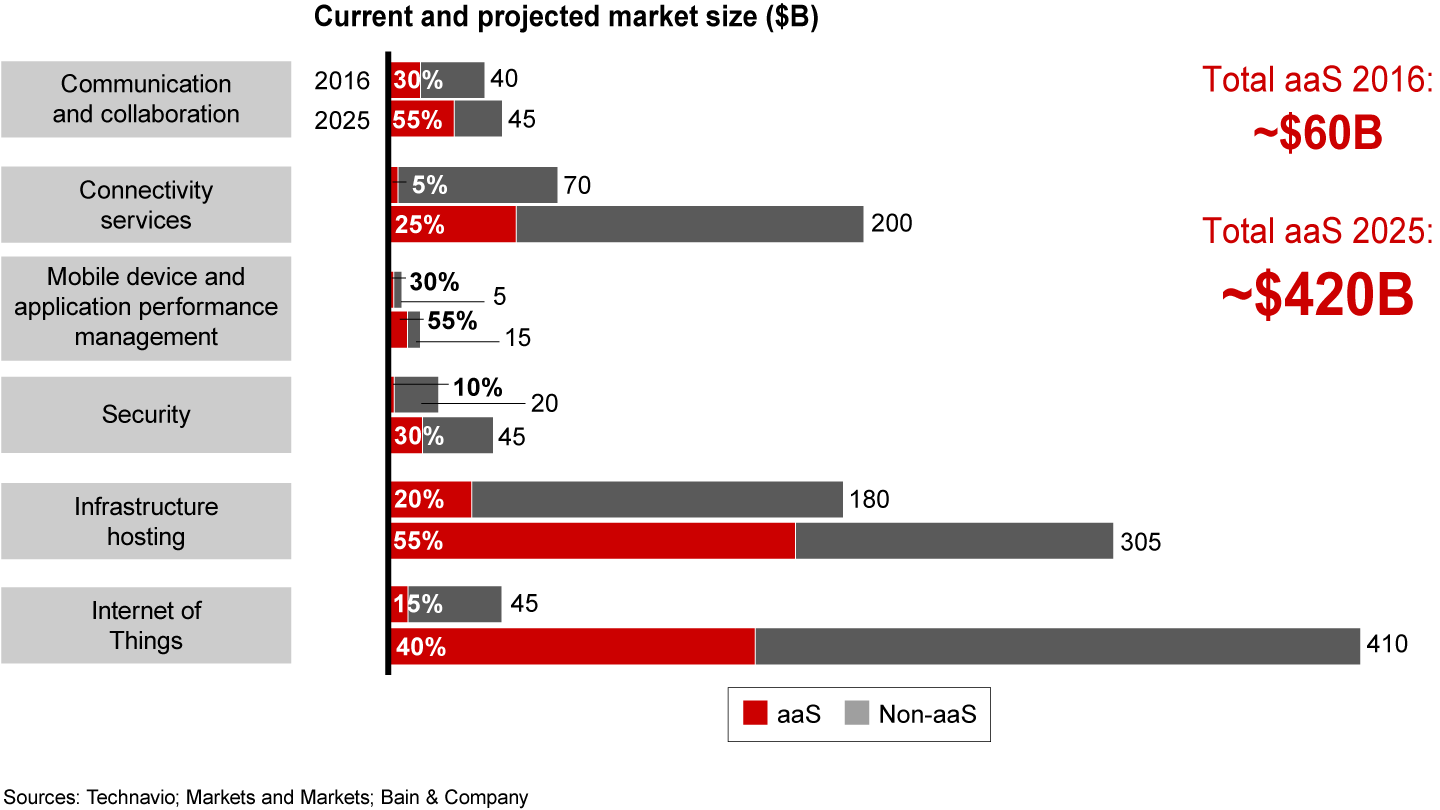

By 2025, XaaS will have made strong inroads into the enterprise communications services market, growing to more than $400 billion, from $60 billion in 2016. The fastest adoption is expected from two quickly growing segments: one, infrastructure hosting, where infrastructure-as-a-service (IaaS) is predicted to grow from 20% of the market today to more than 50% by 2025, or $170 billion; and two, the Internet of Things, where it is predicted to account for nearly 40% of the 2025 market, or $153 billion.
Why play
If it seems like a choice for network service providers to embrace XaaS or not, in time that choice will go away as XaaS becomes an inevitable step in the evolution of the telecom business. In the not-too-distant future, today’s subscription services for connectivity as well as many categories of IT services will represent only a small portion of a successful network service provider’s revenue mix. As XaaS capabilities mature and become the dominant part of the market, unprepared NSPs run the risk of missing out on an important avenue for growth.
To better understand this dynamic, Bain interviewed more than 50 chief information officers (CIOs) and chief technology and information officers (CTIOs) from across a range of industries, focusing on preferences for as-a-service vs. traditional deployment models, mindshare of potential suppliers and the factors underpinning those answers.
Although concerns persist around cost and data security, nearly two-thirds of buyers prefer as-a-service deployment models, and report the greatest preference in the areas of communication and collaboration. Across all segments, a minority of CIOs prefer traditional deployment models.
In contrast, there was little consensus on what type of organization would provide these services, indicating that the market structure is still in flux. Telcos enjoy highest mindshare on the services closest to existing network capability, namely connectivity and collaboration, and were No. 2 or No. 3 in all other areas. And while hyperscale cloud players held highest mindshare overall, in no category did that exceed 50%, further evidence of the current market fragmentation.
How to differentiate—the network as a platform
Telcos’ competitive advantage still lies in their networks, although they will need to evolve their network capabilities and create both new services and partnering models to seize XaaS opportunities.
Primarily, telcos can differentiate themselves by catering to the large B2B segments that will look to directly tap into their network in order to power their own enhanced offerings. These customers will want to be able to get in and out of the network on their users’ schedules, and be able to dynamically and contextually determine service contracts directly and without a lengthy provisioning process and pay-per-use.
This will create a whole host of new business models and revitalize current service offerings. Banks, for example, will pay carriers for enhanced security features. These could include features that activate when a customer approaches an ATM to complete a cash withdrawal. By providing contextual information on preceding location and usage patterns, these features could help establish that the person using the ATM is indeed the card owner or, conversely, warn that someone is using the card fraudulently. CTIOs will look to partially program the network underpinning their enterprise services in order to do things like enable virtual office environments on handheld devices for employees traveling overseas. This particular functionality would require CTIOs to be able to directly and dynamically manage the service-level agreements. They would need to ensure that secure server space be provisioned in real time and near the travel location so that critical business applications run flawlessly at the lowest possible latency.
Hence, the most competitive aaS-enabled networks will have secure, programmable interfaces that permit third parties to independently develop applications. Both successful start-ups and thriving, established companies will take advantage of the power that other ecosystems can provide and make their core propositions stronger and more attractive—including tapping into the capabilities NSPs can offer.
NSPs that seize this opportunity will enjoy indirect revenue streams from a large number of very different enterprises that develop new products and applications for their respective business models. This is the same “long tail” that we observe in companies like Salesforce.com. The winning carriers will have transformed their networks into platforms that allow other enterprises—and even consumers—to directly access the assets of the NSPs in a controlled manner.
Those that do not make the move risk commoditization and lower revenue as subscription services decline and their prices drop.
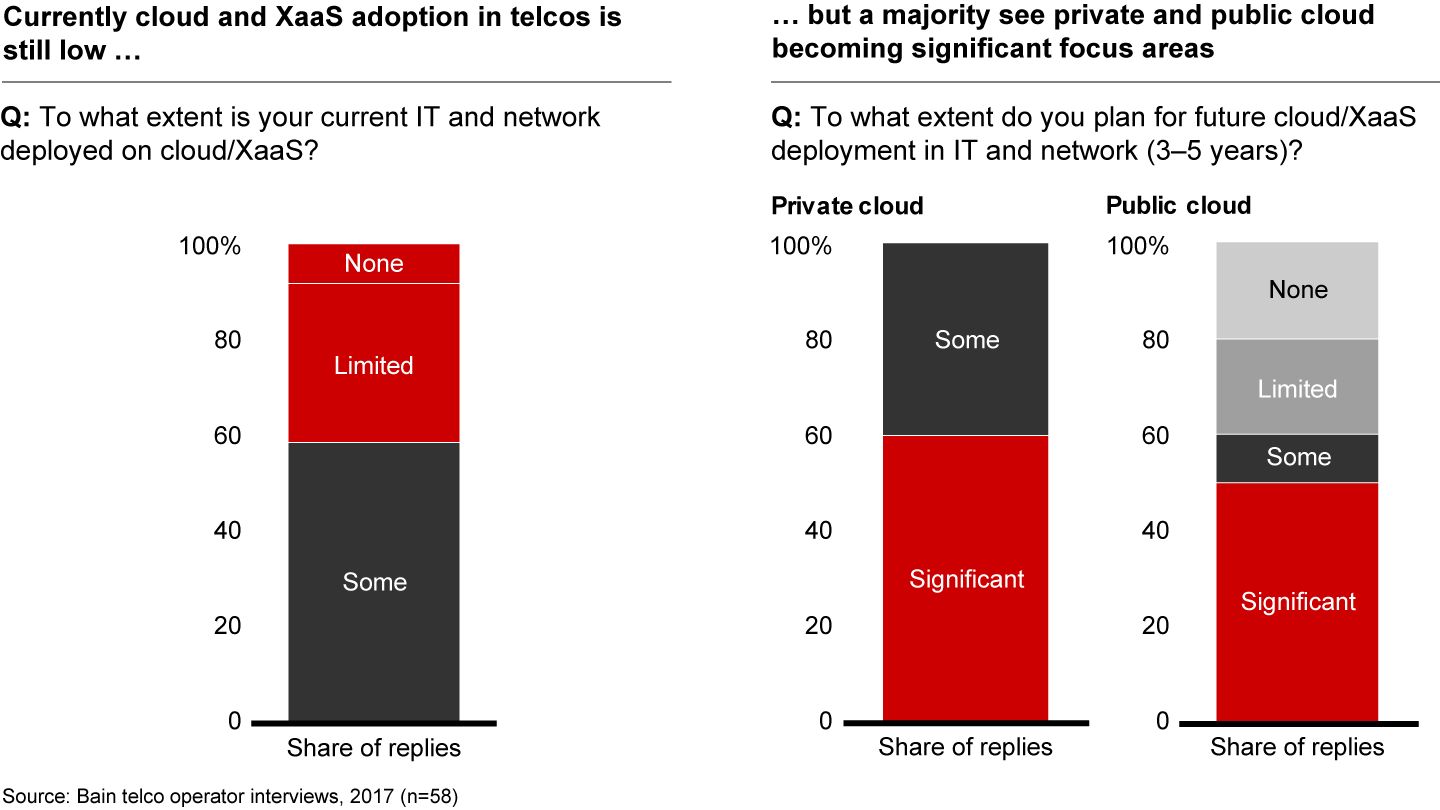
Some in the industry are beginning to recognize this. Telecom operators report being bullish on XaaS and are expected to invest significantly in this approach over the coming years (see Figure 3). Those that embrace cloud technologies early are likely to enjoy greater flexibility, lower costs, improved functionality and an overall increased customer centricity—and therefore have the best chance of standing out from the competition.
Figure 3

In this world, the network will have become a platform itself, enabling NSPs to stay relevant and avoid the often-cited fear of commoditization.
What will be your approach? Play defense, start building your own XaaS businesses or find the right partners to build the ecosystem you think can win?
As executives determine which path is best for their companies, leading firms are getting traction by focusing on these steps:
- Choose where to play. Identifying both the broad categories (e.g., UCaaS) and attractive niches (e.g., specific industry solutions) where you can play and win, valuing segments that are closer to the core, focusing on fewer segments to increase the chances of success and investing sufficiently.
- Evolve network capabilities. With the transition to software-defined networks, and in a controlled manner to protect network integrity, beginning to open new capabilities to third parties. This would be done while assertively adopting virtualized architectures with the goal of separating the network infrastructure from the services and control layers.
- Don’t just build, also buy. Outside of core connectivity, tapping into the capabilities of specialists in specific segments of aaS. Given the scalable nature of aaS, most of these capabilities are highly portable and can result in lower marginal cost and, more important, greater assurance of service.
- Test and learn with partners. Teaming with and adapting to the innovation practices of hyperscale players and start-ups, and being ready to change tack as the market evolves.
Jani Kelloniemi is a partner in Bain & Company’s Telecommunications, Media and Technology practice and is based in the firm’s Helsinki office. Herbert Blum, a partner based in the Toronto office, leads Bain’s TMT practice in the Americas. David Ellis is a partner in Bain’s IT practice and is based in the Sydney office.
First published in 12月 2018