

論説

How can commercial insurers deliver more value to their customers, and thereby earn greater loyalty?
The question is devilishly complex. For one thing, insurance carriers often have distant relationships and little contact with their business customers, especially when customers work through brokers. Even when carriers do have regular contact, many do not know exactly what their customers value or where they should be steering investments to improve their value proposition. The products and services offered by most carriers thus remain fairly undifferentiated in customers’ eyes, and the companies suffer from relatively low levels of customer advocacy.
But the battle to differentiate and earn customers’ advocacy can be won. The battleground has shifted away from specific features and pricing of policies to elements at the relationship level, like being easy to do business with. Mastering the intangibles of the customer’s overall insurance experience is much harder than, say, making a policy cheaper, but creating a better experience will slow the process of commoditization. And some companies have begun to apply a scientific lens to aspects of the value proposition that previously were difficult to quantify.

Prameet Jamnadas: Elements of Value in Commercial Insurance
Commercial insurers who embrace the Elements of Value® are more likely to succeed over competitors.
Bain & Company has identified 40 “elements of value” in business-to-business (B2B) markets—fundamental attributes of a company’s offering in their most essential and discrete forms—that lift value propositions above commodity status and benefit customers in particular ways. Value as we define it addresses several categories of customers’ priorities. At the base of the pyramid, a company must offer the table stakes of meeting specifications, at an acceptable price with regulatory compliance and ethical standards—no surprises there. Beyond table stakes, we group the first level of elements as functional, such as scalability or cost reduction.
Infographic: The B2B Elements of Value
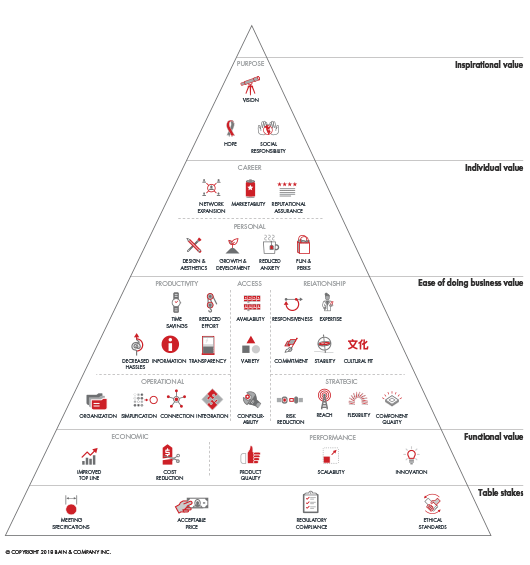

At the next layer, we encounter the first set of more subjective elements, those that make it easier to do business by raising productivity (time savings, decreased hassles) or by nurturing a beneficial relationship between the parties involved (responsiveness, expertise). Moving up the pyramid, the elements address more individual priorities, whether they are personal (reduced anxiety, design and aesthetics) or career-related (reputational assurance). At the top of the pyramid are the inspirational elements vision, hope and social responsibility.
As described in a recent Harvard Business Review article, we derived these Elements of Value from scores of quantitative and qualitative customer studies for clients over three decades. Our model traces its conceptual roots to the psychologist Abraham Maslow’s “hierarchy of needs,” first published in 1943. Then a faculty member at Brooklyn College, Maslow argued that human actions are motivated by an innate desire to fulfill needs ranging from the very basic (security, warmth, food and rest) to the complex (self-esteem and altruism). Almost all marketers today are familiar with Maslow’s hierarchy. The Elements of Value approach extends his insights by focusing on people in their corporate roles—describing their behavior around buying and using business products and services.
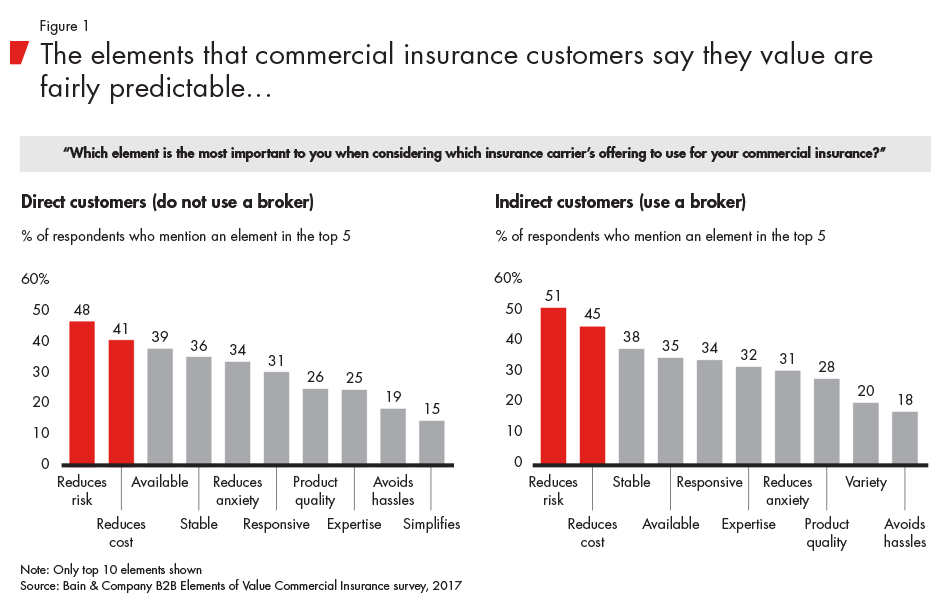
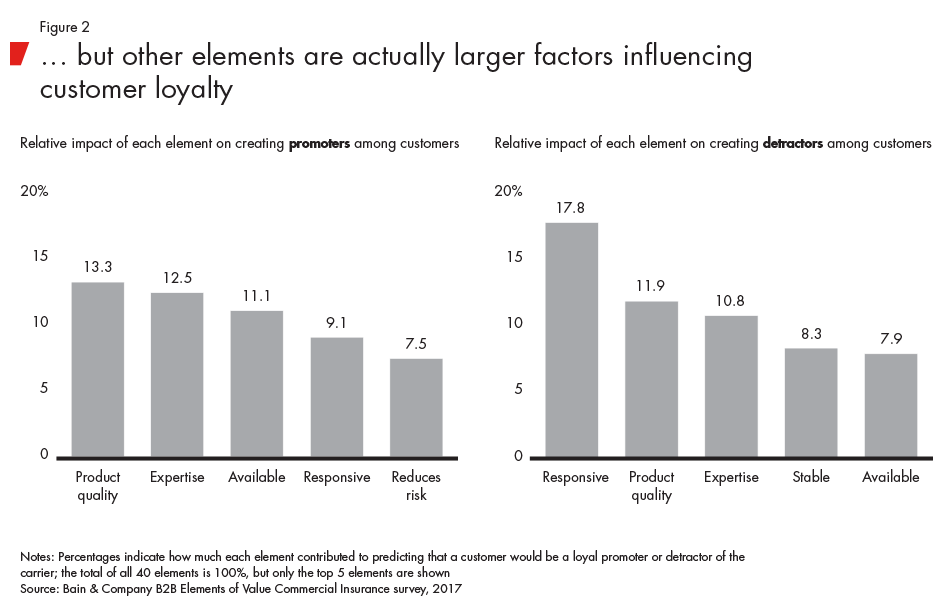
To understand the Elements of Value in commercial insurance, we recently conducted a survey of more than 1,300 US buyers and brokers. When we asked customers what they want from their insurance carriers, buyers put a high value on a fairly predictable list of elements: risk reduction, cost reduction, availability, stability and reduced anxiety (see Figure 1). However, when we derived what aspects prompt loyalty to carriers, other elements proved to be more important: product quality, expertise in the customer’s business and responsiveness—clear areas of opportunity for insurers (see Figure 2). No carriers systematically outperform today on these elements; as a result, customers tend to view them as commodity providers.
Businesses working through a broker generally viewed their carriers less favorably than those who go direct, with the value perceived being distributed across carriers and brokers. Since brokers typically are the first point of contact in any interaction with customers, carriers get relegated to a secondary status. For example, half of customers said they are highly likely to switch carriers on their brokers’ recommendation, regardless of how happy or how long they may have been with their carrier. As one CFO told us, “My industry does not have many carriers from which to choose. I trust my broker to recommend changing carriers for higher value/less cost/equal or better coverage.”
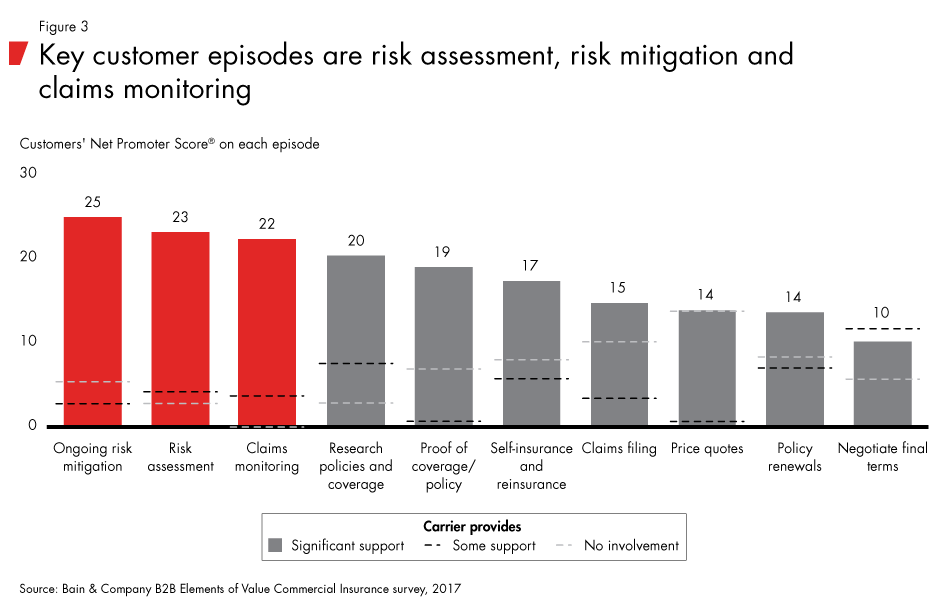
Yet although most business customers value their broker relationship, carriers can still add value. Among customers with direct carrier experiences, we analyzed 10 key episodes that customers go through. Carriers that provide significant support at three episodes—an initial risk assessment, ongoing risk management advice and monitoring a claim—can delight customers (see Figure 3). These carriers earn 20 percentage points higher than average on their Net Promoter Score® (a key metric of loyalty), which is a big gap in an industry whose Net Promoter Score in the US averages about 10. And the benefits of a high Net Promoter Score flow through to company economics, as customers who are promoters tend to stay longer with their carrier, spend more and recommend the carrier to others.
Not only do these moments of truth offer an opportunity for carriers to earn greater loyalty, but technological changes also make it increasingly possible to shine at those moments. For example, the integration of customer data with other data, and the application of advanced analytics, can provide tailored insight for initial risk assessments, including how much coverage a customer may need and in what areas, given their industry and situation. Zurich scores highest in our survey as being significantly involved in risk assessment, in part based on its digital applications and tools. Using Zurich’s Risk Advisor, customers can undertake their own on-site risk assessments and generate practical risk-mitigation actions from the results. They can also develop scenarios to see how changing the ratings and implementing Zurich’s risk-improvement actions will affect the overall risk.
When it comes to claims monitoring, many carriers have just started to shift from largely manual to more automated processes, such as giving customers instant access to the status of their claims, including when they can expect updates or payment. The goal here is to create a more seamless and convenient experience across the points of interaction.
Chubb/ACE holds a slight lead over other companies in our survey as being significantly involved in claims monitoring. Recently, Chubb invested in a web-based portal called Worldview, which gives customers visibility into their claims and the cost of risk through dashboards, daily updates and notes from adjusters. Chubb also is developing 4D, a predictive analytics tool that synthesizes structured and unstructured claims data to improve claims calculations.
Carriers have a different set of elements to focus on with their broker partners. A carrier’s availability, for instance, is the most important element in creating promoters or detractors among brokers (see Figure 4).
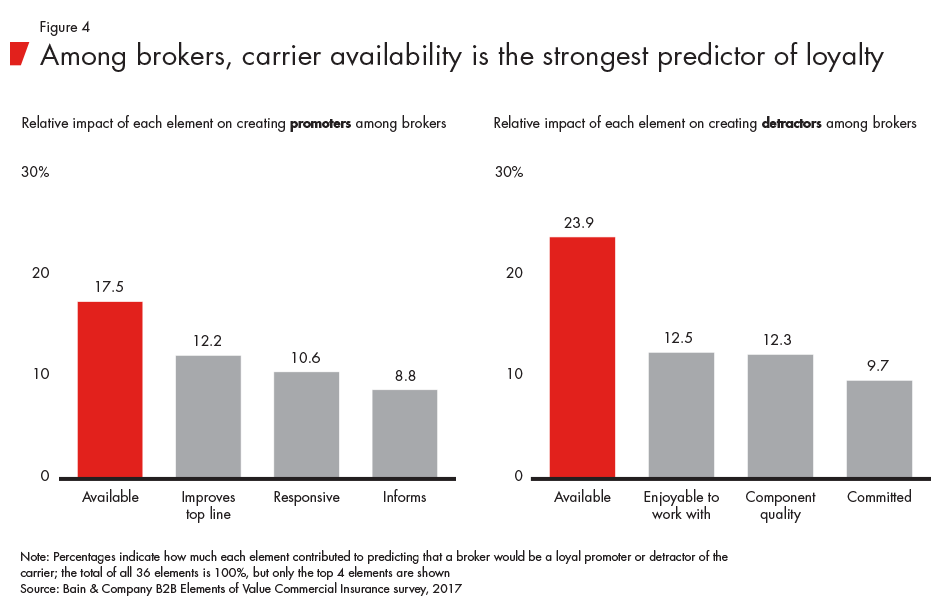
Liberty Mutual excels here, far outscoring competitors on availability. The company strives to provide a wealth of resources through the online VantagePort portal, which features claims reporting, secure file sharing, loss control resources, case studies, customizable reports and more.
The challenge for carriers is to systematize availability in ways that add value to brokers while using staff time productively. They will need better tools to sort the urgent, high-value inquiries (“I have a customer who needs a quote by tomorrow”) from the lower-value inquiries (“Make these small changes for the next policy renewal”) that, over time, should be automated. Serving these different interactions at the appropriate level will require a combination of personalized attention with more powerful, yet intuitive self-service platforms. And managers will need to provide their representatives with crystal-clear expectations, metrics and coaching.
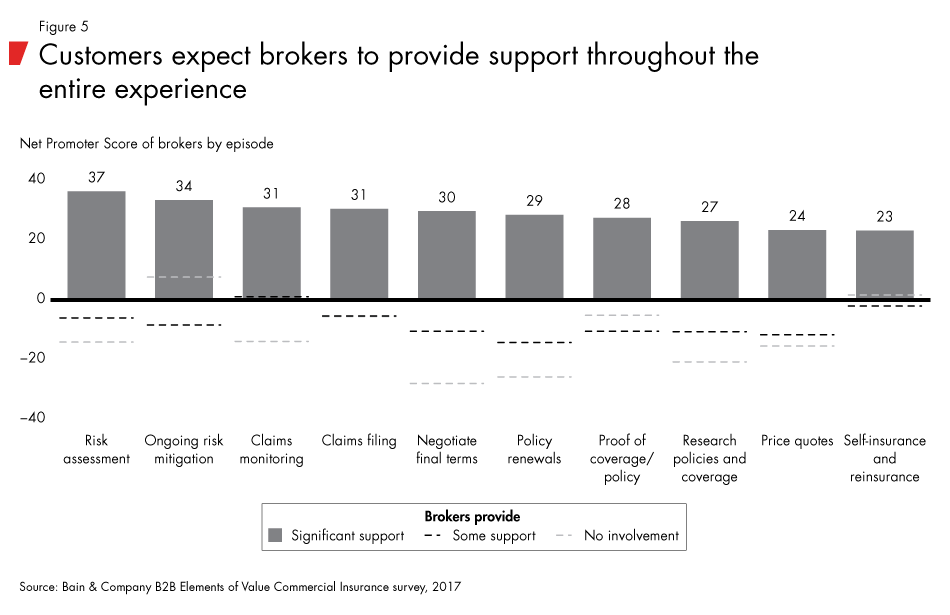
For insurance brokers, the stakes also are high but the value dynamics somewhat different. Buyers in our survey put the greatest emphasis on broker’s expertise and availability, but rather than focusing on a few moments of truth, customers expect significant support throughout the entire experience (see Figure 5). When customers don’t get that support, the penalty is an average 25- to 40-percentage-point lower Net Promoter Score across the 10 episodes. The challenge for brokerage companies is to provide a consistently high but economically sustainable level of support, perhaps with extra support for their most demanding, high-value customers.
Brokerage firms have been consolidating in recent years, giving larger firms an advantage in mobilizing their capital and breadth of experience to invest in the systems, analytics and industry-level specialization required to provide tailored advice and support. Large scale also helps spread the cost of digital platforms across more mid-market and small-size customers.
•••
Executives at commercial insurance carriers and brokers face dozens of potential options when trying to decide where to allocate scarce resources on marketing or customer service, or adding IT system features or analytic capabilities. The mix of objective and subjective priorities, and the different perspectives of end customers and brokers, can be tricky to untangle. The Elements of Value allow managers to identify which elements matter most to each set of important stakeholders, and therefore precisely where a company should invest to stand out from the pack.
Darci Darnell is a partner with Bain & Company’s Customer Strategy & Marketing practice and the Financial Services practice. Prameet Jamnadas is a partner with the Financial Services practice. Eric Almquist is a partner with the Customer Strategy & Marketing practice. Darnell and Jamnadas are based in Chicago, and Almquist in Boston.
Net Promoter®, Net Promoter System®, Net Promoter Score® and NPS® are registered trademarks of Bain & Company, Inc., Fred Reichheld and Satmetrix Systems, Inc.

Elements of Value® Insights
What do customers want? Bain's Elements of Value® represent the deeper aspirations behind the purchasing decisions of B2B and B2C customers. Our insights explore the ways companies can go beyond price to offer more value.
First published in 3月 2018