
Skip to Content
  • オフィス

    オフィス

    北米・南米
    • Atlanta
    • Austin
    • Bogota
    • Boston
    • Buenos Aires
    • Chicago
    • Dallas
    • Denver
    • Houston
    • Los Angeles
    • Mexico City
    • Minneapolis
    • Monterrey
    • Montreal
    • New York
    • Rio de Janeiro
    • San Francisco
    • Santiago
    • São Paulo
    • Seattle
    • Silicon Valley
    • Toronto
    • Washington, DC
    ヨーロッパ・中東・アフリカ
    • Amsterdam
    • Athens
    • Berlin
    • Brussels
    • Copenhagen
    • Doha
    • Dubai
    • Dusseldorf
    • Frankfurt
    • Helsinki
    • Istanbul
    • Johannesburg
    • Kyiv
    • Lisbon
    • London
    • Madrid
    • Milan
    • Munich
    • Oslo
    • Paris
    • Riyadh
    • Rome
    • Stockholm
    • Vienna
    • Warsaw
    • Zurich
    アジア・オーストラリア
    • Bangkok
    • Beijing
    • Bengaluru
    • Brisbane
    • Ho Chi Minh City
    • Hong Kong
    • Jakarta
    • Kuala Lumpur
    • Manila
    • Melbourne
    • Mumbai
    • New Delhi
    • Perth
    • Shanghai
    • Singapore
    • Sydney
    • Tokyo
    全てのオフィス
  • アルムナイ
  • メディア
  • お問い合わせ
  • 東京オフィス
  • Japan | 日本語

    地域と言語を選択

    グローバル
    • Global (English)
    北米・南米
    • Brazil (Português)
    • Argentina (Español)
    • Canada (Français)
    • Chile (Español)
    • Colombia (Español)
    ヨーロッパ・中東・アフリカ
    • France (Français)
    • DACH Region (Deutsch)
    • Italy (Italiano)
    • Spain (Español)
    • Greece (Elliniká)
    アジア・オーストラリア
    • China (中文版)
    • Korea (한국어)
    • Japan (日本語)
  • Saved items (0)
    Saved items (0)

    You have no saved items.

    後で閲読、共有できるようにするためにブックマークしてください

    Explore Bain Insights
  • 業界別プラクティス
    メインメニュー

    業界別プラクティス

    • 航空宇宙、防衛、政府関連
    • 農業
    • 化学製品
    • インフラ、建設
    • 消費財
    • 金融サービス
    • ヘルスケア
    • 産業機械、設備
    • メディア、エンターテインメント
    • 金属
    • 採掘・鉱業
    • 石油、ガス
    • 紙、パッケージ
    • プライベートエクイティ
    • 公共、社会セクター
    • 小売
    • テクノロジー
    • 通信
    • 交通
    • 観光産業
    • 公益事業、再生可能エネルギー
  • 機能別プラクティス
    メインメニュー

    機能別プラクティス

    • カスタマー・エクスペリエンス
    • サステイナビリティ、 社会貢献
    • Innovation
    • 企業買収、合併 (M&A)
    • オペレーション
    • 組織
    • プライベートエクイティ
    • マーケティング・営業
    • 戦略
    • アドバンスド・アナリティクス
    • Technology
    • フルポテンシャル・トランスフォーメーション
  • Digital
  • 知見/レポート
  • ベイン・アンド・カンパニーについて
    メインメニュー

    ベイン・アンド・カンパニーについて

    • ベインの信条
    • 活動内容
    • 社員とリーダーシップ
    • プレス・メディア情報
    • クライアントの結果
    • 受賞歴
    • パートナーシップを結んでいる団体
    Further: Our global responsibility
    • ダイバーシティ
    • 社会貢献
    • サステイナビリティへの取り組み
    • 世界経済フォーラム(WEF)
    Learn more about Further
  • キャリア
    メインメニュー

    キャリア

    • ベインで働く
      キャリア
      ベインで働く
      • Find Your Place
      • ベインで活躍する機会
      • ベインのチーム体制
      • 学生向けページ
      • インターンシップ
      • 採用イベント
    • ベインでの体験
      キャリア
      ベインでの体験
      • キャリアストーリー
      • 社員紹介
      • Where We Work
      • 成長を後押しするサポート体制
      • アフィニティ・グループ
      • 福利厚生
    • Impact Stories
    • 採用情報
      キャリア
      採用情報
      • 採用プロセス
      • 面接内容
    FIND JOBS
  • オフィス
    メインメニュー

    オフィス

    • 北米・南米
      オフィス
      北米・南米
      • Atlanta
      • Austin
      • Bogota
      • Boston
      • Buenos Aires
      • Chicago
      • Dallas
      • Denver
      • Houston
      • Los Angeles
      • Mexico City
      • Minneapolis
      • Monterrey
      • Montreal
      • New York
      • Rio de Janeiro
      • San Francisco
      • Santiago
      • São Paulo
      • Seattle
      • Silicon Valley
      • Toronto
      • Washington, DC
    • ヨーロッパ・中東・アフリカ
      オフィス
      ヨーロッパ・中東・アフリカ
      • Amsterdam
      • Athens
      • Berlin
      • Brussels
      • Copenhagen
      • Doha
      • Dubai
      • Dusseldorf
      • Frankfurt
      • Helsinki
      • Istanbul
      • Johannesburg
      • Kyiv
      • Lisbon
      • London
      • Madrid
      • Milan
      • Munich
      • Oslo
      • Paris
      • Riyadh
      • Rome
      • Stockholm
      • Vienna
      • Warsaw
      • Zurich
    • アジア・オーストラリア
      オフィス
      アジア・オーストラリア
      • Bangkok
      • Beijing
      • Bengaluru
      • Brisbane
      • Ho Chi Minh City
      • Hong Kong
      • Jakarta
      • Kuala Lumpur
      • Manila
      • Melbourne
      • Mumbai
      • New Delhi
      • Perth
      • Shanghai
      • Singapore
      • Sydney
      • Tokyo
    全てのオフィス
  • アルムナイ
  • メディア
  • お問い合わせ
  • 東京オフィス
  • Japan | 日本語
    メインメニュー

    地域と言語を選択

    • グローバル
      地域と言語を選択
      グローバル
      • Global (English)
    • 北米・南米
      地域と言語を選択
      北米・南米
      • Brazil (Português)
      • Argentina (Español)
      • Canada (Français)
      • Chile (Español)
      • Colombia (Español)
    • ヨーロッパ・中東・アフリカ
      地域と言語を選択
      ヨーロッパ・中東・アフリカ
      • France (Français)
      • DACH Region (Deutsch)
      • Italy (Italiano)
      • Spain (Español)
      • Greece (Elliniká)
    • アジア・オーストラリア
      地域と言語を選択
      アジア・オーストラリア
      • China (中文版)
      • Korea (한국어)
      • Japan (日本語)
  • Saved items  (0)
    メインメニュー
    Saved items (0)

    You have no saved items.

    後で閲読、共有できるようにするためにブックマークしてください

    Explore Bain Insights
  • 業界別プラクティス
    • 業界別プラクティス

      • 航空宇宙、防衛、政府関連
      • 農業
      • 化学製品
      • インフラ、建設
      • 消費財
      • 金融サービス
      • ヘルスケア
      • 産業機械、設備
      • メディア、エンターテインメント
      • 金属
      • 採掘・鉱業
      • 石油、ガス
      • 紙、パッケージ
      • プライベートエクイティ
      • 公共、社会セクター
      • 小売
      • テクノロジー
      • 通信
      • 交通
      • 観光産業
      • 公益事業、再生可能エネルギー
  • 機能別プラクティス
    • 機能別プラクティス

      • カスタマー・エクスペリエンス
      • サステイナビリティ、 社会貢献
      • Innovation
      • 企業買収、合併 (M&A)
      • オペレーション
      • 組織
      • プライベートエクイティ
      • マーケティング・営業
      • 戦略
      • アドバンスド・アナリティクス
      • Technology
      • フルポテンシャル・トランスフォーメーション
  • Digital
  • 知見/レポート
  • ベイン・アンド・カンパニーについて
    • ベイン・アンド・カンパニーについて

      • ベインの信条
      • 活動内容
      • 社員とリーダーシップ
      • プレス・メディア情報
      • クライアントの結果
      • 受賞歴
      • パートナーシップを結んでいる団体
      Further: Our global responsibility
      • ダイバーシティ
      • 社会貢献
      • サステイナビリティへの取り組み
      • 世界経済フォーラム(WEF)
      Learn more about Further
  • キャリア
    人気検索キーワード
    • デジタル
    • 戦略
    前回の検索
      最近訪れたページ

      Content added to saved items

      Saved items (0)

      Removed from saved items

      Saved items (0)

      Expert Commentary

      Why Every In-Market Test Benefits from the Right Sample-Selection Strategy

      Why Every In-Market Test Benefits from the Right Sample-Selection Strategy

      These five strategies cover the majority of testing situations.

      著者:June Wu

      • min read
      }

      記事

      Why Every In-Market Test Benefits from the Right Sample-Selection Strategy
      en

      Many companies use in-market tests to find out if new variations can significantly strengthen a current practice, whether it’s a call-center script, promotion, store layout or other feature in need of improvement.

      While marketers focus on properly designing new testing variations, they tend to pay less attention to selecting the sample audience. That’s shortsighted, as sample selection is critical for in-market tests with a predefined target audience. Whether it’s a simple A/B test or a complicated multivariate test, success stems in part from dividing the available target audience into multiple look-alike testing groups. The goal is to confidently attribute any significant differences in key performance indicators across groups solely to the tests, without worrying about potential noise generated during sample selection.

      This is not a trivial exercise. Depending on their research objectives, companies can tackle it using one of the five different sample-selection strategies we’ve identified:

      1. Pure random sampling
      2. Stratified random sampling
      3. Group balancing
      4. One-to-one matching
      5. Group matching

      The strategies are based on the following criteria:

      • The need to match a specific target group;
      • The need to create segment-level insights;
      • Group size; and
      • If matching a specific target group, whether that group contains a single subject or multiple subjects.

      Figure 1 shows the decision tree for selecting a strategy. Here’s how it works.

      Figure 1
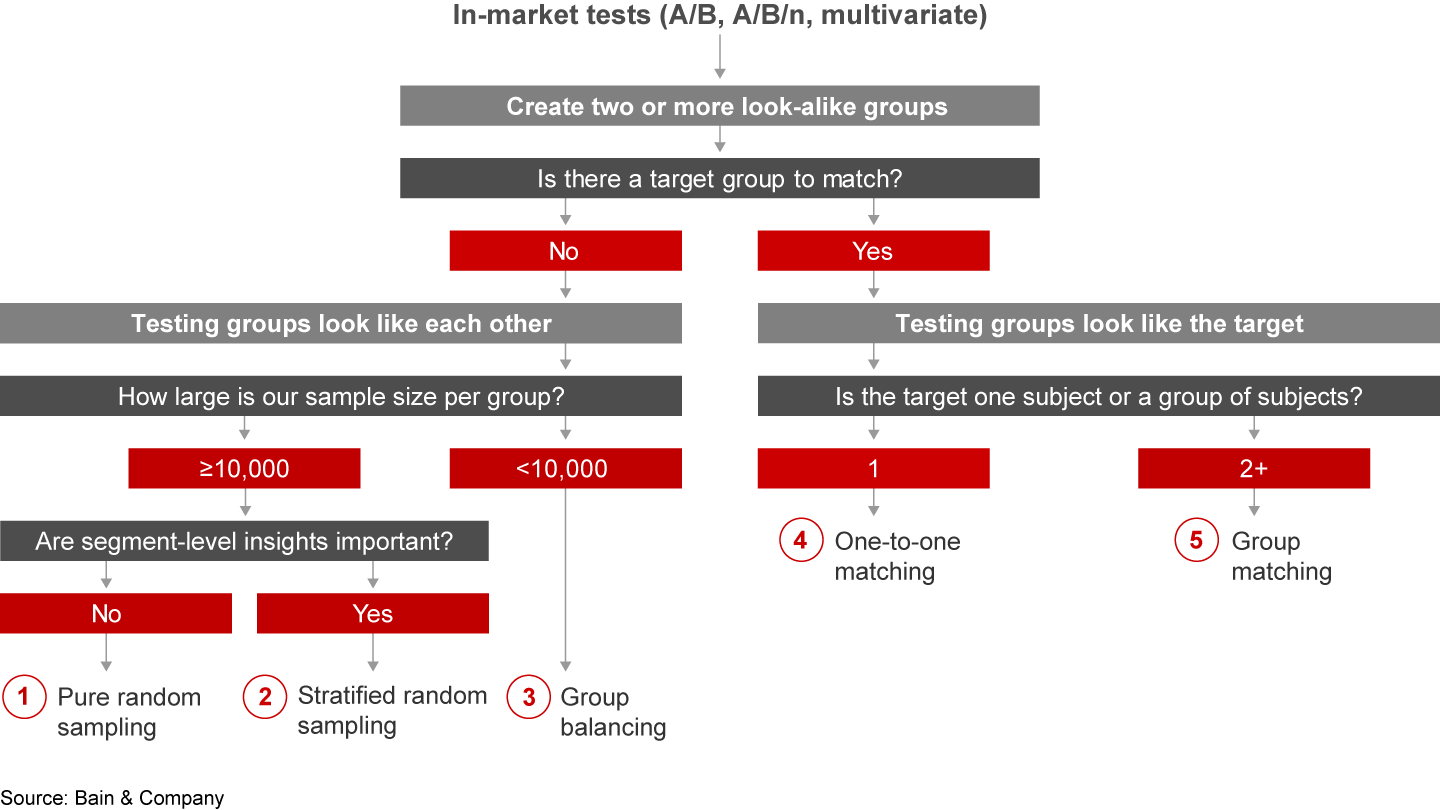
      Use this decision tree to choose a sample-selection strategy
      Use this decision tree to choose a sample-selection strategy
      Use this decision tree to choose a sample-selection strategy

      Without a specific target group to match, which is common for consumer markets, sample selection aims to divide the available target audience into multiple groups that look like each other. From there, you can use one of the following two random sampling strategies if the group size is large enough (typically exceeding 10,000).

      Strategy 1: Pure random sampling

      Pure random sampling works well if you’re not concerned about segment-level insights but instead care only about insights for the entire population. This approach randomly assigns subjects from the available target audience to one of the testing groups.

      Strategy 2: Stratified random sampling

      Stratified random sampling works well if one of your objectives is to obtain segment-level insights, such as which product should be offered to segment A and which to segment B. This approach creates a stratum at the segment level; then, within each stratum, it randomly assigns the research subject to one of the testing groups. As a result, segment distributions are the same across all testing groups and for the overall population. This feature allows you to identify the overall winner as well as segment-specific winners.

      Strategy 3: Group balancing

      A different situation arises when a company has no specific target to match and wants to test with relatively small group sizes (usually fewer than 10,000). Store tests, for instance, typically use samples of fewer than a hundred. Random sampling wouldn’t work because the group variations would be quite large. You need a strategy that balances all key characteristics across groups.

      Group balancing employs an optimization algorithm designed to minimize the sum of group distance (the distance between each group and the overall population), subject to constraints such as the number of groups, group size (minimum and maximum) and whether or not any leftover is allowed (not all subjects are assigned). When we test only a couple hundred or fewer, group balancing vastly outperforms random sampling strategies.

      Now let’s consider a situation where you have a specific target to match, which is more common for market testing or store testing. Here, the objective is to select groups of markets or stores that match the target, to minimize the distance of candidates from the target. Depending on whether the target has a single subject or multiple subjects, you should use one of the following two matching strategies.

      Strategy 4: One-to-one matching

      If the target has a single subject, such as a designated market area (DMA), and you want to find another DMA very similar to it, one-to-one matching involves a simple sorting exercise. You only need to calculate the distance of each potential candidate DMA to the target DMA and identify the single DMA that minimizes this distance.

      Strategy 5: Group matching

      If the target has multiple subjects, such as call centers or store locations, and you want to find a group of other call centers or stores that resemble the target, group matching involves an optimization exercise. You want the average of the new group to match that of the existing group, without matching each individual subject within the group. Because the size of each group usually is not the same, you need an optimization algorithm to determine the right size for each group, which subject should be chosen and how to assign the subject to a group. The solution is not unique, but you need to search in an intelligent way to find an answer that’s practical and good enough for your research objective.

      These five sample-selection strategies cover the majority of situations involving in-market tests among a fixed target population. In our experience, the five strategies, when applied correctly, isolate true test effects from potential sampling biases. They allow a company to test successfully when sample sizes or detectable differences are small.

      June Wu is a senior expert in Bain & Company’s Advanced Analytics practice. She is based in Boston.

      Read More

      Advanced Analytics Expert Commentary

      Success with advanced analytics requires both technical know-how and a thoughtful approach. In this series, Bain's experts offer practical advice on some of the most common data issues.

      著者
      • Headshot of June Wu
        June Wu
        Expert Associate Partner, Boston
      関連するコンサルティングサービス
      • アドバンスド・アナリティクス
      アドバンスド・アナリティクスエキスパートのコメント
      Successful A/B Tests in Retail Hinge on These Design Considerations

      Following a small set of guidelines will result in more meaningful and trustworthy results.

      詳細
      アドバンスド・アナリティクス
      How AI Is Starting to Transform Circular Packaging

      There are 15 AI use cases companies across the value chain can use today to accelerate circularity.

      詳細
      アドバンスド・アナリティクスエキスパートのコメント
      Defining the Intelligent Enterprise

      A recap from DeepLearning.AI’s AI Dev 25 × NYC.

      詳細
      アドバンスド・アナリティクス
      How Life Sciences Leaders Are Widening the AI Capability Gap

      Most pharma and medtech companies agree that a strong data foundation is table stakes. Few invest equally in the behaviors needed to move from pilots to adoption.

      詳細
      Marketing Analytics
      Innovative Approaches to Measuring Creative Effectiveness

      Bain's Cesar Brea and EDO's John Cripps discuss how to understand and optimize new ways of advertising.

      詳細
      First published in 12月 2019
      Tags
      • Marketing Analytics
      • アドバンスド・アナリティクス
      • アドバンスド・アナリティクスエキスパートのコメント

      クライアント支援事例

      アドバンスド・アナリティクス Advanced Analytics Breakthrough Lets Metals Company Optimize Yield Cost

      ケーススタディを見る

      アドバンスド・アナリティクス Advanced Analytics powers up UtilityCo’s reliability, and customers notice

      ケーススタディを見る

      顧客戦略、マーケティング Direct marketing excellence through experimental design

      ケーススタディを見る

      お気軽にご連絡下さい

      私達は、グローバルに活躍する経営者が抱える最重要経営課題に対して、厳しい競争環境の中でも成長し続け、「結果」を出すために支援しています。

      ベインの知見。競争が激化するグローバルビジネス環境で、日々直面するであろう問題について論じている知見を毎月お届けします。

      *プライバシーポリシーの内容を確認し、合意しました。

      プライバシーポリシーをご確認頂き、合意頂けますようお願い致します。
      Bain & Company
      お問い合わせ Sustainability Accessibility Terms of use Privacy Cookie Policy Sitemap Log In

      © 1996-2026 Bain & Company, Inc.

      お問い合わせ

      How can we help you?

      • ビジネスについて
      • プレス報道について
      • 採用について
      全てのオフィス