
Skip to Content
  • オフィス

    オフィス

    北米・南米
    • Atlanta
    • Austin
    • Bogota
    • Boston
    • Buenos Aires
    • Chicago
    • Dallas
    • Denver
    • Houston
    • Los Angeles
    • Mexico City
    • Minneapolis
    • Monterrey
    • Montreal
    • New York
    • Rio de Janeiro
    • San Francisco
    • Santiago
    • São Paulo
    • Seattle
    • Silicon Valley
    • Toronto
    • Washington, DC
    ヨーロッパ・中東・アフリカ
    • Amsterdam
    • Athens
    • Berlin
    • Brussels
    • Copenhagen
    • Doha
    • Dubai
    • Dusseldorf
    • Frankfurt
    • Helsinki
    • Istanbul
    • Johannesburg
    • Kyiv
    • Lisbon
    • London
    • Madrid
    • Milan
    • Munich
    • Oslo
    • Paris
    • Riyadh
    • Rome
    • Stockholm
    • Vienna
    • Warsaw
    • Zurich
    アジア・オーストラリア
    • Bangkok
    • Beijing
    • Bengaluru
    • Brisbane
    • Ho Chi Minh City
    • Hong Kong
    • Jakarta
    • Kuala Lumpur
    • Manila
    • Melbourne
    • Mumbai
    • New Delhi
    • Perth
    • Shanghai
    • Singapore
    • Sydney
    • Tokyo
    全てのオフィス
  • アルムナイ
  • メディア
  • お問い合わせ
  • 東京オフィス
  • Japan | 日本語

    地域と言語を選択

    グローバル
    • Global (English)
    北米・南米
    • Brazil (Português)
    • Argentina (Español)
    • Canada (Français)
    • Chile (Español)
    • Colombia (Español)
    ヨーロッパ・中東・アフリカ
    • France (Français)
    • DACH Region (Deutsch)
    • Italy (Italiano)
    • Spain (Español)
    • Greece (Elliniká)
    アジア・オーストラリア
    • China (中文版)
    • Korea (한국어)
    • Japan (日本語)
  • Saved items (0)
    Saved items (0)

    You have no saved items.

    後で閲読、共有できるようにするためにブックマークしてください

    Explore Bain Insights
  • 業界別プラクティス
    メインメニュー

    業界別プラクティス

    • 航空宇宙、防衛、政府関連
    • 農業
    • 化学製品
    • インフラ、建設
    • 消費財
    • 金融サービス
    • ヘルスケア
    • 産業機械、設備
    • メディア、エンターテインメント
    • 金属
    • 採掘・鉱業
    • 石油、ガス
    • 紙、パッケージ
    • プライベートエクイティ
    • 公共、社会セクター
    • 小売
    • テクノロジー
    • 通信
    • 交通
    • 観光産業
    • 公益事業、再生可能エネルギー
  • 機能別プラクティス
    メインメニュー

    機能別プラクティス

    • カスタマー・エクスペリエンス
    • サステイナビリティ、 社会貢献
    • Innovation
    • 企業買収、合併 (M&A)
    • オペレーション
    • 組織
    • プライベートエクイティ
    • マーケティング・営業
    • 戦略
    • アドバンスド・アナリティクス
    • Technology
    • フルポテンシャル・トランスフォーメーション
  • Digital
  • 知見/レポート
  • ベイン・アンド・カンパニーについて
    メインメニュー

    ベイン・アンド・カンパニーについて

    • ベインの信条
    • 活動内容
    • 社員とリーダーシップ
    • プレス・メディア情報
    • クライアントの結果
    • 受賞歴
    • パートナーシップを結んでいる団体
    Further: Our global responsibility
    • ダイバーシティ
    • 社会貢献
    • サステイナビリティへの取り組み
    • 世界経済フォーラム(WEF)
    Learn more about Further
  • キャリア
    メインメニュー

    キャリア

    • ベインで働く
      キャリア
      ベインで働く
      • Find Your Place
      • ベインで活躍する機会
      • ベインのチーム体制
      • 学生向けページ
      • インターンシップ
      • 採用イベント
    • ベインでの体験
      キャリア
      ベインでの体験
      • キャリアストーリー
      • 社員紹介
      • Where We Work
      • 成長を後押しするサポート体制
      • アフィニティ・グループ
      • 福利厚生
    • Impact Stories
    • 採用情報
      キャリア
      採用情報
      • 採用プロセス
      • 面接内容
    FIND JOBS
  • オフィス
    メインメニュー

    オフィス

    • 北米・南米
      オフィス
      北米・南米
      • Atlanta
      • Austin
      • Bogota
      • Boston
      • Buenos Aires
      • Chicago
      • Dallas
      • Denver
      • Houston
      • Los Angeles
      • Mexico City
      • Minneapolis
      • Monterrey
      • Montreal
      • New York
      • Rio de Janeiro
      • San Francisco
      • Santiago
      • São Paulo
      • Seattle
      • Silicon Valley
      • Toronto
      • Washington, DC
    • ヨーロッパ・中東・アフリカ
      オフィス
      ヨーロッパ・中東・アフリカ
      • Amsterdam
      • Athens
      • Berlin
      • Brussels
      • Copenhagen
      • Doha
      • Dubai
      • Dusseldorf
      • Frankfurt
      • Helsinki
      • Istanbul
      • Johannesburg
      • Kyiv
      • Lisbon
      • London
      • Madrid
      • Milan
      • Munich
      • Oslo
      • Paris
      • Riyadh
      • Rome
      • Stockholm
      • Vienna
      • Warsaw
      • Zurich
    • アジア・オーストラリア
      オフィス
      アジア・オーストラリア
      • Bangkok
      • Beijing
      • Bengaluru
      • Brisbane
      • Ho Chi Minh City
      • Hong Kong
      • Jakarta
      • Kuala Lumpur
      • Manila
      • Melbourne
      • Mumbai
      • New Delhi
      • Perth
      • Shanghai
      • Singapore
      • Sydney
      • Tokyo
    全てのオフィス
  • アルムナイ
  • メディア
  • お問い合わせ
  • 東京オフィス
  • Japan | 日本語
    メインメニュー

    地域と言語を選択

    • グローバル
      地域と言語を選択
      グローバル
      • Global (English)
    • 北米・南米
      地域と言語を選択
      北米・南米
      • Brazil (Português)
      • Argentina (Español)
      • Canada (Français)
      • Chile (Español)
      • Colombia (Español)
    • ヨーロッパ・中東・アフリカ
      地域と言語を選択
      ヨーロッパ・中東・アフリカ
      • France (Français)
      • DACH Region (Deutsch)
      • Italy (Italiano)
      • Spain (Español)
      • Greece (Elliniká)
    • アジア・オーストラリア
      地域と言語を選択
      アジア・オーストラリア
      • China (中文版)
      • Korea (한국어)
      • Japan (日本語)
  • Saved items  (0)
    メインメニュー
    Saved items (0)

    You have no saved items.

    後で閲読、共有できるようにするためにブックマークしてください

    Explore Bain Insights
  • 業界別プラクティス
    • 業界別プラクティス

      • 航空宇宙、防衛、政府関連
      • 農業
      • 化学製品
      • インフラ、建設
      • 消費財
      • 金融サービス
      • ヘルスケア
      • 産業機械、設備
      • メディア、エンターテインメント
      • 金属
      • 採掘・鉱業
      • 石油、ガス
      • 紙、パッケージ
      • プライベートエクイティ
      • 公共、社会セクター
      • 小売
      • テクノロジー
      • 通信
      • 交通
      • 観光産業
      • 公益事業、再生可能エネルギー
  • 機能別プラクティス
    • 機能別プラクティス

      • カスタマー・エクスペリエンス
      • サステイナビリティ、 社会貢献
      • Innovation
      • 企業買収、合併 (M&A)
      • オペレーション
      • 組織
      • プライベートエクイティ
      • マーケティング・営業
      • 戦略
      • アドバンスド・アナリティクス
      • Technology
      • フルポテンシャル・トランスフォーメーション
  • Digital
  • 知見/レポート
  • ベイン・アンド・カンパニーについて
    • ベイン・アンド・カンパニーについて

      • ベインの信条
      • 活動内容
      • 社員とリーダーシップ
      • プレス・メディア情報
      • クライアントの結果
      • 受賞歴
      • パートナーシップを結んでいる団体
      Further: Our global responsibility
      • ダイバーシティ
      • 社会貢献
      • サステイナビリティへの取り組み
      • 世界経済フォーラム(WEF)
      Learn more about Further
  • キャリア
    人気検索キーワード
    • デジタル
    • 戦略
    前回の検索
      最近訪れたページ

      Content added to saved items

      Saved items (0)

      Removed from saved items

      Saved items (0)

      論説

      Why Zero-Based Budgeting Goes Wrong

      Why Zero-Based Budgeting Goes Wrong

      Four common pitfalls can keep companies from achieving lasting results.

      著者:Jason Heinrich, Andrew Carleton and Tracy Thurkow

      • min read
      }

      論説

      Why Zero-Based Budgeting Goes Wrong
      en
      概要
      • More executives than ever are considering zero-based budgeting as a cost-cutting tool. But many will be disappointed, because they view it only as a cost-cutting tool and not as a big shift in cost management philosophy.
      • When ZBB fails, it’s usually because leadership is neither engaged nor aligned, cost-cutting is indiscriminate, cost control is the primary message, and execution is inadequate, prioritizing pace, tools and benchmarking over capability building.
      • A fundamental change in mindset can make the difference between wasted hopes and winning the ZBB trifecta of boosting revenues, margins and employee engagement.

      Few management tools can match zero-based budgeting (ZBB) as a way to overhaul the practices that keep a company from reaching its full potential. That is why so many business leaders see it as a no-brainer to manage costs better and drive strategic thinking at all levels of the organization. They are aiming to win the ZBB trifecta of growing both revenues and profits while boosting employee engagement. When Bain & Company recently surveyed nearly 1,300 executives across industries and throughout the world about their views on 25 different management tools, we learned that zero-based budgeting is increasingly top of mind. Across all regions, more than 50% of respondents surveyed in 2017 indicated an intention to use ZBB in 2018.

      However, if our past follow-on survey results are any measure, the number of companies deploying this solution—as opposed to intending to deploy it—will be substantially lower. While executives like ZBB in theory, when faced with the reality of what it takes to do it right, many opt to postpone or abort. They start out with the view that zero-based budgeting is a simple matter of ignoring last year's budget when developing this year's budget. But they often become intimidated when they discover that it is far more complex, representing a fundamental shift in the company's overall approach to cost management. Moreover, companies that view ZBB as a mere tool—as opposed to a transformational approach to cost management—may achieve savings in their first year but then revert to old spending patterns. It is the difference between going on a crash diet to shed a few pounds and committing to lifestyle changes that improve your overall health, losing weight in the process.

      Just how daunted are executives by zero-based budgeting? Users gave it the lowest satisfaction rating of all 25 management tools in our survey.

      These executives likely would have changed their view if they had been armed with knowledge about what typically goes wrong with ZBB. When we surveyed more than 400 business leaders about their experiences with such transformational change efforts, they cited the need to build deep commitment at all levels of the organization, beyond communication; to make the right strategic and business choices; and to garner widespread support (see Figure 1). Indeed, zero-basing cannot be a mechanical, finance-only effort. Instead, it is a chance to rethink all activity in the organization. Installing the nuts and bolts of a program is just the beginning. ZBB is a capability that both requires and enables culture change. When it goes sour, it's usually because leadership fails to energize the organization, win hearts and minds, and thoughtfully address the failure points.
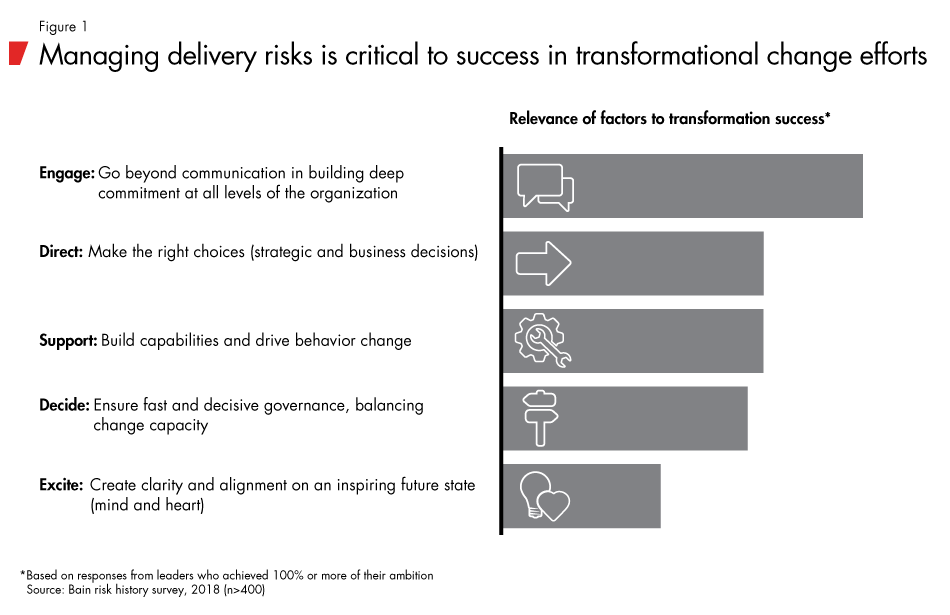
      Managing delivery risks is critical to success in transformational change efforts

      Managing delivery risks is critical to success in transformational change efforts

      Based on our work with hundreds of companies across industries, we have identified four common pitfalls. Here is why, despite their faith in ZBB's potential, some companies have so much trouble achieving results that stick over time.

      Pitfall #1: The insidious problem of public agreement but private dissent

      Even the most ambitious ZBB initiative is doomed to deliver unsatisfying results unless leaders vocally endorse it from day one, striving to generate buy-in from the executive team and throughout the organization during the program's design and implementation. It needs to be a top-five priority on the CEO's agenda.

      A new cost management capability represents a serious redirection for a company. ZBB is not a typical cost-cutting program that can be "unveiled," with minimal organizational involvement in its creation and minimal employee rewards for its success. That type of approach will only foster resentment and resistance.

      Jim Harris, who leads Bain's Aerospace, Defense & Government Services practice in the Americas, describes the benefits of using zero-based redesign and zero-based budgeting to focus on the real requirements to running a business as efficiently as possible.

      Pitfall #2: Inflicting the same pain everywhere

      Many associate ZBB with across-the-board cost-cutting. That is a misconception—and the wrong starting point. As a sophisticated cost management capability, zero-based budgeting helps a company clearly distinguish between strategic and nonstrategic costs—the first step toward rebalancing how every dollar should be spent to prioritize high-return investments.

      As part of ZBB, companies evaluate their investment posture to understand where to devote resources and where to make deep cuts, based on their strategic priorities. They determine the capabilities in which they should invest to become best in class and those that they can deprioritize to become best in cost.

      Pitfall #3: Making cost control the primary message

      Too often, companies view ZBB as just another cost initiative instead of focusing on its other dimensions, such as the strategic reinvestments that fuel growth and the ownership mindset that kindles employee engagement. For example, ZBB helps eliminate the clutter that makes it hard for employees to do their jobs, simplifying the organization and the practices that frustrate results-oriented high performers.

      Pitfall #4: Not recognizing that execution is a people issue

      Even when companies strive to craft an effective ZBB program, they may find themselves falling short with inadequate execution that prioritizes pace, tools and benchmarking over capability building. Many companies spend too little time and energy on the human aspect of teaching and training a new set of behaviors. It is one thing to install a new set of tools and processes to improve financial visibility and cost management. It is something else to fully integrate those tools into how employees work, introducing a new way of managing costs.

      Ultimately, zero-based budgeting goes wrong when companies start with incorrect ideas about what it is and what it is not. Viewing it as a program to "install" is bound to disappoint. Instead, ZBB is a new capability that requires and enables culture change. It needs ongoing care and nurturing to deliver its full potential. Leaders need to make a fundamental mindset shift, moving from the posture of "We're going to roll out ZBB in the organization" to "ZBB will only work if we help the organization adopt and leverage it." The distinction is huge—and spells the difference between wasted hopes and winning the zero-based budgeting trifecta of boosting revenues, margins and employee engagement.


      Jason Heinrich is a Bain & Company partner based in Chicago. Andrew Carleton is a Bain partner based in London, and Tracy Thurkow is a partner in Atlanta.

      Related Video

      Kelly Liu: Zero-based Budgeting in Tech

      Zero-based budgeting and zero-based redesign can help businesses invest in new technologies like artificial intelligence and the Internet of Things.

      著者
      • Headshot of Jason Heinrich
        Jason Heinrich
        パートナー, Chicago
      • Headshot of Tracy Thurkow
        Tracy Thurkow
        パートナー, Atlanta
      関連するコンサルティングサービス
      • 業績改善
      コンサルティングサービス
      • Zero-based Budgeting
      コスト
      The New Case for Zero-Based Cost Management

      A clean-sheet approach helps leaders produce savings that stick—even in turbulent times.

      詳細
      コスト
      Scaling AI While Controlling Tech Costs

      AI adds complexity, but it’s also a powerful tool to control spending.

      詳細
      業績改善
      Transforming Maintenance with Artificial Intelligence

      With little to no capex, companies can turn maintenance into an engine of cash flow.

      詳細
      コスト
      Retail Efficiency Rewritten: New AI Tools Demand a Second Look at Your Costs

      Tech-enabled cost transformation can ease the mounting pressure on retailer profits.

      詳細
      Zero-based Budgeting
      Why Successful Transformations Depend on Frontline Ownership

      Energizing the front line and leveraging cross-functional expertise can help you overcome the complexity (and disappointment) that often befall transformation efforts.

      詳細
      First published in 6月 2018
      Tags
      • Zero-based Budgeting
      • コスト
      • 業績改善

      クライアント支援事例

      IT Cost Transparency Helps Insurer Strengthen Tech Expense Management Capability

      ケーススタディを見る

      業績改善 Lean Six Sigma solves a commercial bank's growth problem

      ケーススタディを見る

      業績改善 Turning bottlenecks into growth opportunities

      ケーススタディを見る

      お気軽にご連絡下さい

      私達は、グローバルに活躍する経営者が抱える最重要経営課題に対して、厳しい競争環境の中でも成長し続け、「結果」を出すために支援しています。

      ベインの知見。競争が激化するグローバルビジネス環境で、日々直面するであろう問題について論じている知見を毎月お届けします。

      *プライバシーポリシーの内容を確認し、合意しました。

      プライバシーポリシーをご確認頂き、合意頂けますようお願い致します。
      Bain & Company
      お問い合わせ Sustainability Accessibility Terms of use Privacy Cookie Policy Sitemap Log In

      © 1996-2026 Bain & Company, Inc.

      お問い合わせ

      How can we help you?

      • ビジネスについて
      • プレス報道について
      • 採用について
      全てのオフィス