

論説

Executive summary
What will it take to win in India’s consumer goods market?
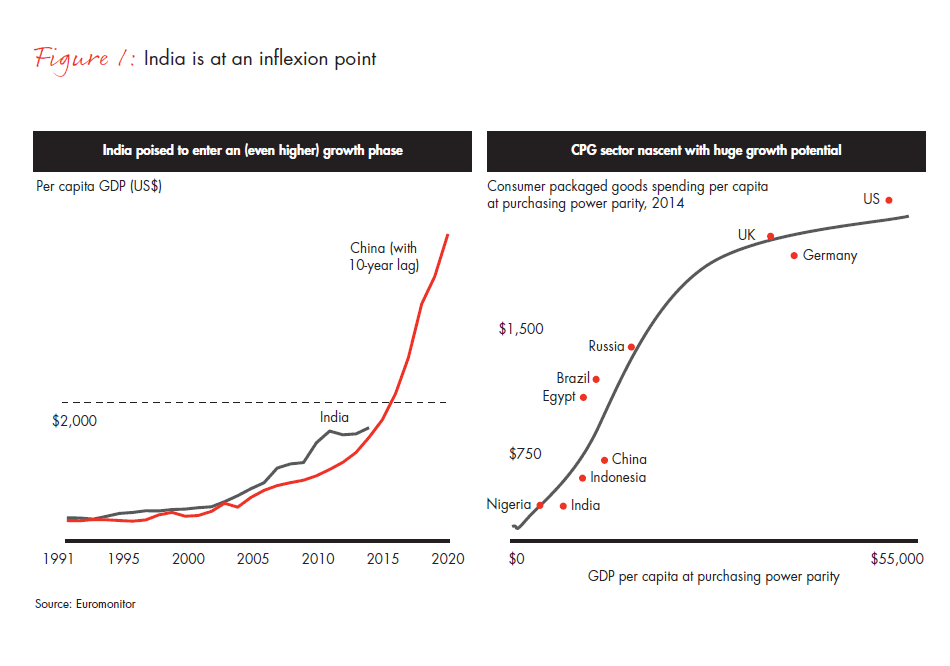
India is poised to enter an even higher phase of growth—with favourable demographics, higher spending on discretionary items, a strong government focused on economic reforms and positive investor sentiment. In many ways, India is where China was about 10 years ago—an inflexion point. As fast as growth has been during the past 10 years, it’s much slower than the rate at which we anticipate India will grow over the next decade.
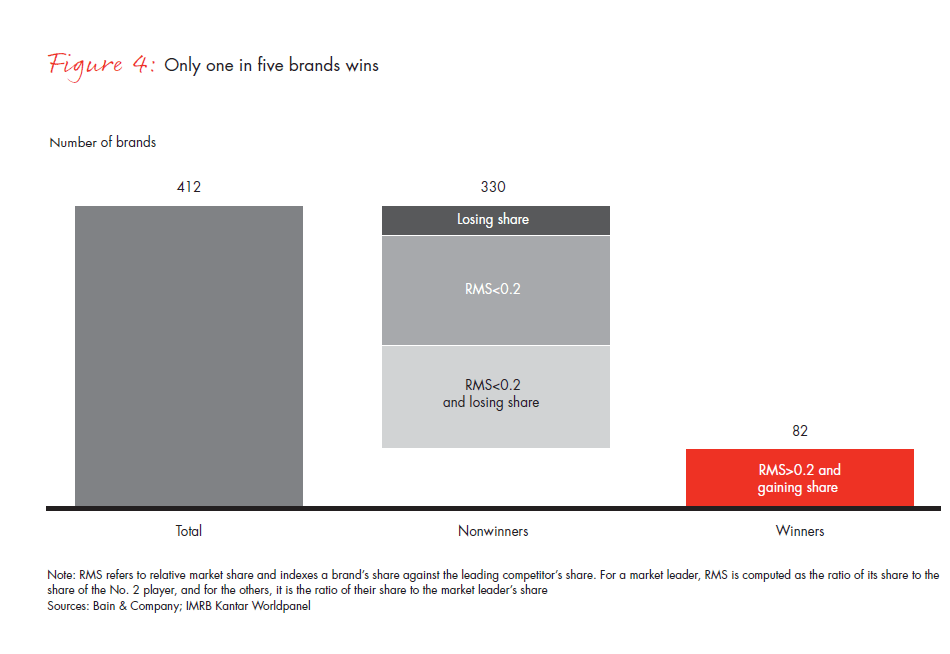
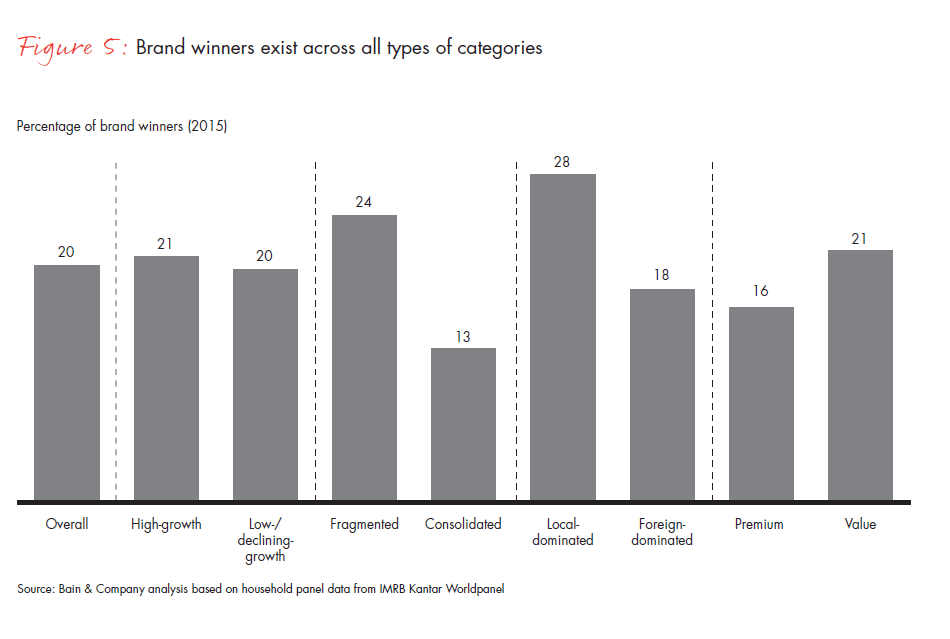
However, just because the economy is gaining momentum, it doesn’t mean that all brands will win. A Bain & Company analysis has found that only one in five brands becomes a winner in terms of size and growth. The one-in-five rule is based on data from 2013–2015, a period of high growth, and it applies across all company dimensions—to foreign-dominated as well as to local-dominated brands, to companies in consolidated categories and fragmented industries, and to categories with a high contribution of premium brands and a high contribution of value brands. That means companies can’t influence their destiny by picking a category. It’s what they do inside the category that matters. For brands hoping to truly benefit from India’s economy, success rests on understanding actual shopper behaviour and what winners do differently.
Bain partnered with IMRB Kantar Worldpanel to study the shopping habits of nearly 80,000 Indian households, including a mix of urban and rural shoppers spanning different town sizes and socioeconomic classifications. Together, we looked at detailed records in 37 important consumer goods categories across food and beverage, and home and personal care—categories that account for nearly two-thirds of all fast-moving consumer goods categories tracked by the household panel in India.
Our research provided rich analysis and sharp insights into shopper behaviour. Many of our insights are in sync with the results from studies that Bain conducted in China, Indonesia, the UK and the US, showing how similar shoppers are around the world.
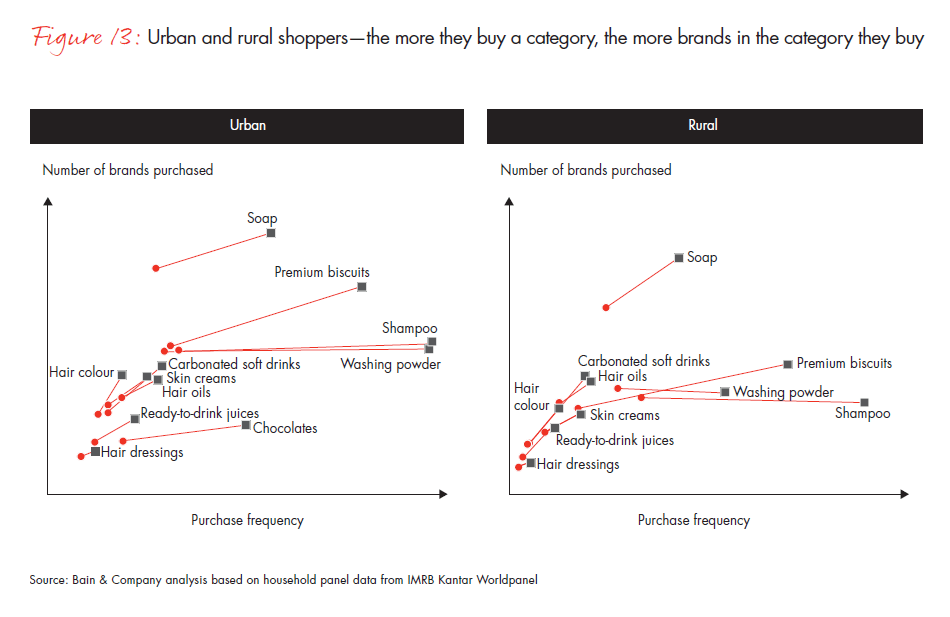
Among the most significant findings: Shoppers are not loyal to specific brands. They buy multiple brands in each category. We call this repertoire behaviour (repertoire being the set of brands purchased by a shopper within a given category). In fact, heavy shoppers of a category tend to buy more brands in that category. This is true of both urban and rural shoppers across socioeconomic groups—and it’s a situation that will intensify as India’s market for consumer goods expands.
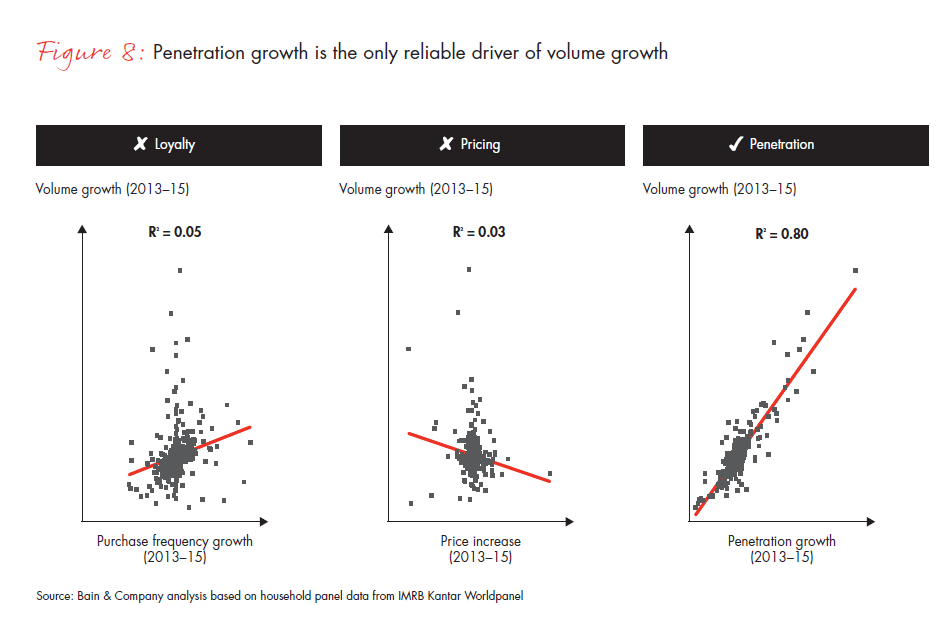
Winning in this environment is both a challenge and an opportunity. As we’ve seen in many markets, the best approach a brand can take is to keep improving household penetration, defined as the percentage of all households within a market that are buying a particular brand in a year. Penetration is more important than a brand’s frequency of purchase in determining category leadership.
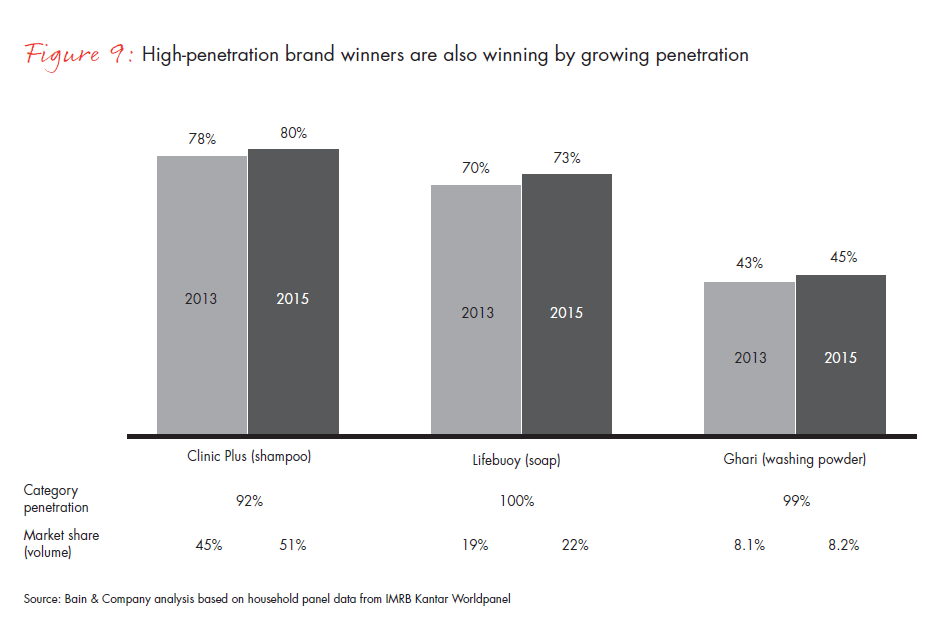
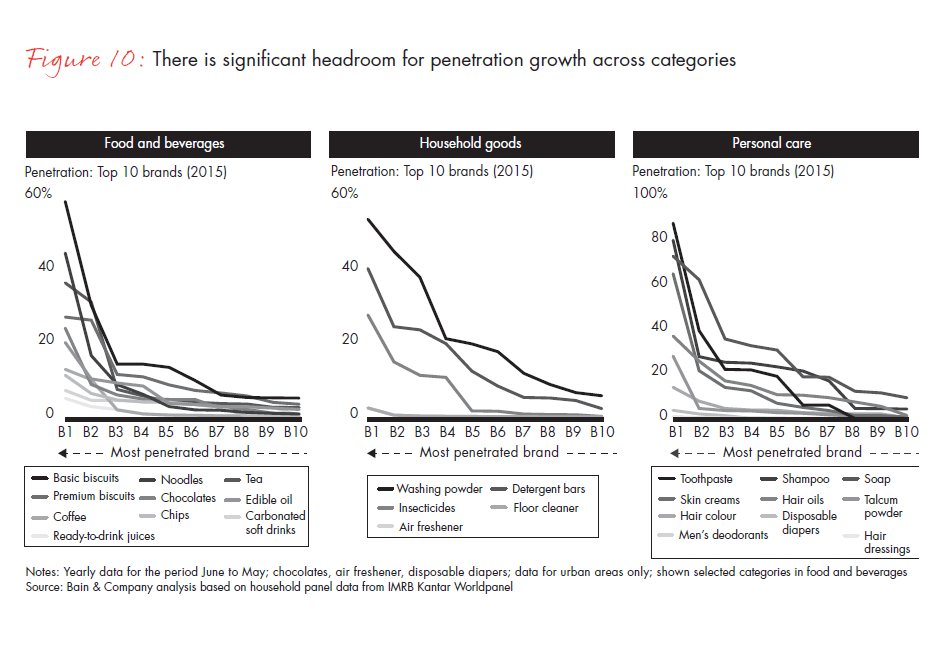
Even in highly penetrated categories, most brands have significant headroom for growing penetration. Indeed, brands such as Lifebuoy and Clinic Plus, which have penetration levels exceeding 70%, have been able to grow by boosting their already high penetration even more during the past two years.
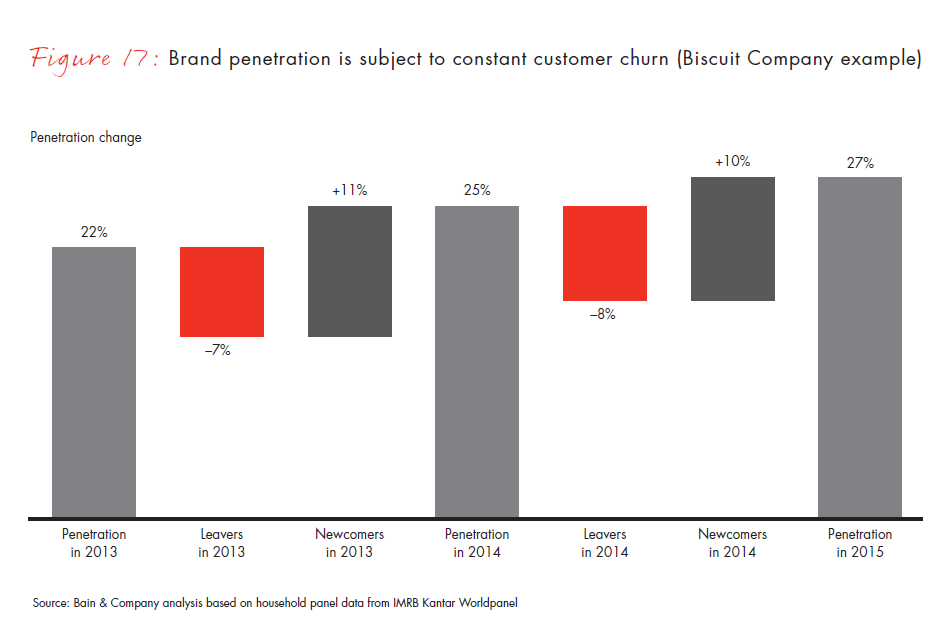
These key findings emanate from the basic research of the Ehrenberg-Bass Institute for Marketing Science, summarised by Professor Byron Sharp, director of the Institute, in his book How Brands Grow, based on decades of observations of buying behaviour. Our analysis proves that the connection between increased household penetration and category share gains holds just as true in India as in other markets we have observed. Similar to other markets, brands in India must re-earn penetration by continually recruiting new consumers. Even a brand winner such as Britannia Good Day saw a churn of around 32% of its shopper base but has successfully managed to recruit approximately 44% more shoppers, resulting in a net increase in penetration.
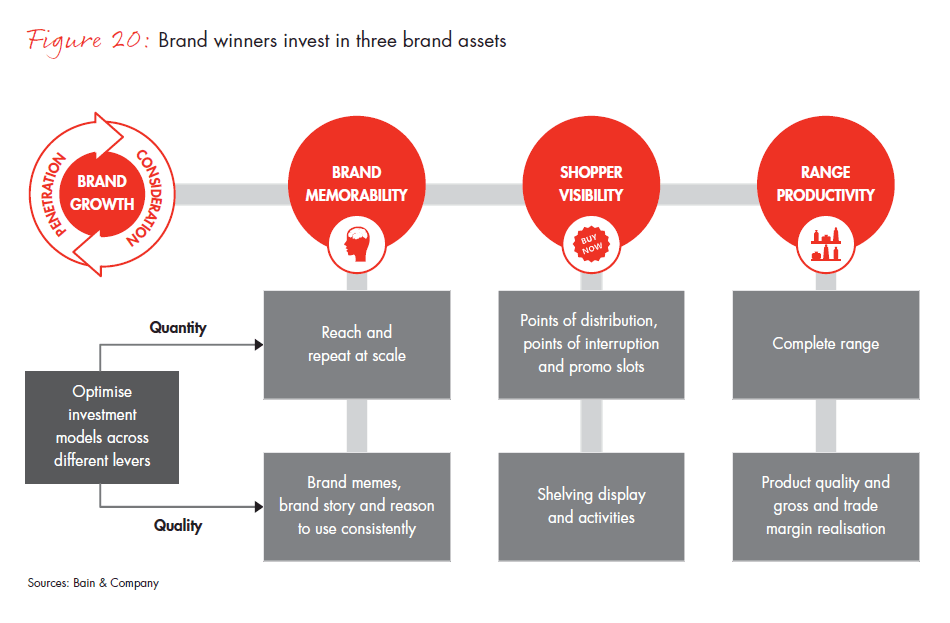
Our work with clients on growth strategies has shown that the best companies increase penetration and outperform their competitors by thoughtfully investing in both the quantity and quality of three key areas.
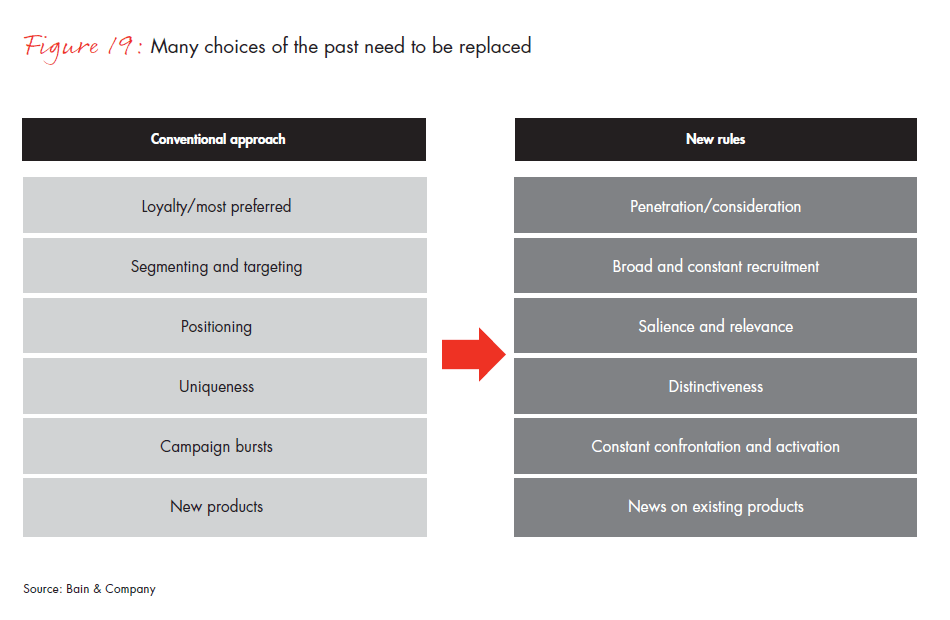
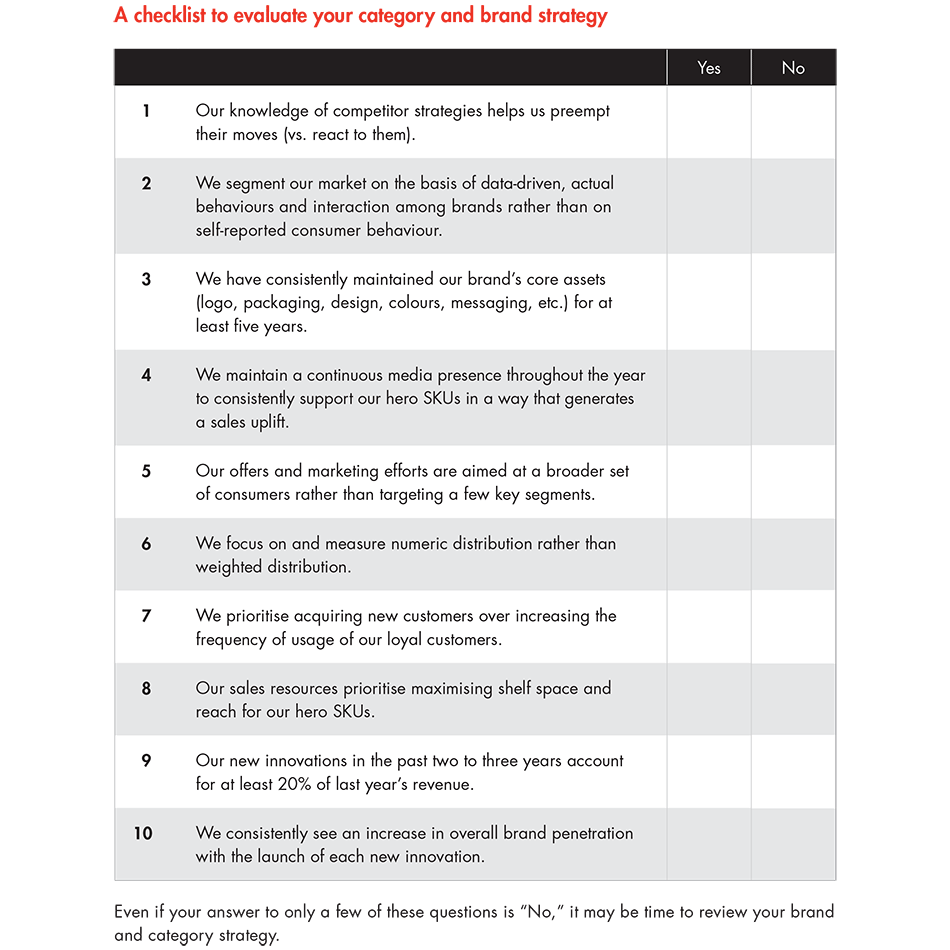
- Brand memorability: Rather than trying to stay fresh by routinely switching messaging and running campaigns in waves, brand winners build brand memorability by steadily and repeatedly reinforcing a brand’s audio and visual cues and nurturing brand memes around consumer-relevant needs and occasions. India’s Nirma laundry detergent has consistently used the same mascot, the Nirma girl, for more than 40 years.
- Shopper visibility: Hero SKUs are the proven products for any particular brand that every shopper will know and look for and that contribute the bulk of sales and profits. Brands that ensure that these hero SKUs are readily available in various sizes, formats and price points, in as many stores as possible, with prominent visibility on shelves and at other key consideration points in the store, increase their chances of landing in consumers’ baskets. Also, by focusing on hero SKUs, they can eliminate the complexity of having too large an assortment. Hindustan Unilever serves as a successful example of how improving shopper visibility can significantly improve brand growth. Hindustan Unilever and other brands differentiate on in-store execution. Also, they find that increasing numeric distribution is key—weighted distribution alone will not suffice.
- Range productivity: Brand winners launch fewer, more successful new products. Our US research shows that brand winners use innovation to help fuel growth, but they do so selectively. They introduce 40% fewer products than their rivals, but their innovations are 25% more likely to achieve growth every year following the product launch. Rather than measuring success based on high innovation rates, these companies invest to understand what can truly bring new users to their brand. For example, brand winners often focus on innovations that are less sexy, such as new pack sizes to serve different channels, occasions and price points. They rely on deep insights about consumer repertoires to guide these innovations, launching products that tap opportunity in more baskets rather than cannibalising existing sales. Not only does this lead to higher innovation success rates, it also frees up resources to continue investing behind core brands. In India, Lifebuoy Red is still generating most of the growth for the brand while some other soap brands with multiple variants have not gained incremental household penetration.
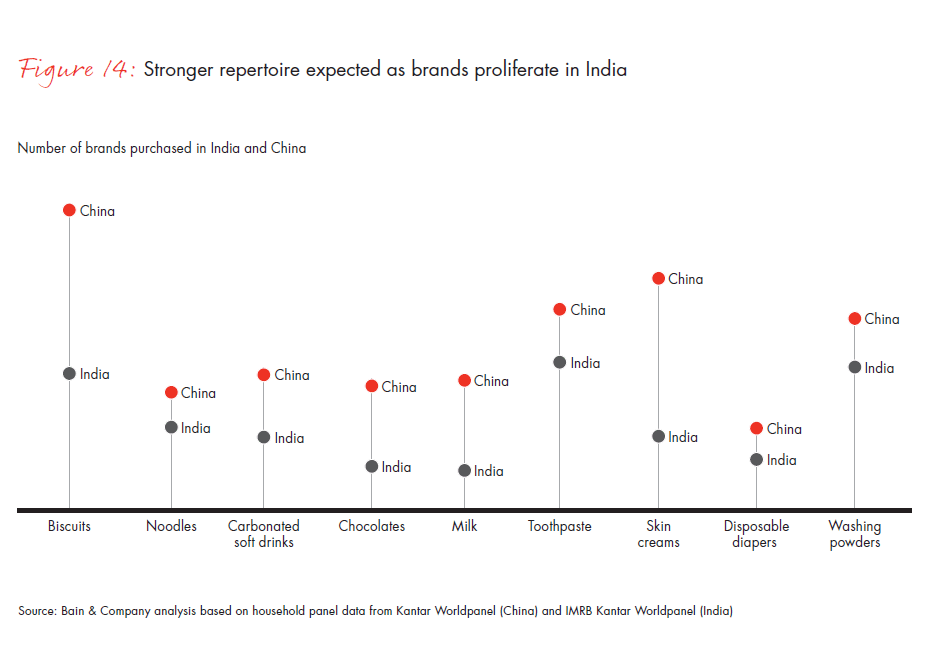
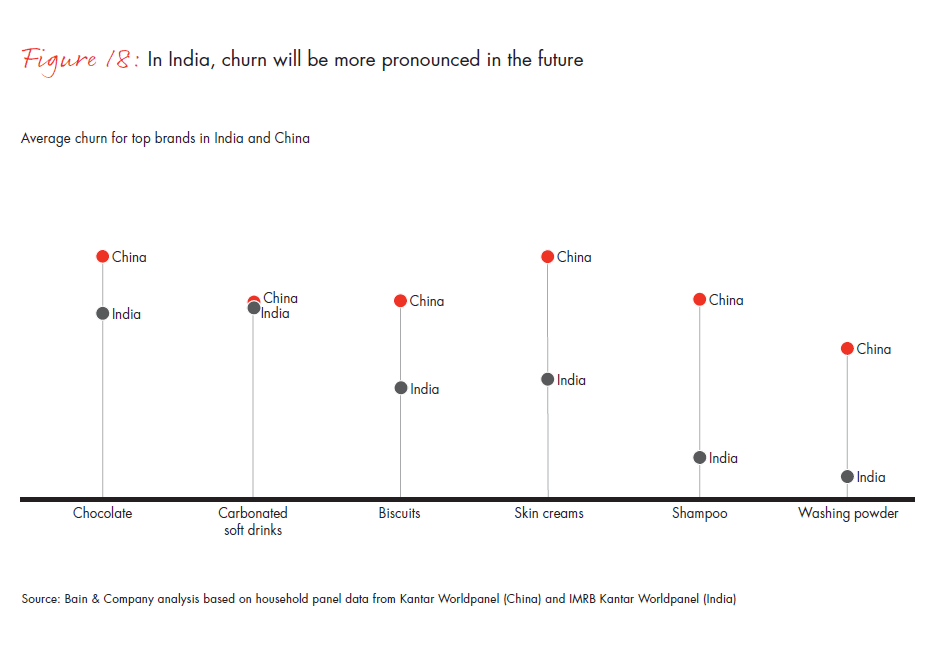
As consumer goods spending in India reaches an inflexion point, marketers of everything from Chyawanprash to biscuits and from deodorant bars to hair oil and soap will need to understand the important nuances of shopper behaviour at the point of sale. Our research across multiple categories determined that roughly one-third of India’s shopper base churns every year. With the number of brands increasing in each category, consumers will have wider repertoires—and that means churn will intensify. It will be even more important than ever to develop a plan for boosting penetration as the best way to grow and prosper in India.
Joydeep Bhattacharya, a partner in Bain's Consumer Products practice, discusses the importance of household penetration and three areas where brand winners in India can invest to stay on top.
Prospects for brand growth in India
- India’s economy is at an inflexion point, with favourable demographics, a stable and strong government focused on economic reforms, and positive investor sentiment. Per-capita GDP is approaching $1,600 and about to ascend. India’s pattern of growth lags behind China’s by 10 years. If conditions continue, it now is poised to replicate the huge growth boom China experienced a decade ago.
- The prospects look good for brands hoping to benefit from India’s growth. Fast-moving consumer goods spending per capita, around $180 in 2014 based on World Bank and Euromonitor data, is expected to rise rapidly during the next 10 years, in tandem with the growth in per-capita GDP.
- To understand shopping behaviour for the 37 most important consumer goods categories, Bain & Company teamed with IMRB Kantar Worldpanel to track real-time spending of approximately 80,000 Indian shoppers, split between 64,000 urban households and 15,000 rural households.
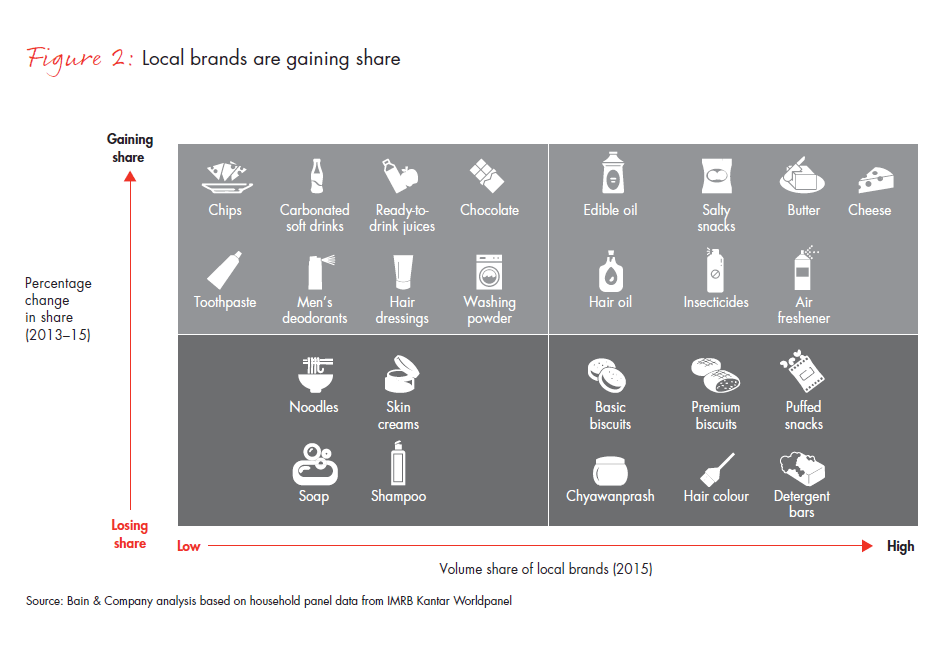
- Despite the market size, only one in five brands is considered a winner, with relative market share exceeding 0.2, according to our analysis of 412 brands. Our study found that local and quasi-local brands are gaining volume share, especially in categories where distinctive local tastes, such as cheese, are a factor.
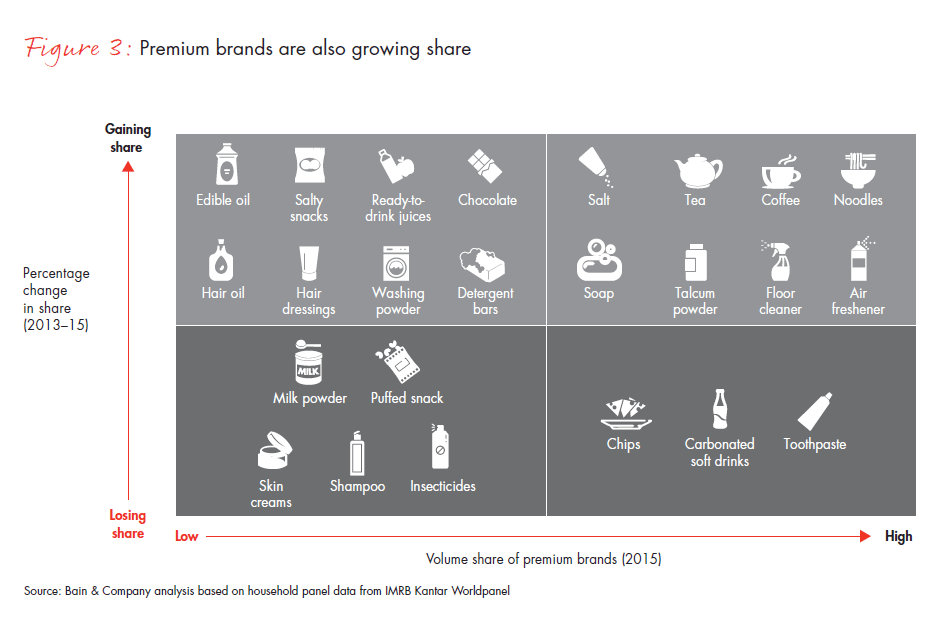
- Premium brands are gaining volume share, too. The categories in which premium brands are gaining the most volume share include coffee, ready-to-drink juices, air freshener and talcum powder. The categories in which premium brands are losing the most volume share include insecticides, milk powder and puffed snacks.
- Brand winners exist in all category types, but they are most prevalent in categories where local companies maintain leadership and in fragmented categories. The fewest brand winners are in consolidated categories or categories with high contribution of premium brands.
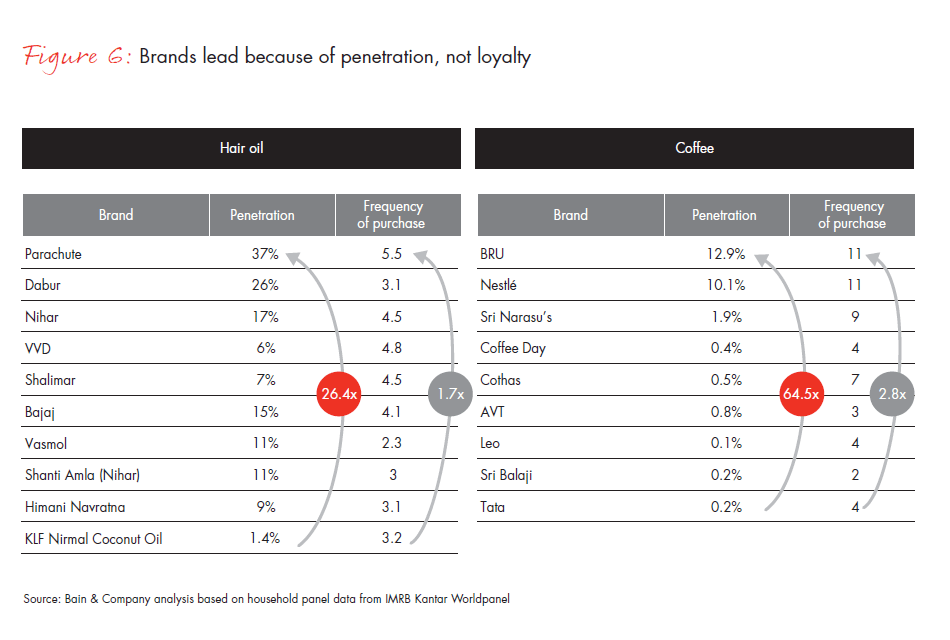
- Brands lead because of penetration, not loyalty. For example, the leading brand in hair oil (Parachute) has 26.4 times the penetration of the 10th brand while the frequency of purchase is only 1.7 times higher. Similarly, the leading noodle brand in India maintains a rate of penetration that is 10 times greater than the category average.
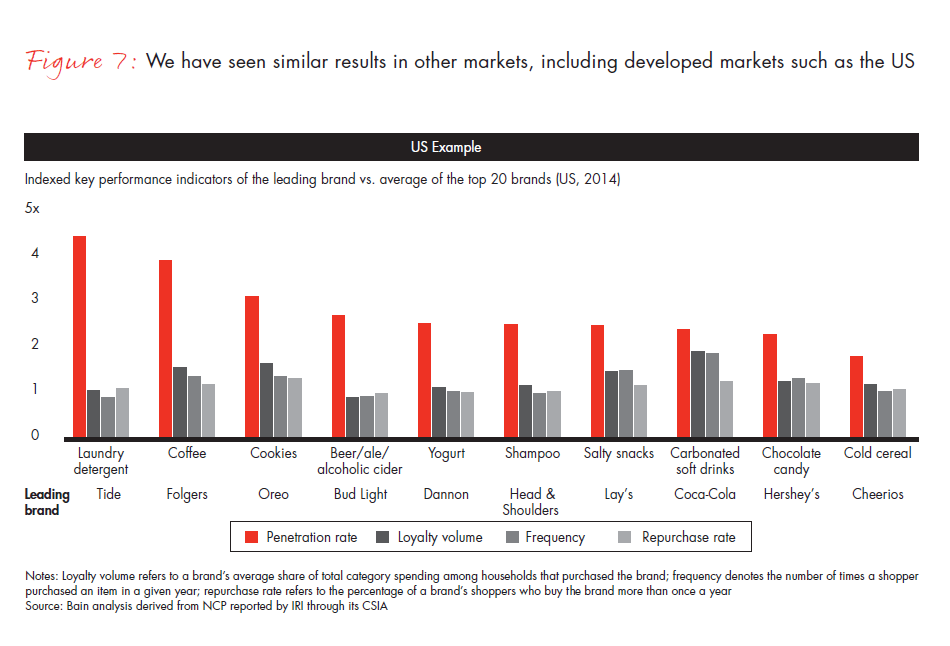
- The importance of penetration in determining market share is evident in other countries (both developed and developing markets) that we’ve studied. Penetration rate is more important than loyalty, purchase frequency or repurchase rate. That’s why brand winners focus on growing household penetration.
Understanding shopper behaviour: Why penetration matters
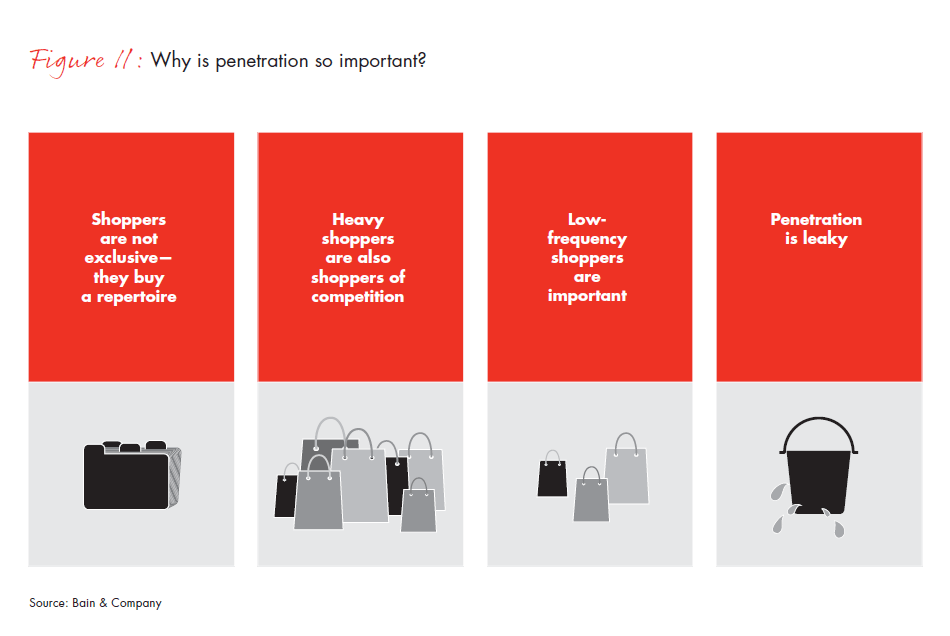
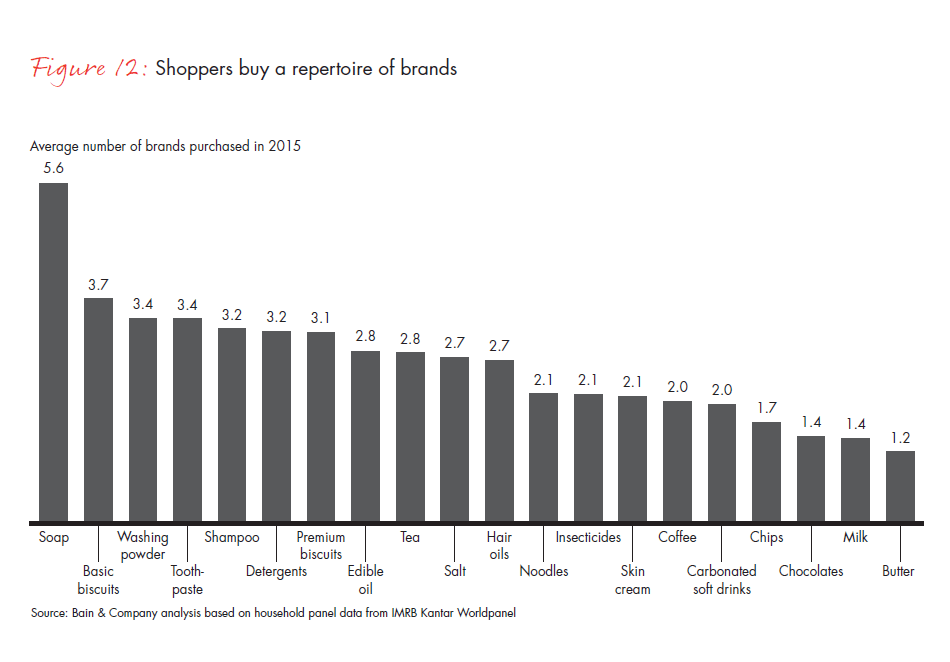
- There’s a fundamental reason why household penetration is so significant: India’s shoppers, similar to their counterparts elsewhere in the world, generally are not exclusive to any one brand. They are repertoire shoppers, which means that in most situations, shoppers who buy more frequently in a category also tend to buy more brands in that category—choosing different brands for the same occasion or need. These findings apply among both rural and urban shoppers.
- Repertoire behaviour is highest in the soap category, in which India’s shoppers buy an average of 5.6 different brands each year. Repertoire behaviour is observed across multiple categories in food and beverage, and health and personal care. Even for a category such as hair colour, which on average is bought only four times a year, the average household buys two brands.
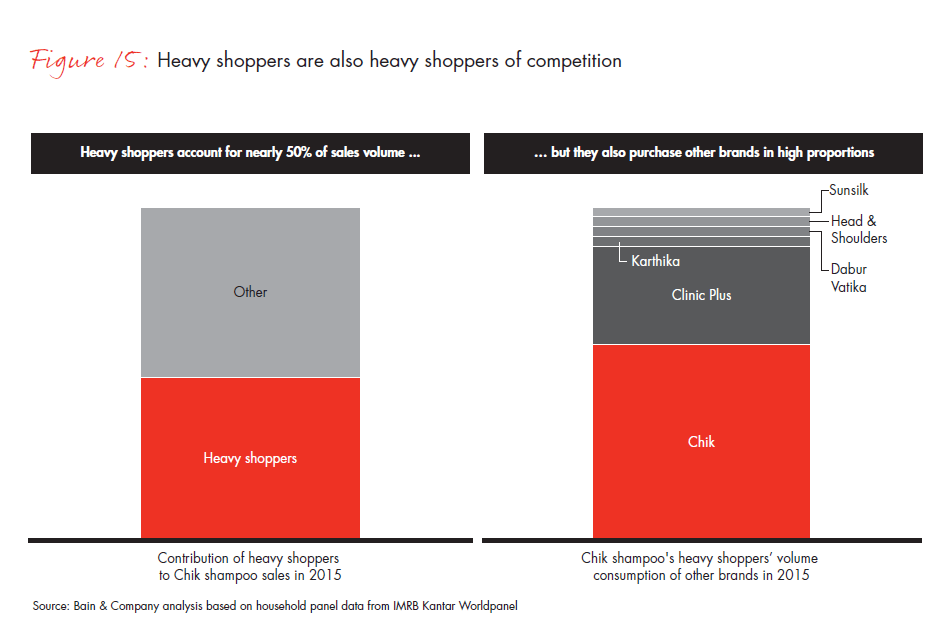
- Heavy shoppers in a category, those representing the top 20% of purchasers, are also heavy shoppers of the competition. Even leading brands in India have a relatively low share of wallet.
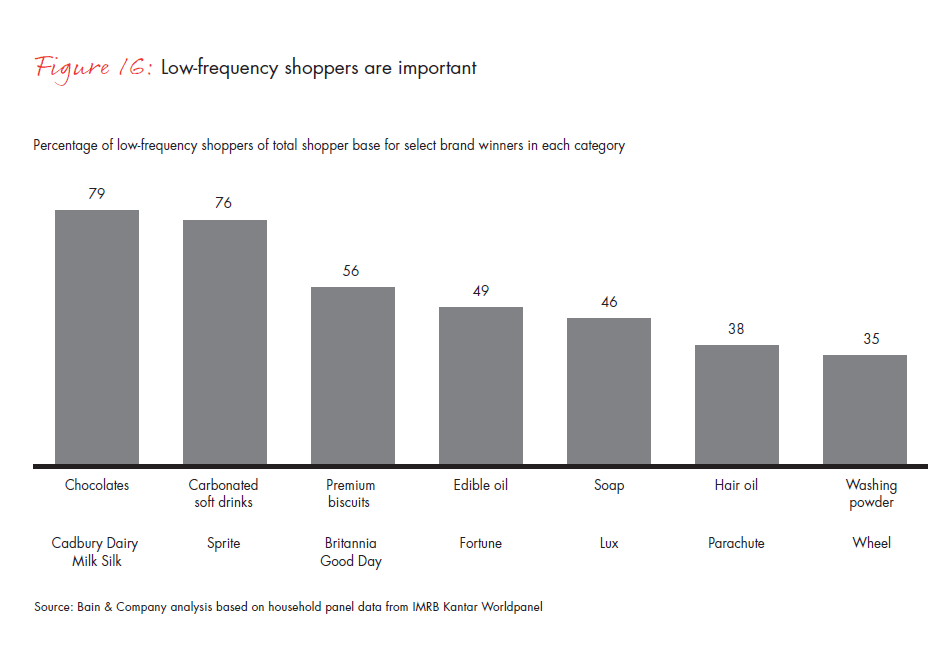
- Low-frequency shoppers are important for brands. A large part of the customer base for India’s leading brands are occasional users of the brand who are regular users of the category. Even for brand winners such as Fortune oils and Britannia Good Day biscuits, low-frequency shoppers represent nearly 50% to 60% of their total shopper base.
- India’s leading brands experience high rates of churn. Each year, they lose roughly one-third of their existing customers, making it critical to re-recruit consumers to maintain penetration.
How to win: The Bain Brand Accelerator®
- Building penetration is difficult to do in isolation from another critical performance indicator in consumer goods: brand consideration (defined as the percentage of consumers who would consider your brand for a given purchase occasion).
- Building penetration requires continually building consideration—which in turn helps increase penetration. The steady path for earning consideration and penetration requires investing in three key brand assets: brand memorability, shopper visibility and range productivity.
- Brand memorability: Brand winners don’t necessarily spend more on advertising, but they spend more effectively. Frequency of messaging is key, with consistent brand memes, brand story and reason to use the brand.
- Shopper visibility: Brands that ensure core products are readily available in various sizes, formats and price points, in as many stores as possible, with prominent visibility on shelves and at other key consideration points in the store, increase their chances of landing in consumers’ baskets.
- Range productivity: Brand winners as a group introduce fewer but more successful new products. They invest to understand what can truly bring new users to their brand. That often means growing proven hero SKUs with innovations that are less sexy, such as new pack sizes to serve different channels, occasions and price points.
Joydeep Bhattacharya is a Bain & Company partner based in New Delhi, Nikhil Ojha is a Bain partner based in Mumbai, and Shyam Unnikrishnan is a principal based in New Delhi. They are all members of Bain’s Consumer Products practice.
In conjunction with IMRB Kantar Worldpanel.
The Bain Brand Accelerator® is a registered trademark of Bain & Company.
Acknowledgements
This report is a joint effort between Bain & Company and IMRB Kantar Worldpanel. The authors extend gratitude to all who contributed to this report; in particular, Laurie Norrie, Bain practice area manager, and K Ramakrishnan, general manager and country head, Household Panel at IMRB Kantar World Panel.
First published in 7月 2016