
Skip to Content
  • オフィス

    オフィス

    北米・南米
    • Atlanta
    • Austin
    • Bogota
    • Boston
    • Buenos Aires
    • Chicago
    • Dallas
    • Denver
    • Houston
    • Los Angeles
    • Mexico City
    • Minneapolis
    • Monterrey
    • Montreal
    • New York
    • Rio de Janeiro
    • San Francisco
    • Santiago
    • São Paulo
    • Seattle
    • Silicon Valley
    • Toronto
    • Washington, DC
    ヨーロッパ・中東・アフリカ
    • Amsterdam
    • Athens
    • Berlin
    • Brussels
    • Copenhagen
    • Doha
    • Dubai
    • Dusseldorf
    • Frankfurt
    • Helsinki
    • Istanbul
    • Johannesburg
    • Kyiv
    • Lisbon
    • London
    • Madrid
    • Milan
    • Munich
    • Oslo
    • Paris
    • Riyadh
    • Rome
    • Stockholm
    • Vienna
    • Warsaw
    • Zurich
    アジア・オーストラリア
    • Bangkok
    • Beijing
    • Bengaluru
    • Brisbane
    • Ho Chi Minh City
    • Hong Kong
    • Jakarta
    • Kuala Lumpur
    • Manila
    • Melbourne
    • Mumbai
    • New Delhi
    • Perth
    • Shanghai
    • Singapore
    • Sydney
    • Tokyo
    全てのオフィス
  • アルムナイ
  • メディア
  • お問い合わせ
  • 東京オフィス
  • Japan | 日本語

    地域と言語を選択

    グローバル
    • Global (English)
    北米・南米
    • Brazil (Português)
    • Argentina (Español)
    • Canada (Français)
    • Chile (Español)
    • Colombia (Español)
    ヨーロッパ・中東・アフリカ
    • France (Français)
    • DACH Region (Deutsch)
    • Italy (Italiano)
    • Spain (Español)
    • Greece (Elliniká)
    アジア・オーストラリア
    • China (中文版)
    • Korea (한국어)
    • Japan (日本語)
  • Saved items (0)
    Saved items (0)

    You have no saved items.

    後で閲読、共有できるようにするためにブックマークしてください

    Explore Bain Insights
  • 業界別プラクティス
    メインメニュー

    業界別プラクティス

    • 航空宇宙、防衛、政府関連
    • 農業
    • 化学製品
    • インフラ、建設
    • 消費財
    • 金融サービス
    • ヘルスケア
    • 産業機械、設備
    • メディア、エンターテインメント
    • 金属
    • 採掘・鉱業
    • 石油、ガス
    • 紙、パッケージ
    • プライベートエクイティ
    • 公共、社会セクター
    • 小売
    • テクノロジー
    • 通信
    • 交通
    • 観光産業
    • 公益事業、再生可能エネルギー
  • 機能別プラクティス
    メインメニュー

    機能別プラクティス

    • カスタマー・エクスペリエンス
    • サステイナビリティ、 社会貢献
    • Innovation
    • 企業買収、合併 (M&A)
    • オペレーション
    • 組織
    • プライベートエクイティ
    • マーケティング・営業
    • 戦略
    • アドバンスド・アナリティクス
    • Technology
    • フルポテンシャル・トランスフォーメーション
  • Digital
  • 知見/レポート
  • ベイン・アンド・カンパニーについて
    メインメニュー

    ベイン・アンド・カンパニーについて

    • ベインの信条
    • 活動内容
    • 社員とリーダーシップ
    • プレス・メディア情報
    • クライアントの結果
    • 受賞歴
    • パートナーシップを結んでいる団体
    Further: Our global responsibility
    • ダイバーシティ
    • 社会貢献
    • サステイナビリティへの取り組み
    • 世界経済フォーラム(WEF)
    Learn more about Further
  • キャリア
    メインメニュー

    キャリア

    • ベインで働く
      キャリア
      ベインで働く
      • Find Your Place
      • ベインで活躍する機会
      • ベインのチーム体制
      • 学生向けページ
      • インターンシップ
      • 採用イベント
    • ベインでの体験
      キャリア
      ベインでの体験
      • Blog: Inside Bain
      • キャリアストーリー
      • 社員紹介
      • Where We Work
      • 成長を後押しするサポート体制
      • アフィニティ・グループ
      • 福利厚生
    • Impact Stories
    • 採用情報
      キャリア
      採用情報
      • 採用プロセス
      • 面接内容
    FIND JOBS
  • オフィス
    メインメニュー

    オフィス

    • 北米・南米
      オフィス
      北米・南米
      • Atlanta
      • Austin
      • Bogota
      • Boston
      • Buenos Aires
      • Chicago
      • Dallas
      • Denver
      • Houston
      • Los Angeles
      • Mexico City
      • Minneapolis
      • Monterrey
      • Montreal
      • New York
      • Rio de Janeiro
      • San Francisco
      • Santiago
      • São Paulo
      • Seattle
      • Silicon Valley
      • Toronto
      • Washington, DC
    • ヨーロッパ・中東・アフリカ
      オフィス
      ヨーロッパ・中東・アフリカ
      • Amsterdam
      • Athens
      • Berlin
      • Brussels
      • Copenhagen
      • Doha
      • Dubai
      • Dusseldorf
      • Frankfurt
      • Helsinki
      • Istanbul
      • Johannesburg
      • Kyiv
      • Lisbon
      • London
      • Madrid
      • Milan
      • Munich
      • Oslo
      • Paris
      • Riyadh
      • Rome
      • Stockholm
      • Vienna
      • Warsaw
      • Zurich
    • アジア・オーストラリア
      オフィス
      アジア・オーストラリア
      • Bangkok
      • Beijing
      • Bengaluru
      • Brisbane
      • Ho Chi Minh City
      • Hong Kong
      • Jakarta
      • Kuala Lumpur
      • Manila
      • Melbourne
      • Mumbai
      • New Delhi
      • Perth
      • Shanghai
      • Singapore
      • Sydney
      • Tokyo
    全てのオフィス
  • アルムナイ
  • メディア
  • お問い合わせ
  • 東京オフィス
  • Japan | 日本語
    メインメニュー

    地域と言語を選択

    • グローバル
      地域と言語を選択
      グローバル
      • Global (English)
    • 北米・南米
      地域と言語を選択
      北米・南米
      • Brazil (Português)
      • Argentina (Español)
      • Canada (Français)
      • Chile (Español)
      • Colombia (Español)
    • ヨーロッパ・中東・アフリカ
      地域と言語を選択
      ヨーロッパ・中東・アフリカ
      • France (Français)
      • DACH Region (Deutsch)
      • Italy (Italiano)
      • Spain (Español)
      • Greece (Elliniká)
    • アジア・オーストラリア
      地域と言語を選択
      アジア・オーストラリア
      • China (中文版)
      • Korea (한국어)
      • Japan (日本語)
  • Saved items  (0)
    メインメニュー
    Saved items (0)

    You have no saved items.

    後で閲読、共有できるようにするためにブックマークしてください

    Explore Bain Insights
  • 業界別プラクティス
    • 業界別プラクティス

      • 航空宇宙、防衛、政府関連
      • 農業
      • 化学製品
      • インフラ、建設
      • 消費財
      • 金融サービス
      • ヘルスケア
      • 産業機械、設備
      • メディア、エンターテインメント
      • 金属
      • 採掘・鉱業
      • 石油、ガス
      • 紙、パッケージ
      • プライベートエクイティ
      • 公共、社会セクター
      • 小売
      • テクノロジー
      • 通信
      • 交通
      • 観光産業
      • 公益事業、再生可能エネルギー
  • 機能別プラクティス
    • 機能別プラクティス

      • カスタマー・エクスペリエンス
      • サステイナビリティ、 社会貢献
      • Innovation
      • 企業買収、合併 (M&A)
      • オペレーション
      • 組織
      • プライベートエクイティ
      • マーケティング・営業
      • 戦略
      • アドバンスド・アナリティクス
      • Technology
      • フルポテンシャル・トランスフォーメーション
  • Digital
  • 知見/レポート
  • ベイン・アンド・カンパニーについて
    • ベイン・アンド・カンパニーについて

      • ベインの信条
      • 活動内容
      • 社員とリーダーシップ
      • プレス・メディア情報
      • クライアントの結果
      • 受賞歴
      • パートナーシップを結んでいる団体
      Further: Our global responsibility
      • ダイバーシティ
      • 社会貢献
      • サステイナビリティへの取り組み
      • 世界経済フォーラム(WEF)
      Learn more about Further
  • キャリア
    人気検索キーワード
    • デジタル
    • 戦略
    前回の検索
      最近訪れたページ

      Content added to saved items

      Saved items (0)

      Removed from saved items

      Saved items (0)

      レポート

      Young Workers Are Increasingly Overwhelmed
      en

      Not only has Covid-19 led to a tragic loss of life around the world, but it has also caused immense psychological strain. Individuals have coped with grief, adapted to social isolation, and reconfigured the way they work, all at the same time. The portion of American adults exhibiting signs of an anxiety disorder leaped from 8% in 2019 to a peak of 36% by December 2020. The pandemic has undoubtedly been an example of what sociologists call a “collective trauma” event.

      However, stress levels have been rising for some time now, particularly for younger generations. Although longitudinal data over an extended time period is sparse, even in the last decade, the reported stress levels across generations has started to diverge. Generation X, Generation Y, also known as millennials, and Generation Z no longer experience the steady decline in stress that has historically been associated with aging (see Figure 5.1).
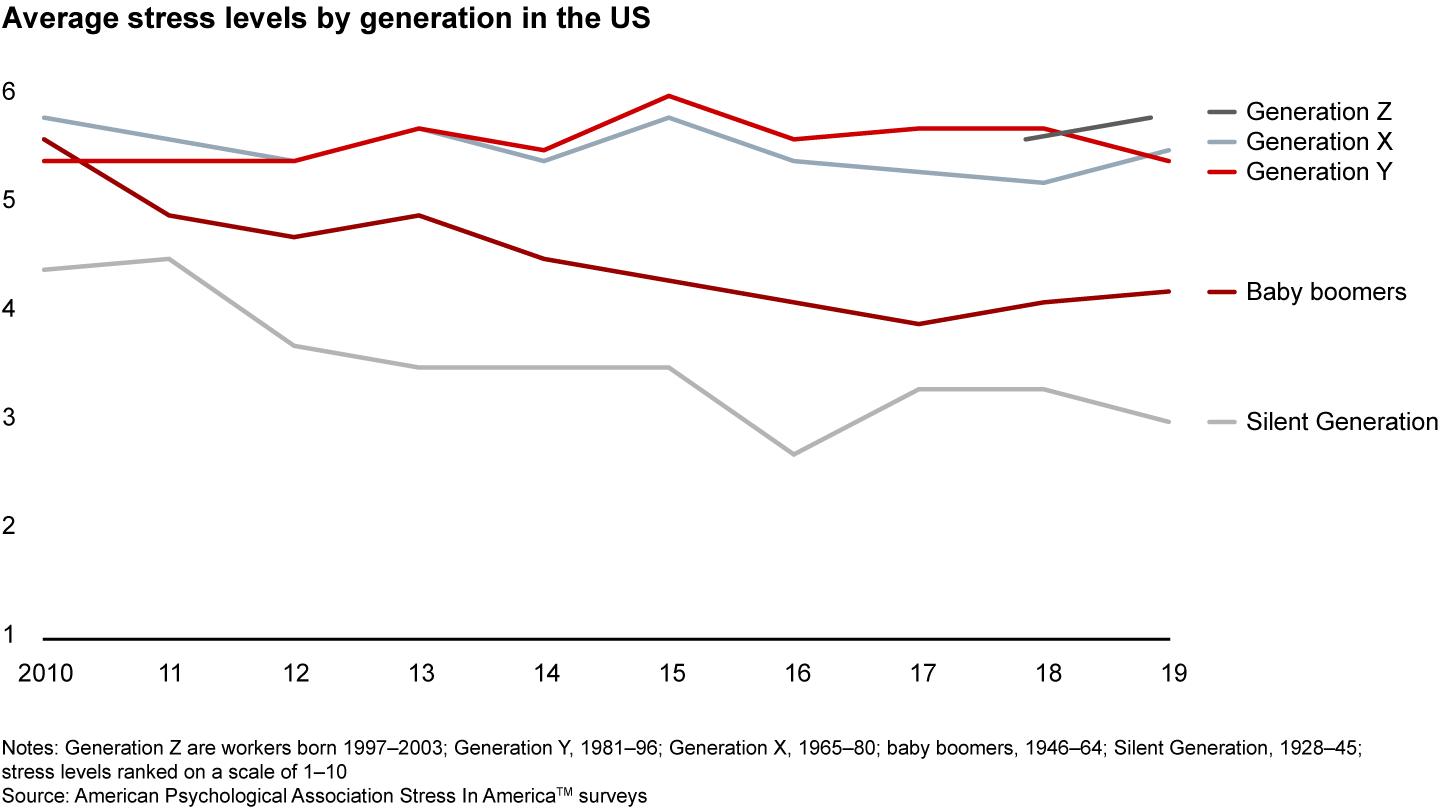
      Figure 5.1
      Stress levels are diverging across generations

      Unlike older cohorts, younger generations are grappling with a new mix of stressors. The combination of slowing economic growth, rising inequality, and declining housing affordability across the West has made it far more difficult for younger workers to attain financial stability. The dark sides of recent technological progress add to these challenges: Email blurs the lines between work and personal time, an issue only compounded by working from home. Social media pushes younger generations to constantly compare their lifestyles with those of their peers. And the acceleration of innovation cycles creates the illusion of life at twice the speed.

      フルレポートのダウンロードはこちら (PDF)

      Younger workers have also been exposed to broader turbulence over the past decade, including greater political polarization, geopolitical tensions, and concerns about climate change, not to mention a pandemic. The lives of younger generations are characterized by a far higher degree of ambiguity and uncertainty—and they simply haven’t been educated on how to cope with it.

      Of all these issues, the economic stressors matter most to young workers. When we asked workers across Western markets to share their biggest concerns for the next 5 to 10 years, 61% of respondents under 35 cited financial issues, job security, or failing to meet their career goals. Only 40% of those over 35 cited the same concerns.

      %

      of workers under 35 expressed concerns about financial issues, job security, or failure to meet career goals

      %

      of workers over 35 cited the same concerns

      The odds of achieving absolute upward mobility—earning more than one’s parents—are the lowest they have been in the US for any generation since World War II. For the Silent Generation, about 90% of workers could expect to earn more than their parents, with the figure even higher for all but the wealthiest families. For Generation X, this figure had fallen to about 50%, with the biggest decline in the middle class. The emerging data for Generation Y suggests the picture is worsening. This trend is consistent across the West, with absolute upward mobility at levels equal to or below the lowest on record, which stretches back to the beginning of the 20th century.

      Two factors have contributed to the decline in absolute upward mobility: slowing growth and rising inequality. The youngest generation of workers has seen inequality skyrocket, as the earnings gap between those who enter high-skill professions and those who do not continues to widen. The growing income premium for a college degree certainly plays a role in this story. But it’s now estimated that more than 40% of recent college graduates end up in jobs that don’t require higher education. Today’s labor markets are increasingly characterized by a winner-takes-all dynamic, where a small number of graduates capture a vast majority of the returns on education.

      “The lives of younger generations are characterized by a far higher degree of ambiguity and uncertainty—and they simply haven’t been educated on how to cope with it.”

      In places like the US, where higher education receives limited public funding, universities are also saddling workers with crippling debt. In Europe, younger workers are often spared the burden of student debt, but youth unemployment has reached crushing levels—37% in Spain, 29% in Italy, and 19% in France—as the fallout of the financial crisis more than a decade ago continues to limit opportunities.

      On top of everything else, younger workers will grapple with the burden of caring for an aging population. They also face the challenge of paying down public debt, which has ballooned as a result of the pandemic, at a time of slowing macroeconomic growth.

      The psychological effects of these pressures should not be underestimated. To see what could be in store for the West, one can look to Japan. In the 1990s, the term hikikomori was added to the lexicon to describe the growing phenomenon of young adults who had failed to secure jobs during Japan’s prolonged economic slowdown known as the Lost Decade. Their feelings of shame and defeat led them to withdraw from the labor market permanently and become recluses who lived with their parents well into their adult years. Since then, the number of hikikomori has steadily grown to more than a million people, according to government estimates.

      Interactive

      Six Worker Archetypes for the World Ahead

      There’s no such thing as the “average” worker. Understanding six archetypes can help firms build an effective talent strategy.

      Given cultural differences, such a pattern may or may not emerge in the West. But it’s evident that many young people have become disillusioned with the prevailing economic system and mainstream politics. As a result, some have gravitated toward radical political movements. Others are seeking change through economic, rather than democratic, processes. This includes consuming and investing based on their individual beliefs, although the impact tends to be diffuse. Many young people sense that the best way to achieve change is by encouraging their employers to take more active stances on social and political issues. In some cases, these workers are willing to vote with their feet.

      Looking at the emerging economies of the world, the youngest generations have had a very different experience. In countries like China, Indonesia, and Nigeria, younger workers are experiencing less instability than their predecessors, while economic liberalization and convergence are rapidly increasing their prospects for upward income mobility. According to our survey, 81% of workers in emerging markets said they felt optimistic that their lives would be better 5 to 10 years from now, compared with only 63% in developed economies. It may be too early to say how much these diverging experiences could reshape global competitiveness in the coming decade, but it does reinforce the point that the hopes and fears of workers in the developed and developing world are distinct.

      Continue Reading

      Rehumanizing Work: The Journey Ahead


      About the Research

      Data powered by Dynata, a leading global first-party data and insights platform.

      著者
      • Headshot of Andrew Schwedel
        Andrew Schwedel
        パートナー, New York
      • Headshot of James Root
        James Root
        パートナー, Hong Kong
      • Headshot of James Allen
        James Allen
        Advisory Partner, London
      • Headshot of John Hazan
        John Hazan
        パートナー, Paris
      • Eric Almquist
        Former Advisory Partner, Boston
      • Thomas Devlin
        Former Director, Bain Futures, London
      • Headshot of Karen Harris
        Karen Harris
        Managing Director, Macro Trends Group, New York
      企業の未来像
      AI and Power: A Marriage of Necessity

      Tech and utilities are an unlikely pair, but how well they balance data center electricity demand and finite energy resources will have huge implications.

      詳細
      企業の未来像
      How to Feed AI’s Hunger for Power

      The explosive growth of artificial intelligence will need a lot of electricity from a utility industry that hasn’t seen demand grow for 20 years.

      詳細
      企業の未来像
      The Working Future In Gulf Cooperation Council Countries

      It's time to humanize how we think about work to appeal to today's talent.

      詳細
      企業の未来像
      Automation May Not Come for Everyone's Job After All

      Uniquely human skills are becoming more important as the composition of the workforce shifts.

      詳細
      企業の未来像
      Working Women and the War for Talent

      By addressing deeply rooted gender imbalances, firms can overcome the labor shortage.

      詳細
      First published in 1月 2022
      Tags
      • Leadership & Talent
      • 企業の未来像
      • 戦略
      • 組織

      クライアント支援事例

      戦略 A Bold New Strategy Restores a Bank to a Leadership Position

      ケーススタディを見る

      組織 A Video Game Company Levels Up With a New Operating Model

      ケーススタディを見る

      組織 組織改革により、グローバルメーカーの収益性を回復

      ケーススタディを見る

      お気軽にご連絡下さい

      私達は、グローバルに活躍する経営者が抱える最重要経営課題に対して、厳しい競争環境の中でも成長し続け、「結果」を出すために支援しています。

      ベインの知見。競争が激化するグローバルビジネス環境で、日々直面するであろう問題について論じている知見を毎月お届けします。

      *プライバシーポリシーの内容を確認し、合意しました。

      プライバシーポリシーをご確認頂き、合意頂けますようお願い致します。
      Bain & Company
      お問い合わせ Sustainability Accessibility Terms of use Privacy Cookie Policy Sitemap Log In

      © 1996-2026 Bain & Company, Inc.

      お問い合わせ

      How can we help you?

      • ビジネスについて
      • プレス報道について
      • 採用について
      全てのオフィス