
Skip to Content
  • オフィス

    オフィス

    北米・南米
    • Atlanta
    • Austin
    • Bogota
    • Boston
    • Buenos Aires
    • Chicago
    • Dallas
    • Denver
    • Houston
    • Los Angeles
    • Mexico City
    • Minneapolis
    • Monterrey
    • Montreal
    • New York
    • Rio de Janeiro
    • San Francisco
    • Santiago
    • São Paulo
    • Seattle
    • Silicon Valley
    • Toronto
    • Washington, DC
    ヨーロッパ・中東・アフリカ
    • Amsterdam
    • Athens
    • Berlin
    • Brussels
    • Copenhagen
    • Doha
    • Dubai
    • Dusseldorf
    • Frankfurt
    • Helsinki
    • Istanbul
    • Johannesburg
    • Kyiv
    • Lisbon
    • London
    • Madrid
    • Milan
    • Munich
    • Oslo
    • Paris
    • Riyadh
    • Rome
    • Stockholm
    • Vienna
    • Warsaw
    • Zurich
    アジア・オーストラリア
    • Bangkok
    • Beijing
    • Bengaluru
    • Brisbane
    • Ho Chi Minh City
    • Hong Kong
    • Jakarta
    • Kuala Lumpur
    • Manila
    • Melbourne
    • Mumbai
    • New Delhi
    • Perth
    • Shanghai
    • Singapore
    • Sydney
    • Tokyo
    全てのオフィス
  • アルムナイ
  • メディア
  • お問い合わせ
  • 東京オフィス
  • Japan | 日本語

    地域と言語を選択

    グローバル
    • Global (English)
    北米・南米
    • Brazil (Português)
    • Argentina (Español)
    • Canada (Français)
    • Chile (Español)
    • Colombia (Español)
    ヨーロッパ・中東・アフリカ
    • France (Français)
    • DACH Region (Deutsch)
    • Italy (Italiano)
    • Spain (Español)
    • Greece (Elliniká)
    アジア・オーストラリア
    • China (中文版)
    • Korea (한국어)
    • Japan (日本語)
  • Saved items (0)
    Saved items (0)

    You have no saved items.

    後で閲読、共有できるようにするためにブックマークしてください

    Explore Bain Insights
  • 業界別プラクティス
    メインメニュー

    業界別プラクティス

    • 航空宇宙、防衛、政府関連
    • 農業
    • 化学製品
    • インフラ、建設
    • 消費財
    • 金融サービス
    • ヘルスケア
    • 産業機械、設備
    • メディア、エンターテインメント
    • 金属
    • 採掘・鉱業
    • 石油、ガス
    • 紙、パッケージ
    • プライベートエクイティ
    • 公共、社会セクター
    • 小売
    • テクノロジー
    • 通信
    • 交通
    • 観光産業
    • 公益事業、再生可能エネルギー
  • 機能別プラクティス
    メインメニュー

    機能別プラクティス

    • カスタマー・エクスペリエンス
    • サステイナビリティ、 社会貢献
    • Innovation
    • 企業買収、合併 (M&A)
    • オペレーション
    • 組織
    • プライベートエクイティ
    • マーケティング・営業
    • 戦略
    • アドバンスド・アナリティクス
    • Technology
    • フルポテンシャル・トランスフォーメーション
  • Digital
  • 知見/レポート
  • ベイン・アンド・カンパニーについて
    メインメニュー

    ベイン・アンド・カンパニーについて

    • ベインの信条
    • 活動内容
    • 社員とリーダーシップ
    • プレス・メディア情報
    • クライアントの結果
    • 受賞歴
    • パートナーシップを結んでいる団体
    Further: Our global responsibility
    • ダイバーシティ
    • 社会貢献
    • サステイナビリティへの取り組み
    • 世界経済フォーラム(WEF)
    Learn more about Further
  • キャリア
    メインメニュー

    キャリア

    • ベインで働く
      キャリア
      ベインで働く
      • Find Your Place
      • ベインで活躍する機会
      • ベインのチーム体制
      • 学生向けページ
      • インターンシップ
      • 採用イベント
    • ベインでの体験
      キャリア
      ベインでの体験
      • Blog: Inside Bain
      • キャリアストーリー
      • 社員紹介
      • Where We Work
      • 成長を後押しするサポート体制
      • アフィニティ・グループ
      • 福利厚生
    • Impact Stories
    • 採用情報
      キャリア
      採用情報
      • 採用プロセス
      • 面接内容
    FIND JOBS
  • オフィス
    メインメニュー

    オフィス

    • 北米・南米
      オフィス
      北米・南米
      • Atlanta
      • Austin
      • Bogota
      • Boston
      • Buenos Aires
      • Chicago
      • Dallas
      • Denver
      • Houston
      • Los Angeles
      • Mexico City
      • Minneapolis
      • Monterrey
      • Montreal
      • New York
      • Rio de Janeiro
      • San Francisco
      • Santiago
      • São Paulo
      • Seattle
      • Silicon Valley
      • Toronto
      • Washington, DC
    • ヨーロッパ・中東・アフリカ
      オフィス
      ヨーロッパ・中東・アフリカ
      • Amsterdam
      • Athens
      • Berlin
      • Brussels
      • Copenhagen
      • Doha
      • Dubai
      • Dusseldorf
      • Frankfurt
      • Helsinki
      • Istanbul
      • Johannesburg
      • Kyiv
      • Lisbon
      • London
      • Madrid
      • Milan
      • Munich
      • Oslo
      • Paris
      • Riyadh
      • Rome
      • Stockholm
      • Vienna
      • Warsaw
      • Zurich
    • アジア・オーストラリア
      オフィス
      アジア・オーストラリア
      • Bangkok
      • Beijing
      • Bengaluru
      • Brisbane
      • Ho Chi Minh City
      • Hong Kong
      • Jakarta
      • Kuala Lumpur
      • Manila
      • Melbourne
      • Mumbai
      • New Delhi
      • Perth
      • Shanghai
      • Singapore
      • Sydney
      • Tokyo
    全てのオフィス
  • アルムナイ
  • メディア
  • お問い合わせ
  • 東京オフィス
  • Japan | 日本語
    メインメニュー

    地域と言語を選択

    • グローバル
      地域と言語を選択
      グローバル
      • Global (English)
    • 北米・南米
      地域と言語を選択
      北米・南米
      • Brazil (Português)
      • Argentina (Español)
      • Canada (Français)
      • Chile (Español)
      • Colombia (Español)
    • ヨーロッパ・中東・アフリカ
      地域と言語を選択
      ヨーロッパ・中東・アフリカ
      • France (Français)
      • DACH Region (Deutsch)
      • Italy (Italiano)
      • Spain (Español)
      • Greece (Elliniká)
    • アジア・オーストラリア
      地域と言語を選択
      アジア・オーストラリア
      • China (中文版)
      • Korea (한국어)
      • Japan (日本語)
  • Saved items  (0)
    メインメニュー
    Saved items (0)

    You have no saved items.

    後で閲読、共有できるようにするためにブックマークしてください

    Explore Bain Insights
  • 業界別プラクティス
    • 業界別プラクティス

      • 航空宇宙、防衛、政府関連
      • 農業
      • 化学製品
      • インフラ、建設
      • 消費財
      • 金融サービス
      • ヘルスケア
      • 産業機械、設備
      • メディア、エンターテインメント
      • 金属
      • 採掘・鉱業
      • 石油、ガス
      • 紙、パッケージ
      • プライベートエクイティ
      • 公共、社会セクター
      • 小売
      • テクノロジー
      • 通信
      • 交通
      • 観光産業
      • 公益事業、再生可能エネルギー
  • 機能別プラクティス
    • 機能別プラクティス

      • カスタマー・エクスペリエンス
      • サステイナビリティ、 社会貢献
      • Innovation
      • 企業買収、合併 (M&A)
      • オペレーション
      • 組織
      • プライベートエクイティ
      • マーケティング・営業
      • 戦略
      • アドバンスド・アナリティクス
      • Technology
      • フルポテンシャル・トランスフォーメーション
  • Digital
  • 知見/レポート
  • ベイン・アンド・カンパニーについて
    • ベイン・アンド・カンパニーについて

      • ベインの信条
      • 活動内容
      • 社員とリーダーシップ
      • プレス・メディア情報
      • クライアントの結果
      • 受賞歴
      • パートナーシップを結んでいる団体
      Further: Our global responsibility
      • ダイバーシティ
      • 社会貢献
      • サステイナビリティへの取り組み
      • 世界経済フォーラム(WEF)
      Learn more about Further
  • キャリア
    人気検索キーワード
    • デジタル
    • 戦略
    前回の検索
      最近訪れたページ

      Content added to saved items

      Saved items (0)

      Removed from saved items

      Saved items (0)

      Forbes.com

      Capital Superabundance is Here to Stay in Private Equity

      Capital Superabundance is Here to Stay in Private Equity

      Private equity’s impressive rebound has been a manifestation of the enormous expansion of financial assets that have been building up in the global economy for more than 25 years.

      著者:Hugh MacArthur, Graham Elton, Bill Halloran and Suvir Varma

      • min read

      記事

      Capital Superabundance is Here to Stay in Private Equity
      en

      This article originally appeared on Forbes.com.

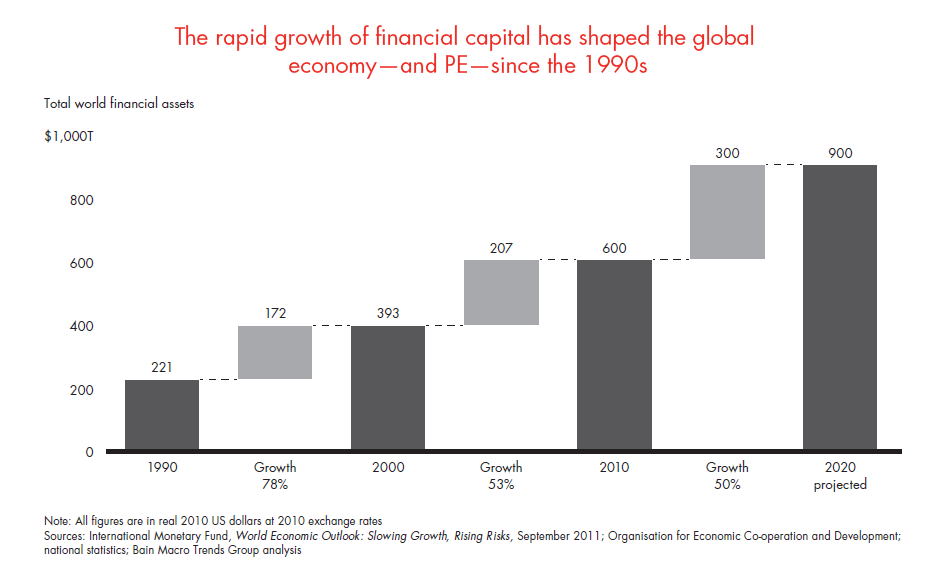
      Private equity’s (PE) impressive rebound from the downturn subsequent to the 2008 global financial crisis—along with the factors that created the buyout boom and brought PE to the precipice in the first place—has been a manifestation of the enormous expansion of financial assets that have been building up in the global economy for more than 25 years. As we explain in Bain & Company’s Global Private Equity Report, this capital superabundance is the product of financial engineering, high-speed computing and a loosening of financial services regulations. The resulting growth of financial assets has been prodigious and relentless: Global financial capital increased 53% from 2000 to 2010, reaching some $600 trillion, and Bain’s Macro Trends Group projects that it will swell by half again, to approximately $900 trillion by year-end 2020 (see figure).

      forbes-pe-report-2015-fig-02-01_embed

      Capital superabundance played a lead role in PE firms’ ability to mobilize large pools of capital, fueling the buyout boom years between 2005 and 2007. As it approached a cyclical peak, global buyout deal value spiked from $293 billion in 2005 to $687 billion and $673 billion in 2006 and 2007, respectively. PE buyers were willing to pay high prices to win intensely competitive auctions, as average deal multiples climbed to 9.7 times EBITDA on US and European leveraged buyouts in 2007. Lots of readily available debt capital helped pay for the takeovers. But instead of being set up for the success they worked so hard and paid so dearly to pursue, PE funds quickly discovered they were poised for disaster when they were blindsided by the 2008 financial crash.

      How capital superabundance helped rescue PE following the downturn. As they surveyed the wreckage of the global market meltdown and took stock of what lay ahead, PE investors found little cause for optimism. A trio of formidable challenges loomed: massive asset write-downs mandated by mark-to-market accounting regulations, seemingly impassable roadblocks at every exit channel and a towering wall of portfolio company debt refinancings needed to avoid defaults.

      In the end, none of these challenges led to the industry’s downfall, thanks to the heretofore underappreciated role of capital superabundance. Central bank programs unleashed a flood of liquidity that quickly brought rates on high-yield bonds and leveraged loans back to prerecession levels. By July 2009, average rates on leveraged loans fell nearly 12 percentage points to 8.4% and rates on high-yield bonds fell by nearly half to 11.5% from their peaks just seven months before. With debt investors desperately scouring for yield wherever they could find it, rates on leveraged loans and high-yield bonds issued by PE borrowers kept falling—to just 5.4% and 6.8%, respectively, by the end of 2014.

      The benign interest-rate environment worked wonders in razing the wall of refinancings that PE borrowers faced. As business conditions began to stabilize by mid-2009 and creditors regained confidence that the threat of widespread portfolio company defaults was retreating, creditors’ hunger for yields outstripped their worries of default risk. By 2012, borrowers had managed to level the wall of refinancing down to a small fraction of its original size.

      Capital superabundance also quickly helped revive the valuations of PE funds’ portfolio holdings by lifting public equity prices. As buyout-fund general partners (GPs) revalued their portfolios to reflect stock market gains, net asset valuations climbed nearly every quarter since the financial crisis hit with the brief exception of the third quarter of 2011, when Europe’s sovereign debt crisis ignited fears that the eurozone would slide back into recession. With rising valuations powered by broad market beta, worries of massive PE defaults soon subsided. Examining 337 companies owned by the 14 largest PE sponsors, Moody’s, the credit-rating agency, discovered that the annualized 6% default rate between 2008 and 2013 of the PE-backed companies in the sample was a shade lower than that of similarly rated companies that were not in PE hands.

      The period following the downturn had its share of notable multibillion-dollar PE defaults. However, such failures as there were had little to do with the size of the portfolio company or how much leverage the buyout-fund GPs used to finance it. The chief reason for many of the PE defaults associated with the financial crisis was the fact that the companies that stumbled were not well positioned for success from the start. The downturn did not cause these deals to fail; it merely hastened their downfall.

      The experience of the past several years confirms patterns about deal success and failure that Bain & Company has seen developing during the more than two decades we have co-invested alongside clients in deals. Combing through the extensive set of deals with which Bain is intimately familiar, we have identified a set of winning factors that correlate with deal success. Winning factors include characteristics such as a high market growth rate for the relevant sector in which a target company competes and opportunities to expand into an obvious product or geographic adjacency. Bain has found few deals that achieved unambiguous success in the absence of at least one winning factor—and the more of these factors there are, the more potential ways for a deal to win. Bain has also documented several “warning beacons” that are highly likely to undermine a deal’s success, even if only one is present. One such indicator of trouble is to underestimate the impact of competitive challenges that disrupt a target company’s business model.

      Ultimately, buyouts from the boom years preceding the market crash fell into three distinct groups. The obvious winners were deals that had one or more winning factors and no warning beacons; barring unforeseen shocks, these investments were highly likely to be successful from the outset. Clear losers lacked winning factors and had at least one glaring warning beacon; they were unlikely to succeed, irrespective of business-cycle or financial market conditions. The third category of deals had characteristics that made them neither especially good nor particularly bad, and this group benefited most from the helpful effects of capital superabundance. Bought for high prices at the cyclical peak, these companies could easily have tipped into losing territory had it not been for the surge of market beta that ultimately bailed them out.

      PE funds husbanded their buyout assets through the downturn and rode a wave of market beta to successful exits that, while taking longer than the three- to five-year holding periods envisioned at their time of purchase, were unanticipated just a few bleak years before. As public markets recovered, the door for IPOs reopened and the confidence of strategic corporate buyers rebounded. The overhang of exits from boom-year holdings gradually began to recede. By the middle of 2014, PE funds had at least partially realized gains from the vast majority of buyouts they had made during the boom years.

      Written by Hugh MacArthur, Graham Elton, Bill Halloran and Suvir Varma, leaders of Bain & Company’s Private Equity Group.


      forbes-pe-report-2015-fig-02-01_full
      著者
      • Headshot of Hugh MacArthur
        Hugh MacArthur
        パートナー, Boston
      • Headshot of Graham Elton
        Graham Elton
        Chairman, EMEA Private Equity, London
      • Headshot of Bill Halloran
        Bill Halloran
        Advisory Partner, San Francisco
      • Headshot of Suvir Varma
        Suvir Varma
        Advisory Partner, Singapore
      関連業種
      • プライベートエクイティ
      プライベートエクイティ
      Bain & Company's Global Private Equity Report 2015

      Five building blocks can help private equity firms create value across their portfolio holdings.

      詳細
      ヘルスケア
      Global Healthcare Private Equity Report 2015

      Healthcare continues to be an attractive but challenging area for private equity investment.

      詳細
      プライベートエクイティ
      Dry Powder: Live from NEXUS 2026

      Jennifer Choi, CEO of ILPA, joins us for a wide-ranging conversation on the current mood among LPs, the mainstreaming of continuation vehicles, and the accelerating race to retail capital.

      詳細
      プライベートエクイティ
      Bain & Company’s Global Private Equity Report 2026: Executive Summary

      A glance at the top-line numbers would suggest the industry is gaining traction, but is it?

      詳細
      プライベートエクイティ
      Welcome to a New Era in Private Equity

      If you’re waiting for everything to get back to “normal,” don’t hold your breath.

      詳細
      First published in 4月 2015
      Tags
      • プライベートエクイティ

      クライアント支援事例

      Smart Pricing Helped a Private Equity Firm Unlock More Value

      ケーススタディを見る

      Rapid Tech Due Diligence Helped a Private Equity Firm Invest with Confidence

      ケーススタディを見る

      業績改善 Finding profit potential in a struggling private equity portfolio company

      ケーススタディを見る

      お気軽にご連絡下さい

      私達は、グローバルに活躍する経営者が抱える最重要経営課題に対して、厳しい競争環境の中でも成長し続け、「結果」を出すために支援しています。

      ベインの知見。競争が激化するグローバルビジネス環境で、日々直面するであろう問題について論じている知見を毎月お届けします。

      *プライバシーポリシーの内容を確認し、合意しました。

      プライバシーポリシーをご確認頂き、合意頂けますようお願い致します。
      Bain & Company
      お問い合わせ Sustainability Accessibility Terms of use Privacy Cookie Policy Sitemap Log In

      © 1996-2026 Bain & Company, Inc.

      お問い合わせ

      How can we help you?

      • ビジネスについて
      • プレス報道について
      • 採用について
      全てのオフィス