
Skip to Content
  • オフィス

    オフィス

    北米・南米
    • Atlanta
    • Austin
    • Bogota
    • Boston
    • Buenos Aires
    • Chicago
    • Dallas
    • Denver
    • Houston
    • Los Angeles
    • Mexico City
    • Minneapolis
    • Monterrey
    • Montreal
    • New York
    • Rio de Janeiro
    • San Francisco
    • Santiago
    • São Paulo
    • Seattle
    • Silicon Valley
    • Toronto
    • Washington, DC
    ヨーロッパ・中東・アフリカ
    • Amsterdam
    • Athens
    • Berlin
    • Brussels
    • Copenhagen
    • Doha
    • Dubai
    • Dusseldorf
    • Frankfurt
    • Helsinki
    • Istanbul
    • Johannesburg
    • Kyiv
    • Lisbon
    • London
    • Madrid
    • Milan
    • Munich
    • Oslo
    • Paris
    • Riyadh
    • Rome
    • Stockholm
    • Vienna
    • Warsaw
    • Zurich
    アジア・オーストラリア
    • Bangkok
    • Beijing
    • Bengaluru
    • Brisbane
    • Ho Chi Minh City
    • Hong Kong
    • Jakarta
    • Kuala Lumpur
    • Manila
    • Melbourne
    • Mumbai
    • New Delhi
    • Perth
    • Shanghai
    • Singapore
    • Sydney
    • Tokyo
    全てのオフィス
  • アルムナイ
  • メディア
  • お問い合わせ
  • 東京オフィス
  • Japan | 日本語

    地域と言語を選択

    グローバル
    • Global (English)
    北米・南米
    • Brazil (Português)
    • Argentina (Español)
    • Canada (Français)
    • Chile (Español)
    • Colombia (Español)
    ヨーロッパ・中東・アフリカ
    • France (Français)
    • DACH Region (Deutsch)
    • Italy (Italiano)
    • Spain (Español)
    • Greece (Elliniká)
    アジア・オーストラリア
    • China (中文版)
    • Korea (한국어)
    • Japan (日本語)
  • Saved items (0)
    Saved items (0)

    You have no saved items.

    後で閲読、共有できるようにするためにブックマークしてください

    Explore Bain Insights
  • 業界別プラクティス
    メインメニュー

    業界別プラクティス

    • 航空宇宙、防衛、政府関連
    • 農業
    • 化学製品
    • インフラ、建設
    • 消費財
    • 金融サービス
    • ヘルスケア
    • 産業機械、設備
    • メディア、エンターテインメント
    • 金属
    • 採掘・鉱業
    • 石油、ガス
    • 紙、パッケージ
    • プライベートエクイティ
    • 公共、社会セクター
    • 小売
    • テクノロジー
    • 通信
    • 交通
    • 観光産業
    • 公益事業、再生可能エネルギー
  • 機能別プラクティス
    メインメニュー

    機能別プラクティス

    • カスタマー・エクスペリエンス
    • サステイナビリティ、 社会貢献
    • Innovation
    • 企業買収、合併 (M&A)
    • オペレーション
    • 組織
    • プライベートエクイティ
    • マーケティング・営業
    • 戦略
    • アドバンスド・アナリティクス
    • Technology
    • フルポテンシャル・トランスフォーメーション
  • Digital
  • 知見/レポート
  • ベイン・アンド・カンパニーについて
    メインメニュー

    ベイン・アンド・カンパニーについて

    • ベインの信条
    • 活動内容
    • 社員とリーダーシップ
    • プレス・メディア情報
    • クライアントの結果
    • 受賞歴
    • パートナーシップを結んでいる団体
    Further: Our global responsibility
    • ダイバーシティ
    • 社会貢献
    • サステイナビリティへの取り組み
    • 世界経済フォーラム(WEF)
    Learn more about Further
  • キャリア
    メインメニュー

    キャリア

    • ベインで働く
      キャリア
      ベインで働く
      • Find Your Place
      • ベインで活躍する機会
      • ベインのチーム体制
      • 学生向けページ
      • インターンシップ
      • 採用イベント
    • ベインでの体験
      キャリア
      ベインでの体験
      • Blog: Inside Bain
      • キャリアストーリー
      • 社員紹介
      • Where We Work
      • 成長を後押しするサポート体制
      • アフィニティ・グループ
      • 福利厚生
    • Impact Stories
    • 採用情報
      キャリア
      採用情報
      • 採用プロセス
      • 面接内容
    FIND JOBS
  • オフィス
    メインメニュー

    オフィス

    • 北米・南米
      オフィス
      北米・南米
      • Atlanta
      • Austin
      • Bogota
      • Boston
      • Buenos Aires
      • Chicago
      • Dallas
      • Denver
      • Houston
      • Los Angeles
      • Mexico City
      • Minneapolis
      • Monterrey
      • Montreal
      • New York
      • Rio de Janeiro
      • San Francisco
      • Santiago
      • São Paulo
      • Seattle
      • Silicon Valley
      • Toronto
      • Washington, DC
    • ヨーロッパ・中東・アフリカ
      オフィス
      ヨーロッパ・中東・アフリカ
      • Amsterdam
      • Athens
      • Berlin
      • Brussels
      • Copenhagen
      • Doha
      • Dubai
      • Dusseldorf
      • Frankfurt
      • Helsinki
      • Istanbul
      • Johannesburg
      • Kyiv
      • Lisbon
      • London
      • Madrid
      • Milan
      • Munich
      • Oslo
      • Paris
      • Riyadh
      • Rome
      • Stockholm
      • Vienna
      • Warsaw
      • Zurich
    • アジア・オーストラリア
      オフィス
      アジア・オーストラリア
      • Bangkok
      • Beijing
      • Bengaluru
      • Brisbane
      • Ho Chi Minh City
      • Hong Kong
      • Jakarta
      • Kuala Lumpur
      • Manila
      • Melbourne
      • Mumbai
      • New Delhi
      • Perth
      • Shanghai
      • Singapore
      • Sydney
      • Tokyo
    全てのオフィス
  • アルムナイ
  • メディア
  • お問い合わせ
  • 東京オフィス
  • Japan | 日本語
    メインメニュー

    地域と言語を選択

    • グローバル
      地域と言語を選択
      グローバル
      • Global (English)
    • 北米・南米
      地域と言語を選択
      北米・南米
      • Brazil (Português)
      • Argentina (Español)
      • Canada (Français)
      • Chile (Español)
      • Colombia (Español)
    • ヨーロッパ・中東・アフリカ
      地域と言語を選択
      ヨーロッパ・中東・アフリカ
      • France (Français)
      • DACH Region (Deutsch)
      • Italy (Italiano)
      • Spain (Español)
      • Greece (Elliniká)
    • アジア・オーストラリア
      地域と言語を選択
      アジア・オーストラリア
      • China (中文版)
      • Korea (한국어)
      • Japan (日本語)
  • Saved items  (0)
    メインメニュー
    Saved items (0)

    You have no saved items.

    後で閲読、共有できるようにするためにブックマークしてください

    Explore Bain Insights
  • 業界別プラクティス
    • 業界別プラクティス

      • 航空宇宙、防衛、政府関連
      • 農業
      • 化学製品
      • インフラ、建設
      • 消費財
      • 金融サービス
      • ヘルスケア
      • 産業機械、設備
      • メディア、エンターテインメント
      • 金属
      • 採掘・鉱業
      • 石油、ガス
      • 紙、パッケージ
      • プライベートエクイティ
      • 公共、社会セクター
      • 小売
      • テクノロジー
      • 通信
      • 交通
      • 観光産業
      • 公益事業、再生可能エネルギー
  • 機能別プラクティス
    • 機能別プラクティス

      • カスタマー・エクスペリエンス
      • サステイナビリティ、 社会貢献
      • Innovation
      • 企業買収、合併 (M&A)
      • オペレーション
      • 組織
      • プライベートエクイティ
      • マーケティング・営業
      • 戦略
      • アドバンスド・アナリティクス
      • Technology
      • フルポテンシャル・トランスフォーメーション
  • Digital
  • 知見/レポート
  • ベイン・アンド・カンパニーについて
    • ベイン・アンド・カンパニーについて

      • ベインの信条
      • 活動内容
      • 社員とリーダーシップ
      • プレス・メディア情報
      • クライアントの結果
      • 受賞歴
      • パートナーシップを結んでいる団体
      Further: Our global responsibility
      • ダイバーシティ
      • 社会貢献
      • サステイナビリティへの取り組み
      • 世界経済フォーラム(WEF)
      Learn more about Further
  • キャリア
    人気検索キーワード
    • デジタル
    • 戦略
    前回の検索
      最近訪れたページ

      Content added to saved items

      Saved items (0)

      Removed from saved items

      Saved items (0)

      M&A Report

      Diversified Industrials M&A: Shaping Portfolios via M&A

      Diversified Industrials M&A: Shaping Portfolios via M&A

      Dealmaking bounces back as industrial players continue to rebalance portfolios and pursue growth.

      著者:Clark Herndon, Magnus Könberg, Sachin Kotak, and John Sequeira

      • min read
      }

      レポート

      Diversified Industrials M&A: Shaping Portfolios via M&A
      en
      At a Glance
      • M&A reached a new high in 2021 as industrial companies used portfolio management to balance leadership in their core with aggressive growth in new markets.
      • While two-thirds of the deals involved a shift back to scale M&A, industrial companies went after scope deals that will help them expand into a new business or geography, or develop a needed capability.
      • The year 2021, similar to most of the past five years, saw a higher divestiture volume in diversified industrials than other sectors as companies exited noncore or underperforming businesses.
      • Our survey of executives found that industrial dealmakers were far more likely than all other execs to rank a clear deal thesis and clear integration thesis as the most important aspects of successful scope deals.

      This article is part of Bain's 2022 M&A Report.

      Explore the report

      In 2021, strategic dealmaking among industrials reached new heights as industrial companies accelerated portfolio reshaping in the face of evolving industry dynamics. Deal value was up 50% year over year, and appetite remains for more, with two-thirds of industrial executives anticipating that deal volume will grow in 2022, according to a recent Bain survey (see Figure 1).

      Figure 1
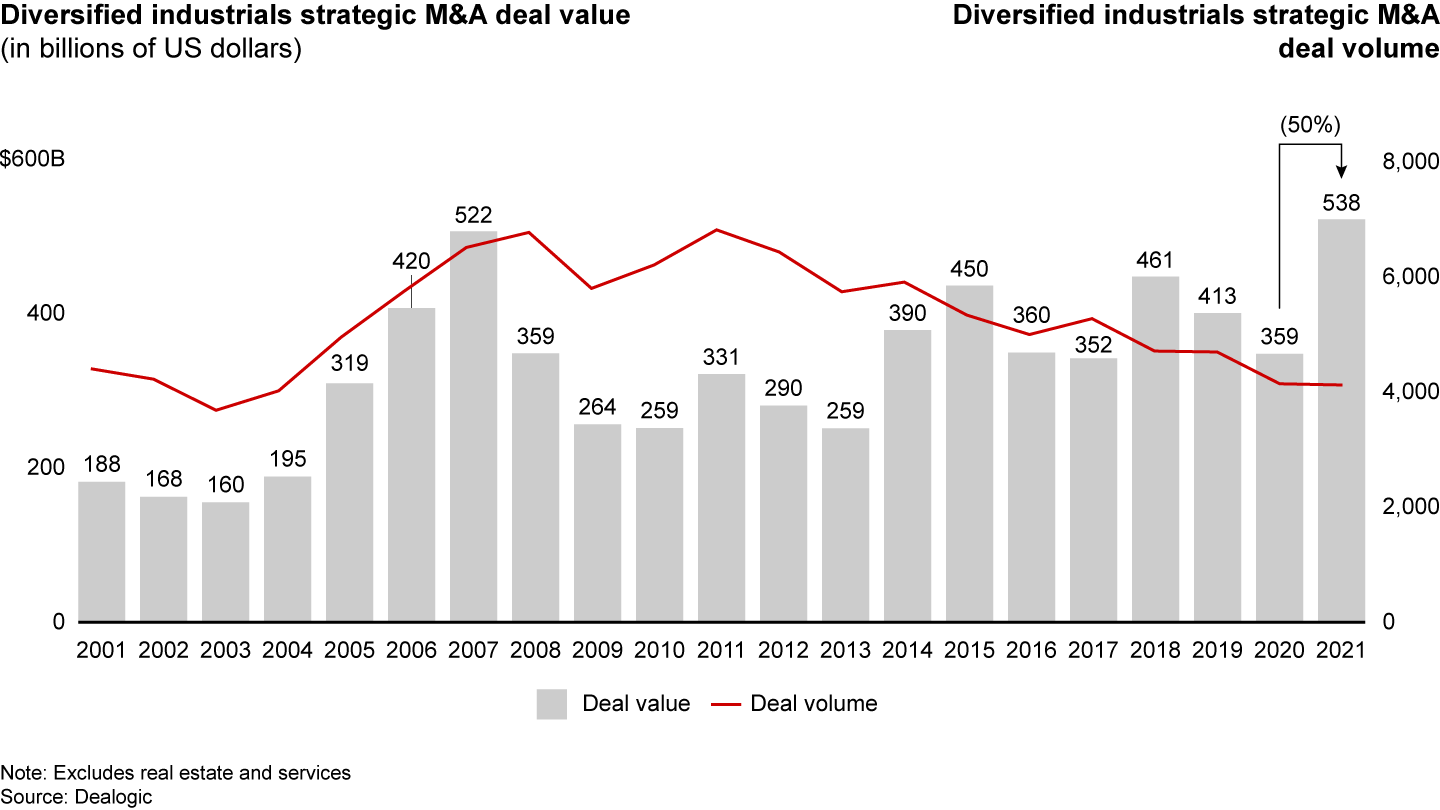
      After a period of stagnant deal value, 2021 deal activity exceeded recent history for strategic M&A in diversified industrials
      After a period of stagnant deal value, 2021 deal activity exceeded recent history for strategic M&A in diversified industrials
      After a period of stagnant deal value, 2021 deal activity exceeded recent history for strategic M&A in diversified industrials

      Market fundamentals suggest why industrial M&A is so active. In many sectors, the underlying market growth is low (GDP-plus), but leading companies have higher growth aspirations. Many market leaders have done a good job in past years to build No. 1 and No. 2 positions in their core, and further share gain is increasingly difficult. M&A provides access to higher-growth, more attractive, and strategically important markets.

      Balancing the pursuit of leadership in the core against growth in adjacent markets amplifies the need for industrial companies to maintain a robust and evergreen portfolio strategy.

      Dynamic portfolio reshaping is reflected in the balance between scale and scope deals. Since the pandemic, large deal activity among industrial companies has shifted back to scale, as seen in deals such as bearing manufacturer RBC’s acquisition of Dodge from ABB, Goodyear’s acquisition of Cooper, and Cargotec’s announced merger with Konecranes. Scope and capability deals continued at a good pace as well, accounting for more than one in three large deals. For example, Uber expanded its freight offering with the purchase of Transplace and its shipper technology. Holcim Group (formerly LafargeHolcim) bolstered its energy-efficient buildings business by buying Firestone Building Products and its sustainable roof offerings early in 2021, announcing a second deal in the same roofing segment in late December with the acquisition of Malarkey.

      Since the pandemic, large deal activity among industrial companies has shifted back to scale.

      Industrial players leaned in to acquire critical new capabilities around software, the Internet of Things (IoT), artificial intelligence, and connectivity at high valuations. Rockwell Automation’s acquisition of Plex Systems, a cloud-based manufacturing solution, and Siemens’ acquisition of IoT start-up Wattsense both point to the ongoing industrial digitization journey common in this sector. Notably, targets with attractive capabilities are highly valued tech assets that trade, on average, at 25 times EBITDA vs. 13 times for targets in the industrial core (and acquirers’ own valuation). Hitachi’s acquisition of digital engineering and design firm GlobalLogic at $9.6 billion implies an EBITDA multiple of more than 37 times. In light of these multiples, many companies are taking a portfolio approach to developing these capabilities through corporate venture capital, joint ventures, and partnerships.

      Active portfolio management is also evident in the high rate of divestitures among industrial companies. Successful companies act as decisively to exit noncore or underperforming businesses as they do to invest behind their growth strategies. The year 2021, similar to most of the past five years, saw a higher divestiture volume in diversified industrials than other sectors; recent divestitures from large industrial leaders, such as Siemens (Flender), ABB (Dodge mechanical power), ThyssenKrupp (mining technologies), and Hitachi (metals), are more representative of the trend than some may realize. These divestitures are often used to fuel deals in more attractive segments.

      Successful companies act as decisively to exit noncore or underperforming businesses as they do to invest behind their growth strategies.

      Evolving the industrial M&A playbook for scope and capability deals

      Successful industrial companies have adapted and changed how they approach M&A to make scope and capability deals as successful as scale deals. In a recent Bain survey of executives, industrial dealmakers were far more likely than all other execs to rank a clear deal thesis and clear integration thesis as the most important aspects of successful scope deals (see Figure 2).

      Figure 2
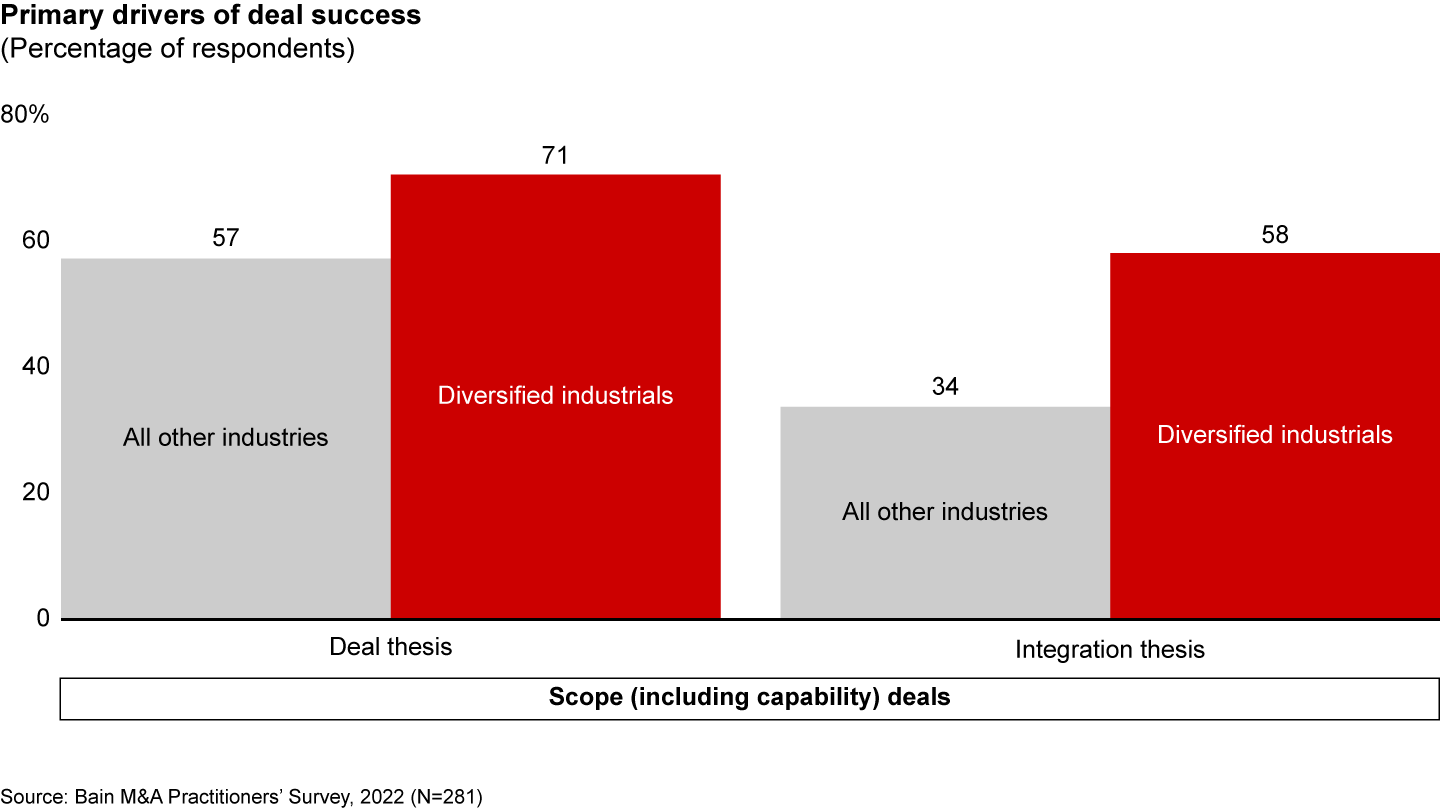
      Industrial executives cite clear deal and integration theses as the most important aspects of successful scope M&A
      Industrial executives cite clear deal and integration theses as the most important aspects of successful scope M&A
      Industrial executives cite clear deal and integration theses as the most important aspects of successful scope M&A

      Many industrials with a successful M&A track record excel at integrating scale acquisitions and driving cost synergies. What these executives recognize, however, is that scope and capability deals present a new set of challenges. Acquirers lack intuitive knowledge on the rules of the game or on key players in these new markets and industry segments. Valuations are higher, and the value creation logic is different. Rather than cost reduction, scope deals’ success often comes down to revenue synergies through integrated offerings and cross-selling of emergent capabilities and products or services. The integration approach must reflect these unique sources of value and risk that comes from acquiring an adjacent business.

      With this in mind, we observe three key adjustments that scale-oriented industrial firms must make for successful scope and capability dealmaking.

      First, proactively link corporate strategy and the M&A roadmap. Firmly establishing strategic rationale and fully aligning the organization top to bottom ahead of a potential scope or capability deal is key. Scale-oriented industrial buyers typically set up a centralized governance model to ensure a strong link between M&A and corporate strategy. Yet the decision clock speed of many industrials becomes a blocker if strategic intent is reevaluated in a short diligence phase. Conviction will be tested in an environment of high valuations and rapid deal processes, and leaders must adapt their diligence processes (including board approval, for example) to make decisions quickly in less traditional and more competitive markets.

      Rather than cost reduction, scope deals’ success often comes down to revenue synergies through integrated offerings and cross-selling of emergent capabilities and products or services.

      Second, update the diligence playbook for scope deals—build on all the traditional best practices, but increase emphasis on what matters for scope and capability. Rigor must be added to revenue synergies diligence to assess customer willingness to pay for new, not-yet-available, innovative offerings—or to validate cross-selling potential (see “Bringing Science to the Art of Revenue Synergies”). Leaders also recognize that as deals move further afield, internal market and industry expertise will be insufficient, and they build an ecosystem of partners and advisers to support with capabilities and expertise not available in-house.

      Third, tailor the integration thesis for each deal. Understand the ambition for how the integration will protect and develop the acquired business while enhancing the existing one. A scope deal predicated on combining product portfolios requires a different focus and roadmap than a capability deal for an innovative technology to embed in existing products. Aligning management teams may require more attention (and intention) to preserve the unique capability of the target company. Leading companies adopt key elements from the value creation plan concept, common within private equity, to set up a merger integration program that accelerates value capture. This often leads to targeted integration and even retaining the acquired company as a separate entity while also defining the critical few areas of collaboration that are crucial for the deal thesis and value creation plan. Successful companies must shift to a mentality of integration by exception rather than by default.

      Read more

      Automotive and Mobility M&A

      Manufacturers and suppliers are racing to secure leadership positions in an industry in which high-tech and software capabilities are critical for success.

      One industrial company adapted its M&A approach when acquiring an attractive but premium-priced asset that offered a foothold in a desirable new line of business. The acquirer had a successful track record of integrating small to medium targets in its core business. When a refresh of corporate strategy called for adjacent moves, however, leadership recognized that a new M&A playbook was needed. During diligence, they used extensive customer research to evaluate both the target’s standalone growth and how technology capabilities could enhance the acquirer’s core products, building comfort that the deal would lead to both share gains and margin improvements. Convinced of the full potential, the company had the confidence to make the winning bid. Then, after closing the deal, they applied a limited integration model that emphasized product development collaboration for the integrated offering while leaving the acquired entity to operate on a standalone basis beyond those critical few areas. As a result, the acquired company continued its rapid growth trajectory while in parallel delivering on the rapid development and time-to-market benefits of the joint offerings that constituted the majority of the synergy case.

      Outlook

      Looking ahead, we do not expect the momentum to slow for M&A activity within the industrial sector, and we believe that trends toward aggressive scale theses and scope and capability deals will persist. High valuations are making the deal market more challenging, and some companies will decide to sit on the sidelines. Those that want to grow must take a more proactive stance, and this will accentuate the need for robust end-to-end management of the M&A value chain. Deals require a clear strategic rationale, well-defined deal and integration theses, modern diligence across cost and revenue synergies, and stringent planning, realization, and follow-through of value creation post-close. In the chapters that follow, we observe many of these trends in the automotive and aerospace and defense subsectors.

      Read the Next Chapter

      Automotive and Mobility M&A: How Companies Tune Up Their M&A Engines

      Read our 2022 M&A Report

      Download the PDF Explore the report
      著者
      • Headshot of Clark Herndon
        Clark Herndon
        パートナー, Washington, DC
      • Headshot of Magnus Könberg
        Magnus Könberg
        パートナー, Stockholm
      • Headshot of Sachin Kotak
        Sachin Kotak
        パートナー, New Delhi
      • Headshot of John Sequeira
        John Sequeira
        パートナー, Toronto
      関連業種
      • Metals
      • インフラ、建設、建築
      • 産業機械
      • 産業財、サービス
      • 林産品(林業)、紙、パッケージ
      関連するコンサルティングサービス
      • 企業買収、合併(M&A)
      航空宇宙、防衛、政府関連
      Aerospace and Defense M&A

      As the industry resets growth expectations amid an uncertain future, many are turning to dealmaking.

      詳細
      自動車
      Automotive and Mobility M&A

      Manufacturers and suppliers are racing to secure leadership positions in an industry in which high-tech and software capabilities are critical for success.

      詳細
      M&A Report
      Diversified Industrials M&A

      Diversified industrials are adapting their M&A playbooks to take on more deals that advance environmental and social agendas.

      詳細
      M&A Report
      Defense M&A

      Bold moves will determine the winners as a continent rearms.

      詳細
      産業財、サービス
      How Sustainability Is Creating B2B Growth

      Our survey of B2B buyers and sellers finds growth leaders using sustainability to create commercial value while laggards focus on compliance.

      詳細

      Overview

      • Letter from the M&A Team: Beneath the M&A Headlines

      • State of the M&A Market

      • Bain’s Bedrock Beliefs on How to Create Value from M&A

      Hot Topics

      • Reimagining Talent in M&A

      • Bringing Science to the Art of Revenue Synergies

      • The ESG Imperative in M&A

      • Delivering Results in Joint Ventures and Alliances Requires a New Playbook

      • Harnessing the True Value of Corporate Venture Capital

      Industry Views

      • Aerospace and Defense M&A

      • Asset Management M&A

      • Automotive and Mobility M&A

      • Banking M&A

      • Consumer Products M&A

      • Diversified Industrials M&A

      • Energy and Natural Resources M&A

      • Healthcare M&A

      • Insurance M&A

      • Media M&A

      • Payments M&A

      • Retail M&A

      • Technology M&A

      • Telecommunications M&A

      • Wealth Management M&A

      Regional Perspectives

      • Brazil M&A

      • China M&A

      • India M&A

      • Japan M&A

      First published in 2月 2022
      Tags
      • M&A Report
      • Metals
      • インフラ、建設、建築
      • 企業買収、合併(M&A)
      • 産業機械
      • 産業財、サービス
      • 林産品(林業)、紙、パッケージ

      クライアント支援事例

      戦略 A Steel Company Seeks to Regain Market Leadership

      ケーススタディを見る

      Supply Chain Security Mitigates a Sovereign Wealth Fund’s Construction Disruptions

      ケーススタディを見る

      Digital Tata Steel Helps Home Builders Break New Ground

      ケーススタディを見る

      お気軽にご連絡下さい

      私達は、グローバルに活躍する経営者が抱える最重要経営課題に対して、厳しい競争環境の中でも成長し続け、「結果」を出すために支援しています。

      ベインの知見。競争が激化するグローバルビジネス環境で、日々直面するであろう問題について論じている知見を毎月お届けします。

      *プライバシーポリシーの内容を確認し、合意しました。

      プライバシーポリシーをご確認頂き、合意頂けますようお願い致します。
      Bain & Company
      お問い合わせ Sustainability Accessibility Terms of use Privacy Cookie Policy Sitemap Log In

      © 1996-2026 Bain & Company, Inc.

      お問い合わせ

      How can we help you?

      • ビジネスについて
      • プレス報道について
      • 採用について
      全てのオフィス