
Skip to Content
  • オフィス

    オフィス

    北米・南米
    • Atlanta
    • Austin
    • Bogota
    • Boston
    • Buenos Aires
    • Chicago
    • Dallas
    • Denver
    • Houston
    • Los Angeles
    • Mexico City
    • Minneapolis
    • Monterrey
    • Montreal
    • New York
    • Rio de Janeiro
    • San Francisco
    • Santiago
    • São Paulo
    • Seattle
    • Silicon Valley
    • Toronto
    • Washington, DC
    ヨーロッパ・中東・アフリカ
    • Amsterdam
    • Athens
    • Berlin
    • Brussels
    • Copenhagen
    • Doha
    • Dubai
    • Dusseldorf
    • Frankfurt
    • Helsinki
    • Istanbul
    • Johannesburg
    • Kyiv
    • Lisbon
    • London
    • Madrid
    • Milan
    • Munich
    • Oslo
    • Paris
    • Riyadh
    • Rome
    • Stockholm
    • Vienna
    • Warsaw
    • Zurich
    アジア・オーストラリア
    • Bangkok
    • Beijing
    • Bengaluru
    • Brisbane
    • Ho Chi Minh City
    • Hong Kong
    • Jakarta
    • Kuala Lumpur
    • Manila
    • Melbourne
    • Mumbai
    • New Delhi
    • Perth
    • Shanghai
    • Singapore
    • Sydney
    • Tokyo
    全てのオフィス
  • アルムナイ
  • メディア
  • お問い合わせ
  • 東京オフィス
  • Japan | 日本語

    地域と言語を選択

    グローバル
    • Global (English)
    北米・南米
    • Brazil (Português)
    • Argentina (Español)
    • Canada (Français)
    • Chile (Español)
    • Colombia (Español)
    ヨーロッパ・中東・アフリカ
    • France (Français)
    • DACH Region (Deutsch)
    • Italy (Italiano)
    • Spain (Español)
    • Greece (Elliniká)
    アジア・オーストラリア
    • China (中文版)
    • Korea (한국어)
    • Japan (日本語)
  • Saved items (0)
    Saved items (0)

    You have no saved items.

    後で閲読、共有できるようにするためにブックマークしてください

    Explore Bain Insights
  • 業界別プラクティス
    メインメニュー

    業界別プラクティス

    • 航空宇宙、防衛、政府関連
    • 農業
    • 化学製品
    • インフラ、建設
    • 消費財
    • 金融サービス
    • ヘルスケア
    • 産業機械、設備
    • メディア、エンターテインメント
    • 金属
    • 採掘・鉱業
    • 石油、ガス
    • 紙、パッケージ
    • プライベートエクイティ
    • 公共、社会セクター
    • 小売
    • テクノロジー
    • 通信
    • 交通
    • 観光産業
    • 公益事業、再生可能エネルギー
  • 機能別プラクティス
    メインメニュー

    機能別プラクティス

    • カスタマー・エクスペリエンス
    • サステイナビリティ、 社会貢献
    • Innovation
    • 企業買収、合併 (M&A)
    • オペレーション
    • 組織
    • プライベートエクイティ
    • マーケティング・営業
    • 戦略
    • アドバンスド・アナリティクス
    • Technology
    • フルポテンシャル・トランスフォーメーション
  • Digital
  • 知見/レポート
  • ベイン・アンド・カンパニーについて
    メインメニュー

    ベイン・アンド・カンパニーについて

    • ベインの信条
    • 活動内容
    • 社員とリーダーシップ
    • プレス・メディア情報
    • クライアントの結果
    • 受賞歴
    • パートナーシップを結んでいる団体
    Further: Our global responsibility
    • ダイバーシティ
    • 社会貢献
    • サステイナビリティへの取り組み
    • 世界経済フォーラム(WEF)
    Learn more about Further
  • キャリア
    メインメニュー

    キャリア

    • ベインで働く
      キャリア
      ベインで働く
      • Find Your Place
      • ベインで活躍する機会
      • ベインのチーム体制
      • 学生向けページ
      • インターンシップ
      • 採用イベント
    • ベインでの体験
      キャリア
      ベインでの体験
      • Blog: Inside Bain
      • キャリアストーリー
      • 社員紹介
      • Where We Work
      • 成長を後押しするサポート体制
      • アフィニティ・グループ
      • 福利厚生
    • Impact Stories
    • 採用情報
      キャリア
      採用情報
      • 採用プロセス
      • 面接内容
    FIND JOBS
  • オフィス
    メインメニュー

    オフィス

    • 北米・南米
      オフィス
      北米・南米
      • Atlanta
      • Austin
      • Bogota
      • Boston
      • Buenos Aires
      • Chicago
      • Dallas
      • Denver
      • Houston
      • Los Angeles
      • Mexico City
      • Minneapolis
      • Monterrey
      • Montreal
      • New York
      • Rio de Janeiro
      • San Francisco
      • Santiago
      • São Paulo
      • Seattle
      • Silicon Valley
      • Toronto
      • Washington, DC
    • ヨーロッパ・中東・アフリカ
      オフィス
      ヨーロッパ・中東・アフリカ
      • Amsterdam
      • Athens
      • Berlin
      • Brussels
      • Copenhagen
      • Doha
      • Dubai
      • Dusseldorf
      • Frankfurt
      • Helsinki
      • Istanbul
      • Johannesburg
      • Kyiv
      • Lisbon
      • London
      • Madrid
      • Milan
      • Munich
      • Oslo
      • Paris
      • Riyadh
      • Rome
      • Stockholm
      • Vienna
      • Warsaw
      • Zurich
    • アジア・オーストラリア
      オフィス
      アジア・オーストラリア
      • Bangkok
      • Beijing
      • Bengaluru
      • Brisbane
      • Ho Chi Minh City
      • Hong Kong
      • Jakarta
      • Kuala Lumpur
      • Manila
      • Melbourne
      • Mumbai
      • New Delhi
      • Perth
      • Shanghai
      • Singapore
      • Sydney
      • Tokyo
    全てのオフィス
  • アルムナイ
  • メディア
  • お問い合わせ
  • 東京オフィス
  • Japan | 日本語
    メインメニュー

    地域と言語を選択

    • グローバル
      地域と言語を選択
      グローバル
      • Global (English)
    • 北米・南米
      地域と言語を選択
      北米・南米
      • Brazil (Português)
      • Argentina (Español)
      • Canada (Français)
      • Chile (Español)
      • Colombia (Español)
    • ヨーロッパ・中東・アフリカ
      地域と言語を選択
      ヨーロッパ・中東・アフリカ
      • France (Français)
      • DACH Region (Deutsch)
      • Italy (Italiano)
      • Spain (Español)
      • Greece (Elliniká)
    • アジア・オーストラリア
      地域と言語を選択
      アジア・オーストラリア
      • China (中文版)
      • Korea (한국어)
      • Japan (日本語)
  • Saved items  (0)
    メインメニュー
    Saved items (0)

    You have no saved items.

    後で閲読、共有できるようにするためにブックマークしてください

    Explore Bain Insights
  • 業界別プラクティス
    • 業界別プラクティス

      • 航空宇宙、防衛、政府関連
      • 農業
      • 化学製品
      • インフラ、建設
      • 消費財
      • 金融サービス
      • ヘルスケア
      • 産業機械、設備
      • メディア、エンターテインメント
      • 金属
      • 採掘・鉱業
      • 石油、ガス
      • 紙、パッケージ
      • プライベートエクイティ
      • 公共、社会セクター
      • 小売
      • テクノロジー
      • 通信
      • 交通
      • 観光産業
      • 公益事業、再生可能エネルギー
  • 機能別プラクティス
    • 機能別プラクティス

      • カスタマー・エクスペリエンス
      • サステイナビリティ、 社会貢献
      • Innovation
      • 企業買収、合併 (M&A)
      • オペレーション
      • 組織
      • プライベートエクイティ
      • マーケティング・営業
      • 戦略
      • アドバンスド・アナリティクス
      • Technology
      • フルポテンシャル・トランスフォーメーション
  • Digital
  • 知見/レポート
  • ベイン・アンド・カンパニーについて
    • ベイン・アンド・カンパニーについて

      • ベインの信条
      • 活動内容
      • 社員とリーダーシップ
      • プレス・メディア情報
      • クライアントの結果
      • 受賞歴
      • パートナーシップを結んでいる団体
      Further: Our global responsibility
      • ダイバーシティ
      • 社会貢献
      • サステイナビリティへの取り組み
      • 世界経済フォーラム(WEF)
      Learn more about Further
  • キャリア
    人気検索キーワード
    • デジタル
    • 戦略
    前回の検索
      最近訪れたページ

      Content added to saved items

      Saved items (0)

      Removed from saved items

      Saved items (0)

      M&A Report

      The ESG Imperative in M&A

      The ESG Imperative in M&A

      Acquirers need to assess target companies for hidden risks and for ways to advance their environmental, social, and corporate governance agendas.

      著者:Jean-Charles van den Branden, Axel Seemann, and Marc Lino

      • min read
      }

      レポート

      The ESG Imperative in M&A
      en
      At a Glance
      • In our survey of M&A executives, only 11% say they extensively assess environmental, social, and corporate governance (ESG) in the deal-making process on a regular basis today, but 65% expect their company’s focus on ESG to increase.
      • Some companies are ahead on this curve. By incorporating ESG into their M&A process, they have set themselves up with an advantage in pursuing value creation opportunities and a head start in meeting their ESG imperatives.
      • By making sustainability a part of each deal thesis and using corporate priorities as a benchmark to assess each potential deal, the best companies find assets that will advance existing ESG initiatives and create economic value.

      This article is part of Bain's 2022 M&A Report.

      Explore the report

      Environmental, social, and corporate governance (ESG) is rapidly becoming front of mind for regulators, investors, customers, and employees—and it is rising to the top of corporate agendas as well. As ESG gains in importance, it is becoming a mark of business quality. Many now view a well-devised corporate ESG strategy as a positive indicator for long-term revenue growth.

      In our recent global survey of 281 M&A executives, 65% expect their own company’s focus on ESG to increase over the next three years. This view extends to M&A. More than half of surveyed respondents either see ESG leadership as justifying higher deal valuations or expect this to be the case in the future, indicating a need for buyers to appropriately assess and value their targets’ ESG performance.

      But are corporate buyers accounting for ESG in their M&A process today?

      Not yet, according to our survey. Only 11% of respondents say they extensively assess ESG during the deal-making process on a regular basis. In fact, out of 10 elements of the corporate M&A process, ESG was the least-emphasized dimension. Many are struggling to determine how to embed the process of assessing the ESG implications of an acquisition into their M&A strategy.

      Some companies are ahead on this curve. By incorporating ESG into their M&A process, they have set themselves up with an advantage in pursuing value creation opportunities and a head start in meeting their ESG imperatives.

      For example, when an industrial company recognized as a sustainability leader in its industry pursued a provider of infrastructure technology, energy implications were a major consideration. The sustainability edge is an important differentiator for the industrial company’s real estate customers, who own assets ranging from commercial buildings to data centers. Increasingly, those customers were demanding more environmental solutions, both to manage energy costs and to meet ESG commitments of their own. The infrastructure technology company proved to be an attractive target. It provided products for an energy-intensive and growing business segment, and it had the added differentiation of being as effective as alternatives but significantly more sustainable. This type of investment is central to the industrial company’s strategy, which emphasizes offering greener solutions that are good for the environment, good for its customers, and good for business.

      Similarly, a European food producer known for its healthy and environmentally friendly products used the diligence process to understand a potential North American acquisition target’s performance on a range of ESG factors. The diligence determined that the target, an ingredient company, had a positive environmental profile that surpassed competitors and strong positioning on consumer health that could benefit the acquirer. But the same research also unearthed risks in the target’s diversity, equity, and inclusion (DEI) profile. The diligence enabled the acquirer to clearly see how the ingredient company’s strengths in sustainable packaging, in particular, could be used to appeal to its own customers and emphasized this in the value creation plan; it also revealed the specific actions that the acquirer needed to take to begin addressing the target’s DEI issues on day one.

      By beginning to unlock ESG as an M&A priority and a factor in delivering deal value, these companies move ahead of the majority of companies that have yet to evolve their M&A models to account for the growing sophistication of ESG. They’ve discovered that the traditional check-the-box approach to sustainability issues falls short. When assessing targets, they dig deeper on issues ranging from greenhouse gas emissions to DEI, and from business ethics to supply chains.

      The traditional check-the-box approach to sustainability issues falls short.

      Linking corporate ESG strategy to M&A

      Success in this arena begins by linking overarching corporate ESG strategy to M&A strategy. It means making sustainability a part of each deal thesis. It means using corporate priorities as a benchmark to assess each potential deal and find assets that will advance existing ESG initiatives as well as create economic value.

      This value can come from multiple sources. For instance, in the consumer products industry, 68% of our surveyed executives see ESG’s value in helping them gain share by improving their brand image to appeal to changing consumer preferences. Leaders in the energy sector, meanwhile, more commonly cite ESG initiatives for helping them meet requirements or expectations of investors and financiers to lower the cost of capital. Across industries, ESG measures can also add value by helping manage costs (e.g., waste reduction) or by helping attract and retain top talent—a particularly critical goal in today’s competitive talent environment.

      Sixty-eight percent of our surveyed consumer products executives see ESG’s value in helping them gain share by improving their brand image.

      Of course, not every asset will advance an underlying ESG goal, and other business rationales will often justify pursuing a given asset, regardless of the ESG footprint. Even in such situations, performing diligence on a target’s ESG record is critical to underwriting the deal. There may be real financial costs that the buyer will incur to integrate and advance the target’s ESG capabilities up to the acquirer’s standards, for example.

      Infographic

      Five Big Things to Know about M&A in 2022

      Retaining talent, capturing revenue synergies, boosting ESG, and making the most of alternative deal models are top of mind for buyers.

      The maturity and urgency of the ESG imperative varies by industry, company, and even by specific deal. As a result, it’s important that companies distinguish between ESG-motivated and ESG-conscious M&A.

      ESG-motivated deals are pursued explicitly to advance the buyer’s ESG agenda. Perhaps the most visible examples are in carbon-intensive industries. M&A is a driving force in the energy sector’s transition to renewable sources of power. As we explore in “Energy and Natural Resources M&A: Deals to Deliver the Energy Transition,” incumbents use M&A to reposition their portfolios around sustainable energy alternatives faster than they could be built organically. Meanwhile, in consumer products, the shift from animal- to plant-based proteins has prompted its own surge in M&A and partnerships. For example, to advance its mission of becoming a global leader in plant-based foods, Netherlands-based Upfield acquired leading plant-based cheese manufacturer Arivia. And other consumer goods companies are turning to M&A to address issues important to the social pillar of their ESG strategy. Consider Hershey’s acquisition of health-forward food brand Lily’s or the purchase by Mars of Kind and Ferrero’s acquisition of Eat Natural.

      Companies seeking transparent and socially conscious supply chains will give extra scrutiny to a potential acquisition’s vendor base.

      Meanwhile, ESG-conscious M&A incorporates an ESG angle across the M&A value chain, even if the motivating deal thesis is not ESG related. For example, acquirers may perform due diligence to determine if a target’s carbon footprint is aligned with the acquirer’s sustainability goals, unrelated to the deal rationale. Companies seeking transparent and socially conscious supply chains will give extra scrutiny to a potential acquisition’s vendor base. Such ESG-conscious thinking is gaining popularity across industries, though different sectors will place emphasis on different ESG topics.

      Our survey of executives found that the mix of deal type varies across industries. For example, while energy sector executives report that the plurality of deals within their industry are ESG motivated, most other industries see ESG-conscious M&A as far more relevant to their current deal makeup (see Figure 1).

      Figure 1
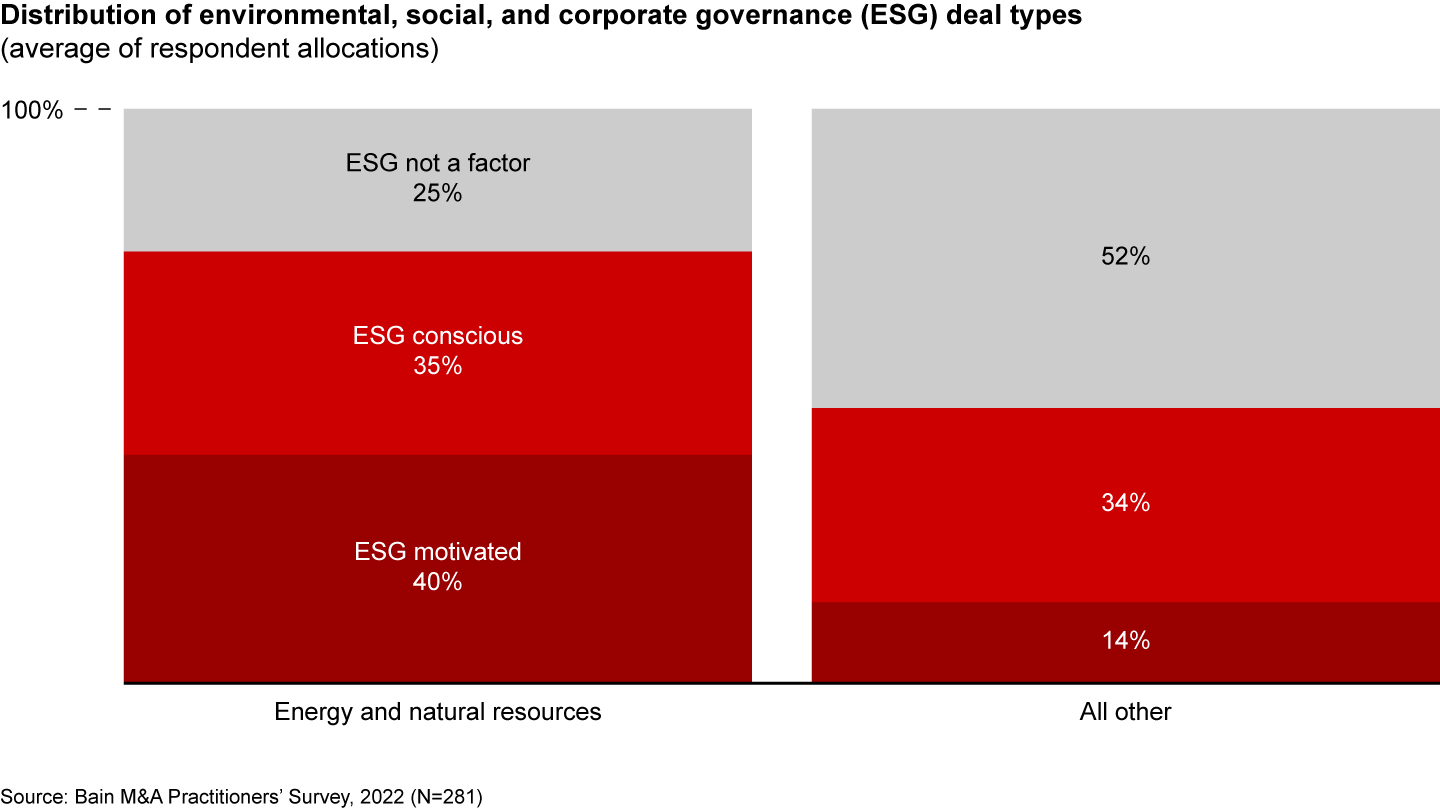
      Energy and natural resources companies are more focused on environmental, social, and corporate governance deals
      Energy and natural resources companies are more focused on environmental, social, and corporate governance deals
      Energy and natural resources companies are more focused on environmental, social, and corporate governance deals

      To strengthen their ESG efforts in M&A, we recommend buyers ask themselves several key questions that will guide the integration of ESG into the deal-making process.

      • Strategy: What are the implications of our corporate ESG agenda on our M&A strategy? How will the board weigh ESG considerations when evaluating deals?
      • Diligence: What are the material ESG issues for this deal, and how does the target perform in those areas? What are the potential risks and improvements to our overall ESG position and competitiveness? How do we evolve our diligence playbook to answer these questions? How do ESG considerations impact the value creation plan for this asset?
      • Integration: How does ESG factor into our integration thesis? What governance and resourcing is required to ensure ESG objectives and value creation initiatives are met (either for improving the target’s ESG performance or leveraging the target’s strengths to improve our own ESG performance)? What are the specific initiatives to unlock the ESG value creation opportunities?

      These questions may be tough to answer, but by asking them early, companies set themselves up to address the ESG imperative for everyone’s benefit as they make the M&A moves that will boost their performance.

      Read the Next Chapter

      Delivering Results in Joint Ventures and Alliances Requires a New Playbook

      Read our 2022 M&A Report

      Download the PDF Explore the report
      著者
      • Headshot of Jean-Charles van den Branden
        Jean-Charles van den Branden
        パートナー, Brussels
      • Headshot of Axel Seemann
        Axel Seemann
        Alumni, Munich
      • Headshot of Marc Lino
        Marc Lino
        パートナー, Dubai
      関連するコンサルティングサービス
      • M&A Due Diligence
      • Post-Merger Integration
      • 企業買収、合併(M&A)
      M&A Report
      Banking M&A

      As conditions shift, leading banks are fusing scale with scope to create future-ready organizations.

      詳細
      M&A Report
      Consumer Products M&A

      In their quest for profitable growth, more companies are divesting brands or buying insurgents.

      詳細
      M&A Report
      Media M&A

      AI and other tech tools can boost bidding confidence in this highly competitive environment.

      詳細
      M&A Report
      Defense M&A

      Bold moves will determine the winners as a continent rearms.

      詳細
      M&A Report
      Building Products M&A

      Why more companies are acquiring for scope.

      詳細

      Overview

      • Letter from the M&A Team: Beneath the M&A Headlines

      • State of the M&A Market

      • Bain’s Bedrock Beliefs on How to Create Value from M&A

      Hot Topics

      • Reimagining Talent in M&A

      • Bringing Science to the Art of Revenue Synergies

      • The ESG Imperative in M&A

      • Delivering Results in Joint Ventures and Alliances Requires a New Playbook

      • Harnessing the True Value of Corporate Venture Capital

      Industry Views

      • Aerospace and Defense M&A

      • Asset Management M&A

      • Automotive and Mobility M&A

      • Banking M&A

      • Consumer Products M&A

      • Diversified Industrials M&A

      • Energy and Natural Resources M&A

      • Healthcare M&A

      • Insurance M&A

      • Media M&A

      • Payments M&A

      • Retail M&A

      • Technology M&A

      • Telecommunications M&A

      • Wealth Management M&A

      Regional Perspectives

      • Brazil M&A

      • China M&A

      • India M&A

      • Japan M&A

      First published in 2月 2022
      Tags
      • M&A Due Diligence
      • M&A Report
      • Post-Merger Integration
      • 企業買収、合併(M&A)

      クライアント支援事例

      業績改善 Aggressively growing an IT service provider with a high-performance culture

      ケーススタディを見る

      企業買収、合併(M&A) An OFS captures post-merger growth synergies

      ケーススタディを見る

      顧客戦略、マーケティング Salesforce integration generates M&A success in healthcare

      ケーススタディを見る

      お気軽にご連絡下さい

      私達は、グローバルに活躍する経営者が抱える最重要経営課題に対して、厳しい競争環境の中でも成長し続け、「結果」を出すために支援しています。

      ベインの知見。競争が激化するグローバルビジネス環境で、日々直面するであろう問題について論じている知見を毎月お届けします。

      *プライバシーポリシーの内容を確認し、合意しました。

      プライバシーポリシーをご確認頂き、合意頂けますようお願い致します。
      Bain & Company
      お問い合わせ Sustainability Accessibility Terms of use Privacy Cookie Policy Sitemap Log In

      © 1996-2026 Bain & Company, Inc.

      お問い合わせ

      How can we help you?

      • ビジネスについて
      • プレス報道について
      • 採用について
      全てのオフィス