
Skip to Content
  • オフィス

    オフィス

    北米・南米
    • Atlanta
    • Austin
    • Bogota
    • Boston
    • Buenos Aires
    • Chicago
    • Dallas
    • Denver
    • Houston
    • Los Angeles
    • Mexico City
    • Minneapolis
    • Monterrey
    • Montreal
    • New York
    • Rio de Janeiro
    • San Francisco
    • Santiago
    • São Paulo
    • Seattle
    • Silicon Valley
    • Toronto
    • Washington, DC
    ヨーロッパ・中東・アフリカ
    • Amsterdam
    • Athens
    • Berlin
    • Brussels
    • Copenhagen
    • Doha
    • Dubai
    • Dusseldorf
    • Frankfurt
    • Helsinki
    • Istanbul
    • Johannesburg
    • Kyiv
    • Lisbon
    • London
    • Madrid
    • Milan
    • Munich
    • Oslo
    • Paris
    • Riyadh
    • Rome
    • Stockholm
    • Vienna
    • Warsaw
    • Zurich
    アジア・オーストラリア
    • Bangkok
    • Beijing
    • Bengaluru
    • Brisbane
    • Ho Chi Minh City
    • Hong Kong
    • Jakarta
    • Kuala Lumpur
    • Manila
    • Melbourne
    • Mumbai
    • New Delhi
    • Perth
    • Shanghai
    • Singapore
    • Sydney
    • Tokyo
    全てのオフィス
  • アルムナイ
  • メディア
  • お問い合わせ
  • 東京オフィス
  • Japan | 日本語

    地域と言語を選択

    グローバル
    • Global (English)
    北米・南米
    • Brazil (Português)
    • Argentina (Español)
    • Canada (Français)
    • Chile (Español)
    • Colombia (Español)
    ヨーロッパ・中東・アフリカ
    • France (Français)
    • DACH Region (Deutsch)
    • Italy (Italiano)
    • Spain (Español)
    • Greece (Elliniká)
    アジア・オーストラリア
    • China (中文版)
    • Korea (한국어)
    • Japan (日本語)
  • Saved items (0)
    Saved items (0)

    You have no saved items.

    後で閲読、共有できるようにするためにブックマークしてください

    Explore Bain Insights
  • 業界別プラクティス
    メインメニュー

    業界別プラクティス

    • 航空宇宙、防衛、政府関連
    • 農業
    • 化学製品
    • インフラ、建設
    • 消費財
    • 金融サービス
    • ヘルスケア
    • 産業機械、設備
    • メディア、エンターテインメント
    • 金属
    • 採掘・鉱業
    • 石油、ガス
    • 紙、パッケージ
    • プライベートエクイティ
    • 公共、社会セクター
    • 小売
    • テクノロジー
    • 通信
    • 交通
    • 観光産業
    • 公益事業、再生可能エネルギー
  • 機能別プラクティス
    メインメニュー

    機能別プラクティス

    • カスタマー・エクスペリエンス
    • サステイナビリティ、 社会貢献
    • Innovation
    • 企業買収、合併 (M&A)
    • オペレーション
    • 組織
    • プライベートエクイティ
    • マーケティング・営業
    • 戦略
    • アドバンスド・アナリティクス
    • Technology
    • フルポテンシャル・トランスフォーメーション
  • Digital
  • 知見/レポート
  • ベイン・アンド・カンパニーについて
    メインメニュー

    ベイン・アンド・カンパニーについて

    • ベインの信条
    • 活動内容
    • 社員とリーダーシップ
    • プレス・メディア情報
    • クライアントの結果
    • 受賞歴
    • パートナーシップを結んでいる団体
    Further: Our global responsibility
    • ダイバーシティ
    • 社会貢献
    • サステイナビリティへの取り組み
    • 世界経済フォーラム(WEF)
    Learn more about Further
  • キャリア
    メインメニュー

    キャリア

    • ベインで働く
      キャリア
      ベインで働く
      • Find Your Place
      • ベインで活躍する機会
      • ベインのチーム体制
      • 学生向けページ
      • インターンシップ
      • 採用イベント
    • ベインでの体験
      キャリア
      ベインでの体験
      • Blog: Inside Bain
      • キャリアストーリー
      • 社員紹介
      • Where We Work
      • 成長を後押しするサポート体制
      • アフィニティ・グループ
      • 福利厚生
    • Impact Stories
    • 採用情報
      キャリア
      採用情報
      • 採用プロセス
      • 面接内容
    FIND JOBS
  • オフィス
    メインメニュー

    オフィス

    • 北米・南米
      オフィス
      北米・南米
      • Atlanta
      • Austin
      • Bogota
      • Boston
      • Buenos Aires
      • Chicago
      • Dallas
      • Denver
      • Houston
      • Los Angeles
      • Mexico City
      • Minneapolis
      • Monterrey
      • Montreal
      • New York
      • Rio de Janeiro
      • San Francisco
      • Santiago
      • São Paulo
      • Seattle
      • Silicon Valley
      • Toronto
      • Washington, DC
    • ヨーロッパ・中東・アフリカ
      オフィス
      ヨーロッパ・中東・アフリカ
      • Amsterdam
      • Athens
      • Berlin
      • Brussels
      • Copenhagen
      • Doha
      • Dubai
      • Dusseldorf
      • Frankfurt
      • Helsinki
      • Istanbul
      • Johannesburg
      • Kyiv
      • Lisbon
      • London
      • Madrid
      • Milan
      • Munich
      • Oslo
      • Paris
      • Riyadh
      • Rome
      • Stockholm
      • Vienna
      • Warsaw
      • Zurich
    • アジア・オーストラリア
      オフィス
      アジア・オーストラリア
      • Bangkok
      • Beijing
      • Bengaluru
      • Brisbane
      • Ho Chi Minh City
      • Hong Kong
      • Jakarta
      • Kuala Lumpur
      • Manila
      • Melbourne
      • Mumbai
      • New Delhi
      • Perth
      • Shanghai
      • Singapore
      • Sydney
      • Tokyo
    全てのオフィス
  • アルムナイ
  • メディア
  • お問い合わせ
  • 東京オフィス
  • Japan | 日本語
    メインメニュー

    地域と言語を選択

    • グローバル
      地域と言語を選択
      グローバル
      • Global (English)
    • 北米・南米
      地域と言語を選択
      北米・南米
      • Brazil (Português)
      • Argentina (Español)
      • Canada (Français)
      • Chile (Español)
      • Colombia (Español)
    • ヨーロッパ・中東・アフリカ
      地域と言語を選択
      ヨーロッパ・中東・アフリカ
      • France (Français)
      • DACH Region (Deutsch)
      • Italy (Italiano)
      • Spain (Español)
      • Greece (Elliniká)
    • アジア・オーストラリア
      地域と言語を選択
      アジア・オーストラリア
      • China (中文版)
      • Korea (한국어)
      • Japan (日本語)
  • Saved items  (0)
    メインメニュー
    Saved items (0)

    You have no saved items.

    後で閲読、共有できるようにするためにブックマークしてください

    Explore Bain Insights
  • 業界別プラクティス
    • 業界別プラクティス

      • 航空宇宙、防衛、政府関連
      • 農業
      • 化学製品
      • インフラ、建設
      • 消費財
      • 金融サービス
      • ヘルスケア
      • 産業機械、設備
      • メディア、エンターテインメント
      • 金属
      • 採掘・鉱業
      • 石油、ガス
      • 紙、パッケージ
      • プライベートエクイティ
      • 公共、社会セクター
      • 小売
      • テクノロジー
      • 通信
      • 交通
      • 観光産業
      • 公益事業、再生可能エネルギー
  • 機能別プラクティス
    • 機能別プラクティス

      • カスタマー・エクスペリエンス
      • サステイナビリティ、 社会貢献
      • Innovation
      • 企業買収、合併 (M&A)
      • オペレーション
      • 組織
      • プライベートエクイティ
      • マーケティング・営業
      • 戦略
      • アドバンスド・アナリティクス
      • Technology
      • フルポテンシャル・トランスフォーメーション
  • Digital
  • 知見/レポート
  • ベイン・アンド・カンパニーについて
    • ベイン・アンド・カンパニーについて

      • ベインの信条
      • 活動内容
      • 社員とリーダーシップ
      • プレス・メディア情報
      • クライアントの結果
      • 受賞歴
      • パートナーシップを結んでいる団体
      Further: Our global responsibility
      • ダイバーシティ
      • 社会貢献
      • サステイナビリティへの取り組み
      • 世界経済フォーラム(WEF)
      Learn more about Further
  • キャリア
    人気検索キーワード
    • デジタル
    • 戦略
    前回の検索
      最近訪れたページ

      Content added to saved items

      Saved items (0)

      Removed from saved items

      Saved items (0)

      レポート

      Exits: A Return to Steady State as Recession-Vintage Assets Clear

      Exits: A Return to Steady State as Recession-Vintage Assets Clear

      Holding periods for healthcare investments returned to between three and five years.

      著者:Jason Slocum, Kara Murphy, and Nirad Jain

      • min read
      }

      レポート

      Exits: A Return to Steady State as Recession-Vintage Assets Clear
      en
      概要
      • Global healthcare PE exits were relatively flat at 112 deals in 2018 vs. 116 in 2017 as volume stabilized following the clearance of recession-vintage assets.
      • The median holding period for 2018 exits declined to a more typical long-term level of 4.1 years, the lowest level since 2009.
      • Sponsor-to-sponsor transactions made up an increasingly large portion of exits—47% in 2018 vs. 28% in 2015—reflecting ample appetite for healthcare deals.
      • Total disclosed value fell again from $44.4 billion in 2017 to $31.6 billion in 2018, led by a $13 billion decline in the value of exits to corporates.

      This article is part of Bain’s 2019 Global Healthcare Private Equity and Corporate M&A Report. Explore the contents of the report here or download the PDF to read the full report.

      In a return to historical norms, exit volume and value both declined in 2018 from the year earlier. Volume fell to 112 in 2018 from 116 in 2017, the lowest level since 2012 (see Figure 12). This followed the spike in activity from 2012 to 2015, as funds now have cleared their books of the vast majority of assets acquired prior to the past recession.

      Figure 12
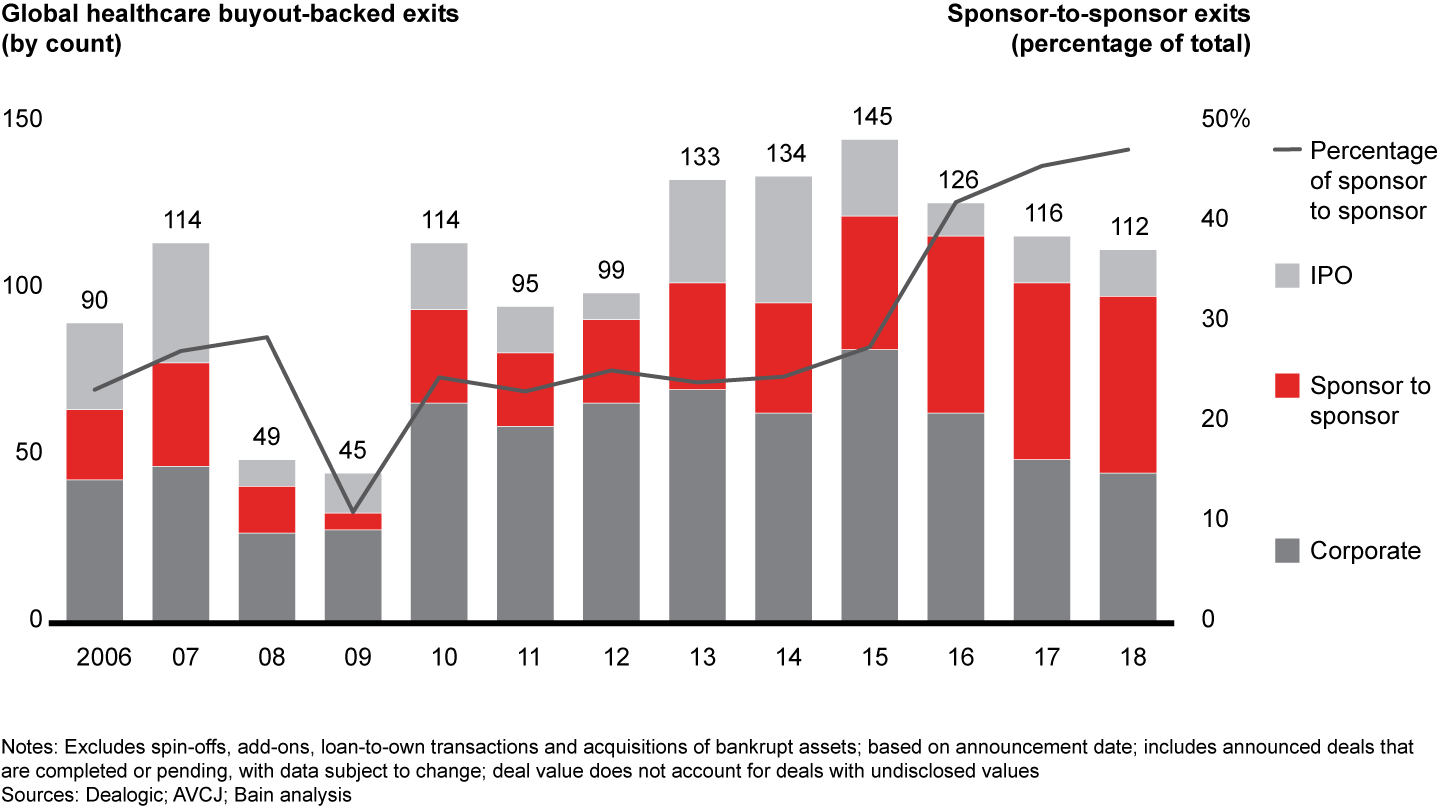
      While exit activity continued to decline, the share of transactions between financial sponsors remained high
      While exit activity continued to decline, the share of transactions between financial sponsors remained high
      While exit activity continued to decline, the share of transactions between financial sponsors remained high

      Disclosed exit value fell to $31.6 billion in 2018 from $44.4 billion in 2017, driven by a 43% decline in the value of exits to corporates. The 2018 values came in at roughly half the 2015 and 2016 levels, mainly because of a decline in the median value of the top 10 exits. Still, those top exits accounted for about 60% of the value in 2018, and each was worth at least $1 billion.

      From a regional perspective, although North America continues to be the most active region, accounting for a little more than half of volume, exit activity declined 13%, and disclosed value was down 46% compared with 2017, driven by fewer megadeals. North America’s decline was partially offset by a roughly 25% increase in European exit activity and a roughly 20% increase in the region’s disclosed value.

      Turning to the Asia-Pacific region, exit activity and value held steady at a little more than 10% of global volume and a little less than $4 billion in disclosed value during both 2017 and 2018. As the market matures and the tail end of the first major Asia-Pacific healthcare investment cycle plays out, the region is beginning to see a growing number of high-profile sponsor-to-sponsor exits, such as EQT Partners’ sale of its stake in I-Med Radiology Network, the largest diagnostic imaging services provider in Australia, to Permira for $1 billion.

      With IPO activity stable year over year, corporate and sponsor exits continued to account for a significant portion of value and volume. There were 14 IPOs in 2018, 8 of which were in biopharma. Despite that trend, the largest IPO of the year came in the provider sector, as Bain Capital partially exited Brazilian corporate health plan operator Grupo Notre Dame Intermedica, raising $800 million. The largest biopharma IPO of the year, at $373 million, was clinical-stage CAR-T treatment developer and Pfizer carve-out Allogene Therapeutics, in which TPG held a stake investment.

      Relatively high private valuations continued to steer a growing share of exits to corporate acquirers or other PE funds, rather than to public markets. Exits to corporates accounted for roughly 40% of exit volume and three of the top four exits by value in 2018, including Summit Partners’ divestiture of Integrated DNA Technologies to Danaher Corporation for $2 billion.

      The share of exits to sponsors remained high at 47% of total volume, up significantly from just 28% in 2015. Provider and medtech were the most popular sectors for sponsor exits in 2018, with 75% of sponsor-to-sponsor exit activity.

      The recent buildup of capital for healthcare private equity has had a number of impacts, including high-profile exits to sponsors of category-leading assets. Increasingly, other sponsors are viewed as attractive exit options, especially if the selling firm can negotiate to maintain a minority stake. For example, KKR acquired a majority stake in Heartland Dental, the largest dental support organization in the US, from the Ontario Teachers’ Pension Plan. Additionally, Oak Hill Capital Partners led a recapitalization of VetCor, one of the largest veterinary hospital operators in the US, alongside existing management and existing investors Harvest Partners and Cressey & Company. Neither of the deal values were disclosed.

      As sponsor activity picks up, exit characteristics have been changing for funds of different sizes. Given the competition for top assets and the immense amount of dry powder, small funds (less than $1 billion of funds raised over the past 10 years) find it harder to buy from other sponsors, while large funds (greater than $5 billion of funds raised over the past 10 years) are hunting for deals owned by smaller sponsors. A Bain analysis found that the share of exits from sponsors to small-cap funds dropped from roughly 20% in 2017 to about 10% in 2018. Large funds were acquirers in 66% of all sponsor-to-sponsor exits in 2018, up from just 40% in 2017.

      In tandem, midsized funds (between $1 billion and $5 billion of funds raised over the past 10 years) increasingly look to boost returns by building platforms through operational improvements and bolt-on M&A. These funds typically then sell to similarly sized or larger funds that are willing to pay more for a platform asset. In 2017, roughly two-thirds of sponsor-to-sponsor exits went to same-sized or larger acquirers; in 2018, the share rose to more than three-quarters. For example, Water Street Healthcare Partners divested its stake in Premise Health, a leading provider of worksite care in the US, to OMERS Private Equity. After Water Street formed the platform in 2014 by merging two onsite care assets, it helped Premise expand its geographic footprint over the next four years through several strategic acquisitions and an investment in a technology platform.

      As investors finished offloading the tail of their prerecession assets and preemptively took advantage of high private market valuations, typical holding periods returned to the standard three to five years, similar to periods immediately following the recession. The median holding period across all exits fell to 4.1 years, the lowest since 2009 and a roughly 20% decline from 2017 (see Figure 13). In fact, just 34% of all 2018 exits had holding periods greater than five years, down from 52% in 2017 and the lowest level since 2010.

      Figure 13
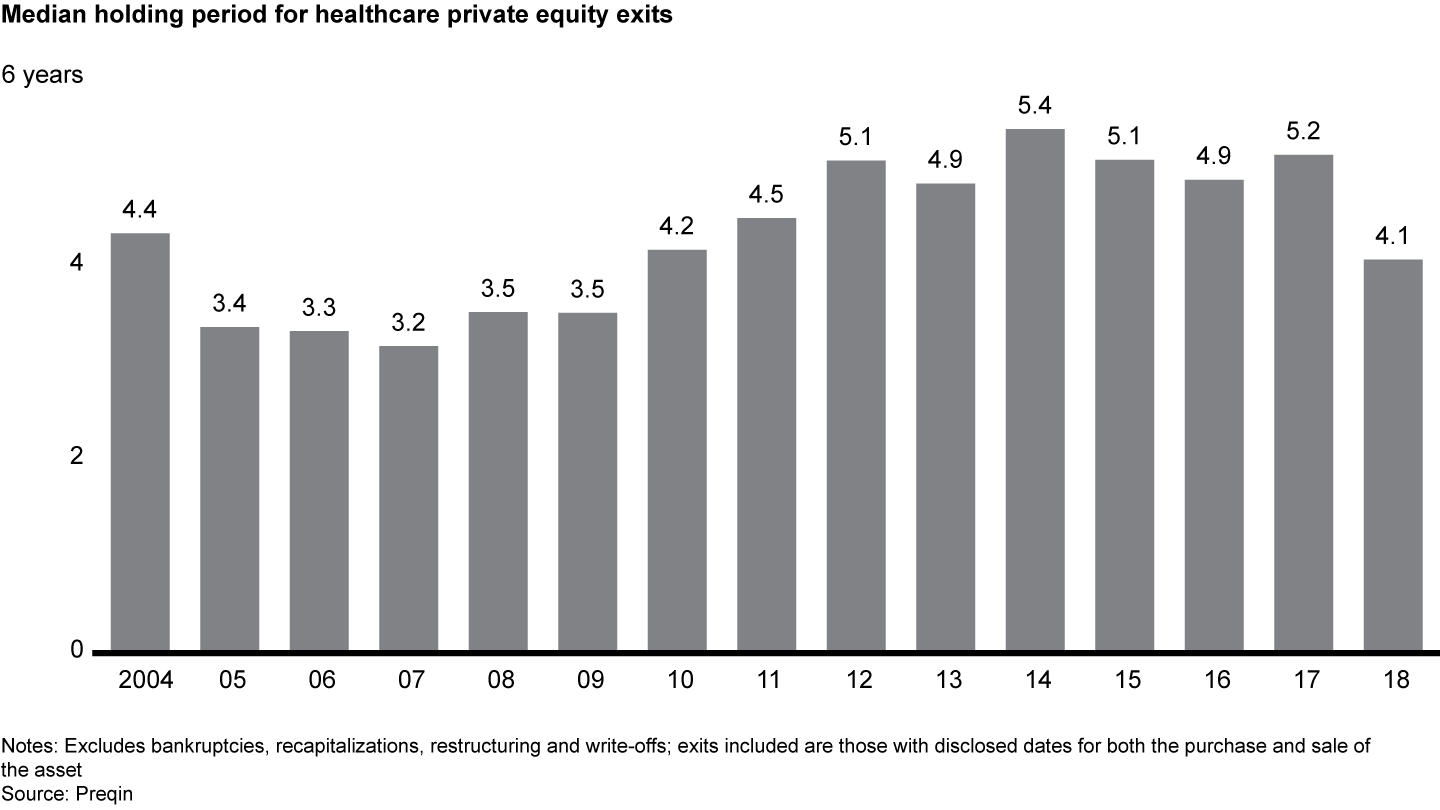
      Holding periods are returning to a steady-state level as investors offload recession-vintage assets and more quickly take advantage of high valuations
      Holding periods are returning to a steady-state level as investors offload recession-vintage assets and more quickly take advantage of high valuations
      Holding periods are returning to a steady-state level as investors offload recession-vintage assets and more quickly take advantage of high valuations

      Looking ahead, funds may decide to opportunistically exit deals and take advantage of heavy sponsor demand for relatively recession-resistant assets and high valuations. On the other hand, funds may decide to lengthen their holding period if they possess a category-leading asset and don’t have pressure to sell. In some cases, a longer-term value-creation plan to raise incremental returns may be more valuable than selling top-performing assets and hunting for ways to redeploy large sums of new capital.

      We are encouraged, however, by the recent growth in deal count and value over the past few years, and we see a large accumulation of three- to five-year vintage assets that are likely to retrade soon. Smart investors will have a strong hypothesis about the best exit options for an asset at the outset of the diligence process and will continue to reevaluate their exit timing and approach over the life of the investment.

      Read the Next Section

      2019 and Beyond: An Oasis of Calm?

      著者
      • Headshot of Jason Slocum
        Jason Slocum
        Alumni, Boston
      • Headshot of Kara Murphy
        Kara Murphy
        パートナー, Boston
      • Headshot of Nirad Jain
        Nirad Jain
        パートナー, New York
      関連業種
      • プライベートエクイティ
      • ヘルスケア
      ヘルスケア
      Year in Review: Healthcare Megadeals Lead the Way

      Investors flocked to recession-resistant healthcare investments ahead of a possible downturn.

      詳細
      ヘルスケア
      Corporate M&A: Healthcare Acquisitions Feed Revenue Growth

      To maximize value, companies need an airtight integration thesis.

      詳細
      ヘルスケア
      2019 and Beyond: An Oasis of Calm?

      The jury is out on whether the next round of healthcare investments will generate returns on par with previous buyouts.

      詳細
      ヘルスケア
      What Differentiates Winning Healthcare IT Investments

      Amidst continued high-valuation multiples and competitive deal processes, a disciplined focus on value-creation levers distinguishes winning bids and successful exits.

      詳細
      ヘルスケア
      Healthcare Private Equity Market 2025: Resurgence and Record Growth

      Healthcare private equity investment posted a very strong year for deal value and volume, paired with a strong rebound in exits.

      詳細
      First published in 4月 2019
      Tags
      • プライベートエクイティ
      • ヘルスケア

      クライアント支援事例

      サステイナビリティ、社会貢献 A Paper Company Takes Bold Steps to Make Sustainability a Source of Profits

      ケーススタディを見る

      戦略 Review focuses biotech on portfolio potential

      ケーススタディを見る

      戦略 Pharma oncology growth strategy

      ケーススタディを見る

      お気軽にご連絡下さい

      私達は、グローバルに活躍する経営者が抱える最重要経営課題に対して、厳しい競争環境の中でも成長し続け、「結果」を出すために支援しています。

      ベインの知見。競争が激化するグローバルビジネス環境で、日々直面するであろう問題について論じている知見を毎月お届けします。

      *プライバシーポリシーの内容を確認し、合意しました。

      プライバシーポリシーをご確認頂き、合意頂けますようお願い致します。
      Bain & Company
      お問い合わせ Sustainability Accessibility Terms of use Privacy Cookie Policy Sitemap Log In

      © 1996-2026 Bain & Company, Inc.

      お問い合わせ

      How can we help you?

      • ビジネスについて
      • プレス報道について
      • 採用について
      全てのオフィス