

論説

概要
- The timing and extent of eventual defaults due to Covid-19 is uncertain, but history suggests that credit stresses will peak long after overall bank stock indexes recover.
- Preparing an early warning treatment and loan-workout strategy thus is essential. To identify problematic accounts, banks should replace the standard deterministic model with a statistical model that adds a managerial view of the situation, which improves both accuracy and responsiveness.
- Banks should heal ailing loans in two streams: smaller loans using a mostly automated system, and large or complex loans relying on industry experts.
- A nonperforming-exposure unit should recruit high performers from other departments and implement automated monitoring of loans, which will require adjustments to IT systems.
Sooner or later comes the reckoning.
In the wake of the coronavirus’s toll on human health and the subsequent shutdown of many businesses, many banks and other lenders worldwide rolled out moratoriums for individuals and businesses on loan repayments. Some banks now have more than 10% of their outstanding loans in limbo. All of these suspended loans will require monitoring of borrowers’ situations and process adjustments down the road.

Macro Surveillance Platform
For more detail on the business implications of coronavirus from Bain’s Macro Trends Group, log on to the Macro Surveillance Platform. Learn more about the platform >
Given the present magnitude of unemployment, when payments resume, the scale of potential bankruptcies and loan defaults could dwarf past financial crises. The sharp drop in consumption has severely damaged many small businesses as well as large corporates, which could presage more bankruptcies and rising nonperforming exposure for banks. That raises the specter for a bank solvency crisis where capitalization ratios are weakest.
Considering the stock of private nonperforming loans (NPLs), Bain & Company estimates that every country analyzed will have more NPLs than during the global financial crisis of 2008. Estimates range from one to two times that of 2008 in Europe and the US, one to four times in the UK, and two to five times in most parts of Asia (see Figure 1). Low-income and emerging markets in South America and Africa, which generally have fewer capital resources and government safety nets, could be hit even harder.
Figure 1
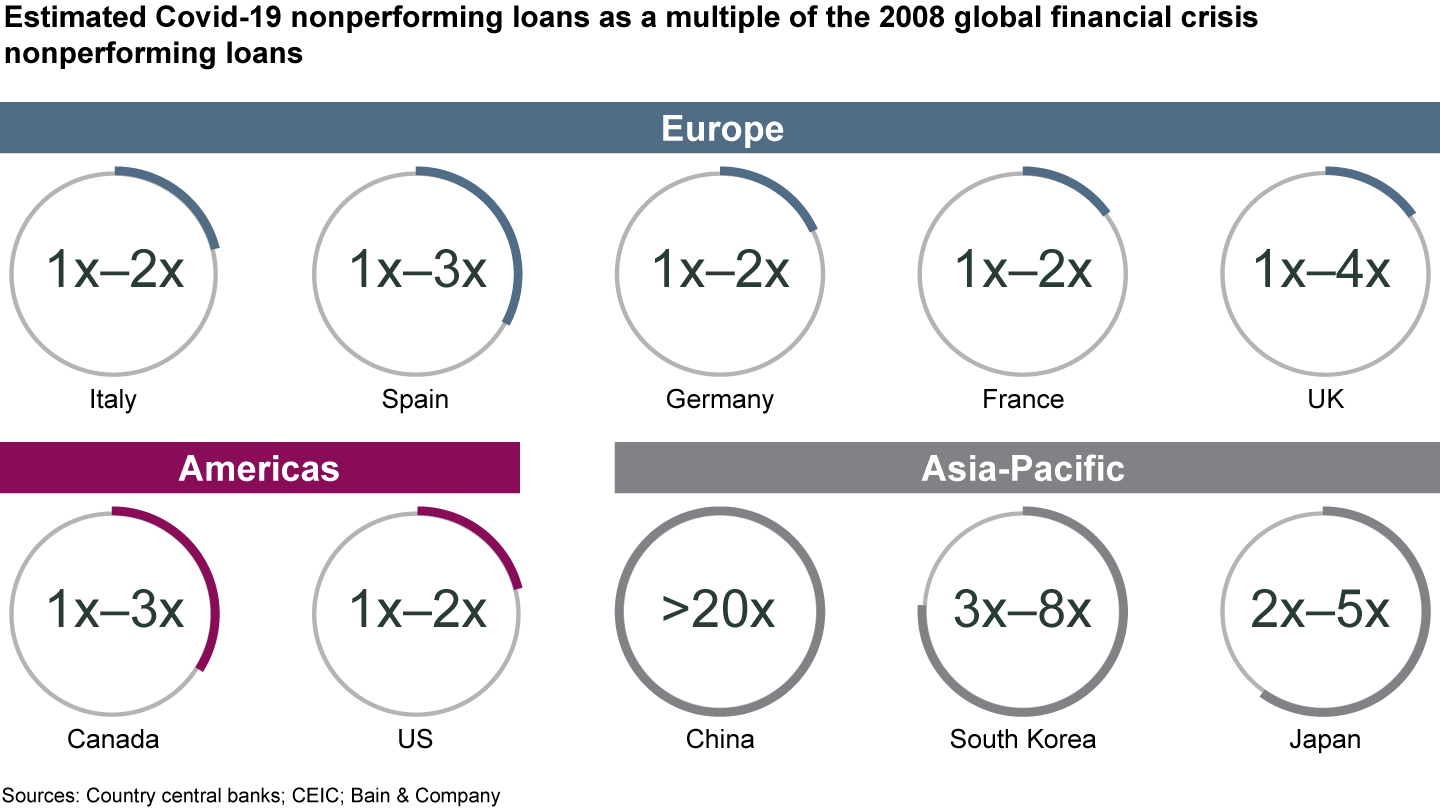

China’s estimated exposure exceeds 20 times that of 2008, as residential and corporate debt fueled much of the country’s rapid economic expansion over the past decade. However, China may be less vulnerable than other countries because the government would be more likely to intervene by nationalizing banks, writing off their bad debt and replacing it with public debt. Other countries may be reluctant to repeat the 2008 conversion of bank debt to public debt.
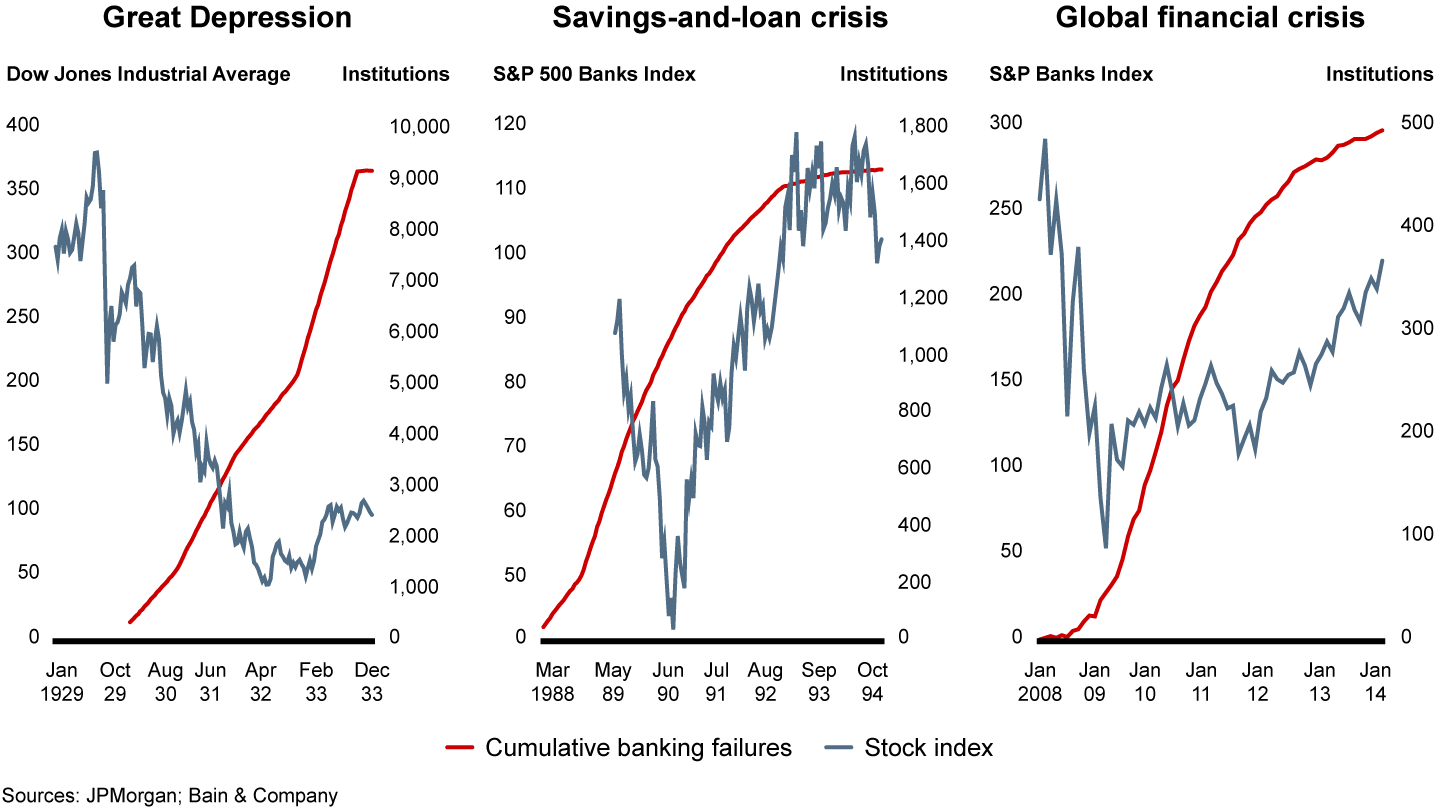
The eventual extent of loan defaults is highly uncertain. If history is any guide, though, we know that the peak of bank failures substantially lagged the bottom of the equity markets (see Figure 2).
Figure 2

Some banks have started to selectively pull back. For example, JPMorgan Chase recently stopped accepting new home equity line-of-credit applications. And Wells Fargo recently ceased making auto loans through independent dealerships in the US. Many auto dealers that appear solvent today could come under significant financial stress due to soaring unemployment, and Wells Fargo figures this is the right time to free itself of the credit exposure. If other banks snap up the financing arrangements ended by Wells Fargo, they may find themselves catching a falling knife.
A better early warning system
Reducing their nonperforming exposure will be a major challenge for most banks, on several dimensions. Banks with a high level of NPLs often operate close to their minimum capital requirements, limiting their ability to increase provisions for the loans or absorb losses from selling them, or to make new loans. Stakeholder concerns come into play as well, as investors worry about further impairment charges or losses from selling off loans, which would reduce profits.
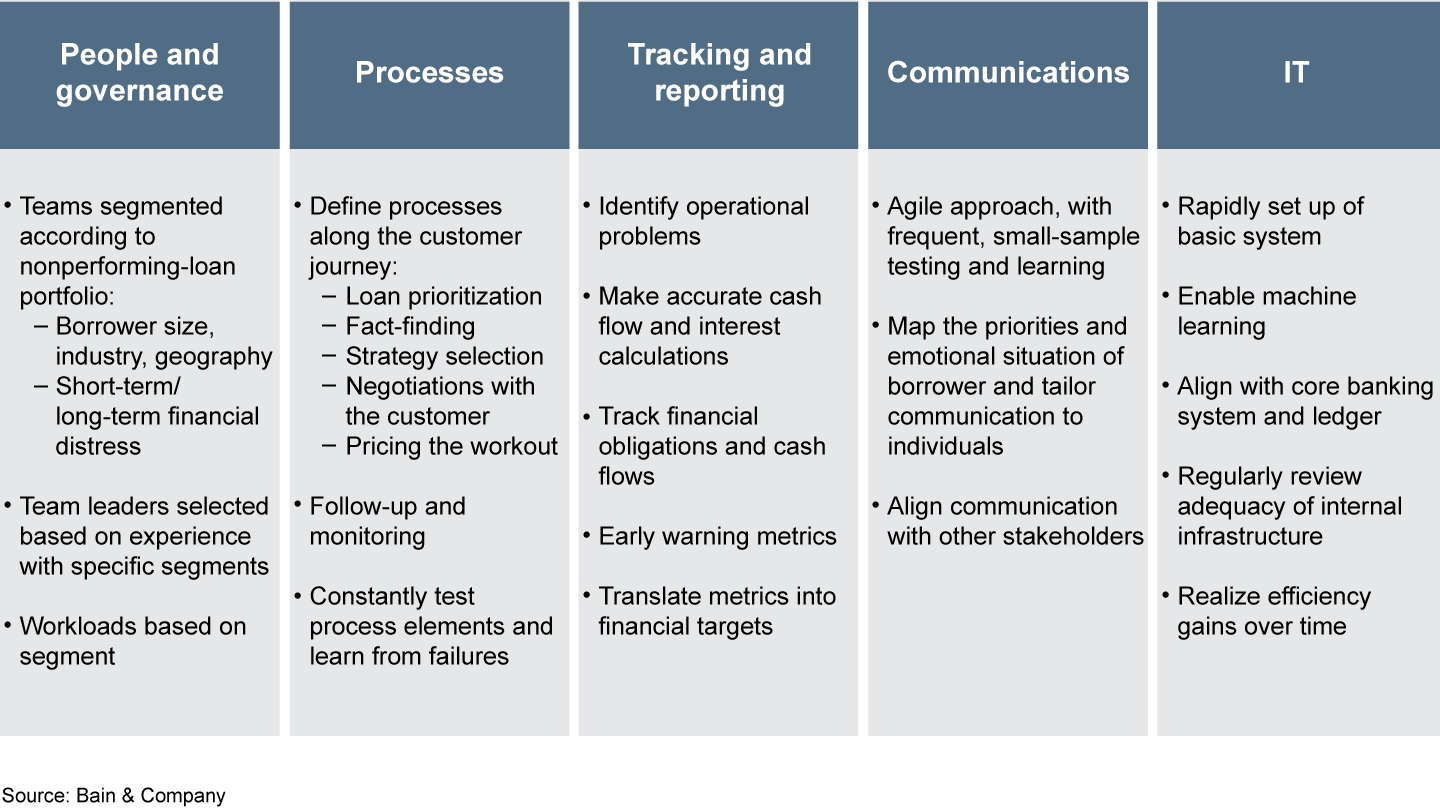
Preparing a plan now to identify and deal with vulnerable loans thus is essential (see Figure 3). That starts with developing a dedicated early warning system and a loan-workout strategy, tailored to a bank’s asset and customer bases. Executing the strategy requires setting up a dedicated workout unit. This team will need accurate and timely loan and customer data, which often entails changes to legacy IT systems.
Figure 3

Identifying loans that will get into trouble could be more difficult than in past recessions, given the uncertainty over the timing of moratoriums, the duration of the recession, the pace of an economic recovery and the likely enduring changes in consumer behavior caused by at-home lockdowns.
The standard deterministic model used by banks relies on flagging an observed event that will affect ability to repay a loan—a borrower loses his job, or a couple divorces and one spouse has little income for making mortgage payments. This type of model has several drawbacks. It does not give a bank much time to plan a new arrangement for the loan, its accuracy has room for improvement, and it produces many false positives that often lead account managers to ignore the warning signals.
Circumstances today call for a different model—a statistical model that adds a predictive, experience-driven, managerial view of the situation. In this model, a bank can automatically track 10 to 20 variables, such as frequently reaching credit card limits, or being flagged by taxing authorities, or missing alimony payments. Combining variables enables a bank to predict the probability of default more accurately than the deterministic model (see Figure 4).
Figure 4
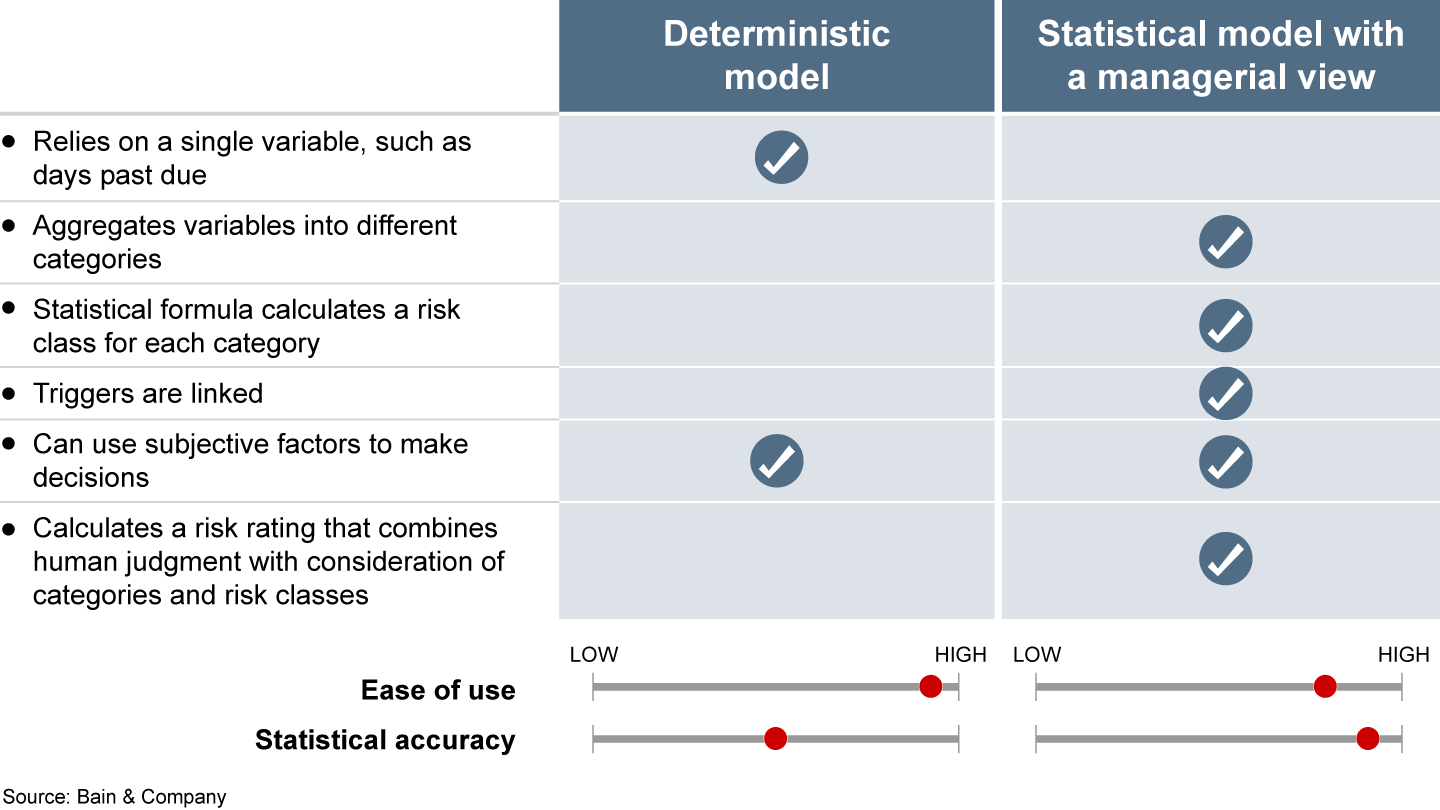

Adding the managerial view further improves accuracy and the bank’s responsiveness. For instance, an account manager who follows a vulnerable corporate account closely will know that it signed major new customers—information that could offset negative variables. On-the-ground, human intelligence thus can help reduce the false positives coming from the risk department. Combining this approach with adaptive analytic techniques such as machine learning will revolutionize early warning and radically reduce losses.
Using options and a portfolio approach
During past crises, banks’ first impulse was to extend loan repayment and reduce individual payment amounts, in the hope that borrowers will eventually repay their loans. The downside of this approach is that it maintains or increases exposure to a potentially worsening economy and extends the period of exposure.
An alternative strategy reduces that exposure. The bank devises a set of options for individual borrowers, ranging from extending the repayment schedule, to joint venturing (with or without stapled debt), to outright sale of the loan. Senior managers, rather than case officers, should make the decision on which treatment to apply, giving the bank stronger control.
At the same time, the strategy involves developing a portfolio approach for NPLs, using an agreed-on plan about what share of incoming NPLs should receive each treatment. A portfolio view takes into account the expected NPL amounts, type of loan by industry, the capital and liquidity situation of the bank, and so on. It creates a more controlled, forward-looking process that can also be discussed with the board, to ensure a tight link with the bank’s overall strategy. By contrast, an uncontrolled decision-making process at the case-officer level limits the bank’s options and planning ability.
Building a robust workout unit
Banks’ experiences with building better workout and recovery units suggest several actions.
- Move troubled loans away from original relationship managers, to avoid the confirmation bias or wishful thinking that lingers after the initial extension of credit.
- Set up two workout streams. Personal and smaller business loans should run through a mostly automated “factory” that uses a single decision tree. Large or complex loans require an expert in the relevant industry, in order to judge the company’s viability.
- Scale up the recovery machine by enlisting high performers from other areas of the bank to join the nonperforming-exposure unit. That unit should be separate from the commercial unit.
- Define and align treatments for ailing clients that are uniform and maintain value for the bank.
- Improve monitoring. Receiving account information at the end of the month is often too late. Banks will need automated monitoring, accessible at any time, to understand how a loan is performing and when it can safely exit the healing area. Despite the initial reaction from many IT teams that such automation is impossible, several banks have already installed such systems.
- Finally, resist the temptation to sell troubled loans until the very last moment, as selling is more capital-destructive than workout and recovery. Banks tend to sell such loans at a price well below their value.
Acting now to anticipate the coming wave of troubled loans will allow banks to respond quickly yet carefully, rather than making ad hoc decisions and firefighting. Solid preparation, followed by deft execution of the plan, raises the odds of thriving once the economy turns up again.

Coronavirus
The global Covid-19 pandemic has extracted a terrible human toll and spurred sweeping changes in the world economy. Across industries, executives have begun reassessing their strategies and repositioning their companies to thrive now and in the world beyond coronavirus.
First published in 6月 2020