

論説

概要
- Bain’s benchmark survey of life and P&C insurers identified the top decile in premium growth, profitability, innovation and customer loyalty. These leaders have made the most progress in four critical areas—although all insurers still have a long way to go.
- The leaders use digital assets and channels to put customers’ priorities front and center. Digital helps them gain a cost and underwriting advantage.
- Among this elite group, better customer outcomes and more efficient operations also stem from an advanced innovation agenda and innovation culture.
- The leading companies have figured out how to deal with their legacy IT—not necessarily remove it—in order to reap value from data and analytics.
Despite extensive transformation plans pursued by many major insurance companies, progress has been slow for the industry over the past few years.
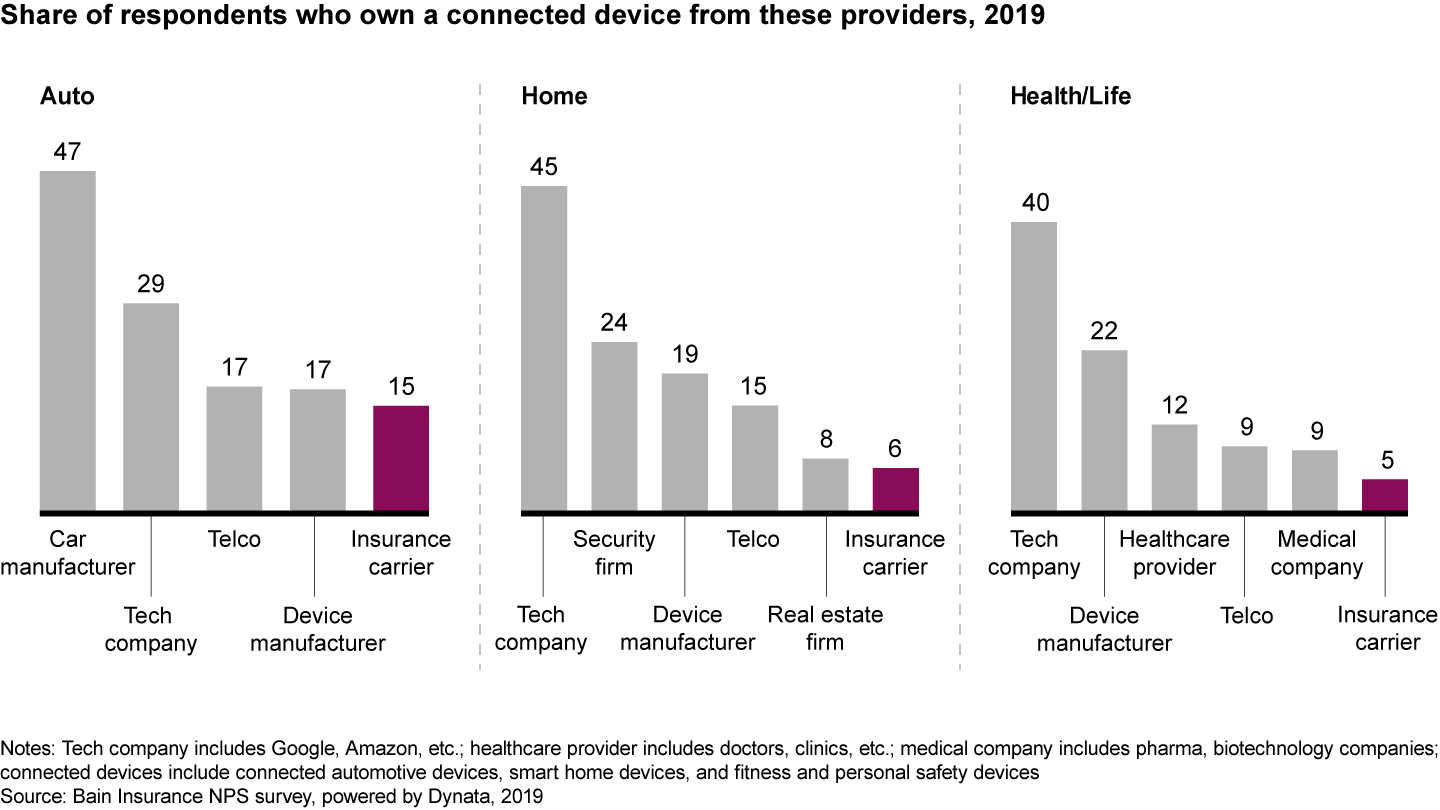
Customer loyalty, as measured by the Net Promoter Score®, has inched up, but the loyalty leaders among traditional incumbents have not changed much. Expense ratios have remained flat. Many digital tools and channels still are not easy and convenient for customers to use. Innovation also lags, as illustrated by the low share of connected devices provided by insurers, relative to technology companies and automakers (see Figure 1).
Figure 1

Looking at the largest firms, the relative market shares of some leading incumbents have eroded, and multinational carriers no longer cluster as top performers in total shareholder return. Traditional scale by premiums or assets still matters, but increasingly will require capitalizing on data and analytics to create a competitive advantage.

Macro Surveillance Platform
For more detail on the business implications of coronavirus from Bain’s Macro Trends Group, log on to the Macro Surveillance Platform. Learn more about the platform >
Enter the Covid-19 pandemic and subsequent economic turmoil that have, first and foremost, taken a terrible toll on human health, household finances and business activity. For the insurance industry, the crisis has had some specific effects. Notably, Covid-19 creates an imperative to accelerate digital tools and channels, because of extensive work-at-home adoption, cost pressures and changes in customer behavior. Many customers who did not previously interact digitally have now gone online for shopping and other activities, making it easier for insurers to drive digital adoption. The crisis also catalyzed some insurers to quickly mobilize cross-functional teams and adopt new ways of working. Now many insurers are looking to accelerate digital and cost agendas.
To gauge how well the industry was positioned before the pandemic, Bain & Company benchmarked 104 retail insurance executives in life and property and casualty (P&C) in the US, UK and Australia. We identified insurers that are setting the pace—the 10% of companies that achieve above-average premium growth and profitability, and also outperform on innovation and customer loyalty. These leaders have built critical capabilities in four areas that position them well for a post-pandemic environment.
1. Using simple, digital processes to put customers first
Many customers struggle with their insurer’s digital channels, with problems ranging from incomplete information on the website to a slow or complicated process. Leading insurers fare better in this regard. They have made more progress on delivering a digital experience built on simplicity and convenience.
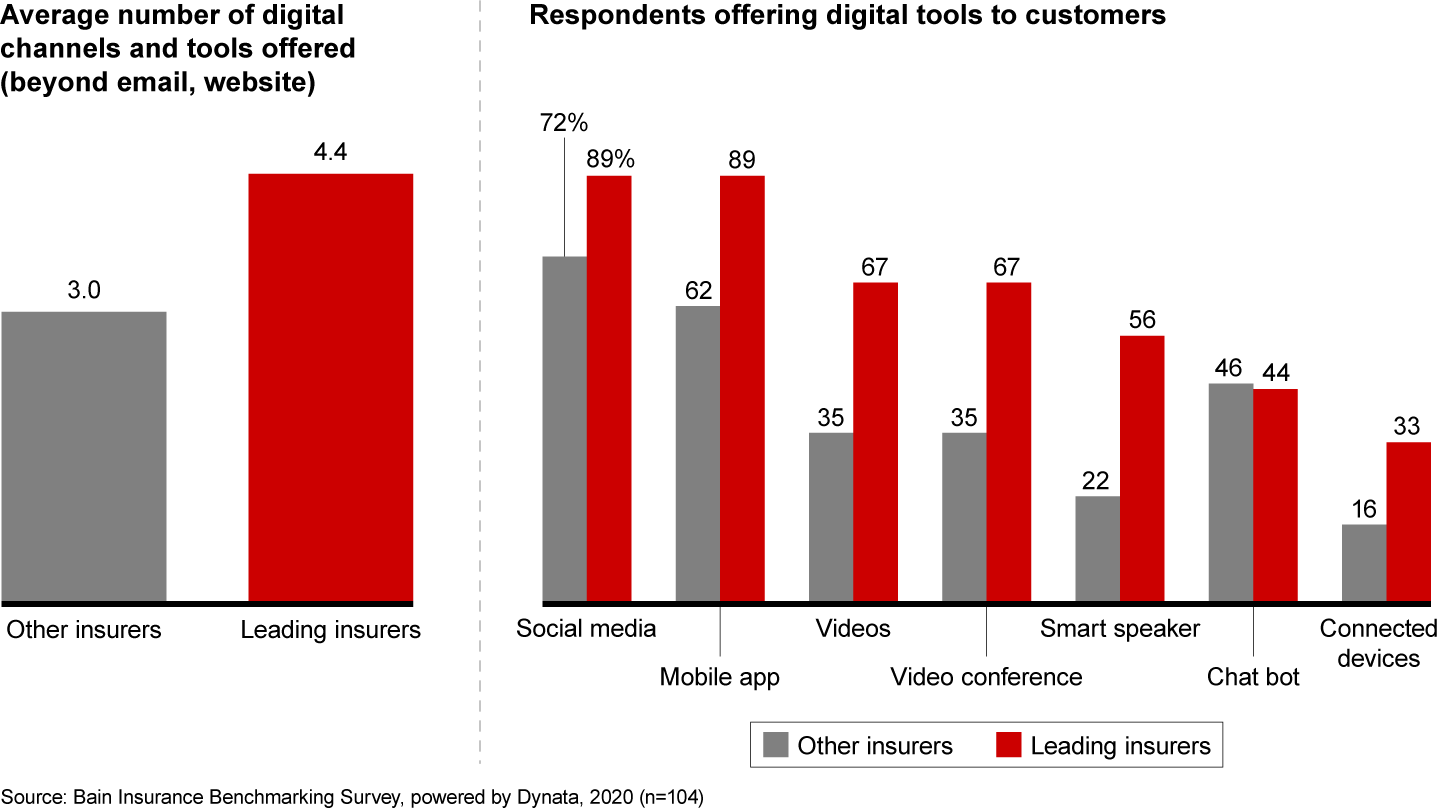
These leaders have invested ahead of the curve in state-of-the-art digital assets. For instance, they are 1.7 times more likely than other insurance companies to have a cutting-edge website and customer service portal. They are 2.8 times more likely to offer instant online approval or rejection of an application for auto insurance. And they have broader digital offerings, including video (see Figure 2).
Figure 2

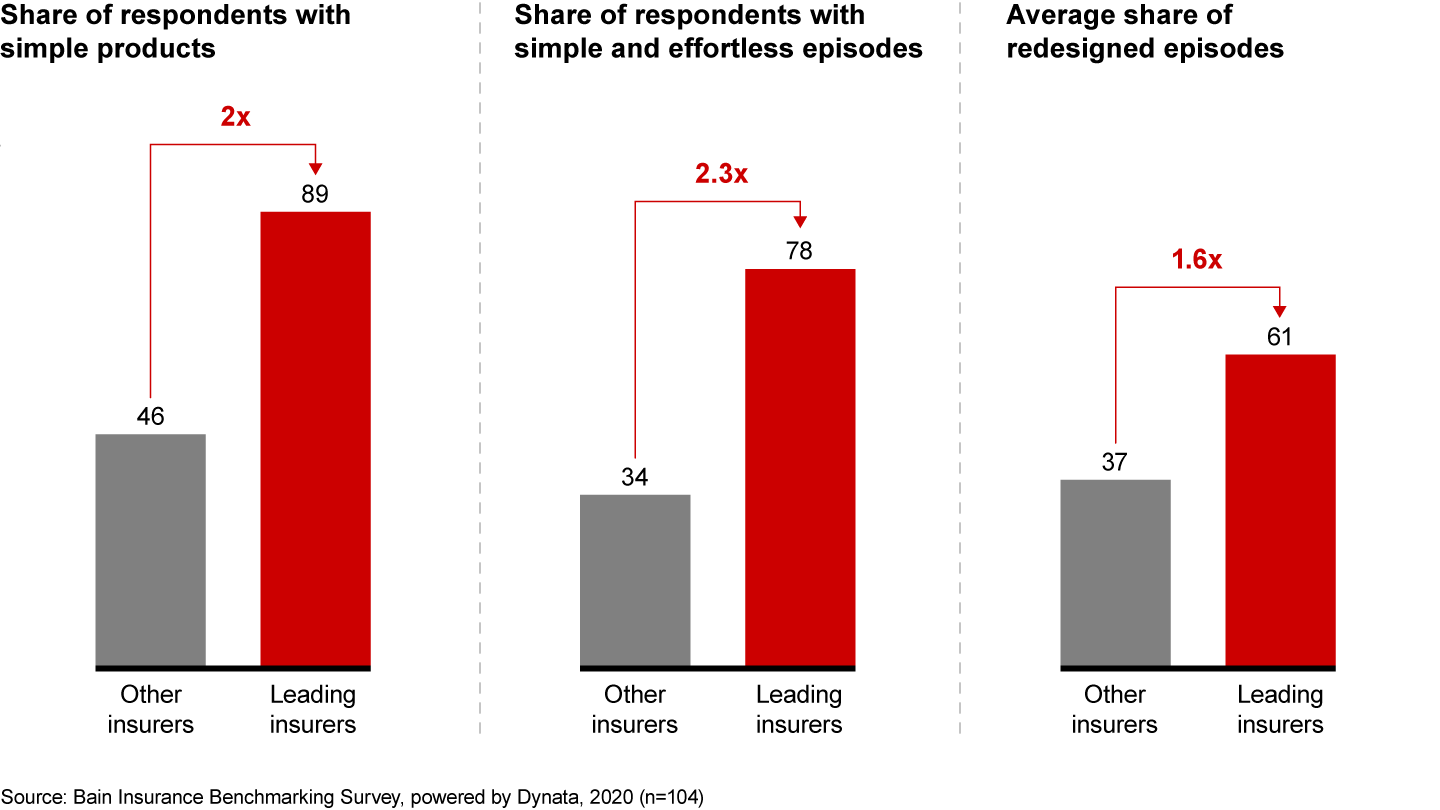
The leaders use data and customer feedback to refine their interactions in ways that appeal to customers. For example, they are twice as likely to have simple products and effortless customer episodes—all the activities that customers and the provider perform to fulfill the customer’s needs. To that end, they have recently redesigned 61% of their episodes and have scheduled the rest for redesign soon (see Figure 3).
Figure 3

AIA’s concerted efforts on increasing digital engagement with customers, for instance, have helped the company improve its Net Promoter Score from a laggard position six years ago to above average in markets such as Australia and Malaysia. In turn, AIA’s strong growth has put the company near the top of performance in Asia for five-year total shareholder return.
2. Using digital to build cost and underwriting advantage
To survive in a low-interest-rate environment, insurers will need to use digitalization to further reduce costs. The leaders are already reaping the benefits of connected data and automated underwriting. Roughly 90% of leaders in the survey are using advanced data such as connected devices. And they are almost four times as likely as other companies to employ fully automated risk assessment. Some 29% of the leaders issue new policies immediately, vs. an average of three days for all respondents.
In claims, they differentiate volume from value, by digitizing and automating high-volume tasks and using human expertise for high-value decisions: Our survey found that 57% of the leaders have advanced claims triage, but fewer than one-third of leaders have deployed fully automated loss adjustment.
Covid-19 has accelerated the push to automate. For example, Suncorp in Australia automated processes previously handled through an outsourcer after losing that workforce to Covid-19 lockdowns. Fast, tactical short-term automation projects allowed Suncorp to function despite losing the majority of its business process outsourcing. In one case, a team spent a weekend setting up a bot to handle the large volume of financial hardship and relief requests from customers.
Another recent example comes from State Farm in the US. Prior to the pandemic, State Farm handled only 15% of auto claims virtually. The company quickly shifted to claims management based on smartphone photographs and has reached a level of 99% virtual inspection along with favorable customer satisfaction.
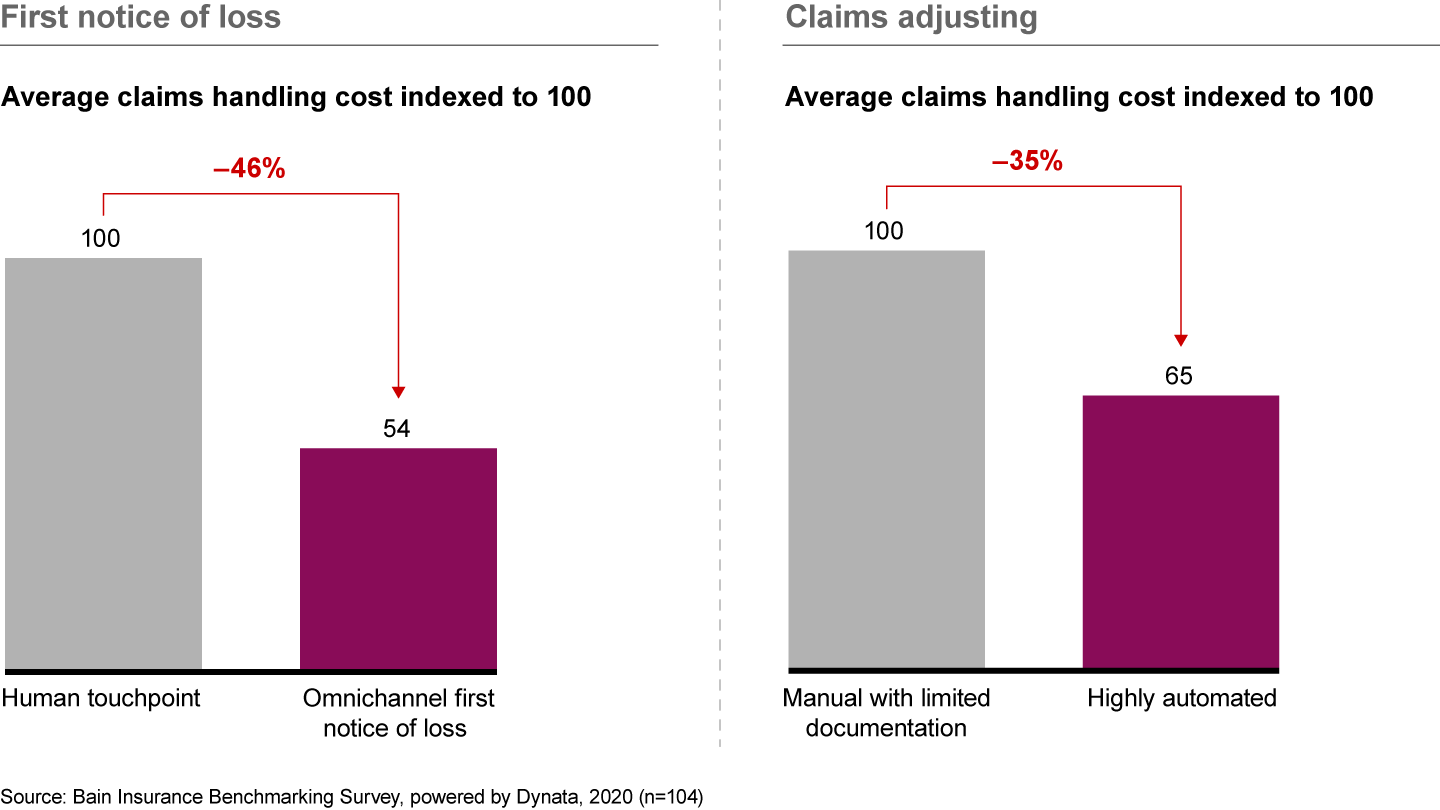
Lower policy application costs and claims handling costs, and better customer outcomes, go along with advanced operations. Auto insurers with automated risk assessment have an average 31% lower cost per policy application. P&C insurers with omnichannel first-notice-of-loss processes have on average 46% lower handling cost per claim (see Figure 4).
Figure 4

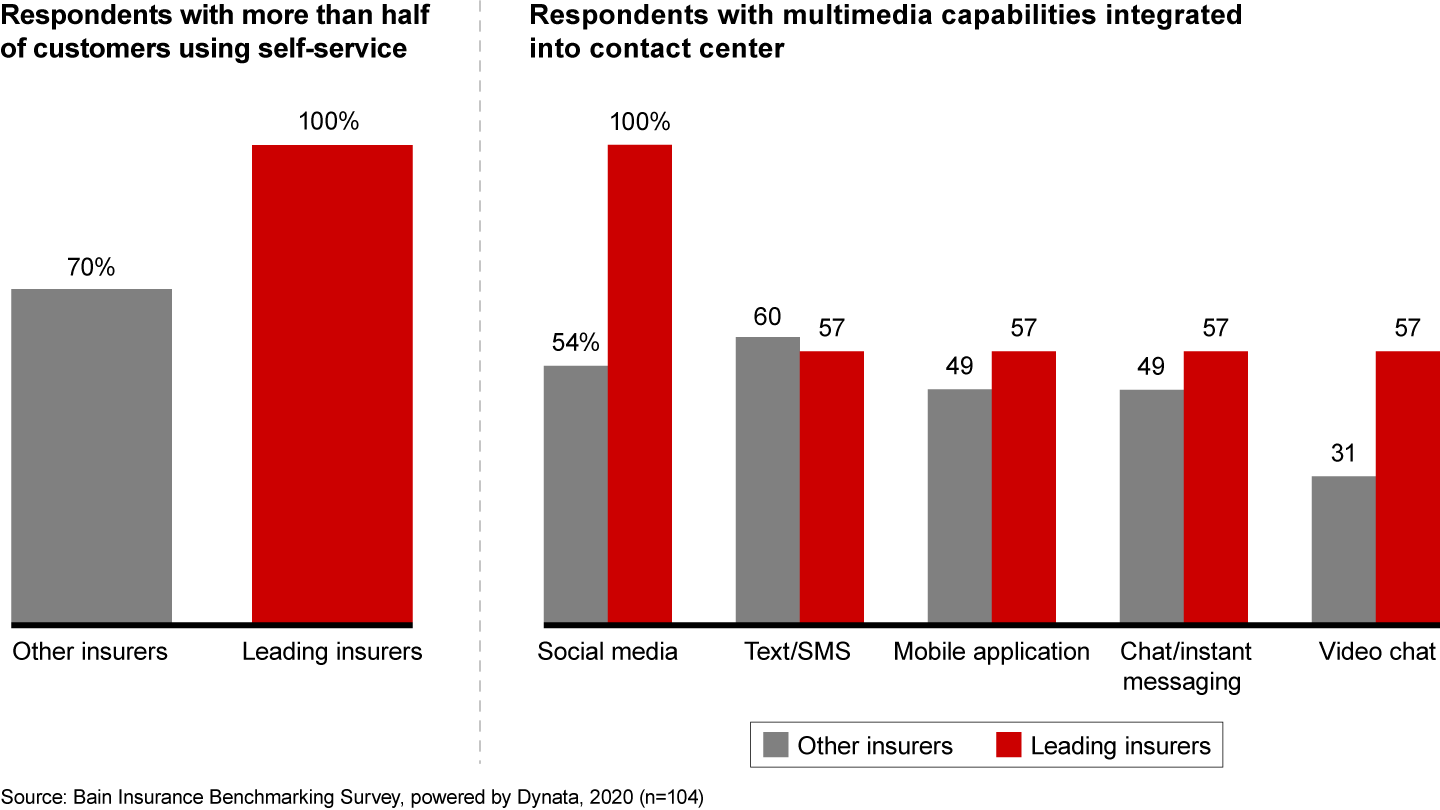
The leaders also deliver self-service at scale: All of the leaders have more than half of customers using self-service. But when customers do need contact centers, the leaders integrate more multimedia capabilities (see Figure 5).
Figure 5

Progressive has pioneered the use of digital technologies to become more efficient, being the first US carrier to offer online policy quotes and a 24-hour claims service. Technology is part of what has allowed Progressive to achieve a low expense ratio (20.5% in 2019) and a high return on equity.
3. Embracing innovation and executing faster
Better customer outcomes and more efficient operations also stem from an advanced innovation agenda among the select group of leading insurers.
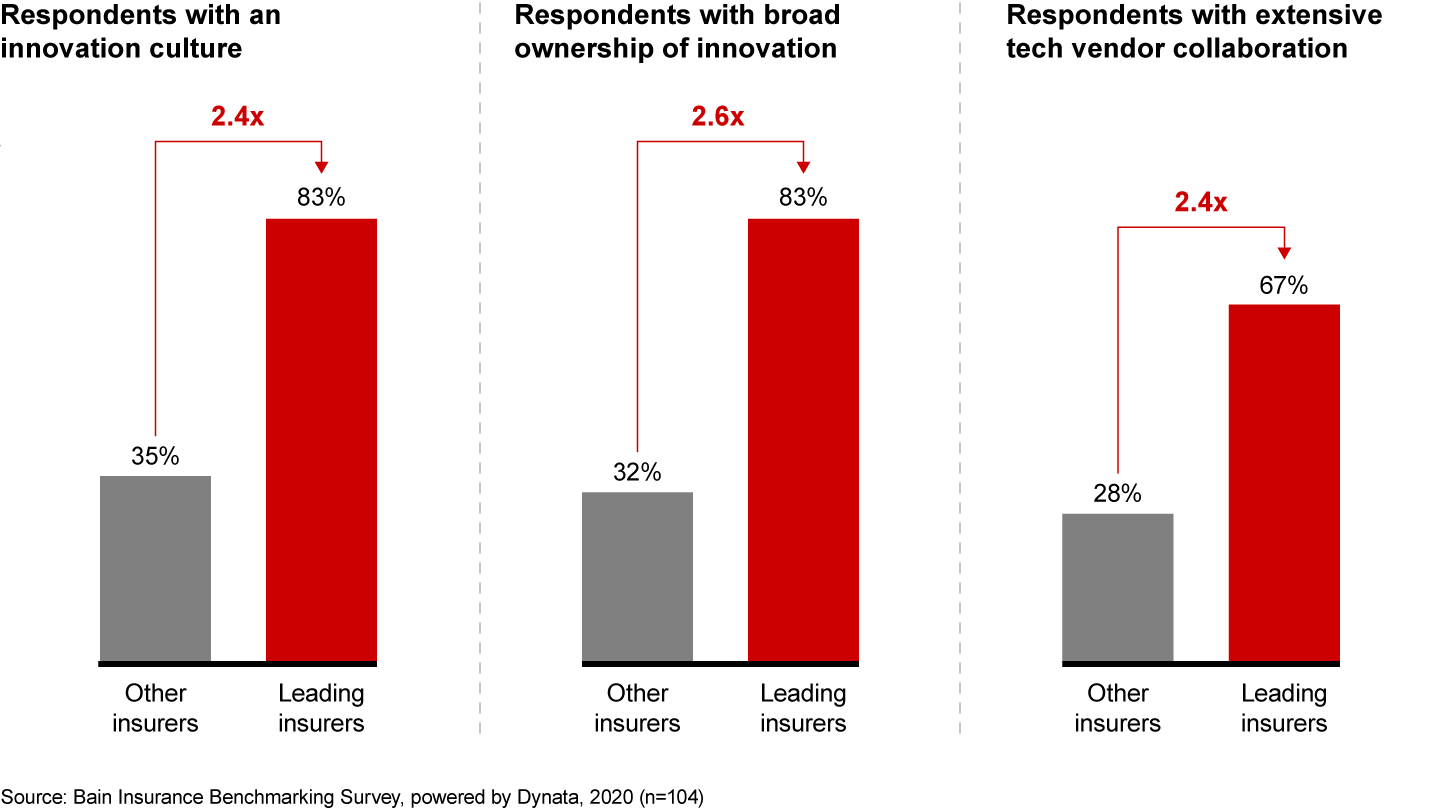
The innovation edge relies on several characteristics. Leading companies are 4.2 times more likely than the rest to have their IT team and business teams collaborate closely and effectively, and 2.4 times more likely to collaborate effectively with technology firms. That adds up to 83% of leaders having a culture of innovation and achieving a broad ownership of innovation in the firm (see Figure 6).
Figure 6

These firms have committed to Agile ways of working, which helps them introduce products and features to the market in a faster time frame. Close to 90% of the respondents get a new product to market in less than six months when deploying Agile at scale.
To maintain this level of innovation and speed, the leaders are 1.8 times more likely to have the right people with the right skills in the right positions. In addition, they are 2.4 times more likely to have flexibility to reallocate funding for IT, as opposed to employing annual fixed-budget cycles.
4. Working around legacy IT to reap the benefits of new technologies
Every major insurer has to contend with legacy IT, and leading companies have figured out how to deal with their legacy—not necessarily remove it—in order to reap value from data and analytics. For instance, they are 2.2 times more likely to have real-time data processing capabilities, and twice as likely to apply artificial intelligence or machine learning at scale.
They have an average of six advanced applications of digital technologies today, whether to improve customer outcomes or apply automation throughout the value chain, including compliance and portfolio management. Some 63% of the leaders deploy a modernized architecture, and 75% of them mostly or entirely use the cloud.
New technologies sit at the heart of new business models. Leading insurers thus aggressively pursue businesses with promise for the future, as 83% have launched a separate digital attacker company.
Consider PingAn, which spends at least 1% of annual revenues on R&D, especially around AI, blockchain and cloud computing. The company uses AI, for instance, in speech robots for customer service, for screening job candidates and for initial reporting and loss assessment in auto claims, so that 95% of auto claims can be handled within 10 minutes.
Further, PingAn built the first licensed online insurance company in China, in a joint venture with Tencent and Alibaba. That digital attacker, named ZhongAn, sells small, simple policies and has pushed the boundaries on speed and innovation, whether to take new products to market, issue new policies (32,000 per second at peak times) or launch one-click claims service.
Such advanced technologies have helped propel PingAn to be a leading insurance firm globally on five-year total shareholder return.
Choosing your battles
Although the top decile of insurers have an advantage over other firms at present, they still have a long way to go in each area of digital leadership.
As insurance companies consider their next moves during these tumultuous times, one lesson from past crises is clear: The situation calls for step change rather than incremental change, because economic crises rearrange the competitive board.
Headed into the global financial crisis a decade ago, a group of almost 3,900 companies worldwide posted double-digit earnings growth, on average, according to Bain analysis. As soon as the storm hit, performance diverged sharply: The winners grew at an 8% compound annual growth rate (CAGR) during the downturn, compared with –2% among the losers. What’s more, the winners locked in gains to grow at an average 22% CAGR during the recovery while the losers stalled at 0%. The gap continued during subsequent years.
Achieving a successful step change will entail a number of coordinated steps:
- Set bold digitalization and cost targets to accomplish in the next year what previously would have taken five years.
- Identify and redesign the customer episodes that matter most, such as research and claims.
- Turn data and analytics into a source of competitive advantage, working around legacy IT if necessary.
- Radically reduce cost through automation and self-service, while improving employees’ skills for high-value interactions.
- Consider launching a digital attacker as a platform for new growth.
With the cost pressures and the shift in customer behavior caused by the Covid-19 crisis, the future is arriving sooner than insurance companies anticipated. Accelerating their digital efforts along the lines described here will raise the odds that they can emerge from this crisis in winning positions.
Net Promoter®, Net Promoter System®, Net Promoter Score®, NPS® and NPS Prism® are registered trademarks and service marks of Bain & Company, Inc., Fred Reichheld and Satmetrix Systems, Inc.

About the Research
Data powered by Dynata, a leading global first-party data and insights platform.

Coronavirus
The global Covid-19 pandemic has extracted a terrible human toll and spurred sweeping changes in the world economy. Across industries, executives have begun reassessing their strategies and repositioning their companies to thrive now and in the world beyond coronavirus.
First published in 7月 2020