

論説

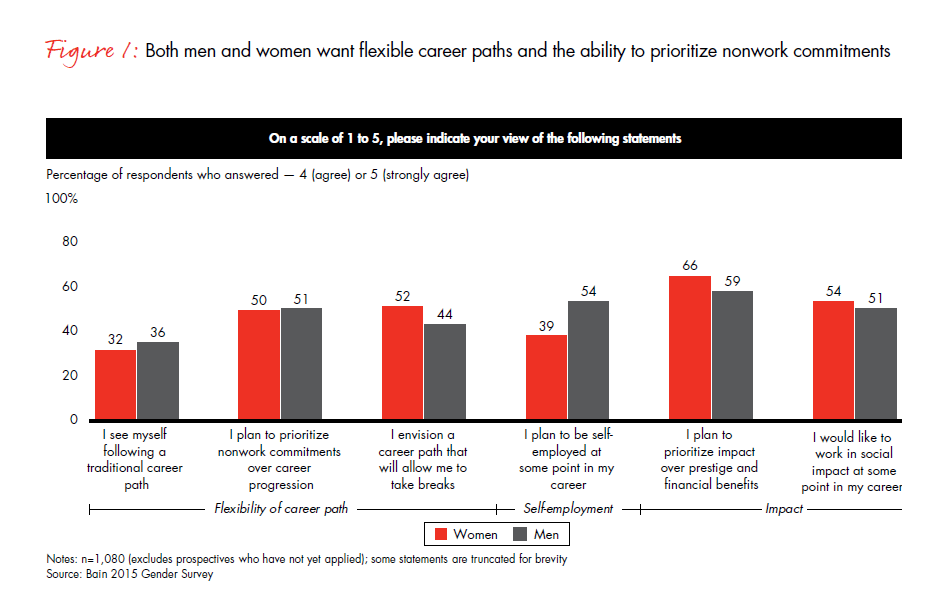
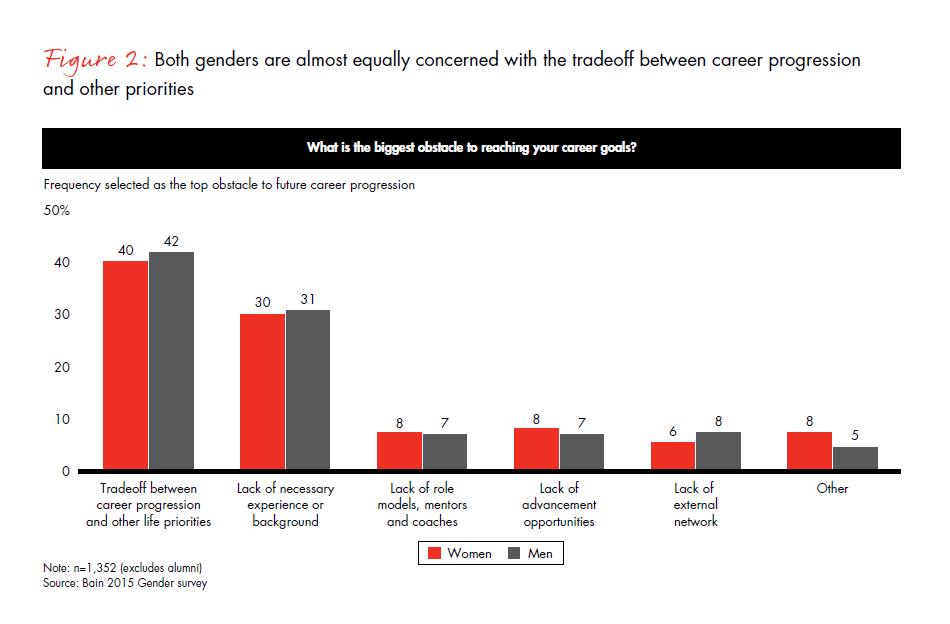
For years the conventional wisdom has been that women value career path flexibility more than men. Men just want to get to the top; women want more. But a recent national study by Bain & Company of 1,500 young MBA students and graduates from the country’s top business schools turns those assumptions on their head. Work-life balance is no longer only a woman’s issue. Nearly equal numbers of women and men on the MBA track now plan to prioritize nonwork commitments over career progression (see Figure 1). And both women and men view the tradeoff between their career progression and other life priorities as the biggest obstacle to reaching their career goals (see Figure 2).
The new study also confirms other similarities between the genders. Men and women enroll in business school for better career options and greater expertise. Both genders aspire to similar jobs after graduation. Nearly equal numbers of women and men want to reach top management (69% of women and 68% of men). However, both men and women also want more space in their professional lives for family and nonwork commitments. Overall, MBA students are thinking more holistically about what they want to accomplish both personally and professionally. They are no longer focused only on career trajectory. They want rich, multidimensional lives.
The biggest change for the millennial generation is that men now share the aspiration for a multifaceted life scoreboard equally with women. Existing gender gaps are starting to close, and both genders now are embracing many concerns traditionally viewed as “woman specific.” Men are thinking about their future roles as parents along with their dreams of becoming top executives. For example, the study reveals that both genders anticipate nearly equal and active involvement in raising a family, with 80% of women and nearly 70% of men saying they intend to have a joint parenting role once they have a family.
More than half of women and 44% of men say they imagine a career path that will enable them to take breaks without jeopardizing their opportunity for promotion.
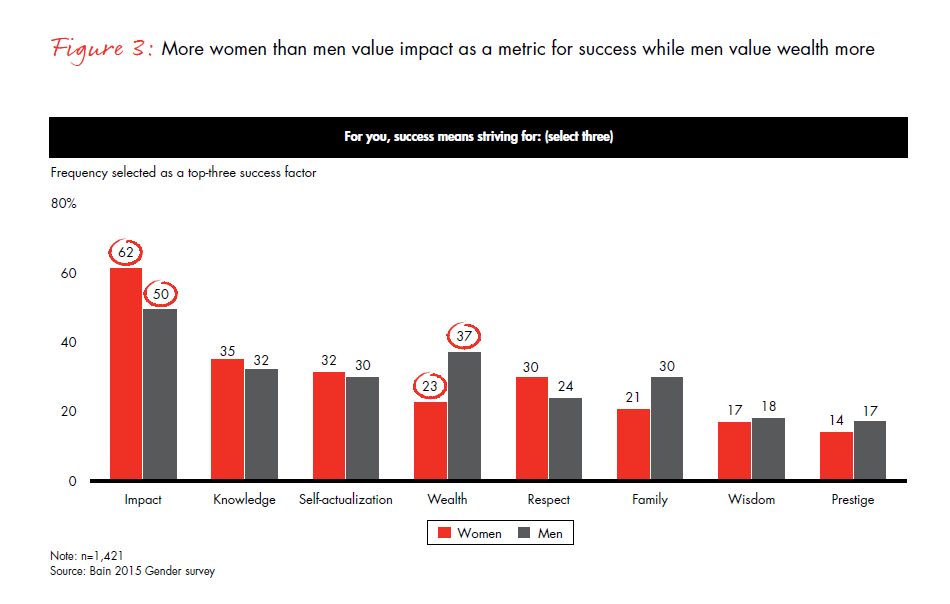
While men and women do share equal interest in having a multidimensional work life, some important differences remain. When asked about their most important metrics for success, both men and women mention impact as their main metric, though women mention impact more frequently than men (62% vs. 50%)(see Figure 3). Men are more likely to cite family as a metric for success, perhaps underscoring that they are more conscious about balancing work and life than they have been in the past. The emphasis on family has not, however, changed male perspectives on financial success. In terms of metrics for success, wealth is a strong second for men, and they mention it more frequently—37% of men vs. 23% of women.
This shift in attitudes and goals is consequential since MBA graduates are the lifeblood of nearly every major company around the world. MBA programs have long been viewed as direct channels to high-powered, intense careers that require long hours and sacrifice, particularly in the years immediately following school. Companies recruiting at schools have depended on their status as coveted employers and had their pick of top talent on campus. They have also relied on this talent to strengthen their leadership pipeline, assuming that many, if not most, new recruits will continue to push themselves relentlessly to upper levels of management.
An upcoming generation of business leaders and entrepreneurs who are no longer solely focused on the corner office would force universities and employers to adapt their curriculum to reflect the fact that “work at all costs” careers are no longer as attractive—to women or men. Millennials may still be aspiring to leadership positions, but along the way they also are looking for work opportunities that offer less traditional paths and more flexible work models. Other research shows that a high percentage of graduates from the top MBA programs continue to choose finance and consulting as their preferred careers, and consulting remains the No. 1 career choice of both women and men as well in this study. But their second and third choices reflect the desire for more balanced environments, with men selecting technology and entrepreneurship companies and women agreeing, but adding a strong interest in working in industries that have a social impact.
Julie Coffman, a partner in Bain's Organization practice, explains what MBA programs and employers should do to support these future leaders.
In view of these shifts in goals, MBA programs and employers have two choices: Adapt to these new priorities or risk losing future talent.
MBA programs that want to show they understand this desire for work-life integration need to convince prospective students they will provide the instruction, experiential learning and career opportunities the students seek. It is no longer only about propelling someone directly to the top; it is also about creating future leaders who can be successful at work as well as in other areas of their lives. This emphasis should flow through all aspects of the MBA experience, including a curriculum that develops leaders who are well equipped to achieve business results while balancing personal priorities. Classes on leadership, on management of multicultural teams and even on practical skill development for how to work with a partner to share responsibilities at home should be available as important program offerings.
Schools should also rethink their approach to career guidance services. They should provide timely access to employers who value employees with these priorities and to alumni who can build long-lasting relationships with students once they are fully involved in the real world of managing a multifaceted life. Moreover, future MBA alumni may look to their alma maters as sources of lifelong learning opportunities that then create opportunities for MBA programs to strengthen these important relationships as alumni navigate career and life choices.

Integrating Work and Life
More men and women are choosing educational and career paths that will enable them to succeed in work and in life.
Employers, in turn, have their own set of challenges as they try to attract the next generation of leaders. If graduates are looking for jobs that offer multiple ways to succeed, companies need to do more than just talk about flexibility. They also need to demonstrate that they have a work culture and management team members who embrace multiple paths to the top, and that they have developed and implemented flexible working models that may include options such as part-time employment, leaves of absence, telecommuting and job sharing. This goes beyond the obvious, and increasingly more common, demands for paid sick and parental leave benefits. Indeed, companies need to show that they value the roles of both men and women as caregivers and that they support and celebrate the many ways employees can be successful without sacrificing their nonwork priorities.
Doing this right will require major cultural change on the part of companies recruiting new talent. Many corporate cultures explicitly and implicitly reward hard-charging young professionals, leading many to feel they are “slacking off” or not impressing their supervisors when they have other commitments. Further, many promotion processes tend to reward hours spent at a desk over other measures of achievement. To ensure that flexible work models are truly successful, organizations must change the way they think about career progression and the policies and behaviors that reinforce current promotion practices—not an easy task.
For companies able to do this, the benefits will extend beyond getting top MBAs in the door. They will also be more likely to keep those young professionals in the talent pipeline for the long term. Our previous research has shown that men and women tend to start their careers with high levels of aspiration to reach top management and confidence that they can achieve that goal. Unfortunately, over the course of their careers, many women lose both the aspiration and confidence to reach their objectives. Part of this loss comes from their lack of interest in sacrificing other priorities to fit what they believe to be the stereotypes of success in their organization (such as an unwavering commitment to long hours and constant work). It also comes from a lack of support and inspiration to move to the next level. This makes it doubly important for companies to follow up in concrete ways on their promises to support and reward the pursuit of both professional and personal priorities.
With the rise of this new generation, companies and MBA programs can no longer afford to ignore or minimize the desire for multidimensional lives or invest in this solely as a “woman’s issue.” Both men and women will be choosing educational and career paths that enable them to be successful in work and in life. Schools and companies that rely on MBAs to fill their leadership pipeline have to keep up with these changes in priorities—or they will see talent go elsewhere in the years to come.
Julie Coffman is a partner with Bain & Company in the Chicago office and chair of Bain’s Global Women’s Leadership Council. Priscilla Schenck is a Bain principal in Chicago. Melissa Artabane is the Director of Bain’s Global Diversity Programs in Boston.
First published in 10月 2015