
Skip to Content
  • オフィス

    オフィス

    北米・南米
    • Atlanta
    • Austin
    • Bogota
    • Boston
    • Buenos Aires
    • Chicago
    • Dallas
    • Denver
    • Houston
    • Los Angeles
    • Mexico City
    • Minneapolis
    • Monterrey
    • Montreal
    • New York
    • Rio de Janeiro
    • San Francisco
    • Santiago
    • São Paulo
    • Seattle
    • Silicon Valley
    • Toronto
    • Washington, DC
    ヨーロッパ・中東・アフリカ
    • Amsterdam
    • Athens
    • Berlin
    • Brussels
    • Copenhagen
    • Doha
    • Dubai
    • Dusseldorf
    • Frankfurt
    • Helsinki
    • Istanbul
    • Johannesburg
    • Kyiv
    • Lisbon
    • London
    • Madrid
    • Milan
    • Munich
    • Oslo
    • Paris
    • Riyadh
    • Rome
    • Stockholm
    • Vienna
    • Warsaw
    • Zurich
    アジア・オーストラリア
    • Bangkok
    • Beijing
    • Bengaluru
    • Brisbane
    • Ho Chi Minh City
    • Hong Kong
    • Jakarta
    • Kuala Lumpur
    • Manila
    • Melbourne
    • Mumbai
    • New Delhi
    • Perth
    • Shanghai
    • Singapore
    • Sydney
    • Tokyo
    全てのオフィス
  • アルムナイ
  • メディア
  • お問い合わせ
  • 東京オフィス
  • Japan | 日本語

    地域と言語を選択

    グローバル
    • Global (English)
    北米・南米
    • Brazil (Português)
    • Argentina (Español)
    • Canada (Français)
    • Chile (Español)
    • Colombia (Español)
    ヨーロッパ・中東・アフリカ
    • France (Français)
    • DACH Region (Deutsch)
    • Italy (Italiano)
    • Spain (Español)
    • Greece (Elliniká)
    アジア・オーストラリア
    • China (中文版)
    • Korea (한국어)
    • Japan (日本語)
  • Saved items (0)
    Saved items (0)

    You have no saved items.

    後で閲読、共有できるようにするためにブックマークしてください

    Explore Bain Insights
  • 業界別プラクティス
    メインメニュー

    業界別プラクティス

    • 航空宇宙、防衛、政府関連
    • 農業
    • 化学製品
    • インフラ、建設
    • 消費財
    • 金融サービス
    • ヘルスケア
    • 産業機械、設備
    • メディア、エンターテインメント
    • 金属
    • 採掘・鉱業
    • 石油、ガス
    • 紙、パッケージ
    • プライベートエクイティ
    • 公共、社会セクター
    • 小売
    • テクノロジー
    • 通信
    • 交通
    • 観光産業
    • 公益事業、再生可能エネルギー
  • 機能別プラクティス
    メインメニュー

    機能別プラクティス

    • カスタマー・エクスペリエンス
    • サステイナビリティ、 社会貢献
    • Innovation
    • 企業買収、合併 (M&A)
    • オペレーション
    • 組織
    • プライベートエクイティ
    • マーケティング・営業
    • 戦略
    • アドバンスド・アナリティクス
    • Technology
    • フルポテンシャル・トランスフォーメーション
  • Digital
  • 知見/レポート
  • ベイン・アンド・カンパニーについて
    メインメニュー

    ベイン・アンド・カンパニーについて

    • ベインの信条
    • 活動内容
    • 社員とリーダーシップ
    • プレス・メディア情報
    • クライアントの結果
    • 受賞歴
    • パートナーシップを結んでいる団体
    Further: Our global responsibility
    • ダイバーシティ
    • 社会貢献
    • サステイナビリティへの取り組み
    • 世界経済フォーラム(WEF)
    Learn more about Further
  • キャリア
    メインメニュー

    キャリア

    • ベインで働く
      キャリア
      ベインで働く
      • Find Your Place
      • ベインで活躍する機会
      • ベインのチーム体制
      • 学生向けページ
      • インターンシップ
      • 採用イベント
    • ベインでの体験
      キャリア
      ベインでの体験
      • Blog: Inside Bain
      • キャリアストーリー
      • 社員紹介
      • Where We Work
      • 成長を後押しするサポート体制
      • アフィニティ・グループ
      • 福利厚生
    • Impact Stories
    • 採用情報
      キャリア
      採用情報
      • 採用プロセス
      • 面接内容
    FIND JOBS
  • オフィス
    メインメニュー

    オフィス

    • 北米・南米
      オフィス
      北米・南米
      • Atlanta
      • Austin
      • Bogota
      • Boston
      • Buenos Aires
      • Chicago
      • Dallas
      • Denver
      • Houston
      • Los Angeles
      • Mexico City
      • Minneapolis
      • Monterrey
      • Montreal
      • New York
      • Rio de Janeiro
      • San Francisco
      • Santiago
      • São Paulo
      • Seattle
      • Silicon Valley
      • Toronto
      • Washington, DC
    • ヨーロッパ・中東・アフリカ
      オフィス
      ヨーロッパ・中東・アフリカ
      • Amsterdam
      • Athens
      • Berlin
      • Brussels
      • Copenhagen
      • Doha
      • Dubai
      • Dusseldorf
      • Frankfurt
      • Helsinki
      • Istanbul
      • Johannesburg
      • Kyiv
      • Lisbon
      • London
      • Madrid
      • Milan
      • Munich
      • Oslo
      • Paris
      • Riyadh
      • Rome
      • Stockholm
      • Vienna
      • Warsaw
      • Zurich
    • アジア・オーストラリア
      オフィス
      アジア・オーストラリア
      • Bangkok
      • Beijing
      • Bengaluru
      • Brisbane
      • Ho Chi Minh City
      • Hong Kong
      • Jakarta
      • Kuala Lumpur
      • Manila
      • Melbourne
      • Mumbai
      • New Delhi
      • Perth
      • Shanghai
      • Singapore
      • Sydney
      • Tokyo
    全てのオフィス
  • アルムナイ
  • メディア
  • お問い合わせ
  • 東京オフィス
  • Japan | 日本語
    メインメニュー

    地域と言語を選択

    • グローバル
      地域と言語を選択
      グローバル
      • Global (English)
    • 北米・南米
      地域と言語を選択
      北米・南米
      • Brazil (Português)
      • Argentina (Español)
      • Canada (Français)
      • Chile (Español)
      • Colombia (Español)
    • ヨーロッパ・中東・アフリカ
      地域と言語を選択
      ヨーロッパ・中東・アフリカ
      • France (Français)
      • DACH Region (Deutsch)
      • Italy (Italiano)
      • Spain (Español)
      • Greece (Elliniká)
    • アジア・オーストラリア
      地域と言語を選択
      アジア・オーストラリア
      • China (中文版)
      • Korea (한국어)
      • Japan (日本語)
  • Saved items  (0)
    メインメニュー
    Saved items (0)

    You have no saved items.

    後で閲読、共有できるようにするためにブックマークしてください

    Explore Bain Insights
  • 業界別プラクティス
    • 業界別プラクティス

      • 航空宇宙、防衛、政府関連
      • 農業
      • 化学製品
      • インフラ、建設
      • 消費財
      • 金融サービス
      • ヘルスケア
      • 産業機械、設備
      • メディア、エンターテインメント
      • 金属
      • 採掘・鉱業
      • 石油、ガス
      • 紙、パッケージ
      • プライベートエクイティ
      • 公共、社会セクター
      • 小売
      • テクノロジー
      • 通信
      • 交通
      • 観光産業
      • 公益事業、再生可能エネルギー
  • 機能別プラクティス
    • 機能別プラクティス

      • カスタマー・エクスペリエンス
      • サステイナビリティ、 社会貢献
      • Innovation
      • 企業買収、合併 (M&A)
      • オペレーション
      • 組織
      • プライベートエクイティ
      • マーケティング・営業
      • 戦略
      • アドバンスド・アナリティクス
      • Technology
      • フルポテンシャル・トランスフォーメーション
  • Digital
  • 知見/レポート
  • ベイン・アンド・カンパニーについて
    • ベイン・アンド・カンパニーについて

      • ベインの信条
      • 活動内容
      • 社員とリーダーシップ
      • プレス・メディア情報
      • クライアントの結果
      • 受賞歴
      • パートナーシップを結んでいる団体
      Further: Our global responsibility
      • ダイバーシティ
      • 社会貢献
      • サステイナビリティへの取り組み
      • 世界経済フォーラム(WEF)
      Learn more about Further
  • キャリア
    人気検索キーワード
    • デジタル
    • 戦略
    前回の検索
      最近訪れたページ

      Content added to saved items

      Saved items (0)

      Removed from saved items

      Saved items (0)

      論説

      Investors Have Soured on Europe’s Banks, and Now a Downturn Looms

      Investors Have Soured on Europe’s Banks, and Now a Downturn Looms

      Capital and liquidity have deteriorated. Can banks reverse course?

      著者:João Soares

      • min read
      }

      論説

      Investors Have Soured on Europe’s Banks, and Now a Downturn Looms
      en

      European banks had a mixed year in their overall health. They experienced a deterioration in capital and liquidity across the board by the end of 2018, with five large banks warranting the “highest concern” status in Bain’s latest health check, up from just two of the largest banks flashing that signal. They did, however, on average improve their profitability and asset quality (see Figure 1).

      Figure 1
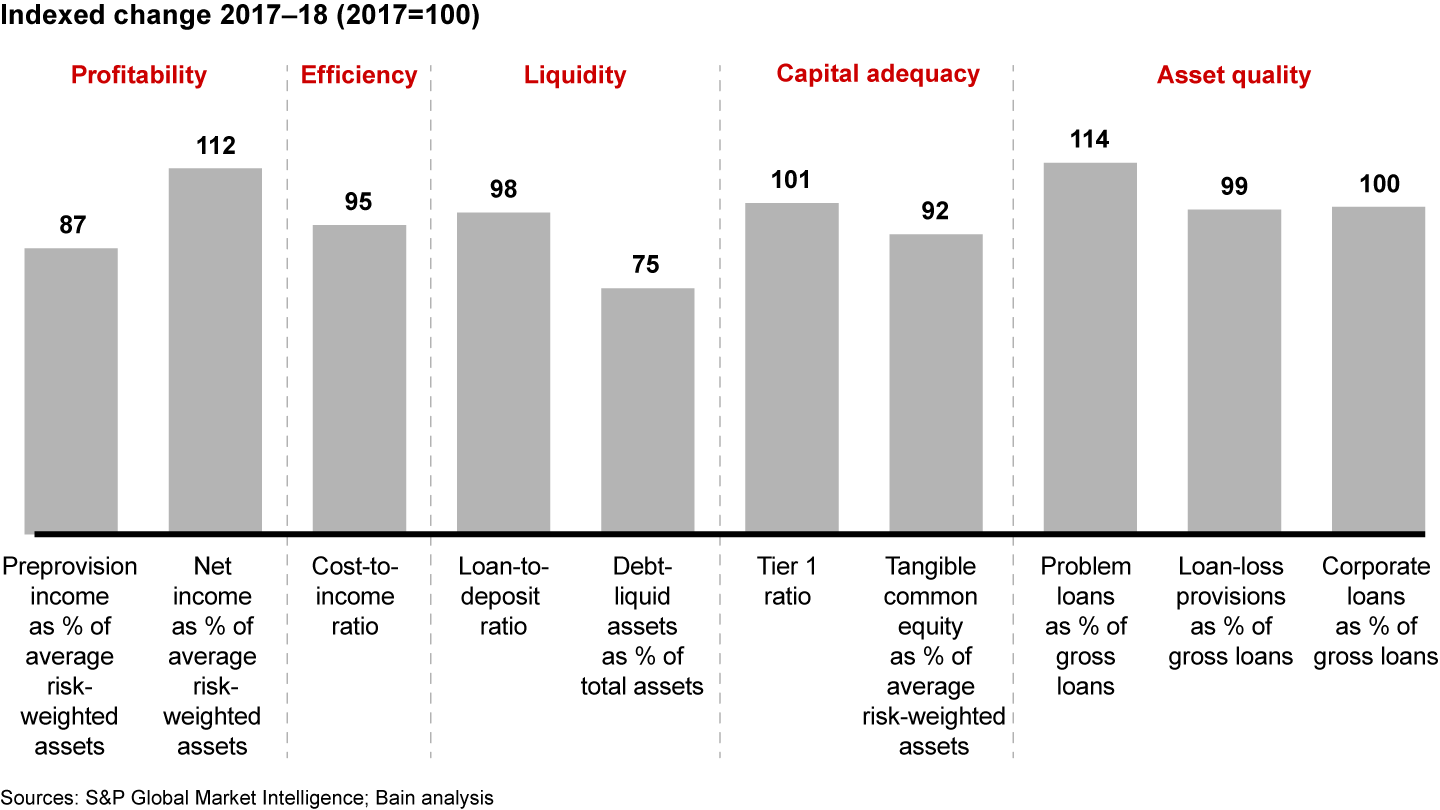
      On average, European banks have improved on net income and asset quality, while losing on efficiency, liquidity and capital metrics
      On average, European banks have improved on net income and asset quality, while losing on efficiency, liquidity and capital metrics
      On average, European banks have improved on net income and asset quality, while losing on efficiency, liquidity and capital metrics

      Equity investors turned more pessimistic. Bank stock prices dipped for every category of bank, correlating with the overall market retreat in late 2018. The average price-to-book ratio for all banks in the sample was 0.63, vs. 0.92 at year-end 2017.

      These conclusions emerge from Bain & Company’s latest health check of the banking system, the sixth annual analysis covering 101 banks in the base study. Our health check scoring model derives from three dimensions, two of which represent banks’ robustness (see “How the scoring model works,” below):

      • profitability and efficiency;
      • asset and liability health (here, we give a relatively heavy weighting to asset quality as essential for future earnings); and
      • stability of the operating environment.

      Our scoring relies on data from S&P Global Market Intelligence. The health check provides a uniquely integrated view, which stands in contrast to looking only at a balance sheet or income statement. Based on the combination of the critical financial ratios, we calculate a score for each bank and place it in one of four categories (see Figure 2).

      Figure 2
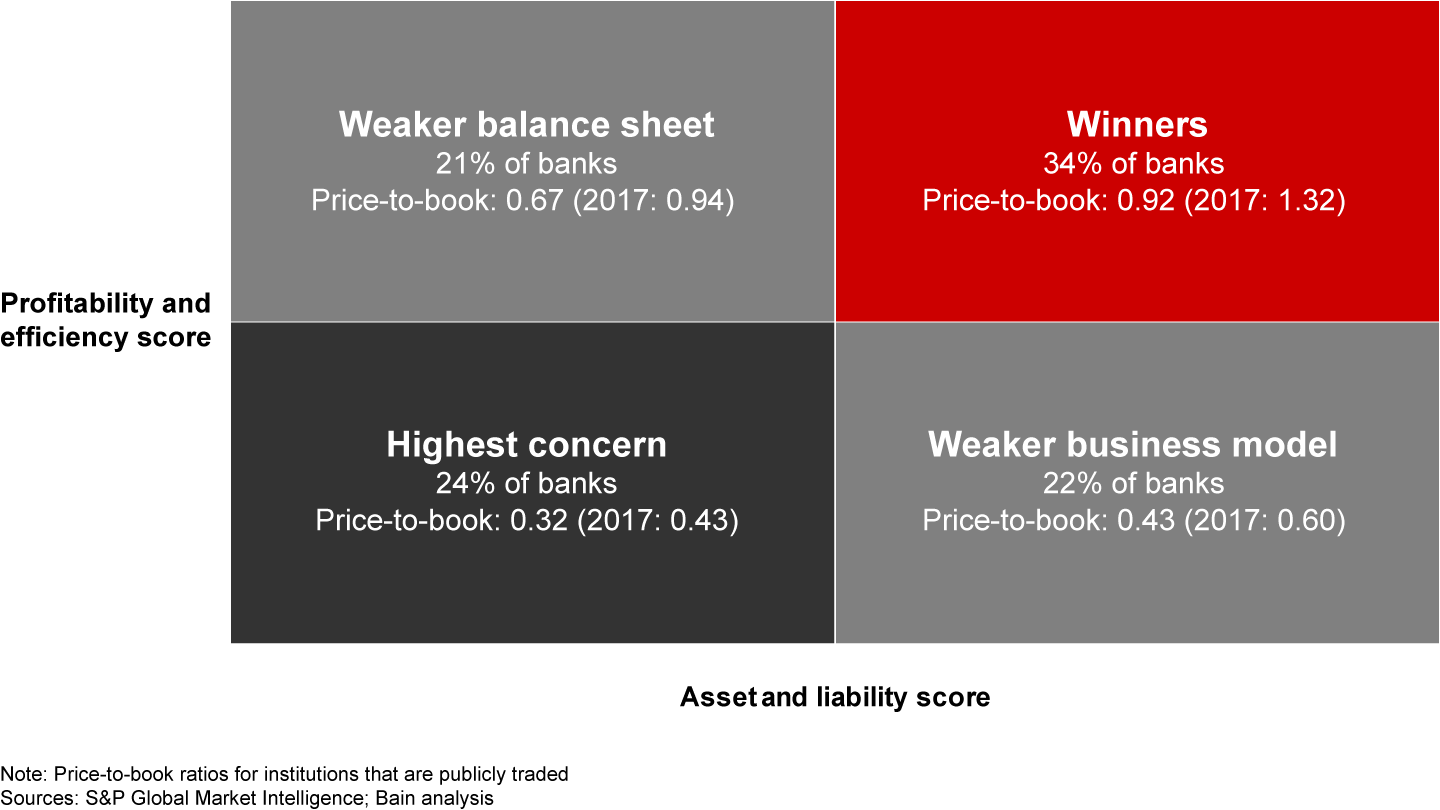
      Equity investors give winner banks a large multiple advantage
      Equity investors give winner banks a large multiple advantage
      Equity investors give winner banks a large multiple advantage
      • Winners. Some 34% of the banks attained this strong position. Yet even these outperformers traded at a discount at year-end, with a price-to-book ratio of 0.92, down from 1.32 in 2017. Scandinavian and northwest European banks continue to outperform on all financial indicators (see Figure 3).
      • Weaker business model. Banks in this category account for 22% of the total, consisting primarily of German and Irish banks. Investors pushed down stock prices to a price-to-book ratio of 0.43, lower than the 0.60 in 2017.
      • Weaker balance sheet. Some 21% of the banks have a priority to improve their weak balance sheets. Over the years, banks in this category have shown vulnerabilities not yet fully reflected in profit and loss statements. This group of banks finished the year with an average price-to-book ratio of 0.67, down from 0.94.
      • Highest concern. Of the total base of banks, 24% flash a high-risk signal. Investors lowered the price-to-book ratio to 0.32, down from 0.43. This category is peppered with banks from Italy and Greece, with a few more from Italy, Portugal, Poland, France and Germany. Five large banks with more than $250 billion in assets, from Germany, France and Spain, fell into this category. Two additional large banks reached the weaker balance sheet quadrant, which in the past has been a reliable predictor of troubled paths.
      Figure 3
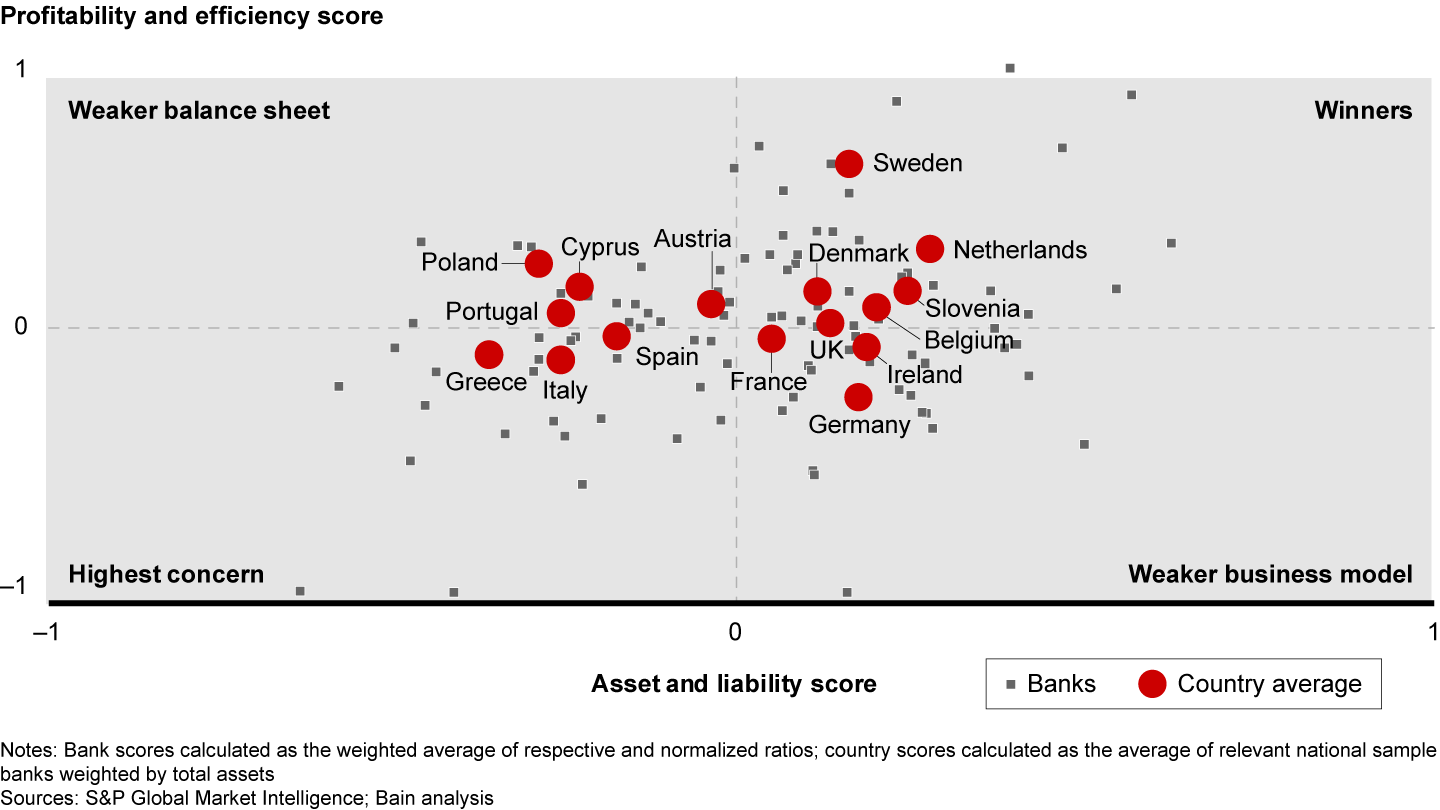
      Banks in southern Europe warrant the highest concern, while those in Ireland and Germany struggle with the business model
      Banks in southern Europe warrant the highest concern, while those in Ireland and Germany struggle with the business model
      Banks in southern Europe warrant the highest concern, while those in Ireland and Germany struggle with the business model

      It’s worth noting that virtually all banks that disappeared in Europe over the past decade fell into the highest-concern category, and at least four of them were resolved. Three are in the lowest possible position for the business model, with a weak balance sheet as well, in Germany, Italy and Portugal.

      The equity market’s pricing is directionally correct between the winners and highest-concern banks. Winners trade on average at three times those of highest concern. Still, the market is severely pricing banks with resilient balance sheets but poor business models, as the price-to-book average of weaker business models almost matches the highest-concern level.

      The challenges and path forward for a bank will depend on its relative position. What banks need to work on now depends on their relative position.

      • Improve the balance sheet or maintain a healthy one. Banks that are vulnerable here should work to shrink the balance sheet, and reduce their risk-weighted assets and gross loans. One no-regrets move is to restructure nonperforming loans, and then to be proactive—if a bank does not have a dynamic early warning system, it should build one now. Lagging banks can improve the stability of the funding mix by increasing customer deposits and reducing the reliance on wholesale funding.
      • Increase profitability to improve returns and capital position. Most banks have loads of “bad” costs and complexity—labor-intensive processes that could be digitized for self-service, or broken processes that cause rework—which remain even after they undertake significant cost programs. A useful approach to streamline or avoid such complexity is zero-based budgeting. This clean-sheet approach forces managers to scrutinize all spending and requires justifying every expense that should be kept.
        In parallel, banks also have leeway to accelerate programs that improve the customer experience, largely by making the experience simpler and more digital, and by resolving customer inquiries or problems at the first contact. Going “simple, digital and right first time” is well worth the effort, because customer loyalty and financial health remain closely intertwined, as Net Promoter Score® and business model strength are correlated (see Figure 4).
      Figure 4
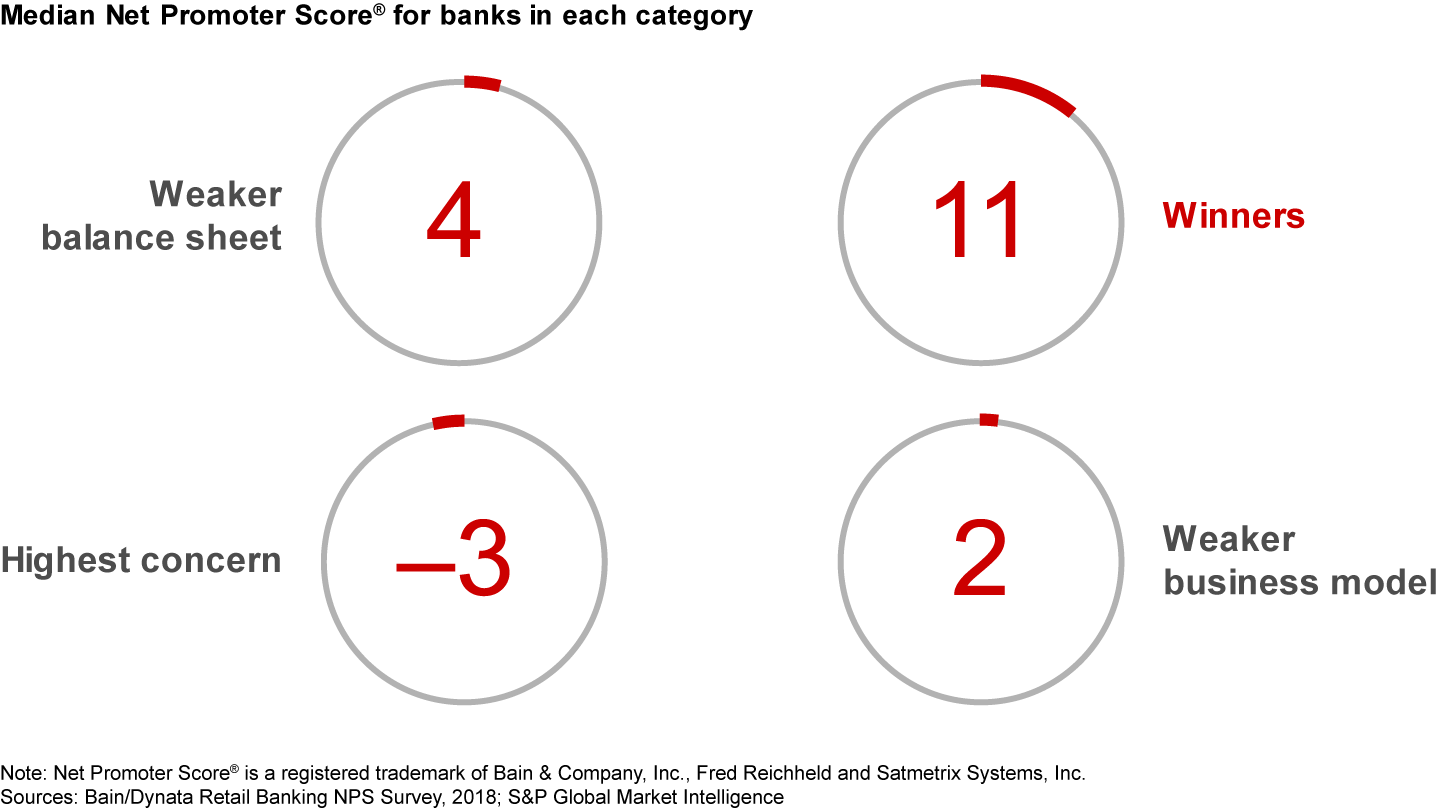
      Customer loyalty and business strength go hand in hand
      Customer loyalty and business strength go hand in hand
      Customer loyalty and business strength go hand in hand
      • Prepare for an industry overhaul. The emergence of challenger banks and specialist companies may be changing the dynamics of some markets, in that younger customers are willing to try these alternatives, given how easy it is to do so and how regulation has opened the playing field. For example, in Bain’s latest global consumer banking survey, among all UK respondents, the product share is low for challenger banks Revolut, Monzo, Starling and Monese, but for respondents who opened a new checking or savings account in the past year, the share doubles. For younger respondents who opened an account, the share increases by four times. In other words, the disrupters and product specialists are parlaying their greater customer loyalty to punch well above their weight in attracting new business. As a result, national and cross-border consolidation is likely to accelerate.

      When a downturn materializes, it could be a “fasten your seatbelts” moment. More borrowers will have difficulty repaying their loans, with the main concern being business borrowers, given their loan size and the sequence of deterioration. If history is any guide, and depending on the severity of the downturn, two to five banks whose performance classifies them in the highest-concern group could disappear, most likely by absorption, within the next couple of years. More jarring to investors, a couple of large banks with weaker balance sheets that have sailed under the radar due to their strong in-year performance could hit the ropes as well. By contrast, more agile banks are improving their early warning systems using advanced analytics, creating mechanisms to be able to increase the resilience of their balance sheet.


      How the scoring model works

      The scoring model in Bain’s health check of the banking system gathers data in six areas, with the heaviest weighting on asset quality (see figure).

      Investors have soured on Europe's banks

      Profitability. The key determinant of sustainable success or failure, it measures the ability to create economic value and to preserve or improve risk protection for creditors. Performance metrics include preprovision income as a percentage of risk-weighted assets and net income as a percentage of risk-weighted assets.

      Efficiency. Cost containment is a strategic focal point; it allows banks to satisfy stakeholders’ requirements without overly aggressive risk taking. Performance metrics include operating expenses as a percentage of net revenue.

      Asset quality. A main factor in future earnings and capital generation or erosion, loan quality is a key to determining a bank’s stability. Nonperforming loans predict future losses. Performance metrics as a percentage of gross loans include problem loans, loan-loss provisions and corporate loans.

      Capital adequacy. Banks typically fail due to losses in the loan portfolio, poor business models or fraud—all of which lead to a decline in capital. In the case of low profitability, capital is the most important buffer for absorbing risk costs. Performance metrics include Tier 1 capital as a percentage of risk-weighted assets and tangible common equity as a percentage of average risk-weighted assets.

      Liquidity. Illiquidity is often a proximate cause of failure as banks might not any longer be able to finance themselves under pressure. Access to market funding may not be based on long-term relationships but rather on creditworthiness. Performance metrics include gross loans as a percentage of total deposits and total debt—that is, liquid assets as a percentage of total assets.

      Operating environment. Bank performance is often constrained by violent economic cycles, adverse political decisions or weak legal systems. Declines in economic growth correlate highly with worsening asset quality. Performance metrics include assessment of sovereign credit rating and corruption.

      Net Promoter Score® is a registered trademark of Bain & Company, Inc., Fred Reichheld and Satmetrix Systems, Inc. 

      João Soares is a partner with Bain & Company’s Financial Services practice. He is based in London. The author thanks Justyna Nowicka and Emeric Karacsonyi for their contribution to the European health check analysis.

      著者
      • Headshot of João Soares
        João Soares
        パートナー, New York
      関連業種
      • 金融サービス
      • 銀行
      関連するコンサルティングサービス
      • Corporate Strategy
      コンサルティングサービス
      • Zero-based Budgeting
      金融サービス
      Not a Banking Crisis, but a Battle for Street Cred

      Our health check shows how the largest banks fare in liquidity and market perception, and what they must do to improve their positions.

      詳細
      金融サービス
      Six Threats Demand a New Playbook for Banks in Wealth and Asset Management

      AI, direct-to-consumer models, and the return of local priorities are redrawing industry lines.

      詳細
      Zero-based Budgeting
      The New Case for Zero-Based Cost Management

      A clean-sheet approach helps leaders produce savings that stick—even in turbulent times.

      詳細
      Corporate Strategy
      The Magic of Founder-led Companies

      Companies with their founder present performed twice as well as their peers in the S&P 500 over the past decade.

      詳細
      金融サービス
      Banking M&A

      As conditions shift, leading banks are fusing scale with scope to create future-ready organizations.

      詳細
      First published in 12月 2019
      Tags
      • Corporate Strategy
      • Zero-based Budgeting
      • 金融サービス
      • 銀行

      クライアント支援事例

      Digital A European Banking Giant Rises to the Fintech Challenge

      ケーススタディを見る

      Further℠ Redesigning a Bank’s Climate Strategy for Growth

      ケーススタディを見る

      チェンジ・マネジメント The change process unlocks potential and profits

      ケーススタディを見る

      お気軽にご連絡下さい

      私達は、グローバルに活躍する経営者が抱える最重要経営課題に対して、厳しい競争環境の中でも成長し続け、「結果」を出すために支援しています。

      ベインの知見。競争が激化するグローバルビジネス環境で、日々直面するであろう問題について論じている知見を毎月お届けします。

      *プライバシーポリシーの内容を確認し、合意しました。

      プライバシーポリシーをご確認頂き、合意頂けますようお願い致します。
      Bain & Company
      お問い合わせ Sustainability Accessibility Terms of use Privacy Cookie Policy Sitemap Log In

      © 1996-2026 Bain & Company, Inc.

      お問い合わせ

      How can we help you?

      • ビジネスについて
      • プレス報道について
      • 採用について
      全てのオフィス