
Skip to Content
  • オフィス

    オフィス

    北米・南米
    • Atlanta
    • Austin
    • Bogota
    • Boston
    • Buenos Aires
    • Chicago
    • Dallas
    • Denver
    • Houston
    • Los Angeles
    • Mexico City
    • Minneapolis
    • Monterrey
    • Montreal
    • New York
    • Rio de Janeiro
    • San Francisco
    • Santiago
    • São Paulo
    • Seattle
    • Silicon Valley
    • Toronto
    • Washington, DC
    ヨーロッパ・中東・アフリカ
    • Amsterdam
    • Athens
    • Berlin
    • Brussels
    • Copenhagen
    • Doha
    • Dubai
    • Dusseldorf
    • Frankfurt
    • Helsinki
    • Istanbul
    • Johannesburg
    • Kyiv
    • Lisbon
    • London
    • Madrid
    • Milan
    • Munich
    • Oslo
    • Paris
    • Riyadh
    • Rome
    • Stockholm
    • Vienna
    • Warsaw
    • Zurich
    アジア・オーストラリア
    • Bangkok
    • Beijing
    • Bengaluru
    • Brisbane
    • Ho Chi Minh City
    • Hong Kong
    • Jakarta
    • Kuala Lumpur
    • Manila
    • Melbourne
    • Mumbai
    • New Delhi
    • Perth
    • Shanghai
    • Singapore
    • Sydney
    • Tokyo
    全てのオフィス
  • アルムナイ
  • メディア
  • お問い合わせ
  • 東京オフィス
  • Japan | 日本語

    地域と言語を選択

    グローバル
    • Global (English)
    北米・南米
    • Brazil (Português)
    • Argentina (Español)
    • Canada (Français)
    • Chile (Español)
    • Colombia (Español)
    ヨーロッパ・中東・アフリカ
    • France (Français)
    • DACH Region (Deutsch)
    • Italy (Italiano)
    • Spain (Español)
    • Greece (Elliniká)
    アジア・オーストラリア
    • China (中文版)
    • Korea (한국어)
    • Japan (日本語)
  • Saved items (0)
    Saved items (0)

    You have no saved items.

    後で閲読、共有できるようにするためにブックマークしてください

    Explore Bain Insights
  • 業界別プラクティス
    メインメニュー

    業界別プラクティス

    • 航空宇宙、防衛、政府関連
    • 農業
    • 化学製品
    • インフラ、建設
    • 消費財
    • 金融サービス
    • ヘルスケア
    • 産業機械、設備
    • メディア、エンターテインメント
    • 金属
    • 採掘・鉱業
    • 石油、ガス
    • 紙、パッケージ
    • プライベートエクイティ
    • 公共、社会セクター
    • 小売
    • テクノロジー
    • 通信
    • 交通
    • 観光産業
    • 公益事業、再生可能エネルギー
  • 機能別プラクティス
    メインメニュー

    機能別プラクティス

    • カスタマー・エクスペリエンス
    • サステイナビリティ、 社会貢献
    • Innovation
    • 企業買収、合併 (M&A)
    • オペレーション
    • 組織
    • プライベートエクイティ
    • マーケティング・営業
    • 戦略
    • アドバンスド・アナリティクス
    • Technology
    • フルポテンシャル・トランスフォーメーション
  • Digital
  • 知見/レポート
  • ベイン・アンド・カンパニーについて
    メインメニュー

    ベイン・アンド・カンパニーについて

    • ベインの信条
    • 活動内容
    • 社員とリーダーシップ
    • プレス・メディア情報
    • クライアントの結果
    • 受賞歴
    • パートナーシップを結んでいる団体
    Further: Our global responsibility
    • ダイバーシティ
    • 社会貢献
    • サステイナビリティへの取り組み
    • 世界経済フォーラム(WEF)
    Learn more about Further
  • キャリア
    メインメニュー

    キャリア

    • ベインで働く
      キャリア
      ベインで働く
      • Find Your Place
      • ベインで活躍する機会
      • ベインのチーム体制
      • 学生向けページ
      • インターンシップ
      • 採用イベント
    • ベインでの体験
      キャリア
      ベインでの体験
      • Blog: Inside Bain
      • キャリアストーリー
      • 社員紹介
      • Where We Work
      • 成長を後押しするサポート体制
      • アフィニティ・グループ
      • 福利厚生
    • Impact Stories
    • 採用情報
      キャリア
      採用情報
      • 採用プロセス
      • 面接内容
    FIND JOBS
  • オフィス
    メインメニュー

    オフィス

    • 北米・南米
      オフィス
      北米・南米
      • Atlanta
      • Austin
      • Bogota
      • Boston
      • Buenos Aires
      • Chicago
      • Dallas
      • Denver
      • Houston
      • Los Angeles
      • Mexico City
      • Minneapolis
      • Monterrey
      • Montreal
      • New York
      • Rio de Janeiro
      • San Francisco
      • Santiago
      • São Paulo
      • Seattle
      • Silicon Valley
      • Toronto
      • Washington, DC
    • ヨーロッパ・中東・アフリカ
      オフィス
      ヨーロッパ・中東・アフリカ
      • Amsterdam
      • Athens
      • Berlin
      • Brussels
      • Copenhagen
      • Doha
      • Dubai
      • Dusseldorf
      • Frankfurt
      • Helsinki
      • Istanbul
      • Johannesburg
      • Kyiv
      • Lisbon
      • London
      • Madrid
      • Milan
      • Munich
      • Oslo
      • Paris
      • Riyadh
      • Rome
      • Stockholm
      • Vienna
      • Warsaw
      • Zurich
    • アジア・オーストラリア
      オフィス
      アジア・オーストラリア
      • Bangkok
      • Beijing
      • Bengaluru
      • Brisbane
      • Ho Chi Minh City
      • Hong Kong
      • Jakarta
      • Kuala Lumpur
      • Manila
      • Melbourne
      • Mumbai
      • New Delhi
      • Perth
      • Shanghai
      • Singapore
      • Sydney
      • Tokyo
    全てのオフィス
  • アルムナイ
  • メディア
  • お問い合わせ
  • 東京オフィス
  • Japan | 日本語
    メインメニュー

    地域と言語を選択

    • グローバル
      地域と言語を選択
      グローバル
      • Global (English)
    • 北米・南米
      地域と言語を選択
      北米・南米
      • Brazil (Português)
      • Argentina (Español)
      • Canada (Français)
      • Chile (Español)
      • Colombia (Español)
    • ヨーロッパ・中東・アフリカ
      地域と言語を選択
      ヨーロッパ・中東・アフリカ
      • France (Français)
      • DACH Region (Deutsch)
      • Italy (Italiano)
      • Spain (Español)
      • Greece (Elliniká)
    • アジア・オーストラリア
      地域と言語を選択
      アジア・オーストラリア
      • China (中文版)
      • Korea (한국어)
      • Japan (日本語)
  • Saved items  (0)
    メインメニュー
    Saved items (0)

    You have no saved items.

    後で閲読、共有できるようにするためにブックマークしてください

    Explore Bain Insights
  • 業界別プラクティス
    • 業界別プラクティス

      • 航空宇宙、防衛、政府関連
      • 農業
      • 化学製品
      • インフラ、建設
      • 消費財
      • 金融サービス
      • ヘルスケア
      • 産業機械、設備
      • メディア、エンターテインメント
      • 金属
      • 採掘・鉱業
      • 石油、ガス
      • 紙、パッケージ
      • プライベートエクイティ
      • 公共、社会セクター
      • 小売
      • テクノロジー
      • 通信
      • 交通
      • 観光産業
      • 公益事業、再生可能エネルギー
  • 機能別プラクティス
    • 機能別プラクティス

      • カスタマー・エクスペリエンス
      • サステイナビリティ、 社会貢献
      • Innovation
      • 企業買収、合併 (M&A)
      • オペレーション
      • 組織
      • プライベートエクイティ
      • マーケティング・営業
      • 戦略
      • アドバンスド・アナリティクス
      • Technology
      • フルポテンシャル・トランスフォーメーション
  • Digital
  • 知見/レポート
  • ベイン・アンド・カンパニーについて
    • ベイン・アンド・カンパニーについて

      • ベインの信条
      • 活動内容
      • 社員とリーダーシップ
      • プレス・メディア情報
      • クライアントの結果
      • 受賞歴
      • パートナーシップを結んでいる団体
      Further: Our global responsibility
      • ダイバーシティ
      • 社会貢献
      • サステイナビリティへの取り組み
      • 世界経済フォーラム(WEF)
      Learn more about Further
  • キャリア
    人気検索キーワード
    • デジタル
    • 戦略
    前回の検索
      最近訪れたページ

      Content added to saved items

      Saved items (0)

      Removed from saved items

      Saved items (0)

      論説

      The Net Promoter System®'s Journey to Employee Advocacy: The First Mile

      The Net Promoter System®'s Journey to Employee Advocacy: The First Mile

      How companies can lay the foundation for employee advocacy.

      著者:Rob Markey

      • min read
      }

      論説

      The Net Promoter System®'s Journey to Employee Advocacy: The First Mile
      en

      Imagine heading into your local Target store, as I did recently. It’s a busy Saturday morning and you’re ready for the crowds. You select what you need and then stand in line at the checkout. But when it’s your turn, you get a surprise. The checkout clerk is a young woman who greets you with a smile, looks you in the eye and seems completely delighted to be serving you. She chats, she laughs, she makes sure you got everything you wanted— and yet she somehow moves you through the line with the utmost efficiency. You go out into the parking lot feeling good about your experience. You’ll be glad to come back to that store the next time you’re out shopping.

      How different this is from our usual experience as shoppers! Far too often, sales and checkout clerks at supermarkets, department stores and wherever else we go seem uninterested and lackadaisical. Their manner, their speech and their body language all convey the same message: They’re just trying to get through the day. You, the customer, are a hassle—one more person they have to take care of so they can move on to the next. Maybe they tap the credit-card reader impatiently. Maybe they shove your goods into bags as if they can’t wait to get you out of there (or, alternatively, bag the goods at a glacial pace). Whatever the specifics, you don’t feel good when you leave, and you begin to think about where else you might do your shopping.

      What’s the difference here? The employee’s personality? Inadequate training? Maybe that’s sometimes the case. But far more often the problem is organizational. Employees who are sour or unhappy, employees who don’t respond to customers positively, are usually employees who hate their jobs. And they hate their jobs because their company has failed to provide them with the basics, the minimum requirements for employee satisfaction.

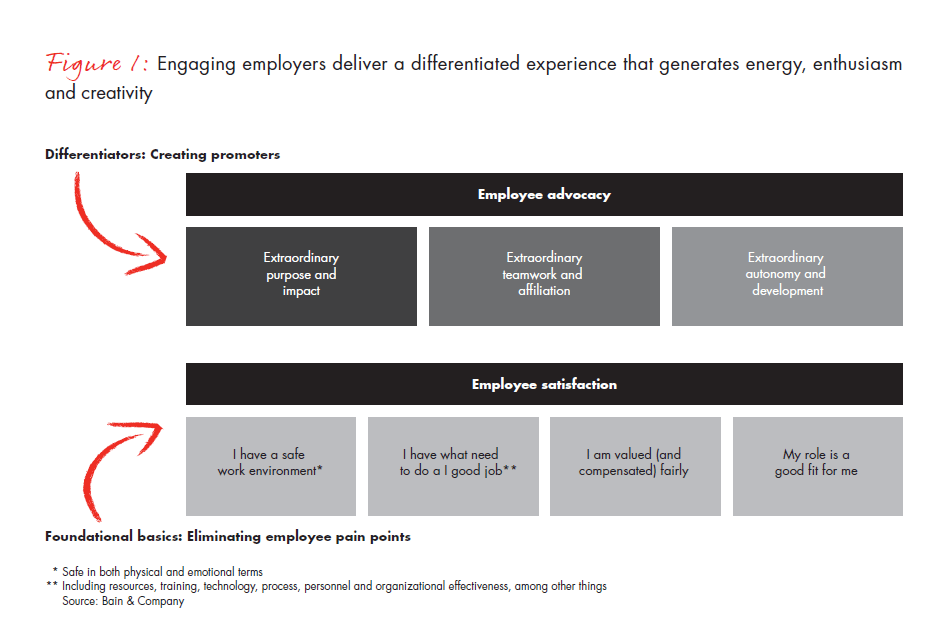
      In most employees’ minds, these basics boil down to four conditions. If you were working on the front lines of an organization, these are the questions you would ask yourself every day.

      1. Is my work environment safe?

      Physical safety is paramount. A century ago, more than 20,000 people died each year on the job in the US alone, and many more were injured. We have come a long way since then, but manufacturing and construction sites (to say nothing of hazardous worksites like mines and commercial fishing boats) can still be dangerous.

      While parts of the workforce still face physical danger at work, every employee may face issues of emotional safety. People who feel threatened, bullied, humiliated or harassed react much as they do to physical danger. These reactions are powerful. When people fear for their safety, their brains emit chemicals that put them on high alert. Their defense mechanisms are activated. They focus on keeping themselves as safe as possible—on surviving whatever danger they perceive. Employees in a threatening environment necessarily think first about themselves. Taking care of customers will always be secondary.

      li-journey-to-employee-advocacy-fig-01_embed


      2. Am I in the right job?

      Most of us have been in situations where we have had to stretch, to learn something new. That often works out well. But sometimes employees find themselves in jobs that they will never be suited for. They may lack the hard skills they need—an advanced level of programming, say—and find it difficult or impossible to acquire those skills. They may have personality traits that get in the way of good performance. A person dealing directly with customers, for instance, needs good social and verbal skills and the ability to empathize with what the customer is feeling. An introverted technical analyst who’s great with data may lack the ability to interact well with people, and is unlikely to succeed in such a role.

      For people who are in the wrong job, every day is a struggle. They feel like fish out of water. They’re constantly aware that they’re not doing great work, and they may not even know why. The resulting frustration makes it difficult or impossible to think about a customer’s needs. Why should I care about them when nobody seems to care about me?

      3. Do I have what I need to succeed?

      No one in an organization succeeds alone. Employees need the training, tools and technologies to do the job well. They need processes that work and support systems that help rather than hinder.

      If this condition isn’t met, the effects are grim. As customers, we all feel frustrated when we watch a sales clerk or airline reservation agent stare helplessly at a balky computer. But now put yourself in the employees’ position: No matter how hard they try, they know that something will get in the way of doing their job well. That kind of difficulty breeds acute dissatisfaction. It also leads to a deep cynicism about the company’s commitment to customers.

      4. Am I being treated fairly?

      Fairness is always hard to define, but people are quick to react when they feel they are being treated unfairly. Consider situations like these:

      • I never hear how I’m doing. When supervisors never give employees any feedback—or when the feedback they do give is always negative—employees start to get resentful. They wonder why no one seems to notice or appreciate their efforts. Before long, they’re apt to figure, Why bother? (Or else they start to look for a new job.)
      • Good work has nothing to do with success around here. Employees generally find it fair when they and their colleagues advance on the basis of merit and effort. They find it distinctly unfair when other criteria—favoritism, office politics and so on—determine advancement or raises. There’s little point in going the extra mile when your colleague in the next cubicle will shine because he knows how to curry favor with the boss.
      • I could make a lot more money working for a competitor. Compensation is always a loaded issue, and sometimes complaints about pay are a smokescreen for other issues. Still, money is one form of appreciation for a job well done. When pay doesn’t relate to performance—or when the level of compensation is way out of line with the market—it feels unfair. Employees start worrying about getting their fair share of the pie rather than thinking about how to make the pie bigger.

      When any one of these conditions is broken—let alone more than one—it generates anxiety and anger as well as frustration. The results are all too obvious: low morale, poor collaboration and teamwork, low productivity, high turnover. The situation distracts employees from what really matters: improving customers’ lives. Even if they stay on the job, they rarely go the extra mile. Nor do they do what’s necessary to earn customers’ trust and make them feel good about the experience, the way I felt that day at Target.

      Make no mistake: Meeting these four conditions sets the baseline for employee satisfaction. It doesn’t achieve the real goal: employee advocacy. But it’s a start. As the psychologist Abraham Maslow famously pointed out, most of us human beings can’t focus on higher-level goals until we have met more fundamental objectives, such as safety and security. So it is in the workplace. Unless employees feel that their basic needs are being met, there’s little chance that they’ll ever develop the enthusiasm, energy and creativity that mark true advocacy.

      So it’s critical to build a solid foundation before reaching for higher goals. How do loyalty leaders accomplish this? The most successful companies are almost maniacal about identifying weak spots in their organization’s foundation—places where employees don’t feel safe, believe they’re in the wrong job, don’t feel they have the tools or support necessary to deliver for customers, or don’t feel valued fairly. They then turn the company’s best resources to shoring up that foundation as quickly and securely as possible, so they can move on to the more meaningful work of earning their employees’ deep commitment.

      A future article will address how to create the conditions that do create advocacy, a state in which employees consistently go the extra mile for customers. In the meantime, be sure your employees are satisfied because your organization meets the four conditions outlined here. Satisfaction may not be sufficient for advocacy, but it certainly is necessary.

      Rob Markey is a partner and director in Bain & Company’s New York office and leads the firm’s Global Customer Strategy & Marketing practice. He is coauthor of the best seller The Ultimate Question 2.0: How Net Promoter Companies Thrive in a Customer-Driven World.


      li-journey-to-employee-advocacy-fig-01_full
      著者
      • Headshot of Rob Markey
        Rob Markey
        Advisory Partner, Boston
      関連するコンサルティングサービス
      • Net Promoter System®
      • 顧客戦略、マーケティング
      コンサルティングサービス
      • Net Promoter®
      顧客戦略、マーケティング
      Who Should Run Your Net Promoter System®?

      Gritty, passionate executives are key to implementing a Net Promoter System effectively.

      詳細
      顧客戦略、マーケティング
      The Net Promoter System®'s "Inner Loop": The Secret to Individual Learning and Connections with Customers

      The key is enabling employees to get real-time feedback directly from customers.

      詳細
      顧客戦略、マーケティング
      The Net Promoter System®'s "Outer Loop"

      How companies make systemic changes—and show employees they’re serious about customer centricity.

      詳細
      ロイヤルティ
      Net Promoter for People: Give Employees a Voice, Get Their Best

      Net Promoter® for People is about empowering employees to bring energy, enthusiasm and creativity to delight customers.

      詳細
      ロイヤルティ
      After Years of Customer Loyalty Programs in Insurance, What Works, and What’s Next?

      Based on Bain’s 10 years of research, five themes describe the progress and challenges of earning customers’ advocacy in an increasingly digital experience.

      詳細
      First published in 11月 2015
      Tags
      • Net Promoter System®
      • Net Promoter®
      • ロイヤルティ
      • 顧客戦略、マーケティング

      クライアント支援事例

      サポート部門 Resetting Shared Services to Save $75 Million

      ケーススタディを見る

      フルポテンシャル・トランスフォメーション Turning around a pioneering service for working parents with sick children

      ケーススタディを見る

      顧客戦略、マーケティング Revitalizing a utility's market position with customer loyalty

      ケーススタディを見る

      お気軽にご連絡下さい

      私達は、グローバルに活躍する経営者が抱える最重要経営課題に対して、厳しい競争環境の中でも成長し続け、「結果」を出すために支援しています。

      ベインの知見。競争が激化するグローバルビジネス環境で、日々直面するであろう問題について論じている知見を毎月お届けします。

      *プライバシーポリシーの内容を確認し、合意しました。

      プライバシーポリシーをご確認頂き、合意頂けますようお願い致します。
      Bain & Company
      お問い合わせ Sustainability Accessibility Terms of use Privacy Cookie Policy Sitemap Log In

      © 1996-2026 Bain & Company, Inc.

      お問い合わせ

      How can we help you?

      • ビジネスについて
      • プレス報道について
      • 採用について
      全てのオフィス