
Skip to Content
  • オフィス

    オフィス

    北米・南米
    • Atlanta
    • Austin
    • Bogota
    • Boston
    • Buenos Aires
    • Chicago
    • Dallas
    • Denver
    • Houston
    • Los Angeles
    • Mexico City
    • Minneapolis
    • Monterrey
    • Montreal
    • New York
    • Rio de Janeiro
    • San Francisco
    • Santiago
    • São Paulo
    • Seattle
    • Silicon Valley
    • Toronto
    • Washington, DC
    ヨーロッパ・中東・アフリカ
    • Amsterdam
    • Athens
    • Berlin
    • Brussels
    • Copenhagen
    • Doha
    • Dubai
    • Dusseldorf
    • Frankfurt
    • Helsinki
    • Istanbul
    • Johannesburg
    • Kyiv
    • Lisbon
    • London
    • Madrid
    • Milan
    • Munich
    • Oslo
    • Paris
    • Riyadh
    • Rome
    • Stockholm
    • Vienna
    • Warsaw
    • Zurich
    アジア・オーストラリア
    • Bangkok
    • Beijing
    • Bengaluru
    • Brisbane
    • Ho Chi Minh City
    • Hong Kong
    • Jakarta
    • Kuala Lumpur
    • Manila
    • Melbourne
    • Mumbai
    • New Delhi
    • Perth
    • Shanghai
    • Singapore
    • Sydney
    • Tokyo
    全てのオフィス
  • アルムナイ
  • メディア
  • お問い合わせ
  • 東京オフィス
  • Japan | 日本語

    地域と言語を選択

    グローバル
    • Global (English)
    北米・南米
    • Brazil (Português)
    • Argentina (Español)
    • Canada (Français)
    • Chile (Español)
    • Colombia (Español)
    ヨーロッパ・中東・アフリカ
    • France (Français)
    • DACH Region (Deutsch)
    • Italy (Italiano)
    • Spain (Español)
    • Greece (Elliniká)
    アジア・オーストラリア
    • China (中文版)
    • Korea (한국어)
    • Japan (日本語)
  • Saved items (0)
    Saved items (0)

    You have no saved items.

    後で閲読、共有できるようにするためにブックマークしてください

    Explore Bain Insights
  • 業界別プラクティス
    メインメニュー

    業界別プラクティス

    • 航空宇宙、防衛、政府関連
    • 農業
    • 化学製品
    • インフラ、建設
    • 消費財
    • 金融サービス
    • ヘルスケア
    • 産業機械、設備
    • メディア、エンターテインメント
    • 金属
    • 採掘・鉱業
    • 石油、ガス
    • 紙、パッケージ
    • プライベートエクイティ
    • 公共、社会セクター
    • 小売
    • テクノロジー
    • 通信
    • 交通
    • 観光産業
    • 公益事業、再生可能エネルギー
  • 機能別プラクティス
    メインメニュー

    機能別プラクティス

    • カスタマー・エクスペリエンス
    • サステイナビリティ、 社会貢献
    • Innovation
    • 企業買収、合併 (M&A)
    • オペレーション
    • 組織
    • プライベートエクイティ
    • マーケティング・営業
    • 戦略
    • アドバンスド・アナリティクス
    • Technology
    • フルポテンシャル・トランスフォーメーション
  • Digital
  • 知見/レポート
  • ベイン・アンド・カンパニーについて
    メインメニュー

    ベイン・アンド・カンパニーについて

    • ベインの信条
    • 活動内容
    • 社員とリーダーシップ
    • プレス・メディア情報
    • クライアントの結果
    • 受賞歴
    • パートナーシップを結んでいる団体
    Further: Our global responsibility
    • ダイバーシティ
    • 社会貢献
    • サステイナビリティへの取り組み
    • 世界経済フォーラム(WEF)
    Learn more about Further
  • キャリア
    メインメニュー

    キャリア

    • ベインで働く
      キャリア
      ベインで働く
      • Find Your Place
      • ベインで活躍する機会
      • ベインのチーム体制
      • 学生向けページ
      • インターンシップ
      • 採用イベント
    • ベインでの体験
      キャリア
      ベインでの体験
      • キャリアストーリー
      • 社員紹介
      • Where We Work
      • 成長を後押しするサポート体制
      • アフィニティ・グループ
      • 福利厚生
    • Impact Stories
    • 採用情報
      キャリア
      採用情報
      • 採用プロセス
      • 面接内容
    FIND JOBS
  • オフィス
    メインメニュー

    オフィス

    • 北米・南米
      オフィス
      北米・南米
      • Atlanta
      • Austin
      • Bogota
      • Boston
      • Buenos Aires
      • Chicago
      • Dallas
      • Denver
      • Houston
      • Los Angeles
      • Mexico City
      • Minneapolis
      • Monterrey
      • Montreal
      • New York
      • Rio de Janeiro
      • San Francisco
      • Santiago
      • São Paulo
      • Seattle
      • Silicon Valley
      • Toronto
      • Washington, DC
    • ヨーロッパ・中東・アフリカ
      オフィス
      ヨーロッパ・中東・アフリカ
      • Amsterdam
      • Athens
      • Berlin
      • Brussels
      • Copenhagen
      • Doha
      • Dubai
      • Dusseldorf
      • Frankfurt
      • Helsinki
      • Istanbul
      • Johannesburg
      • Kyiv
      • Lisbon
      • London
      • Madrid
      • Milan
      • Munich
      • Oslo
      • Paris
      • Riyadh
      • Rome
      • Stockholm
      • Vienna
      • Warsaw
      • Zurich
    • アジア・オーストラリア
      オフィス
      アジア・オーストラリア
      • Bangkok
      • Beijing
      • Bengaluru
      • Brisbane
      • Ho Chi Minh City
      • Hong Kong
      • Jakarta
      • Kuala Lumpur
      • Manila
      • Melbourne
      • Mumbai
      • New Delhi
      • Perth
      • Shanghai
      • Singapore
      • Sydney
      • Tokyo
    全てのオフィス
  • アルムナイ
  • メディア
  • お問い合わせ
  • 東京オフィス
  • Japan | 日本語
    メインメニュー

    地域と言語を選択

    • グローバル
      地域と言語を選択
      グローバル
      • Global (English)
    • 北米・南米
      地域と言語を選択
      北米・南米
      • Brazil (Português)
      • Argentina (Español)
      • Canada (Français)
      • Chile (Español)
      • Colombia (Español)
    • ヨーロッパ・中東・アフリカ
      地域と言語を選択
      ヨーロッパ・中東・アフリカ
      • France (Français)
      • DACH Region (Deutsch)
      • Italy (Italiano)
      • Spain (Español)
      • Greece (Elliniká)
    • アジア・オーストラリア
      地域と言語を選択
      アジア・オーストラリア
      • China (中文版)
      • Korea (한국어)
      • Japan (日本語)
  • Saved items  (0)
    メインメニュー
    Saved items (0)

    You have no saved items.

    後で閲読、共有できるようにするためにブックマークしてください

    Explore Bain Insights
  • 業界別プラクティス
    • 業界別プラクティス

      • 航空宇宙、防衛、政府関連
      • 農業
      • 化学製品
      • インフラ、建設
      • 消費財
      • 金融サービス
      • ヘルスケア
      • 産業機械、設備
      • メディア、エンターテインメント
      • 金属
      • 採掘・鉱業
      • 石油、ガス
      • 紙、パッケージ
      • プライベートエクイティ
      • 公共、社会セクター
      • 小売
      • テクノロジー
      • 通信
      • 交通
      • 観光産業
      • 公益事業、再生可能エネルギー
  • 機能別プラクティス
    • 機能別プラクティス

      • カスタマー・エクスペリエンス
      • サステイナビリティ、 社会貢献
      • Innovation
      • 企業買収、合併 (M&A)
      • オペレーション
      • 組織
      • プライベートエクイティ
      • マーケティング・営業
      • 戦略
      • アドバンスド・アナリティクス
      • Technology
      • フルポテンシャル・トランスフォーメーション
  • Digital
  • 知見/レポート
  • ベイン・アンド・カンパニーについて
    • ベイン・アンド・カンパニーについて

      • ベインの信条
      • 活動内容
      • 社員とリーダーシップ
      • プレス・メディア情報
      • クライアントの結果
      • 受賞歴
      • パートナーシップを結んでいる団体
      Further: Our global responsibility
      • ダイバーシティ
      • 社会貢献
      • サステイナビリティへの取り組み
      • 世界経済フォーラム(WEF)
      Learn more about Further
  • キャリア
    人気検索キーワード
    • デジタル
    • 戦略
    前回の検索
      最近訪れたページ

      Content added to saved items

      Saved items (0)

      Removed from saved items

      Saved items (0)

      レポート

      M&A Regulation: Scrutiny of Deals Expands

      M&A Regulation: Scrutiny of Deals Expands

      Regulators are raising new concerns beyond market consolidation.

      著者:Les Baird, David Harding, Andrei Vorobyov and Shikha Dhar

      • min read
      }

      レポート

      M&A Regulation: Scrutiny of Deals Expands
      en
      概要
      • The year 2019 saw unprecedented regulatory scrutiny of M&A transactions.
      • In a tech-enabled world, deal scrutiny is expanding to include issues such as data ownership and access to critical technology, often prompted by national interests, as well as the impact on future competition.
      • The time, complexity and the resources to get deals over the regulatory hurdle are rising—it will take longer than you think and cost more than you expect.
      • This all places greater demands on preparing for regulator consultations and broader stakeholder communications during the deal diligence and negotiation phases.

      This article is Section 2.1 of Bain's 2020 Global Corporate M&A Report. Explore our latest annual M&A report here.

      Scale deals are getting harder to clear

      Many industries are reaching their natural limits on consolidation, a nagging reality that makes it harder to get deals approved. Consider T-Mobile and Sprint’s $59.6 billion merger in the US. After two unsuccessful bids, it was finally approved by the federal regulatory authorities, but the deal still faces objections from multiple states. In Asia-Pacific, regulators blocked the $6.2 billion merger of Vodafone Group’s Australian business with TPG Telecom. In Europe, the Competition and Markets Authority (CMA) halted the $10 billion Sainsbury’s-Asda merger.

      European regulators have also been hawkish on pan-European deals. In February 2019, the European Commission (EC) blocked the merger of Siemens Mobility and Alstom's rail transport business. The companies failed to address the EC’s concerns regarding competition in the signaling and high-speed rolling stock markets. Alstom CEO Henri Poupart-Lafarge said, “If I have one regret, it is using that phrase ‘European champion.’” The EC also blocked a joint venture between Germany’s Thyssenkrupp and India’s Tata Steel (Europe) in June 2019, which would have created Europe’s second-largest steel producer.

      For companies undertaking scale deals, there are proven ways to prepare for navigating regulatory consultations.

      Let’s look at the proposed merger between the No. 3 and No. 4 telecommunications players in a European country. The two companies were offering mobile services in the same market, with a combined market share of 25%. The EC had a past record of requiring remedies or even blocking such in-country telecom deals. Over the previous five years, Europe saw two such mobile-mobile scale deals rejected or withdrawn, and five were approved with remedies, which, over time, progressed in their severity.

      Knowing this history, the acquirer still decided to go ahead but to prepare rigorously and perform vast and in-depth analysis on issues such as:

      • local and European market and competitor analysis, including both core mobile and adjacent markets;
      • infrastructure investments made by players and the outlook for future developments;
      • business rationale for the deal and the expected benefits, in particular to customers;
      • risks for the two companies in the event that they did not merge and the effect on competition; and
      • merger efficiencies (synergies) and their specificity and verifiability.

      The comprehensive analysis addressed the regulator’s concerns by showing how the deal would be a win-win for the merging companies and customers as it would both improve services and increase competition. The robust responses prepared to address all political and competitive arguments against the deal were strong enough to allow the acquirer to ask for and receive unconditional approval from the EC.

      The time, expense and required remedies to get scale deals approved is rising. Increased regulatory scrutiny—enabled by digital technologies such as e-discovery, which can scan hundreds of thousands of documents on company IT systems and devices—raises the bar on deal evaluation, due diligence and the depth of preparation needed for regulatory filings and engagement.

      Companies need to be ready for a longer time to close, including the timing implications on value capture and, more importantly, the people costs. A lengthy time to close can wear out the most motivated leadership teams, and as regulators ask for more internal data, it can also drain other resources. Assessing regulatory risks at the diligence stage and preparing for remedy negotiation ahead of time bring great value.

      Scrutiny on nontraditional grounds is rising

      The rising tide of populism and widespread angst around economic and political well-being are raising questions about the role of large corporations and their influence over day-to-day life. The resulting political pressure has led to some fundamental rethinking about antitrust laws and national security mandates in approving deals. As such, regulatory oversight is evolving beyond issues of market concentration to include consumer data and privacy, national interest and security, and future competition. Some sectors, such as technology, aerospace and defense, telecommunications, and healthcare, lend themselves to more scrutiny on nontraditional grounds than others do.

      There are several recent instances of blocked deals and even rescindments on these grounds. In 2019, the Committee on Foreign Investment in the United States (CFIUS) required Beijing Kunlun Tech to sell Grindr, a dating app purchased over 2016 to 2018. Some believe that the request came after scrutinizing app developers over the safety of the personal information of millions of Americans. (CFIUS did not disclose the reasons.)

      Around the same time, CFIUS demanded that Chinese digital healthcare company iCarbonX divest its interests in PatientsLikeMe and HealthTell, two US companies that collect health data. While the reason for CFIUS’s decision in this particular deal is unknown, it was speculated that the regulatory body had concerns that the private health data of American citizens would be exposed to the Chinese owner.

      In September 2019, the US Department of the Treasury proposed regulations to broaden the CFIUS’s oversight to smaller foreign investments that involve a critical technology, critical infrastructure or sensitive personal data of US citizens.

      Recently, regulators have increased scrutiny on what are being termed “killer acquisitions.” In these deals, a large company acquires innovative targets only to discontinue the development of the targets’ innovative projects to prevent future competition. Indeed, acquisitions of start-ups by larger incumbents could eliminate future competitive threats, increasing the incumbents’ overall market power in a way that would not be captured with traditional market share analysis. These acquisitions often go undetected due to low deal value, scale or consumer impact.

      Amazon’s attempt to take a minority stake in Deliveroo, an online food delivery business, through a financing round with several other investors (totaling $575 million) is under inquiry by the CMA after German authorities had already cleared the deal.

      This type of scrutiny is not only limited to tech companies. Mexican officials blocked Walmart’s deal to acquire Cornershop, a small grocery delivery business. The deal was blocked on the grounds of unfair access. Walmart could not guarantee a level playing field for rival retailers whose customers use the application to order groceries and other goods.

      Even in pharma, deals in which a big company acquires a nascent rival and halts its drug development are coming under scrutiny. Questcor (currently Mallinckrodt ARD) had a US monopoly on adrenocorticotropic hormone drugs with its Acthar formulation. It acquired the US rights to a potentially competing drug, Synacthen Depot, in 2013, and later stopped its development. Acthar’s vial price was raised from $40 in 2001 to $34,000 in 2015, while outside the US, Synacthen Depot was available at a fraction of Acthar’s price, according to the complaint. To settle the complaint, the company agreed to grant a license to develop Synacthen Depot and pay a $100 million fine to the Federal Trade Commission (FTC) for violating antitrust laws (by preventing another bidder from developing and launching the drug in the US).

      Lately, the FTC chairman has gone so far as to say that he’s ready to break up major technology platforms if necessary by undoing their past mergers. For many companies, this is new territory to navigate (see Figure 2.1).

      Figure 2.1
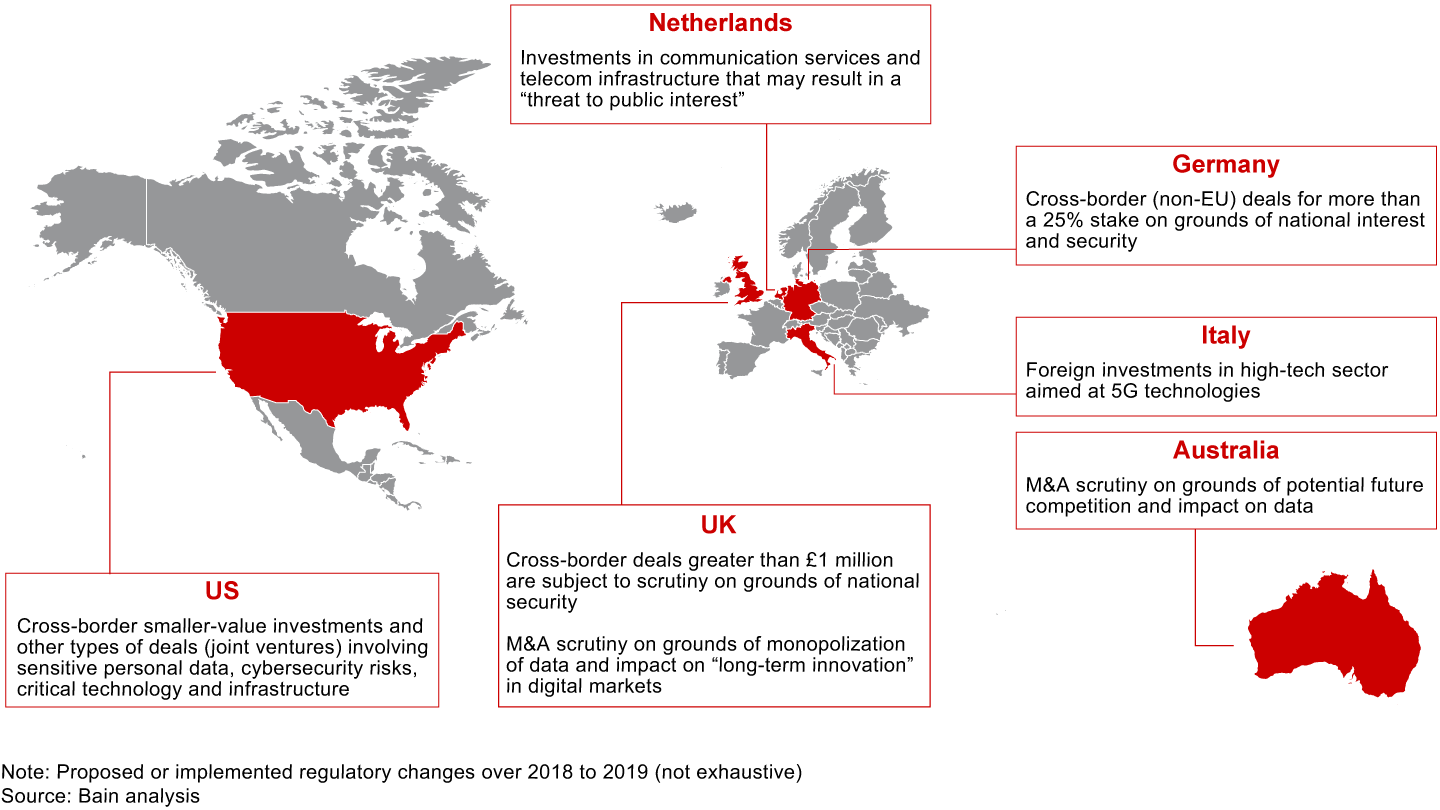
      Regulatory deal scrutiny is expanding to nontraditional areas
      Regulatory deal scrutiny is expanding to nontraditional areas
      Regulatory deal scrutiny is expanding to nontraditional areas

      For dealmakers, scale and market power are no longer the only considerations to get regulatory approval. Addressing the evolving regulatory discussions and stakeholder communications will require greater thought and preparation, but doing so can pay off by reducing the friction and costs required to get a deal over the regulatory hurdle.

      This article is part of Bain’s 2020 Global Corporate M&A Report. Explore the contents of the report here or download the PDF to read the full report.

      Read the Next Section

      Dealmaking: How Will the Scope M&A Boom Pan Out?

      著者
      • Headshot of Les Baird
        Les Baird
        パートナー, Boston
      • Headshot of David Harding
        David Harding
        Advisory Partner, Boston
      • Andrei Vorobyov
        Alumni, Copenhagen
      関連するコンサルティングサービス
      • Post-Merger Integration
      • 企業買収、合併(M&A)
      コンサルティングサービス
      • Due Diligence
      • M&A Capability
      企業買収、合併(M&A)
      Dealmaking: How Will the Scope M&A Boom Pan Out?

      Scope deals now represent 60% of all large M&A.

      詳細
      通信
      The New Age of Scale, Scope and Infrastructure in Telecom M&A

      As the industry matures, telecommunications companies increasingly create value by diversifying their view of M&A.

      詳細
      M&A Capability
      Due Diligence: Evolving Approaches Boost the Odds of Success

      Poor diligence is the root cause of deal failure.

      詳細
      M&A Capability
      The Coming Wave of Banking M&A

      Covid-19 will spur further consolidation, and the most active acquirers have a leg up.

      詳細
      企業買収、合併(M&A)
      Media M&A

      AI and other tech tools can boost bidding confidence in this highly competitive environment.

      詳細
      First published in 1月 2020
      Tags
      • Due Diligence
      • M&A Capability
      • Post-Merger Integration
      • 企業買収、合併(M&A)

      クライアント支援事例

      コスト・トランスフォーメーション An EPC Leader Transforms Itself Amid Intense Volatility

      ケーススタディを見る

      戦略 A cable TV acquisition nets 70% IRR

      ケーススタディを見る

      Quick due diligence results in a well-timed purchase

      ケーススタディを見る

      お気軽にご連絡下さい

      私達は、グローバルに活躍する経営者が抱える最重要経営課題に対して、厳しい競争環境の中でも成長し続け、「結果」を出すために支援しています。

      ベインの知見。競争が激化するグローバルビジネス環境で、日々直面するであろう問題について論じている知見を毎月お届けします。

      *プライバシーポリシーの内容を確認し、合意しました。

      プライバシーポリシーをご確認頂き、合意頂けますようお願い致します。
      Bain & Company
      お問い合わせ Sustainability Accessibility Terms of use Privacy Cookie Policy Sitemap Log In

      © 1996-2026 Bain & Company, Inc.

      お問い合わせ

      How can we help you?

      • ビジネスについて
      • プレス報道について
      • 採用について
      全てのオフィス