

Paper & Packaging Report

概要
- Successful companies embrace disruption rather than fight it by focusing on the vital few uncertainties that matter.
- Becoming future ready, more sustainable, and reaching full potential requires a dynamic strategy.
- A winning strategy is good in all scenarios rather than brilliant in one context but a failure in others.
This article is part of Bain’s 2023 Paper & Packaging Report
These days, chief executives in paper and packaging face extreme uncertainty, volatility, and disruption. Covid-19 caused abnormal demand patterns across many product categories. In addition, paper and packaging companies have seen record-high volatility in input costs, spurred by surging energy and chemical costs, record-high inflation, and an enormous spike in overseas transport costs in 2021. New regulation is also scrambling categories, boosting some products while destroying others.
Despite this acute turbulence, most companies still rely on traditional approaches to strategy—such as analyzing trends, making forecasts, and committing to a set of actions that they rigidly follow—but these approaches are unfit for the high degree of instability that many companies are currently experiencing.
Companies getting it right embrace uncertainty and disruption (rather than fighting it) by focusing on the vital few uncertainties that matter. These include supply and demand fluctuations, cost volatility in energy and raw material prices, and geopolitical risks. There are also uncertainties around the impact and timing of the green transition as well as around new technologies, including artificial intelligence, smart packaging, and e-commerce penetration.
Leading companies are engaging in strategy making as a continuous process that generates a dynamic plan. They are laying out the possible scenarios that could develop, taking key actions now, and preparing the organization to react in a timely manner via signposts or trigger points when conditions change.
A perfect storm
External pressures and disruptions are at an all-time high, and companies can’t afford to ignore uncertainty when planning and implementing strategy.
Covid-19 caused demand to surge in certain product categories, such as the panic buying of toilet paper, and plunge in others, such as the radical drop in office paper demand as copying and printing in offices suddenly disappeared while electronic contract signing took off.
As a result of the crisis in Ukraine, natural gas prices in Europe spiked from an already high €80 per megawatt-hour in January 2022 to a peak of more than €300 per megawatt-hour in August, with electricity prices following suit (see Figure 1).
Figure 1
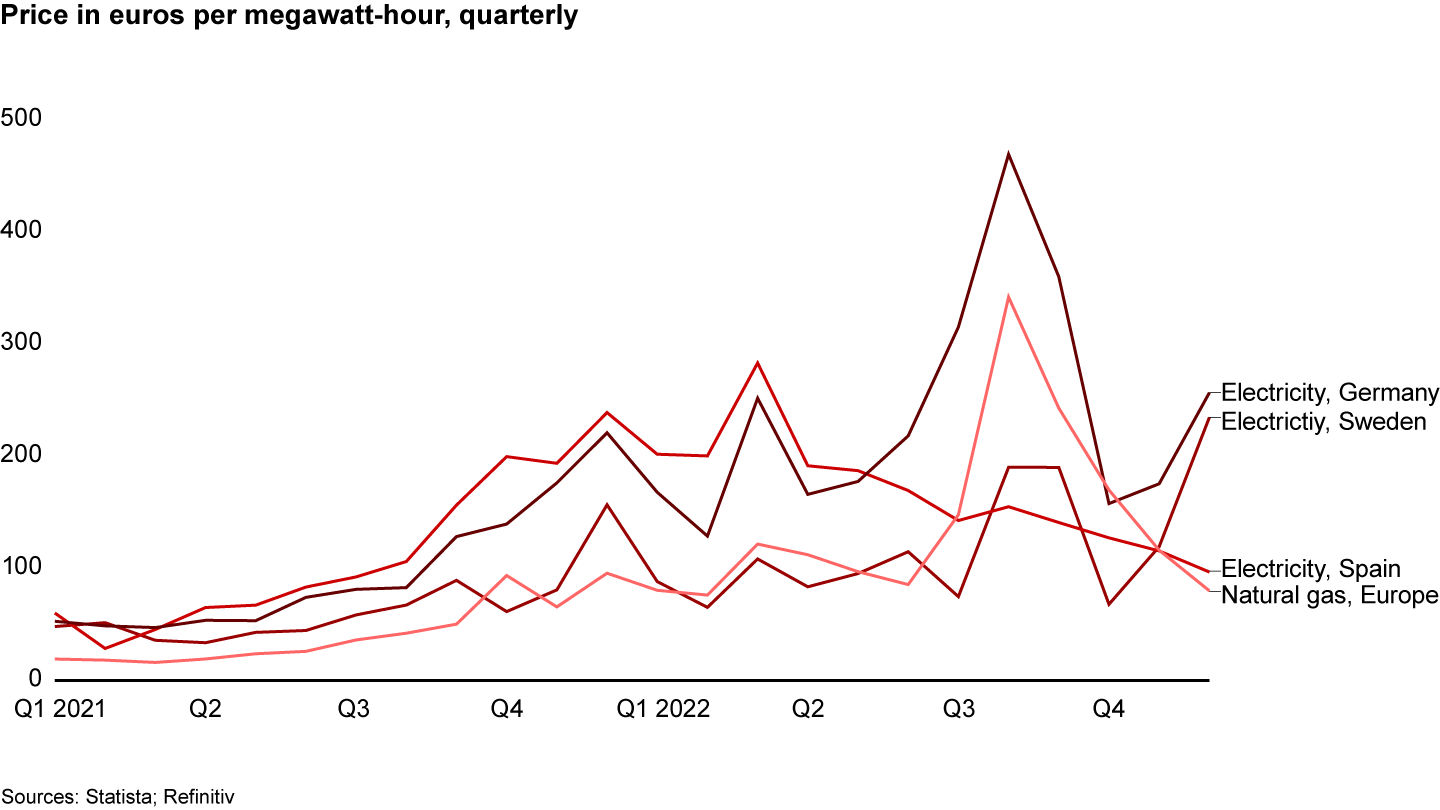

Overseas transport costs more than tripled in 2021 and sustained high levels for a large part of 2022 because of the lack of sea container capacity and other supply chain disruptions. Key chemicals used in the industry have skyrocketed in cost as well—for instance, starches rose by more than 60%, and caustic soda increased by almost 200% for some customers.
Regulation is also shifting growth patterns and in practice eliminating some product categories (such as plastic straws) while creating new ones (such as molded fiber for compostable salad bowls). Bans and restrictions on single-use plastics are propelling a clear shift from plastic to paper straws and lids, and they are boosting the demand of recycled content in PET (polyethylene terephthalate) bottles.
Recent proposed EU regulation aims at reducing “avoidable packaging”—that is, reducing the demand of quick-service restaurant packaging and shifting from single-use tableware, for instance, to washable items, as already showcased in France.
Finally, record-setting rates of inflation, increasing interest rates, and the fear of a recession are additional drivers of uncertainty. Becoming future ready, more sustainable, and reaching full potential requires a dynamic plan and continuous strategy process.
Scenario planning
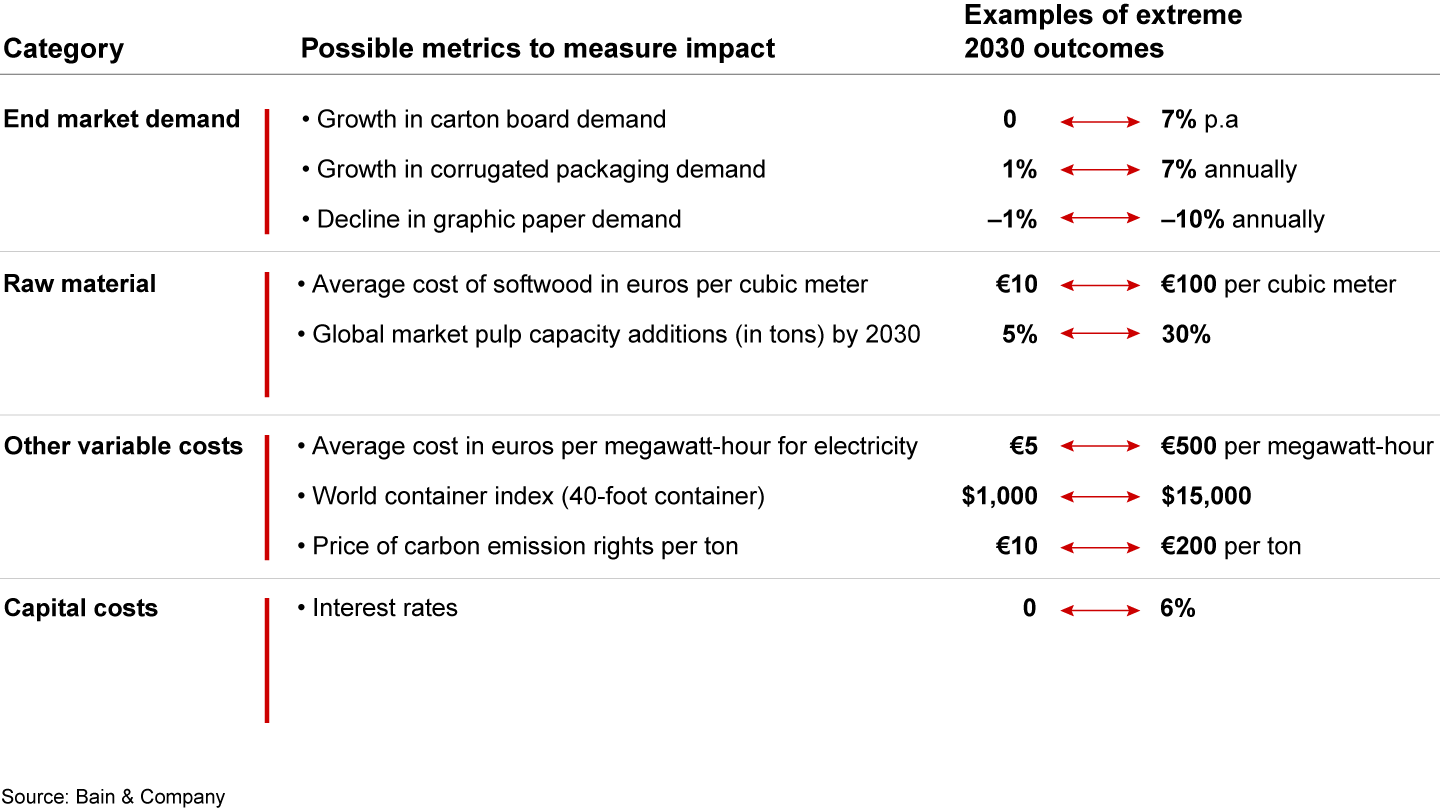
Scenario planning is certainly not new, but while it used to be an academic exercise that executives performed every few years, it’s now mission critical given the ever-increasing turbulence. Scenario planning begins with no-regret moves, or actions a company needs to take under any scenario. Then, it is key to identify trigger points or signposts to signal when a scenario occurs so that you can react quickly and take a new strategic direction (see Figure 2).
For example, a company evaluating sustainability may determine that under any scenario it will need to create more recyclable and compostable packaging going forward in light of tightening regulations and changing consumer demand. It would start by investing in R&D to develop new forms of packaging and improve resiliency. Then, the company would plan for various scenarios that factor in possibilities such as volatile energy costs, input prices, evolving regulation, and the dollar value of potential losses should each scenario play out. Finally, the company would track clearly defined signposts, and when signposts suggested one scenario becoming more likely, management could react quickly and adjust.
The company would then use these scenarios for sensitivity analysis, meaning it could pressure test strategic decisions and investments. For example, an investment into a new paper mill will have massively different economics depending on the expected growth of paper demand and the input costs. Having a feeling for the extreme upper and lower bounds can help identify the most promising investment across scenarios.
Figure 2

Solidify new pricing and product portfolio management
High inflationary environments make pricing a priority for companies. Some high-performing companies choose to streamline the product offering and optimize the mix to mitigate supply shocks and drive growth. These companies eliminate product families and stock-keeping units (SKUs) based on complexity analytics, migrating customers to a more profitable portfolio. They reprice high-complexity SKUs for which customers are willing to pay more, transform the cost structure of low-margin products, and exit product categories that aren’t strategic fits.
It’s also important to develop a strategy for passing through the fluctuating costs of raw materials. This will depend on whether your contract with suppliers is tied to market dynamics or an agreed-upon index that could be tied to global inflation or containerboard prices, for instance, or a mix of the two. Where you have negotiating power, you may need to push for higher than 100% pass-through pricing, and in other categories, you need to realize that your competitive position is such that you can't get the full pass-through price. And all this decision making needs to happen quickly in response to market circumstances.
Build long-term customer relationships
The paper and packaging industry is known for long-term customer relationships, and one of the best examples is liquid carton packaging, where there are only a few suppliers and a few customers that are already in long-term relationships.
For many of the other grades, you have many more choices, and in turbulent times, customers often look for better value alternatives, leading to increased churn. Winning companies in these categories, however, also invest in superior customer engagement, such as deeper collaboration in demand planning, inventory management, logistics, and new product innovation.
Even packaging companies in grades with more choices for customers prioritized serving customers with long-term relationships rather than chasing the highest-margin customers when prices increased rapidly in 2022. Now in 2023, those companies are reaping the benefits in terms of maintaining their customers’ share of wallet because those long-term customers have stuck with them.
Double down on operational resiliency and traceability
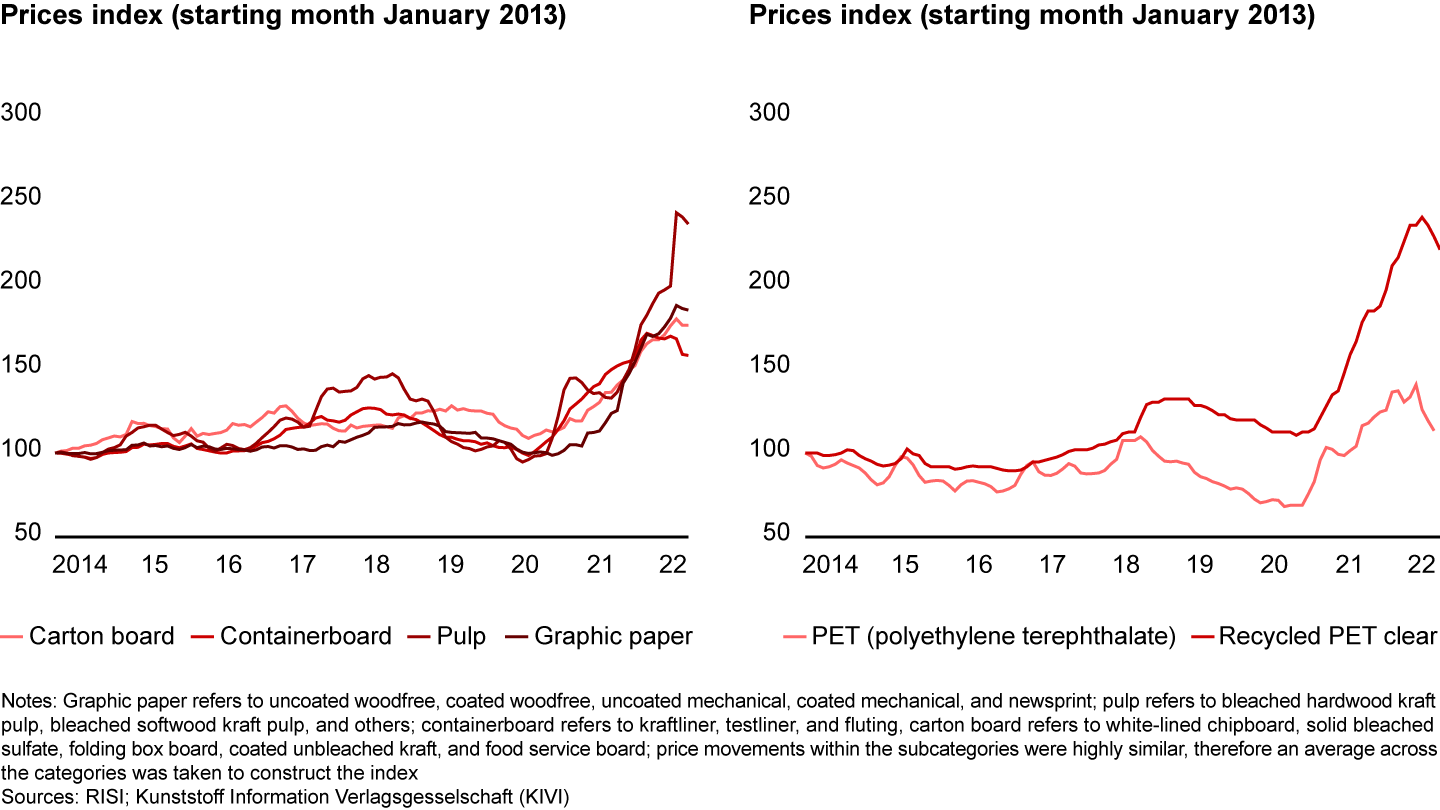
Over the past year, volatile energy prices have been the most obvious driver of uncertainty, and supply chain issues, with both input and output prices fluctuating wildly, have also played a role (see Figure 3). As a result, operational resiliency and traceability are more important than ever. Leading companies are investing in multiple sources of supply so that they are not dependent on one supplier per category. They are also thinking about their footprint strategy and regionalizing their supply chain more than they have done in the past, meaning that their subcontractors for a given region (e.g., North American operations) would be mostly in that region. Finally, for high-volatile categories, they are using contractual terms or hedging to ensure they are protected.
Figure 3

Strategically allocate capital expenditures, R&D, and M&A funding
Downturns are a great time to gain market share. To win, you must invest selectively to outperform competitors. Use M&A to reshape the portfolio of businesses. For example, in 2008, Graphic Packaging acquired Altivity Packaging for $1.75 billion to create one of the largest producers of folding cartons in North America. The combined company was able to realize significant cost savings and operational efficiencies, improving profitability and solidifying Graphic Packaging’s position as a leading producer of folding cartons in North America.
It's also critical to continue investing in R&D, allocating capital toward the right projects while making sure they are flexible. Stora Enso, for example, is currently investing €1 billion into converting an idle paper machine into a high-volume consumer board production line. The machine will be able to produce folding box board as well as coated unbleached kraft, which can be used in a wide range of industries, including food and beverage packaging for frozen, chilled, dry, and fast food.
Reset the cost base and prioritize automation
Basic automation tools have become common in many paper and packaging companies. Modern machines can run sawmills and pulp mills with very little human oversight, and digital sales channels can automate many sales activities. Automation cuts costs (because it reduces variability) and improves safety. With improving industrial controls and closed-loop control systems, fewer employees are needed to run highly complex paper machines.
Going forward, the only certainty is uncertainty. Turbulence will most likely only increase. For this reason, winning executives are designing a strategy that is good in all scenarios rather than brilliant in one context but a failure in others.
More from the report
Read our Paper & Packaging Report 2023
First published in 8月 2023