Skip to Content
  • オフィス

    オフィス

    北米・南米
    • Atlanta
    • Austin
    • Bogota
    • Boston
    • Buenos Aires
    • Chicago
    • Dallas
    • Denver
    • Houston
    • Los Angeles
    • Mexico City
    • Minneapolis
    • Monterrey
    • Montreal
    • New York
    • Rio de Janeiro
    • San Francisco
    • Santiago
    • São Paulo
    • Seattle
    • Silicon Valley
    • Toronto
    • Washington, DC
    ヨーロッパ・中東・アフリカ
    • Amsterdam
    • Athens
    • Berlin
    • Brussels
    • Copenhagen
    • Doha
    • Dubai
    • Dusseldorf
    • Frankfurt
    • Helsinki
    • Istanbul
    • Johannesburg
    • Kyiv
    • Lisbon
    • London
    • Madrid
    • Milan
    • Munich
    • Oslo
    • Paris
    • Riyadh
    • Rome
    • Stockholm
    • Vienna
    • Warsaw
    • Zurich
    アジア・オーストラリア
    • Bangkok
    • Beijing
    • Bengaluru
    • Brisbane
    • Ho Chi Minh City
    • Hong Kong
    • Jakarta
    • Kuala Lumpur
    • Manila
    • Melbourne
    • Mumbai
    • New Delhi
    • Perth
    • Shanghai
    • Singapore
    • Sydney
    • Tokyo
    全てのオフィス
  • アルムナイ
  • メディア
  • お問い合わせ
  • 東京オフィス
  • Japan | 日本語

    地域と言語を選択

    グローバル
    • Global (English)
    北米・南米
    • Brazil (Português)
    • Argentina (Español)
    • Canada (Français)
    • Chile (Español)
    • Colombia (Español)
    ヨーロッパ・中東・アフリカ
    • France (Français)
    • DACH Region (Deutsch)
    • Italy (Italiano)
    • Spain (Español)
    • Greece (Elliniká)
    アジア・オーストラリア
    • China (中文版)
    • Korea (한국어)
    • Japan (日本語)
  • Saved items (0)
    Saved items (0)

    You have no saved items.

    後で閲読、共有できるようにするためにブックマークしてください

    Explore Bain Insights
  • 業界別プラクティス
    メインメニュー

    業界別プラクティス

    • 航空宇宙、防衛、政府関連
    • 農業
    • 化学製品
    • インフラ、建設
    • 消費財
    • 金融サービス
    • ヘルスケア
    • 産業機械、設備
    • メディア、エンターテインメント
    • 金属
    • 採掘・鉱業
    • 石油、ガス
    • 紙、パッケージ
    • プライベートエクイティ
    • 公共、社会セクター
    • 小売
    • テクノロジー
    • 通信
    • 交通
    • 観光産業
    • 公益事業、再生可能エネルギー
  • 機能別プラクティス
    メインメニュー

    機能別プラクティス

    • カスタマー・エクスペリエンス
    • サステイナビリティ、 社会貢献
    • Innovation
    • 企業買収、合併 (M&A)
    • オペレーション
    • 組織
    • プライベートエクイティ
    • マーケティング・営業
    • 戦略
    • アドバンスド・アナリティクス
    • Technology
    • フルポテンシャル・トランスフォーメーション
  • Digital
  • 知見/レポート
  • ベイン・アンド・カンパニーについて
    メインメニュー

    ベイン・アンド・カンパニーについて

    • ベインの信条
    • 活動内容
    • 社員とリーダーシップ
    • プレス・メディア情報
    • クライアントの結果
    • 受賞歴
    • パートナーシップを結んでいる団体
    Further: Our global responsibility
    • ダイバーシティ
    • 社会貢献
    • サステイナビリティへの取り組み
    • 世界経済フォーラム(WEF)
    Learn more about Further
  • キャリア
    メインメニュー

    キャリア

    • ベインで働く
      キャリア
      ベインで働く
      • Find Your Place
      • ベインで活躍する機会
      • ベインのチーム体制
      • 学生向けページ
      • インターンシップ
      • 採用イベント
    • ベインでの体験
      キャリア
      ベインでの体験
      • Blog: Inside Bain
      • キャリアストーリー
      • 社員紹介
      • Where We Work
      • 成長を後押しするサポート体制
      • アフィニティ・グループ
      • 福利厚生
    • Impact Stories
    • 採用情報
      キャリア
      採用情報
      • 採用プロセス
      • 面接内容
    FIND JOBS
  • オフィス
    メインメニュー

    オフィス

    • 北米・南米
      オフィス
      北米・南米
      • Atlanta
      • Austin
      • Bogota
      • Boston
      • Buenos Aires
      • Chicago
      • Dallas
      • Denver
      • Houston
      • Los Angeles
      • Mexico City
      • Minneapolis
      • Monterrey
      • Montreal
      • New York
      • Rio de Janeiro
      • San Francisco
      • Santiago
      • São Paulo
      • Seattle
      • Silicon Valley
      • Toronto
      • Washington, DC
    • ヨーロッパ・中東・アフリカ
      オフィス
      ヨーロッパ・中東・アフリカ
      • Amsterdam
      • Athens
      • Berlin
      • Brussels
      • Copenhagen
      • Doha
      • Dubai
      • Dusseldorf
      • Frankfurt
      • Helsinki
      • Istanbul
      • Johannesburg
      • Kyiv
      • Lisbon
      • London
      • Madrid
      • Milan
      • Munich
      • Oslo
      • Paris
      • Riyadh
      • Rome
      • Stockholm
      • Vienna
      • Warsaw
      • Zurich
    • アジア・オーストラリア
      オフィス
      アジア・オーストラリア
      • Bangkok
      • Beijing
      • Bengaluru
      • Brisbane
      • Ho Chi Minh City
      • Hong Kong
      • Jakarta
      • Kuala Lumpur
      • Manila
      • Melbourne
      • Mumbai
      • New Delhi
      • Perth
      • Shanghai
      • Singapore
      • Sydney
      • Tokyo
    全てのオフィス
  • アルムナイ
  • メディア
  • お問い合わせ
  • 東京オフィス
  • Japan | 日本語
    メインメニュー

    地域と言語を選択

    • グローバル
      地域と言語を選択
      グローバル
      • Global (English)
    • 北米・南米
      地域と言語を選択
      北米・南米
      • Brazil (Português)
      • Argentina (Español)
      • Canada (Français)
      • Chile (Español)
      • Colombia (Español)
    • ヨーロッパ・中東・アフリカ
      地域と言語を選択
      ヨーロッパ・中東・アフリカ
      • France (Français)
      • DACH Region (Deutsch)
      • Italy (Italiano)
      • Spain (Español)
      • Greece (Elliniká)
    • アジア・オーストラリア
      地域と言語を選択
      アジア・オーストラリア
      • China (中文版)
      • Korea (한국어)
      • Japan (日本語)
  • Saved items  (0)
    メインメニュー
    Saved items (0)

    You have no saved items.

    後で閲読、共有できるようにするためにブックマークしてください

    Explore Bain Insights
  • 業界別プラクティス
    • 業界別プラクティス

      • 航空宇宙、防衛、政府関連
      • 農業
      • 化学製品
      • インフラ、建設
      • 消費財
      • 金融サービス
      • ヘルスケア
      • 産業機械、設備
      • メディア、エンターテインメント
      • 金属
      • 採掘・鉱業
      • 石油、ガス
      • 紙、パッケージ
      • プライベートエクイティ
      • 公共、社会セクター
      • 小売
      • テクノロジー
      • 通信
      • 交通
      • 観光産業
      • 公益事業、再生可能エネルギー
  • 機能別プラクティス
    • 機能別プラクティス

      • カスタマー・エクスペリエンス
      • サステイナビリティ、 社会貢献
      • Innovation
      • 企業買収、合併 (M&A)
      • オペレーション
      • 組織
      • プライベートエクイティ
      • マーケティング・営業
      • 戦略
      • アドバンスド・アナリティクス
      • Technology
      • フルポテンシャル・トランスフォーメーション
  • Digital
  • 知見/レポート
  • ベイン・アンド・カンパニーについて
    • ベイン・アンド・カンパニーについて

      • ベインの信条
      • 活動内容
      • 社員とリーダーシップ
      • プレス・メディア情報
      • クライアントの結果
      • 受賞歴
      • パートナーシップを結んでいる団体
      Further: Our global responsibility
      • ダイバーシティ
      • 社会貢献
      • サステイナビリティへの取り組み
      • 世界経済フォーラム(WEF)
      Learn more about Further
  • キャリア
    人気検索キーワード
    • デジタル
    • 戦略
    前回の検索
      最近訪れたページ

      Content added to saved items

      Saved items (0)

      Removed from saved items

      Saved items (0)

      論説

      Private Equity’s Wild First-Half Ride

      Private Equity’s Wild First-Half Ride

      Our midyear report found that the industry continued to supersize in 2021 and is on track to post its best year by far.

      著者:Hugh MacArthur

      • min read
      }

      論説

      Private Equity’s Wild First-Half Ride
      en

      Let’s be honest: At this time last year, when Covid-19 was still casting a long shadow over the global economy, would anybody in the private equity industry have predicted that 2021 had the potential to blow the cover off the record books?

      We noted then that the deal market was showing surprising strength as massive government stimulus kept economies and markets humming around the globe. But the pace of recovery has been extraordinary, and, by almost any measure, 2021 is setting up to be by far the best year in the industry’s history.

      It’s always dangerous to forecast the next six months based on the year’s first half, but private equity deal value, exit value, and fund-raising are all on pace to approach or cross $1 trillion by year-end (see Figure 1). If that bears out, the industry will have essentially tripled in size over the 10 years starting in 2011, powering through what turned out to be a brief Covid-19 shock. Private equity’s supersizing has created ever larger funds doing ever larger deals. And given that the industry’s mountain of dry powder stood at a new record of $3.3 trillion as of June 30 (around $1 trillion in buyout funds alone), there’s plenty of fuel left to drive new activity.

      Figure 1
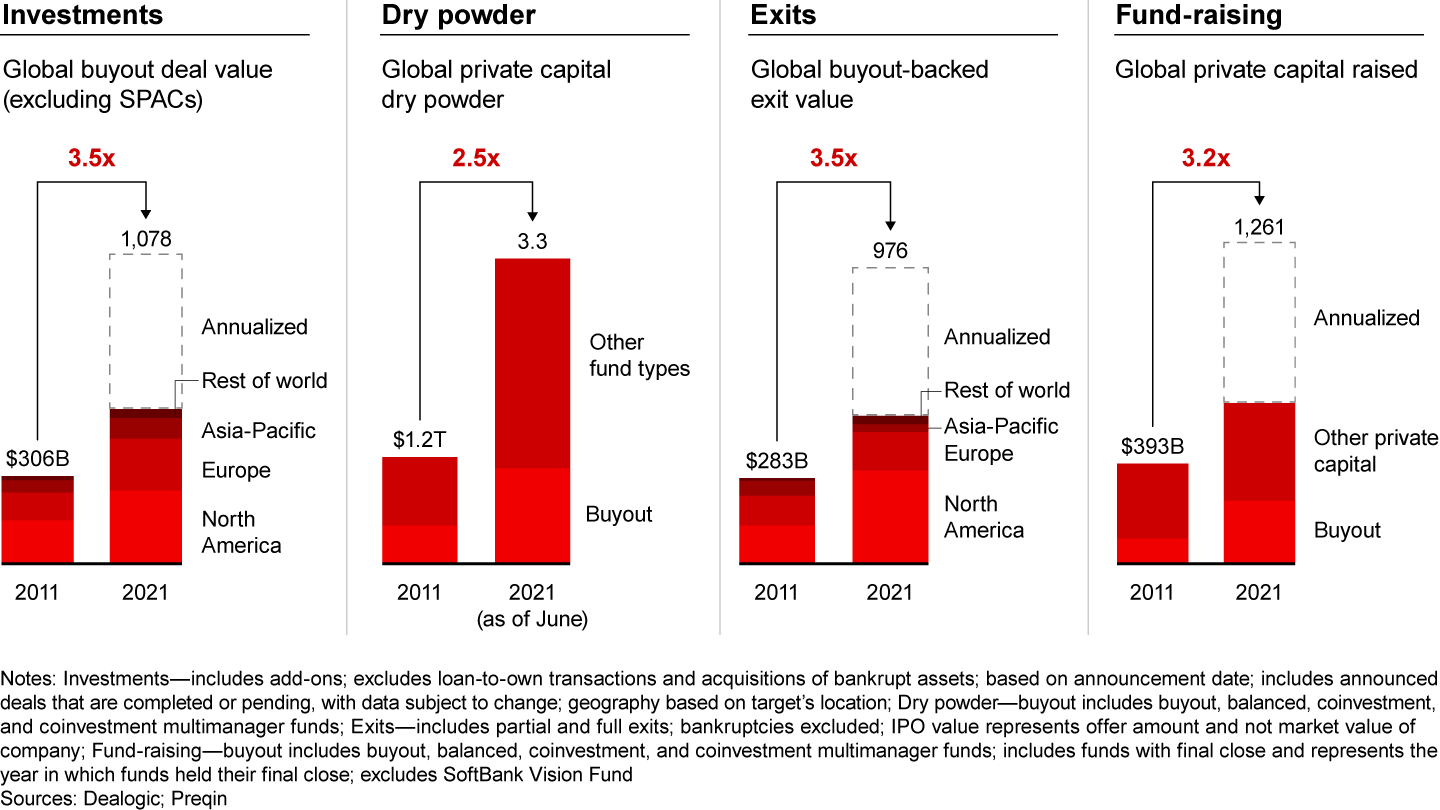
      Any way you look at it, the private equity industry is supersizing
      Any way you look at it, the private equity industry is supersizing
      Any way you look at it, the private equity industry is supersizing

      A torrid first half

      Globally, private equity generated $539 billion in deal value during the first six months of 2021. That’s on par with the full-year average since 2016 of $543 billion. A full-year total above $1 trillion this year would dwarf the previous record of $804 billion, set in 2006 as the industry peaked before the global financial crisis (see Figure 2).

      Figure 2
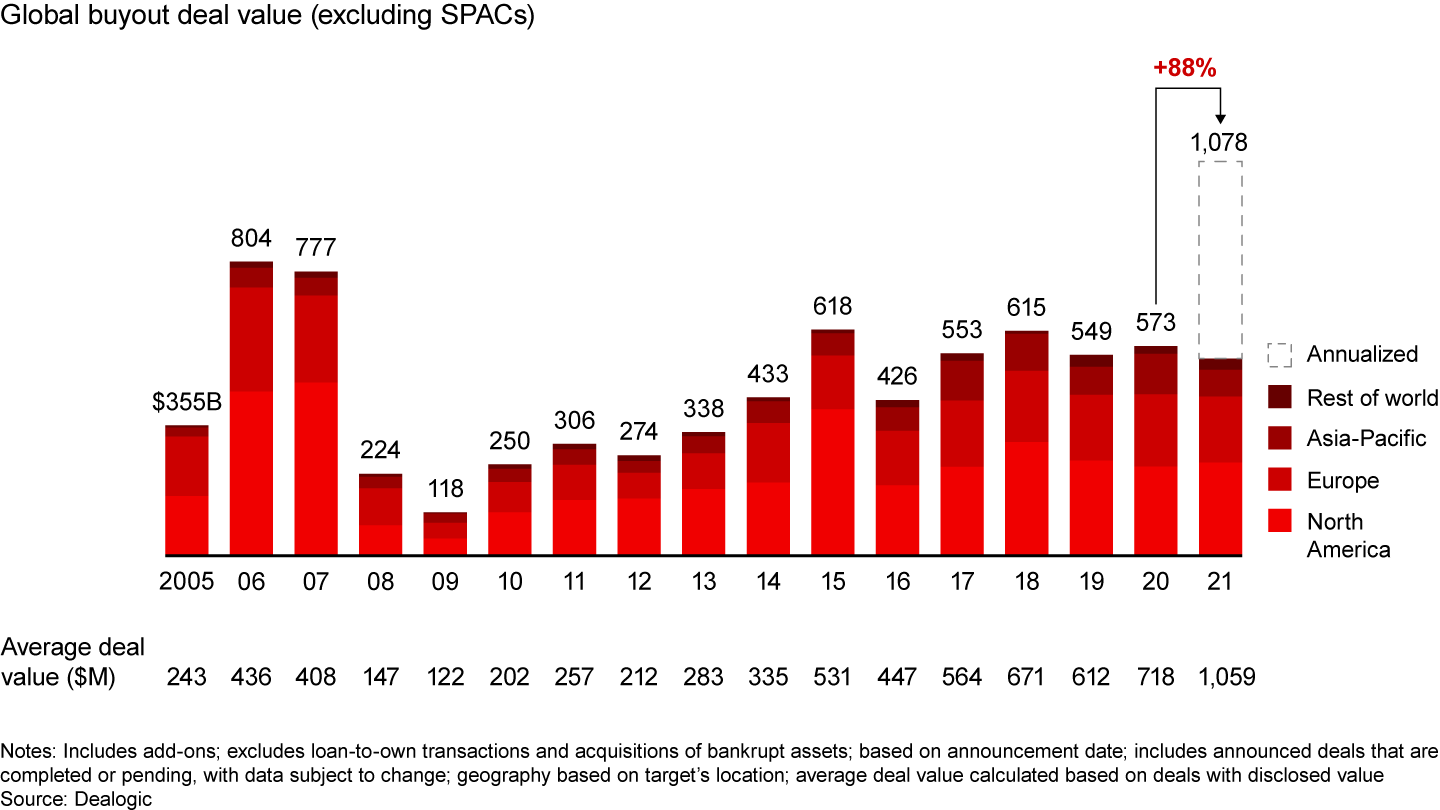
      Global buyout deal value is on pace to top $1 trillion annually for the first time ever, surpassing the previous boom years of 2006 and 2007
      Global buyout deal value is on pace to exceed $1 trillion annually for the first time in history, surpassing the previous boom years of 2006 and 2007
      Global buyout deal value is on pace to exceed $1 trillion annually for the first time in history, surpassing the previous boom years of 2006 and 2007

      What’s clear is that deal size, not deal count, is behind the increase in value. The number of individual deals was tracking up 16% compared with the first half of 2020 after falling well short of the long-term average of 4,000 in 2020. But the average deal size spiked by 48%, from $718 million to $1.1 billion.

      The strength in dealmaking showed up across the board, but the technology sector continued to dominate activity. One in every three buyout deals in the first half involved a tech company (most notably in software), and that probably understates tech’s growing appeal to investors. These numbers often leave out subsectors like fintech, tech-enabled services, and healthcare IT, which also drew heavy interest from PE investors. Given that tech means growth and growth means higher multiples, the bias toward investing in these sectors will likely continue in the months and years ahead.

      SPACs still matter

      The US market’s voracious appetite for SPAC-sponsored initial public offerings came to a sudden halt in April, amid increased regulatory scrutiny of these special-purpose acquisition companies (see Figure 3). But even if the volume of new SPACs remains at lower levels through the rest of the year, the $207 billion in SPAC IPO capital raised since January 2019 will continue to leave its mark on the private equity ecosystem.

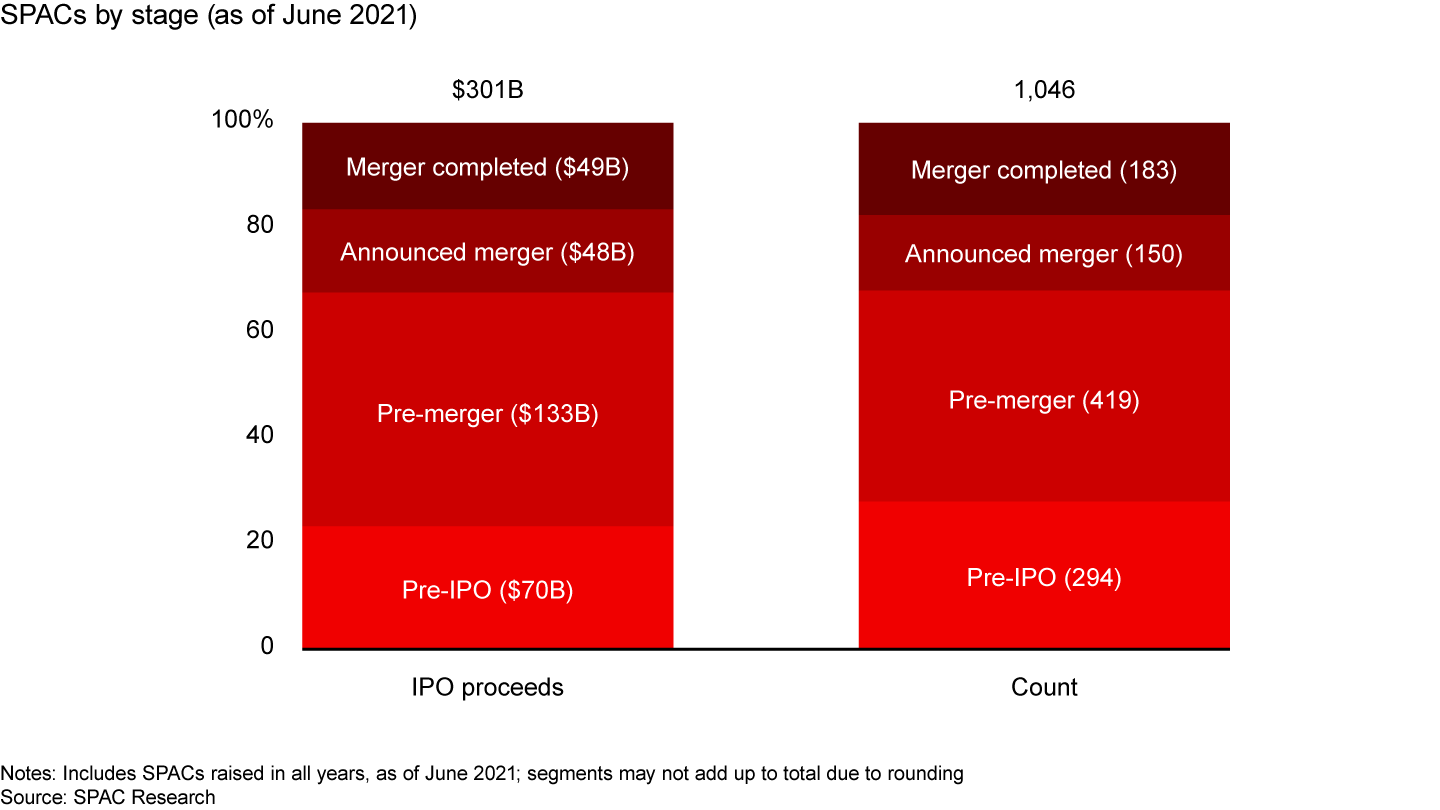
      As of June 30, SPACs had spent only $49 billion to close merger deals, and another $48 billion had been committed to announced mergers. That means 419 SPACs holding $133 billion are still looking for companies to take public (see Figure 4), presenting both challenges and opportunities for general partners (GPs).

      Figure 3
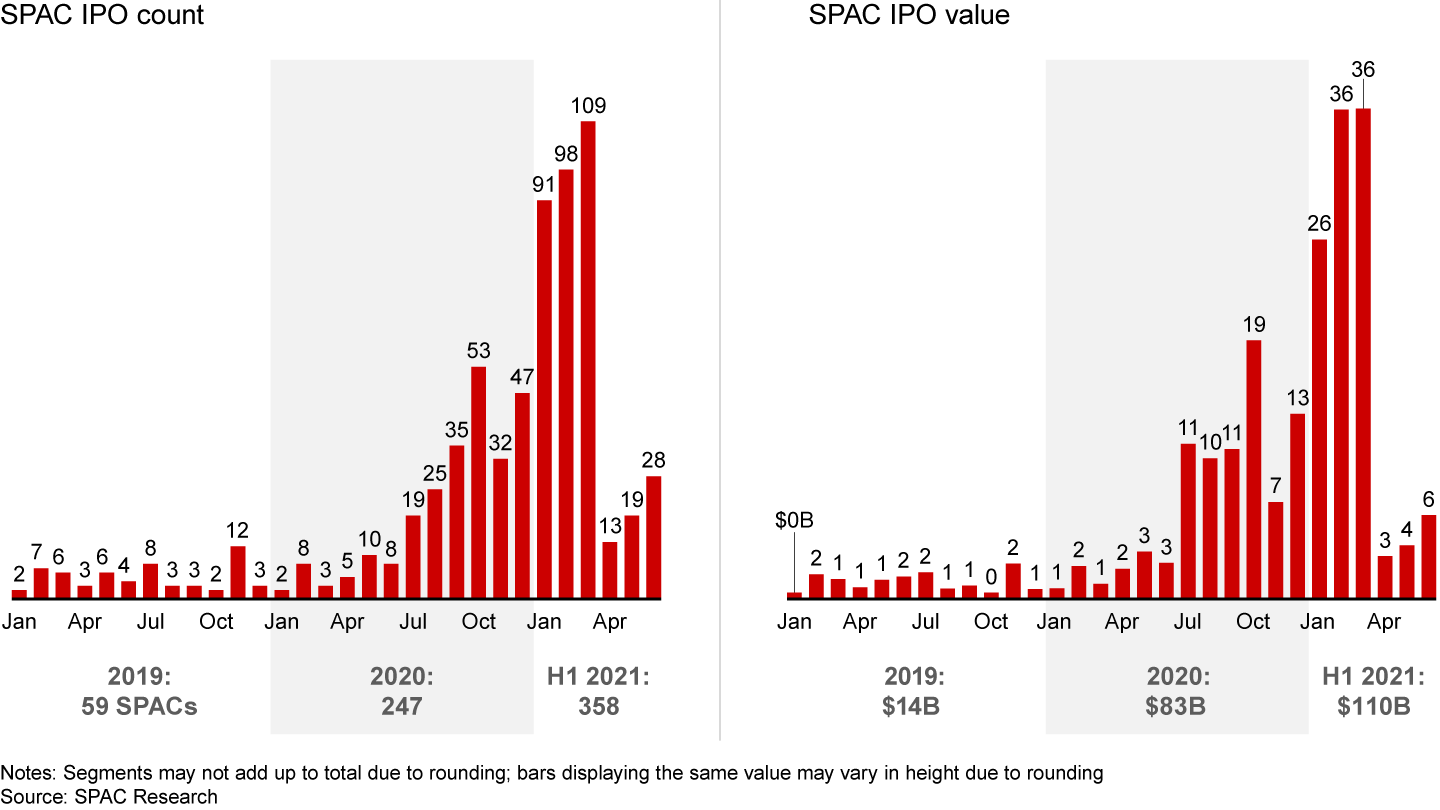
      SPAC IPO activity slowed dramatically in April due to increased regulatory oversight and shifting policy
      SPAC IPO activity slowed dramatically in April due to increased regulatory oversight and shifting policy
      SPAC IPO activity slowed dramatically in April due to increased regulatory oversight and shifting policy
      Figure 4
      There are still more than 400 SPACs armed with $133 billion in capital searching for potential merger partners
      There are still more than 400 SPACs armed with $133 billion in capital searching for potential merger partners
      There are still more than 400 SPACs armed with $133 billion in capital searching for potential merger partners

      The challenge is that some portion of that unspent capital will only add to the already fierce competition firms face when hunting through a limited supply of quality acquisition targets. This is especially notable given that the purchasing power of that $133 billion is actually some multiple higher; SPAC deals are typically leveraged with other forms of financing like private investments in public equity (PIPEs). The upside is that SPAC mergers will continue to create a strong exit channel for GPs seeking a fast-track entry to the public markets.

      The rush to public markets

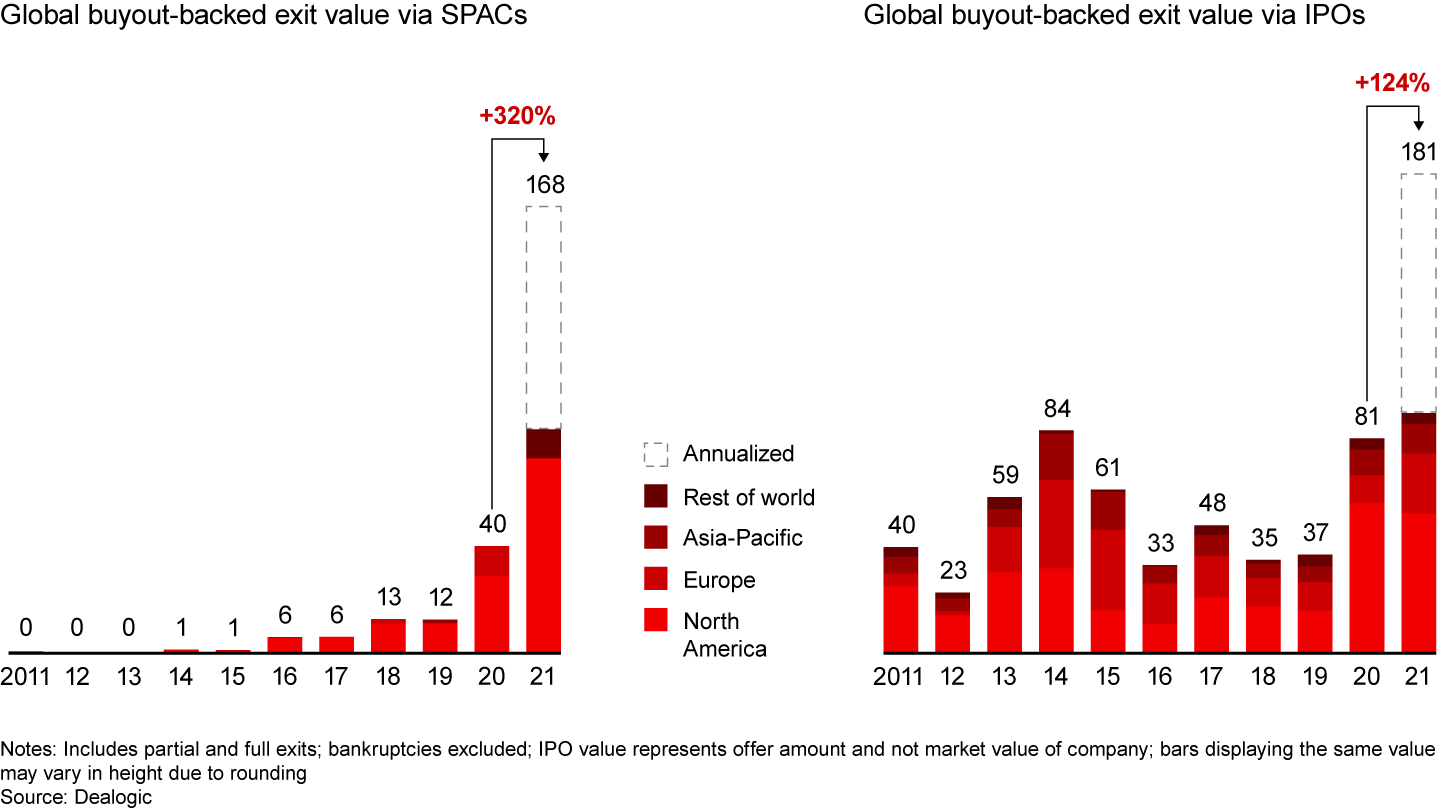
      SPACs have already proven to be willing buyers of portfolio companies, helping juice the exit market in 2021. Global buyout-backed exit value through June 30 soared to $488 billion, or 10% higher than the full-year total in 2020, partly on the back of $84 billion in SPAC mergers. (SPAC transactions made up 24% of North American exit value.) Traditional IPOs also were on fire, accounting for $90 billion worth of exits (see Figures 5 and 6). This surge in public exits was mostly a North American phenomenon, driven by exceptionally robust public markets in the US. If that continues into the second half, the pace could push global exit value toward $1 trillion, essentially doubling the previous peak of $521 billion in 2014.

      Figure 5
      Global exit value has already surpassed 2020’s full-year total, and 2021 is shaping up as the best year for exits ever
      Global exit value has already surpassed 2020’s full-year total, and 2021 is shaping up as the best year for exits ever
      Global exit value has already surpassed 2020’s full-year total, and 2021 is shaping up as the best year for exits ever
      Figure 6
      General partners are flocking to the red-hot public markets, setting records with both SPAC mergers and traditional IPOs
      General partners are tapping the red-hot public markets as never before, setting records with both SPAC mergers and traditional IPOs
      General partners are tapping the red-hot public markets as never before, setting records with both SPAC mergers and traditional IPOs

      Private equity’s enduring appeal

      Returning capital to investors at such a pace can only improve the appeal of private equity as an asset class. But limited partners (LPs) haven’t needed much encouragement to keep the flywheel turning. According to Preqin’s first-half Investor Outlook, approximately 90% of LPs say they plan to commit the same amount of capital or more to private equity over the next 12 months (see Figure 7). And over the first half of 2021, they turned the spigot wide open.

      Figure 7
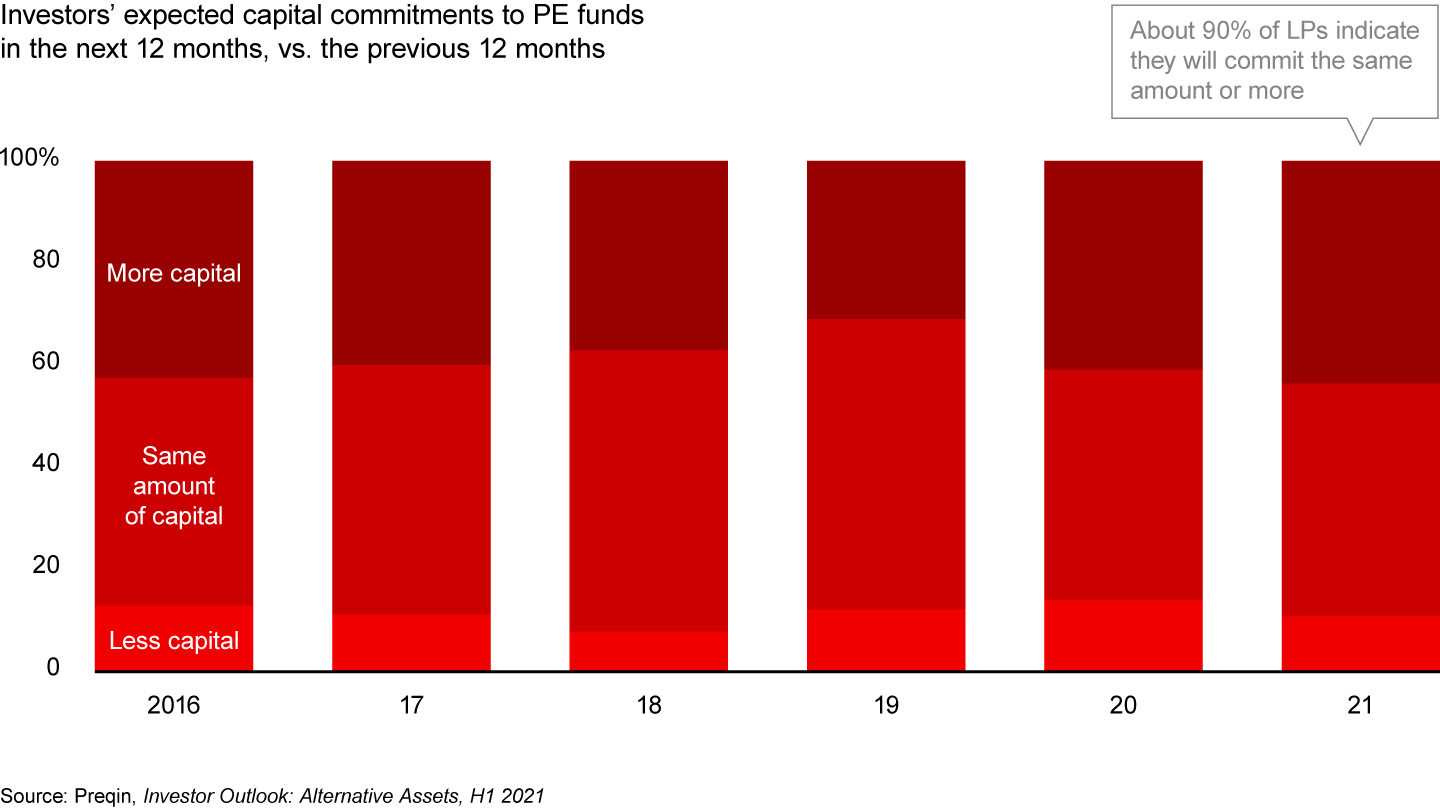
      Investors remain steadfast in their support of private equity, which is translating into record fund-raising
      Investors remain steadfast in their support of private equity, which is translating into record fund-raising
      Investors remain steadfast in their support of private equity, which is translating into record fund-raising

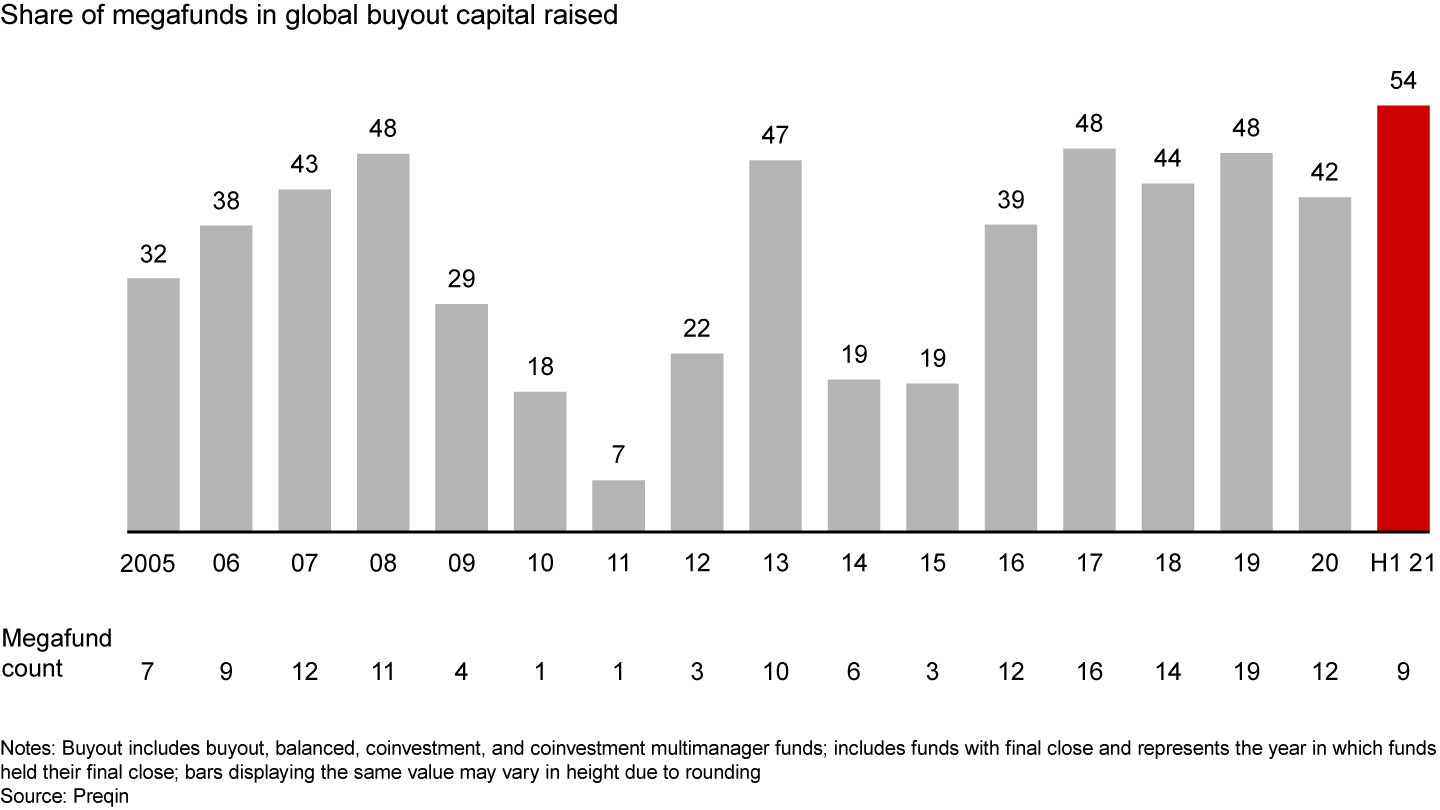
      Overall, fund-raising was up to $631 billion in the first half, a pace that would push the year-end total close to $1.3 trillion (see Figure 8). Buyout, venture, and growth funds saw the biggest increases over 2020, while secondaries, distressed, and real estate funds fell off. The bias toward size among LPs has never been more apparent. Through June 30, just nine megafunds (those with more than $5 billion in assets) collected $120.4 billion, or more than half of all the buyout capital raised (see Figure 9). Most of them were household names—EQT, KKR, CD&R, Bain Capital—and they raised 17% more than they targeted, on average.

      Figure 8
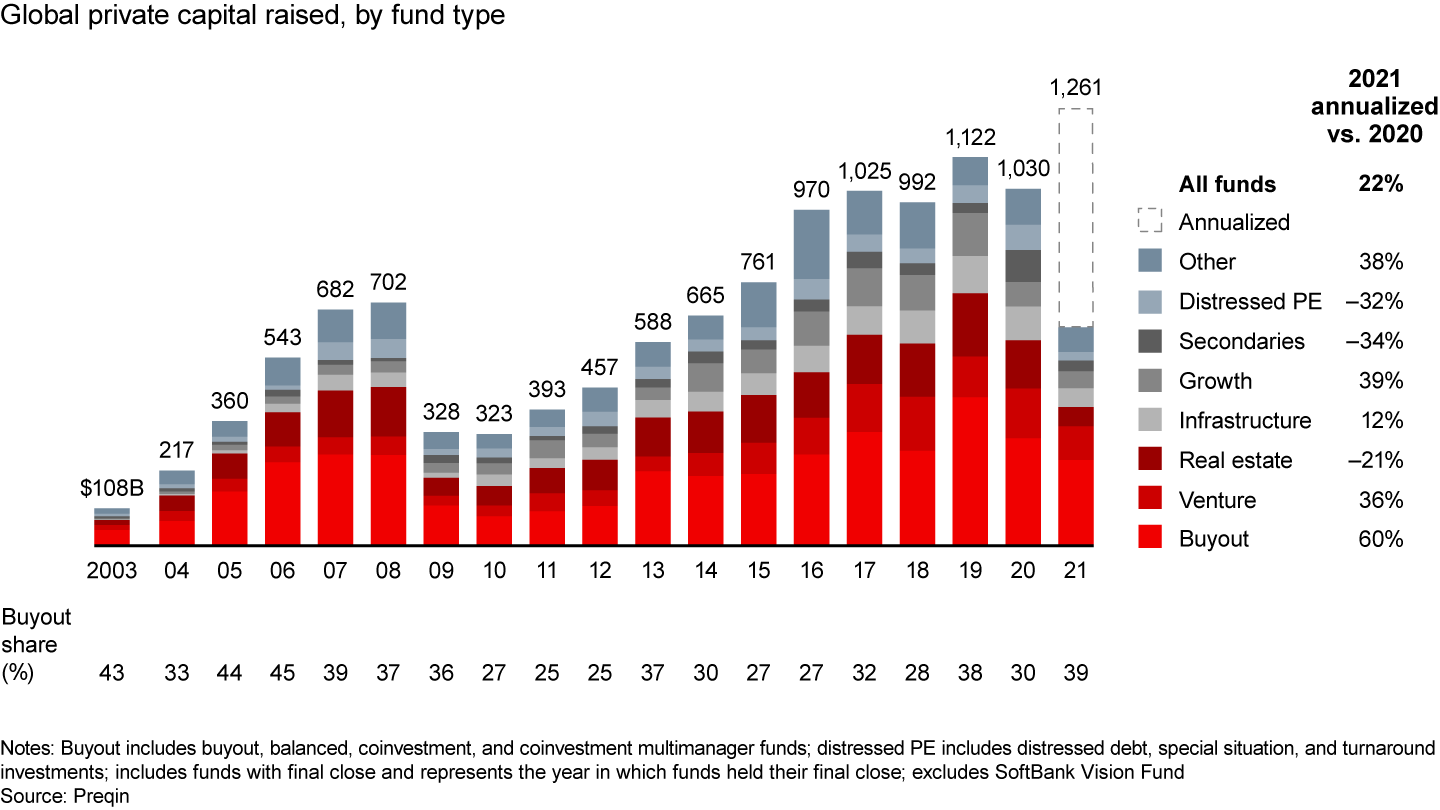
      Private equity has been raising money at a sizzling pace for years, but 2021 will likely set a new single-year record
      Private equity has been raising money at a sizzling pace for years, but 2021 will likely set a new single-year record
      Private equity has been raising money at a sizzling pace for years, but 2021 will likely set a new single-year record
      Figure 9
      Megafunds set the pace in the first half, with nine $5 billion–plus funds taking in more than half of all buyout capital raised
      Megafunds set the pace in the first half, with nine $5 billion–plus funds taking in more than half of all buyout capital raised
      Megafunds set the pace in the first half, with nine $5 billion–plus funds taking in more than half of all buyout capital raised

      The road ahead

      There’s obviously no way to know if the second half of 2021 will mirror the first, but there are a couple of key implications for private equity investors in the numbers we’ve seen so far.

      First, despite the robust activity since January, we continue to see evidence of pent-up demand. As we noted in Bain’s Global Private Equity Report 2021, deal count (as distinct from value) has been below historical levels since last year.

      The pace of dealmaking increased in the first half of 2021, and the market is on track to deliver around 3,700 deals by year-end. But that’s still below the 4,000 or so each year that the industry is used to. In the wake of the pandemic, GPs have struggled a bit to get smaller transactions closed, perhaps because of uncertainty in the markets or because the industry infrastructure has simply been overwhelmed with the volume of larger transactions. Either way, the deal numbers combined with the dry powder numbers indicate that many GPs are still in the market looking for targets or waiting to close transactions. That argues we will continue to see a surge in demand for new deals.

      Second, fluency in technology is only becoming more important for every private equity investor. As we’ve seen, one in three buyouts now involves the traditional tech sector. But that’s only part of the story. Digital innovation is seeping into every subsector in the market, challenging GPs to ask themselves a critical question: What role does technology play in my chosen industries, and how should that affect my investment strategy?

      Increasingly, it will pay to understand how tech is changing the competitive landscape and what companies can do to capitalize. GPs need to know how to assess the underlying technology of the assets they hope to acquire so they can underwrite risk and opportunity with confidence. When deals close, they need to know that their portfolio teams have the expertise to deploy technology to extract maximum value for all stakeholders.

      Our crystal ball is as fuzzy as everybody else’s, and we don’t purport to know what the next 6 to 12 months will actually deliver. But the winds seem favorable. The forces that drove the first half’s extraordinary activity—supportive monetary policy, a relatively strong economy, soaring equity markets, and a mountain of dry powder—show no signs of weakening. Unless something changes, the momentum is likely to continue.

      著者
      • Headshot of Hugh MacArthur
        Hugh MacArthur
        パートナー, Boston
      関連業種
      • プライベートエクイティ
      プライベートエクイティ
      Megafund Capabilities on a Mid-market Budget with Gryphon’s David Andrews

      In part two of our interview with Gryphon’s co-CEO, we discover why his $11 billion firm built a 40-person ops team—something most middle-market firms wouldn’t even contemplate.

      詳細
      プライベートエクイティ
      Spotting the Downturn Early and Coming Out Ahead with Gryphon’s David Andrews

      We ask the co-CEO of Gryphon Investors how he spotted one of the harshest cycles in the industry’s history and when he thinks it may finally break.

      詳細
      プライベートエクイティ
      What Kind of AI Cycle Are We Actually In?

      The question for investors is not whether AI will boom or bust, but who may be unwittingly subsidizing the buildout.

      詳細
      プライベートエクイティ
      Macro Update: What Could Derail 2026?

      Bain’s leading macroeconomic expert examines the cracks beneath the surface of the US market and how investors should prepare for post-globalization realities.

      詳細
      プライベートエクイティ
      What Differentiates Winning Healthcare IT Investments

      Amidst continued high-valuation multiples and competitive deal processes, a disciplined focus on value-creation levers distinguishes winning bids and successful exits.

      詳細
      First published in 7月 2021
      Tags
      • プライベートエクイティ

      クライアント支援事例

      Smart Pricing Helped a Private Equity Firm Unlock More Value

      ケーススタディを見る

      Rapid Tech Due Diligence Helped a Private Equity Firm Invest with Confidence

      ケーススタディを見る

      業績改善 Finding profit potential in a struggling private equity portfolio company

      ケーススタディを見る

      お気軽にご連絡下さい

      私達は、グローバルに活躍する経営者が抱える最重要経営課題に対して、厳しい競争環境の中でも成長し続け、「結果」を出すために支援しています。

      ベインの知見。競争が激化するグローバルビジネス環境で、日々直面するであろう問題について論じている知見を毎月お届けします。

      *プライバシーポリシーの内容を確認し、合意しました。

      プライバシーポリシーをご確認頂き、合意頂けますようお願い致します。
      Bain & Company
      お問い合わせ Sustainability Accessibility Terms of use Privacy Cookie Policy Sitemap Log In

      © 1996-2026 Bain & Company, Inc.

      お問い合わせ

      How can we help you?

      • ビジネスについて
      • プレス報道について
      • 採用について
      全てのオフィス