

論説

Holiday sales were decent in aggregate but disappointing for a number of prominent retailers. Omnichannel retail sales grew 3.1% over the holiday season (November and December). Growth skewed heavily toward e-commerce, where sales grew more than seven times faster than they did in stores (13% versus 1.7%). The need for retailers to deliver profitable growth, and to build the innovation capabilities required to do so, has never been greater. Winning retailers will adopt a more comprehensive approach to innovating both online and in stores, aligning the organization across a common set of priorities. That approach—a systematic, repeatable and fast method for designing and developing prioritized innovation—is called Agile.
The season in review
Preliminary estimates indicate that core retail sales grew 3.1% this holiday season over last year (see Figure 1), below what most retailers were hoping for, but above the 10-year average of 2.8%.1 Robust e-commerce sales—spurred by mobile devices—boosted performance, but a continued shift in spending to non-core retail sectors (for example, cars and restaurants), unseasonably warm November and December weather in many parts of the country and weaker tourism sales tempered holiday results. Substantial markdown activity throughout the holiday period, as retailers tried to offload excess inventory, contributed to top-line unit growth. Some retailers, including JCPenney, Costco, Barnes & Noble, Toys “R” Us, GameStop, Burlington Stores and American Eagle, reported growth in line with average industry performance. Others, among them Macy’s, Best Buy, Tiffany & Co. and hhgregg, saw declines. A few—Children’s Place and L Brands, for example—significantly outperformed the market with holiday sales growing at rates as high as 7% to 8% year over year.
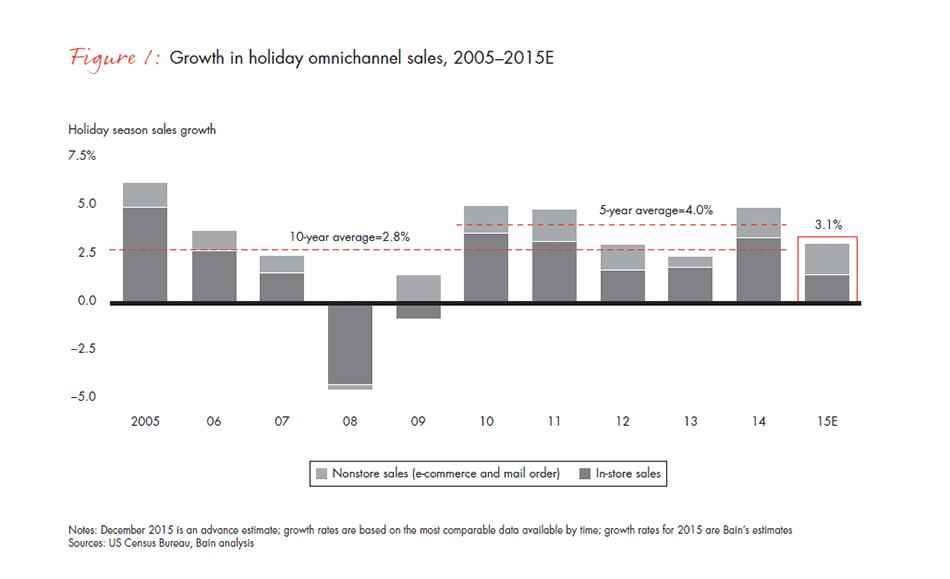
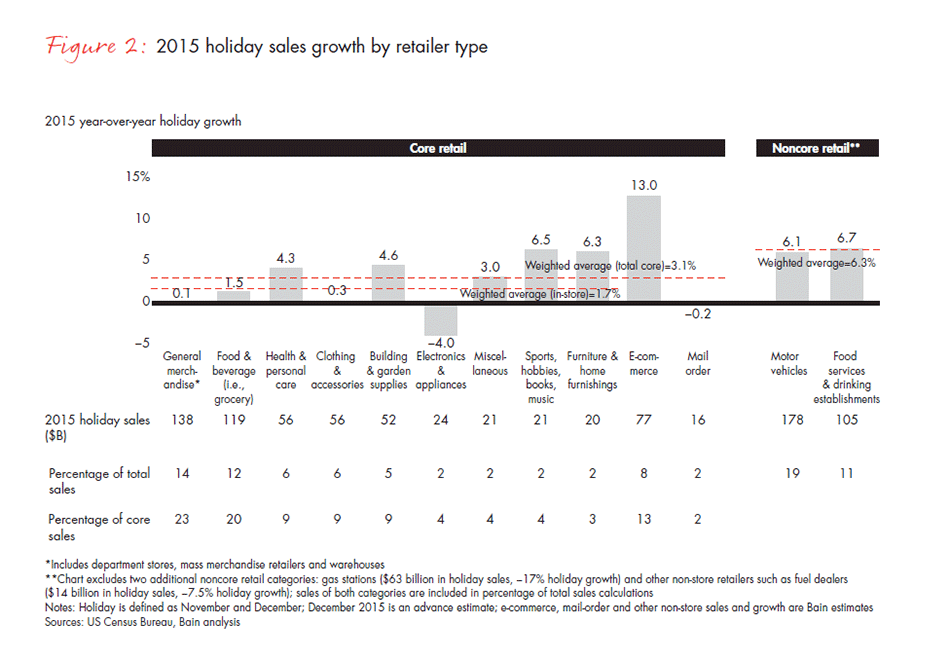
Data released by the US Census Bureau suggest in-store sales grew by 1.7% this holiday season, below last year’s 4% and the 10-year average of 2%. Within the core retail sector, holiday sales were strongest in two of the lowest-volume categories: Sales at sporting goods and furniture stores grew by 6.5% and 6.3%, respectively, but together comprised 7% of core sales. The largest core retail segment—general merchandise stores—was flat year over year, while electronics stores experienced the greatest decline, down 4% (see Figure 2). Spending remained strong in non-core retail sectors—motor vehicles (6.1%) and food services (6.7%)—which together represent nearly one-third of total in-store sales.
E-commerce accounted for an estimated 13% of core retail sales this holiday season and more than half of total growth, which was in large part a result of mobile sales (including smartphones and tablets). Amazon.com claims to have had a record-breaking holiday season, citing a 40% increase in shipments on Cyber Monday relative to last year and 3 million new Prime members in the week leading up to Christmas alone. One report suggests Amazon generated 43% of all US online sales in November and December, more than the next 10 largest retailers combined. Many omnichannel retailers—among them, Macy’s, Best Buy, JCPenney, Target, American Eagle and Toys “R” Us—also reported robust e-commerce results, albeit with mixed in-store results across the group.
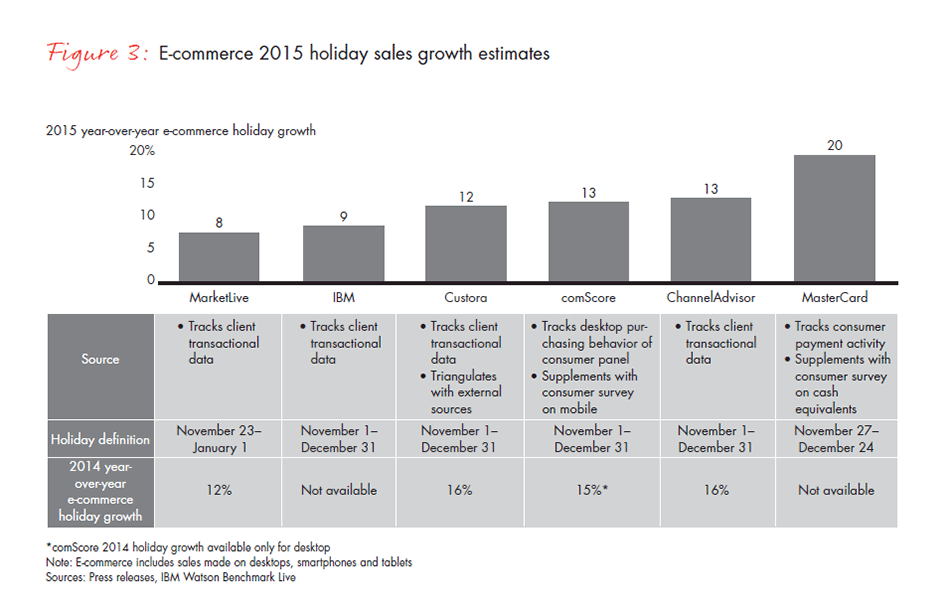
The Census Bureau does not release an advance estimate for e-commerce holiday sales as it does for in-store sales. Reports from a number of different sources, however, suggest year-over-year growth ranging from 8% to 20% (see Figure 3). ComScore, which issues the most widely referenced data point, reports a 13% increase in digital sales this holiday season, down from 14% last year.2 Although the e-commerce growth rate has gone down year over year, online sales continue to scale: The fourth quarter of 2014 generated an incremental $11 billion over the same period in 2013; and we estimate this figure increased to $12 billion in 2015.
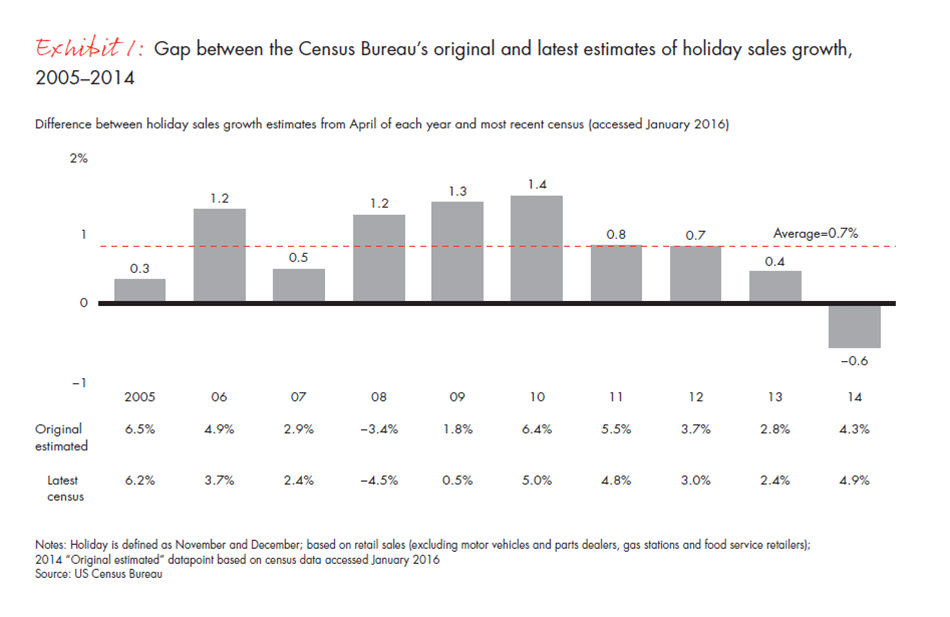
It turns out that understanding what actually happened over the holiday season is almost as complicated as forecasting it. Reports of holiday results varied significantly by source, ranging from 3% to 8%, driven not only by methodology but also by the retail sectors included in the analysis and the period used to define the holiday. Even data from the Census Bureau, widely considered the most comprehensive source of retail sales data available, can be challenging. The Census Bureau goes back and adjusts its reports as larger and more accurate data samples become available. Bain compared the original holiday sales results published annually by the Census Bureau going back 10 years against the 2015 release, which contains all adjustments for past years. The results suggest final holiday growth numbers vary 70 basis points from initial estimates (see Appendix Exhibit 1).
A further complication: Omnichannel shopping blurs channel boundaries, making it increasingly difficult for retailers to account for sales by channel. For example, which channel should get credit for an item bought online but shipped from stores? And should stores be penalized for online purchases that are returned to stores? Some retailers are abandoning channel allocation entirely, opting instead for catchment-area accounting—pooling store and digital transactions generated within a given geographic area—to align incentives with a common goal. These disparate accounting practices make it even more difficult to interpret aggregate in-store and e-commerce results independently of each other.
Mobile went mainstream this holiday season. Mobile devices played a pivotal role in omnichannel sales this holiday season as shoppers became increasingly comfortable browsing, researching and buying through their smartphones and tablets, and retailers invested to improve the experience. Mobile contributed to record-breaking sales on Cyber Monday: Mobile sales were up 50% year over year and made up 25% to 30% of total online sales. Over the holiday season, mobile commerce grew nearly 60%, accounting for 18% of total digital sales, up from 13% in 2014. Although mobile sales comprised just one-fifth of e-commerce sales, mobile devices generated two-thirds of total digital traffic. Smartphones and tablets are used more frequently for information gathering than desktop computers, resulting in lower conversion rates.
Amazon ramped up efforts to promote mobile commerce this holiday season, offering mobile notifications and mobile-only deals, launching a mobile referral program and restricting all Prime Now purchasing to its mobile app. Its efforts were successful. The e-tailer reported that 70% of its customers shopped on a mobile device this holiday season, up from 60% last year. The number of customers using Amazon’s mobile app also doubled from last year, as did the number of Prime members making a purchase on their mobile phone. Similarly, Walmart improved the functionality of its mobile app in preparation for the holiday. An October update added a Wish List feature and streamlined the checkout and payment processes. Walmart generated nearly half of its online orders via the mobile app on both Black Friday and Cyber Monday, double that of 2014.

Agile Insights
Agile Innovation techniques are spreading beyond software development to a wide range of industries and functions. Bain's Agile Insights explore how companies can adopt scrum thinking.
Mobile apps also helped retailers engage with in-store shoppers, augmenting the physical store experience. For example, Target introduced Target Run to select stores ahead of the holidays. Target Run leverages beacon technology to change announcements and offers based on where customers are in the stores. The Sephora To-Go app allows shoppers to see what’s in stock at their local store, scan products for ratings and reviews, and research how to use products most effectively. At the end of the holiday season, Sephora used in-app messaging to target loyal customers, pushing information on discounts, new product launches and exclusives. For added convenience during the hectic holiday period, Best Buy offered customers curbside pickup through a third-party mobile app, which notified store personnel via GPS when a shopper was approaching the store to collect an order.
Looking forward: The innovation imperative
The need for retailers to deliver profitable growth, and to build the innovation capabilities required to do so, has never been greater. With sluggish sales at a larger number of stores, many retailers are wondering whether to milk, close or reinvent them. A common response is to keep reducing service and staffing levels. The problem with this strategy is that stores become less appealing, and customers take their shopping elsewhere. Instead, retailers need to innovate in ways that change the rules of the game, accelerate performance and attract top talent.
Over the past decade, much of the growth and innovation in retail has come from digital technologies. All functions of a modern retailer—from product development to merchandising, marketing, stores and supply chain—have a range of digital tools available to help retailers acquire, convert, engage, serve and retain customers more effectively and profitably. As the saying goes: “Every company is now a software company, whether it knows it or not.”
Internet pure plays are at the forefront of digital innovation in retail, often defining themselves as technology companies first and retailers second. Take Amazon, for example. CEO Jeff Bezos has made innovation a part of every employee’s job description. In the last decade, Amazon has invested heavily in customer experience, behind the scenes capabilities to improve business efficiency and expansion into adjacent businesses and product lines. Consider the following examples in each of these categories:
- Customer experience: Amazon patented one-click buying, which allows shoppers to make online purchases (via desktop, tablet or smartphone) with a single click, bypassing traditional shopping cart software. Also, the company’s product reviews have evolved over time. Today, a machine-learning platform developed in-house automatically highlights newer and more helpful reviews. Amazon customizes the website for repeat customers, integrating recommendations throughout the purchasing process. Its marketing strategy is also heavily driven by data. For example, clickstream data—a record of a shopper’s online activity—are used to determine which marketing emails should go to which customers. If customers qualify for multiple offers, algorithms ensure that only the most effective is released. Finally, the company’s Subscribe & Save program was among the first to extend discounts on popular products to customers who sign up for monthly deliveries; and Dash Buttons now allow shoppers to reorder items with one push.
- Behind-the-scenes capabilities: Behind the scenes, Amazon conducts extensive experimental design—testing everything from navigation, colors, button styles, product placement and pricing, to messaging—to improve the user experience and drive conversion on the site. The company’s dynamic pricing capabilities adjust prices on more than 80 million items each day to optimize margins, tailoring price points to customer demand, inventory levels and competitors’ pricing. More than 30,000 robots roam Amazon’s fulfillment centers, enabling workers to process hundreds of orders per second. Although items in warehouses may appear randomly shelved, customer transaction data inform the organization. Sophisticated algorithms predict which products are most likely to be sold together. In December 2013, Amazon received a patent for another application of predictive analytics: anticipatory shipping. Anticipatory shipping uses big data—past orders, searches, wish lists, and dwell time on site, for example—to forecast what customers want even before they know what they want. With this knowledge, Amazon can preemptively ship packages to local hubs closer to likely buyers, thereby reducing shipping distance and cost of speed. Finally, Amazon became the first retailer to announce that it was exploring drone technology, with the potential for 30-minute transactions from order placed to item received.
- New business and product lines: Amazon has expanded beyond e-commerce with new business and product lines, including Amazon Video (launched as Amazon Unbox in 2006 and subsequently enhanced and rebranded), Amazon Web Services (2006), Amazon Kindle (2007), Amazon Fire TV (2014), Amazon Echo (2015) and Amazon Flex (2015). Regular experimentation allows the e-tailer to release test innovations quickly, doubling down on those that add value to the business and its customers, and scrapping those that don’t. For example, in February Amazon will discontinue Register, a credit card processing service for retailers, two years after its release. The company also has announced plans to shutter Amazon Local, its daily deals platform, and Amazon Destinations, a hotel booking service introduced just last year.
Many of these innovations were available to omnichannel retailers—had they wanted to invest and known how to innovate. In fact, traditional retailers started with more assets and more customer data than their pure-play counterparts. Amazon and other digital-only retailers have simply been better at both prioritizing and executing high-value ideas.
Innovative omnichannel retailers have started to incorporate digital capabilities to boost innovation. For example, the UK-based grocer Tesco trialed IBM’s augmented reality app to optimize inventory levels in real-time. The mobile app connects photos of aisles to Tesco’s product database to identify products that are understocked or missing. Walgreens has partnered with JDA Software to both digitize and expand its planogram library in an effort to revamp stores and better serve customers. Planograms link to sales history, sales goals, syndicated data and local customer profiles, allowing for more data-driven and timely changes in assortment. And Kroger has developed a sophisticated mobile app to augment the in-store customer experience. Its app informs customers where in the store they can find the items on their shopping list and pushes digital coupons based on purchase history.
While some omnichannel retailers have made significant strides, examples of comprehensive and corporate-wide transformations like those at Amazon don’t yet exist. Omnichannel retailers too often remain trapped in convention, implementing small isolated pockets of newness but struggling to keep up with broader market changes. Many people attribute the breadth and depth of innovation at Amazon to its digital business model. They believe Internet pure plays can be more nimble because they aren’t saddled with the physical assets that weigh down their omnichannel counterparts. However, Amazon holds an enormous amount of physical assets. In the United States alone, the company has more than 100 fulfillment centers, 30,000 robots, 30 data centers (with plans to build 15 to 20 more), 4 customer service locations, lockers in more than 200 cities and, of course, a new brick-and-mortar venture in Seattle. It’s unlikely, then, that physical assets are driving the innovation gap between Amazon and traditional retailers. What’s at work here is a fundamentally different approach to innovation.
An Agile approach to innovation
Amazon has hundreds of teams using Agile methodologies—comprehensive, repeatable and fast-moving systems for prioritizing, designing and developing innovation. Agile methodologies have transformed the software industry over the past 30 years and are increasingly seeing broader application outside IT. Agile isn’t just one more approach to creative thinking or iterative prototyping. Instead, it’s a well-developed holistic system engineered to overcome more than a dozen common barriers to successful innovation. In tens of thousands of software development projects, Agile methods have more than tripled average success rates, from 11% to 39%. In large, complex projects, Agile’s success rate jumps to six times that of conventional methods. Early data from adoption in functional areas outside IT—including R&D, marketing, operations and corporate strategy—suggest an equally high success rate and point to the importance of Agile’s systematic and repeatable characteristics.
Amazon has honed its Agile capabilities for more than a decade. In the early 2000s, Jeff Bezos restructured the organization to operate in “two-pizza teams,” groups small enough that two pizzas could feed all members. The objective was for these cross-functional teams to break free of functional silos and prescriptive processes, and attack the most pressing challenges facing the business. According to Bezos, “This kind of decentralization is important for innovation because your hands are closer to the knobs of what you’re trying to build.”
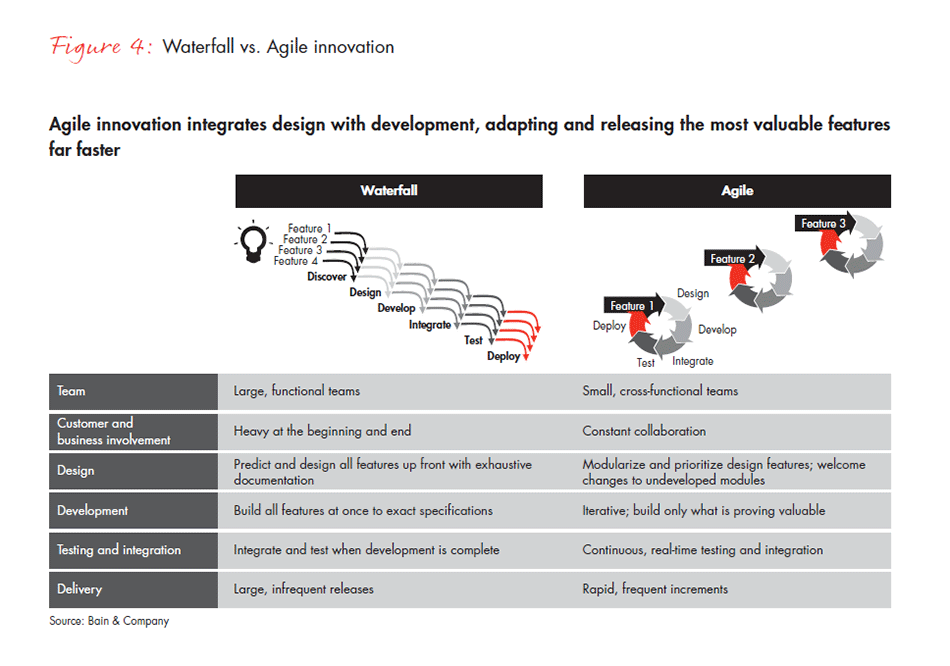
Agile vs. Waterfall. The fundamentals of Agile are simple. To tackle an opportunity, the organization forms and empowers a small, focused, cross-functional and self-managing team. The team’s initiative owner uses techniques like design thinking and crowdsourcing to build and prioritize a catalog of promising ideas or features. A process facilitator protects the team from distractions and puts its collective intelligence to work. The team then breaks top-priority tasks into small modules, decides how much work to take on and how to get it done, and starts building working versions in short cycles known as sprints. The process is transparent to everyone. Team members hold brief stand-up meetings daily to review progress and identify obstacles. They resolve disagreements with experimental feedback loops rather than endless debates or appeals to authority. They test small working increments with small groups of customers over short periods of time. If customers get excited, the increment may be released immediately, even if some senior executive isn’t a fan or another thinks it needs more bells and whistles. If not, it’s edited or scrapped, with a ruthless focus on building only what’s proving valuable. The team then brainstorms ways to improve future cycles and prepares to attack the new top priority. What Agile offers Amazon is a way not only to come up with good ideas, but also to develop, test and implement them quickly.
In contrast, traditional retailers typically use what’s called the Waterfall method. Waterfall is a sequential design process that consists of stages, from discovery to deployment (see Figure 4). Developers predict and design all features up front and then proceed to build those features to exact specifications. Testing occurs only after development, followed by large-scale deployment. Practitioners move to the next step in the innovation process only when the previous step is complete. Failure at any stage means scrapping the project entirely and starting again. This makes a detailed project plan critical from Day 1, and makes any deviation from this plan—a shift in focus to a different initiative, for example—a significant setback.
Frustrated with long IT waitlists, functional areas within traditional retailers have set up shadow IT groups that yield small pockets of innovation. But these efforts create their own challenges. First, they are often evolutionary, not revolutionary, with functions hastily pulling resources together to copy intriguing pieces of what others are doing simply to remain competitive. Second, projects often emerge more gimmicky than innovative, largely the result of a siloed investment that fails to deliver real value to broader customer experiences. Finally, given these pockets of innovation are disjointed, execution can suffer. For example, many omnichannel retailers offered online customers the convenience of picking up their orders in stores this holiday season. Although the online interface—selecting the in-store pickup option and making the purchase—may have been impressive, in-store execution often was not. Operational challenges around inventory systems, staffing levels, training, and space and signage for pickups created a host of frustrations for customers.
The solution: A shift toward a more unified and systematic approach to Agile innovation. This approach fosters continuous improvement that accelerates performance. When Amazon creates a competitive advantage, the company doesn’t simply declare victory and move on to other opportunities. Instead, it invests to make those small advantages major differentiators. As Bezos explains: “You have to ask what your customers need and want, and then, no matter how hard it is, you better get good at those things.”
Implementing Agile. Agile innovation offers substantial benefits. It increases customers’ engagement and satisfaction by improving visibility and adapting to customers’ changing priorities. It brings the most valuable products and features to market faster. It minimizes the waste inherent in meetings, repetitive planning, formal documentation, quality defects and low-value product features. It also reduces employee turnover by producing team members who are happier, more creative, more committed to success and better trained for advancement.
Unfortunately, not every company that adopts Agile does so successfully. In Bain’s experience, implementing Agile at the team level is relatively easy. The bigger challenge is in handling rapid growth as the methodology catches hold and rolls out to other functions. What’s needed is a change in innovation architecture. Leading retailers will build this architecture on the following tenets:
- Learn to focus: All too often, retail organizations spread valuable resources too thin by trying to tackle too many initiatives at once. A continuous (and ruthless) prioritization of ideas based on the latest estimates of value to customers and financial results is critical to success.
- Develop a common corporate agenda: Individual teams focusing on small parts of large complex problems need to see and work from the same ranked list of enterprise-wide priorities. If a new mobile app is the top priority for software development, it must also be the top priority for marketing, budgeting, vulnerability testing and software integration. Retailers struggle with getting people out of functional silos and working together as multidisciplinary teams. This results in websites that feel disjointed from stores, multiple apps that confuse customers and don’t work together, and poor execution of otherwise powerful omnichannel initiatives (buy online, pick up in store, for example).
- Lead by delegation: Senior leaders need to avoid second-guessing and overturning initiative owners’ decisions. If you don’t like the results, change the initiative owners, don’t incapacitate them. If you’re going to hire extraordinary people, give them extraordinary roles and treat them with extraordinary respect. And a bonus: Once free from micromanaging, senior leaders can spend more time strategizing, removing obstacles and increasing cross-functional collaboration.
- Emphasize teams, not individuals: Agile teams use process facilitators to continuously improve their collective intelligence. Metrics evolve from tracking outputs and utilization rates (how busy people are) to business outcomes and team happiness (how valuable and engaged people are). Recognition and reward systems must shift to weight team results more than individual efforts.
Agile practitioners aim to develop minimum viable products, early iterations that can be put into the marketplace and tested with customers, and then improved. This brief section of our holiday newsletter was designed as a minimum viable product. Our hope is that it will help retail executives who are unfamiliar with Agile methodologies start to learn what they involve and begin to test them out in 2016. We think Agile is a big new idea that will have widespread application in the future of retail. We look forward to testing and retesting that proposition, and to continually improving the methodologies.
***
This is the last issue of this season’s holiday newsletters. We hope you’ve enjoyed our discussions of shipping, Amazon, the value of stores and Agile innovation. To read the full series, please visit www.bain.com/holiday. We look forward to keeping in touch with you over the course of the year, and we will be back in October to share our 2016 holiday outlook. As always, we welcome your questions and perspectives.
Appendix
1 Core retail sales include North American Industry Classification System (NAICS) categories 442 (furniture and home furnishings stores), 443 (electronics and appliance stores), 444 (building materials and garden equipment and supplies dealers), 445 (food and beverage stores), 446 (health and personal care stores), 448 (clothing and clothing accessories stores), 451 (sporting goods, hobby, book and music stores), 452 (general merchandise stores) and 453 (miscellaneous store retailers), and e-commerce and mail-order sales across these categories.
2 The US Census Bureau reported 14% growth year over year for the fourth quarter of 2014. ComScore did not report mobile results for the 2014 holiday season. It did report year-over-year desktop-only growth of 15% for November and December 2014.
First published in 1月 2016